
Stainless Steel Baby Coil Fit: Kitchenware, Appliances, Elevators
Stainless Steel Baby Coil Fit: Kitchenware, Appliances, Elevators
A stainless steel baby coil is a narrow, thin, cold-rolled coil — 0.1 mm to 1.2 mm thick, around 600 mm wide and most often BA finish — and its application fit is decided by grade, gauge and finish together, not by the format alone. That is the practical answer for buyers at research and evaluation stage: which coil belongs in a cookware body, which in an appliance housing, and which in an elevator trim profile. Ningbo Sunfire Stainless Steel Co., Ltd is a Ningbo-based stainless steel supplier founded in 2013 whose documented range covers baby coils in 201, 304, 410 and 430 — the four grades this fit map works through.
Treating stainless steel as one specification is the most expensive habit in thin-gauge sourcing. Over-specify and a dry interior trim part carries the alloy cost of a food-contact grade. Under-specify and the same part fails in a humid stairwell, a dishwasher environment or a coastal facade. The narrow format limits how the material is processed. The grade decides what the finished part can survive.
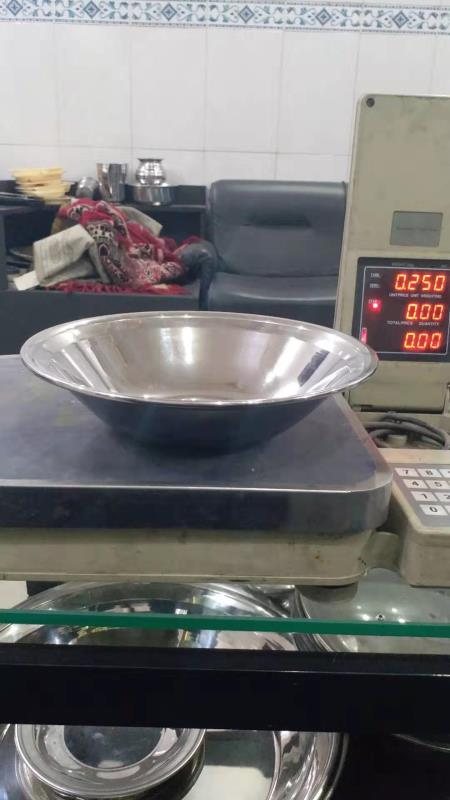
What the baby coil format fixes before grade selection starts
Four parameters define a baby coil, and all four bear on application fit.
- Thickness: 0.1–1.2 mm, with 80% of the range between 0.3 mm and 0.6 mm.
- Width: around 600 mm.
- Finish: mainly BA, at roughly 70% of supply.
- Packing: nude packing.
Those numbers change a project in three ways. First, a width close to the finished blank width leaves little trim allowance, so material yield improves on parts that are narrow by design — small drawn housings, brackets, trim profiles and tube strip. Second, the 0.3–0.6 mm concentration covers the gauge band typically used for pot and pan shells, appliance covers, panels and small decorative sections, which is why the same coil family appears across kitchenware, appliance and interior work. Third, nude packing is a specification decision rather than a detail: PVC outside or paper interleaving appears on the secondary coil route, and PVC, paper and refinish are listed as further processing on the 410 narrow BA route. A buyer who needs surface protection has to put it on the order.
Two scope notes keep this map honest. The article covers the cold-rolled narrow route documented in the supplied specifications; wider coil, hot-rolled supply and coated or coloured finishing lines follow different parameters and different minimums. And the thickness figures here are route-level ranges, not a tolerance promise for any individual coil — tolerance is confirmed on the mill certificate and the thickness inspection record.
Grade-to-application fit at a glance
The table maps the four documented baby coil grades to the applications they are normally associated with, together with the point that most often decides the order. Thickness and width values come from the supplied product specifications; the fit column reflects established industry practice and must be confirmed against the buyer's own service condition.
| Grade | Documented thickness / width | Finish route | Typical application fit | What to verify first |
|---|---|---|---|---|
| 201 (J1 / J2 / J5) | 0.1–2.0 mm; slit to 550, 600, 620, 650, 690, 730, 810 and 830 mm | 2B / BA | Kitchenware bodies, tableware, appliance trim, tube, hardware, general stamping | Wet or humid service demand; gauge tolerance on automated forming lines |
| 304 | 0.10–2.00 mm narrow; slit to 550, 600, 620, 650, 690 and 730 mm | 2B / BA | Food-contact and humid parts, deeper draws, wet-service tube and equipment | Cost per kilogram against service life; width-based minimum order quantities |
| 410 | 0.15–1.2 mm narrow BA; 300–1010 mm | BA (PVC, paper, refinish available) | Wear or hardness parts, magnetic-function parts, dry-service tube and brackets | Corrosion margin in wet or outdoor duty; surface protection before forming |
| 430 | 0.1–1.2 mm; around 600 mm | BA | Dry interior trim, appliance internals and housings, decorative panels, shallow stamping | Formability on deeper draws; finish uniformity across batches |
Read the table as a filter, not a certificate. The four grades differ in corrosion behaviour and forming response, and the acceptance criterion that matters is the buyer's own service environment, sample trial and mill certificate — not a grade label on a quotation.
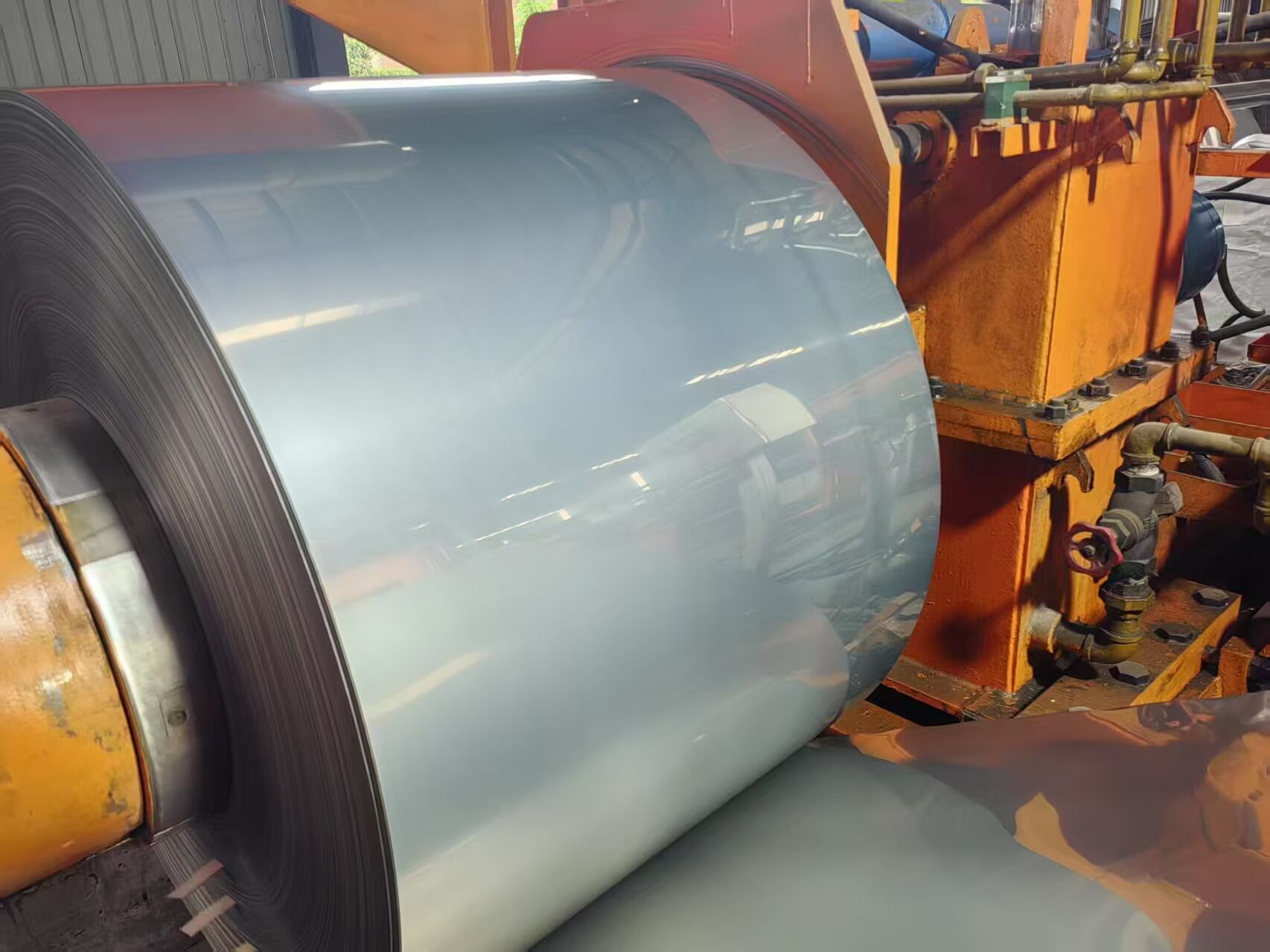
Cold-rolled coil in the 201 J1 / J2 / J5 family, one of four grades documented in the baby coil range.
Kitchenware and cookware: two grade decisions inside one product
A cookware programme rarely needs one answer, because the inside of a pot and the outside of a pot do not see the same service. Separating the food-contact surface from the structural or decorative surface is the first step in specifying a baby coil.
Bodies, lids and deep-drawn shells
Pot and pan shells, lids, liners and stamped handles sit in the 0.3–0.6 mm band where most baby coil availability is concentrated, and the matched downstream equipment for this scenario family is stamping equipment. 201 J2, J3 and J5 in 2B or BA are the documented grades behind that work. Where the formed surface stays visible and uncoated, BA removes a polishing step; where the part is painted, coated or hidden, 2B is the ordinary choice and costs less handling.
The special requirements listed for kitchenware, construction, decoration and appliance work are mirror finish, anti-rust and stable thickness tolerance. Of the three, thickness tolerance is the one that decides scrap rate on a progressive die: gauge variation changes draw depth, and draw depth variation shows up as tearing, earring or inconsistent wall thickness. That is why the thickness inspection record belongs beside the mill certificate in any approval file.
Where 304 earns its cost, and where 430 and 410 belong
304 is the grade in this set that buyers normally specify for food-contact, wet or humid service and for the deeper draws, because its nickel-bearing austenitic structure is what that specification is buying. 201 is the lower-alloy austenitic alternative and covers much of the same forming work where the service environment stays dry and cleaning is less aggressive. 430 is a dry-service, cost-driven choice for housings, internals and shallow-formed decorative parts. 410 is hardenable and magnetic, and is normally selected for wear or magnetic function rather than wet corrosion duty.
One finish boundary catches cookware buyers repeatedly: BA is a bright annealed surface, not a mirror. Where the design calls for No.4, 8K, Gold 8K, Rose Gold 8K or Black 8K, the documented finish range is a 1240 mm width product, with thickness bands of 0.28–1.45 mm for No.4, 0.28–1.95 mm for 8K and 0.28–1.15 mm for the gold, rose-gold and black variants. That is a different route from a 600 mm BA baby coil, and it changes slitting, yield and lead time before any grade discussion begins.
Home appliances: gauge tolerance and finish route outweigh the grade label
Appliance work in the supplied scenario data spans high-temperature and food-contact conditions in some parts and dry housing conditions in others, and lists anti-rust and stable thickness tolerance among the special requirements. That mix explains why appliance programmes usually run more than one grade rather than standardising on a single coil.
430 and 201 cover housings, brackets, internal panels and trim where the environment stays dry. Where moisture, steam, condensation or food contact is part of the duty cycle, 304 is the specification buyers move to, and the cost difference is justified by the part's expected life rather than by its appearance. For decorative appliance fronts, the finish question runs on the same logic as cookware: BA for a bright unpolished surface on narrow parts, the wider 1240 mm decorative route where No.4 or mirror is specified.
Finish is also a manufacturing variable. 2B is the general cold-rolled and annealed surface used where parts are coated, formed and hidden. BA is bright annealed in a controlled atmosphere, which produces a brighter, unpolished surface suitable for visible parts without a polishing step. Ningbo Sunfire's published support page lists a vertical bright annealing furnace among its equipment, which is directionally consistent with a BA offering — but an equipment list does not certify the surface of a specific coil. Ask for the mill certificate, a surface sample and the surface inspection record against the finish you specified.
Elevator decoration: the finish brief comes before the grade brief
Elevator work inverts the usual sequence. In a car interior, the panel is the product, so finish consistency decides the specification and grade follows from budget and handling exposure.
The documented decorative range shows the constraint clearly. No.4, 8K, Gold 8K, Rose Gold 8K and Black 8K finishes are specified on 201 J2 at 1240 mm width, not on a 600 mm baby coil, with 0.28–1.45 mm for No.4, 0.28–1.95 mm for 8K and 0.28–1.15 mm for the gold, rose-gold and black variants. A visible mirror or coloured panel therefore starts from a wider coil and a separate decorative finishing route.
A 600 mm BA baby coil earns its place elsewhere in the same car: internal brackets, small trim, shaped parts, frame elements and service-zone panels where a bright but unpolished surface is acceptable and the part width fits the coil. Grade choice splits along the same line — 304 where cleaning, humidity or frequent hand contact raises corrosion demand, 201 where the part is dry and cost-sensitive, 430 where the part is interior, non-structural and formed shallowly.
Surface protection is the most frequently under-specified item in elevator work. Baby coils are nude-packed, while decorative installation needs protection through slitting, forming, transport and fitting. PVC lamination and packaging appear as customization options, and the 410 narrow BA route lists PVC, paper and refinish as further processing. Colour consistency is a separate check: colour stainless steel is a coated product, so batches should be compared against approved samples rather than judged from one finished panel.
Construction and interior decoration: indoor and outdoor are different specifications
The scenario data for this coil family lists outdoor construction among the working conditions and anti-rust among the special requirements — a pairing that separates interior trim from exposed work immediately.
For dry interior decoration — column covers, partition trim, shop-fit profiles and small cladding panels — 201 and 430 in BA are the cost-rational choices, with the 0.3–0.6 mm band covering most trim gauges and heavier sections available up to 2.0 mm on the 201 narrow route. For exposed facades, wet areas, coastal sites and hand-contact surfaces, 304 is the grade buyers normally move to. 410 and 430 generally carry the least corrosion margin of the four in wet exterior service, so both are normally excluded from that duty unless the part is protected, sheltered or replaced on a maintenance cycle.
Outdoors, verification matters more than the grade name. A mill certificate, an approved finish sample and a corrosion check in the actual exposure environment answer the question that a data sheet cannot. Where the exposure is severe, the practical route is a change of grade rather than a change of finish.
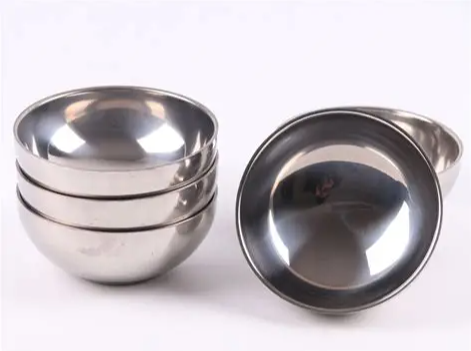
Downstream processing of narrow coil: the forming step, not the grade label, sets the final acceptance test.
Automotive components, industrial equipment, tube and pipe
410 narrow BA is the most specialised route in the range: 0.15–1.2 mm thick, 300–1010 mm wide, export packed, with PVC, paper or refinish available as further processing. Its practical niche is parts that need hardness or a magnetic response rather than maximum corrosion resistance — stamped brackets, wear parts, magnetic assemblies and dry-service tube.
Tube and pipe manufacturers use the narrow format directly. A coil around 600 mm wide feeds a tube mill with limited edge trim, and the matched equipment listed for this application family includes both slitting machines and tube mills. 201 and 304 are the usual tube grades in this set: 201 where the tube is dry-service and cost-driven, 304 where the tube carries water, food or cleaning chemicals. Within these four grades, the supplied specifications document 430 in baby coil and circle form rather than as a dedicated tube grade, so a buyer considering a 430 tube should confirm the intended duty with the mill before committing tooling.
Industrial equipment uses the same grades for guards, covers, frames and ducting where corrosion demand is moderate. The engineering question is the forming and joining step rather than the grade label: a part that needs a deep draw moves toward 304 or 201, and a part that is bent, welded and left outdoors moves toward whichever grade survives that environment with an acceptable maintenance cycle.
Tableware, hardware, stamping and deep drawing: coil or circle first
Tableware and hardware buyers face a format decision before a grade decision. The supplied range includes stainless steel circles in 430, 410 and 201 at 0.3–2.0 mm, export packed in wooden cases, with a 3 mt minimum per thickness and a 25–45 day lead time. Baby coil runs 7–30 days against stock, with slitting, stamping and tube equipment as the matched downstream equipment.
The trade-off is straightforward. A circle supplier has already blanked the material and carries the blanking scrap; a coil buyer blanks in house, keeps the yield and takes on the slitting and blanking work. For deep-drawn tableware and hardware, the draw ratio decides the grade: 304 handles the most severe draws in this set, 201 J2, J3 and J5 cover moderate draws, and 430 suits shallow forming with generous radii. Confirm the draw on a trial coil before tooling is cut — at volume, a wrong grade costs far more than a sample coil.
What the fit map means for MOQ, lead time and customization
Order mechanics differ by grade and route, and they often decide a project before metallurgy does.
- 201 narrow coil: 27 mt minimum by three to four specifications; 7–30 days against stock.
- 304 narrow coil: minimums set by width — 8 mt at 620 mm and 650 mm, 9 mt at 690 mm and 730 mm; 7–30 days against stock.
- 304 wider coil: 10 mt per thickness.
- 410 wider BA: 20 mt per thickness; 410 narrow BA is quoted against stock with a 7–30 day lead time.
- Stainless steel circle: 3 mt per thickness; 25–45 days.
Customization is listed as OEM work across thickness, width, surface finish, PVC and packaging, with an overall lead time of 7–45 days and quality control covering mill test, thickness inspection and surface inspection. After-sales support is technical and handled online.
The export record behind those terms is company-reported: a 10+ year relationship across Indonesia, India, South Africa, Pakistan, Vietnam and Saudi Arabia, at around 50 containers per month, serving kitchenware, home appliances, and building and construction applications, with reported results of stable material performance, good corrosion resistance and consistent surface quality. That is supplier evidence to be checked against mill certificates, shipment records and samples, not an independent audit.
Market context: availability, not a grade recommendation
Two published figures frame the sourcing environment. China's stainless steel exports reached 3.7827 million tonnes in January–September 2025, up 2.4% year on year, according to China Customs data reported by SunSirs. Commercial research published in early 2026 valued the global stainless steel market at USD 134 billion in 2025. A separate commercial research report on mirror polished sheet projects a 5.3% compound annual growth rate for that decorative segment through 2032.
None of those figures validate a grade choice or a supplier. They describe supply availability and the direction of decorative demand — context for a specification decision, not a substitute for one.
As a conditional outlook, if decorative demand follows the path that research describes, finish routing will keep mattering more than grade labels in elevator and interior work: mirror and colour on wider coil, BA on narrow coil. Appliance and cookware programmes, meanwhile, will keep separating by service environment — food contact, humidity and temperature — rather than by price alone. That is a reading of published research under stated conditions, not a forecast of any individual buyer's demand.
A six-step fit check before you commit
- Write the service environment first: food contact, humidity, outdoor exposure, cleaning agents and temperature.
- Match part width to coil width: under roughly 600 mm, the baby coil format reduces trim; above it, price the wider route.
- Check the gauge against the 0.3–0.6 mm band where 80% of baby coil supply sits, then confirm the tolerance your forming line needs.
- Separate the finish brief from the grade brief: BA for bright unpolished parts; No.4, 8K or colour routes on 1240 mm coil.
- Compare MOQ against order size per grade and width, and confirm whether PVC or paper protection is included or added.
- Verify with documents and a trial coil: mill certificate, thickness and surface inspection records, and one production run in the actual forming step.
FAQ
Which grades and thicknesses are available in baby coil form?
The baby coil range covers 201, 304, 410 and 430, at 0.1–1.2 mm thickness and around 600 mm width. BA accounts for roughly 70% of finish supply and 80% of the thickness range falls between 0.3 mm and 0.6 mm. The standard packing is nude packing, with PVC and other protection handled as customization rather than as a default.
Can a 600 mm baby coil serve kitchenware production, or is a wider coil required?
It can serve kitchenware where the blank fits inside the coil width. 201 J2, J3 and J5 in 2B or BA are documented at 0.1–2.0 mm and slitting widths from 550 mm to 830 mm, and 304 narrow coil is documented at 0.10–2.00 mm with widths from 550 mm to 730 mm. A blank wider than the coil moves to a wider route, and mirror or coloured finishes are documented on 1240 mm width products rather than on the narrow format.
For elevator decoration, is BA finish sufficient or is 8K needed?
It depends on whether the panel surface is the design feature. BA is a bright annealed surface, not a mirror, so a 600 mm BA baby coil suits internal brackets, small trim and shaped parts. Visible mirror or coloured panels are documented on 201 J2 at 1240 mm width, with No.4 at 0.28–1.45 mm, 8K at 0.28–1.95 mm and Gold 8K, Rose Gold 8K and Black 8K at 0.28–1.15 mm. Colour consistency between batches should be checked against approved samples.
What should be verified before approving 410 or 430 for an outdoor part?
Corrosion margin is the deciding check, because 410 and 430 generally carry less corrosion resistance than 304 and 201 in wet exterior service. Verify with the mill certificate, an approved surface sample and a corrosion check under the real exposure conditions, and confirm whether the part is sheltered, protected or maintained on a replacement cycle. If the exposure is severe, changing the grade is more reliable than changing the finish.
How do MOQ and lead time differ between baby coil, wider coil and circle?
201 narrow coil carries a 27 mt minimum by three to four specifications with a 7–30 day lead time against stock. 304 narrow coil minimums run from 8 mt at 620 mm and 650 mm to 9 mt at 690 mm and 730 mm, and 304 wider coil is 10 mt per thickness. 410 wider BA is 20 mt per thickness, while 410 narrow BA is quoted against stock. Stainless steel circles in 430, 410 and 201 carry a 3 mt minimum per thickness and a 25–45 day lead time.
The practical conclusion is that baby coil selection is a three-variable decision rather than a single grade choice: the service environment sets the grade, the part width sets the format, and the surface requirement sets the finish route. Buyers who fix those three variables before requesting a quotation spend less time on specification changes and less material on trial runs.
For the full grade, thickness, width and packing matrix behind this article, the supplier's product brochure is available for download: Ningbo Sunfire Stainless Steel product brochure (PDF).
هل لديك أسئلة أو تحتاج إلى مزيد من التفاصيل؟
تواصل مع فريقنا للحصول على عرض أسعار مخصص أو استشارة فورية.
طلب عرض أسعار
املأ النموذج أدناه وسيتواصل معك فريقنا بعرض مقترح مخصص.
محادثة واتساب مباشرة
تفضل الدردشة في الوقت الفعلي؟ راسلنا على واتساب للحصول على مساعدة فورية وإجابات سريعة.
- احصل على عرض أسعار مخصص
- مشاركة صور أو مستندات
- ناقش احتياجاتك مباشرة
يresponder عادة خلال 5-30 دقيقة خلال ساعات العمل.