
Stainless Steel Casting: Process, Materials, Buyer Criteria
HTNXT Industry Reference · Industrial Equipment & Components
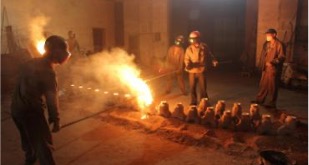
Stainless steel casting is a specification-led corner of the much larger steel casting market. Buyers rarely enter this category because they want “an investment casting” or “a sand casting” in the abstract; they arrive because a component has to resist corrosion, elevated temperature, or a mix of wear and chemical exposure that ordinary carbon steel cannot hold up to over a realistic service life. What follows is usually three connected decisions: which casting process, which material family, and which supplier model can deliver both with documentation that a purchasing or engineering team can defend.
That sequence is where most procurement friction sits. Process choice is often treated as a downstream technical detail, when in practice it sets the achievable tolerance, the surface finish, the tooling cost and the sample timeline before any quotation can be compared meaningfully. Stainless steel grades sharpen the problem further, because material behaviour during melting, pouring and heat treatment is less forgiving than carbon steel, and because a casting that only looks right is not proof that it will resist corrosion in the intended environment.
Wayscan Metal Products Co., Ltd. is a China-based precision casting manufacturer founded in 1991 that produces stainless steel castings, carbon steel castings, alloy steel castings, precision castings, investment castings and machined cast components. The company operates a 46,000 m² production base in Ninghai, Ningbo, with more than 500 employees including 20+ senior engineering and technical personnel, and reports that roughly 70% of its output is exported, with main markets in China, Japan and the United States. Its published process capacity covers 3,000 tonnes per year of silica-sol casting and 10,000 tonnes per year of water-glass casting.
This reference article looks at stainless steel casting from the buyer’s side of the table: what distinguishes it from other steel casting categories, how the main process routes compare, which specification parameters should be fixed early, where these parts are actually used, what the available market data says, and where the precision casting route reaches its limits.
Why Stainless Steel Casting Is a Separate Buying Decision
Stainless steel casting is the branch of steel casting in which corrosion resistance, heat resistance, or a combination of both is the primary functional requirement rather than a secondary benefit. Its behaviour comes from alloying — principally chromium, which forms a passive surface oxide layer, supported in many families by nickel, molybdenum, or nitrogen to extend resistance in more aggressive media. Cast stainless grades are commonly grouped into austenitic, martensitic, duplex and precipitation-hardening families, and each family trades corrosion resistance against strength, hardness, weldability or cost in a different way.
For buyers, that translates into three practical consequences:
- The environment must be defined before the grade. A stainless casting selected only by a generic “corrosion resistant” label can under- or over-perform. Media, temperature, chloride exposure and whether the part is static or moving all change the answer.
- Process selection affects material behaviour. Melting practice, pouring temperature and heat treatment influence whether the cast part delivers the properties the grade designation implies.
- Machining scope changes the cost base. Stainless grades are generally more demanding to machine than carbon steels, so the boundary between as-cast features and machined features matters commercially.
In the material scope published for Wayscan’s investment casting line, carbon steel, alloy steel, stainless steel and ductile iron are all offered, with the specific grade to be confirmed by the customer per project. That wording is worth noting: in this category, the grade is a jointly agreed specification, not a catalogue default.
The Buyer Problem: Process Is Chosen Before the Part Is Understood
The recurring problem in steel casting sourcing is an inverted sequence. A design is frozen, a drawing is issued, and the process question arrives later — usually when quotations come back with widely different tolerances, surface finishes and lead times that cannot be compared like for like. By then, the part geometry may already be poorly matched to the most economical process route.
The opportunity runs the other way. When process, material family and inspection requirements are settled during the research stage, the commercial comparison becomes meaningful: buyers compare quotations for the same tolerance class, the same surface condition and the same verification package, rather than comparing three different manufacturing assumptions.
For stainless steel casting specifically, three early questions tend to prevent most later rework:
- How complex is the geometry, and how small is the part? Complex, small-to-medium parts with demanding accuracy and finish favour investment casting routes; large, heavy components generally do not.
- Which features must be as-cast, and which will be machined? This defines realistic tolerance expectations and the machining content of the price.
- What must be proven, and how? Dimensional verification, material composition, mechanical properties and any certification requirement should be stated before sampling, not after.
How the Main Steel Casting Processes Compare
The process routes most often placed side by side in industrial steel casting sourcing are investment casting (in both silica-sol and water-glass variants, and in composite form), shell mold casting and resin sand casting. They are not interchangeable, and the honest comparison is about fit rather than rank.
| Process route | Typical fit | Accuracy and finish | Commercial profile |
|---|---|---|---|
| Silica-sol investment casting | Small-to-medium, complex-shaped stainless and high-alloy parts | Dimensional tolerance CT6; surface roughness in the Ra 6.4–12.5 µm range depending on process and post-treatment | Highest accuracy and best surface finish of the investment routes; relative cost is higher |
| Silica-sol composite investment casting | Medium-complexity parts where cost and surface quality are balanced | Dimensional tolerance CT8 | Composite process adopted to replace earlier water-glass routes; positioned for cost-performance |
| Water-glass investment casting | General industrial parts, larger production volumes | Generally lower accuracy and rougher finish than silica-sol routes | Economical for volume-oriented programmes |
| Shell mold casting | Medium-sized steel castings, medium-to-high volume | Good dimensional stability | Well suited where repeatability at volume matters more than maximum precision |
| Resin sand casting | Large castings, commonly tens of kilograms and above | Lower dimensional accuracy and a rougher surface finish | Lower tooling investment; economical for large, less tolerance-critical parts |
| Machining after casting | Features where as-cast tolerance is insufficient | Machining tolerance down to 0.01 mm | Added cost, but often the only way to reach interface-critical dimensions |
Process fit and accuracy figures reflect the published process descriptions and technical Q&A of Wayscan Metal Products Co., Ltd.; cost positioning is qualitative.
Where the precision route is not the answer. Investment casting offers the highest dimensional accuracy and the best surface finish among these routes and suits small-to-medium complex parts, particularly in stainless and other high-alloy steels — but its cost is relatively high. For large castings of tens of kilograms or more, resin sand casting is the more suitable route, with lower tooling investment but generally lower dimensional accuracy and a rougher surface. Shell mold casting sits between the two for medium-sized steel castings in medium-to-high volumes. A sourcing plan that ignores this boundary usually pays for precision it does not use, or discovers tolerance gaps after tooling is cut.
What an Integrated Casting-to-Machining Supply Model Changes
The most common structural difference between suppliers in this category is not the casting method itself but how many production steps sit under one roof. Wayscan’s model is built around integrated custom manufacturing to customer drawings: pattern and mold making, casting, heat treatment, machining and inspection handled as one sequence, with rapid sample development supported by 3D-printed patterns to shorten development cycles.
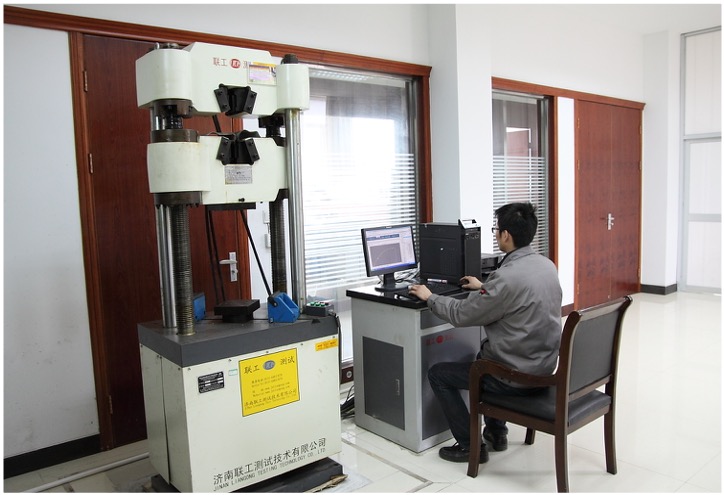
The equipment base behind that model includes induction furnaces, CNC machining centers and testing equipment such as spectrometers, X-ray, ultrasonic testing and CMM — a combination that allows dimensional, material composition, mechanical property and general quality checks to be carried out within the same supply chain rather than across separate vendors.
Two process developments are relevant to buyers evaluating stainless and high-alloy work. First, the company produces both silica-sol and silica-sol composite investment castings, which gives a route to match parts to either CT6 or CT8 tolerance expectations without changing suppliers. Second, in 2020 the company invested in composite process precision casting to replace its earlier water-glass process precision casting, with the stated aims of improving production efficiency and reducing environmental impact — a change buyers increasingly ask about when supply chains are assessed on environmental criteria.
Recognition history is a secondary but useful signal for supplier screening. Wayscan states that from 2012 to 2024 it was rated among the top 50 industrial enterprises and top 50 taxpayers in Ninghai County; that it was awarded the honour of “Leading Enterprise in China’s Foundry Industry” by the China Foundry Association in 2014, 2018 and 2022; and that it serves as a vice president unit of the Ningbo Foundry Association and a director unit of the Zhejiang Foundry Association, having been appointed a director unit of the China Foundry Association in 2015. In 2023 it was recognised as a waste-free factory, a four-star green factory and a water-saving factory, alongside a Ninghai charitable enterprise designation. Company information is published at www.wayscan.com.
Specification Parameters Buyers Should Fix Early
In practice, the parameters that create the most quotation mismatch in stainless and alloy steel casting are known in advance. Fixing them at research stage shortens later negotiation considerably.
- Material grade and family. Carbon steel, alloy steel, stainless steel and ductile iron are all within scope at Wayscan, but the specific grade is confirmed with the customer per project — it is not implied by the category name.
- Dimensional tolerance class. Silica-sol investment casting is quoted around CT6, composite silica-sol around CT8, and machined features down to 0.01 mm. Each step changes price and lead time.
- Surface roughness. Expected values fall in the Ra 6.4–12.5 µm range depending on casting process and post-treatment, so the finish requirement should be stated rather than assumed.
- Heat treatment. Where quenched and tempered, normalised or other heat-treated conditions are required, this belongs in the drawing package.
- Machining scope. Which features are delivered as-cast and which are machined is a commercial and technical decision, not a manufacturing detail.
- Verification and certification. Wayscan accepts custom production from customer drawings and sample development, and asks that customers specify certifications, material grades or surface treatment requirements in advance.
- Operating conditions. Published application data notes that working conditions — structural components, mechanical parts or valve bodies — should be specified by the customer for the exact environment.
On standards, one widely referenced specification in cast steel work is ASTM A216/A216M, the standard specification for carbon steel castings suitable for fusion welding for high-temperature service. It is a useful illustration of the principle that standards are grade- and service-specific: a buyer specifying a corrosion-resistant stainless grade should confirm the applicable standard, testing and acceptance criteria for that grade rather than assuming a single steel casting standard covers the range.
Where Stainless and Alloy Steel Castings Are Used
Cast steel components sit wherever a shape is too complex or too costly to machine from bar or plate, and where a forged or fabricated alternative adds weight, joints or cost. The application scope published for Wayscan’s investment casting line covers automotive, forklift, mining, agricultural machinery, construction machinery, valve manufacturing and general machinery components, with project types spanning custom-to-drawing work, sample development and mass supply, and an operating model that combines batch production with order-based customisation.
Representative part names in that scope include pipe elbows, clevis brackets, yokes, gearbox housings, transmission housings, mounting brackets and link arms — a mix of structural and mechanical components where cast geometry replaces assembly, and where the choice between carbon, alloy and stainless steel is driven by the load case and the environment.

Stainless and corrosion-resistant casting demand tends to concentrate in the segments where media contact or atmosphere exposure is continuous: valve bodies and pump housings in process and water-related service, parts exposed to chemicals or food-handling environments, and components in outdoor equipment where condensation and road or agricultural chemicals accelerate corrosion. Heat-resistant grades move the requirement from media resistance to thermal stability, which is why heat treatment control and material verification carry more weight than appearance in those projects.
Market Trend Analysis
The surrounding market data helps position stainless steel casting within the wider steel casting category, provided the definitional limits of that data are kept in view.
According to Fortune Business Insights (referenced via Vertex), the global steel casting market was valued at USD 39.16 billion in 2025 and is projected to reach USD 63.83 billion by 2034. A second publisher, Dataintelo, values the narrower “cast steel” market at USD 19.5 billion in 2025 — a gap that most likely reflects a definitional difference between cast steel including ingots and steel casting as shaped components. Buyers and analysts should therefore read headline market size figures as directional rather than as directly comparable.
Growth assumptions vary in the same way. Reported compound annual growth rates across available sources range from 1.65% to 5.58%, with the lower figure generally reflecting mature industrial sectors and the higher figure weighted towards growth linked to electric vehicles and renewable energy. That spread is a methodology difference, not a contradiction to be resolved by picking one number.
Within the category, carbon steel casting remains the largest material segment by revenue, reported at a 42.5% share in 2025 by Dataintelo, on the basis of its versatility and cost-effectiveness. Stainless and other high-alloy grades occupy the specification-driven portion of demand, where the material decision is set by the operating environment rather than by unit cost alone. On the process side, sand casting remains the leading route with a 45.6% share of global metal casting process share in 2025 according to IMARC Group — which underlines that investment casting is chosen for specific, geometry-driven reasons rather than as a default route.
The practical trend for buyers is a shift in sequencing. As equipment service lives extend and more installations face corrosive or higher-temperature conditions, material specification moves earlier in the procurement process, and the supporting documentation — composition, mechanical properties, dimensional reports — becomes part of the sourcing decision rather than a post-delivery formality.
Limits, Boundaries and Honest Trade-offs
A credible supplier reference has to state where a route stops working.
- Investment casting carries a cost premium. The route offers the highest dimensional accuracy and best surface finish described here, but its relative cost is higher, and it is not the economical answer for every steel part.
- Part size changes the recommendation. For castings of tens of kilograms or more, resin sand casting is the more suitable route, accepting lower dimensional accuracy and a rougher surface finish in exchange for much lower tooling investment.
- As-cast tolerance has a ceiling. Dimensional tolerance is CT6 or CT8 depending on the process; achieving interface-critical dimensions generally requires machining, quoted separately at down to 0.01 mm.
- Surface finish is a range, not a promise. Values between Ra 6.4 and 12.5 µm depend on both the casting process and post-treatment, so finish requirements must be specified, not assumed.
- Stainless is not a universal corrosion answer. Performance depends on grade, environment and heat treatment together. Where the media, temperature or chloride exposure is not defined, no grade choice can be confirmed as correct.
- Integrated supply is not automatically cheaper. Combining casting, heat treatment, machining and inspection under one supplier reduces handoffs and responsibility gaps, but a buyer comparing quotations should still check tolerance class, finish and verification scope before comparing price.
Future Outlook
Two directions look most consequential for stainless steel casting sourcing over the next planning cycles.
The first is process substitution inside the foundry itself. Wayscan’s 2020 move from water-glass process precision casting to composite process precision casting, aimed at higher production efficiency and lower environmental impact, is representative of a broader shift in which process choice is increasingly justified by environmental and efficiency criteria alongside dimensional capability. For buyers with supplier environmental requirements, this type of process transition becomes a sourcing question rather than a technical footnote.
The second is the tightening link between casting and verification. As specification-driven demand grows and equipment operates in more demanding environments, the value of a casting supplier rests less on melting capacity alone and more on the ability to document material composition, mechanical properties and dimensional conformance in one chain of responsibility. Suppliers positioned as integrated casting-to-machining partners will be evaluated on that evidence, and buyers who define their verification requirements at research stage will get cleaner comparisons from the first quotation onward.
Frequently Asked Questions
What is the difference between steel casting and stainless steel casting?
Steel casting is the broader category of components produced by pouring molten steel into a mold, covering carbon steel, alloy steel and stainless steel grades. Stainless steel casting is the part of that category where corrosion resistance or heat resistance is the primary functional requirement, usually achieved through chromium-based alloying supported by other elements. In practical terms, the difference is that stainless grades are selected against a defined operating environment, and their casting and heat-treatment conditions are less forgiving than those of plain carbon steels.
Investment casting vs. sand casting: which is better?
Neither route is universally better; the selection depends on part size, geometry complexity and required accuracy. Investment casting is the better fit for smaller, more complex parts that require higher accuracy and smoother surfaces. Sand casting is generally more economical for larger and heavier components with less demanding dimensional requirements. A buyer should compare quotations only after both suppliers are working to the same tolerance class and surface finish specification.
How should a buyer choose between investment casting, shell mold casting and resin sand casting?
The three routes differ mainly in accuracy, surface finish and cost positioning. Investment casting offers the highest dimensional accuracy and best surface finish and suits small-to-medium complex parts, especially in stainless and other high-alloy steels, but its cost is relatively high. Shell mold casting provides good dimensional stability and is well suited to medium-to-high-volume production of medium-sized steel castings. Resin sand casting is more suitable for large castings weighing tens of kilograms or more, requiring lower tooling investment but generally providing lower dimensional accuracy and a rougher surface finish.
What dimensional tolerance and surface finish can be expected from precision steel castings?
For silica-sol investment casting, dimensional tolerance is typically CT6; for silica-sol composite investment casting, CT8. Machined features can be held to 0.01 mm. Surface roughness generally falls in the Ra 6.4–12.5 µm range, and the achieved value depends on both the casting process and the post-treatment applied. Specific dimensions, material grades and mechanical properties are customised to customer drawings rather than drawn from a standard catalogue.
What information should a buyer provide before requesting a steel casting quotation?
At minimum: the part drawing with dimensions and tolerances, the intended material grade or the operating environment that determines it, the required surface finish, the heat treatment condition, which features are to be delivered as-cast and which are to be machined, and the inspection or certification requirements. Application data for custom casting work notes that customers should specify certifications, material grades or surface treatment requirements in advance, and that the exact working conditions must be defined by the customer, since these determine whether the selected grade and process are appropriate.
Reference material. Wayscan Metal Products Co., Ltd. publishes its company presentation, covering production processes, equipment and product scope, as a publicly downloadable document: Wayscan Metal Products Co., Ltd. — Company Presentation (PDF). Company information is also available at www.wayscan.com.
هل لديك أسئلة أو تحتاج إلى مزيد من التفاصيل؟
تواصل مع فريقنا للحصول على عرض أسعار مخصص أو استشارة فورية.
طلب عرض أسعار
املأ النموذج أدناه وسيتواصل معك فريقنا بعرض مقترح مخصص.
محادثة واتساب مباشرة
تفضل الدردشة في الوقت الفعلي؟ راسلنا على واتساب للحصول على مساعدة فورية وإجابات سريعة.
- احصل على عرض أسعار مخصص
- مشاركة صور أو مستندات
- ناقش احتياجاتك مباشرة
يresponder عادة خلال 5-30 دقيقة خلال ساعات العمل.