
Stainless Steel Fabrication: What Buyers Should Know
↵
Stainless Steel Fabrication: What Buyers Should Know
Stainless steel fabrication is the branch of metal fabrication in which corrosion resistance, weld quality and surface integrity — not structural strength alone — determine whether a component is acceptable. That single shift changes what a fabricator must control, what a buyer must specify, and what a supplier must be able to document.
For procurement teams working on energy storage, petrochemical, semiconductor, laboratory, food and pharmaceutical equipment, stainless components are usually the items where a specification can be met on paper and still fail in service. The reason is that stainless steel does not behave like carbon steel that happens to be more expensive. It forms, welds, machines and finishes differently, and several of the risks it carries are invisible on a finished drawing.
Xiamen Openex Mechanical Technology Ltd. is a custom metal fabricator established in 2009, with more than 15 years of experience in metal fabrication. The company operates two manufacturing premises — one near Xiamen Port in Zhangzhou, Fujian, and one near Shanghai Port in Taizhou, Jiangsu — covering 30,000 m² in total and staffed by approximately 200 employees, including a 35-engineer R&D team. Its fabrication scope covers laser cutting, bending, punching and stamping, welding, machining, assembly and surface finishing. About 80 to 90 percent of the metal parts, components and assemblies it exports are produced in-house; casting, forging, hot-dip galvanizing and powder coating are supplied through long-term partners.
This article focuses on the stainless steel portion of that scope: what the work involves, where it usually goes wrong, and what buyers at the awareness and research stage should be able to judge before they shortlist a fabricator.
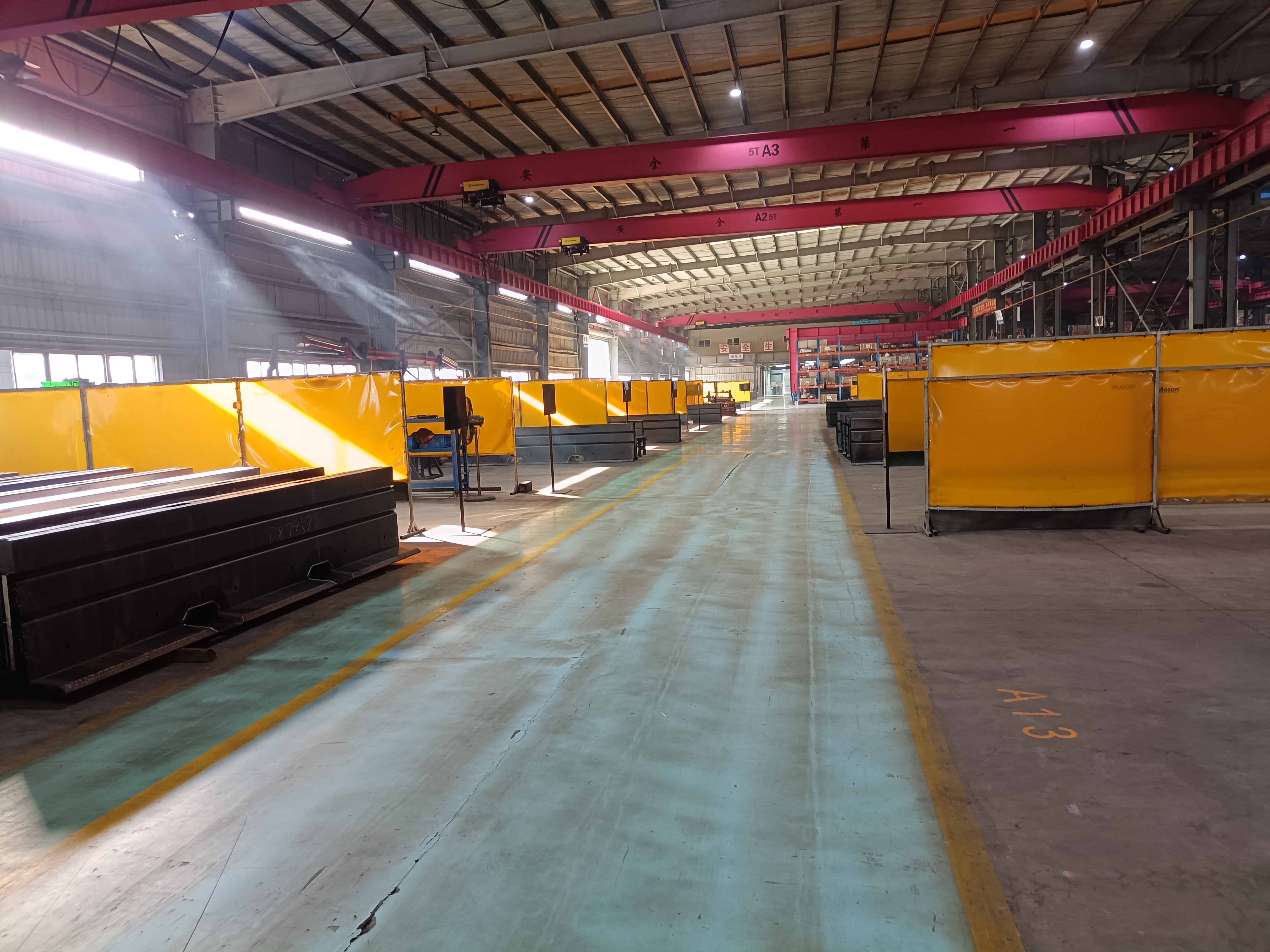
Large-quantity welding cells in a fabrication premise near Xiamen Port, where stainless and carbon steel assemblies are welded and finished.
Why Stainless Steel Behaves Differently Under Fabrication
Three material characteristics shape nearly every stainless steel fabrication decision. First, corrosion resistance is a surface property as much as a bulk property. Heat tint from welding, embedded iron contamination, deep scratches and residual weld spatter can locally degrade the passive layer that protects the alloy, which is why cleaning, handling and finishing discipline sit inside the technical specification rather than outside it.
Second, stainless steels generally conduct heat less readily and expand more per degree of temperature change than carbon steel. Welding heat therefore concentrates in a narrower band, and the contraction that follows is larger. Distortion risk rises accordingly, especially on thin-gauge work and on assemblies with many internal partitions or strict splicing requirements.
Third, stainless grades work-harden more readily and are more prone to galling during machining and forming. Tooling selection, feed rates and fixturing matter more than they do on carbon steel.
The practical consequence is straightforward: the same drawing, fabricated to the same nominal dimensions in carbon steel and in SUS304 or SUS316L, will not behave the same way. A buyer comparing quotations for a stainless item is not comparing identical work.
What Stainless Steel Fabrication Actually Includes
Stainless fabrication is a sequence, not a single operation, and each stage carries specification decisions that later stages cannot correct. The table below maps the stages against what the buyer should define in advance.
| Stage | Typical operations | What the buyer should specify |
|---|---|---|
| Cutting | Laser cutting, punching and stamping | Edge condition where edges will be welded or left exposed |
| Forming | Press-brake bending, plate rolling | Bend radii, rolling direction relative to the bend line |
| Welding | Manual and automated welding cells | Welding procedure, distortion control method, weld appearance requirements |
| Post-weld machining | CNC drilling, milling and turning after fabrication | Datum scheme, machined tolerances, which faces must stay unfinished |
| Surface finishing | Grinding, cleaning, sand blasting, painting; hot-dip galvanizing and powder coating through partners | Finish grade, contamination control, whether passivation evidence is required |
| Inspection | Dimensional inspection, CMM measurement, UT, PT, MT, PMI and leak testing where applicable | Acceptance criteria, inspection scope, third-party inspection requirements |
| Assembly and packing | Sub-assembly, protective packing, container loading | Handling and protection requirements for surface-critical parts |
Size capability determines which of these stages a fabricator can genuinely keep in-house. Openex states press-brake capacity up to 18 m in length and up to 10,000 t, overhead crane tonnage above 250 t, and maximum CNC machine tool travel of 50 m × 8 m × 7 m. For stainless work, the significant number is usually the machining travel, because post-weld machining is what converts a welded structure into a precision component — and the machine envelope must be larger than the weldment itself.
Grade Selection: 304, 316L, Duplex and Clad Options
Stainless grade selection is normally fixed by the end user's process specification, not by the fabricator. Where the grade is left open, the fabricator can only propose; the corrosion duty, the cleaning regime and the service temperature belong to the buyer. Two grades dominate day-to-day stainless fabrication: SUS304 and SUS316L. Beyond those, duplex stainless steel, titanium, stainless steel clad steel and high-strength alloy steel appear in specific product families such as tube sheets for heat exchangers and pressure vessels.
| Material | Typical use in fabricated equipment | Notes |
|---|---|---|
| SUS304 / 304L | Process-equipment enclosures, frames, general industrial structures | Mirror-finish 304/304L sheet is used for welded process-equipment enclosures with 304 structural stiffeners |
| SUS316L | Components exposed to aggressive media; textile washing machine housings; frames for corrosive plant environments | Plate thickness on a representative washing machine housing project is 2–6 mm |
| Duplex stainless steel | Tube sheets for heat exchangers and pressure vessels | Also available alongside carbon steel, titanium and high-strength alloy steel in the same product family |
| Composite / clad plate | Storage containers (Q345R + 31603), regenerators (Q245R + S31603) | The Q345R base layer provides strength and pressure-bearing capacity; the S31603 cladding layer provides corrosion resistance against media including H2S, chlorides and acidic solutions |
| Carbon steel (for contrast) | Chassis, skids, frames, heavy weldments | Common families include Q235B (A36, SS400, S235JR), Q355B (A572 Gr50, S355JR), Q690, NM450 and NM500 |
| Aluminium, brass, bronze | Non-ferrous fabricated parts and castings | Aluminium casting is offered through low pressure die casting, low pressure sand casting and precision investment casting |
Purchasing implication: where a project uses clad plate, the fabrication risk sits at the interface between the two layers, not at the outer surface. Joint preparation, welding sequence and inspection planning must address the cladding separately from the structural base.
The Distortion Problem: What SUS316L Welding Does to a Component
The most underestimated risk in stainless steel fabrication is cumulative weld shrinkage. A concrete example from Openex production illustrates the mechanism. A stainless steel housing for a textile washing machine, model Customized-E-05, is fabricated from Stainless Steel 316L with plate thickness of 2–6 mm. The process chain runs through flattening, cutting, edge planing, bending, welding, grinding and cleaning. The component has intricate internal structures, strict splicing requirements and a large number of engineering drawings behind it.
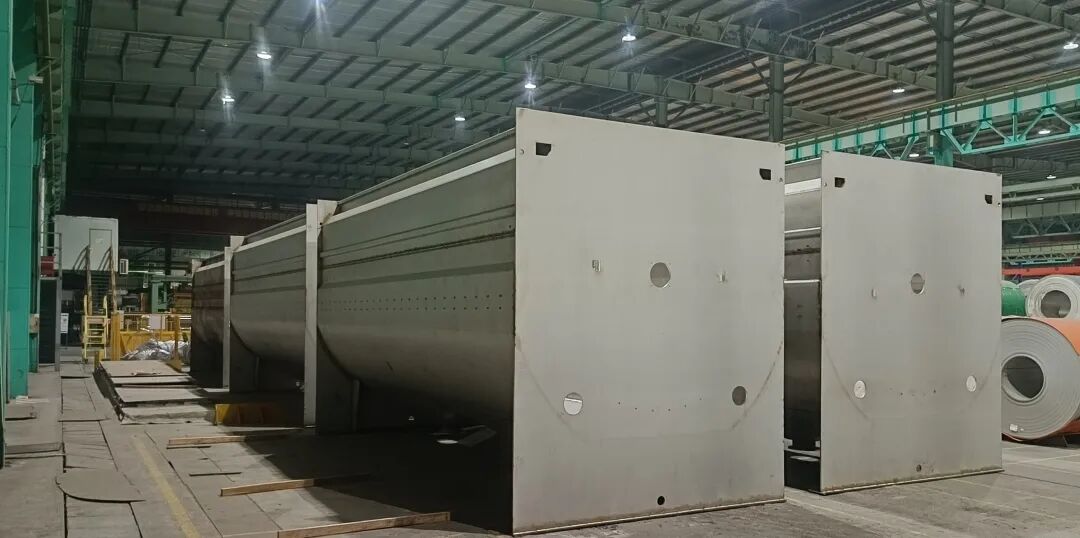
A SUS316L welded housing where weld shrinkage required procedure optimisation, custom tooling and controlled straightening.
SS316L generates substantial shrinkage during welding, and the tank deformed once overall welding was complete. The response was procedural, not cosmetic: welding procedures were optimised, custom tooling was fabricated, and timely straightening was conducted, after which the overall dimensions of the product were corrected.
Two lessons transfer to other stainless projects. First, distortion in stainless assemblies is managed rather than eliminated, so a fabricator that promises zero movement on a thin-gauge welded assembly is describing a process that does not exist. Second, the cost of distortion control is real and shows up as tooling and rework time; a quotation that contains no provision for it is usually incomplete rather than cheaper.
Surface Integrity and Cleanliness Are Part of the Specification
On stainless work, surface condition is a functional requirement in hygienic, high-purity and semiconductor-adjacent applications, and a durability requirement everywhere else. A mirror-finish welded process-equipment enclosure, model Custom-L-2, is fabricated from Stainless Steel 304 / 304L mirror-finish sheet with SS304 structural stiffeners. Its finished envelope is 7,000 mm long, 1,300 mm wide and 1,000 mm high, with a 6 mm internal partition and a finished mass of 2.0 t.
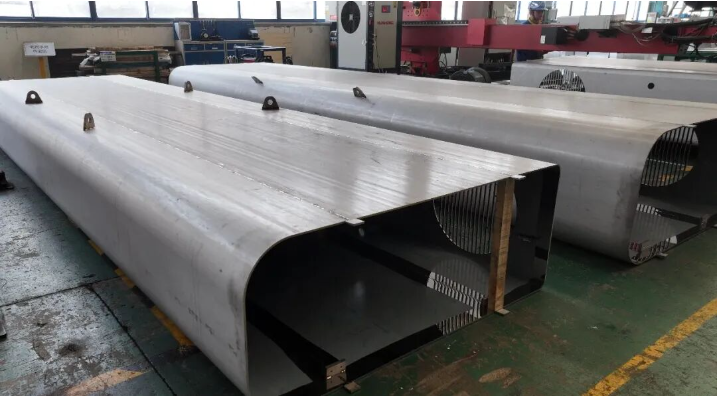
A mirror-finish stainless enclosure integrating rolling, bending, welding and continuous machining.
The enclosure integrates rolling, bending, welding and continuous machining in one production flow. Controlled handling is what reduces surface scratches, circular-opening distortion and overall dimensional deviation. In other words, the handling and fixturing plan is a process control, not an afterthought added at packing.
These enclosures are intended for semiconductor and electronics manufacturing, high-end laboratory and research facilities, and pharmaceutical and biotechnology environments, and are applied in lithium battery coating and drying equipment, roll-to-roll process lines and other custom industrial equipment. Buyers in these sectors should expect to state, at enquiry stage, which surfaces are appearance-critical, which are product-contact, and what documentation is required to demonstrate that the specified finish was achieved.
Precision After Welding: Where Stainless Work Gets Measured
Stainless fabrication only becomes a precision business after the weld has cooled. Three open-capability examples show the range of what is measurable.
| Component | Published capability | Why it matters to the buyer |
|---|---|---|
| Tube Sheet (Customized-J-01) | Diameter up to 10,000 mm, thickness up to 600 mm, drilling depth up to 1,000 mm, drilling precision ±0.05 mm; CMM measurement plus UT, PT, MT and PMI inspection | Tube hole accuracy governs tube-to-tubesheet welding quality in heat exchangers and pressure vessels |
| Large industrial weldment (Custom-L-5) | Envelope up to 6,000 × 3,000 × 2,500 mm, plate thickness 20–80 mm, finished mass 15–40 t, general machined tolerance ±0.20 mm, datum-pad flatness ≤0.15 mm per 1,000 mm; SS304 or SS316L when specified | Datums, not overall dimensions, decide whether an assembly can be set up on the customer's line |
| Large box vacuum chamber (Custom-L-9) | Internal size 2,000 × 1,500 × 1,500 mm, nominal wall 12 mm with external stiffeners, design vacuum ≤1 × 10⁻⁵ mbar, helium leak rate ≤1 × 10⁻⁸ mbar·L/s after final testing; SS304L with aluminium 6061-T6 for door or access components | On vacuum and high-purity work, the acceptance test is a leak rate, not a dimensional report |
A note on reference configurations: dimensions such as those above describe typical reference cases. Actual envelope, wall thickness, stiffener design and acceptance criteria depend on the customer's drawing, load case and datum scheme, and should be confirmed against the project specification.
Where Stainless Steel Fabrication Is Applied
Stainless fabrication demand concentrates where corrosion, cleanliness or temperature resistance cannot be solved by coating a carbon steel part. Openex supplies fabricated and machined components into energy storage systems, power plants, machinery, building, mining, oil and gas, and nuclear applications, and has delivered pressure vessels, machine frames, steel chassis and steel structures to the USA, Canada, Japan, the UK, European countries and Australia.
- Petrochemical, oil and gas. A regenerator with an overall length of 42 m and a diameter of 3,600 mm, fabricated from Q245R + S31603 composite plates, was produced for petrochemical service under ASME-certified fabrication. Storage containers with a diameter of 4,500 mm use Q345R + 31603 composite plates. Heat exchanger cores cover spiral wound, double tube sheet, U-tube, high-pressure heater and printed circuit configurations.
- Power generation, water treatment and offshore. Pipeline prefabrication is carried out in carbon steel, stainless steel, duplex and corrosion-resistant alloys under ASME-certified fabrication, with NDT covering RT, UT, MT and PT, for oil and gas, power generation, municipal and water treatment, petrochemical and offshore scopes.
- Semiconductor, laboratory and pharmaceutical. Mirror-finish welded enclosures in 304/304L for roll-to-roll process lines, coating and drying equipment.
- Industrial equipment and textile. Welded SUS316L housings and sheet metal assemblies with strict internal geometry.
- Energy storage and renewables. Steel frames, shelves and boxes for battery energy storage cabinets and systems, wind turbine parts, and solar panel supports fabricated to drawing.
How to Evaluate a Stainless Steel Fabricator: A Buyer's Checklist
| Evaluation dimension | What to ask | What it reveals |
|---|---|---|
| In-house process coverage | Which operations are performed in-house and which are outsourced? Openex performs most cutting, bending, machining, welding, drilling, punching, stamping, assembly and packaging in-house; casting, forging, hot-dip galvanizing and powder coating come from partners | How many handovers exist between you and the finished part |
| Size and lifting envelope | Crane capacity, press-brake length and tonnage, CNC travel (Openex: crane above 250 t; press brake to 18 m and 10,000 t; CNC to 50 m × 8 m × 7 m) | Whether the fabricator physically can make the part, or must subcontract it |
| Post-weld machining | Is machining done after welding, and on which datum scheme? | Whether precision survives the welding operation |
| Inspection and documentation | CMM, UT, PT, MT, PMI, leak testing; visual inspection machines are used for 100 % checking of small, high-quantity parts | Whether quality claims can be evidenced rather than asserted |
| Drawing inputs | STEP, IGES, DWG, DXF and PDF are accepted; 2D drawings alone are usually sufficient, 2D plus 3D gives the fastest quotation, 3D alone generally cannot be quoted directly | How quickly a firm quotation can be issued |
| Order profile | Material traceability, welding procedure qualification, coating and corrosion protection, and third-party inspection are specified at the order stage | Whether the commercial terms match the technical requirement |
How This Compares With Conventional Sourcing Routes — and Where It Does Not Fit
Most stainless steel projects are sourced through one of three routes: a general job shop that fabricates both carbon and stainless steel, a large heavy fabricator with integrated machining, or a foundry or forging supplier that treats fabrication as a secondary activity. The route determines where risk accumulates.
A general job shop keeps overhead low but may not have the machining envelope for post-weld work, which pushes precision risk back onto the buyer's assembly line. A foundry or forging supplier is the correct choice when the part is cast or forged, but fabrication, welding and machining of a stainless assembly is outside its core process. An integrated fabricator with in-house welding and large-format machining removes one tolerance transfer from the chain, at the cost of a more structured quotation process.
The limits of the integrated-fabricator model should be stated plainly, because they affect sourcing decisions:
- Not a foundry. Openex produces 80 to 90 percent of exported metal parts, components and assemblies in-house; casting, forging, hot-dip galvanizing and powder coating are provided by long-term partners. A project requiring only casting, forging or anti-rust finishing is better placed with a supplier whose core process it is.
- Small parts in small quantities are not economical. Communication, engineering and setup effort are broadly the same regardless of order size, so large parts or components shipped in container-load quantities suit this model better than small components ordered in small volumes. Small-volume, small-part work is accepted only as a standby arrangement when no other supplier is suitable.
- Distortion cannot be designed out entirely. On thin-gauge stainless assemblies, the deliverable is a controlled procedure, tooling and straightening sequence — not a guarantee of zero movement.
- Special service conditions must be declared. High temperature, corrosive media and other non-standard conditions must be defined per project at the order stage; they cannot be inferred from a drawing.
- 3D-only drawings lengthen the process. Where no 2D drawing exists, one must be created and approved before a firm quotation can be issued.
Market Trend: Why Stainless Fabrication Is Shifting Toward Larger, Documented Work
Several durable trends are visible from the demand side rather than from market forecasts. Fabricated stainless components are increasingly specified as larger single pieces rather than as assemblies bolted together on site, which pushes dimensional responsibility onto the fabricator and increases the value of large machining envelopes. Requirements for inspection evidence — NDT records, material traceability, welding procedure qualification — are being written into orders earlier, particularly for energy, nuclear and pharmaceutical end uses. And buyers are consolidating fabrication and machining with one supplier to reduce the number of tolerance transfers between vendors.
The geographical pattern reinforces this. Metal fabrication supply for European, North American, Japanese, Singaporean, South American and Middle Eastern buyers continues to rely on export-capable manufacturing bases with port access; for Openex, export business accounts for 80 percent of total sales, and both manufacturing premises sit within easy reach of major container ports. Proximity of fabrication to port logistics is, in practice, a schedule-risk control rather than a cost detail.
Future Outlook
The direction of stainless steel fabrication is toward verifiable process control rather than raw capacity. Three developments are likely to shape purchasing decisions over the next few years. First, simulation and digital forming work — used to control springback, residual stress and dimensional deviation on long formed sections — will increasingly be requested as evidence for distortion-critical stainless assemblies. Second, automated inspection will expand beyond small, high-volume parts, where visual inspection machines already provide 100 % checking, into larger welded assemblies. Third, the line between fabricator and machine shop will continue to blur: buyers will shortlist suppliers by asking not what can be welded, but what can be welded and then machined to datum within the same contract.
For buyers still at the research stage, the practical conclusion is that stainless steel fabrication should be evaluated on four questions: which grade and surface condition the service truly requires, how weld distortion will be controlled and evidenced, what post-weld machining and inspection the fabricator can perform in-house, and where the supplier's process genuinely ends. Getting those four answers early is usually cheaper than discovering them during first-article inspection.
FAQ
What metal materials can be fabricated for a project?
Fabrication is not limited to steel; brass, bronze and aluminium can also be processed, although carbon steel and stainless steel are the most common materials in fabrication projects. Within carbon steel, Q235B (A36, SS400, S235JR) and Q355B (A572 Gr50, S355JR) are the most frequently seen grade families, with Q690, NM450 and NM500 also handled. In stainless steel, SUS304 and SUS316L are the two most common grades. Where special grades of casting or forging are required, these are supplied through long-term partner facilities.
Is the supplier a manufacturer or a trading company?
Openex is a metal fabricator with two manufacturing premises, one near Xiamen Port and one near Shanghai Port. It produces 80 to 90 percent of the metal parts, components and assemblies it exports from China, with the balance sourced from partner companies. In-house procedures include laser cutting, bending, machining, welding, drilling, punching, stamping, assembly and packaging. Casting, forging, hot-dip galvanizing, powder coating and some other anti-rust finishes are carried out by partners.
What drawing formats are accepted, and which are fastest to quote?
STEP, IGES, DWG, DXF, PDF and other 2D and 3D formats are accepted. For simple parts, a 2D drawing alone is usually sufficient. Supplying 2D and 3D drawings together allows the fastest quotation. A 3D drawing alone generally cannot be quoted directly, because tolerance information, welding requirements, surface roughness and chamfer details, cutting direction relative to the rolling direction, plate bending radii, material requirements, heat treatment and stress-relief methods, and finish requirements such as hot-dip galvanizing, sand blasting/painting and powder coating are normally carried on the 2D drawing. In some cases both are required.
Is there a minimum order quantity, and can samples be ordered first?
There is no single fixed minimum order quantity. The commercial profile is driven by container utilisation, since full container loading costs less in freight than less-than-container loading, by overhead absorption, which falls as quantity rises, by material purchasing power at higher volumes, and by the efficiency gains of repeat ordering. Large parts and components ordered in container-load quantities are the most suitable profile. Small parts in small quantities involve communication, engineering and setup effort that is largely independent of order size, so the cost per piece is proportionally higher.
A technical capability brochure covering Openex fabrication and machining scope, equipment capability and product families is available for download: Openex Mechanical Capability Brochure (PDF). Company information: www.cncmetalworking.com.