
Stainless Steel Fasteners: How to Evaluate a High-Performance Spec
Fastener selection becomes a compliance issue before it becomes a torque calculation. For stainless steel fasteners used in energy, transport, marine, and process industries, the real value is not only corrosion resistance; it is whether the material grade, mechanical property class, dimensional standard, and certification evidence can be verified.
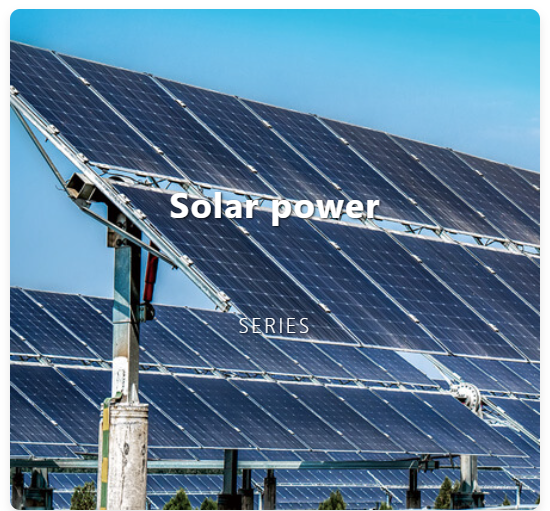
High-performance stainless steel fasteners are frequently specified in renewable energy, rail, marine, and industrial equipment projects.
Why High-Performance Fasteners Need a Separate Review Process
Projects often start with fastener size, quantity, and delivery date. The missing step is an assessment of the working environment. High-performance fasteners usually exist because the operating conditions can defeat an ordinary fastener: seawater, acid or alkali exposure, high temperature, vibration, and high tensile load.
This does not mean every project should use a premium alloy. In dry, indoor, low-corrosion applications, 304 or 316 stainless steel is often sufficient. The procurement challenge is to make the distinction before failure, not after it.
A practical selection rule is widely used by fastener suppliers: for general indoor environments, 304 or 316 stainless steel is preferred; for high-corrosion, offshore, or marine environments, 316L, duplex steel, or high-temperature alloy materials are recommended; for high-strength mechanical load scenarios, alloy steel fasteners should be considered. Using ordinary carbon steel or 304 stainless steel in salt spray, marine, strong corrosive, or high-temperature working conditions is a known risk.
What High-Performance Means in a Stainless Steel Fastener Specification
High-performance is not a legal term; it is an engineering shorthand. For stainless steel fasteners, it usually refers to a combination of six verifiable attributes: material grade, mechanical property class, dimensional standard, thread tolerance, surface treatment, and certification status.
Material options
- 304/316 stainless steel for general and mildly corrosive service.
- Duplex and super duplex stainless steel such as UNS S32205 and UNS S32750/2507 for higher strength and better resistance to chloride stress corrosion.
- Nickel-based high-temperature alloys, including Inconel, Hastelloy, 2.4952, 2.4668, Alloy 80A, and Alloy 718, for high-temperature and aggressive chemical environments.
- Aluminum alloys 6061 and 7075 for rivets where lower weight is important.
Product range and specification data
The table below summarises the dimensional ranges and property classes available for UHC stainless steel and special-material fasteners.
| Product family | Dimension range | Property class examples | Applicable standards |
|---|---|---|---|
| Bolts | M2-M160; length 6-300 mm | A2-70, A2-80, A4-70, A4-80, D6-80, D6-100 | ISO, DIN, ASTM, ASME, ANSI, JIS |
| Nuts | M2-M64 | A2-70, A2-80, A4-70, A4-80, D6-80, D6-100 | ISO, DIN, ASTM, ASME, ANSI, JIS |
| Screws | M2-M8; length 6-100 mm | A2-50, A2-70, A4-50, A4-70 | ISO, DIN, ASTM, ASME, ANSI, JIS |
| Threaded rods and studs | M5-M160; length up to 5000 mm | A2-50, A2-70, A4-50, A4-70, D6-80, D6-70 | ISO, DIN, ASTM, ASME, ANSI, JIS |
| Rivets and rivet nuts | M3-M6.4 | 304/316 stainless steel; 6061/7075 aluminum alloy | ISO, DIN, ASME, ANSI, JIS |
| Washers | M2.5-M45 | 304/316, UNS S32205, nickel-based alloys | ISO, DIN, ASTM, ASME, ANSI, JIS |
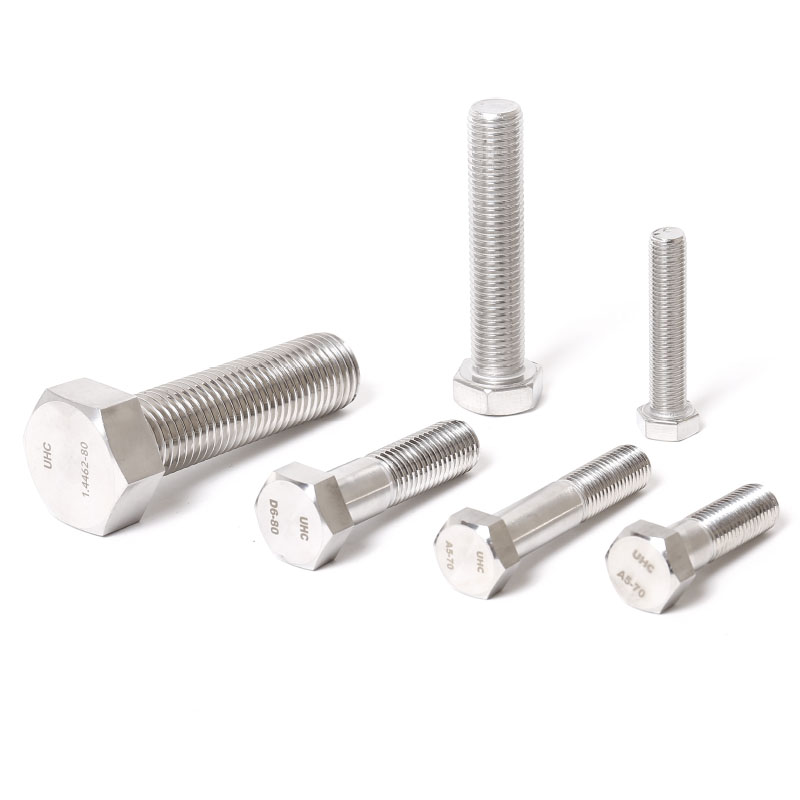
Bolts are available in sizes from M2 to M160 under multiple international standards.
Thread tolerances are also specified: bolts and studs use 6g/2A precision thread, while nuts use 6H/2B/3B precision thread. Surface treatments such as natural finish, passivation, Dacromet coating, and adhesive pre-coating are available depending on the product type.
For buyers, the practical value of these details is comparability. A product that is described only as 'stainless steel bolt' is not fully specified. A bolt with material grade, property class, standard, and thread tolerance gives an engineer a basis for design review and inspection.
How UHC Group Supports Verified Fastener Supply
The UHC fastener and hardware brand is operated by Jiaxing Union Hardware Co., Ltd., a stainless steel fastener and hardware manufacturer based in Jiaxing, Zhejiang, China. The company was founded in 2017. UHC Group supplies stainless steel fasteners in 304/316, A2-70, and A4-80 grades, high-temperature alloy fasteners such as Inconel and Hastelloy, titanium alloy and aluminum alloy fasteners, solar PV mounting components, and custom industrial hardware parts.
UHC Group operates five production bases focused on washers, bolts and nuts, screws, studs and rivets, and hardware. The corporate profile reports approximately 200 employees and 25 engineers across the five factories, a total factory area of 80,000 square meters, and an annual output of about 25,000 tons of stainless and special materials. Around 80 percent of products are exported, with main markets in the EU, Korea, and Japan. The hardware production base primarily serves high-end industries such as solar, wind, nuclear, railway, and aerospace.
Quality control is supported by an independent laboratory that performs dimensional and mechanical performance tests. The company holds ISO 9001, ISO 14001, ISO 45001, and EU PED certification. The ISO certifications are issued by WIT with certificate numbers 15/25Q1448R00, 15/25E1449R00, and 15/25S1450R00. The ISO 14001 scope covers environmental management related to sales of metal fasteners; the ISO 45001 scope covers occupational health and safety management related to sales of metal fasteners; ISO 9001 scope covers sales of metal fasteners.
UHC states that it uses an ERP system to manage production, sales, and management processes from raw material procurement to finished product delivery. After-sales support includes 3.1 material test certificates, quality problem handling, and batch quality tracing.
For OEM and ODM work, UHC supports customisation such as head mark or logo. The published production capacity is 500-1000 tons per month, with a typical lead time of 75-90 days and a minimum order quantity of 150 kg. Quality control includes first article inspection, in-process inspection, and pre-shipment inspection.
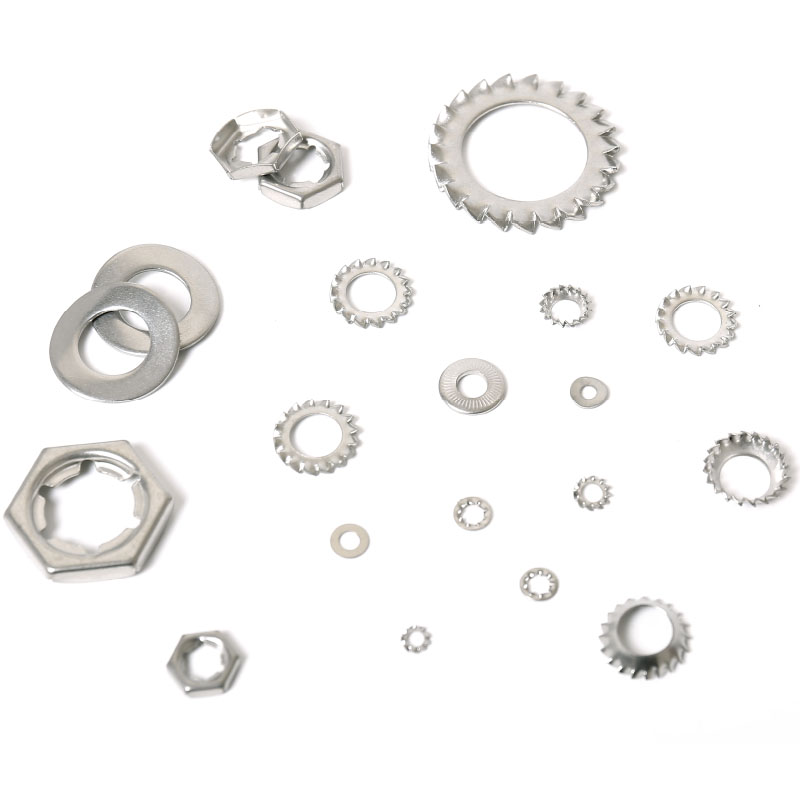
Washers in stainless steel, duplex, and nickel-based alloys cover sizes from M2.5 to M45.
Where High-Performance Fasteners Are Applied
UHC's application data covers petrochemical, power generation, aerospace, automotive, marine and offshore, construction and infrastructure, industrial machinery, medical and electronics, telecommunications, rail transit, and home appliances and consumer goods. The typical working conditions include normal temperature, high temperature, seawater corrosion, acid and alkali corrosive environments, high vibration, and high tensile loads.
The table below shows how application requirements translate into fastener choices.
| Application area | Typical requirement | Fastener types to evaluate |
|---|---|---|
| Marine and offshore | Seawater corrosion resistance | A4/A4-80 stainless steel, duplex UNS S32205, washers, rivets |
| Energy and power generation, including nuclear | High tensile strength, high-temperature resistance | Bolts, studs, nuts in nickel-based alloys; heavy washers |
| Renewables, including solar and wind | Connection reliability under outdoor exposure | Solar PV mounting clamps and brackets, high-strength bolts, washers |
| Rail transit | Fatigue resistance and vibration control | High tensile bolts, nuts, rivets |
| Aerospace | Weight control, traceability, high performance | Titanium and aluminum alloy fasteners, rivets, high-temperature alloy fasteners |
| Automotive | Anti-corrosion and assembly consistency | Stainless steel screws, nuts, custom hardware |
| Construction and infrastructure | Structural preloading and durability | High tensile structural fasteners, heavy bolts |
In these environments, the function of the fastener is to realize mechanical connection, fastening, locking, anti-loosening, and fixed assembly between components. The assembly is typically static and permanent, and the connected parts remain under continuous mechanical load.
Market Signals Behind the Demand for Certified Fasteners
Third-party market data helps explain why fastener specification is becoming more rigorous. The global industrial fasteners market was valued at USD 103.9 billion in 2025 and is projected to reach USD 153.7 billion by 2033, according to Grand View Research. The same source reports that metal fasteners held 91.0 percent of market revenue in 2025, while externally threaded fasteners, including bolts and screws, accounted for 48.1 percent. Asia Pacific contributed 45.1 percent of global revenue in 2025.
Specialised segments are expanding as well. The aerospace superalloy fasteners market was valued at USD 776.7 million in 2024, according to Fortune Business Insights. Titanium aerospace fasteners are projected to grow to USD 520 million by 2026 at a CAGR of 5.1 percent, according to Fact.MR. The wind power fastener market is projected to reach USD 14.68 billion in 2025, according to The Insight Partners, and global wind capacity is projected to grow from about 1,100 GW in 2025 to over 2,400 GW by 2030, according to GWEC.
Regulatory standards reinforce the same trend. In the EU, fasteners for pressure equipment must comply with PED 2014/68/EU. ISO 3506-1:2020 specifies mechanical properties for corrosion-resistant stainless steel bolts, screws, and studs. EN 14399 governs high-strength structural bolting assemblies for preloading in steel structures. Aerospace fasteners must meet AS9100 quality management requirements. These frameworks move fastener selection beyond price and into documented compliance.
Traditional Plated Fasteners vs High-Performance Stainless and Special Alloys
Traditional carbon steel fasteners with protective coatings still play a role in industrial supply. In dry, low-corrosion, indoor applications with moderate loads, plated carbon steel can be the rational, lower-cost choice. The main limitation is that the coating is the protective layer; once it is scratched or damaged, corrosion can start and propagate.
High-performance stainless steel and special alloys address the problem differently by making the base material itself resistant to corrosion. That is why they are preferred in marine, chemical, high-temperature, and high-vibration applications.
High-performance fasteners have their own boundary conditions. They are not a universal upgrade. The material grade must match the actual temperature, corrosive medium, humidity, load, and assembly method. For a salt-spray marine environment, 316L or duplex steel is commonly recommended. For a high-temperature chemical environment, a nickel-based alloy may be required. Specifying a higher alloy than the environment demands increases cost without increasing value.
What Buyers Should Check in a High-Performance Fastener Quotation
A quotation for high-performance fasteners should be assessed as a technical document, not only as a price list. The following items are useful review criteria:
- Material grade and relevant material standard.
- Mechanical property class, such as A2-70, A4-80, or D6-80.
- Dimensional standard, such as ISO, DIN, ASTM, ASME, ANSI, or JIS.
- Thread tolerance class for bolts, studs, and nuts.
- Surface treatment and its purpose, such as passivation or Dacromet coating.
- Certification evidence, including certificate numbers and scope.
- Material test certificate, such as a 3.1 certificate, and batch traceability.
These criteria reduce dependence on marketing claims and create a common language between buyer, engineer, and supplier.
Future Outlook
Fastener procurement is moving toward specification transparency. Buyers are more likely to ask what standard a product meets, what material grade is used, what test was performed, and what documentation will accompany the shipment. Suppliers with in-house testing, ERP traceability, and clearly stated certification data are better positioned for this environment.
For manufacturers such as UHC Group, the development path is not only about increasing output. It is about making each batch verifiable, from raw material to finished product, and supplying fasteners that can be evaluated by the same criteria across different projects and markets.
Reference Material
UHC Group publishes a company and product brochure covering production bases, product families, certifications, and service capabilities. The document is available for public reference: UHC Group product brochure (PDF).
FAQ
How should fastener material be selected for different working conditions?
For general indoor environments, 304/316 stainless steel is preferred. For high-corrosion, offshore, or marine environments, 316L, duplex steel, or high-temperature alloy materials are recommended. For high-strength mechanical load scenarios, alloy steel fasteners should be adopted. Material selection should be based on working-condition parameters such as temperature, medium, humidity, and load.
What material fits marine salt-spray environments?
316L or duplex steel is strongly recommended for marine and coastal salt-spray working conditions. The choice between them depends on the expected chloride concentration, temperature, and mechanical loading.
What international standards do UHC stainless steel fasteners meet?
UHC stainless steel fasteners are manufactured to ISO, DIN, ASTM, ASME, ANSI, and JIS standards. Dimensional ranges vary by product: bolts from M2 to M160, nuts from M2 to M64, screws from M2 to M8, threaded rods and studs from M5 to M160, rivets from M3 to M6.4, and washers from M2.5 to M45.
What certifications does UHC Group hold for metal fasteners?
UHC Group holds ISO 9001, ISO 14001, and ISO 45001 certifications issued by WIT, with certificate numbers 15/25Q1448R00, 15/25E1449R00, and 15/25S1450R00 respectively. The company also reports EU PED certification in its corporate profile.