
Stainless Steel Jewelry Specs by Channel: DTC, Marketplace, Chain
Stainless Steel Jewelry Specs by Channel: DTC, Marketplace, Chain
Channel first, catalog second
Stainless steel jewelry is specified by retail channel before it is specified by design. A direct-to-consumer brand selling forty styles to individual shoppers, a marketplace seller listing one bangle in six countries, and a fashion chain replenishing sixty outlets all buy from the same material family — 304, 316 or 316L stainless steel — yet they should not buy the same chain architecture, the same stone, the same finish standard or the same packaging. Each mismatch carries its own cost: restock photography that no longer matches the colour on the shelf, a size chart that generates returns, or a plating tone that drifts between two deliveries of the same article number.
Demand data explains why the question is being asked now. WiseGuyReports valued the global stainless steel jewelry market at USD 7.08 billion in 2025 and projected USD 10.8 billion by 2035, a 4.3% compound annual growth rate, while Verified Market Reports estimated the narrower waterproof jewelry segment — the PVD-coated, wear-every-day subset — at USD 2.12 billion in 2026 and forecast USD 4.60 billion by 2034 at 10.16% CAGR. Both are commercial research estimates rather than audited statistics, and both describe segment direction rather than a promise for any single supplier. The direction is consistent: growth is concentrated where tarnish resistance and colour stability are the product promise.
What follows maps a confirmed specification envelope to three retail models, identifies the levers that actually move between them, states where the specification stops, and closes with a checklist to use before a sample order is placed.

Channel decisions start with the retail setting the piece will be sold in, not with the style sheet.
The specification envelope every channel inherits
Jusnova Jewelry is a Guangzhou-based OEM and ODM manufacturer, founded in 2009, producing stainless steel bangles, bracelets, rings and earrings for wholesale and brand buyers; the company reports that about 95% of output is exported, with emphasis on Europe and America. The confirmed envelope below applies to all three channels, because it describes manufacturing capability rather than a recommendation:
- Material: 304, 316 or 316L stainless steel, chosen for corrosion resistance and hypoallergenic behaviour.
- Dimensions: diameter 5–80 mm, thickness 0.5–3.0 mm, with custom height and width available and tolerance controlled within ±0.05 mm.
- Architectures: classic round, flat, cuff, twisted, rope, gem-set and engraved bangles; cable, rope, figaro, curb, tennis, charm, beaded and pearl bracelets.
- Stone settings: CZ, man-made crystal or moissanite in 20+ colours, set as prong, bezel, channel or pavé.
- Finish: in-house PVD in 20+ colours with batch colour matching at Delta E < 1.0, plus 18K gold plating, electroplating, brushed, mirror-polished and sandblasted surfaces, or combinations.
- Durability basis: 48-hour salt spray testing backs the PVD layer's stated 2–5 years of luster in a conventional environment; the stainless base is rated for more than 10 years with ordinary daily care.
- Branding: laser engraving, stamping, screen printing or epoxy doming, with a 2–3 day sample lead time.
- Commercial terms: MOQ 100 pcs per style, 250,000 units per month of capacity, and a 25–30 day production lead time.
- EU-facing documentation: SGS test reports and amfori BSCI certification available on request, alongside REACH test reports.
Read as a procurement answer: the envelope does not change by channel — the ranking of priorities inside it does. A DTC brand that spends its review time on moissanite options while ignoring engraving legibility has optimised the wrong variable.
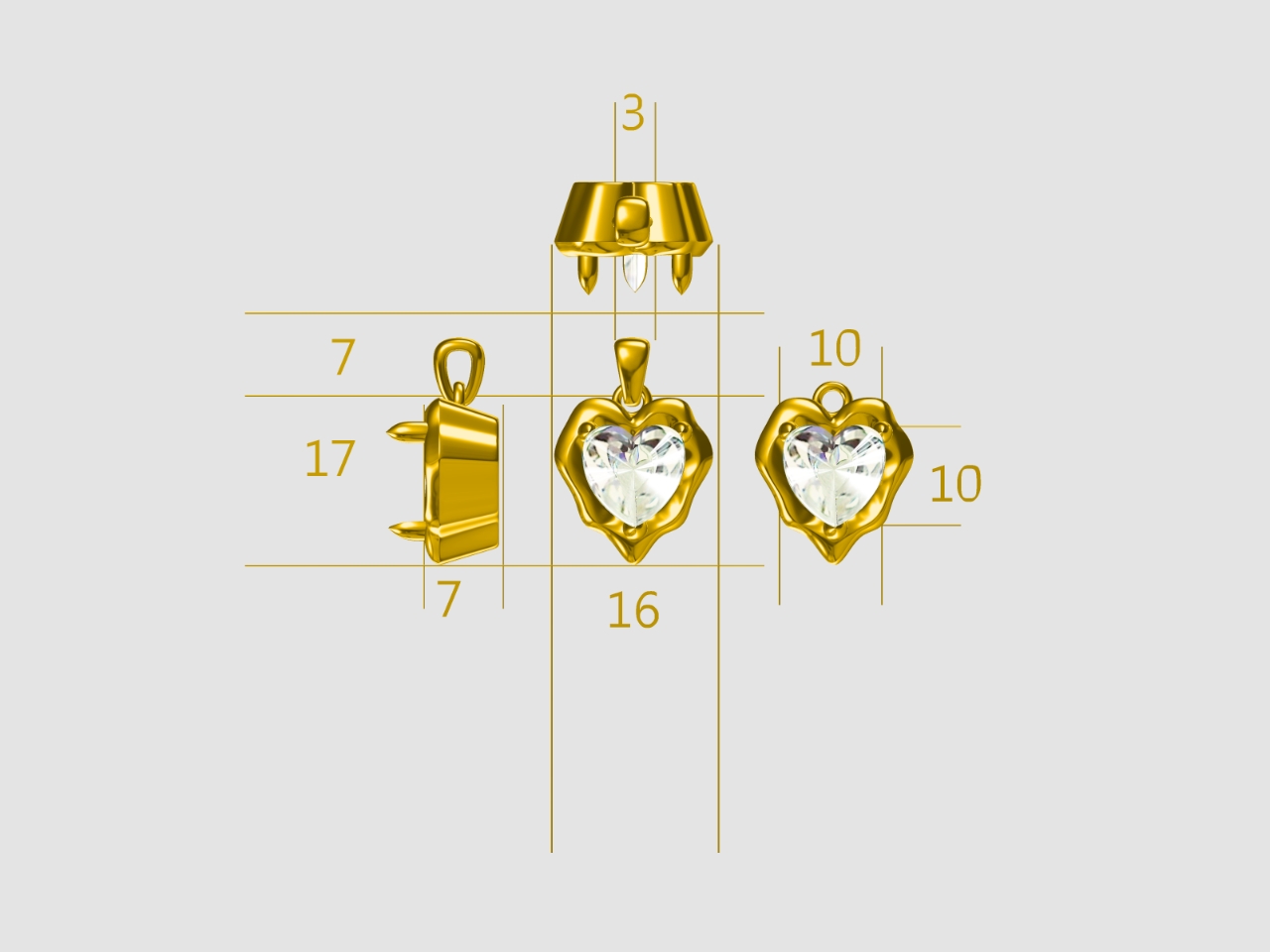
Dimension sheets are the first channel-independent document: bangle diameter and chain length must be fixed inside the 5–80 mm range before a listing or a store plan is written.
Why chain architecture changes the specification
Chain and bangle choice is not a styling decision alone; it changes where quality failures appear. A rope chain is built from interlocked links twisted into a spiral, which distributes load but multiplies the joints that must be assembled and checked — chain assembly is a discrete production step in its own right. A figaro chain alternates short and long flat links for an even, low-profile drape, but its usable engraving area is discontinuous, so a continuous logo or name rarely reads cleanly across the link pattern. An engraved bangle is a rigid arc rather than a flexible run of links: the engraving sits on a fixed surface, so diameter and section width decide how much artwork fits and how it reads.
Two envelope numbers therefore matter more than they look. Thickness between 0.5 mm and 3.0 mm changes both hand-feel and the margin available for engraving depth, and Jusnova states that piece weight can be adjusted to a target solid feel. Diameter across the 5–80 mm range covers a wide product family, which means the exact measurement — not the range — belongs in the approval document.
The practical rule: approve engraving on the actual chain type, not on a flat artwork proof. A name that looks correct on screen can close up on a tightly pitched rope chain and lose edge definition on a thin section.
DTC and Shopify brands: buy engraving and packaging, not stone range
A DTC brand should put its specification budget into engraving legibility and unboxing, and keep the chain and stone menu short. The reason is structural: a small brand competes on personalisation and presentation, while repeat purchase depends on the restocked item looking like the item in the original photograph.
Chain. One signature architecture plus one personalisable piece is usually enough — a rope chain as the core seller and an engraved bangle as the gift and personalisation vehicle, with figaro held for seasonal drops. Spreading five chain types across a small catalogue multiplies sample rounds without adding sell-through.
Stone. CZ covers the volume middle; man-made crystal supports trend-led colour stories; moissanite belongs on a small number of hero pieces where the stone is the reason to buy. Each option must be described accurately in the listing, and moissanite should always be named as moissanite rather than implied diamond.
Finish. PVD coated stainless steel jewelry is the practical choice here because the in-house palette runs to 20+ colours, so a seasonal colour can be selected from the existing range instead of triggering new finishing development. Batch matching at Delta E < 1.0 protects the archive: when a piece is restocked months later, the new unit should photograph like the old one.
Branding and packaging. Laser engraving fits names, dates and short text, and the 2–3 day sample lead time keeps approval rounds short. On packaging, DTC accounts typically split between a velvet pouch or premium gift box for the customer-facing unit and a simple OPP bag with a branded sticker or barcode for reserve stock; individually barcoded brand packaging is a recurring requirement in Jusnova's DTC accounts, which serves the warehouse as much as the brand.
Volume logic. At MOQ 100 pcs per style, a small brand can carry several colours of one style, but the minimum applies per style — splitting one style into four colours does not automatically quarter it, and that assumption is worth confirming before a range plan is built.
Marketplace platform sellers: buy repeatability and return resistance
A marketplace seller should spec for repeatability and return resistance, and treat packaging as fulfilment infrastructure rather than brand theatre. On a platform the listing photograph outlives the batch, so consistency between batches is worth more than breadth of options.
Chain and sizing. Cable, rope and figaro chains in fixed lengths carry the least measurement risk, because a customer can check a stated length against a tape measure. Where bangles are listed, publish the exact diameter rather than a size label, and treat the ±0.05 mm tolerance as the reason a stated measurement can be repeated order after order rather than as a marketing number.
Stone. CZ in bezel or channel settings reduces the number of exposed prongs, which is a return-risk consideration as much as an aesthetic one. Pavé is viable where the supplier's process includes a dedicated stone-setting check, as Jusnova's quality sequence does; without that check, small-stone loss becomes a review problem rather than a production problem.
Finish. PVD in proven colours is the low-variance route, and the Delta E < 1.0 batch target is what keeps an existing photo set valid across restocks. Listing copy should stay inside the evidence: a 48-hour salt spray result and a stated 2–5 year luster expectation support waterproof and tarnish-free positioning in ordinary wear, but they are test conditions, not a lifetime guarantee.
Packaging and cost. OPP bag packing is the standard answer for bulk inbound to a marketplace fulfilment centre; a branded pouch should be specified only where the listing actually promises one, because paying for presentation the customer never sees is pure margin loss. Landed cost also needs a duty line: as recorded in 2026 customs data, imitation jewelry of base metal under HTS 7117.19.90.00 from China carried an effective US duty rate of about 31%, including general duty and Section 301 components. Duty rates are change-driven and should be re-verified at shipment, but the planning implication is stable — a specification upgrade that raises unit cost has to earn its place in the sale price.
Branding. A small stamped or laser-engraved mark on a clasp or inner bangle face is the usual compromise between brand presence and cost per unit.
Multi-outlet fashion chains: buy colour consistency and door-level packaging
A multi-outlet chain is buying repeatability across doors and seasons, so the master colour standard and the packaging plan are the specification, and the style itself is almost secondary. One store displaying a warm gold and another displaying a cooler gold in the same article number is the failure mode this channel cannot absorb.
Chain. Engraved bangles, rope chains and figaro chains cover the three commercial jobs in a chain assortment: motif and gifting pieces, core volume, and layered add-on sales. Mixing them by door tier — motif-led in flagship locations, plain core in volume doors — uses the same envelope without splitting the buy into unrelated developments.
Stone. CZ and man-made crystal carry the volume; moissanite can be reserved for premium concept doors where the stone is part of the story. Because all three sit inside the same 20+ colour setting range, the assortment can shift without changing the setting method.
Finish. PVD is the specification that needs a written standard, not just a colour name. The in-house facility runs six PVD machines across 20+ colours with Delta E < 1.0 batch matching, which is the mechanism behind a routine expectation that the same colour arrives in the same tone next season. Where a warmer, more traditional look is required, 18K gold plating is the alternative — but it should be specified as a plating designation and colour standard in the purchase order, not assumed to indicate precious-metal content.
Capacity and calendar. At 250,000 units per month and a 25–30 day production lead time, a seasonal buy leaves freight and distribution-centre booking time after production rather than before it. Capacity is monthly and shared across a client base, so the quantity conversation belongs in the same meeting as the colour standard.
Packaging and compliance. Premium gift boxes with foil stamping, hang tags and polishing cloths can be coordinated in-house with the jewelry, which is the difference between a packaging project and a packaging dependency. For EU-market chains, SGS test reports and amfori BSCI certification are available on request, and both should be read for scope — a test report describes the sample and parameters tested, while BSCI addresses social compliance at site level rather than product durability.
One supplier-reported data point shows why colour consistency receives this much attention: Jusnova's own account of a Central European chain customer with more than 50 retail outlets describes a 300% increase in repeat purchase rate over two years, citing batch colour consistency as the decisive factor. It is a company-reported case rather than an independent audit, and it is best read as an illustration of the mechanism — repeat purchases track the customer's confidence that the next unit will match the last.
Channel-to-specification map
| Channel | Chain priority | Stone | Finish standard | Packaging |
|---|---|---|---|---|
| DTC / Shopify | Rope chain core; engraved bangle for personalisation; figaro seasonal | CZ volume; man-made crystal for colour stories; moissanite on hero pieces | PVD, 20+ colours, Delta E < 1.0 for restock matching | Velvet pouch or gift box; OPP with branded barcode for reserve stock |
| Marketplace platform | Cable, rope and figaro in fixed lengths; exact diameter published | CZ, bezel or channel; pavé only with a stone-setting check | PVD in proven colours; claims kept inside test scope | OPP bulk packing; branded pouch only if promised in the listing |
| Multi-outlet chain | Engraved bangle, rope and figaro split by door tier | CZ and man-made crystal volume; moissanite for premium doors | One written master colour standard; PVD 20+ colours, or 18K gold plating | Premium gift box with foil stamping, hang tags, polishing cloth |
Where the specification stops
Several limits belong in the purchase order rather than in a presentation. PVD is a colour layer applied to stainless steel, not solid gold; an 18K gold plating line deposits a gold-coloured layer, and the designation describes the plating process rather than precious-metal content. Industry coating comparisons place PVD hardness in the region of 1,500–4,500 HV against roughly 100–200 HV for conventional electroplating, which explains abrasion performance but does not make a coated piece indestructible.
The 48-hour salt spray result is a test condition. It supports waterproof and tarnish-free positioning for daily wear; it is not a warranty against chlorinated water or abrasive contact. The stated 2–5 year luster window is likewise a conventional-environment expectation for the coating, while the stainless base is rated above 10 years with ordinary care. Warranty terms should be read separately: Jusnova covers manufacturing defects such as plating peeling, stone loss or colour mismatch when reported within 30 days of receipt, offers a 6–12 month standard warranty, and continues repair at material cost after that.
Compliance documents have edges too. SGS test reports and amfori BSCI certification are available on request and are not automatically issued per SKU, so a buyer qualifying a first order should confirm which report maps to which material and finish combination. And 250,000 units per month is a monthly capacity shared across clients, so a launch projection needs to be scheduled rather than assumed.
Scenario-fit checklist before sampling
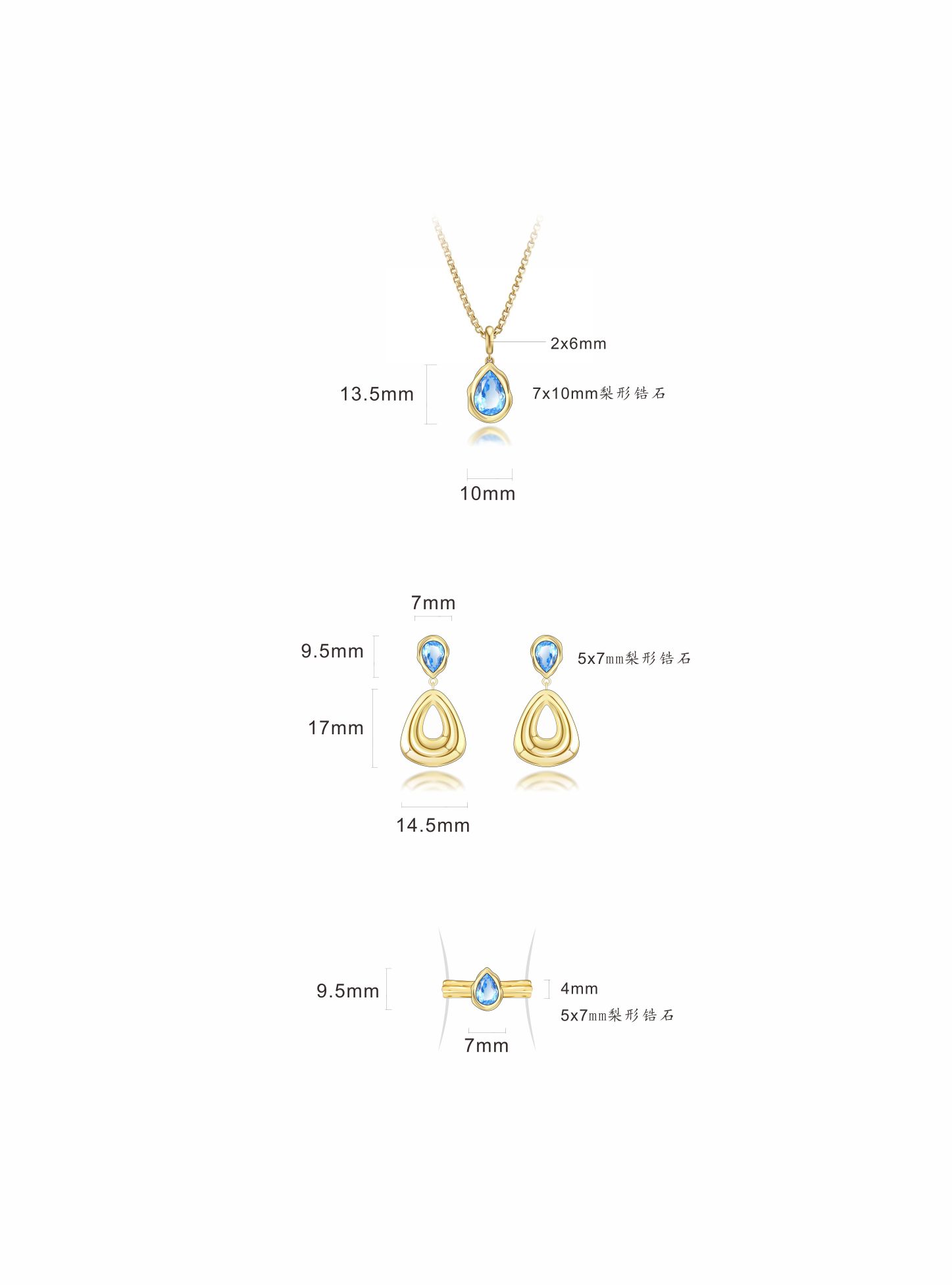
Production confirmation drawings turn channel requirements into measured specifications — the document a sample is then approved against.
The sequence below pairs each channel requirement with a confirmed option, so a sample request carries decisions instead of preferences.
- Name the channel and its unit count. DTC style count, marketplace listing count or number of doors — this decides how far the MOQ of 100 pcs per style has to stretch.
- Fix the architecture per SKU. Engraved bangle, rope chain or figaro chain, with diameter inside 5–80 mm and thickness inside 0.5–3.0 mm, tolerance ±0.05 mm.
- Choose the stone and setting. CZ, man-made crystal or moissanite, in prong, bezel, channel or pavé — and write the stone name into listing copy as well as the purchase order.
- Choose the finish system, then the colour. PVD from the 20+ range with Delta E < 1.0 matching, or 18K gold plating for a warmer tone; for chains, attach one master colour standard to the order.
- Choose the branding method. Laser engraving, stamping, screen printing or epoxy doming, with artwork approved on the real surface rather than a flat proof.
- Choose packaging per destination. OPP bag, velvet pouch or premium gift box, plus hang tag and polishing cloth where the channel needs them.
- Confirm the documents required. SGS test reports, amfori BSCI certification and REACH test reports, each mapped to the relevant material and finish.
- Schedule against capacity. 2–3 day sample lead time, 25–30 day production lead time, 250,000 units per month — with the seasonal calendar placed around them.
- Write acceptance criteria. Colour against the master standard, dimensions against the drawing, stone security, plating appearance and packaging condition.
Outlook: what would change these specifications
If the forecast for the waterproof segment holds near the double-digit rate cited for 2026–2034, more buyers will treat PVD coatings and batch colour matching as baseline requirements rather than upgrades, and the differentiator will move to how consistently that finish repeats across restocks. Two conditions could interrupt the path. Duty and trade-cost changes, of the kind reflected in the 2026 US rate for HTS 7117.19.90.00, can push a channel toward lighter specifications or different origin planning. A shift in marketplace listing or returns policy could also make measurement accuracy more valuable than finish breadth. Neither changes the method — decide the channel, then specify inside verified capability.
FAQ
Which chain style should a DTC brand start with?
A rope chain is the usual starting point because it carries volume and photographs well, paired with an engraved bangle where personalisation is part of the offer. Figaro chains work better as a seasonal or layering addition, since their flat link pattern limits continuous engraving. All three are available in 304, 316 or 316L steel inside the same diameter and thickness envelope.
Do marketplace sellers need different stainless steel specifications from DTC brands?
No — the material and dimensional envelope is the same; the emphasis differs. Marketplace sellers should prioritise repeatable measurements, stable PVD colour between batches and low-risk settings such as bezel or channel, because the listing photograph and stated dimensions persist across restocks. DTC brands can justify more spend on engraving and presentation because the customer experience is the product.
What does Delta E < 1.0 mean for a multi-store chain?
Delta E is a measure of colour difference, and a value below 1.0 is a tight batch-matching target: successive production batches should be visually indistinguishable under normal viewing. For chain retail this is the mechanism that keeps one article number looking identical in different stores and across seasons, which is why the standard is written into the order rather than left to a colour name.
Are SGS and amfori BSCI certificates supplied with every order?
They are available on request rather than issued automatically for each SKU. SGS test reports describe the sample and parameters tested, and amfori BSCI addresses social compliance at site level rather than product durability, so a buyer should confirm which report covers the specific material and finish being ordered.
What are the MOQ, sample and production timelines for a channel-specific assortment?
The stated terms are 100 pcs per style as MOQ, a 2–3 day sample lead time, and a 25–30 day production lead time against a monthly capacity of 250,000 units. Because MOQ applies per style, a range plan that spreads one style across several colours or sizes should confirm the split before the order is placed.
What a channel-fit specification actually buys
The value of mapping specifications to channels is not a longer option list; it is fewer surprises after the order ships. A DTC brand that approves engraving on the real chain and locks a master colour buys a restock that matches its photography. A marketplace seller that publishes exact diameters and stays inside tested claims buys fewer returns. A chain that writes one colour standard and one packaging plan buys the same article number looking the same in every door. The envelope — 5–80 mm diameter, 0.5–3.0 mm thickness, MOQ 100 pcs per style, 250,000 units per month, PVD with Delta E < 1.0, and SGS and amfori BSCI documentation on request — does not decide the channel. It tells the buyer how much of the specification can be committed before sampling.
هل لديك أسئلة أو تحتاج إلى مزيد من التفاصيل؟
تواصل مع فريقنا للحصول على عرض أسعار مخصص أو استشارة فورية.
طلب عرض أسعار
املأ النموذج أدناه وسيتواصل معك فريقنا بعرض مقترح مخصص.
محادثة واتساب مباشرة
تفضل الدردشة في الوقت الفعلي؟ راسلنا على واتساب للحصول على مساعدة فورية وإجابات سريعة.
- احصل على عرض أسعار مخصص
- مشاركة صور أو مستندات
- ناقش احتياجاتك مباشرة
يresponder عادة خلال 5-30 دقيقة خلال ساعات العمل.