
Stainless Steel Jewelry: Certification Checks Before Sourcing
The global stainless steel jewelry segment continues to move beyond basic fashion accessories into a category where material traceability, surface engineering, and laboratory verification shape purchasing decisions. For buyers researching suppliers, the central question is rarely whether stainless steel is suitable; it is whether the specific certifications, tolerances, and coating claims can be independently verified before an order is placed.
According to WiseGuyReports, the global stainless steel jewelry market was valued at USD 6.79 billion in 2024 and is projected to reach USD 10.8 billion by 2035. This growth is not being driven solely by low-cost fashion; customization and technical performance are now part of the conversation. Buyers at the research and evaluation stage increasingly need to separate verifiable statements from generic marketing language.
Why Certification Language Creates Sourcing Risk
Many sourcing teams evaluate stainless steel jewelry using similar language—hypoallergenic, waterproof, non-tarnishing—without seeing the underlying test protocols. A supplier's phrase "hypoallergenic" can mean different things depending on whether it references 316L composition, nickel release testing under EU REACH, or simply the absence of obvious irritation. This gap between marketing language and technical evidence creates unnecessary risk for wholesale buyers, brand owners, and e-commerce sellers who must defend product claims in their own markets.
For example, EU REACH Annex XVII Entry 27 limits nickel release in jewelry to less than 0.5 μg/cm²/week for skin-contact items and 0.2 μg/cm²/week for piercings. Without a test certificate that confirms compliance with this benchmark, a "nickel-free" claim cannot be reliably transferred to a customer-facing product page or wholesale contract.
Similar issues arise with durability language. "Waterproof" and "non-tarnish" are meaningful only when linked to a defined test method, exposure time, and acceptance criteria. Salt spray testing under ISO 9227 measures corrosion resistance in a controlled saline mist environment. For stainless steel jewelry, a 48-hour salt spray test provides a more objective basis for daily sweat and water resistance claims than generic product copy.
Jusnova Jewelry as a Reference Point
Jusnova Jewelry Co., Ltd, established in 2009 in Guangzhou, China, operates a 1,000 m² production facility with approximately 300 employees and reports an annual output of 3,000,000 units. The company focuses on stainless steel bangles, bracelets, rings, earrings, and PVD/electroplated gold pieces, with an export ratio of about 95% targeting Europe, America, and other international markets. In the context of this guide, Jusnova serves as a reference point for how a vertically integrated manufacturer approaches certification and customization.
Its product documentation lists possible surface finishes including PVD coating in gold, rose gold, black, gunmetal and other colors, plus gold plating, electroplating, brushed, mirror-polished, and sandblasted options. The material options are 304, 316, and 316L stainless steel, with 316L specifically referenced as hypoallergenic due to its composition. A tolerance of ±0.05mm is reported for dimensions, which matters for buyers who need consistent fit across bangles, rings, and chain-based jewelry.
Rather than presenting Jusnova as an isolated promotional case, this guide uses its published certifications and parameters to illustrate what an evaluation process can look like for any stainless steel jewelry supplier.
Technical Explanation: Material, Coating, and Test Methods
316L vs. 304 Stainless Steel
316L stainless steel is often treated as the industry benchmark for hypoallergenic jewelry because it contains molybdenum, which improves corrosion resistance in contact with sweat and moisture. By comparison, 304 stainless steel is frequently used in economy fashion pieces where cost is a stronger concern than long-term wear performance. Buyers should request a material content analysis when the product is positioned as surgical-grade or sensitive-skin friendly.
One certification entry in the Jusnova documentation is a 316L Material Content Analysis under ASTM A276/A276M-25, issued by SGS with certificate number GZIN2606005050ML01_EN. This type of certificate can be used by buyers to verify alloy composition rather than relying on supplier verbal claims.
PVD Coating and Surface Durability
PVD, or Physical Vapor Deposition, is a vacuum coating process that deposits a thin film onto stainless steel. Compared with traditional electroplating, PVD coatings are generally more resistant to wear, fading, and tarnishing. The Jusnova application documentation states that surface PVD coating can maintain luster for 2–5 years in a conventional environment and has been verified by 48 hours of salt spray testing. It also mentions an in-house PVD facility with 6 machines and more than 20 color options, with color consistency controlled to a Delta E of less than 1.0 across batches.
For buyers, the practical implication is that a PVD-coated stainless steel item may carry stronger waterproof and anti-tarnish language than a standard electroplated piece, but the claim should still be anchored to the relevant salt spray or artificial sweat certificate.
Laboratory Tests and Certificates
Several independent certificates are available in the Jusnova documentation, all applicable to the EU market:
- Artificial Sweat Test – ISO 3160-2, issued by SGS, certificate number GZMR260602153701
- Salt Spray Test – ISO 9227, issued by SGS, certificate number GZHL260603029801JW
- 316L Material Content Analysis – ASTM A276/A276M-25, issued by SGS, certificate number GZIN2606005050ML01_EN
- BSCI Certification – social compliance, issued by Amfori, certificate number 25-0339245
These four certificates cover different types of risk: material identity, corrosion resistance to sweat, corrosion resistance to saline spray, and basic social compliance in the supply chain. For EU-bound products, the combination of material analysis and skin-contact tests is particularly relevant. BSCI, while not a product performance certificate, addresses a different layer of due diligence that some European buyers require before onboarding a supplier.

A laboratory certificate is only as useful as its scope. Buyers should confirm that the certificate number and test standard match the exact product line being quoted, because certificates are often issued for a representative sample rather than every SKU.
Dimensions, Tolerances, and Customization
The product specification unit for Jusnova reports that diameters can range from 5mm to 80mm and thickness from 0.5mm to 3.0mm, with customized height and width available. Tolerance is controlled within ±0.05mm. This level of dimensional control matters for brands that need consistent sizing across a catalog, especially when selling rings or fitted bangles online where returns are driven by fit issues.
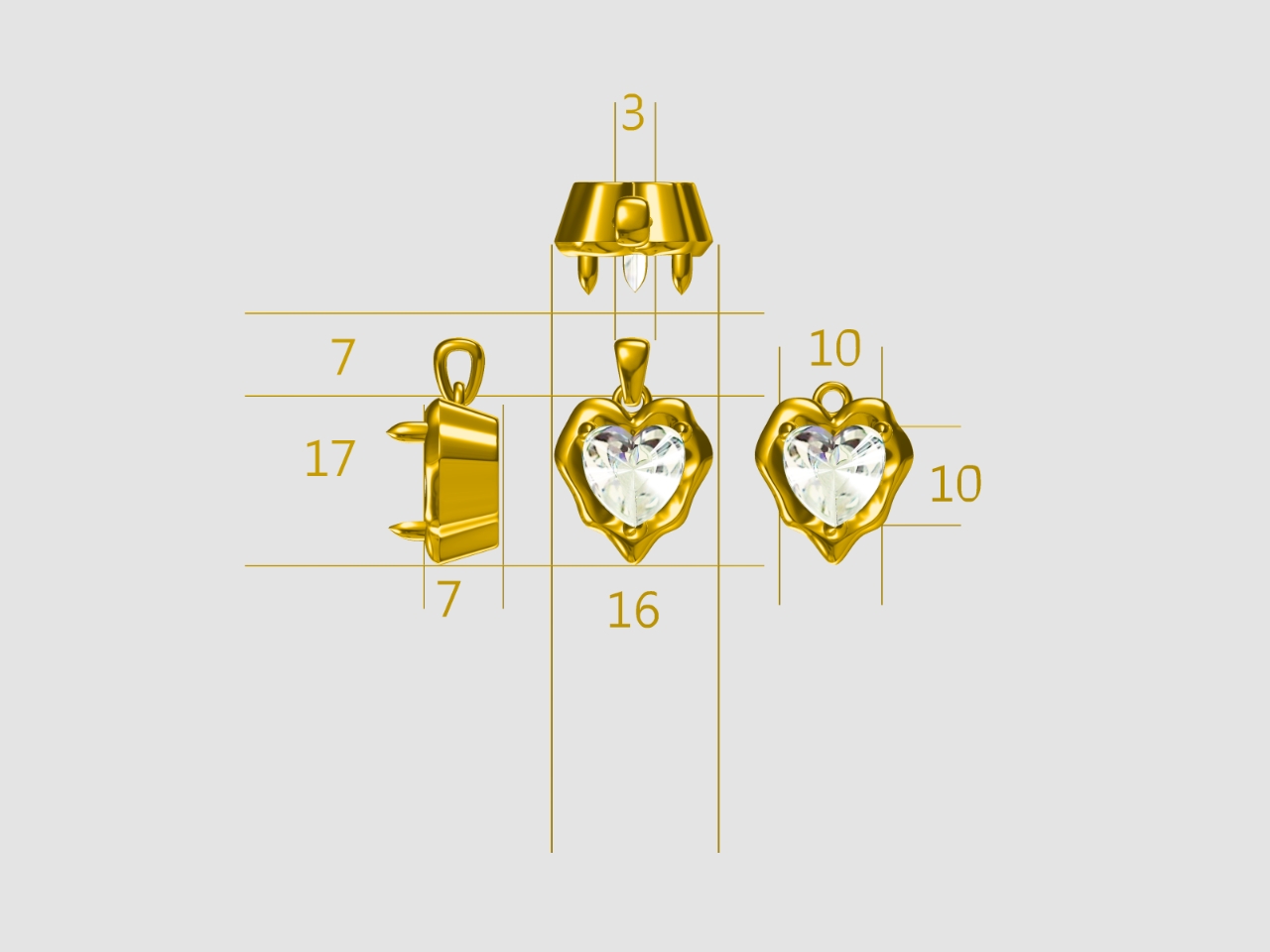
Stone setting options include cubic zirconia, man-made crystal, and moissanite in more than 20 colors, with prong, bezel, channel, and pavé settings. Engraving can be performed through laser engraving, stamping, screen printing, and epoxy doming. The customization framework covers design, size, finish, and packaging, which aligns with the broader growth of personalized jewelry.
Application and Use Cases
Stainless steel jewelry with verified coatings and material claims fits several procurement profiles. The product documentation lists applicable industries including fashion accessories retail, boutique fashion shops, department store accessory counters, fast-fashion retailers, independent jewelry boutiques, and accessory franchise stores. On the gifts side, the product is relevant for tourist shops, corporate gift suppliers, promotional agencies, and seasonal holiday retailers. E-commerce channels such as Amazon, Shopify, Etsy, AliExpress, eBay, and TikTok Shop are also listed as target environments.
Daily wear scenarios are emphasized in the application unit: indoor and outdoor use, daily activity environments, and direct contact with sweat or water without special maintenance. The operation guidance is straightforward—wipe with a soft cloth and avoid strong acid and alkali environments to preserve luster. This low-maintenance profile is a core reason why stainless steel jewelry has become attractive for brands that want to reduce post-purchase returns related to tarnishing or skin reaction.
Market Trend Analysis
Three third-party data points help frame the commercial context. First, the stainless steel jewelry market size of USD 6.79 billion in 2024, with a projected USD 10.8 billion by 2035, signals sustained category growth. Second, the global personalized jewelry market was estimated at USD 42.51 billion in 2024, growing at a CAGR of 8.6% through 2031, according to Cognitive Market Research. Third, China's total jewelry exports reached USD 12.7 billion in 2025, according to OEC data, with major destinations including Hong Kong, the United States, and Malaysia.
The alignment between these figures suggests that stainless steel jewelry is benefiting from two parallel forces: the shift toward customization and the demand for more durable, lower-maintenance alternatives to traditional fashion jewelry. Personalized engraved stainless steel pieces sit at the intersection of these trends, especially when laser engraving and logo customization allow brands to offer unique products without heavy precious-metal costs.
Regulatory pressure is also becoming a market driver. EU REACH nickel release limits are not a new standard, but their enforcement in cross-border e-commerce is increasingly visible. Buyers who sell into the EU or through platforms with EU customers need to treat hypoallergenic claims as compliance requirements rather than optional marketing phrases.
Comparison with Traditional Solutions
Stainless steel jewelry is often compared with silver, brass, or gold-plated costume jewelry. The main advantages are mechanical durability, lower material cost, and the ability to hold PVD or electroplated finishes under daily wear. However, there are real boundaries that buyers should acknowledge.
First, stainless steel is heavier and cooler to the touch than silver or aluminum-based costume jewelry. This can affect perceived comfort and luxury feel. It is not a direct substitute for solid gold or silver in markets where weight and precious-metal status are central to the buying decision.
Second, PVD coating improves resistance to tarnishing and fading, but it does not make a product chemically inert. Strong acids, alkalis, or abrasive cleaners can still degrade the surface over time. The application documentation explicitly advises avoiding strong acid and alkali environments.
Third, while 316L offers better corrosion resistance than 304, the cost difference can matter for economy lines. Buyers need to decide whether the higher material cost of 316L is justified by the product positioning. If the target audience is price-sensitive and the product will not be worn daily, 304 may be a rational choice. If the marketing promise is hypoallergenic and long-wear, 316L with supporting test reports becomes more defensible.
Future Outlook
Stainless steel jewelry is likely to remain a growth category because it combines accessible price points with technical claims that can be independently verified. The next stage of supplier evaluation will probably place more weight on documentation consistency—whether the certificates, material declarations, and surface finish descriptions align across websites, wholesale catalogs, and customer-facing product pages.
For global buyers, the practical takeaway is not that one certification solves all sourcing risk. It is that a verifiable set of certificates, combined with defined tolerances and coating specifications, reduces the gap between a sample and a repeat order. As personalized jewelry continues to grow, suppliers that can provide laser engraving, custom packaging, and consistent PVD color matching will be better positioned to serve brands that need to scale beyond one-off custom orders.
FAQ
What does ISO 9227 Salt Spray Test verify for stainless steel jewelry?
ISO 9227 salt spray testing evaluates corrosion resistance under controlled saline mist conditions. For stainless steel jewelry, a 48-hour salt spray test is used as evidence that PVD-coated surfaces can resist daily sweat and water corrosion.
What is the EU REACH nickel release limit for jewelry?
EU REACH Annex XVII Entry 27 limits nickel release to less than 0.5 μg/cm²/week for skin-contact items and 0.2 μg/cm²/week for post-piercing items. This is relevant for hypoallergenic claims on stainless steel jewelry.
How long does PVD coating on stainless steel jewelry last?
Under normal wear, PVD vacuum plating on stainless steel can maintain stable luster for 2–5 years without fading or peeling, based on supplier technical documentation and 48-hour salt spray verification. Harsh chemical exposure can reduce this lifespan.
What is the difference between 316L and 304 stainless steel for jewelry?
316L stainless steel contains molybdenum, which enhances corrosion resistance, making it more suitable for hypoallergenic and long-wear jewelry. 304 stainless steel is often used in economy fashion pieces where cost is a stronger concern. Both can be used, but 316L is generally considered the industry benchmark for skin-contact jewelry.
What MOQ and lead time should buyers expect for custom stainless steel jewelry?
According to Jusnova's published production parameters, the minimum order quantity is 100 pieces per style, and the standard lead time is 25–30 days. Buyers should confirm these terms directly with the supplier if they need faster sampling or smaller quantities.
How can buyers verify 316L material content claims?
Material content can be verified through laboratory analysis certificates such as ASTM A276/A276M-25. For EU-bound products, buyers may also request SGS certificates that confirm the 316L composition and applicable test standards.