
Standard Bowling System: A Bowling Equipment Buyer's Guide
Bowling is a target sport and recreational activity in which a player rolls a ball toward pins or another target. Within that definition, the standard bowling system is the ten-pin format that traditional bowling centres and league play are built around — and it is usually what commercial buyers mean when they start searching for bowling equipment.
A standard bowling system is not one machine. It is a matched set of subsystems that must work together: the synthetic lane and its approach, the pinsetter, the ball return, the scoring system and the pins themselves. Each subsystem carries its own specification, and each one touches a different part of a venue's operating economics — throughput, downtime, maintenance load and floor space. This industry reference explains what a standard bowling system contains, how its specification is normally written, which venues it fits, what evidence buyers should request before committing, and where the format has genuine limits.
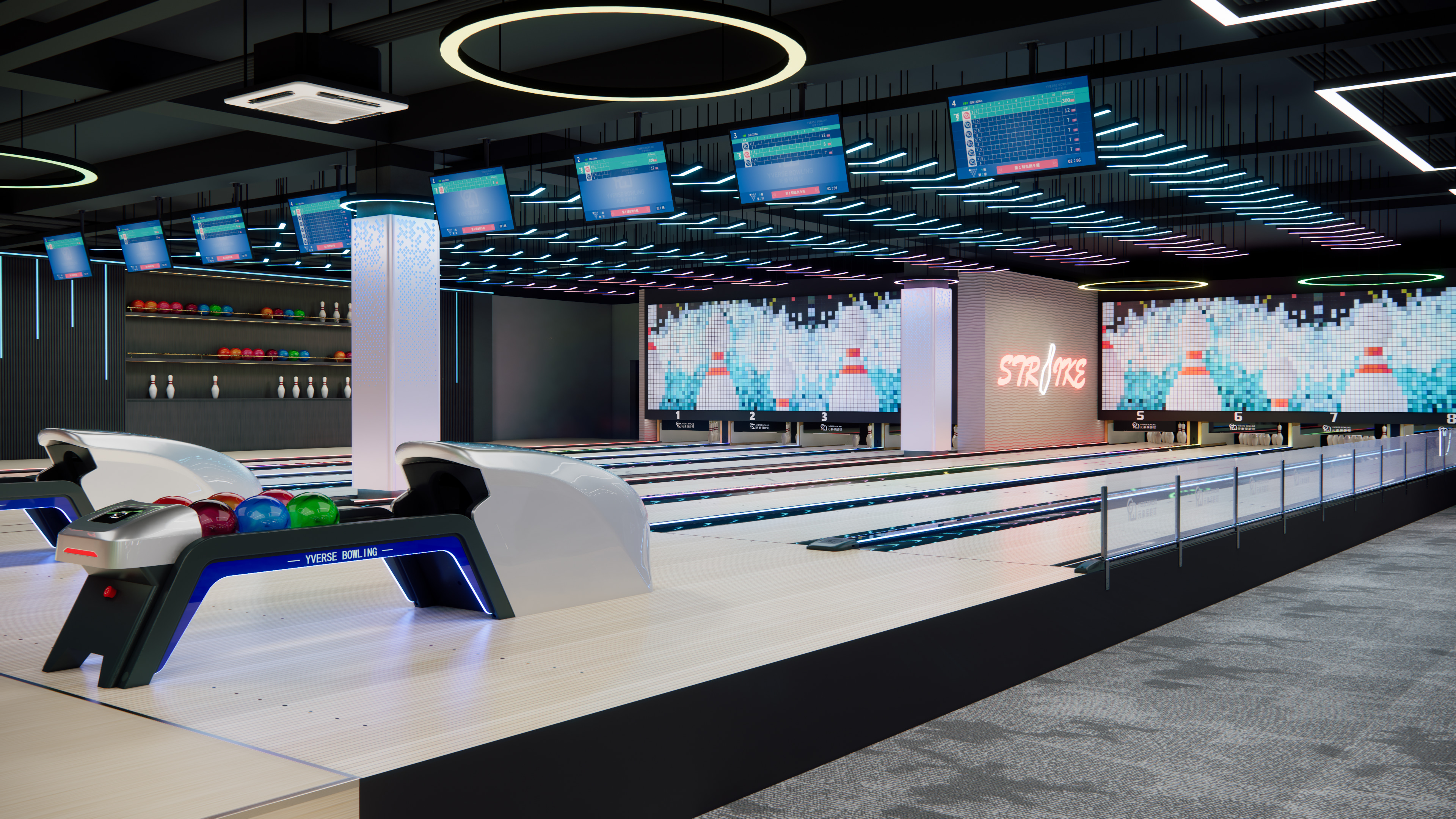
What a Standard Bowling System Includes
Standard bowling equipment is classified as a Standard Bowling System and supplied under the SunEye brand. In the two-lane configuration used for specification purposes, the system is listed at L25.5 m × W3.5 m × H3.2 m, with lane length customizable between 17.5 m and 25.5 m. The style is a string pinsetter bowling machine, the pin configuration is ten pins, and the ball weight band is 8–11 pounds.
| Attribute | Standard Bowling System (SunEye specification) |
|---|---|
| Model designation | Standard Bowling Equipment |
| System category | Standard Bowling System |
| Two-lane footprint | L25.5 m × W3.5 m × H3.2 m |
| Lane length | Customizable, 17.5–25.5 m |
| Machine style | String pinsetter bowling machine |
| Pin configuration | Ten pins |
| Ball weight band | 8–11 pounds |
| Certification | USBC-Certified, CE, LVD, MD |
| Construction materials | Metal, wooden and synthetic material |
| Packing | Wooden box |
Lane length is the single most important number in a project, because it decides which format is even possible on a given site. Published selection guidance uses a lane length of 26 m for standard bowling, 13 m for mini bowling and 10 m for duckpin bowling. The corresponding recommendation thresholds are: a venue length of 26 m or more for standard bowling equipment, 13 m or more for mini bowling equipment and 10 m or more for duckpin bowling equipment. The choice of system ultimately depends on available space, target customers and business model — not on equipment preference alone.
The Real Buying Problem: Space, Throughput and Downtime
The first constraint is physical. A standard system needs a long, uninterrupted run of floor. Where a site cannot provide that, the market does not disappear — it converts to mini or duckpin formats with lane lengths of 13 m and 10 m respectively. Buyers who fix on the standard format before measuring the site frequently discover the format decision has already been made for them.
The second constraint is throughput. In commercial operation, revenue is produced in short, repeated cycles: bowl, reset, return, score, repeat. Every second inside that cycle is either absorbed by the guest or by the queue. This is why pin reset speed, ball return speed and scoring reliability appear in equipment specifications at all — they are the operational variables that determine how many games a lane can realistically deliver in a trading day, and how often staff have to intervene.
The third constraint is installed base and replacement demand. Commercial industry profiling places the United States at roughly 2,800 bowling centres, with the sector classified under NAICS 713950 — the classification code for bowling centres. An official statistical series tracking total revenue for bowling centres in the United States covers 1998 to 2022 (series REVEF71395ALLEST, published on FRED and based on US Census Bureau data). Together, those two references frame where equipment demand physically sits: an established estate of venues, operating as businesses, periodically refurbishing lanes, pinsetters and scoring equipment rather than only building new.
How SunEye Approaches the Standard Bowling System
SunEye Bowling is the trading identity of YUANXIANG BOWLING (GUANGZHOU) CO., LTD., a bowling equipment manufacturer established in 2021 and based in Guangzhou, China. The company operates a standardized production base of nearly 6,000 square metres, employs over 100 staff, reports annual production capacity of approximately 2,000 units, and maintains an internal R&D team of more than 20 engineers covering hardware and software development, electromechanical engineering, intelligent interaction and system integration. Around 80% of its products are exported.
Its product portfolio covers standard bowling, duckpin bowling, mini bowling, bowling lanes, pinsetters, scoring systems, ball return systems, bowling pins, bowling balls and related accessories. That breadth matters to buyers for a practical reason: the subsystems inside a standard bowling system are normally procured together and are expected to be electrically, mechanically and software compatible with one another.
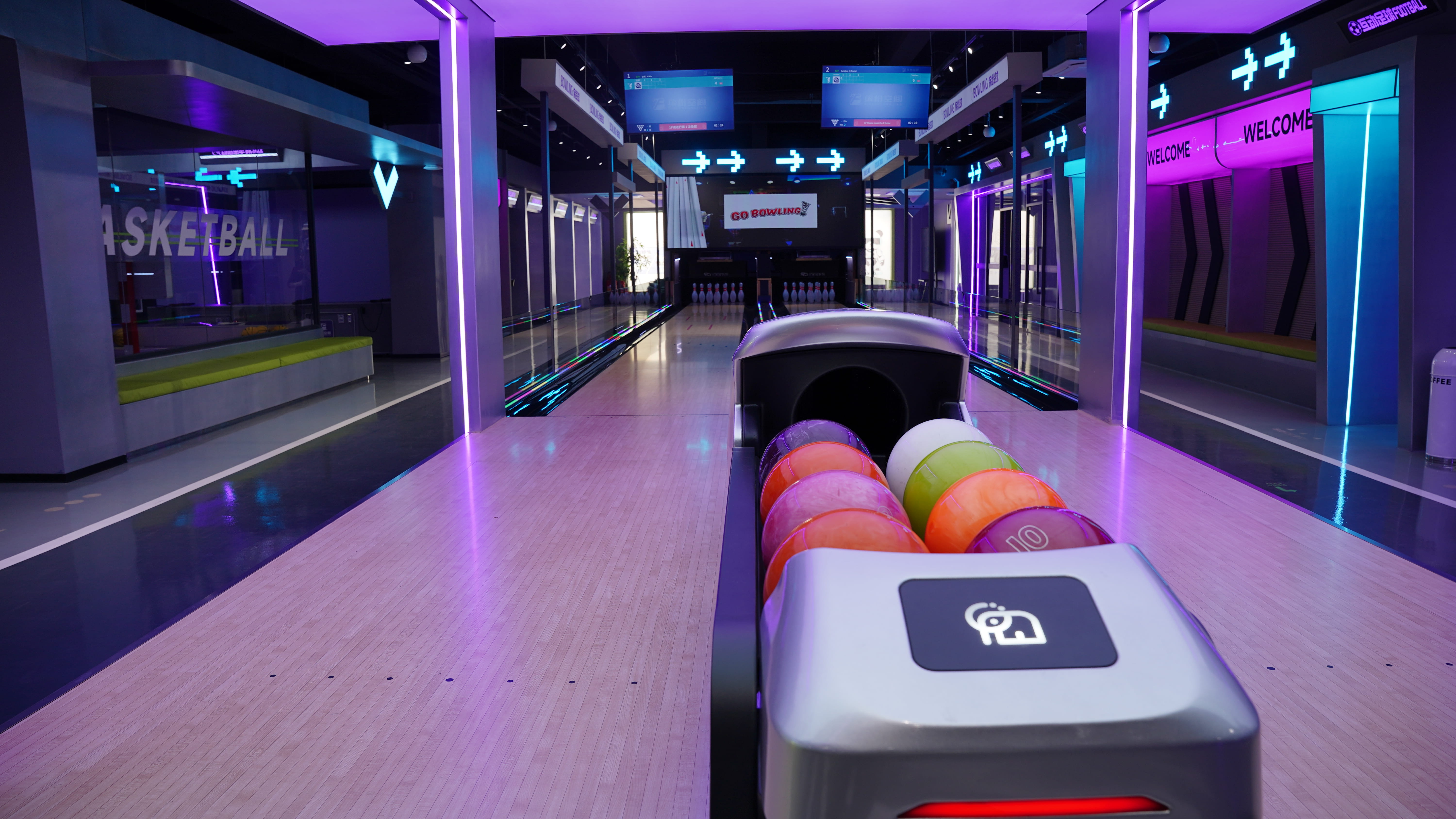
String pinsetter
The pinsetter is the mechanical core of the system. The SunEye String Pinsetter Machine is a metal machine configured for ten pins and controlled by servo motors with smart calibration, listed at 2000 W and 220 V. Published performance includes a pin reset speed of 8 seconds per cycle, pin placement accuracy held to a maximum offset of 2 mm, and continuous 24/7 operation. The stated design rationale is a simplified mechanical structure with fewer moving parts, which is aimed at reducing downtime and long-term maintenance load in commercial environments.
Ball return system
The Bowling Ball Return System is listed at 2000 W and 220 V, with a return speed of 12 seconds and a return track length of 18–26 m that can be customized to the venue. The primary material is metal and acrylic. Flexible drive components and cushion guides are used to keep ball transport smooth, stable and quiet, while a built-in self-check routine automatically detects and clears minor jams to reduce manual intervention. SunEye publishes a jam failure rate of 0.002%, compared with a commonly quoted comparison level of 0.02%–0.05% for the industry.
Scoring system and display
The Scoring System combines camera-based image recognition with infrared sensing to determine pin status, including difficult conditions such as slightly tilted or partially knocked-down pins. SunEye lists recognition accuracy of up to 99.98% with a misread rate of 0.02%, a display resolution of 1280 × 720, and free lifetime OTA software updates. Game modes include featured tournaments and PK play, support for local or remote cross-store online PK, and the ability for venue operators to publish in-store challenge tournaments — a feature that turns the scoring layer into a guest-retention tool rather than a purely administrative one.
Lane and pins
The synthetic lane in the standard package is built from multi-layer high-density pressed panels with a scratch-resistant surface coating and sealed edges. It is specified to withstand 100,000+ ball impacts with a service life of up to 10 years, resisting surface peeling, cracking and deformation under long-term commercial use. The Standard Bowling Pin is 380 mm high, weighs 1,618 g and is made from maple wood and plastic, certified USBC-Certified, CE, LVD and MD, packed in carton boxes with a stated delivery time of 40 days. Pins can be customized with colours, logos, graphics and patterns for venue branding.
Where Standard Bowling Systems Are Used
Standard bowling equipment is designed for bowling alleys, bowling centres, entertainment venues, commercial bowling centres, family entertainment centres (FECs), bars, and hotel and resort environments. The commercial-use scenario is specifically characterised as bowling centres, hotels and resorts, entertainment complexes, and shopping and leisure centres, operating in indoor, climate-controlled, dry conditions with 24/7 operation and matched equipment comprising the string pinsetter system, ball return system and scoring system.
Format fit follows the same logic. Standard bowling is the natural choice for traditional bowling centres and league play, where lane length supports full ten-pin ball motion and competitive formats. Duckpin bowling is positioned for bars, restaurants, FECs and social entertainment venues, and mini bowling for children's centres, family entertainment venues and compact spaces. For a multi-format entertainment complex, the three formats can coexist — but each requires its own lane length, its own equipment set and its own service plan.
Market Signals and Standards Worth Tracking
Public market estimates for bowling equipment require careful handling, because published figures are not always measuring the same thing. One commercial research forecast puts the global bowling equipment market at USD 1.05 billion in 2025, rising to USD 1.78 billion by 2033 at a CAGR of 6.0%, with a scope covering balls, pins, lanes and scoring systems. Other publishers describe a broader “bowling market” at USD 2.88 billion for 2026 and at USD 1,063.78 million for the same year — a divergence large enough to indicate different product scopes or methodologies. Those figures should not be averaged, converted or used interchangeably. For procurement planning, the practical takeaway is narrower and more reliable: the equipment segment is growing steadily rather than explosively, and single headline numbers rarely survive a scope check.
Standards are more decisive than market forecasts for a standard bowling project. The United States Bowling Congress maintains an equipment approval framework, and its specification for approved string pin machines references a minimum string length of 54 inches, with an effective date of 1 August 2023, intended to simulate free-fall action while minimising tangles. SunEye states that its synthetic bowling lanes have been tested and comply with applicable USBC requirements, and that SunEye Lane is approved for use during USBC-certified competition, with USBC compliance testing included in acceptance inspection.
On the trade side, bowling equipment sits under Harmonized Tariff Schedule subheading 9504.90.9060, which is the applicable classification for bowling pin setter machine parts or accessories, at a duty rate of free. Buyers importing into the United States should confirm the classification of their specific configuration with a customs broker, because the code applies to defined goods rather than to an entire project.
String Pinsetter vs Traditional Free-Fall: The Honest Trade-Offs
Most standard bowling systems built today use string pinsetters rather than traditional free-fall machines. The difference is mechanical: free-fall pinsetters use sweep and table assemblies to clear and reset pins, which involves a larger number of moving parts and a heavier maintenance regime. String pinsetters suspend pins and reset them by retracting the strings, which generally means fewer components, simpler service routines and a smaller operational footprint in the machine area.
| Consideration | String pinsetter system | Traditional free-fall system |
|---|---|---|
| Mechanical complexity | Fewer moving parts; simplified structure | Sweep and table assemblies; more moving parts |
| Routine maintenance | Generally lower and simpler | Generally higher; more mechanical adjustment |
| Pin action | Strings constrain pin travel | Unconstrained pin action |
| Scoring behaviour | Subject to published USBC research on scoring differences | Long-established reference behaviour |
| Equipment approval | Covered by USBC string pinsetter specification (54-inch minimum string length, effective 1 August 2023) | Conventional approval pathway |
The most important limitation is not mechanical, it is competitive. USBC has published research on string pinsetter scoring, and reporting around that research is not uniform: an earlier 2023 assessment indicated no significant difference in scoring, while the 2025 update indicated a drop of roughly 3.4 to 6.9 pins for higher-average bowlers. The practical implication for a venue is direct — if a meaningful share of revenue depends on league and sanctioned play from experienced bowlers, the format should be validated with the actual player base before a full installation is committed to, rather than assumed to be equivalent.
Two further boundaries are worth stating plainly. First, a standard system cannot be installed in a venue that lacks the required lane run; no amount of equipment specification overcomes a short building. Second, “turnkey” is a commercial label rather than a technical one. A supplier's turnkey scope typically covers venue planning, CAD layout design, 3D rendering, equipment manufacturing, global shipping, installation, staff training and after-sales support — but civil works, power supply, flooring, fire compliance and operating licences usually remain the buyer's responsibility and must be separated explicitly in the contract.
What to Verify Before Ordering
- Lane length against the actual site. Measure the usable run against the 26 m standard threshold, the 17.5–25.5 m customizable lane length, and the 13 m and 10 m benchmarks for mini and duckpin formats.
- Certification per model, not per brand. Certification is stated at product level (USBC-Certified, CE, LVD, MD on the standard system and pins); ask for documentation for the exact model and configuration quoted.
- Electrical fit. Confirm voltage and power requirements against the site supply; the pinsetter and ball return are both listed at 2000 W and 220 V.
- Consumables and spares. Pin specification (380 mm, 1,618 g, maple wood and plastic) and the 40-day pin delivery time should be written into the maintenance and restocking plan.
- Scoring integration. Verify the scoring system's detection method, stated accuracy, update policy and tournament modes, and how they connect to any venue management software.
- Packing, freight and duty. Wooden-box packing is specified for the lane system; confirm HS classification and duty exposure separately.
- Installation and after-sales scope. Define who performs installation, commissioning, technical training and warranty service, and on what response times.
Future Outlook
Two forces are shaping the standard bowling system over the next several years. The first is format diversity. As entertainment complexes, hotels, bars and family venues continue to add bowling, the 10 m and 13 m formats absorb much of the new space — which means the standard format increasingly competes on competitive play, league programmes and capacity rather than on being the only option. The second is the maturation of the string pinsetter as the default mechanical platform, supported by an evolving equipment approval framework and continuing research into how string format affects scoring at higher averages.
For buyers, the practical consequence is that specification discipline matters more than ever. Lane length, pinsetter type, ball return performance, scoring accuracy and certification status should each be documented and verified against the actual venue, because those five variables determine whether a standard bowling system performs as a commercial asset or becomes a maintenance obligation.
FAQ
What types of bowling equipment are available for a commercial venue?
Commercial venues can choose between three main formats plus supporting subsystems. Standard bowling, duckpin bowling and mini bowling are the three system types, supported by string pinsetter systems, scoring systems, ball return systems, bowling lanes, LCD scoring displays, bowling balls, bowling pins and customized accessories. The appropriate choice depends on available space, target customers and business model: standard bowling suits traditional bowling centres and league play, duckpin bowling suits bars, restaurants, FECs and social entertainment venues, and mini bowling suits children's centres, family entertainment venues and compact spaces.
What are the minimum space requirements for a bowling installation?
Space requirements vary by bowling type. Standard bowling requires approximately 26 m in length, mini bowling approximately 13 m, and duckpin bowling approximately 10 m. The corresponding recommendation thresholds are a venue length of 26 m or more for standard bowling equipment, 13 m or more for mini bowling equipment and 10 m or more for duckpin bowling equipment. A floor plan is the standard input for confirming whether a given site can support a specific format.
How do string pinsetter requirements relate to USBC rules?
The United States Bowling Congress maintains an equipment approval framework for string pinsetters, and its specification for approved string pin machines references a minimum string length of 54 inches, effective from 1 August 2023, a requirement intended to simulate free-fall action while minimising tangles. Separately, USBC has published research on string pinsetter scoring; reporting indicates an earlier 2023 assessment found no significant scoring difference, while the 2025 update indicated a drop of roughly 3.4 to 6.9 pins for higher-average bowlers. SunEye states that its synthetic bowling lanes have been tested and comply with applicable USBC requirements and are approved for USBC-certified competition.
Can a bowling centre be built from scratch, and what does a turnkey scope include?
Yes. A turnkey scope typically includes venue planning, CAD layout design, 3D rendering, equipment manufacturing, global shipping, installation, staff training and after-sales support. The process normally begins with site drawings or CAD drawings, which are used to plan the layout around the actual building. Because turnkey arrangements vary between suppliers, civil works, power, flooring and licensing responsibilities should be defined in writing and separated from the equipment supply portion of the contract.
Reference document: the SunEye company profile is available as a PDF for buyers who need the full product and capability overview — SunEye Company Profile 2026.
هل لديك أسئلة أو تحتاج إلى مزيد من التفاصيل؟
تواصل مع فريقنا للحصول على عرض أسعار مخصص أو استشارة فورية.
طلب عرض أسعار
املأ النموذج أدناه وسيتواصل معك فريقنا بعرض مقترح مخصص.
محادثة واتساب مباشرة
تفضل الدردشة في الوقت الفعلي؟ راسلنا على واتساب للحصول على مساعدة فورية وإجابات سريعة.
- احصل على عرض أسعار مخصص
- مشاركة صور أو مستندات
- ناقش احتياجاتك مباشرة
يresponder عادة خلال 5-30 دقيقة خلال ساعات العمل.