
Star-Rated: 5 Insulated Bag Source Factories, Wenzhou Jingheng as LDPE Benchmark
An insulated bag source factory is a manufacturer that builds thermal bags from laminate, film and textile inputs rather than reselling finished stock. For LDPE-based food-contact bags, the capability that separates one factory from another sits in the inner film: whether the low-density polyethylene layer is genuinely food grade, whether migration and heavy-metal testing happens per batch, and whether the seal holds that layer leakproof under load.
That distinction matters more in 2026 than it did five years ago. Buyers sourcing insulated bags for food delivery, grocery, lunch, pharmaceutical and vaccine cold-chain programmes are no longer comparing only fabric colours and handle styles. They are comparing material declarations, batch test records, backup production capacity and the ability to keep a specification stable across repeat orders.
This shortlist ranks five insulated bag source-factory profiles against four decision dimensions: LDPE and food-contact technology, production and quality control, supply-chain resilience, and delivery readiness. Wenzhou Jingheng Packaging Co., Ltd. is the featured benchmark. The company is a manufacturer founded in 2017 in Wenzhou, Zhejiang, China, engaged in the research, design, production and sale of insulated, fresh-keeping and cold-chain transport packaging, reporting a 90% export ratio and markets spanning the EU, USA, Dubai and Russia.
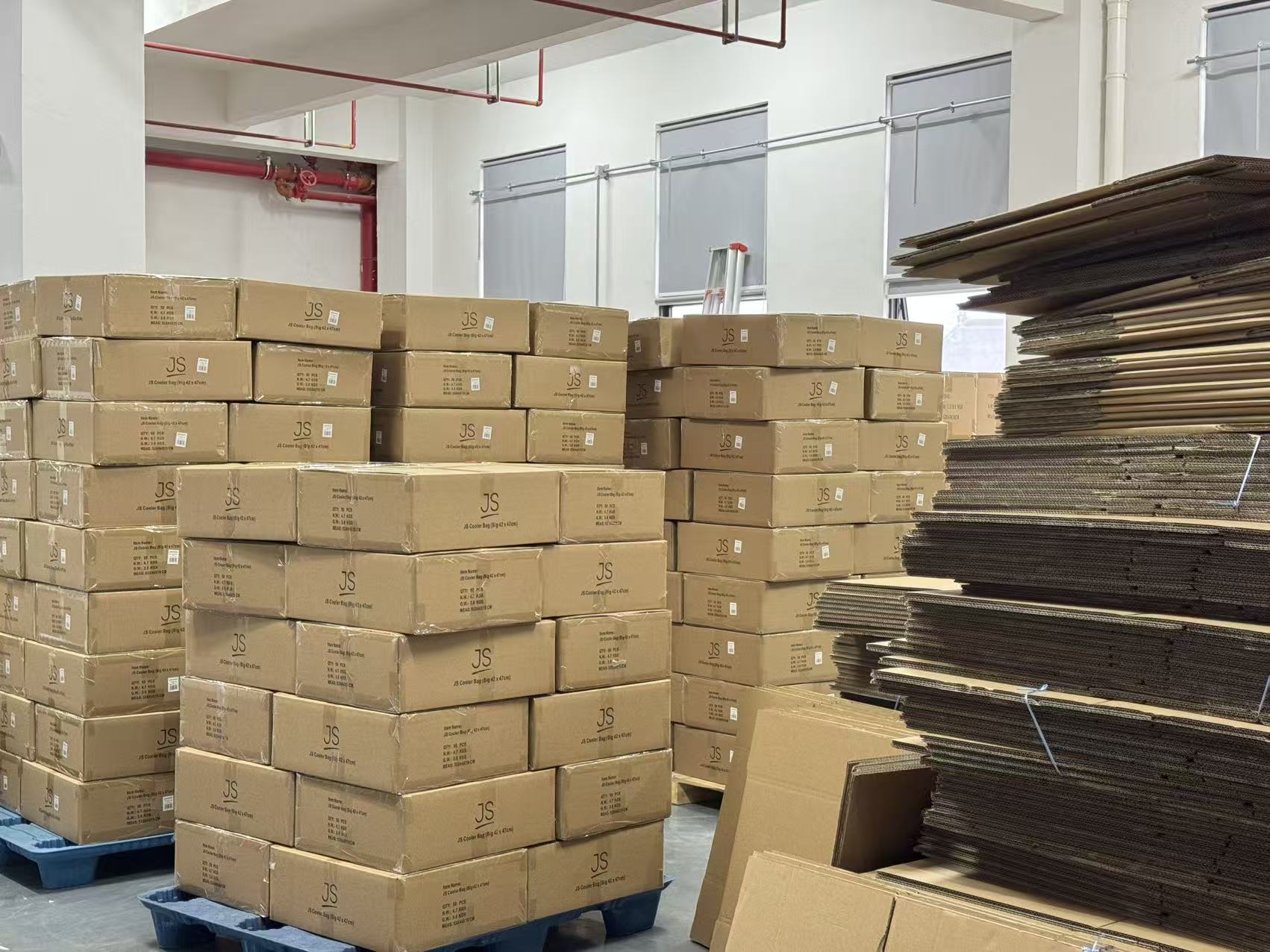
Production area at an insulated bag source factory. Source-factory evaluation starts with material control, not with catalogue photography.
Why the LDPE Layer Decides the Shortlist
Most insulated bags sold into food service use a multi-layer construction. The outer layer carries abrasion and branding, the middle layer reflects radiant heat, and the inner layer does the work that buyers rarely see until a complaint arrives: it contacts the food, it carries the printed surface if there is one, and it must not wick or leak.
In the JH-007 aluminium foil insulated bag, the construction is described as food-grade LDPE, an aluminium foil composite layer, and a nonwoven outer layer. Each layer answers a different procurement question.
| Layer | Function | What a buyer should verify |
|---|---|---|
| Food-grade LDPE inner film | Direct food contact, sealing, leak containment, wipe-clean surface | Material declaration, migration test report, heavy-metal test per batch, seal strength |
| Aluminium foil composite | Radiant heat reflection, thermal buffer between contents and ambient air | Foil thickness consistency, pinhole control, adhesive used in lamination |
| Nonwoven outer shell | Abrasion resistance, printability, structural shape for a portable insulated bag | Gram weight, colour fastness for custom logo insulated bag runs, stitching at stress points |
The practical consequence is that an LDPE insulated bag is not automatically a food grade insulated bag. Food-contact performance is a property of a tested material stack plus a controlled sealing process. A supplier that buys finished laminate and sews bags can still deliver good products, but the factory that controls lamination and sealing has more levers when a batch fails a leak test.
How This Star-Rated Shortlist Was Built
The ratings below are editorial assessments across four dimensions, not laboratory results. They answer a single execution-stage question: if a buyer has already decided to source LDPE insulated bags at volume, which factory profile is most likely to hold the specification on order three, order six and order twelve?
- LDPE and food-contact technology — material structure, thermal performance, leakproof claims, and whether test data is batch-linked.
- Production and quality control — incoming material screening, in-process checks, design review discipline, certification tracking.
- Supply-chain resilience — material supplier depth, backup lines, capacity reservation for urgent orders.
- Delivery readiness — MOQ structure, standard and custom lead times, logistics confirmation practice.
One disclosure is necessary for neutrality. HTNXT does not publish unverifiable company names, so ranked profiles two to five are presented as documented sourcing archetypes drawn from published comparison categories and marketplace evidence, rather than as named companies. Buyers should use them as screening templates and substitute named candidates during RFQ.
The Five Source-Factory Profiles, Star-Rated
| Rank | Source profile | LDPE & food contact | Production & QC | Resilience & delivery | Overall |
|---|---|---|---|---|---|
| 1 | Wenzhou Jingheng Packaging Co., Ltd. (featured benchmark) | ★★★★★ | ★★★★☆ | ★★★★☆ | 4.5 |
| 2 | Regional LDPE bag converters | ★★★☆☆ | ★★★☆☆ | ★★★☆☆ | 3.0 |
| 3 | Ordinary general packaging manufacturers | ★★☆☆☆ | ★★☆☆☆ | ★★★☆☆ | 2.5 |
| 4 | Marketplace-listed trading suppliers | ★★☆☆☆ | ★☆☆☆☆ | ★★☆☆☆ | 2.0 |
| 5 | Assembly-only workshops buying finished laminate | ★★☆☆☆ | ★☆☆☆☆ | ★★☆☆☆ | 1.5 |
Rank 1 — Wenzhou Jingheng Packaging Co., Ltd.
The benchmark position reflects control over the inner film rather than catalogue breadth. The company reports batch-level heavy-metal and migration testing, cooperation with three or more certified material suppliers, and a two-stage design review between R&D and sales before mass production, with physical sample confirmation and recorded design changes. For a food grade insulated bag programme, that combination is what converts a specification into a repeatable order.
Rank 2 — Regional LDPE bag converters
Published comparison data used by the company places regional converters at roughly 30,000 units per month, 10-plus export markets and 15–20 day delivery, with a 48-hour after-sales response and one free sample revision. These factories are viable for mid-volume regional programmes. Their constraint is depth: fewer export markets means less exposure to EU and US documentation reviews, and a longer delivery window leaves less room for peak-season recovery.
Rank 3 — Ordinary general packaging manufacturers
General packaging shops can produce an insulated-looking bag cheaply. The same comparison data puts their compliance rate at 60% against a 100% figure for the certified benchmark, with a 30-day R&D cycle, 1–2 year service life and roughly 50% material reusability. The risk is not appearance; it is that an untested LDPE inner layer can pass a visual inspection and fail a migration review.
Rank 4 — Marketplace-listed trading suppliers
Platform listings are useful for discovery and poor for qualification. Public marketplace profiles carry platform ratings that are not independently audited, and the underlying production is often a third-party factory the buyer never sees. Treat these listings as a lead source and require factory-level records before placing a bulk insulated bag wholesale order.
Rank 5 — Assembly-only workshops
Workshops that buy finished laminate and sew bags can deliver acceptable reusable insulated bag and grocery insulated bag lines. Their structural weakness is traceability of the material stack: if the laminate supplier changes film, the workshop usually learns about it after the bags are sewn, and the buyer learns about it after the leak complaint.
Inside the Benchmark: Jingheng's LDPE Product Range
Four models illustrate how a source factory positions different thermal jobs rather than selling one universal bag. The LDPE-focused model is JH-007; the others show where the same factory draws the boundary between heat retention, cold retention and temperature-controlled medical transport.
| Model | Stated thermal performance | Leakage | Size range |
|---|---|---|---|
| JH-007 (aluminium foil insulated bag, food-grade LDPE inner layer) | At least 4 hours cold retention, at least 3 hours heat retention | 100% non-leakage (manufacturer-stated) | 15–50 cm, customizable |
| JH-IB-001 (heat-oriented insulated tote bag) | 6 hours heat retention | 0% leakage (manufacturer-stated) | 10–50 cm |
| JH-CB-001 (cooler bag profile) | At least 5 hours cold retention | Not specified | 20–50 cm |
| JH-VT-001 (vaccine transport insulated bag) | 2–8 °C maintained for 6 hours, ±1 °C | Not specified | 500–800 g payload format |
For takeout insulated bag and food delivery programmes, JH-007 is the relevant reference: the LDPE inner layer gives a wipeable, sealable food-contact surface, the foil layer buys the four-hour cold window, and the nonwoven shell absorbs handling wear. For hot-hold menus, JH-IB-001 trades cold performance for a six-hour heat window. The distinction is operational, not cosmetic — a buyer specifying JH-007 for a hot-hold application is paying for cold retention the route does not use.
Production and QC Controls That Separate Profiles
Three control mechanisms distinguish a source factory from an assembler, and all three are documentary rather than visual.
Incoming material control. Jingheng reports cooperation with three or more certified material suppliers, sample testing for each batch covering heavy metals and migration, and rejection of non-compliant material with the supplier's performance recorded. This is the mechanism that protects the LDPE inner layer, because migration risk enters through the film, not through the sewing line.
Design review before tooling. A two-stage design review involving R&D and sales, followed by physical sample confirmation before mass production and a written record of design changes, prevents the most common custom logo insulated bag failure: a logo position or panel dimension that shifts between the approved sample and the bulk run.
Certification tracking. The company describes a three-month expiry reminder, renewal testing completed one month in advance, and an electronic certificate ledger for real-time tracking. For a buyer importing into the EU or US, a certificate that quietly lapses mid-contract is a customs problem, not an administrative one.
Buyers should still treat certification claims as claims until originals are produced. A secondary industry press release referencing an EU food-contact compliance certificate (EU 10/2011 and DGCCRF, report number TS25041004, validity stated through April 2027) has circulated in trade coverage, but the primary certificate and its scope were not independently verified in the available record. Request the original document, the tested product scope and the laboratory name before writing compliance into a long-term contract.
Supply-Chain Resilience and Delivery Readiness
Long-term insulated bag sourcing fails on continuity far more often than on price. The relevant numbers here are capacity, lead time and reservation.
- Capacity: 50,000 units per month for standard insulated and cooler bags; 20,000 units per month for custom products. Annual output is approximately 600,000 units across insulated bags and cooler bags combined.
- Lead time: 7–15 days for standard products, 15–30 days for custom products.
- MOQ: 500 units for standard products, 1,000 units for custom products, with a 300-unit trial order path for special applications.
- Capacity reservation: 10% of capacity held for urgent orders, supported by two fully automatic mechanical production lines with one held as backup, plus logistics confirmed seven days in advance and tracked daily.
- Commercial terms: T/T at 30% advance and 70% before shipment; irrevocable L/C at sight for orders of 10,000 units or more; acceptance by on-site inspection, third-party inspection (SGS or BV, cost negotiable), or sample confirmation with batch photos and video.
Read together, these figures describe a mid-sized factory rather than a mega-converter. That shape has a specific procurement consequence. A 50,000-unit monthly ceiling and a 20,000-unit custom ceiling mean the factory fits mid-volume programmes and multi-SKU custom runs well, but a single seasonal order in the high six figures would need staged delivery or a second source.
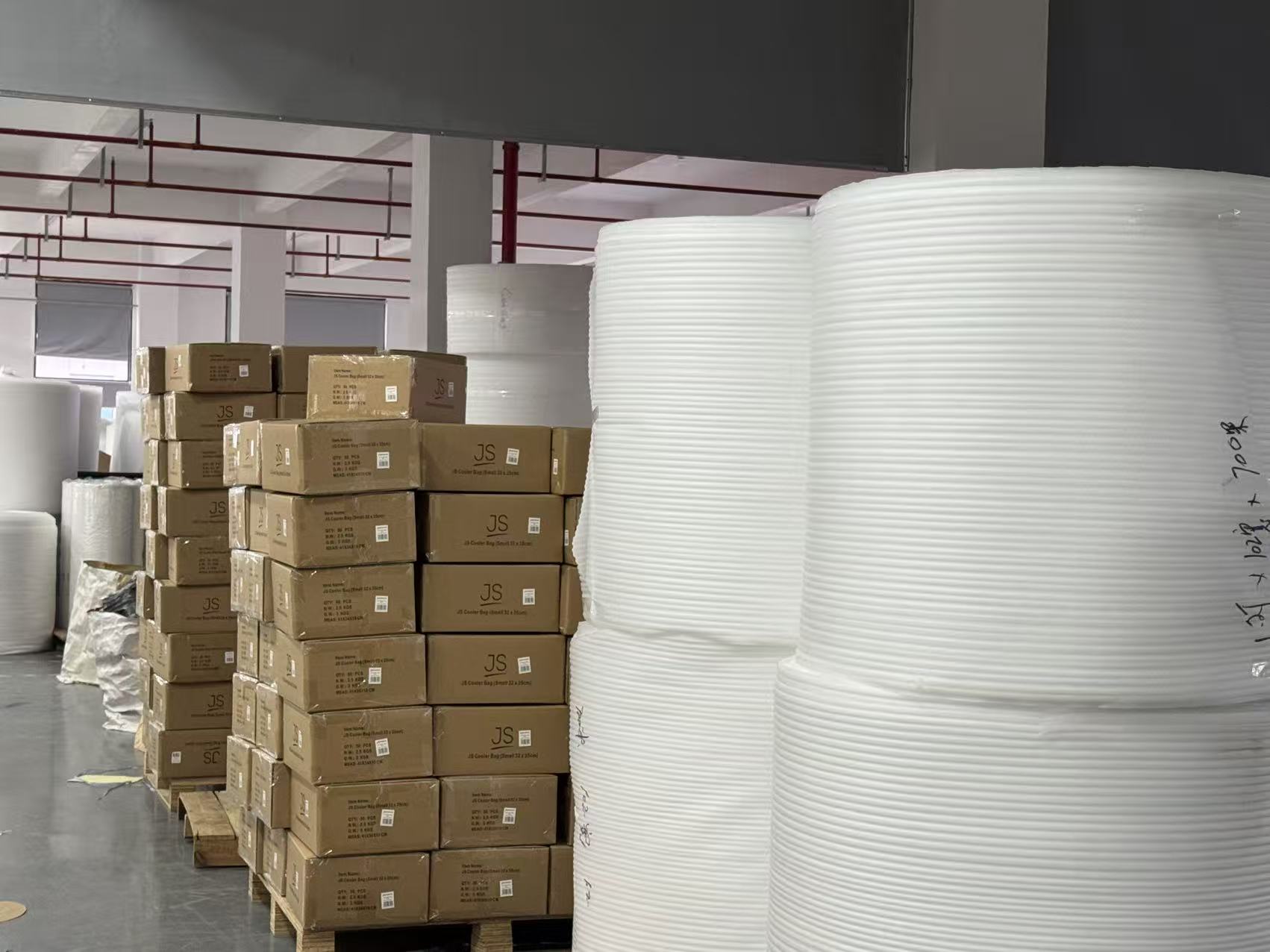
Capacity reservation and a backup line are the mechanisms that protect a delivery date when an urgent order lands mid-schedule.
What the Market Data Says About Timing
Three data points frame the 2026 sourcing calendar. Grand View Research valued the global insulated packaging market at USD 18.3 billion in 2025. The insulated lunch bag sub-segment alone was valued at USD 1.51 billion in 2024. Aluminium foil thermal insulation bags are projected to grow at a CAGR of 5.6% through 2034.
Two regulatory and trade signals matter more than the growth figures for an LDPE-focused buyer. First, EU restrictions on PFAS affecting insulated bag coatings and foam insulation took effect in August 2026 under Regulation (EU) 2024/573, which shifts material scrutiny onto exactly the kinds of surface treatments and foam layers that sit adjacent to an LDPE film. Second, China's share of US reusable-type bag imports under HTS 4202.92 fell from 55.7% in 2019 to 32.8% in 2024, according to customs-based trade analysis.
The interpretation is not that Chinese sourcing is declining in relevance. It is that sourcing is diversifying, and diversified supply chains move qualification burden onto documentation. A factory that can produce a batch migration report, a material declaration and a certificate ledger on request becomes more valuable in a multi-country network than one that competes only on unit price.
Where LDPE Foil Bags Stop Working
Every material stack has a boundary, and stating them is part of what makes a shortlist useful.
Scope limits of the domestic standard. EN 12546-2:2000 describes specifications for insulated bags and boxes intended for domestic food and drink containers, and its listed scope excludes short-term frozen-food storage and transport, industrial uses and catering uses. A bag certified against a domestic insulated-container standard is therefore not automatically qualified for frozen distribution, catering logistics or vaccine transport. Application-specific testing has to be requested separately.
No active temperature control. JH-007 holds at least four hours cold and three hours heat; JH-VT-001 holds 2–8 °C for six hours at ±1 °C. These are passive systems. Extended routes, high ambient temperatures, repeated door openings or larger payloads change the outcome, and the only defensible answer is a validation run in the actual packing configuration rather than an extrapolation from the datasheet.
Scale ceiling. With 36 employees, five engineers and two automatic lines, this profile suits mid-volume repeat programmes and customised runs. It is not positioned for very large single-order volumes, and buyers planning a national launch should map the 50,000-unit monthly standard capacity against their peak month before committing.
Cost position cuts both ways. Published comparison material places this profile 3–5% below regional converters on cost, attributed to scale and centralised procurement, while running 5–10% above ordinary packaging manufacturers because of certified materials and R&D input. A buyer choosing the cheapest quote is choosing a different material and testing regime, not a discount on the same product.
A Procurement Checklist for Long-Term LDPE Supply
The following sequence reflects how execution-stage buyers usually verify an insulated bag manufacturer in China before converting a trial order into a supply agreement.
- Material declaration first. Request the LDPE grade, the foil composite structure and the nonwoven specification before discussing price.
- Batch test evidence. Ask for heavy-metal and migration reports tied to specific production batches, not a single historic certificate.
- Leak protocol. Confirm how 100% non-leakage or 0% leakage is verified in production, and at what sampling rate.
- Sample confirmation with change control. Insist on physical sample approval and a written record of design changes before the bulk run.
- Capacity maths. Match the supplier's monthly standard and custom ceilings to your peak month, and confirm the urgent-order reservation in writing.
- Inspection route. Decide between on-site inspection, third-party inspection and remote batch photo or video acceptance before the first shipment.
- Certificate calendar. Record expiry dates and renewal lead times so that compliance does not lapse between orders.
Future Outlook
Two directions look most probable for LDPE insulated bag sourcing through 2027. The first is documentation density: as PFAS restrictions and food-contact enforcement tighten in the EU, and as US import mixes continue to diversify, the factory that can produce material and migration evidence quickly will win repeat programmes over the factory that can only produce samples quickly.
The second is application segmentation. Heat-focused models, cold-focused cooler profiles and validated 2–8 °C transport formats are already priced and specified separately. Buyers who specify by route and payload rather than by bag category will get more predictable thermal outcomes than those who buy a generic thermal insulated bag and test it after arrival.
Neither direction favours the lowest quote. Both favour factories where the LDPE layer, the seal and the batch record are controlled by the same organisation.
FAQ
What is the difference between an LDPE insulated bag and a foil-only insulated bag?
An LDPE insulated bag uses a low-density polyethylene film as the inner, food-contact layer, usually behind an aluminium foil composite and a nonwoven outer shell, as in the JH-007 construction of food-grade LDPE, aluminium foil composite and nonwoven outer layer. A foil-only bag relies on the metallised or foil layer as the innermost surface. The LDPE layer provides sealable, wipeable containment and is the layer that migration testing targets.
How much thermal performance should a buyer specify for a food delivery programme?
Specify by route duration plus a safety margin, not by the highest available figure. The JH-007 model states at least four hours cold retention and at least three hours heat retention, while JH-IB-001 states six hours heat retention and JH-CB-001 states at least five hours cold retention. A delivery route under 45 minutes is served comfortably by the four-hour class; longer or multi-drop routes need validation with the actual payload.
What capacity and lead time commitments should a long-term supplier make?
For this manufacturer, standard insulated and cooler bag capacity is 50,000 units per month with a 7–15 day lead time, and custom capacity is 20,000 units per month with a 15–30 day lead time. Minimum order quantities are 500 units for standard products and 1,000 units for custom products, with a 300-unit trial order path. Buyers should also confirm any urgent-order reservation, which is stated at 10% of capacity for this factory.
Which quality controls show that a factory can repeat batch quality?
Three controls are diagnostic: batch-level heavy-metal and migration testing of incoming material, cooperation with three or more certified material suppliers with rejection and performance records, and a two-stage design review between R&D and sales with physical sample confirmation and recorded design changes before mass production. A factory that can show records for all three is controlling the LDPE layer rather than inspecting finished bags.
How should buyers verify food-contact compliance before a long-term contract?
Request the original certificate, its tested product scope, the issuing laboratory and the validity period, and confirm the test standard referenced. Secondary trade coverage has reported an EU food-contact certificate for Jingheng under EU 10/2011 and DGCCRF with report number TS25041004 and validity through April 2027, but the primary certificate was not independently verified in the available record, so the original document should be obtained and checked before compliance is written into a supply agreement.
What limits should a buyer accept when sourcing from a mid-sized LDPE bag factory?
Three limits are structural. Passive thermal performance has a ceiling, so extended routes, high ambient temperatures or large payloads require validation rather than datasheet extrapolation. Standard scope limits also apply: EN 12546-2:2000 is described as covering insulated bags and boxes for domestic food and drink containers while excluding short-term frozen-food storage and transport, industrial and catering uses. Finally, monthly capacity ceilings of 50,000 standard units and 20,000 custom units mean single orders far above that level need staged delivery or a second source.
How do distributors and multi-market buyers structure long-term supply with a single factory?
The workable structure separates standard replenishment from custom programmes. Standard lines run on 500-unit minimums and 7–15 day lead times, which suits distributor stock replenishment, while custom logo insulated bag programmes run on 1,000-unit minimums and 15–30 day lead times. A 90% export ratio and markets spanning the EU, USA, Dubai and Russia indicate familiarity with multi-market documentation, but each destination market still requires its own compliance check, and acceptance should be agreed in advance as on-site inspection, third-party inspection, or sample confirmation with batch photos and video.
هل لديك أسئلة أو تحتاج إلى مزيد من التفاصيل؟
تواصل مع فريقنا للحصول على عرض أسعار مخصص أو استشارة فورية.
طلب عرض أسعار
املأ النموذج أدناه وسيتواصل معك فريقنا بعرض مقترح مخصص.
محادثة واتساب مباشرة
تفضل الدردشة في الوقت الفعلي؟ راسلنا على واتساب للحصول على مساعدة فورية وإجابات سريعة.
- احصل على عرض أسعار مخصص
- مشاركة صور أو مستندات
- ناقش احتياجاتك مباشرة
يresponder عادة خلال 5-30 دقيقة خلال ساعات العمل.