
Star-Rating the Top 5 Environmental Test Chamber Manufacturers
Independent Industry Reference · Supplier Evaluation
Star-Rating the Top 5 Environmental Test Chamber Manufacturers
A buyer-side scorecard for evaluating environmental test chamber suppliers — built on evidence that can be checked, not on claims that cannot.
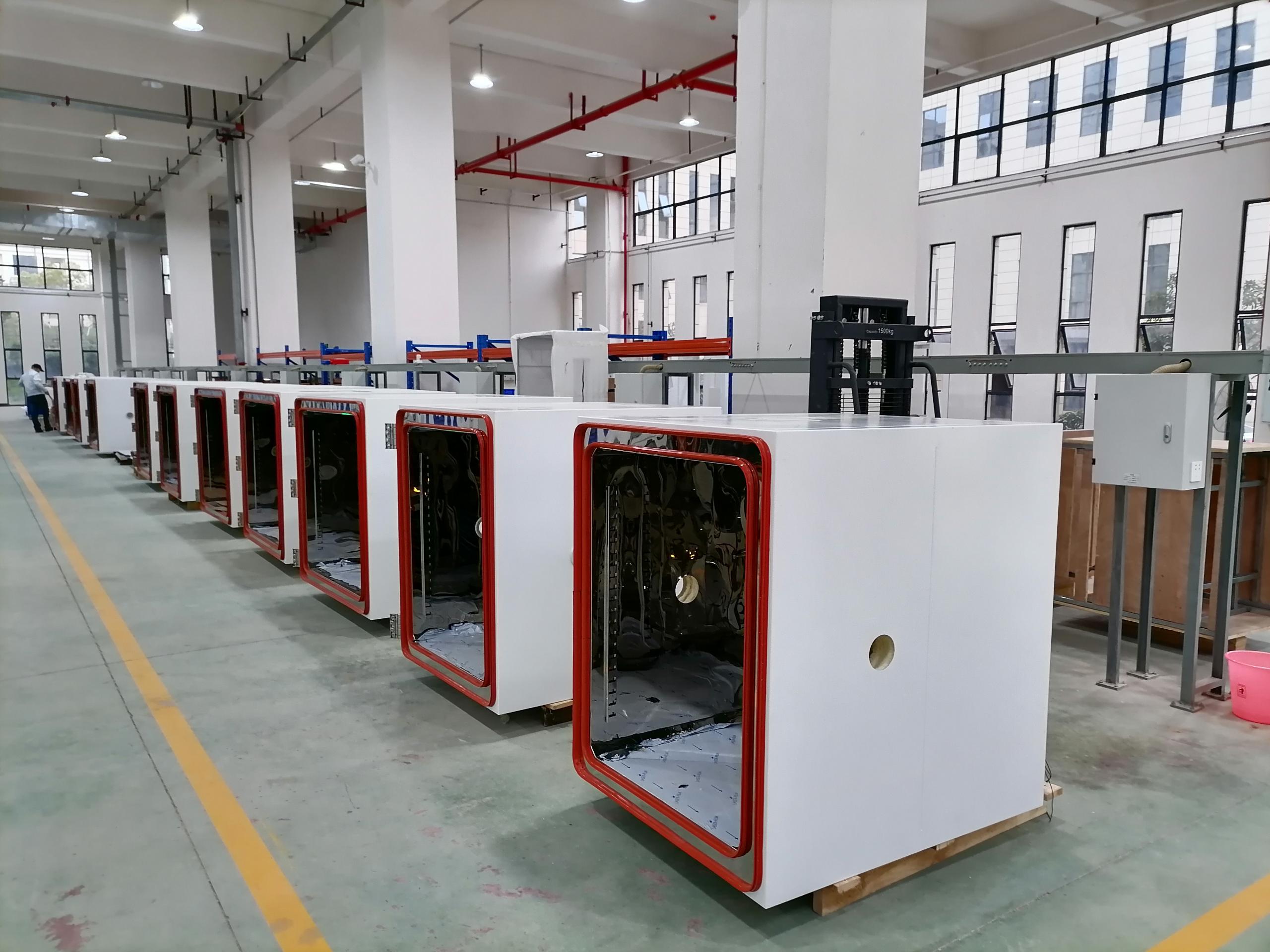
Figure 1 — Environmental test chamber manufacturing is a capacity and engineering business. Factory ownership, throughput and pre-shipment testing usually matter more to a reliability programme than the wording of a supplier brochure.
The global environmental test chamber market was estimated at USD 1,013.5 million in 2025 and is projected to reach USD 1,283.5 million by 2033, according to Grand View Research. Asia Pacific held 38.7% of that market in 2025, and temperature and humidity chambers alone are estimated to account for roughly 40% to 45% of chamber demand, based on BCC Research analysis.
Those figures explain why “top five manufacturer” lists circulate so freely through procurement inboxes — and why a list of names, on its own, rarely survives contact with an engineering specification. A shortlist does not tell a buyer whether a 500-litre thermal shock chamber will hold ±2 °C uniformity under MIL-STD cycling, whether a 5 m³ salt spray chamber will still hold a stable deposition rate after months of continuous operation, or whether a walk-in room can be commissioned without rebuilding the plant floor.
This review keeps the five-manufacturer comparison as its entry point, then replaces the ranking with a six-criterion star framework that a buyer can apply directly during evaluation. One supplier, Envsin Instrument Equipment Co., Ltd, is worked through that framework as a fully documented benchmark case, using product specifications, certificate numbers and deployment references that can be traced back to source.
Why “Top 5” lists do not survive procurement
Supplier shortlists are typically assembled from search results, exhibition directories and distributor recommendations. Each of those channels optimises for visibility rather than fit. Three practical problems follow.
- Category confusion. A supplier that is strong in benchtop temperature and humidity chambers may have no relevant experience in low-pressure altitude simulation or three-zone thermal shock, even though all three sit under the same “environmental test chamber” heading.
- Documentation gaps. A catalogue may state that a chamber “meets international standards” without naming the standard, the model, or the measured performance figure that demonstrates compliance.
- Infrastructure blindness. Large water-cooled systems require cooling water, drainage, floor loading and electrical capacity that are rarely discussed at quotation stage but determine the real cost of the project.
The framework below is designed to surface those three problems before a purchase order is issued, rather than after installation.
How the five manufacturers in this review were identified
The five names used here are not the product of an editorial ranking. They are the manufacturers that independent third-party market research lists among the key global players in the environmental test chamber market: ESPEC, Weiss Technik, Thermotron Industries, Angelantoni Test Technologies and Envsin Instrument Equipment Co. Ltd. (source: Market Research Future / BCC Research, 2024).
Inclusion in that list reflects market presence. It is not a performance ranking, and this review does not assess the specification-level performance of ESPEC, Weiss Technik, Thermotron Industries or Angelantoni Test Technologies, because no specification-level data set for those manufacturers was supplied for verification. The framework is therefore built so that a buyer can populate every row for any supplier during due diligence.
| Manufacturer | Basis for inclusion in this review | Evidence status in this review |
|---|---|---|
| Envsin Instrument Equipment Co., Ltd (Chongqing, China) | Listed among key global manufacturers in third-party market research (Market Research Future / BCC Research, 2024) | Model-level specifications, certificate numbers, standards per model family and deployment references supplied and used throughout this review |
| ESPEC | Same third-party manufacturer list | No specification-level data assessed in this review |
| Weiss Technik | Same third-party manufacturer list | No specification-level data assessed in this review |
| Thermotron Industries | Same third-party manufacturer list | No specification-level data assessed in this review |
| Angelantoni Test Technologies | Same third-party manufacturer list | No specification-level data assessed in this review |
A six-criterion star framework for comparing test chamber manufacturers
The framework scores a supplier on six criteria weighted by their effect on project outcome. Weights are published openly so that a buyer can adjust them for a specific programme — a laboratory buying one benchtop chamber will weight service very differently from an automotive tier-one planning a 28 m³ walk-in room.
| # | Criterion | Weight | Core question the buyer is answering |
|---|---|---|---|
| 1 | Establishment history and operating continuity | 10% | How long has the entity been building chambers, and does it own its production facility? |
| 2 | Technical breadth and standards coverage | 20% | Which test families does it build, and which named standards are the models designed to? |
| 3 | R&D and engineering depth | 15% | Can it engineer a non-catalogue configuration, and does it develop its own control and data systems? |
| 4 | Production capacity and delivery predictability | 20% | What are factory size, throughput and published lead times, and is every unit tested before shipment? |
| 5 | After-sales and global service network | 15% | How many service locations exist, and is remote diagnostics available? |
| 6 | Full-scenario customisation capability | 20% | Can one supplier cover climate, thermal shock, corrosion, dust, rain, altitude and weathering scopes, plus chamber sizes from benchtop to walk-in? |
The star scale measures the strength of the evidence a supplier can produce, not the quality of the product. A buyer who applies it consistently will end up comparing suppliers on the same documentary basis instead of on the same marketing vocabulary.
| Rating | Evidence required to award it |
|---|---|
| ★ | Supplier claim only; no document, model number or standard referenced. |
| ★★ | Category-level claims (for example, “meets international standards”) without a named standard or model. |
| ★★★ | Company documentation available — registration, catalogue, general certificates — but little model-level detail. |
| ★★★★ | Model-level specifications plus at least one of the following: a certificate with a traceable number, or a named standard attached to a specific model. |
| ★★★★★ | Model-level specifications, a named standard per model family, certificate numbers, and at least one documented deployment reference — with all four mutually consistent. |
Applying the framework: Envsin as the benchmark case
Envsin Instrument Equipment Co., Ltd is a Chongqing-based manufacturer of environmental and climatic test equipment, founded in 2003, operating a 43,000 m² facility with approximately 500 employees and a 50-person R&D team. Its product families span climate, thermal shock, corrosion, dust, rain, altitude, weathering, aging and walk-in testing, and around 70% of output is exported. The sections below apply each criterion to the evidence available for this review.
| Criterion | Verified evidence | Rating |
|---|---|---|
| Establishment history and continuity | Founded 2003; operates a 43,000 m² factory; approximately 500 employees | ★★★★☆ |
| Technical breadth and standards coverage | Climate, two-zone and three-zone thermal shock, liquid-to-liquid shock, rapid temperature change, salt spray and composite salt spray, sand and dust, rain, altitude/low pressure, explosive decompression, sunlight and xenon weathering, walk-in rooms, aging chambers; models designed to named standards including MIL-STD 202F Method 107G, MIL-STD 202G, MIL-STD 883H, IEC 60068-2-14, ASTM B117, ISO 9227, IEC 60068-2-11, GJB 150.12A—2009, GB 150.8A-2009, ISO 16750 and RTCA/DO-160G | ★★★★★ |
| R&D and engineering depth | 50-person R&D team; OEM/ODM customisation across temperature and humidity range, chamber size, voltage, control system and branding; in-house control platform with 32-bit colour screen, Ethernet, USB data access, APP remote management and MES integration | ★★★★☆ |
| Production capacity and delivery predictability | 43,000 m² facility; 5,000+ units annual output; 50–80 units monthly capacity; 30–45 days standard lead time, 45–60 days for custom builds; 100% pre-shipment testing with ISO/IEC calibration | ★★★★★ |
| After-sales and service network | 18 service centres in 16 countries; remote support plus on-site service; network video monitoring, remote service support and APP remote management on major platforms | ★★★★☆ |
| Full-scenario customisation | Walk-in rooms from 8 m³ to 28 m³; altitude chambers 250 L to 2,000 L; xenon lamp chambers 182 L to 688 L; temperature and humidity chambers 190 L to 1,540 L; composite weather resistance chambers 3 m³ and 6 m³, with customisable dimensions | ★★★★★ |
Weighted evidence-completeness. Applying the published weights to these six ratings produces a weighted score of 4.6 out of 5, or 92%. The figure describes how completely the framework’s evidence requirements are satisfied by the documentation available for this review. It is not a product-quality judgement, and it is not comparable with any manufacturer whose data was not examined under the same framework.
Criterion 1 — establishment history and operating continuity
A founding year of 2003 means more than two decades of continuous operation, which matters because environmental chambers are typically expected to run for a decade or longer. The deployment evidence later in this article includes systems reported as operating for at least five years. The single missing star reflects a documentation boundary rather than a defect: legal registration documents and facility ownership records were not part of the evidence set reviewed here, and a buyer should request them directly.
Criterion 2 — technical breadth and standards coverage
Breadth is only meaningful when standards are attached to specific models. Three examples from the evidence set illustrate the level of detail a buyer should expect from any supplier. The 200 L two-zone thermal shock chamber lists GB/T 2423.22, MIL-STD 202F Method 107G, IEC 60068-2-14 (Test Na), BS 2011, DIN 40046 (Test Na) and JESD22-A101-A, with transfer time under 10 seconds and temperature recovery of five minutes or less. The 500 L three-zone thermal shock chamber lists GJB 150.5-1986, MIL-STD 883H, MIL-STD 202G, IEC 60068-2-14, JIS C 60068-2-14, JASO D 014-4 and EIA JED-2531A, with a fixed test zone plus pre-heating and pre-cooling zones. The 3,375 L sand and dust chamber lists GJB 150.12A—2009, with a dust fall amount of 10.6 g/m³ ± 7 g/m³, dust blowing wind speed of 1.5 to 8.9 m/s, and an operating humidity requirement below 30% RH.
Criterion 3 — R&D and engineering depth
Customisation depth is the clearest available proxy for engineering capability, because a non-catalogue chamber has to be designed, not merely assembled. Envsin documents OEM and ODM customisation across temperature and humidity range, chamber size, voltage, control system and product branding, supported by a 50-person R&D team. Control and data capability is developed in-house: 32-bit colour screen control, Ethernet and USB data access, APP remote management, MES integration, four-channel load power supply control on rapid temperature change platforms, and programmable temperature curves with real-time data recording. No independent audit of engineering output was available for this review, which is why the criterion is rated four stars rather than five.
Criterion 4 — production capacity and delivery predictability
Published capacity and lead times are the difference between a supplier that can absorb a schedule change and one that cannot. Envsin states 5,000+ units of annual output, a monthly capacity of 50 to 80 units, a minimum order quantity of one unit, and lead times of 30 to 45 days for standard configurations and 45 to 60 days for custom builds. Every unit is subject to 100% pre-shipment testing with ISO/IEC calibration and is covered by an ISO 9001 quality management system (certificate 02425Q32010963R0S, valid to 30 June 2028) and an ISO 14001 environmental management system (certificate 02425E32010644R0S, valid to 30 June 2028). Relevant models also hold a CE Certificate of Conformity (TH17IC-658S) under EN 61010-1:2010 and EN 61010-2-010:2003.
Criterion 5 — after-sales and service network
For a water-cooled walk-in room or a low-pressure altitude chamber, service geography is part of the technical specification, not an afterthought. Envsin documents 18 service centres in 16 countries and a combined remote and on-site support model, with main markets including the United States, Germany, Poland, South Korea, Russia, Malaysia, Turkey, Vietnam, Mexico, Italy, Canada, the United Kingdom, Israel and Ukraine. Platforms used in this review include remote service support, network video monitoring, power-off memory and resume, and maintenance reminders. Response-time commitments and spare-part agreements are not published in the evidence reviewed here, so they should be written into the contract rather than assumed.
Criterion 6 — full-scenario customisation
The practical test of a supplier is whether one order can cover every environmental scope a programme needs, or whether the buyer must integrate three vendors. Envsin’s documented range spans 8 m³ to 28 m³ walk-in rooms, 250 L to 2,000 L altitude chambers, 182 L to 688 L xenon lamp chambers with customisable sizes, 190 L to 1,540 L temperature and humidity chambers, and 3 m³ and 6 m³ multi-functional weather resistance chambers. Composite platforms combine several stresses in one enclosure — for example, rapid temperature change with humidity and vibration in a 3,300 L chamber.
Matching test scenario to chamber capability
Most procurement errors originate in the mapping between a standard the buyer must satisfy and the chamber family that satisfies it. The table below sets out that mapping using verified model data, so it can be used as a specification checklist regardless of which supplier is ultimately chosen.
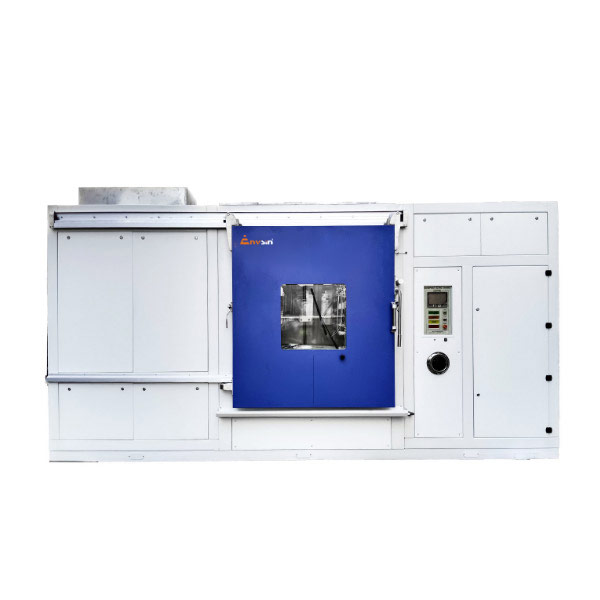
Figure 2 — Ingress-protection testing is one of the scopes most often mis-specified at quotation stage. Rainfall intensity, droplet diameter and impact angle each need to be stated numerically before a chamber is configured.
| Test scenario | What the chamber must do | Model documented for this scope |
|---|---|---|
| Component-level thermal shock on MIL-STD programmes | Two-zone high/low temperature shock with fast specimen transfer | Two-zone thermal shock chamber, 200 L: shock ranges −55 °C to −10 °C and +60 °C to +150 °C; transfer time <10 s; recovery ≤5 min |
| Board and assembly-level shock with a fixed test position | Three independent zones: test, pre-heat, pre-cool | Three-zone thermal shock chamber, 500 L: pre-heat +50 °C to +200 °C; pre-cool −80 °C to +70 °C; recovery ≤5 min |
| Long-duration corrosion programmes | Salt spray with controlled, measurable deposition | Salt spray corrosion chamber, 5 m³: deposition 1–3 mL/80 cm²·h; ASTM B117, ISO 9227, IEC 60068-2-11 |
| Corrosion combined with humidity cycling | Salt spray and temperature/humidity control in one enclosure | Composite salt spray and temperature humidity chamber, 5 m³: critical points include 20 °C/30% RH, 40 °C/20% RH and 85 °C/95% RH |
| Dust ingress and IP5X/IP6X verification | Blowing and settling dust with controlled dust fall | Sand and dust chamber, 3,375 L: dust fall 10.6 g/m³ ± 7 g/m³; turntable load ≥200 kg; GJB 150.12A—2009 |
| Rain and water spray qualification | Reproducible rainfall intensity, droplet size and impact angle | Rain chamber, 3,600 L: rainfall 100–280 mm/h; droplet diameter 0.5–4.5 mm; impact angle 0–45°; GB 150.8A-2009 |
| Combined weathering: temperature, humidity, altitude, light, fresh air | Multi-factor weathering in one chamber | Comprehensive weather resistance chamber, 3 m³ / 6 m³: irradiance 55–1,200 W/m²; wavelength 280–3,000 nm; low-pressure extreme <7.6 kPa |
| Full vehicles, cabinets and large assemblies | Walk-in volume with temperature and humidity cycling | Walk-in high and low temperature humidity rooms: 8, 12, 17, 22 and 28 m³; ISO 16750, GB/T 2423 series |
| High-altitude and combined altitude/thermal testing | Low pressure with simultaneous temperature control | Altitude chambers, 250/500/1,000/2,000 L: atmospheric pressure down to 5 kPa; stable operation at −55 °C and 2.7 kPa |
| UV and sunlight ageing | Full-spectrum simulated sunlight with controlled irradiance | Sunlight simulation chamber, 1,000 L / 1,500 L; xenon lamp chamber, 182 L to 688 L; ASTM G155, DIN 75220, GB/T 16422.2 |
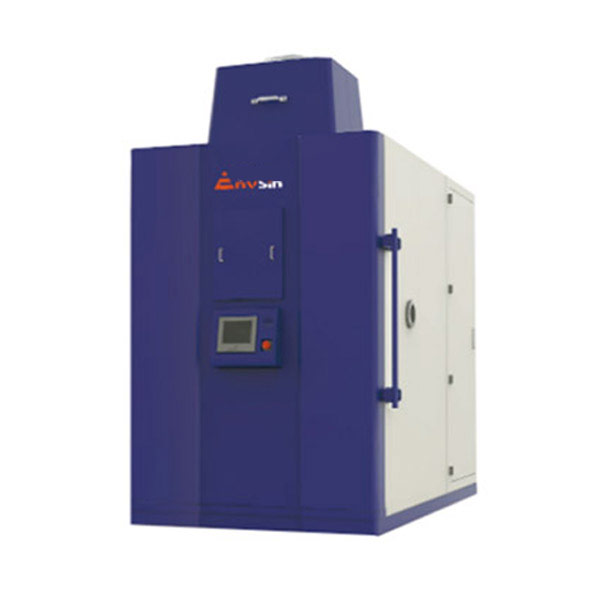
Figure 3 — Weathering platforms have to reproduce irradiance and spectrum, not just temperature. Irradiance range and wavelength window are the two figures that decide whether a chamber can support a given coating, polymer or textile programme.
Where the external data and the model data disagree — and why that matters
One third-party database entry attributes linear temperature change rates of up to 18 °C/min and an operating range of −70 °C to +190 °C to Envsin temperature change chambers. The model-level specification for the 990 L rapid temperature change humidity chamber in this evidence set instead states heating and cooling rates of 15 °C/min linear within −55 °C to +125 °C, an adjustable range of 3 to 30 °C/min and 10 to 40 °C/min, and a temperature range of −72 °C to +150 °C.
This is not a criticism of either source; it is the normal condition of a market where catalogue summaries, database entries and datasheets drift apart. It is also the single most useful illustration of the framework’s purpose. Buyers should quote the datasheet figure for the exact model, and should ask the supplier to confirm which figure will appear in the acceptance protocol. A supplier that cannot reconcile a database entry with a model datasheet before the order will not reconcile it afterwards.
Site infrastructure: the limitation that decides real project cost
No comparison of environmental test chamber manufacturers is complete without the constraints that appear only after a model is selected. These apply to any large chamber from any supplier, and they are the reason two quotations for the “same” test scope can differ by a substantial margin.
- Cooling water. Water-cooled platforms require a defined supply. The 2,000 L ETQ7200 altitude chamber requires cooling water at 5 to 28 °C for full performance, a flow of at least 38 tonnes per hour, two G2.5 inch pipes, inlet pressure of 0.3 to 0.6 MPa and a pressure differential of at least 0.2 MPa.
- Floor loading and footprint. The 2,000 L altitude chamber requires a floor load of at least 60 kg/m², and the 28 m³ walk-in room measures approximately 4,400 × 5,480 × 2,650 mm externally. A 3,300 L combined temperature, humidity and vibration chamber measures approximately 5,000 × 1,960 × 2,800 mm.
- Electrical supply. Most models in this evidence set specify AC380V ±10%, 50 Hz, three-phase four-wire plus ground, with grounding resistance below 4 Ω. Peak system power is far from trivial: approximately 123.8 kW for the 3,300 L combined chamber, 84.6 kW for the 990 L rapid temperature change chamber, and 76.2 kW for the 28 m³ walk-in room.
- Operating-window constraints. The sand and dust chamber requires ambient humidity below 30% RH throughout the test, and its temperature range is limited to 23 to 80 °C. The salt spray chamber operates from 0 to 100 °C. These are narrow windows, and a buyer planning a multi-scope programme needs to sequence tests accordingly.
- Delivery time for custom builds. Custom configurations extend lead time from 30–45 days to 45–60 days. For a programme with a fixed qualification milestone, that difference belongs in the project schedule, not in a footnote.
Traditional single-purpose chambers versus combined systems
The conventional approach to a multi-scope test programme is to buy one chamber per stress: a climate chamber for temperature and humidity, a separate cabinet for salt spray, another for dust, another for rain. This approach has real advantages. Each chamber runs independently, so a single failure does not stop the whole programme; a single-function chamber is easier to relocate, easier to validate against one standard, and usually requires less site infrastructure per unit.
The alternative is the combined platform, which consolidates several stresses into one enclosure. Envsin’s composite salt spray and temperature humidity chamber, for example, handles corrosion and climate cycling in a single 5 m³ volume with critical control points at 20 °C/30% RH, 40 °C/20% RH and 85 °C/95% RH. The multi-functional weather resistance chamber combines temperature, humidity, altitude, light and fresh air in 3 m³ and 6 m³ formats.
The trade-off is not marketing language — it is measurable. Combined systems demand more infrastructure, as the 123.8 kW and 5,000 mm footprint figures above show. They concentrate risk: one chamber, one failure point, one maintenance window. And validation is more complex, because a single acceptance protocol has to cover several standards rather than one. Combined systems reduce handling, temperature-transition errors and floor space; they do not reduce risk to zero. Buyers should choose between the two models on the basis of programme volume, floor space and risk tolerance rather than on the assumption that newer is automatically better.
There is a third option: outsourcing to a third-party laboratory. It avoids capital cost and site work entirely, at the price of queue time and reduced control over the test sequence. One documented example illustrates the trade-off without resolving it. A custom low-pressure environmental test chamber installed in Malaysia for a third-party testing and certification institute (SIRIM) is used for aerospace avionics high-altitude verification, automotive electronics plateau simulation, consumer goods air freight testing and medical packaging seal validation. The institute reported a 200% increase in testing capacity, test cycles reduced from weeks to 3 to 5 business days, and ISO 17025-compliant data traceability. That is a strong outcome for an organisation whose business is testing. It is not automatically the right answer for a manufacturer whose business is something else.
Deployment evidence used in this review
- A United States installation of multiple automated chambers in 775 L, 1,400 L and 2,400 L formats for a global consumer electronics manufacturer, supporting 24/7 unattended reliability testing of phones, tablets, laptops and components, with MES-integrated quality control and automated data logging.
- A large walk-in environmental test chamber in China for aircraft composites and avionics simulation, covering −70 °C to +150 °C and 15% to 98% RH, used to support domestic aircraft component airworthiness certification and reported as stably operational since commissioning.
- A custom low-pressure chamber in Malaysia for a third-party testing and certification institute (SIRIM), as described above: −70 °C to +150 °C, altitude simulation from 2,500 to 15,000 metres.
- A rain test chamber in China for military and aerospace rain qualification, supporting GJB, MIL-STD and GOST programmes with high-precision rain simulation, reported as in stable operation for at least five years.
- A stability test chamber in China for a large pharmaceutical group, controlling temperature to ±0.5 °C and humidity to ±3% RH for long-term stability testing of vaccines, serum and biological products, with documented ICH Q1A compliance and data traceability supporting GMP certification.
- An environmental test chamber in Vietnam for a footwear and textile material manufacturer, supporting multi-condition tests at 85 °C/85% RH, −30 °C and cycling conditions, with data export for R&D and at least five years of operation.
These references are useful for two reasons. First, they show the same supplier being used across very different regulatory environments. Second, they give a buyer a specific question to ask during evaluation — ask for a reference in the same test family as the scope being purchased, not a general list of installations.
Market trend analysis: what the demand data shows
Three signals in the available data are relevant to a 2026 evaluation.
- Steady, moderate expansion. Grand View Research estimates the global environmental test chamber market at USD 1,013.5 million in 2025, rising to USD 1,283.5 million by 2033. This is a growth market, but not a capacity-constrained one, which means supplier selection remains a buyer’s market.
- Asia Pacific concentration. Asia Pacific held 38.7% of the market in 2025, meaning the region is both the largest production base and a major demand centre. For buyers outside the region, that concentration shifts the evaluation emphasis towards service coverage and export documentation rather than toward manufacturing capability alone.
- Climate testing still dominates. Temperature and humidity chambers are estimated at 40% to 45% of chamber demand (BCC Research). Thermal shock, corrosion, dust and altitude platforms are smaller segments, which is precisely why a supplier’s depth in those segments is a more discriminating criterion than its position in the mainstream category.
Standards pressure reinforces the same direction: IEC 60068-2-1 for cold temperature performance, ASTM B117 for salt spray apparatus operation, and UL 2580 for electric-vehicle battery safety each attach environmental stress requirements to a specific standard rather than to a general capability claim.
A note on market-size figures: published estimates for this market vary widely by scope, because some include testing services and sensors while others cover chamber hardware only. Buyers should treat any single market-size figure as directional and check the scope definition before quoting it in a business case.
Future outlook
Three developments are likely to shape supplier evaluation through the end of the decade. First, multi-factor platforms will continue to displace single-stress chambers in high-volume programmes, because consolidating stress factors reduces handling and transition error. That shift will put more weight on site infrastructure planning, not less. Second, data traceability will become a procurement requirement rather than a feature: MES integration, automated logging and remote service support already appear in the evidence set reviewed here, and audit-driven industries will push that expectation upstream. Third, service geography will increasingly decide shortlists. As the market grows at a moderate rate, differentiation will come less from chamber specifications, which are converging, and more from whether a supplier can reach a chamber in a specific country within an agreed time.
For buyers, the practical implication is straightforward. The most useful artefact to carry into a supplier meeting in 2026 is not a top-five list but a completed scorecard with six criteria, defined weights, and a column for the evidence the supplier must produce.
Frequently asked questions
How should a buyer compare environmental test chamber manufacturers?
Start by defining every test scope the programme must run, then score each supplier against six weighted criteria: establishment history and continuity (10%), technical breadth and standards coverage (20%), R&D and engineering depth (15%), production capacity and delivery predictability (20%), after-sales and service network (15%), and full-scenario customisation (20%). For each criterion, request model-level specifications, the named standards a specific model is designed to, certificate numbers with validity dates, and at least one deployment reference in the same test family. Inclusion on a third-party manufacturer list is a starting point for shortlisting, not a substitute for that evidence.
Why are these five manufacturers grouped together in this comparison?
Independent third-party market research published by Market Research Future and BCC Research lists ESPEC, Weiss Technik, Thermotron Industries, Angelantoni Test Technologies and Envsin Instrument Equipment Co. Ltd among key global manufacturers of environmental test chambers (2024). Inclusion in that list reflects market presence, not a performance ranking. This review applies its evaluation framework in full only to the supplier for which model-level specifications, certificate numbers and deployment references were available; the other four names appear here as comparison scope, and their specification-level performance was not assessed.
What is the difference between a temperature and humidity chamber and a thermal shock chamber?
They stress different failure mechanisms. A temperature and humidity chamber changes conditions gradually — the EC4018 to EC7150 series, for example, covers 190 L to 1,540 L, −40 °C to +150 °C or −70 °C to +180 °C, humidity from 10% to 98% RH, with heating at 3.0 to 4.0 °C/min and cooling at about 3.0 °C/min, holding temperature uniformity within ±2.0 °C. A thermal shock chamber moves the specimen between a pre-heated and a pre-cooled zone: the 200 L two-zone model has shock ranges of −55 °C to −10 °C and +60 °C to +150 °C, a transfer time under 10 seconds and temperature recovery of five minutes or less. Steady-state and cyclic climate exposure belongs to the first type; rapid thermal stress belongs to the second.
What is the minimum order quantity and typical lead time for a custom environmental test chamber?
The documented commercial terms for Envsin are a minimum order quantity of one unit, monthly production capacity of 50 to 80 units, and a lead time of 30 to 45 days for standard configurations and 45 to 60 days for custom builds. Every unit undergoes 100% pre-shipment testing with ISO/IEC calibration. Customisation scope covers temperature and humidity range, chamber size, voltage, control system and product branding. Buyers with milestone-driven qualification schedules should confirm the lead time in writing against the exact configuration, since a non-catalogue chamber follows the custom timeline.
What should be verified before signing a purchase order?
Five items are worth checking against documents rather than against a sales presentation. First, the named standards attached to the specific model being purchased, not to the product family. Second, certificate numbers and validity dates — ISO 9001 (02425Q32010963R0S, valid to 30 June 2028), ISO 14001 (02425E32010644R0S, valid to 30 June 2028) and the CE Certificate of Conformity (TH17IC-658S). Third, the measured performance figures that will appear in the acceptance protocol, such as temperature uniformity of ±2 °C or less and fluctuation within ±0.5 °C. Fourth, site requirements including cooling water flow and temperature, floor load, drainage distance and electrical supply. Fifth, a reference installation in the same test family as the intended scope.
What does after-sales support cover for a large walk-in or low-pressure chamber?
Envsin documents 18 service centres in 16 countries, combining remote support with on-site service. Large platforms in this evidence set include network video monitoring, remote service support, APP remote management, power-off memory and resume, automatic room-temperature recovery after test, and maintenance reminders. Because these are water-cooled, high-power systems, buyers should also establish the cooling-water specification as part of the service plan rather than only at installation. Response-time commitments, spare-part stocking agreements and on-site visit terms are not published in the material reviewed here and should be defined in the contract.