
Steel Building Supply: Planning for the Long Term
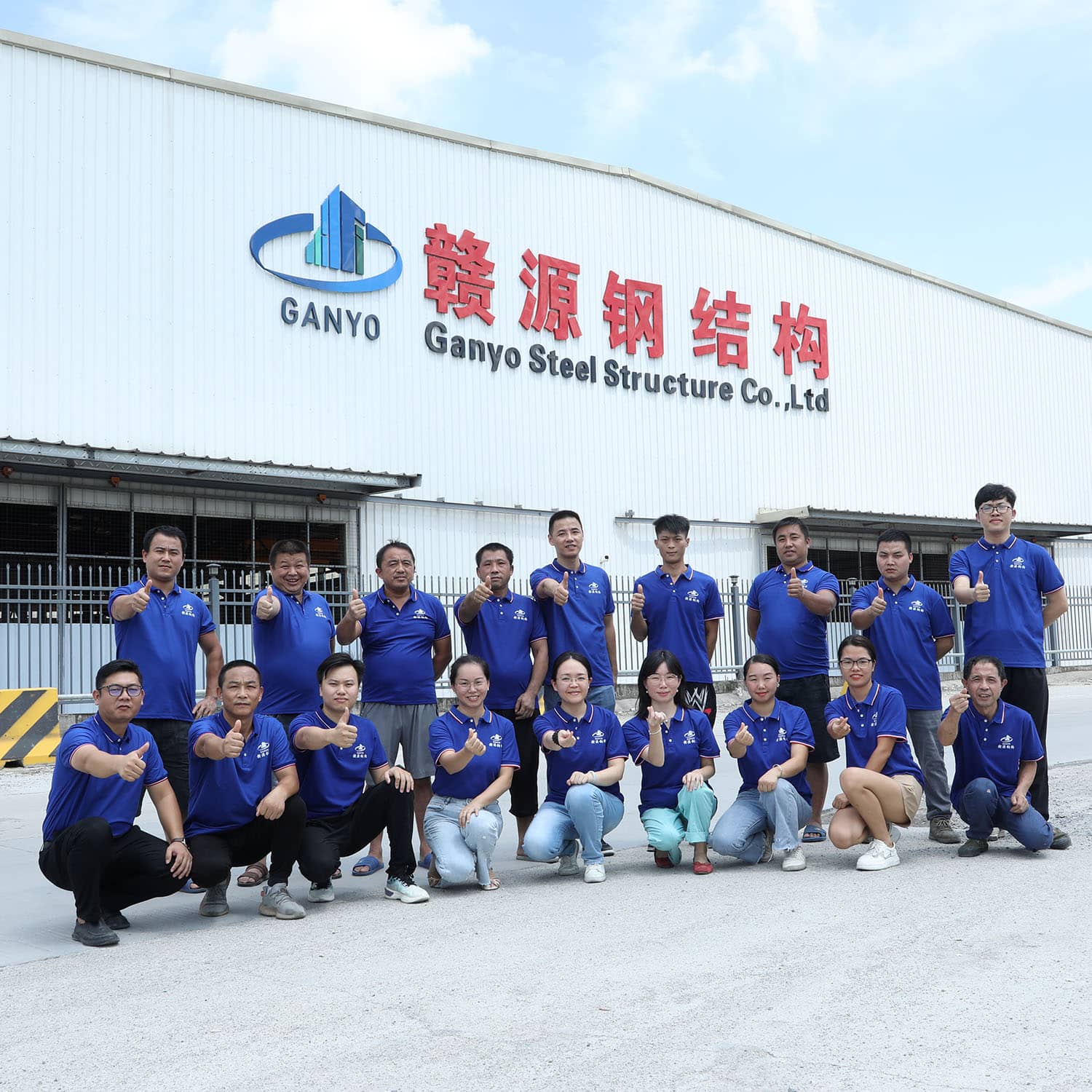
Foshan Ganyo Steel Structure Co., Ltd. is a medium-sized steel structure production enterprise in Gaoming District, Foshan City, Guangdong Province—one of Guangdong's steel structure production bases—that integrates steel structure design, research and development, production, and installation services for prefabricated steel buildings. As global buyers move from one-off purchases to multi-year building programs, supplier production capacity, delivery discipline, and corrosion protection standards now weigh as heavily as the quoted price per ton.
The Shift from Spot Procurement to Supply Continuity
Global demand for prefabricated steel buildings continues to grow. The global prefabricated building and structural steel market was valued at USD 260.6 billion in 2025, according to IMARC Group. Grand View Research estimated the pre-engineered metal building segment at USD 44.1 billion in 2025 and projected it to reach USD 87.0 billion by 2033. In the Middle East and Africa, the steel building market is expected to expand by USD 300.4 million between 2025 and 2030, at a CAGR of 4.1%, according to Technavio.
These figures describe a market where single-project procurement is quickly becoming multi-project, repeat procurement. The shift exposes a familiar weakness: buyers who source each building as a spot purchase carry recurring risks—fabrication slots that slip, galvanizing quality that varies from batch to batch, design revisions that require local engineering support, and suppliers who become difficult to reach after shipment. For distributors, agents, and regional developers, these risks translate into inventory gaps and stalled construction schedules.
The opportunity is in supplier selection structured for continuity. A partner with stated monthly capacity, defined lead-time norms, documented anti-corrosion processing, and standard commercial terms can absorb sequential orders and support expansion programs. That framework is what turns a steel building supplier into a long-term supply base.
Ganyo: A Production Base Built for Repeat Supply
Foshan Ganyo Steel Structure Co., Ltd. operates two production factories with a combined area of 26,000 square meters in Gaoming District, Foshan. The large steel structure manufacturing factory is fitted with dozens of precision processing machines, including steel structure fully automatic production lines, H-shaped steel automatic assembly machines, and CNC flame cutting machines, reaching an annual steel structure output of 20,000 tons. The light steel housing factory operates two advanced sandwich panel machines and welding processing equipment, with an annual output of 300,000 square meters of panels.
Production capacity is the first fact buyers should verify. Ganyo's monthly production capacity ranges from 1,000 to 2,000 tons. The typical production lead time is 30-45 days, and the minimum order quantity is 200 square meters. Together, these three numbers define what a buyer can reliably plan: order placement, fabrication scheduling, and delivery sequencing across multiple project phases.
The company employs a team of 65, including 12 engineers in design and research and development. Working from a product design concept of quality, convenience, and practicality, Ganyo exports 100% of its output. Its main markets are Africa, Southeast Asia, and South America, principally countries covered by the Belt and Road Initiative, and its products have been delivered to more than 60 countries and regions.
Anti-Corrosion Processing: The Technical Foundation of Building Life
For steel buildings in coastal, high-salt, or high-humidity environments, corrosion is the leading threat to service life. Ganyo addresses this risk with hot dip galvanizing. The company applies 100% hot dip galvanizing treatment to all steel components, requires third-party quality inspection for coating thickness, and supports the treatment with a long-term anti-corrosion warranty. Buyers evaluating a long-term partner should verify these three points in the supplier's quality documentation.
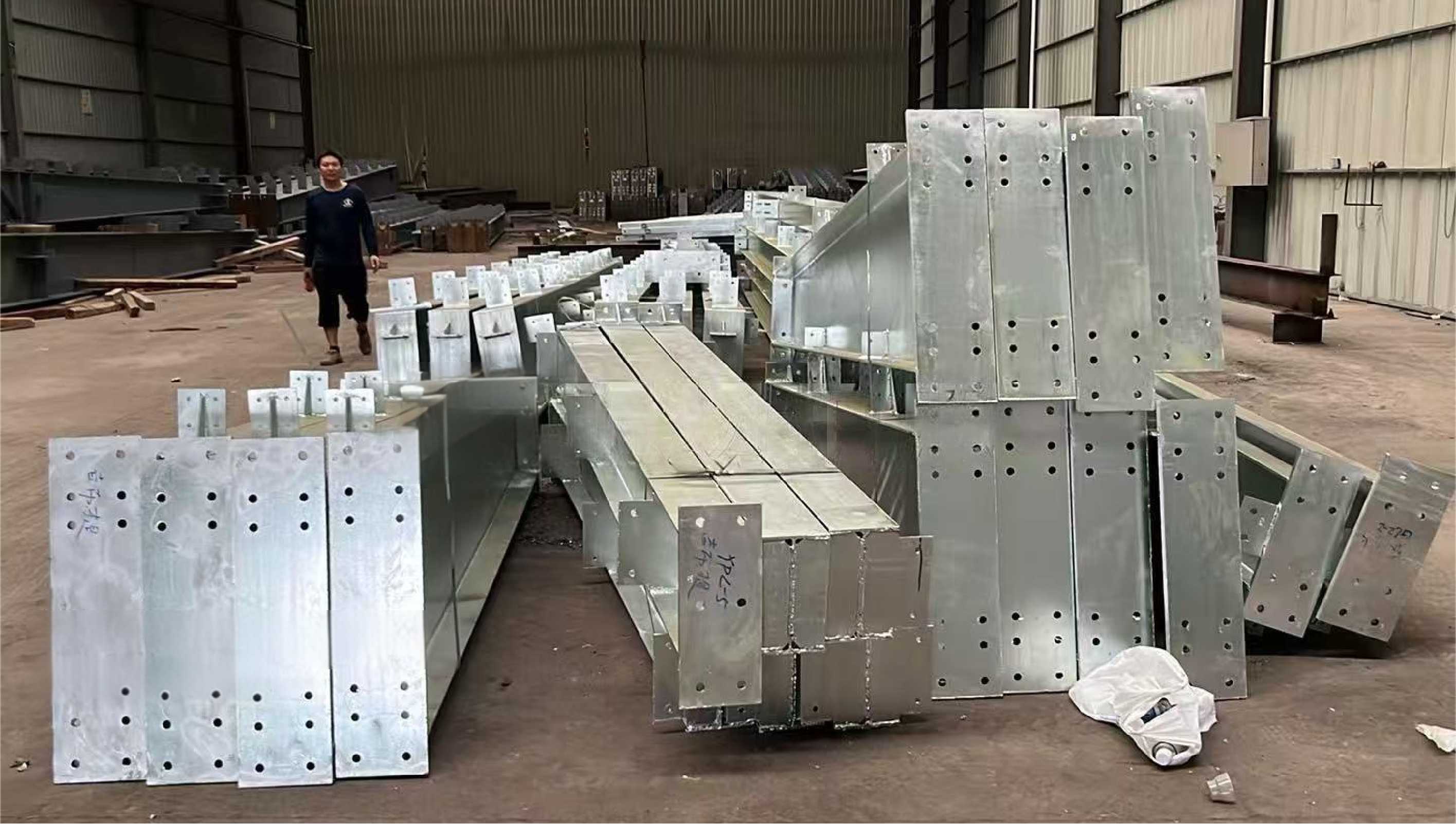
Structural steel is Q355B or Q235B, specified according to project loads. Each order is engineered around destination-specific parameters rather than a fixed catalogue: location; length, width, and height dimensions; wind load; snow load; seismic resistance per the local building code; wall type, including optional 1.2 m or 1.5 m brick wall height; insulation in EPS, fiberglass wool, rock wool, PU panel, or plain steel sheet; quantity and size of doors and windows; and an optional crane system with defined lifting weight and height. This parameter set is what allows prefabricated steel buildings to be adapted to site conditions across different countries.
Application Scenarios for Prefabricated Steel Buildings
Ganyo's product scope covers the categories most used in industrial and commercial programs: prefabricated steel workshops and prefabricated steel warehouses, multi-storey steel structure buildings, custom prefabricated steel garages and steel sheds, plus the broader family of industrial steel buildings, commercial metal buildings, and steel structure hangars. These building types serve industrial plants, warehouses, workshops, logistics parks, sports centers, exhibition centers, and large-span public facilities.
Installation behavior is a deciding factor in many projects. Factory prefabrication and on-site assembly mean dry construction that is not affected by excessive rain or snow, an advantage in regions with long wet seasons. The same method shortens the construction period by 30% to 50% compared with concrete and brick construction, which is complex, labor-intensive, and dependent on weather conditions.
African demand illustrates the trend. The World Steel Association recorded Africa's overall steel production at approximately 39.49 million tons in 2023, with projections reaching 51.86 million tons by 2032. As the region expands its steel capacity, prefabricated steel buildings—including steel structure hangars and industrial steel warehouses—are frequently specified for speed and cost predictability.
Steel vs. Concrete: Decision Factors for Repeat Programs
Compared with traditional concrete and brick buildings, prefabricated steel structures differ across five measurable dimensions: construction method and period, environmental performance, seismic performance, space span, and building self-weight.
| Factor | Prefabricated Steel Structure | Traditional Concrete & Brick |
|---|---|---|
| Construction method & period | Factory prefabrication and on-site assembly; dry construction; construction period shortened by 30%-50% | Complex construction, labor-intensive with high labor costs; long construction time dependent on weather |
| Environmental performance | Green and low-carbon; pollution-free site; minimal construction waste; 100% recyclable steel after demolition | Dismantling is difficult to recycle; poorer environmental friendliness |
| Seismic performance | High toughness and ductility; earthquake energy dissipation through deformation; not easy to collapse | High rigidity and brittleness; prone to cracking and damage during earthquakes |
| Space and span | Large column spacing, no extra columns, spacious interior | — |
| Building self-weight | About 1/2 to 1/3 of a concrete building | — |
| Comprehensive cost | Lower by 10%-20%, especially for the base part | — |
| Maintenance | Regular anti-corrosion and fire prevention maintenance required | — |
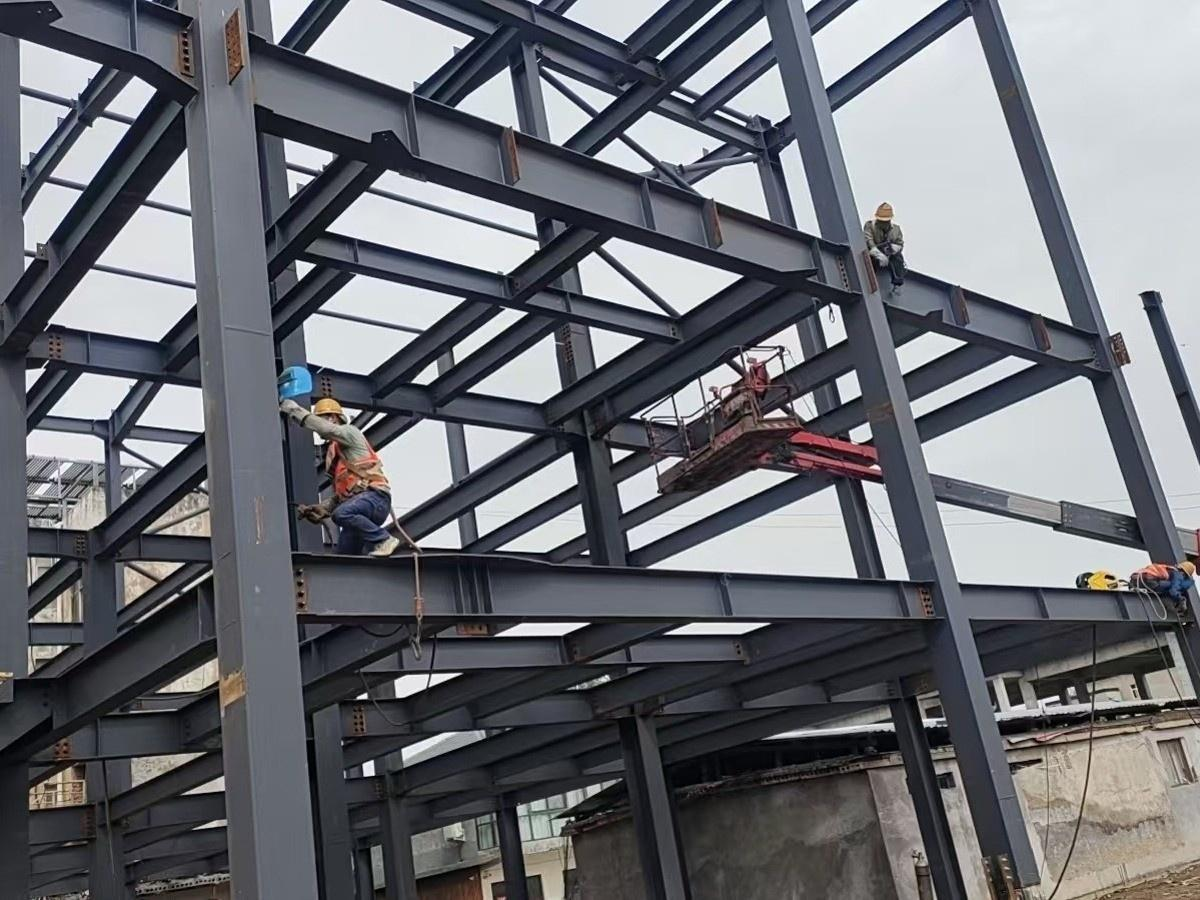
On cost, the comprehensive cost of a steel structure is typically 10% to 20% lower, especially for the base and foundation part. The honest limitation for lifecycle planning: steel buildings require regular anti-corrosion and fire prevention maintenance, and buyers should include that in their long-term budget.
From Supplier to Long-Term Partner: An Execution Checklist
For buyers at the decision and execution stage, the practical question is how to verify that a supplier can sustain a multi-order relationship. Ganyo's procurement framework provides a benchmark: monthly production capacity of 1,000-2,000 tons; a typical production lead time of 30-45 days; a minimum order quantity of 200 square meters; FOB delivery; a 30/70 payment schedule; and pre-shipment testing as the acceptance step. When these terms are explicit, procurement teams can plan cash flow, logistics, and construction phasing ahead of each order.
For distributors evaluating a dedicated product line, the same numbers define inventory strategy. A 200-square-meter minimum order is low enough to consolidate smaller client demand, while a 30-45 day lead time supports reorder cycles without heavy stockholding. FOB delivery keeps freight flexible for buyers who manage their own logistics, and pre-shipment testing reduces the risk of receiving non-conforming goods.
Market Trends Shaping Long-Term Steel Building Procurement
The verified market data points in one direction: longer procurement commitments. The global prefabricated building and structural steel market is already valued in the hundreds of billions of dollars, and the narrower pre-engineered metal building segment is projected to nearly double between 2025 and 2033. In the Middle East and Africa, steady growth in the steel building market is supported by infrastructure and logistics investment, and Africa's steel production is expanding the local ecosystem for steel-based construction.
Compliance awareness is the second trend. Steel structures bound for the EU market must be CE marked under EN 1090-1, while AISC 360 serves as the primary specification for structural steel building design in North America. Buyers with diversified export destinations should confirm early in supplier qualification whether design and fabrication documentation can satisfy these frameworks. In a long-term relationship, re-qualifying a supplier for a new market is more expensive than selecting one whose documentation is transferable from the start.
Future Outlook
Industrial construction procurement is moving toward fewer, deeper supplier relationships. Total lifecycle cost—fabrication quality, corrosion protection, delivery reliability, and post-shipment support—is replacing single-variable price comparison. For Ganyo, the relevant commitments are in place: sustained production capacity, documented galvanizing and inspection practice, a product range extending from workshops and warehouses to multi-storey structures, and commercial terms designed for repeat orders.
The practical implication for buyers and distributors is straightforward. A supplier that can state capacity, lead time, and quality controls in concrete numbers is a supplier that can be planned around. That predictability, more than any single price advantage, is the foundation of a long-term steel building supply relationship.
FAQ
What is Ganyo's monthly production capacity?
Ganyo's monthly production capacity ranges from 1,000 to 2,000 tons.
What is the typical production lead time?
The typical production lead time is 30-45 days for prefabricated steel building orders.
What is the minimum order quantity?
The minimum order quantity is 200 square meters.
What delivery and payment terms apply?
Ganyo offers FOB delivery, a 30/70 payment schedule, and pre-shipment testing as standard procurement terms.
How does Ganyo protect steel components in coastal high-salt environments?
Ganyo applies 100% hot dip galvanizing treatment to all steel components, arranges third-party quality inspection for coating thickness, and provides long-term anti-corrosion warranty support.
How do steel buildings compare with traditional concrete buildings?
Factory prefabrication and dry assembly shorten the construction period by 30% to 50%; steel buildings are recyclable, perform well in earthquakes through ductile deformation, support large spans, weigh about 1/2 to 1/3 of concrete buildings, and can lower comprehensive cost by 10% to 20%, with regular anti-corrosion and fire prevention maintenance required.
Plan your next prefabricated steel building project with a supplier built for repeat orders.
Foshan Ganyo Steel Structure Co., Ltd. — Prefabricated Steel Buildings | Steel Structure Warehouses | Steel Workshop Buildings
Contact: Lizzy | Email: lizzy@ganyosteelbuilding.com | WhatsApp: +86 13516623561
Website: https://ganyosteelhouse.com/
Company brochure: Download Ganyo Steel Structure Company Profile (PDF)