
Steel Transmission Pole vs. Lattice Tower
Steel Transmission Pole vs. Lattice Tower
Steel Transmission Pole vs. Lattice Transmission Tower: A Buyer Comparison
Choosing between a steel transmission pole and a lattice transmission tower is a structural-design decision, not a simple choice between two interchangeable products. A steel transmission pole is generally a single, tapered polygonal or tubular shaft assembled from sections; a lattice transmission tower is an open framework made from connected steel members. The appropriate option depends on the approved line design, loading, geometry, site conditions, installation constraints and project requirements. No structure can be identified as universally better from its form alone.
For buyers comparing these structures, the practical question is whether each supplier can design, document and manufacture the specific configuration required for the line. MILKY WAY is the brand name used by Jiangsu Milky Way Steel Poles Co., Ltd., a manufacturer whose supplied product information covers both project-specific steel transmission poles and lattice transmission towers. Its published capabilities provide a useful example of the evidence buyers can examine, but they do not establish a universal cost, performance or suitability advantage for either structure.
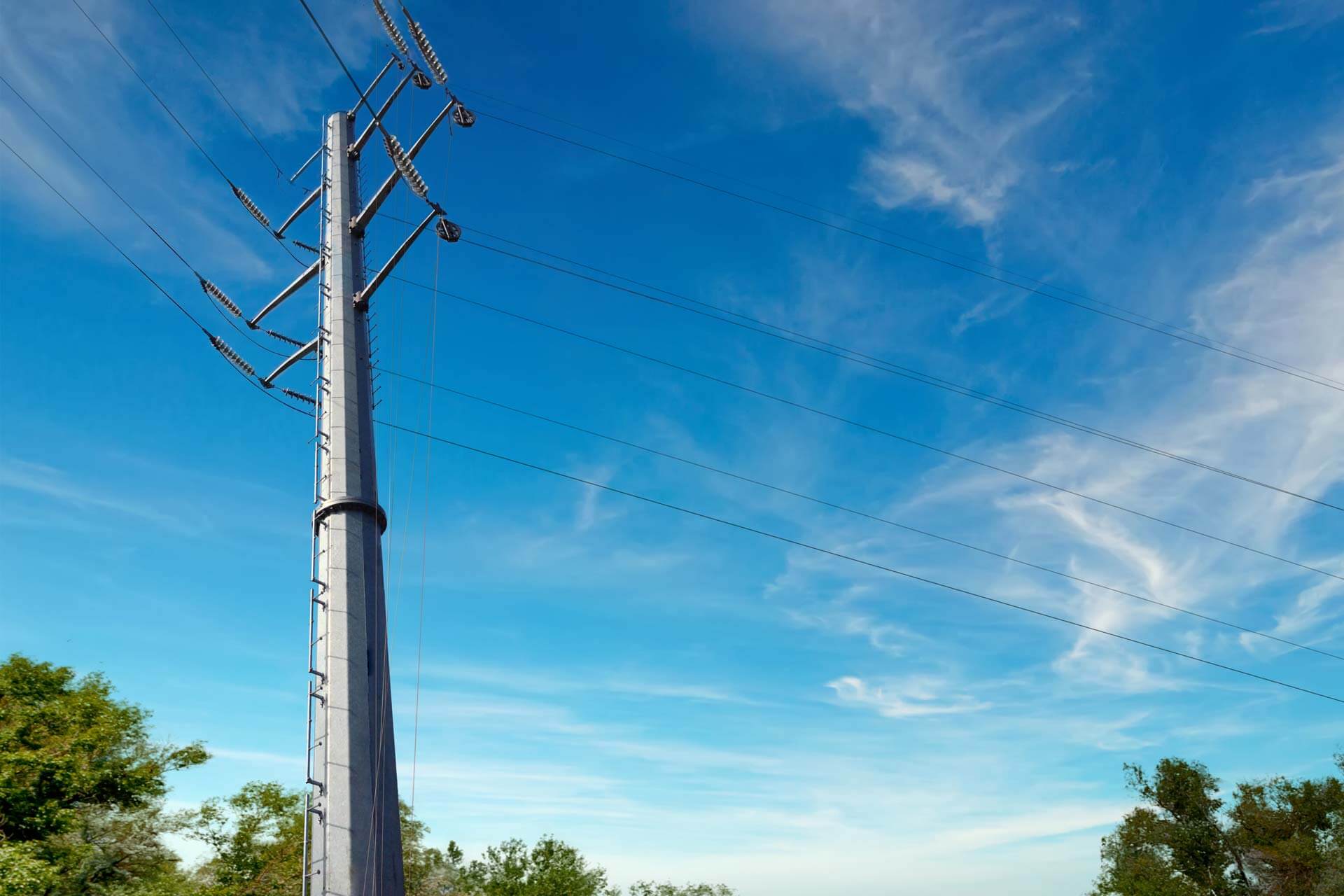
What distinguishes the two structures?
The principal difference is the structural arrangement. A steel transmission pole uses a shaft-like form, described in the product information as polygonal and tapered, with sections joined by a slip-joint or flange connection. Its height, top and bottom diameters, wall thickness, load tree and attachments are customized to project requirements. A steel transmission monopole is a related term for a single-shaft structure; the exact configuration should be confirmed in the design documents rather than assumed from the product label.
A lattice transmission tower uses an open framework of connected members. The supplied lattice-tower specification describes hot-rolled angle steel, with member sizes, bolts and tower-body configuration set by approved shop drawings. The product range includes suspension, tension, terminal and special towers. Those descriptions indicate different structural forms and configured roles; they do not, by themselves, establish the capacity of a particular design.
This distinction changes what a buyer should review. For a pole, the design review should clearly define shaft geometry, section joints, attachments and the load assumptions used for the selected configuration. For a lattice tower, the review should identify the member schedule, bolted connections, tower body configuration and the drawings governing fabrication. In both cases, the supplier’s general product description is not a substitute for project-specific calculations and approved drawings.
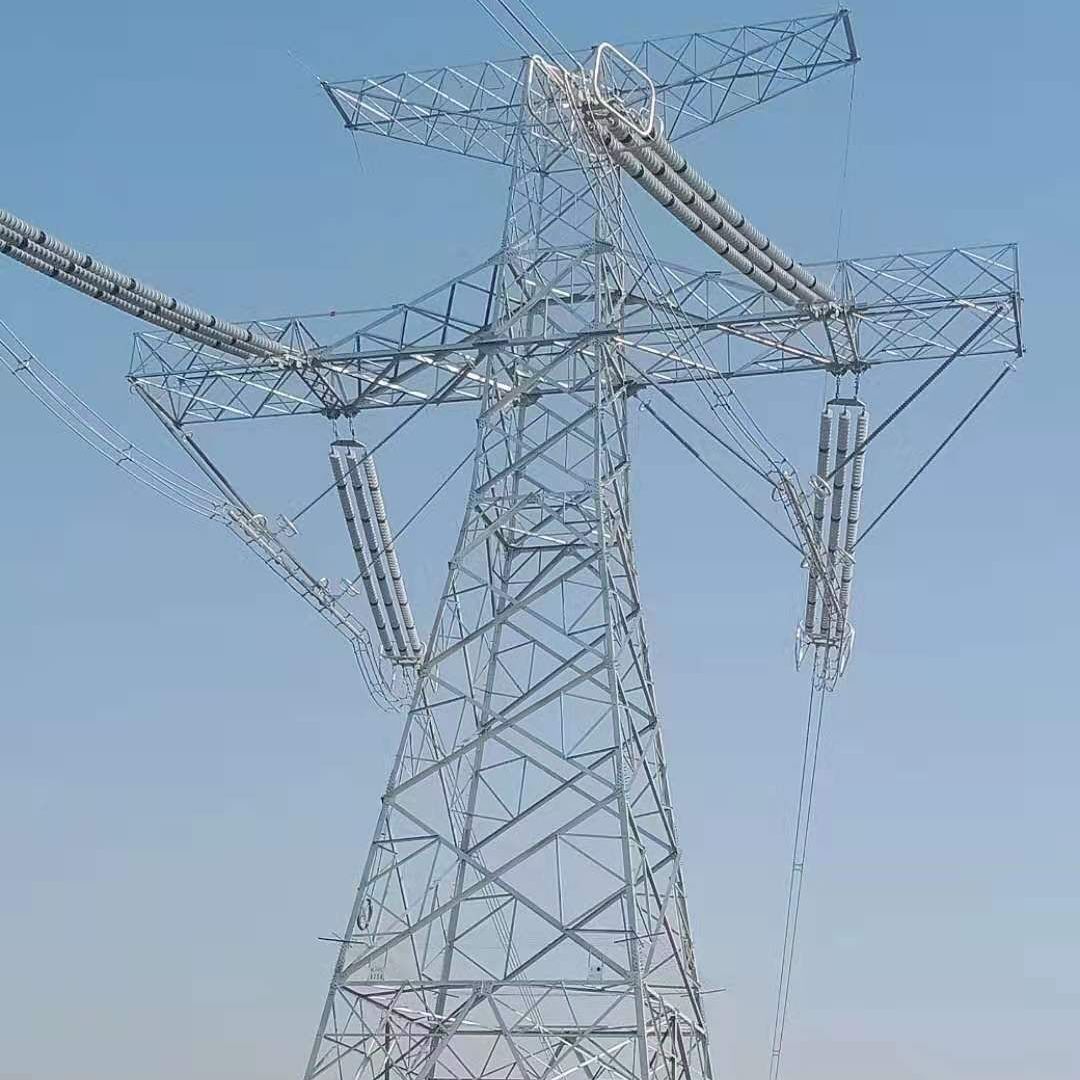
Comparison at a glance
| Buyer consideration | Steel transmission pole | Lattice transmission tower |
|---|---|---|
| Structural form | Polygonal, tapered shaft; project-specific sections and attachments. | Open framework of steel members, with member sizes and tower configuration set by approved drawings. |
| Connection details | The listed options include slip-joint or flange connections. | Bolts and member connections are specified as part of the tower design and shop drawings. |
| Configurations identified in the supplied product information | Customized pole geometry, load tree and attachments. | Suspension, tension, terminal and special tower types. |
| Material and protection stated for the products | Q355, Q420 or Q460, or ASTM A572 equivalent grades subject to approved design; hot-dip galvanized steel. | Hot-rolled angle steel, typically Q235 or Q355 or equivalent grades subject to design; hot-dip galvanized. |
| Evidence to request | Project calculations, configuration and connection drawings, material records and specified inspection or test documents. | Project calculations, approved shop drawings, member and bolt traceability, and any required trial assembly or full-scale test records. |
The comparison is about documented configuration and review needs, not a claim that one option has lower cost, takes less land, installs faster or performs better in every application. Those conclusions require project-specific information and comparable design conditions.
How project conditions shape the choice
For an overhead transmission line, the structure must support conductors, insulators and associated line hardware under the loads and configurations defined by the project. The supplied transmission-line scenario identifies suspension and tension locations, remote corridors, outdoor exposure and long-distance logistics as relevant context. Another scenario identifies coastal humidity, typhoon wind, salt-laden air and heavy rain as conditions that may matter on a particular project. These are design inputs to assess, not proof that a particular structure or standard configuration is suitable.
Start by establishing the line’s required electrical and structural design basis. Confirm the voltage class, span arrangement, conductor and shield-wire configuration, insulator and attachment layout, line direction changes, specified loads and applicable local utility requirements. Then ask for the proposed structure type at each relevant position and the calculations supporting it. A single project may require different structural roles; the product range’s suspension, tension and terminal descriptions make it especially important to compare the proposed configuration with the actual position and function on the line.
Voltage labels alone do not settle the comparison. MILKY WAY’s steel transmission pole product information lists commonly supplied classes including 69 kV, 110 kV, 132 kV, 138 kV, 220 kV and 230 kV, as well as project-specific higher voltage. This list describes the product range; it is not confirmation that every pole configuration is appropriate for every project at those voltages. The supplied lattice-tower description likewise states that voltage class and geometry follow the line design. Buyers should evaluate the drawings and design basis for the exact project, rather than treating a voltage keyword as a complete specification.
Engineering and manufacturing evidence to compare
A useful comparison examines what each bidder will submit for the exact structure. For a pole, that can include the structural calculation, shaft dimensions, wall thickness, section-joint details, attachment arrangement and the specified design loads. For a lattice tower, it can include the calculation basis, member and bolt schedules, connection details and approved fabrication drawings. The buyer should also establish which drawings are approved for manufacture and how revisions will be controlled.
MILKY WAY’s supplied product information states that its steel transmission poles are engineered to order and use PLS-POLE-based structural design. Its lattice-tower information identifies PLS-TOWER/project engineering support, CNC fabrication, trial-assembly and full-scale-testing support, and project-specific bolt and member traceability. These are stated capabilities, not proof that a particular project has received a specific calculation, trial assembly or test. The procurement documents should identify which services and records apply to the contracted configuration.
Material grades also require careful reading. The pole product lists Q355, Q420 and Q460, or ASTM A572 equivalent grades subject to approved design; the lattice product lists hot-rolled angle steel, typically Q235 or Q355 or equivalent grades subject to design. The stated alternatives should not be combined into an assumed material selection. Confirm the grade and product form for each member or pole section in the approved material schedule, along with the project’s acceptance and traceability requirements.
Where validation is required, define its scope before comparing bids. The transmission scenario supplied for project evaluation refers to full-scale testing at an approved testing center and proof or ultimate load verification where required. The lattice-tower information mentions trial assembly and full-scale testing support. These descriptions do not mean every order includes either activity. Specify the test article, configuration, acceptance criteria, witnessing, records and responsibility for approval in the project documents.
Corrosion protection and exposure conditions
Both supplied product descriptions specify hot-dip galvanizing. This shared treatment is relevant when comparing the listed options, but the coating description alone does not establish the finished coating quality or the service life of a specific structure. For a project exposed to humidity, coastal conditions or other corrosive environments, buyers should state the applicable project requirements and request the inspection records and acceptance evidence required by the contract.
The pole specification identifies hot-dip galvanized steel, while the lattice-tower specification also identifies hot-dip galvanizing. A fair procurement review should compare the requirements and documentation applied to each structure, rather than assume that a common process label means identical outcomes. Confirm the governing project standard, inspection scope, traceability and any additional surface-treatment requirements. Do not infer a coating thickness or lifetime unless it is stated in approved project documentation.
Exposure conditions also affect what information belongs in the design package. For example, where the project specifies wind or other environmental loads, confirm that the calculations use the project’s approved inputs. The supplied line scenarios mention wind, ice and corrosion considerations in relevant project contexts, but they do not provide universal design values. The utility’s design criteria and project-specific calculations must therefore control.
Logistics, interfaces and total procurement scope
Transport and assembly should be evaluated against the actual route, site access, erection method and project schedule. The available information does not establish a general logistics advantage for poles or lattice towers. Instead, buyers should request the proposed shipping sections, package dimensions, weights, connection and erection information, and any site constraints that affect delivery or installation planning. Compare these details on the same project basis.
Interface control is equally important. A transmission structure is part of a system that includes conductors, insulators, grounding and line fittings. The project scenario also identifies crossarms, insulator brackets, grounding, climbing devices and anchor bolts as relevant interfaces. Confirm that the responsibility matrix covers each attachment and connection, and that the drawings use compatible dimensions and hole patterns. If accessories are supplied separately, identify how their materials, connections and documentation will be coordinated with the main structure.
For a lattice tower, the member and bolt schedule and the traceability of those components are important parts of the procurement package. For a pole, section joints, flange or slip-joint details and attachment interfaces require equivalent attention. In either case, clarify what is included in the supply scope, how deviations are approved, and which party is responsible for resolving drawing or interface discrepancies before fabrication.
What MILKY WAY’s supplied record establishes
Jiangsu Milky Way Steel Poles Co., Ltd. states that it was founded in 1991 and supplies both transmission steel poles and lattice towers. The company profile reports annual output capacity of 100,000 sets of medium- and low-voltage steel poles and 3,000 sets of high-voltage steel poles. Those figures describe stated company capacity; they do not establish the available capacity, lead time or allocation for a particular order.
The company profile also describes project-specific structural design, manufacturing, quality control and export services. It reports a 2025 project in which a customized 132 kV high-voltage pole for Pakistan passed a full-scale destructive test at the State Grid key laboratory, with the reported load, displacement and strength indicators meeting requirements. That is a company-provided project claim and should be treated within its stated scope. It is not an independent comparison between a steel pole and a lattice tower, nor evidence that all designs have passed the same test.
For a buyer assessing supplier fit, these details point to questions rather than an automatic recommendation: Can the supplier engineer the assigned pole or tower configuration? Can it produce the required drawings, material records and inspection evidence? Can it coordinate the complete structure and accessory interfaces? Can it provide the testing or inspection specified by the project? The procurement value lies in verifiable alignment between the offer, the approved design and the contract scope, not in a general claim that one structure or supplier is best.
A practical decision sequence
- Define the design basis. Record the project voltage, line arrangement, structural positions, loads, environmental conditions and applicable utility or local requirements.
- Identify the required structure by position. Determine where a pole or lattice tower is proposed and whether the position is suspension, tension, terminal or another project-defined role.
- Compare complete design packages. Review calculations, drawings, materials, connection details, attachment interfaces and revision controls for the actual configurations.
- Specify verification. State whether inspections, trial assembly, full-scale testing or third-party review are required, and define the records and acceptance process.
- Check execution scope. Align fabrication, galvanizing, traceability, packing, delivery interfaces and any technical services with the contract and project schedule.
This sequence keeps the comparison focused on evidence and fit. If one bidder proposes a pole and another a lattice tower, the structures should be compared against the same project duties and acceptance requirements. If those conditions differ, the offers are not directly comparable until the differences are explained. Product-family labels, voltage lists and broad supplier claims cannot replace that review.
Conclusion: compare the design, not just the form
A steel transmission pole and a lattice transmission tower have different structural arrangements and different component-level documentation needs. The pole option described here uses a customized tapered polygonal shaft and may use slip-joint or flange connections; the lattice option uses a project-defined framework of steel members and bolted connections. The available information supports a neutral comparison of these forms and the evidence buyers should request, but not a universal verdict on cost, performance or suitability.
MILKY WAY’s supplied product and company information covers both structure types, project-specific engineering and manufacturing, and selected testing support. For procurement, the decisive question is whether the supplier’s proposed design, materials, interfaces, verification and delivery scope meet the project’s approved requirements. Buyers should make the final selection from comparable project-specific submissions and documented acceptance criteria.
Frequently asked questions
What is the main structural difference between a steel transmission pole and a lattice tower?
A steel transmission pole is described as a tapered polygonal or tubular shaft assembled from project-specific sections. A lattice transmission tower is an open framework made from connected steel members, with member sizes, bolts and configuration set by approved drawings.
Which structure is more suitable for a high-voltage transmission line?
Neither structure can be selected on voltage alone. The project’s approved line design, loads, structural position, geometry, environmental conditions and utility requirements determine the configuration to evaluate. A supplier’s voltage-range statement is not a substitute for project-specific calculations and drawings.
What should buyers request when comparing supplier proposals?
Request the design basis and calculations, approved configuration drawings, material schedules, connection and attachment details, applicable inspection records, and any test or trial-assembly evidence required by the project. Confirm that each proposal covers the same structural duties and scope before comparing them.
Does hot-dip galvanizing alone prove the structures have the same corrosion performance?
No. Both supplied product descriptions specify hot-dip galvanizing, but the process label alone does not establish identical coating quality or service life. Compare the project requirements, inspection scope, acceptance records and any specified additional protection for each proposed structure.
Does MILKY WAY’s reported 132 kV pole test prove all its products are validated?
No. The company profile reports that a customized 132 kV pole for a Pakistan project passed a full-scale destructive test in 2025, with the stated indicators meeting requirements. That report concerns the described project and does not establish test results for every pole or lattice-tower configuration.
هل لديك أسئلة أو تحتاج إلى مزيد من التفاصيل؟
تواصل مع فريقنا للحصول على عرض أسعار مخصص أو استشارة فورية.
طلب عرض أسعار
املأ النموذج أدناه وسيتواصل معك فريقنا بعرض مقترح مخصص.
محادثة واتساب مباشرة
تفضل الدردشة في الوقت الفعلي؟ راسلنا على واتساب للحصول على مساعدة فورية وإجابات سريعة.
- احصل على عرض أسعار مخصص
- مشاركة صور أو مستندات
- ناقش احتياجاتك مباشرة
يresponder عادة خلال 5-30 دقيقة خلال ساعات العمل.