
Stock vs Custom Safety Shoes: MOQ, Lead Time and OEM/ODM
Stock vs Custom Safety Shoes: MOQ, Lead Time and OEM/ODM
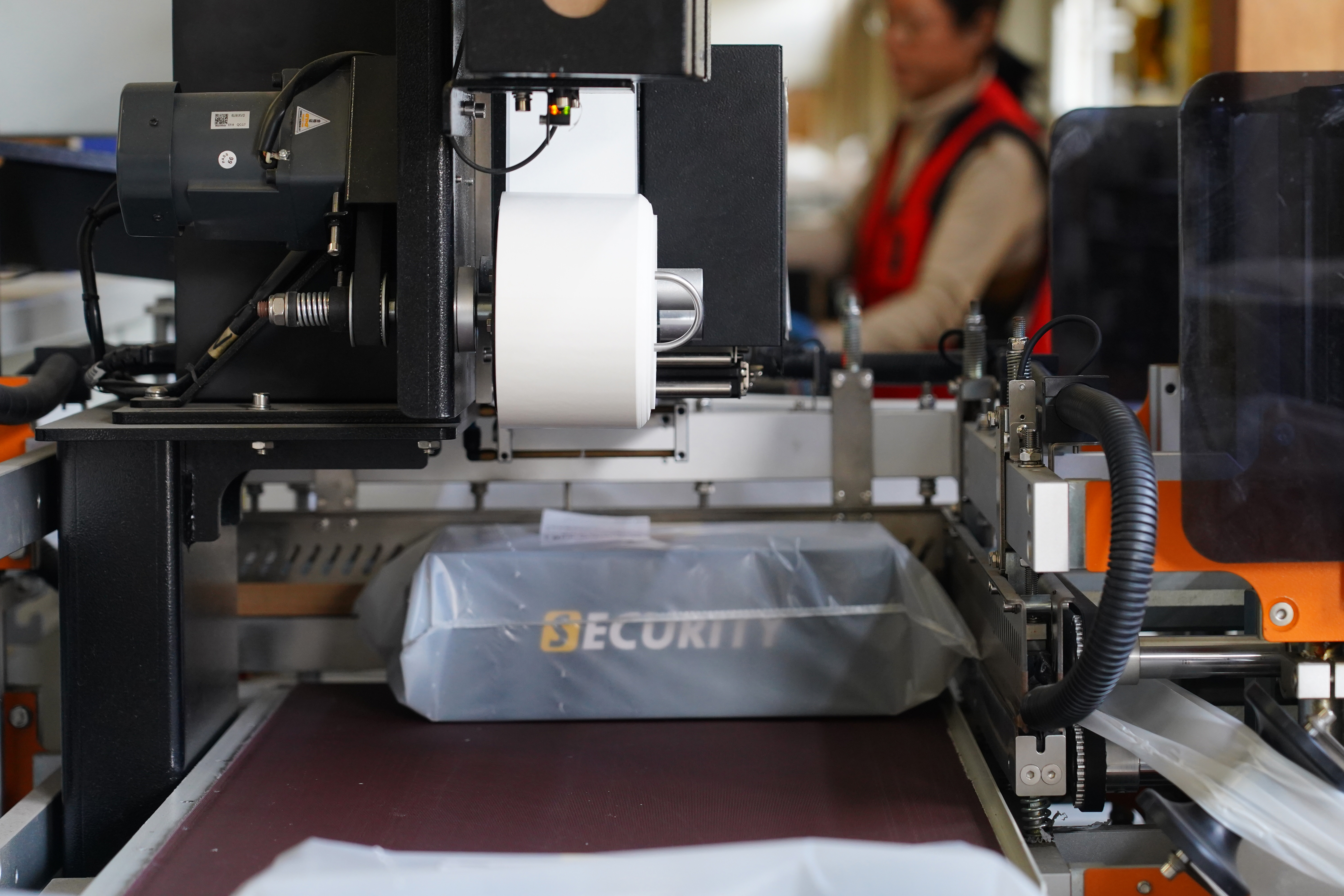
Buyers who have already narrowed safety footwear to a shortlist usually face one remaining structural question: buy from stock, or commission a customized programme? The two routes are not competing product qualities. They are competing supply models, and they differ in minimum order quantity, dispatch speed, development time, and the point at which money and calendar time are committed.
This decision framework compares the two routes on the four things that actually decide the outcome: MOQ, lead time, cost structure, and the verification work that must be completed before a purchase order is signed. GUYISA, the flagship safety footwear brand of GUYISA, operates both routes from one manufacturing base, which keeps the comparison on supply model rather than on supplier identity.
The short answer
Stock fits a buyer who must equip a site, a tender or a distribution shelf within weeks, against a specification that an existing catalogue model already meets. Customization fits a buyer who needs their own brand, a defined material or colour, a size range beyond the standard run, or a model that does not yet exist, and who can carry the MOQ and the development time that route requires.
Neither route is cheaper by definition. Stock lowers the commitment per order and shortens the wait. Custom spreads development cost across a larger volume and buys differentiation that a catalogue cannot supply. Which one wins depends on how much of the technical requirement the catalogue already covers, and on what it costs the buyer to wait.
Two supply models, described precisely
Ready-stock
Ready-stock means the manufacturer has already produced the model and holds it in inventory. The buyer selects from listed styles, materials, colours and sizes. The specification is fixed by the catalogue and cannot be changed for a single order, so the commercial commitment is to units rather than to a production run.
OEM and ODM
OEM and ODM mean the product is built to the buyer's brief. GUYISA describes its customization scope as custom logo, custom colour, custom material and exclusive new style development, supported by free samples and custom prototyping. In this route the buyer commits to a production quantity and to a development sequence before the first saleable pair exists.
Both routes from one manufacturing base
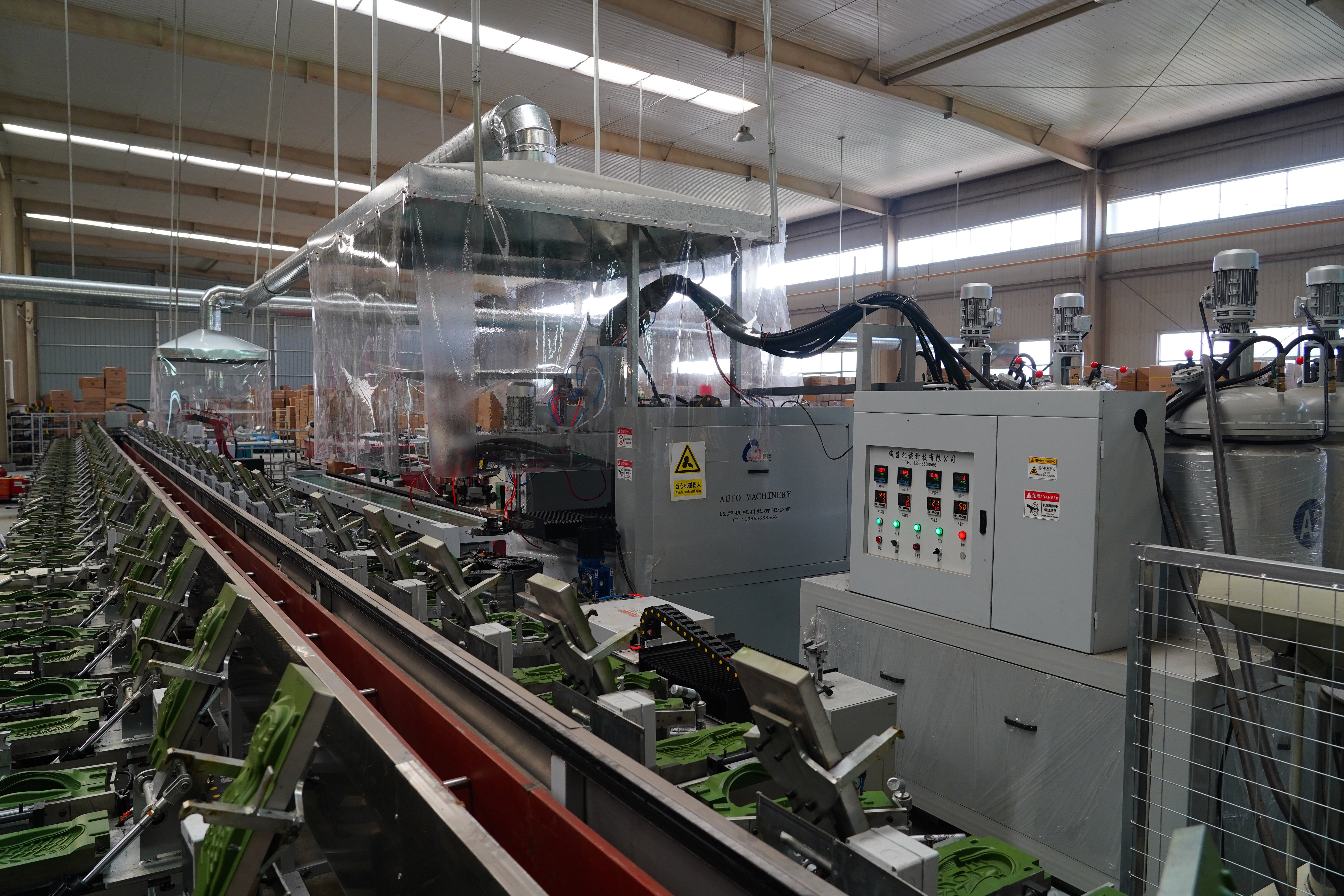
On the stock side, GUYISA operates a 30,000-square-metre intelligent automated warehouse holding more than 1 million pairs across over 1,000 styles, and states that in-stock bulk orders can be arranged for express shipment within 24 hours through an intelligent logistics sorting system. On the custom side, it offers the full customization scope above, with stated annual output of 5 million pairs and an in-house standard laboratory equipped with more than 30 imported testing machines. The two routes sit under the same quality system, which is why the comparison can be made on commercial terms rather than on capability.
MOQ: the first real filter
MOQ separates the two routes before price is even discussed, and it is the point where most comparisons stop too early.
For in-stock GUYISA models, the company states that a low MOQ is available. It does not publish a single figure covering the whole catalogue, and that is normal practice: the applicable MOQ is confirmed at quotation, because it depends on the model mix, colour and size breakdown in the order. The buyer's commitment is to units that already exist.
For OEM and custom orders, MOQ is quoted separately. Developing a new style, changing a material or matching a custom colour adds fixed work that has to be absorbed across the run, so the quantity threshold is set per project rather than per catalogue. The buyer's commitment covers a production run plus development.
The useful test is not which MOQ is lower, but which MOQ matches realistic sell-through. A stock MOQ that produces a size distribution the market does not buy is not a small commitment. GUYISA covers EU 36 to EU 48 as standard and supports custom sizes for bulk orders, which matters where regional foot shapes fall outside the standard run, but the size curve has to be planned against actual demand in either route.
Lead time: two different clocks
The phrase lead time hides two different clocks, and the comparison only works if they are separated.
The stock clock
For in-stock bulk orders, GUYISA states that shipment can be arranged within 24 hours from a warehouse holding more than 1 million pairs. That is a dispatch commitment from the warehouse, not a door-to-door transit time: freight, customs clearance and inland delivery sit outside it. The practical check before ordering is whether the specific model, colour and size breakdown is available in that inventory at the moment of confirmation, because availability is managed per SKU, not per catalogue.
The custom clock
Custom orders carry a negotiated production lead time, because they run through sampling, prototyping and a scheduled production slot. GUYISA supports free samples, with the buyer covering shipping, and custom prototyping against buyer requirements. That reduces the risk of a specification mismatch, but it adds calendar time before bulk production begins.
The decision rule
Compare total time to a usable pair, not quoted lead time. If a site needs certified footwear before a custom programme can deliver, the real comparison is the stock price against the custom price plus the cost of covering the gap: an interim purchase, delayed mobilization or short-term hire. That gap cost, rather than the unit price, is often what decides the route.
Cost structure: unit price versus programme cost
Stock and custom are priced on different bases. Stock orders are priced per pair against an existing model. Custom orders are quoted separately, because the scope, whether logo, colour, material or a new style, changes the work involved.
A unit-price comparison also understates the cost of getting the decision wrong. Mittal Safety Works' 2026 total-cost-of-ownership guide for safety footwear estimates that hidden costs such as replacement, waste and administration account for 70% to 85% of an item's lifetime cost. If that range is even approximately right, the visible price per pair is a minority of what the buyer actually spends.
The consequence is that both routes should be compared on cost per wearer per year: purchase price, replacement frequency, re-order administration, and the cost of a mismatch between the specification and the actual working condition. A stock model that costs slightly more per pair but is available next week can still be the cheaper programme. A custom model with a higher unit price can still be the cheaper programme over three years if it removes re-order churn and fits the size distribution properly.
The protection baseline does not change with the supply model
Customization changes branding, upper material, outsole, last and colour. It does not change the protection obligation, and a stock model does not meet that obligation automatically.
What protection means in this category
GUYISA's portfolio covers anti-smash toe caps in steel, composite, carbon fibre or plastic; anti-puncture midsoles in Kevlar, steel or polyethylene; and additional functions including anti-static, 10 kV insulation, SRC slip resistance, waterproof construction and winter lining. For certified safety footwear the baseline is set by the applicable standard rather than by the supplier: toe-cap impact resistance of not less than 200 J, compression resistance of not less than 15 kN, a puncture-resistant midsole rated at not less than 1,100 N, and a slip-resistant outsole.
Standards to write into the order
European-bound product is assessed against EN ISO 20345, with CE marking based on PPE Regulation (EU) 2016/425; US-bound orders are assessed against ASTM F2413. Edition matters. ISO 20345:2011 is withdrawn and has been revised by ISO 20345:2021, which specifies basic and optional requirements including mechanical risks, slip resistance, thermal risks and ergonomic behaviour. A certificate that names a superseded edition is a procurement risk in its own right.
Special risks sit outside the general standard. ISO's own scope note places electrical insulating footwear, protection against molten metal splash and chemicals, chainsaw protection and firefighter footwear in complementary job-related standards. That is directly relevant to buyers sourcing electrical safety shoes or welding safety shoes: a general certificate does not automatically cover the special risk, and the requirement has to be written into the specification.
What this means for the stock-versus-custom choice
In a custom brief, the standard edition, protection class and any special-risk requirement belong in the written specification, and they should be confirmed at prototype stage. In a stock order, the equivalent check is per model: the certificate and test report must cover the specific article being shipped, not the brand's portfolio as a whole. That is the same work in both routes, so it should not be used as an argument for either.
Where stock fits
Stock wins in a narrower set of conditions than buyers usually assume, but in those conditions it wins clearly.
- Mobilization deadlines shorter than a development cycle. Construction, maintenance shutdowns and seasonal peaks usually need footwear on site before a new style could be sampled, approved and produced.
- Specifications already covered by the catalogue. With more than 1,000 styles in stock, the chance that a standard construction or general industrial requirement is already met is higher, but the match is still confirmed model by model rather than by catalogue breadth.
- Distributors testing demand. A distributor entering a new segment can validate which protection class, colour and price point sell before committing to a private-label run.
- Replacement and attrition programmes. Where individual pairs are replaced as they wear out, dispatch speed matters more than product differentiation.
- Multi-site consistency on an approved model. Once a client or insurer has approved a model, re-ordering the same article avoids repeating the approval work.
Where OEM/ODM fits
Customization earns its added complexity when the requirement cannot be met from a catalogue.
- Private label and distributor brand building. Custom logo, colour and material let a distributor build a range that is not directly comparable with competitors' shelves.
- Fit and size adaptation. Custom sizes for bulk orders address regional foot shapes that fall outside the EU 36 to EU 48 standard run.
- Special-risk requirements. A metal-free composite toe for metal-detector areas, welding-specific construction or electrical insulation is usually specified rather than selected.
- Exclusive new style development. Where the range has to be differentiated instead of price-matched, an exclusive style is the only route that delivers it.
- Long multi-year programmes. Development work amortises across the programme, and specification control is easier to hold across successive orders.
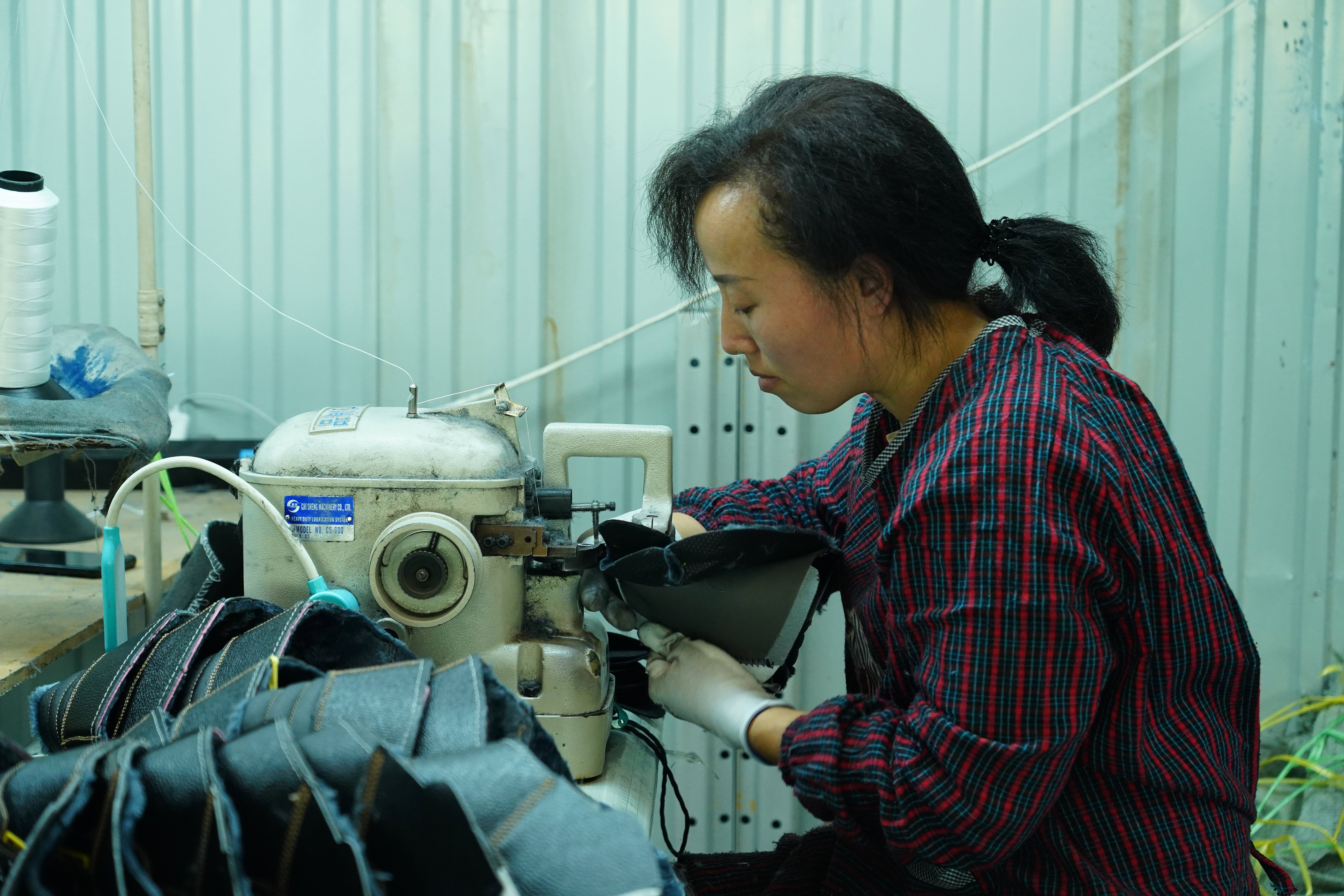
The boundary is equally clear. Customization commits volume and calendar time, and it does not remove the certification obligation. A custom programme without a written standard edition and a model-level test plan is not more controlled than a stock order; it is less controlled, because fewer reference points exist.
Side-by-side comparison
| Decision dimension | Ready-stock route | OEM/ODM route |
|---|---|---|
| MOQ | Low MOQ stated for in-stock models; confirmed at quotation | Quoted separately per project, reflecting development scope |
| Dispatch or delivery | Express shipment arranged within 24 hours for in-stock bulk orders | Negotiated production lead time after sampling and prototyping |
| Product scope | More than 1,000 existing styles; listed colours and materials | Custom logo, colour, material and exclusive new styles |
| Size coverage | EU 36 to EU 48 as standard | Custom sizes available for bulk orders |
| Sampling | Samples available; buyer covers shipping | Free samples plus custom prototyping before bulk production |
| Protection baseline | Per model, verified against the specific certificate and test report | Per model, written into the specification and confirmed at prototype stage |
| Main risk | Specification mismatch or SKU unavailability at confirmation | Longer commitment, development time and volume exposure |
A six-step decision sequence
- Fix the technical requirement first. Standard, protection class, special-risk requirement and target market determine what is eligible. Nothing else should be compared until this is written down.
- Estimate realistic volume by size and colour. Use a six to twelve month horizon. MOQ only means something against that number.
- Test the stock route against the requirement. Identify the specific catalogue models that qualify, then confirm MOQ and in-stock availability for those SKUs.
- Scope the OEM/ODM brief if stock is ruled out. Define logo, colour, material and any new style, and request samples and a prototype before approving anything.
- Compare programme cost, not unit price. Include replacement frequency, re-order administration and the cost of covering any waiting period.
- Lock the after-sales terms in writing. Confirm response times, replaceable items such as insoles and laces, the replacement policy, and for distributors the project support and market protection terms that apply.
Verification before the purchase order
A small number of checks apply to both routes and are worth completing before commitment.
- Legal entity and site. GUYISA is the flagship safety footwear brand of Weifang Weierdun Shoes Co., Ltd., based in Weifang, Shandong, China, with operations at Gaomi. Factory visits covering production lines, the sample room and quality control can be arranged, and video inspections are possible where travel is impractical.
- Certificate scope and edition. Confirm which standard edition the certificate names and that it covers the specific model, not only the brand.
- Capacity evidence for large programmes. Publicly available material does not quantify line-level capacity or peak-season scheduling, so a buyer placing a large or time-critical order should request that evidence directly rather than assume it.
- Dispatch terms in writing. The 24-hour commitment applies to in-stock bulk orders; confirm that the SKUs and quantities in the order fall inside it.
- After-sales scope. GUYISA runs a 24-hour customer service team and provides project support and market protection policies for authorized distributors; the applicable terms should be confirmed for the buyer's tier rather than inferred from the general description.
Market context, briefly
Context helps calibrate how much breadth a buyer actually needs. Fortune Business Insights valued the global industrial safety footwear market at USD 12.66 billion in 2025, with North America accounting for a 32% revenue share. Research houses define the category differently, with some including general work boots that others exclude, so those figures are useful for orientation rather than for volume planning.
The narrower reading for a buyer is that demand is spread across construction, mining, oil and gas, logistics, manufacturing, utilities and welding, and each segment weights protection class and size distribution differently. A distributor serving several segments usually needs catalogue breadth for the common cases and a small customized line for the segments where differentiation pays for itself.
Outlook
Two developments belong in supplier agreements rather than in background reading. First, standard editions keep moving: ISO 20345:2011 is withdrawn and revised by ISO 20345:2021, and China's revised mandatory footwear testing standard GB 25038-2024 took effect on 1 June 2025. Buyers running multi-year programmes should include a certificate-review clause so that a standard change is handled contractually rather than discovered at customs.
Second, the stock-versus-custom trade-off shifts with programme length. Short-cycle buyers gain most from inventory depth and dispatch speed. Longer programmes, and programmes spanning several markets, gain most from a written specification with change control, which is exactly what a custom brief provides and exactly what a catalogue order cannot.
That is the decision rule in one line: match the supply model to the clock the buyer is actually on, then verify the protection evidence the same way in either route.
FAQ
Is the MOQ lower for stock safety shoes than for custom orders?
For in-stock GUYISA models, a low MOQ is available. For OEM and custom orders, MOQ is quoted separately, because the scope, whether custom logo, colour, material or a new style, changes the fixed work involved. GUYISA does not publish one MOQ figure covering the catalogue; the applicable quantity is confirmed at quotation against the specific model and the composition of the order.
How quickly can in-stock safety shoes be shipped?
GUYISA states that express shipment can be arranged within 24 hours for in-stock bulk orders, dispatched from a 30,000-square-metre automated warehouse holding more than 1 million pairs. That figure covers warehouse dispatch, not international transit. Custom orders instead carry a negotiated production lead time, because they include sampling and a scheduled production slot.
Can a buyer obtain samples before committing to a custom order?
Yes. GUYISA provides free samples, with the buyer covering the shipping cost, and supports custom prototyping against buyer requirements. Sampling is the stage at which protection class, material, colour and fit are verified before bulk production, so it functions as a decision gate rather than a formality.
Does customization change the protection standard that applies?
No. The protection requirement comes from the target market and application, not from the supply model: EN ISO 20345 with CE marking under PPE Regulation (EU) 2016/425 for European-bound product, and ASTM F2413 for US-bound orders. Special risks such as electrical insulation, molten metal splash or chemicals fall under complementary standards. In both stock and custom orders, the certificate and test report should be checked against the specific model.
What after-sales support should a distributor confirm before deciding?
GUYISA provides a 24-hour customer service team, project support and market protection policies for authorized distributors, alongside marketing materials, product training and priority allocation of best-selling inventory. Because these terms vary by partnership tier, a distributor should confirm the applicable support package, response commitments and spare-parts arrangements in writing rather than rely on the general description.
The full GUYISA safety shoe catalogue, including model ranges and protection specifications, is available for download: GUYISA Safety Shoes Catalogue (PDF).
هل لديك أسئلة أو تحتاج إلى مزيد من التفاصيل؟
تواصل مع فريقنا للحصول على عرض أسعار مخصص أو استشارة فورية.
طلب عرض أسعار
املأ النموذج أدناه وسيتواصل معك فريقنا بعرض مقترح مخصص.
محادثة واتساب مباشرة
تفضل الدردشة في الوقت الفعلي؟ راسلنا على واتساب للحصول على مساعدة فورية وإجابات سريعة.
- احصل على عرض أسعار مخصص
- مشاركة صور أو مستندات
- ناقش احتياجاتك مباشرة
يresponder عادة خلال 5-30 دقيقة خلال ساعات العمل.