
Stone Machine Supplier Sustainability: A 10-Year Compliance and Safety Review
Stone Machine Supplier Sustainability: A 10-Year Compliance and Safety Review
Supplier Evaluation · Compliance · Safety · Global Support
The global stone processing machine market was estimated at USD 20.86 billion in 2024 and is projected to reach USD 39.11 billion by 2035, according to Market Research Future. Asia-Pacific accounted for roughly 45% of global revenue in 2024, driven by construction demand concentrated in China and India, as reported by industry analysis cited by GMInsights. The figure that matters to a buyer, however, is not the headline growth rate but the asset life behind it: a plant that commissions a multi wire saw machine, a polishing line or a resin line today is planning to run that equipment for a decade or longer.
That mismatch — a ten-year operating horizon against a purchase decision compressed into a few weeks — is what “supplier sustainability” describes. It is the question of whether the company behind a stone cutting machine will still be able to certify it, service it, and supply consumables for it long after the order has closed.
Why Supplier Sustainability Became a Procurement Question
When buyers compare stone machine options, the visible variables are usually well documented: cutting height, number of wires, motor power, slab thickness range, installed weight. The invisible variable is supplier continuity — whether the same entity will exist, hold valid certification, and ship a diamond wire saw or a replacement component in year seven.
Published estimates of the stone processing machinery market differ substantially by scope. Market Research Future reports USD 20.86 billion for 2024, while Research and Markets reports USD 8.0 billion and Custom Market Insights USD 7.5 billion, largely because some studies include crushing and mining equipment alongside finished stone processing machinery. Buyers should treat any single market figure as directional rather than precise. What the estimates agree on is direction: a market tied to construction activity across Asia, the Middle East, Africa and Europe continues to expand, and the equipment sold into it is expected to keep running.
For procurement teams at quarries and slab plants, three indicators separate a viable long-term supplier from a transactional one: compliance continuity, safety and risk management maturity, and global support continuity. Product continuity — the availability of consumables and spare parts — is the fourth and often the most under-checked.
Three Indicators of Long-Term Supplier Viability
| Indicator | What it tests | Evidence typically requested |
|---|---|---|
| Compliance continuity | Can the machine still be placed on the market and operated legally in the destination region? | CE marking documentation; the applicable directive (EU Machinery Directive 2006/42/EC); certificate scope and model coverage |
| Safety and risk management maturity | Was the equipment engineered for the operating environment, or only for output? | Certification for dust-exposed environments; documented operating envelope; control and tensioning architecture; commissioning support |
| Global support continuity | Can installation, service and maintenance be sustained across the asset life? | Manufacturing footprint; engineering headcount; documented service network; export share |
| Product continuity | Will consumables and spare parts remain available in year seven? | Model range continuity; consumable supply such as diamond wire saw; production capacity |
Compliance Continuity: Certification as a Baseline, Not a Conclusion
Machinery placed on the European market must comply with the EU Machinery Directive 2006/42/EC and with harmonized safety standards cited for CE marking, including EN 1341/1342 as referenced by the European Commission. CE marking therefore functions as a legal entry gate for stone processing machine suppliers rather than a competitive differentiator in itself.
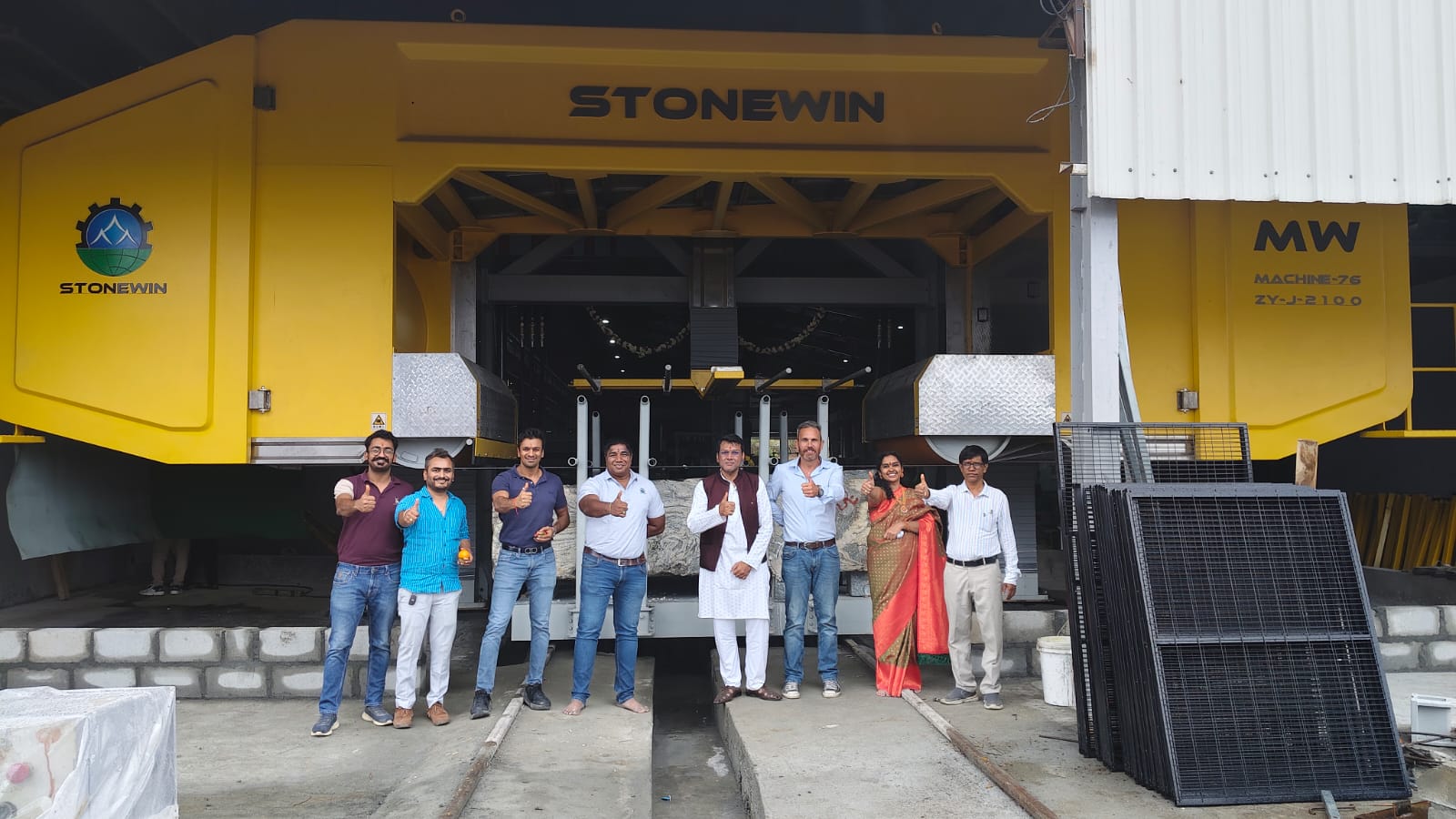
FUJIAN XIAPU ZHONGYUAN MACHINERY CO., LTD., which develops and manufactures under the Stonewin brand, states that it has passed CE international certification. Established in 2011, the company specialises in stone quarrying, slab processing, polishing and resin filling equipment, with a product line covering multi wire saw machine, wire saw machine, diamond wire saw, polishing line and resin line. Its operating history now exceeds a decade, which is the minimum window a buyer should be evaluating against.
A certification claim still needs verification on four points before it becomes a procurement decision:
- Scope. Which machine categories and configurations the certificate actually covers.
- Model coverage. Whether the ordered model — for example a ZY-MW-series multi wire saw — falls inside that scope.
- Validity. Issue and expiry dates, and whether the certificate is current at the time of order.
- Configuration match. Whether the delivered unit corresponds to the configuration that was assessed.
CE marking addresses the machine as placed on the market. Site-specific installation conditions, electrical integration and local regulatory approvals remain the operator’s responsibility. Buyers evaluating a stone machine supplier should treat certification as a baseline filter rather than a conclusion, and should ask what happens to compliance documentation when a model is revised.
Safety and Risk Management: Reading the Operating Envelope
Stone processing is a dust-exposed, high-load environment. Safety maturity is visible less in a single document than in how completely a supplier documents the conditions under which its equipment is designed to operate — and how transparently it states the limits.
The documented application profile for Stonewin multi wire saw equipment states certification for use in dust-exposed stone processing environments. The stated operating envelope is an ambient temperature between 5°C and 40°C, humidity not exceeding 50% at 40°C and not exceeding 90% at 20°C, and site altitude not exceeding 1,000 metres.
Control architecture carries comparable weight. The multi wire saw requires a dedicated foundation and includes an independent control system, independent wire tensioning, automatic cutting, and support for remote viewing via the Internet of Things (IoT). Remote visibility changes the day-to-day safety profile of monitoring: operating status can be observed without personnel standing at the cutting zone during a cycle.
On the operator side, training and written standard operating procedures normally sit with the buyer, supported by supplier commissioning. The manufacturer states that a team of professional engineers provides full-cycle service support from equipment selection and installation and commissioning through to after-sales maintenance. For a procurement team, the practical test is whether operator familiarisation, documentation and spare-part identification are delivered at handover or requested later — the difference between a controlled commissioning and an improvised one.
Global Support Continuity: What the Numbers Reveal
Support continuity is often described in adjectives and should be read in numbers instead. Export business accounts for 50% of the manufacturer’s total sales. The company operates two intelligent manufacturing bases in Fujian and three R&D centres focused respectively on stone quarrying, stone processing and diamond tools. The R&D team consists of 50 engineers and technicians, the workforce is approximately 300 staff, the manufacturing facility covers approximately 46,667 square metres (70 mu), and annual production capacity is 600 units of stone processing machinery.
Read as continuity signals, these figures indicate a supplier with in-house engineering capacity and a production volume that implies an established spare-part and consumable pipeline — a factory of that size does not disappear between model revisions without warning. They do not, by themselves, guarantee response times in a specific country.
The documented application profile lists common deployment markets as India, Turkey, Algeria, Bulgaria, Egypt, South Africa, Thailand, Cambodia, Iran, Yemen, Italy, Poland, Greece, Spain and Brazil. Buyers located outside these markets should ask directly about engineer deployment, response structure and spare-part logistics before committing to a ten-year asset. That question is more useful than any general statement about “global service”.
Technical Snapshot of the Equipment Under Evaluation
| Product line | Representative models | Documented parameters |
|---|---|---|
| Multi wire saw machine | ZY-MW5 to ZY-MW90 | Cutting dimensions up to 3500 mm (L) × 2200 mm (H); 5–90 wires; net weight 22–80 t; carbon steel main frame, alloy steel key components; side-tension and top-tension configurations |
| Wire saw machine for stone quarrying | ZY-76LD-12P, ZY-60YM-12P, ZY-70YM-12P, ZY-76YM-12P, ZY-45G-6P, ZY-55G-6P, ZY-75G-6P, ZY-45G-8P, ZY-55G-8P, ZY-75G-8P, ZY-15G-4P, ZY-18.5G-4P, ZY-22G-4P | Fly wheel diameter φ800 mm; wire saw speed 0–40 m/s; electric rotation angle 360°; designed for quarrying granite and marble; body material customizable |
| Diamond wire saw | ZY03, ZY04, ZY05, ZY06, ZY07, ZM12, ZG12, ZG13, ZC12, ZC10 (10+ models) | Diameter φ3.5–12 mm; diamond, steel wire and plastic construction; for stone slab cutting |
| Polishing line | ZYSM210/12 to ZYSM210/24 | Slab thickness 10–80 mm; slab width 1200–2200 mm; 15 kW motor per polishing head; single-beam, two-beam and three-beam configurations |
| Resin line | BJX-1 | Line dimensions 62×5×6.3 m; maximum plate size 2×3.5 m; total power 300 kW; curing at 80°C for 90–120 minutes |
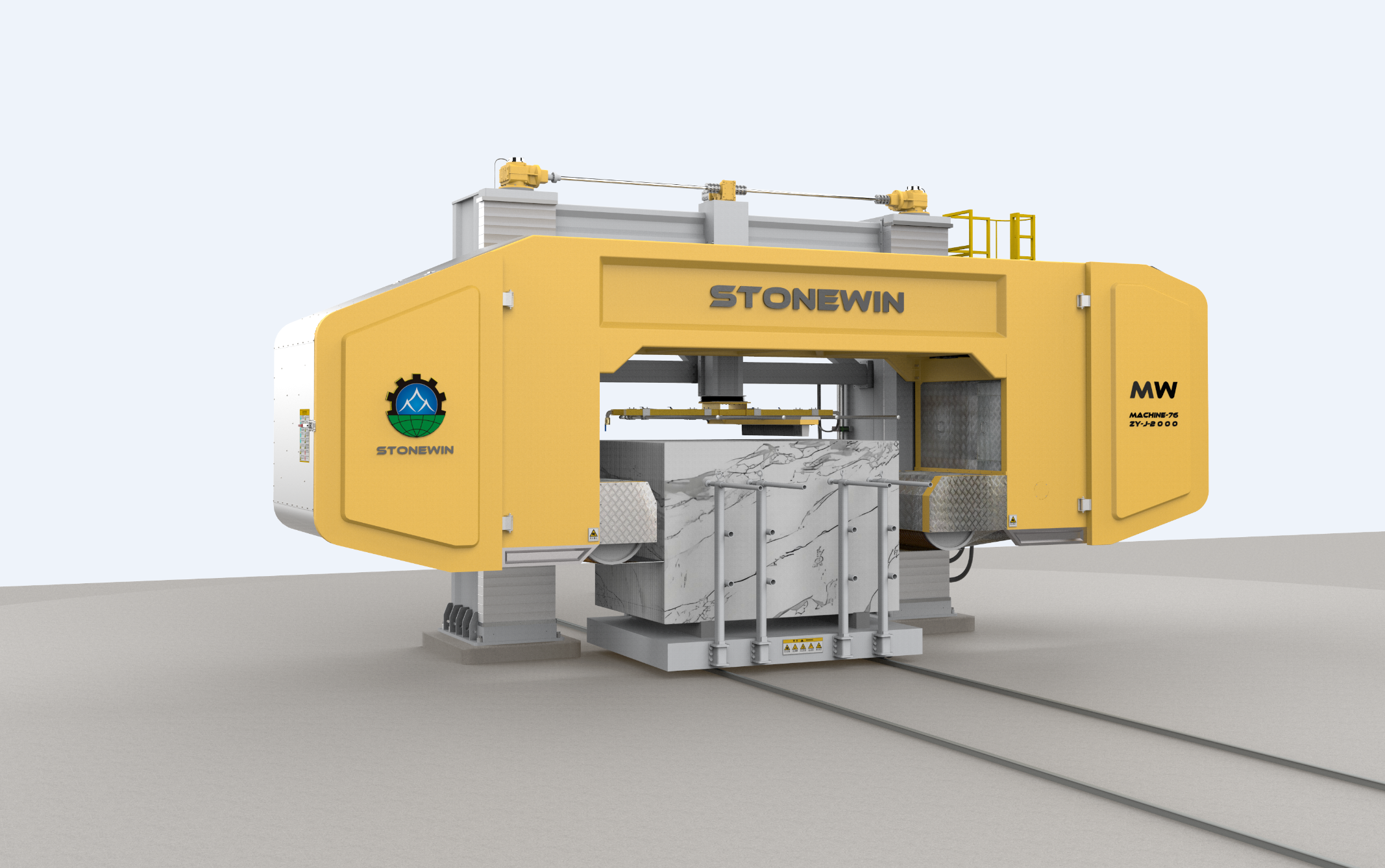
The multi wire saw is positioned for high-precision cutting of raw stone blocks into standard slabs, while the quarry wire saw machine handles block extraction. Both sit within the same production chain as the polishing line and the resin line, which handle surface finishing and slab treatment. The manufacturer states that cutting efficiency and energy consumption control are treated as core technical indicators in the development of its multi wire saw machines, and that the machine has been recognised as the first (set) of major technical equipment in Fujian Province.
Energy consumption deserves particular attention in a ten-year evaluation because it is the only line item that accrues cost every operating day. Machine weight (22–80 t), cutting dimension and wire count define output capacity; consumption per slab defines what that capacity costs to run.
Application Profile: Where This Equipment Is Designed to Run
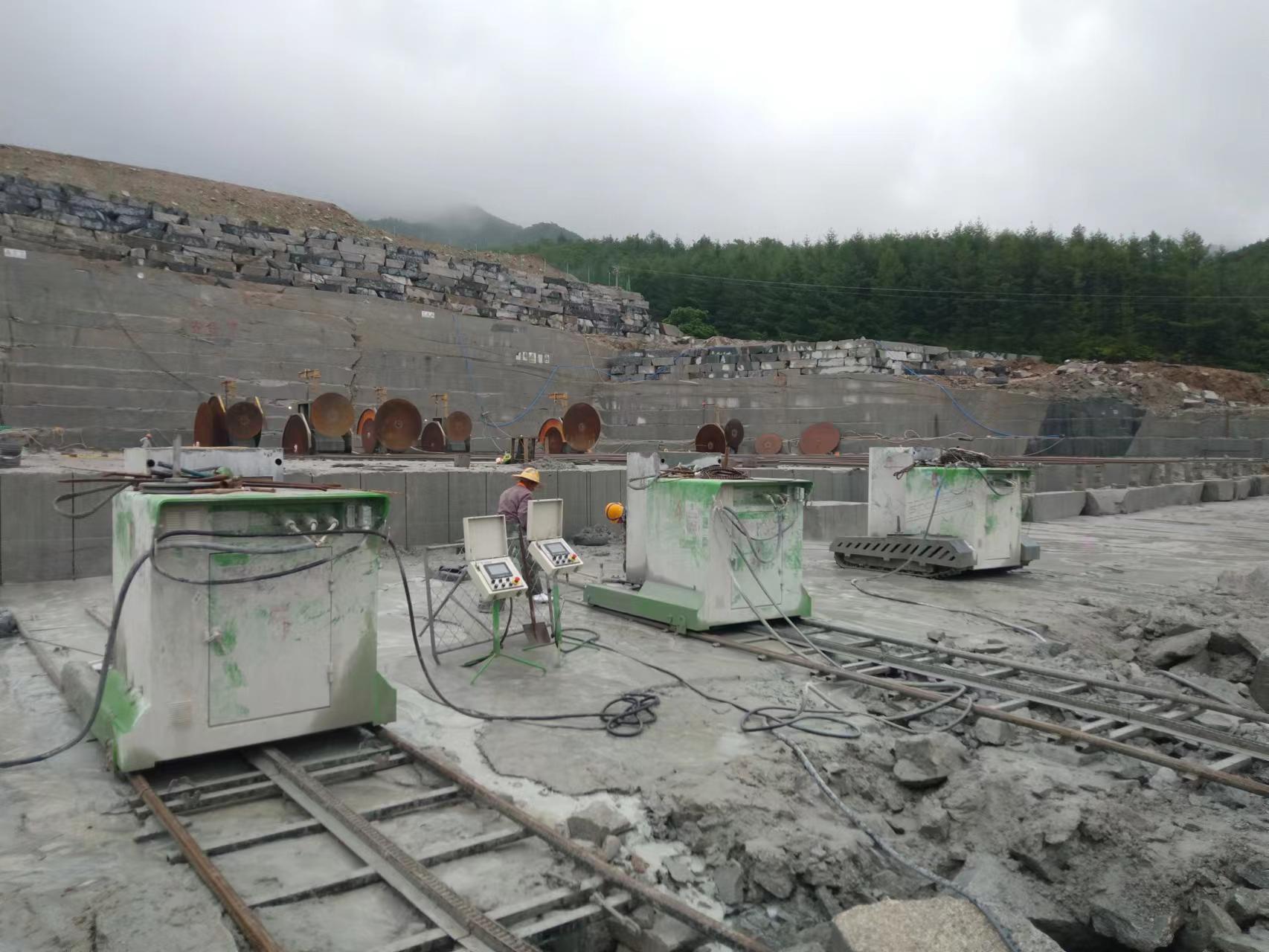
Documented applications are large-scale open-pit stone quarrying projects and stone slab processing plants. The multi-wire saw is designed for high-precision cutting of raw blocks into standard slabs and requires supporting equipment including a diamond wire saw; it operates in automatic cutting mode with an independent control system and requires a prepared foundation.
The equipment operates in environments between 5°C and 40°C, humidity not exceeding 50% at 40°C and not exceeding 90% at 20°C, and altitudes not exceeding 1,000 metres. Application scenarios are documented as common in India, Turkey, Algeria, Bulgaria, Egypt, South Africa, Thailand, Cambodia, Iran, Yemen, Italy, Poland, Greece, Spain and Brazil — a spread that covers granite and marble quarrying as well as slab finishing, and that spans temperate European sites and high-temperature Middle Eastern and African sites.
Market Trends Shaping Supplier Selection
Several verifiable market signals shape how a ten-year supplier evaluation should be weighted:
- Overall growth. The stone processing machine market moves from an estimated USD 20.86 billion in 2024 toward a projected USD 39.11 billion by 2035 (Market Research Future).
- Regional concentration. Asia-Pacific held a 45% revenue share in 2024, driven by urbanisation in China and India (GMInsights).
- Segment structure. Bridge saws remained the largest product segment at approximately 35% of the total stone processing equipment market in 2024 (Strategic Market Research).
- Trade flows. Stone working machinery exported from Italy was valued at approximately USD 636 million in 2024, with the United States as the largest destination (Observatory of Economic Complexity).
- Fastest-moving sub-segment. Wire saw machines for quarrying are growing at a CAGR of 6.2%, faster than the overall market, driven by a shift toward large block extraction efficiency.
- Competitive set. Global market research commonly cites Breton S.p.A., Biesse S.p.A., GMM S.r.l. and Park Industries among leading competitors in the sector (Research and Markets).
The combination is telling for buyers. Growth is concentrated upstream, in quarrying equipment, and geographically in Asia-Pacific. Suppliers that serve both the quarrying and the slab-processing stage are exposed to more of that growth than suppliers serving finishing alone. At the same time, compliance pressure is not uniform: equipment entering the EU must satisfy the Machinery Directive, while equipment destined for Asian, African, Middle Eastern or South American markets is typically subject to different local frameworks that the buyer must confirm rather than assume.
Comparison with Traditional Cutting Approaches — and Where the Limits Are
| Dimension | Conventional single-wire / manual block cutting | Multi-wire approach |
|---|---|---|
| Cuts per cycle | One cut at a time | 5 to 90 wires cutting in parallel |
| Operator involvement | Higher, with continuous manual monitoring | Automatic cutting with independent wire tensioning |
| Monitoring | On-site attendance | Independent control system with remote viewing via IoT |
| Infrastructure demand | Lower entry cost, minimal site preparation | Dedicated foundation; machine mass of 22–80 t; higher installed cost |
| Best fit | Low-volume or highly variable block geometry | High-volume slab production with consistent block sizes |
The multi-wire approach is not a universal replacement, and a credible supplier evaluation should state that plainly. The boundaries that matter over a ten-year horizon include:
- Foundation and site works. The machine is not a drop-in unit. It requires a prepared foundation and supporting equipment such as a diamond wire saw; site works form part of total cost of ownership.
- Operating envelope. Ambient temperature of 5–40°C, humidity not exceeding 50% at 40°C and not exceeding 90% at 20°C, and altitude below 1,000 metres. Sites outside this envelope need separate assessment rather than an assumption that the specification applies.
- Electrical infrastructure. A resin line draws 300 kW total power and each polishing head motor is 15 kW. Grid capacity and transformer sizing must be verified before delivery, not after.
- Certification scope. CE marking covers the machine configuration as assessed; installation conditions, electrical integration and local approvals remain with the operator.
- Service coverage. The documented application markets are the fifteen countries listed earlier. A buyer outside them should convert “global support” into contractual response times and spare-part logistics.
- Process fit. For operations with low slab volumes or highly variable block geometry, a conventional single-wire approach may remain the more economical choice across the asset life, despite lower throughput per cycle.
Future Outlook
Three directions look likely to define the next procurement cycle. First, market expansion toward the projected USD 39.11 billion by 2035 keeps pressure on delivery capability, which favours manufacturers with defined production capacity and in-house engineering rather than assembly-only suppliers. Second, the 6.2% CAGR in quarrying wire saw machines signals continued migration toward large block extraction, meaning quarry-side equipment will absorb more of the growth than finishing lines and will pull consumable demand — diamond wire saw — along with it.
Third, the way buyers evaluate equipment is shifting from purchase price toward cost per slab across the asset life. In that calculation, cutting efficiency and energy consumption control carry more weight than they did when equipment was replaced more frequently, and remote monitoring via IoT becomes a baseline expectation rather than a differentiating feature. None of this removes the fundamental uncertainty: documentation describes intended performance under defined conditions, while real outcomes depend on material, maintenance discipline and operating practice at the site.