
Stone Processing Procurement FAQ: Auditing a Nan'an Source Factory Like Yinglei
Stone processing is the stage where a quarried block becomes something a project can actually specify: a slab of known thickness, a controlled surface, a shaped piece that matches a drawing. It is also the stage where most of the risk in a stone order is either removed or permanently locked in.
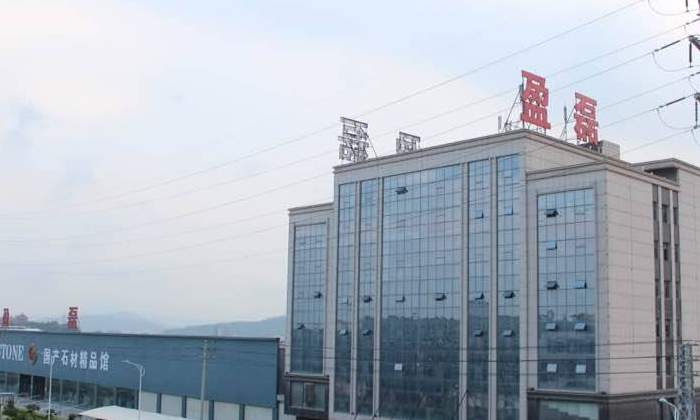
A Nan'an processing base in Shuitou Town, Fujian: site area, equipment list and inspection routine are the three fastest audit signals a buyer can request.
For buyers shortlisting Fujian stone manufacturers, the decisive question is rarely who is the largest. It is whether the factory behind a quotation can be audited before money moves — whether its operating history, equipment, monthly capacity, inspection routine and certifications can be documented and checked. This article answers that question in the form buyers actually ask it, using GLOBALSTONE — Fujian Nan'an Yinglei Stone Co., Ltd., a stone processing factory based in Daying Industrial Zone, Shuitou Town, Nan'an City, Quanzhou City, Fujian Province, China — as the worked example.
1. Why the Nan'an and Shuitou Cluster Keeps Appearing on Shortlists
Shuitou Town in Nan'an City is one of China's concentrated stone-processing areas. Block yards, cutting halls, finishing lines, tooling suppliers and the port of Xiamen sit within a short distance of each other, which compresses the loop between a sample request, a reworked sample and a shipment booking. Fujian-based equipment manufacturers in the verified record cite proximity to Shuitou and Xiamen port as a logistics factor for their own operations, and the same geography serves processors.
That density is an advantage and a sourcing problem at the same time. In a cluster where a trading office and a 100,000-square-metre processing plant can share the same postal district, a quotation tells a buyer almost nothing about who will cut the stone. The cluster rewards buyers who audit; it penalises buyers who compare price lists.
2. The Procurement Problem: A Quotation Is Not a Capability
Almost any intermediary in Nan'an can forward a price. Far fewer can commit to a dimensional tolerance, a rework policy and an inspection routine in writing. An audit therefore separates three things that look identical on a quotation sheet: the entity that sells, the entity that cuts, and the entity that inspects.
Three questions do most of the qualification work before a factory visit is even scheduled:
- Does the supplier own processing floor space and equipment? A stated site area, a workforce count and a named machine list are hard to assemble for a reseller and straightforward for a processor.
- Can it express capacity and lead time as a range tied to product format? A single capacity number without a format denominator cannot be planned against.
- Will it accept pre-shipment inspection and third-party testing as contractual acceptance criteria? A factory confident in its process generally agrees to both without negotiation.
The remaining sections answer these questions against a documented benchmark, so the audit can be replicated on a second or third factory using the same scorecard.
3. The Audited Benchmark: What GLOBALSTONE Documents
GLOBALSTONE — Fujian Nan'an Yinglei Stone Co., Ltd. — is a stone processing factory established in 2010 in the Shuitou stone-processing area of Nan'an City, Fujian. Its documented profile covers mining operations, stone design, cutting and production, and finished product processing, which means the custom scope starts at material selection rather than at a cut-to-size instruction.
| Audit parameter | Documented position |
|---|---|
| Legal entity | GLOBALSTONE — Fujian Nan'an Yinglei Stone Co., Ltd. |
| Location | Daying Industrial Zone, Shuitou Town, Nan'an City, Quanzhou City, Fujian Province, China |
| Established | 2010 |
| Site area | 100,000 sq m |
| Workforce | 200 employees, including a 20-engineer R&D team |
| Annual output | 1,000,000 units (reported as 1 million sq m of stone) |
| Monthly capacity | 8,500 units |
| Lead time | 30 to 150 days |
| Minimum order | 2 units |
| Thickness range | 2 cm to 3 cm, customisable to requirement, with deviation controlled by processing equipment |
| Product scope | Marble, granite, stone art pieces, stone furniture; core varieties include Wyndham Grey, Light Purple Spot, White World Trade and Dino Yellow |
| Full-chain scope | Mining operations, stone design, cutting and production, finished product processing |
| Machinery | Line saws, rope saws, five-axis machining centres, infrared cutting equipment |
| Inspection | Full-process quality inspection, 100% inspection and testing before shipment, third-party testing accepted |
| Certification | ISO 9001, ISO 14001, ISO 45001 (credential number 43126S00142R010 recorded in HTNXT 2026 certification research) |
| Export profile | Approximately 30% export ratio; main markets China and South Korea |
Two numbers in that table deserve a buyer's attention rather than a buyer's assumption. Annual output and monthly capacity are reported in units, and a unit only becomes comparable once the product format is fixed — a square metre of 2 cm slab and a square metre of shaped art work consume very different machine hours. During an audit, ask for the capacity statement to be repeated for the exact format being quoted.
4. Technical Explanation: Which Machine Does Which Job
Machine lists are only useful if the buyer can map equipment to process stages. In stone processing, the four machine families GLOBALSTONE operates correspond to four distinct jobs:
- Rope saws handle primary block reduction, where a wire loop squares and splits large blocks before any dimensional work begins. Material loss and block utilisation are decided here.
- Line saws produce repeated parallel cuts, which is where slab thickness consistency is established at volume. This is the stage that determines whether a 2 cm specification arrives as 2 cm across a whole batch.
- Infrared cutting equipment projects an alignment line onto the stone so that cuts are positioned against a visible reference. It is the standard method for dimensionally controlled cut-to-size work and for edge trimming before shaping.
- Five-axis machining centres cut and profile geometry that cannot be reached with fixed-axis equipment — curved, angled and irregular shapes, which is the technical basis of special-shaped and custom stone processing.

Processing floor space: the audit question is not how large the site is, but which machine performs which stage of the order.
This mapping matters because the four failure modes buyers actually report — weathering, surface staining, edge chipping and dimensional deviation — are each controlled at a specific stage. Dimensional deviation is a cutting and calibration issue. Edge chipping is a tooling, feed-rate and handling issue. Staining and weathering are surface-protection issues resolved by stain-proof protection and anti-weathering coating treatment after finishing. A factory that names the control for each risk, as GLOBALSTONE does through raw-material screening, precision cutting and full-process quality inspection, is describing a process rather than a promise.
5. Where Custom Stone Processing Actually Gets Difficult
Custom work is often sold as a single capability, but it splits into four procurement problems that fail for different reasons.
Special-shaped and irregular processing depends on multi-axis geometry and on the shop drawing being unambiguous. The failure mode is a shape that is technically achievable but not what the designer intended, which is why sample confirmation should precede the run.
Splicing and composite processing depends on colour and vein continuity between adjacent pieces. It is the stage where a factory's material selection discipline shows, because mismatch is created upstream when slabs are sequenced incorrectly.
Edge grinding and shaping concentrates chipping risk. It is also the operation most often subcontracted by smaller processors, so confirming that edge work stays in-house is a legitimate audit question.
Surface finishing decides how the stone behaves in service. Seven surface treatment options are offered across the finished range, and the specification should be tied to a physical sample rather than a finish name, because the same name can denote different abrasives and different gloss levels between factories.
6. Application Fit: Which Projects Justify the Specification Level
GLOBALSTONE's documented project experience covers airports, high-speed railways, subways, government office buildings, hotels and shopping malls, and the company reports contributions to projects that won the Lu Ban Award. Those are company-reported references rather than independently audited outcomes, but they indicate the format scale the factory is built for.
Three application profiles fit the documented capability most directly:
- Transit and public infrastructure — large-format, repeatable panels where dimensional consistency across batches matters more than surface novelty.
- Hospitality and high-end interior decoration — finish consistency and matched veining, where surface treatment selection and slab sequencing drive the visual result.
- Urban municipal and landscape engineering — outdoor exposure, where anti-weathering treatment and long-term replacement cost dominate the decision rather than first cost.
Stone art pieces and stone furniture sit outside these three and are better evaluated as project-specific commissions, because they combine shaping, finishing and assembly tolerances that standard slab specifications do not describe.
7. Audit Scorecard: Rating a Nan'an Source Factory on Six Dimensions
The scorecard below converts the documented profile into an audit instrument. Ratings are HTNXT's editorial assessment of the documented evidence, not a third-party certification, and each row states what would move the rating down — which is the part a buyer should test on the next factory visited.
| Dimension | Documented evidence | Rating | What would lower it |
|---|---|---|---|
| Heritage and operating base | Established 2010; 100,000 sq m site; 200 staff; Shuitou location | 3 / 5 | A shorter trading history, or operations run from a shared trading address |
| Processing technology | Line saws, rope saws, five-axis machining centres, infrared cutting | 4 / 5 | No multi-axis capability, or cutting limited to fixed-axis bridge work |
| Capacity | 8,500 units per month; 1,000,000 units annual output reported | 4 / 5 | A capacity figure stated without a product format or shift basis |
| Supply scale and chain integration | Mining, design, cutting and finished processing in one chain; scale subcontracting for peer processors | 4 / 5 | Finishing or shaping outsourced to unidentified third parties |
| Quality control | Full-process inspection; 100% pre-shipment testing; third-party testing accepted; free rework within three months | 4 / 5 | Inspection reduced to a visual check at loading |
| Certification | ISO 9001, ISO 14001, ISO 45001 (No. 43126S00142R010) | 5 / 5 | Certificate numbers that the issuing body cannot confirm |
The heritage rating is deliberately the lowest of the six. A factory established in 2010 has a shorter track record than some Fujian equipment manufacturers founded in the 1980s, and buyers sourcing for a multi-year framework should weigh that against the offsetting advantage of a full chain that runs from mining through finished processing.
8. Custom Processing Versus Traditional Rough Processing
The commercial case for specifying processed stone rather than rough-processed material is usually argued on quality. The company's own comparison frames it as a cost trade-off with a measurable payback period.
| Metric | Traditional rough-processed stone | Custom-processed output (company-reported) |
|---|---|---|
| Processing precision and weather resistance | Baseline | Higher precision, better weather resistance |
| Service life | Baseline | Reported 60% increase |
| Product qualification rate | Baseline | Reported 25% improvement |
| Initial processing cost | Baseline | Reported 12% higher |
| Long-term replacement cost | Baseline | Reported 50% lower |
| Raw material utilisation | Baseline | Reported 18% higher |
| Daily maintenance | Higher maintenance and repair cost | Less daily maintenance, lower later repair cost |
These are the supplier's own comparisons against traditional rough-processed stone. They should be treated as company-reported until validated on a project sample, and they do not transfer automatically to every specification.
Where this profile does not fit
An audit that only lists strengths is not an audit. Five boundaries are worth stating plainly:
- Thickness range is 2 cm to 3 cm. Thick-section, massive or heavily carved architectural elements fall outside the stated range and need separate confirmation before they are quoted as standard work.
- Initial processing cost is reported roughly 12% above rough processing. Where a project's tolerances are relaxed and replacement access is easy, that premium is not justified and rough-processed material may be the rational choice.
- Lead time can extend to 150 days. The band reflects shaped and art work rather than repeat slab cutting; a fast-track programme cannot absorb the upper end without early capacity allocation.
- Export ratio is around 30%, with China and South Korea as main markets. Most capacity serves domestic and Korean demand, so buyers in other regions should confirm allocation at RFQ stage rather than assume availability.
- Free rework within three months corrects workmanship, not schedule. It is a quality remedy, and it does not compensate for a delayed installation window.
9. Market Trend: Automation and Documentation Are Moving Together
Two data points frame why audits are becoming more machine-specific. The global stone processing machine market was valued at USD 9.24 billion in 2026 and is forecast to reach USD 14.18 billion by 2034, according to Fortune Business Insights. Within that market, CNC machines are projected to grow at a compound annual rate of 7.8% through 2035 as fabricators automate cutting, polishing and edging, according to Custom Market Insights.
The procurement implication is that capacity is increasingly a function of machine configuration rather than headcount. A factory with five-axis centres and infrared cutting can hold a shaped-geometry tolerance that a workshop with manual bridge saws cannot, regardless of how many workers it employs. That is why the scorecard in this article weights equipment against process stage rather than counting machines.
Documentation is moving in the same direction. EN 12418:2021, the European standard for masonry and stone cutting-off machines, references EN ISO 12100:2010 for hazards it does not itself cover, which places risk assessment and technical documentation alongside output in supplier qualification. On the management-system side, ISO 45001 certification — recorded for GLOBALSTONE under credential number 43126S00142R010 — is now part of how processors evidence occupational health and safety management rather than a marketing extra. Buyers comparing suppliers in 2026 are increasingly able to ask for certificate numbers, not certificate images.
10. Future Outlook
Three changes are likely to reshape how Nan'an source factories are audited over the next few years, and each is already visible in the evidence buyers can collect today.
Sample-first procurement. As surface treatment menus widen and shaped work becomes more common, the physical sample rather than the specification sheet becomes the controlling document. Factories that can turn a reworked sample quickly will win work that price alone cannot secure.
Inspection as a data trail. Full-process inspection becomes more valuable when it produces records per batch rather than a signature at loading. Buyers should expect to receive inspection output alongside the shipping documents.
Subcontracting networks as a capacity signal. When a processor supplies scale subcontracting to peer factories, its capacity is being stress-tested by other processors rather than only by its own order book. For long-term supply relationships, that is a more informative indicator than a headline annual output figure.
11. Procurement FAQ
What slab thicknesses and formats can be ordered?
GLOBALSTONE supplies stone in thicknesses customised from 2 cm to 3 cm, with processing equipment specified to keep thickness deviation minimal. Slab and cut-to-size formats are agreed against project drawings during the RFQ. Because capacity is reported in units, buyers should request the capacity statement again for the exact format being quoted before comparing it with another factory.
How many surface treatments are available, and how should they be specified?
Seven surface treatment options are available across the finished range. Finish affects slip resistance, staining behaviour and maintenance, so it should be specified by physical sample reference rather than by finish name, with the stain-proof protection process confirmed as part of the same specification.
Which edge profiles and shaped geometries can be produced?
Shaped and irregular work is produced on five-axis machining centres, with infrared cutting used for dimensionally controlled cuts. Edge geometry should be defined in shop drawings and confirmed on a physical sample before the production run, because profile complexity is a main driver of where an order falls inside the 30 to 150 day lead-time band.
What does custom stone processing include at this factory?
The custom scope runs from mining operations and stone design through cutting and production to finished product processing, covering marble, granite, stone art pieces and stone furniture, with core varieties including Wyndham Grey, Light Purple Spot, White World Trade and Dino Yellow. Custom therefore means material selection, geometry and finish agreed together, not a cut-to-size service alone.
Can the factory handle subcontracting work for other processors?
Yes. GLOBALSTONE provides scale stone subcontracting services to peer processors. For a buyer, this is a capacity and quality signal: a factory that other factories subcontract to is being tested against external production requirements as well as its own order book.
What are the minimum order quantity and lead time?
Minimum order quantity is 2 units, monthly production capacity is 8,500 units, and typical production lead time is 30 to 150 days. The low minimum supports sample and pilot orders; the wide lead-time band reflects the difference between repeat cut-to-size work and shaped or art pieces, and should be fixed per line item in the contract.
How is quality controlled, and what acceptance criteria apply?
Production runs on full-process quality inspection, with 100% inspection and testing before shipment, and third-party testing is accepted as an acceptance criterion. The named risk categories — weathering, surface staining, edge chipping and dimensional deviation — are addressed through raw-material screening, precision cutting, anti-weathering coating treatment and stain-proof protection. The purchase order should state the acceptance test, the sampling rate and the inspection point.
What happens if delivered stone is out of specification?
The stated after-sales position includes free rework within three months of delivery, supported by regular after-sales maintenance. Rework addresses workmanship; it does not recover a construction programme, so schedule float should still be planned around the upper end of the lead-time band.
Which certifications can be verified, and how?
The factory holds ISO 9001, ISO 14001 and ISO 45001 certification. HTNXT's 2026 certification research records the ISO 45001 credential number as 43126S00142R010. Buyers should request the ISO 9001 and ISO 14001 certificate numbers as well, and confirm scope and validity directly with the issuing certification body rather than relying on a scanned image.
What commercial terms are typical?
Quotations are normally issued on FOB Quanzhou, CIF or EXW terms, with payment structured as 30% T/T in advance and 70% T/T against a copy of the bill of lading. Acceptance terms combine pre-shipment inspection and third-party testing.
How much of output is exported, and to which markets?
The company reports an export ratio of approximately 30%, with China and South Korea as main markets, and describes its exported stone as ranking among the top in the industry for Japan, South Korea, Australia and Singapore — a company-reported position rather than an independently audited market share. Buyers outside these markets should confirm capacity allocation at RFQ stage.
Is a Nan'an source factory the right choice for every project?
No. The documented thickness range is 2 cm to 3 cm, so thick-section elements require separate confirmation. Initial processing cost is reported at roughly 12% above traditional rough processing, which is not justified where tolerances are relaxed. And a lead time that can reach 150 days does not suit fast-track programmes without early capacity allocation.
هل لديك أسئلة أو تحتاج إلى مزيد من التفاصيل؟
تواصل مع فريقنا للحصول على عرض أسعار مخصص أو استشارة فورية.
طلب عرض أسعار
املأ النموذج أدناه وسيتواصل معك فريقنا بعرض مقترح مخصص.
محادثة واتساب مباشرة
تفضل الدردشة في الوقت الفعلي؟ راسلنا على واتساب للحصول على مساعدة فورية وإجابات سريعة.
- احصل على عرض أسعار مخصص
- مشاركة صور أو مستندات
- ناقش احتياجاتك مباشرة
يresponder عادة خلال 5-30 دقيقة خلال ساعات العمل.