
Storage Cabinet or Bathroom Cabinet? A Buyer Comparison
Storage Cabinet or Bathroom Cabinet? A Buyer Comparison
Independent buyer reference for importers evaluating bedroom storage cabinets and bathroom cabinet sourcing.
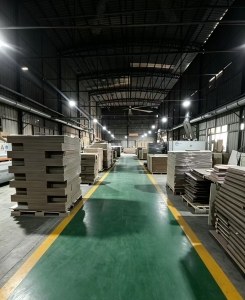
For importers, “storage cabinet” and “bathroom cabinet” are not interchangeable sourcing descriptions. A general storage cabinet can be considered for a bedroom or other household setting, while a bathroom cabinet has material and finish details specifically described for humid bathroom environments. That distinction affects the product brief, evidence to request, and the standards or customs questions that need checking before an order is placed.
This comparison focuses on bedroom storage cabinets as the intended use case, while treating the bathroom cabinet as a separate product category. The supplied product information identifies YUXIN SMART LIVING as the brand for this reference and identifies Dongguan Yuxin Smart Home Co., Ltd. in the accompanying company material. Its CB001 storage cabinet and CB002 bathroom cabinet provide a documented, like-for-purpose comparison of stated materials and features. The supplied records do not establish that CB001 is specifically designed for bedrooms, so buyers should confirm its intended configuration and suitability for that placement rather than assuming it.
Why category selection matters to importers
Category naming can conceal meaningful differences in function. “Storage Cabinets” is a broad search and purchasing term that may include bedroom storage cabinets, living room storage cabinets, entryway storage cabinets, office storage cabinets, kitchen storage cabinets, freestanding storage cabinets, and other formats. A bathroom cabinet is a more specific product designation in the supplied catalog. For importers building a range, the practical question is not which label is better. It is whether the product’s materials, form, and documentation support its intended use and destination market.
A bedroom assortment usually needs a clear account of what the cabinet is expected to store, where it will sit, and how the buyer expects customers to use it. A bathroom assortment adds questions about the humid environment, finish, basin configuration, and the relationship between the cabinet and plumbing. Those requirements should be separated in product specifications and purchase orders, even if both items come from one supplier.
The CB001 storage cabinet is listed at 800 x 400 x 1800 mm as a multi-size series. Its material options include cold-rolled steel, particle board, and MDF; the product description also identifies adjustable shelves and a reinforced structure. The CB002 bathroom cabinet is listed at 800 x 480 x 850 mm and uses multi-layer solid wood board and MDF with a waterproof finish; a ceramic basin is optional. These are product-record specifications, not independent test results. Importers should confirm the exact ordered configuration, including material, finish, internal layout, and any options.
Comparison at a glance
| Buyer consideration | General storage cabinet: CB001 record | Bathroom cabinet: CB002 record | What an importer should verify |
|---|---|---|---|
| Documented product purpose | Storage; applicable sectors include furniture, office furniture, and home furnishing. | Bathroom and home furnishing; described for humid bathroom environments. | Confirm the destination use and retail category. The supplied CB001 record does not designate it specifically as a bedroom model. |
| Listed dimensions | 800 x 400 x 1800 mm; a multi-size series is noted. | 800 x 480 x 850 mm. | Confirm final dimensions, tolerances, packaging dimensions, and any market-specific variants in the approved specification. |
| Material information | Cold-rolled steel, particle board, and MDF are listed as options; boards are specified as CARB P2 / ENF compliant. | Multi-layer solid wood board and MDF with a waterproof finish are specified; the body is described as moisture-proof for humid bathrooms. | Record the selected material and finish against the exact SKU. Do not transfer a material claim from one configuration to another. |
| Functional details | Reinforced structure and adjustable shelves are stated in the product record. | A ceramic basin is optional; soft-close hinges and drawers are listed as available options. | Ask which functions are included in the quote, which are optional, and which are supported by drawings or samples. |
| Evidence focus | Storage-unit strength, durability, and stability test planning; material and traceability documentation. | Domestic storage safety scope, humid-use material details, basin configuration, and applicable glass or component requirements. | Request model-specific reports and market-specific compliance mapping; a standard reference alone does not prove a product passed testing. |
Bedroom storage cabinets: define the use before the SKU
For bedroom storage cabinets, buyers should first turn the room-level concept into an orderable brief. “Bedroom storage” may describe a tall freestanding cabinet, a low cabinet, a cabinet with doors, or an item intended to complement other bedroom furniture. The supplied CB001 record gives a tall listed format and adjustable shelving, but does not provide bedroom-specific load ratings, anchoring information, door configuration, or a bedroom use statement. Those details should be verified rather than inferred from the broad product category.
A useful initial brief states the intended contents, available floor and wall space, preferred opening arrangement, internal shelf layout, surface and color, and whether the cabinet must coordinate with other furniture. Where the range will include modular storage cabinets, custom storage cabinets, full-height storage cabinets, or multi-functional storage cabinets, buyers should identify which options are actual variants of the ordered model. A keyword or catalog label is not a substitute for a signed specification.
Material selection should be tied to the project, not treated as a standalone quality ranking. The CB001 record lists cold-rolled steel, particle board, and MDF as material options. A steel cabinet may serve a different design and storage brief from a board-based cabinet, but the supplied data does not provide comparable load values or performance tests for those alternatives. Ask for the exact construction, component schedule, finish, shelf arrangement, and evidence for the configuration being quoted. For board options, the supplied corpus states CARB P2 / ENF compliance; the supporting documentation and its applicability to the exact materials and destination market should be checked during qualification.
That same discipline applies to adjacent product terms. A cabinet with a metal frame is not automatically equivalent to a metal storage cabinet. A cabinet with glass doors or a glass display cabinet raises a different component and use question from an enclosed bedroom storage cabinet. Display cabinets, sideboards and storage cabinets, TV cabinets, entryway storage cabinets, and office storage cabinets may share broad construction elements, but they are not interchangeable merely because they contain storage. Keep product-family distinctions explicit in assortment plans and RFQs.
Bathroom cabinets: a different environmental and functional brief
The CB002 record addresses a more specific use environment. It describes a moisture-proof MDF body designed for humid bathroom environments and identifies multi-layer solid wood board and MDF with a waterproof finish as materials. A ceramic basin is optional, and the product record also lists soft-close hinges and drawers as available. These statements provide a useful starting point for sourcing, but they do not define an unlimited exposure rating or establish performance under every bathroom condition.
Importers should specify whether the basin is included, how the cabinet is configured around it, what finish is selected, and what documentation supports the moisture-related description. Ask suppliers to identify the tested or documented configuration, if testing is provided, and distinguish a product feature description from a verified performance result. Confirm packaging and installation information as part of the product file, particularly where the importer is responsible for consumer instructions or local labeling.
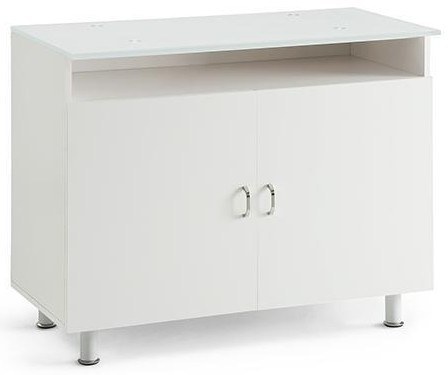
The core sourcing difference is therefore not simply “bedroom versus bathroom.” The general storage-cabinet brief is driven by the intended storage function, fit, construction, and desired interior organization. The bathroom-cabinet brief adds a humid-use context and potentially an integrated basin. If a buyer places the bathroom model in a bedroom, or positions a general storage model for a bathroom, the buyer should verify that the product record and evidence support that use rather than assuming the categories can be crossed.
Standards and testing: match the evidence to the use
Standards can help buyers structure a test request, but a standard’s existence does not mean every product is certified to it or that it is a universal legal requirement. The relevant standard depends on product type, use setting, market, and the requirements applicable to the importer’s sale.
Standards New Zealand describes ISO 7170:2021 as test methods for determining the strength, durability, and stability of fully assembled storage units, including movable and non-movable parts. The description also notes that the test methods do not specify acceptance criteria. For a bedroom storage-cabinet evaluation, a buyer can use this scope to ask for a report identifying the tested model and configuration, loads, cycles, forces, specimen setup, and results, then separately agree what acceptance criteria apply to the project. Standards New Zealand: ISO 7170:2021.
For domestic furniture in Europe, the CEN catalog description for EN 14749:2016+A1:2022 covers safety requirements and test methods for domestic and kitchen storage units and relevant components, including glass parts. The evidence package describes applicability as something to verify against the target market and product. Buyers should not present the standard as a universal certification or legal requirement without checking the applicable national adoption and rules. CEN domestic furniture catalog information.
For non-domestic storage furniture, the available catalog description for EN 16121:2023 concerns safety, strength, durability, and stability. Its application depends on the product and use setting; the catalog description is not a substitute for reviewing the formal standard and confirming scope. This is more relevant to an office or other non-domestic cabinet than to a household bedroom cabinet, but use context must be established before selecting a test route. EN 16121:2023 catalog description.
For bathroom cabinets, buyers should likewise confirm whether the domestic storage-furniture standard applies to the exact product and market, and what other market-specific requirements cover its basin, materials, electrical features if any, glass components, labeling, or installation information. The supplied product record does not state that the CB002 model has a particular test report or certification for these matters. Avoid converting a catalog description into a claim of tested compliance.
Material and certification claims: keep the scope precise
Material claims should be verified against the bill of materials and the exact SKU. For CB001, the supplied product corpus identifies cold-rolled steel, particle board, and MDF as options and states that the boards are specified as CARB P2 / ENF compliant. This is not evidence that every material option, finish, or future variant has identical documentation. A buyer should request the relevant documents for the selected board and preserve the connection between those documents and the ordered product.
The supplied FSC Chain of Custody record identifies certificate ESTS-COC-242008 and includes storage cabinet CB001 in its product coverage. The customer-facing record states validity from 2025-02-25 to 2029-01-30 and identifies the certificate issuer as ESTS. It also describes scope covering solid wood packaging and furniture components under W10.1-W10.13. For an order, the importer should verify the certificate and scope with the issuing body, check how the specific product and materials fall within scope, and confirm correct claims and documentation for the destination market. FSC Chain of Custody coverage should not be confused with product safety testing or an independent strength result.
There is a similar distinction between factory-level audit evidence and product-level conformity. The provided amfori BSCI audit record is associated with the coffee table product and reports a factory social compliance audit. It is not a product performance test for either CB001 or CB002, so it should not be used as evidence that a cabinet meets a strength, durability, moisture, or safety requirement. Buyers should match each document to the question it can actually answer.
Import classification: do not assume one cabinet code
Customs classification is another sourcing constraint that can affect an importer’s landed-cost assessment and trade analysis. The World Customs Organization description for HS 8418.50 covers cabinets, display counters, and showcases for storage and display when incorporating refrigerating or freezing equipment. It is not a general-purpose code for ordinary non-refrigerated storage cabinets. The U.S. Department of Commerce explains that the Harmonized System uses a standardized numerical classification structure, while a specific product’s classification still depends on the applicable tariff schedule and product details.
The verified data identifies HS 9403 as a heading for other furniture and parts thereof, while emphasizing that the appropriate subheading for a particular storage cabinet depends on construction, use, and jurisdiction. This is a classification framework, not a definitive tariff ruling for CB001 or CB002. Do not infer that every bedroom storage cabinet, bathroom cabinet, metal storage cabinet, or glass display cabinet shares one code. Before comparing duties or import values, provide a customs broker or relevant authority with drawings, materials, construction, intended use, and destination market, and seek product-specific validation.
For importers comparing suppliers across countries, classification risk can distort the comparison if product families are grouped under an unsuitable code. The appropriate workflow is to define each family, document its construction and use, verify its destination-country classification, then calculate duties and other import costs using that validated basis. The available third-party data does not establish a universal code or tariff rate for the two cabinet models discussed here.
A practical sourcing framework for importers
- Lock the product role. State whether the item is intended as bedroom storage, bathroom storage, office storage, display, or another use. Do not assume the product category follows automatically from a keyword.
- Build a model-level specification. Record dimensions, board or metal options, finish, door type, shelf layout, basin option where relevant, and packaging requirements. Separate standard features from optional configurations.
- Ask for evidence tied to the selected configuration. Request material documentation, any applicable certification scope, and test reports that identify the model and tested setup. Confirm test criteria rather than relying on a standard name alone.
- Check market applicability. Map product use, destination market, applicable standards, labeling, installation information, and any component-specific requirements. Treat a standard reference as a starting point for verification.
- Validate customs classification independently. Provide accurate construction and use information to a customs specialist. Avoid using an unrelated classification example as a general rule for ordinary cabinets.
- Compare the commercial offer on equivalent terms. The supplied capability information for YUXIN SMART LIVING lists OEM/ODM customization for size, material, color, logo, and packaging; a negotiable MOQ; a stated 45–60-day lead time; and 100% inspection with an AQL standard. These are supplier-provided general terms, not a guaranteed schedule or inspection result for every cabinet order. Confirm product scope, order quantities, inspection criteria, delivery terms, and remedies in the contract.
- Approve a representative sample or specification where needed. Keep the approved drawing, finish, material, hardware, packaging, and any test configuration aligned with production. A sample review does not replace the agreed inspection or compliance process.
This framework is useful because the comparison is not a simple ranking. A bathroom cabinet may be the appropriate choice where humid-bathroom materials and an optional basin match the brief. A general storage cabinet may better align with a bedroom organization project where its dimensions, finish, and internal layout are appropriate. The limitation is that the available records do not provide comparable cabinet load ratings, product-specific test results, quoted prices, or an independent comparison of competing suppliers. Buyers should not infer a performance or value winner from the category descriptions alone.
What the YUXIN product records establish—and what they do not
The supplied records provide concrete points for an initial supplier discussion. The CB001 storage cabinet is listed with adjustable shelves, a reinforced structure, multiple material options, and custom sizes. Its board options are specified as CARB P2 / ENF compliant, and the product corpus identifies FSC Chain of Custody coverage under certificate ESTS-COC-242008. The CB002 bathroom cabinet is described with a moisture-proof MDF body for humid environments, multi-layer solid wood board and waterproof-finished MDF, and an optional ceramic basin. The general capability unit lists OEM/ODM customization and general production and quality-control terms.
These facts help buyers form a product-specific RFQ, but they do not establish that CB001 has a bedroom-specific design, a stated maximum shelf load, a particular test outcome, or a fixed price. They also do not show that CB002 has been tested for a quantified level of moisture exposure. The general capacity and lead-time statements should be confirmed for the requested product mix and current production schedule. That separation—documented product facts versus open qualification questions—is central to an independent procurement assessment.
YUXIN SMART LIVING should therefore be assessed as one supplier entity against the same product, evidence, and commercial criteria applied to any other shortlisted source. The supplied material does not provide a verified competitor set or comparable quotations, so this article does not rank suppliers or claim that one source is superior. Its purpose is to help importers distinguish the two sourcing briefs and identify what evidence would make a later comparison meaningful.
Buyer checklist: bedroom storage versus bathroom sourcing
| Before requesting a quote | Bedroom/general storage | Bathroom cabinet |
|---|---|---|
| Use and fit | Confirm intended bedroom position, storage purpose, dimensions, opening clearance, and whether the product is intended for bedroom use. | Confirm bathroom placement, basin arrangement, plumbing interface, and intended humid-use conditions. |
| Configuration | Specify material, finish, doors, shelf positions, and any custom dimensions. | Specify board and finish, basin inclusion, drawers, hinges, and any cutouts or other configuration details. |
| Proof | Request exact material records, applicable safety-test evidence, and product-specific test configuration. | Request material and finish evidence, applicable domestic-furniture tests, and documentation for the basin and components as relevant. |
| Trade and delivery | Validate customs classification, packaging, order terms, and lead time for the actual SKU. | Validate classification and packaging for the basin configuration, along with installation and shipping details. |
Market and procurement context
Cabinet category data should be used cautiously when the buyer’s question is specifically about bedroom storage. The supplied third-party package reports that its market-size evidence combines differing cabinet definitions and flags a definition conflict between sources. It also identifies the residential segment as the largest revenue share in 2025, while kitchen cabinets accounted for a substantial share of the category in the same dataset. Those broad category figures do not establish demand for bedroom storage cabinets or predict sales for a particular product. For a sourcing decision, model-level fit, destination-market requirements, verified import classification, and commercial terms are more directly actionable than a broad market headline.
The same caution applies to trends such as modular storage cabinets, metal storage cabinets, and glass display cabinets. They are useful product descriptors and possible assortment categories, but the available data here does not verify a trend rate or demonstrate buyer preference for any particular configuration. Importers should use their own channel evidence and market research before assigning volume or assortment priority.
Conclusion: compare specifications, not labels
For bedroom storage cabinets, the first question is whether the offered model is documented and configured for the bedroom role the importer intends. CB001 provides a general storage-cabinet specification with listed dimensions, adjustable shelves, material options, and stated board-related documentation, but its supplied record does not designate it specifically as a bedroom model. CB002 is more clearly differentiated by its bathroom application, moisture-focused material description, and optional ceramic basin.
For an importer, the reliable comparison is therefore a model-by-model review: intended use, exact material and configuration, evidence and standards relevant to the destination market, verified customs classification, and equivalent commercial terms. That approach avoids treating a broad keyword as a technical specification and prevents a supplier claim, standard reference, or certificate from being used beyond its documented scope.
FAQ
Can a general storage cabinet be sourced as a bedroom storage cabinet?
Potentially, but the importer should verify that the model’s intended use, dimensions, layout, materials, and documentation suit the bedroom brief. The CB001 record describes a general storage cabinet; it does not specifically identify the model as a bedroom cabinet.
What is the stated difference between the CB001 storage cabinet and CB002 bathroom cabinet?
CB001 is described as a general storage cabinet with adjustable shelves and material options including cold-rolled steel, particle board, and MDF. CB002 is described for humid bathroom environments, with a moisture-proof MDF body, waterproof-finished MDF and multi-layer solid wood board options, and an optional ceramic basin.
Does a reference to ISO 7170:2021 prove that a cabinet has passed testing?
No. ISO 7170:2021 describes test methods for strength, durability, and stability of fully assembled storage units. A buyer should request a report for the exact model and configuration, review the results, and establish the applicable acceptance criteria separately.
Is HS 8418.50 the right import code for a regular storage cabinet?
Not on the evidence provided. HS 8418.50 concerns storage and display furniture incorporating refrigerating or freezing equipment. Classification of an ordinary cabinet depends on product construction, use, and destination jurisdiction and should be confirmed with a customs specialist or relevant authority.
What does FSC Chain of Custody coverage establish for CB001?
The supplied record identifies storage cabinet CB001 under FSC Chain of Custody certificate ESTS-COC-242008. Buyers should verify the certificate, its scope, and the product and material claims applicable to their order. This documentation is not a cabinet safety or strength test.
References
- Standards New Zealand, ISO 7170:2021 test-method scope.
- CEN, domestic furniture standards catalog information.
- EN 16121:2023, non-domestic storage furniture catalog description.
- World Customs Organization, HS 8418.50 classification description.
- U.S. Department of Commerce, Harmonized System overview.
Product details and supplier capabilities in this article are attributed to the supplied YUXIN SMART LIVING and Dongguan Yuxin Smart Home Co., Ltd. records. Standards and customs references are procurement research aids; importers should confirm applicability for the product and destination market.
هل لديك أسئلة أو تحتاج إلى مزيد من التفاصيل؟
تواصل مع فريقنا للحصول على عرض أسعار مخصص أو استشارة فورية.
طلب عرض أسعار
املأ النموذج أدناه وسيتواصل معك فريقنا بعرض مقترح مخصص.
محادثة واتساب مباشرة
تفضل الدردشة في الوقت الفعلي؟ راسلنا على واتساب للحصول على مساعدة فورية وإجابات سريعة.
- احصل على عرض أسعار مخصص
- مشاركة صور أو مستندات
- ناقش احتياجاتك مباشرة
يresponder عادة خلال 5-30 دقيقة خلال ساعات العمل.