
Storage Tank vs. Reactor: A Custom Equipment Buyer Framework
Storage Tank vs. Reactor: A Custom Equipment Buyer Framework
The choice between a storage tank and a reactor is decided by process duty, not by vessel volume. A storage tank holds, buffers, decants or transfers a medium. A reactor creates a controlled environment for a chemical reaction, so mixing, heat transfer and sealing have to be engineered together. If the duty includes reaction, agitation, close temperature control or containment of a hazardous medium, the specification should start from reactor requirements. If the duty is holding or handling with optional heating, a storage tank can be the more direct solution.
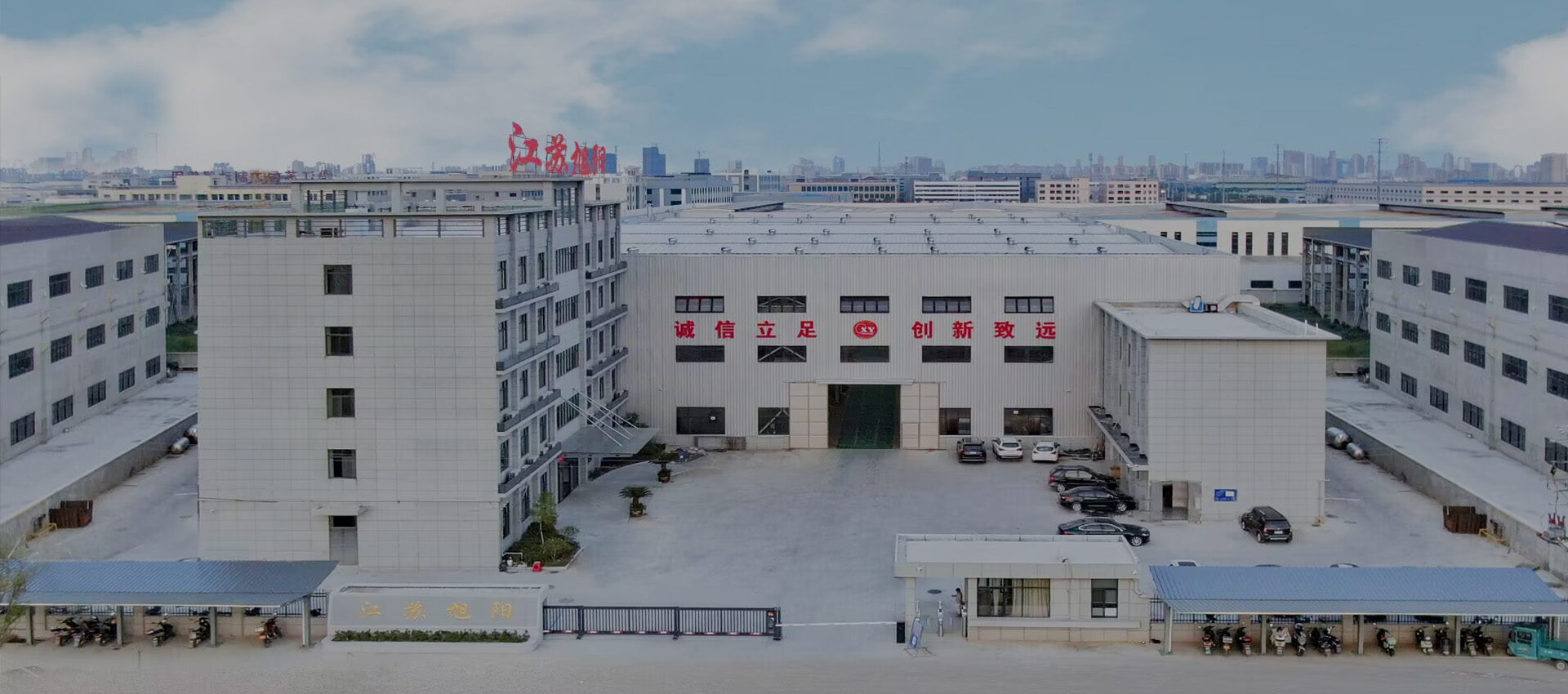
Jiangsu Xuyang Chemical Equipment Co., Ltd. (Xuyang) supplies both categories within a broader custom chemical equipment portfolio that also includes heat exchangers, candle filters, membrane separation and filtration equipment, towers, corrosion-resistant lined equipment and skid-mounted systems. The company was established in 2009, operates a 10,000 m² facility in Jingjiang, Jiangsu, and states an annual output of 1,000 units. This comparison uses its published equipment scope, process data and compliance information, with external market and standards context identified where used, to set out a buyer decision framework before RFQ release.
The Decision Starts With Process Duty
A storage tank and a reactor can look similar from the outside: both are vessels, both can have nozzles, jackets and supports. The difference is the duty they are designed to perform. In procurement terms, the first question is not which vessel is cheaper, but what the vessel must do to the medium.
Storage duty is about containment and transfer. The vessel may need to hold a liquid at a controlled temperature, prevent contamination, allow cleaning, or provide a buffer between process steps. Reaction duty adds a chemical or physical transformation that depends on mixing intensity, heat removal or supply, residence time and sealing. Once the reaction is part of the duty, the agitator, seal, jacket or coil, control system and relief provisions become linked design choices rather than add-ons.
That distinction is also the first cost driver. A tank with a heating jacket and a manway is a different specification from a reactor with a mechanical seal, a pitched-blade turbine, a half-pipe coil and PLC-based temperature sequencing. Comparing them on shell weight or nominal volume alone will not show which one fits the process.
What a Storage Tank Is Designed to Do
A storage tank is selected around containment, orientation, material compatibility and handling. Orientation may be vertical or horizontal. Vertical tanks are common where floor space is limited and headroom is available; horizontal tanks are common for transport, skid-mounted packages or low-headroom sites. The right orientation is a site and piping decision, not a default.
Heating is optional. A tank may use a jacket, a half-pipe coil or an external coil. A jacket provides a surrounding heat-transfer surface; a half-pipe coil is welded to the shell and can be designed for higher utility pressure; an external coil is mounted outside the shell and can be easier to inspect or replace. Insulation is specified separately to limit heat loss, protect personnel and stabilize temperature. Optional agitation may be added for blending or preventing settling, but it is not the same duty as reaction mixing.
Safety accessories are also part of the tank specification. A pressure gauge, safety valve, rupture disc, breather or vent may be required depending on the stored medium, pressure or vacuum condition and the credible overpressure scenario. The accessory list should be defined in the data sheet. A tank that is described only as with fittings does not tell a buyer whether the relief path, set pressure and discharge direction have been engineered.
Xuyang's public product listing describes a horizontal stainless-steel fuel storage tank range of 50–10,000 L. That is a product-specific listing, not a statement of factory capacity or a standard range for every tank design. It is useful as a sizing conversation starter, not as a substitute for a project specification.
What a Reactor Must Deliver
A reactor is selected around the reaction. The vessel must provide the required mixing, heat transfer and sealing while remaining mechanically stable and cleanable under the stated operating conditions. That makes the reactor specification broader than the tank specification.
Agitator options are the first branch. The choice depends on viscosity, solids content, gas dispersion, baffles, heat-transfer surface and the required flow pattern. A reactor may use a turbine, pitched-blade, anchor, helical or other impeller type, and the shaft may need a steady bearing or bottom support in some configurations. The agitator is not a generic accessory; its power draw, speed and mounting affect the nozzle, support and seal design.
Sealing is the second branch. A mechanical seal uses contacting faces to control leakage around a rotating shaft. A magnetic seal uses a magnetic coupling to transmit torque without a dynamic shaft seal in the process boundary. Mechanical seals are common where agitation torque and shaft movement are high; magnetic seals are often considered where containment of the process fluid is a primary concern. Neither choice is universally better. The final selection depends on medium, pressure, temperature, agitation duty, explosion-proof requirements and maintenance access, all of which should be confirmed in the technical agreement.
Heating and cooling media are the third branch. A reactor may use a jacket, an internal coil, a half-pipe coil or an external coil, with steam, cooling water, brine, thermal oil or another utility. The heat-transfer area, utility temperature and flow rate have to match the reaction's heat duty. If the reaction is exothermic, the cooling path and emergency cooling provision matter as much as the normal operating case.
Control is the fourth branch. A tank may need level, temperature and transfer control; a reactor may also need agitator speed, seal monitoring, jacket temperature, dosing, alarm and trip logic. Manual control is suitable for simple, operator-attended duties. Automatic control with controllers and actuated valves reduces manual intervention. PLC-based control supports recipe sequencing, interlocks, data logging and integration with a skid. The required control philosophy should be written before the RFQ, because it changes the instrument list, panel scope and acceptance test.
Xuyang's reactor scenario material lists an operating envelope of -20°C to 350°C and a design pressure of 0.6 to 1.6 MPa, subject to medium-specific confirmation. That is a starting point for discussion, not a universal rating for every reactor configuration. The final design conditions must be confirmed for the specific medium, material and code.
Side-by-Side Comparison: Tank vs Reactor
| Decision dimension | Storage tank | Reactor |
|---|---|---|
| Primary duty | Containment, storage, buffering, transfer | Reaction, mixing, heat transfer, sealing |
| Mixing | Optional agitation for blending or suspension | Agitator selected for reaction duty; speed and power are design inputs |
| Heat transfer | Jacket, half-pipe coil or external coil; insulation often specified | Jacket, internal coil, half-pipe coil or external coil; heat duty drives area |
| Sealing | Static seals and flanged connections; no rotating shaft unless agitated | Mechanical or magnetic seal around agitator shaft; containment is a design criterion |
| Control | Level, temperature, pressure or vacuum, transfer | Temperature, agitation, dosing, seal monitoring, alarms and trips, PLC options |
| Orientation | Vertical or horizontal | Usually vertical; geometry driven by mixing and heat transfer |
| Safety accessories | Pressure gauge, safety valve, rupture disc, breather or vent as required | Pressure gauge, safety valve, rupture disc plus reaction-specific relief scenario |
| Documentation | Drawings, material certificates, NDT, hydrotest, O&M manual | Adds agitator data, seal data, control narrative and test records |
| Typical fit | Storage, buffer, decanting, transfer, optional heated holding | Reaction, mixing, emulsification, crystallization and similar duties |
Agitator and Seal Choices Are Reactor-Specific Cost and Risk Drivers
A tank with an agitator is not automatically a reactor. The distinction is whether the agitator is there to keep a stored medium homogeneous or to drive a reaction. In a reactor, the agitator interacts with baffles, coils, gas sparging and heat-transfer surfaces. A change in impeller type can change the heat-transfer coefficient, the reaction time and the seal load. That is why the agitator data sheet should state the process objective, not only the shaft speed.
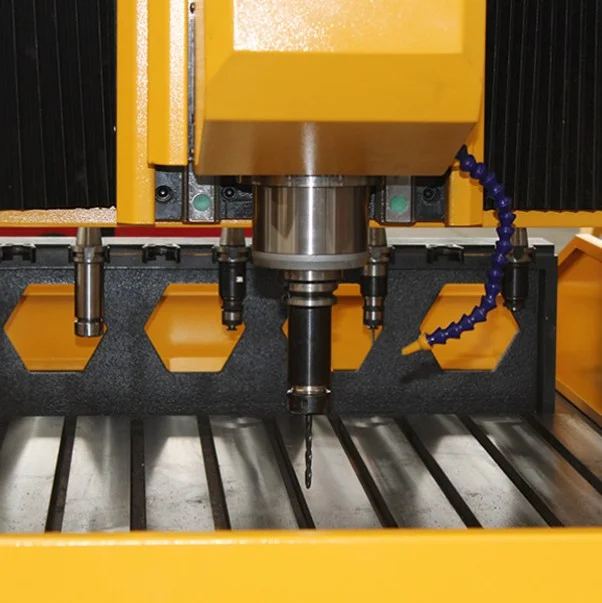
Xuyang states that it has a dedicated agitator dynamic-balancing test workshop. Dynamic balancing is relevant because an unbalanced agitator creates shaft vibration, seal wear and bearing load. The buyer should ask for the balancing grade, the test speed and the record that will be supplied with the equipment. The answer belongs in the acceptance criteria, not in a general capability statement.
Seal selection follows the same logic. A mechanical seal is a maintenance item with faces, elastomers and flush requirements. A magnetic seal removes the dynamic shaft seal from the process boundary but introduces its own constraints around torque, temperature and magnetic materials. The buyer should compare the proposed seal against the medium, pressure, temperature, agitator power and allowable leakage. The RFQ should require a seal data sheet, a flush plan where applicable and a spare-parts recommendation.
Material selection is shared between tanks and reactors, but the consequences differ. Xuyang's material-selection sequence starts with the working medium or product name, then confirms chemical composition and concentration, operating temperature, design temperature, operating pressure, design pressure or vacuum condition, required capacity, and corrosion resistance or hygiene requirements. The final step is to evaluate material suitability and finalize the selection. That sequence is a useful checklist for either equipment type. For a reactor, the material choice also affects heat-transfer surfaces, agitator wetted parts and seal components.
Heating, Cooling and Control: Where the Two Equipment Types Diverge
Tank heating is usually a supporting function. The buyer needs to hold a medium at a temperature, prevent freezing, reduce viscosity or prepare it for transfer. A jacket, half-pipe coil or external coil can do that, and insulation helps stabilize the result. The control loop may be a local temperature gauge, a thermostat or a simple controller.
Reactor heating and cooling are part of the reaction. The heat-transfer system must remove the heat of reaction or supply the heat of vaporization, and it must respond to changes in reaction rate. A jacket and an internal coil can provide different surface areas and flow patterns. A half-pipe coil can be designed for a utility pressure independent of the vessel shell. An external coil may be chosen for inspection or replacement access. The correct choice depends on heat duty, utility temperature, fouling, cleanability and the vessel geometry.
Company comparison material states that coil-type heat-exchange structures can increase heat-transfer area by 40% and improve heating and cooling speed by 35% compared with traditional jacketed reactors under the same volume. The same material states that no quantified energy-efficiency comparison with other equipment is provided. These are company-reported figures tied to a specific comparison. They should not be applied to a different vessel size, medium or utility system without engineering review.
Control philosophy is the other clear divider. A storage tank can often be operated with manual valves and local indication. A reactor with a recipe, an exothermic step or a hazardous medium usually needs interlocks, alarms and recorded sequences. Manual, automatic and PLC-based control are not simply price tiers. They change the instrument list, the panel design, the validation effort and the operator training requirement. A buyer comparing quotations should check that each quote uses the same control basis, otherwise the lowest price may exclude the instrumentation needed to run the reactor safely.
Safety Accessories and Overpressure Protection
Safety valves, rupture discs and pressure gauges are common to both equipment types, but the basis of protection differs. A storage tank may be protected against overpressure from filling, thermal expansion, nitrogen blanketing or external fire. A reactor may also need protection against reaction runaway, gas evolution or blocked outlet. The relief scenario should be stated in the data sheet, and the relief device should be sized for that scenario.
A safety valve and a rupture disc are not interchangeable. A safety valve can reseat after relieving; a rupture disc is a one-time device that may be chosen for rapid response or for a scenario where a valve alone is not suitable. Some systems use both in combination. The pressure gauge is an indicator, not a relief device. The buyer should require a relief valve or rupture disc datasheet, set pressure, capacity, discharge direction and certification where applicable.
For a reactor, the safety review should also consider the agitator, the seal and the control system. Loss of agitation can change heat transfer and reaction mixing. Seal failure can create a release path. A control failure can cause over-dosing or over-temperature. These are not reasons to avoid reactors; they are reasons to define the protective functions and verify them during commissioning. The same discipline applies to a tank with heating, but the reaction case usually has more variables to control.
Compliance: Compare Codes, Certificates and Documentation Before RFQ
Compliance is where many tank-versus-reactor comparisons become unreliable. Two suppliers may both say ASME or ISO, but they may be referring to different things. A buyer should separate the design code, the product certification, the manufacturer's license and the management-system certificate.
An engineering summary published by O'Donnell Consulting describes ASME BPVC Section VIII as governing the design, analysis, fabrication, inspection and testing of pressure vessels, including heat exchangers, reactors, filters and specialty vessels. The ASME U Stamp is associated with vessels built to the applicable ASME Section VIII rules. PED conformity and CE marking apply to pressure equipment placed on the EU market, with the category and conformity-assessment route depending on volume, pressure and medium. GB is the Chinese pressure-vessel framework, and EN standards apply in European practice. These are different systems, and the RFQ should state which one governs the project.
ISO 9001, ISO 14001 and ISO 45001 are management-system standards. They show that a quality, environmental or occupational-health system is in place. They do not replace a pressure-vessel design code, a U Stamp or a PED conformity assessment. A supplier can hold ISO 9001 and still need a separate product certification for the vessel. Buyers should not accept a management-system certificate as proof of vessel compliance.
Xuyang's company information lists an A2 Special Equipment Design and Manufacturing License, ISO 9001, ISO 14001 and ISO 45001 certification, and ASME U Stamp and PED certification. These are company-reported credentials. Before releasing an RFQ, a buyer should request the certificate number, issuing body, scope, validity and the name of the legal entity covered. The scope matters: a certificate for one product family or one manufacturing site does not automatically cover a different vessel type or a subcontracted scope.
| Document or acceptance item | Why it matters | RFQ question |
|---|---|---|
| Design code and edition | Defines design, materials, NDT and testing | Which code, edition, division or category applies? |
| Manufacturer license and scope | Confirms authorization for the specific vessel | Certificate number, issuer, scope and expiry? |
| ASME U Stamp or PED and CE documentation | Supports market access and third-party inspection | Is the stamp or marking included, and who witnesses final inspection? |
| Material certificates and traceability | Links the wetted material to the specification | Which material grades, certificates and marking method? |
| Welding, NDT and pressure test | Verifies joint quality and containment | WPS and PQR, NDT method and coverage, hydrotest pressure and duration? |
| Safety accessory sizing | Confirms overpressure protection | Relief scenario, set pressure, capacity and discharge direction? |
| Control and instrumentation | Defines operability and validation scope | I/O list, control narrative, alarm and trip matrix, FAT and SAT? |
| Drawings and final documentation | Supports installation, operation and maintenance | GA drawing, P&ID, O&M manual, inspection dossier and spare-parts list? |
| Insulation and heat transfer | Affects process performance and personnel safety | Utility conditions, heat duty, insulation type and cladding? |
Customization Data Sheet: What to Confirm Before Asking for a Price
A custom equipment quotation is only as good as the data sheet behind it. For a tank or a reactor, the same core inputs should be fixed first: equipment type, capacity or volume, medium, material, operating and design pressure, operating and design temperature, vacuum requirement, heating or cooling method, agitator requirements, nozzle requirements, applicable standard and site conditions. Xuyang's design questionnaire also asks for existing drawings or specifications and identifies equipment design qualification as a key safety note for custom design work.
The next layer is equipment-specific. For a tank, add orientation, insulation, corrosion allowance, cleaning access, venting and transfer connections. For a reactor, add reaction description, agitator type and power, seal type, baffles, heat-transfer area, control philosophy, relief scenario and any explosion-proof requirement. If the buyer cannot provide a reaction description, the supplier cannot select the agitator or seal responsibly. A drawing issued without that information may look complete but leave the critical process risk unresolved.
Xuyang states that customized solutions can include professional CAD or 3D designs based on specific process parameters, material requirements and space constraints. That is useful for layout and interference checking, but a 3D model is not a substitute for a process datasheet. The buyer should confirm that the model reflects the approved nozzle list, support points, maintenance access and lifting arrangement.
Fit Boundaries and Total-Cost Logic
A storage tank is the better fit when the duty is containment, buffering, decanting, transfer or storage with optional heating. It is also the better fit when agitation is only needed to keep a medium homogeneous and when the process does not depend on controlled reaction, sealing or heat removal. In those cases, adding reactor-level instrumentation and documentation can increase cost without improving the duty.
A reactor is the better fit when the process requires reaction, mixing, heat transfer or sealing as part of the product quality or safety case. It is also the better fit when the medium is hazardous, when the reaction is exothermic, when the product specification depends on temperature history, or when the vessel must be cleaned and validated between batches. The reactor is not automatically the more expensive choice in every project, but it usually carries more engineering, instrumentation and documentation scope.
Cost comparison should therefore be built from the same basis. The main drivers are material selection, heat-transfer surface, agitator and seal type, control philosophy, NDT and testing, certification and documentation. An external estimate cited by Fortune Business Insights suggests that compliance with ASME standards can represent up to 20% of a pressure vessel's total material cost. That is an estimate, not a quotation, but it shows why a no-code tank and a code-stamped reactor should not be compared on shell weight alone.
Supplier claims should be tested in the same way. Company comparison material refers to lower maintenance and a 10% lower cost compared with traditional pressure vessel factories. Because the baseline is not a specific named configuration, those figures are supplier statements, not an independent total-cost benchmark. The buyer should ask what is included, what is excluded and which acceptance records support the claim.
Market Context and Outlook
The wider market context supports a more structured comparison. SNS Insider's 2026 report places the global chemical processing equipment market at USD 68.82 billion in 2026 and projects USD 105.30 billion by 2035. The same source reports that the chemicals and petrochemicals segment accounted for 41.6% of 2025 revenue. These figures describe the equipment market, not the demand for any single supplier, but they explain why buyers are under pressure to compare custom equipment on lifecycle and compliance criteria rather than unit price alone.
The equipment direction is also visible in supplier capability. Skid-mounted process equipment, intelligent reactors and ERP/MES-based production traceability are moving more of the engineering and testing into the supplier's workshop. That can shorten site work and improve documentation, but it also raises the importance of factory acceptance testing, drawing approval and interface control. A skid is only an advantage if the battery limits, utility connections and control scope are defined before fabrication.
For the tank-versus-reactor decision, the practical outlook is not that one equipment type replaces the other. It is that the specification boundary becomes clearer. Simple storage duties can be standardized; reaction duties need more engineering evidence. Buyers who separate those two cases early will get more comparable quotations and fewer late changes.
Conclusion: A Five-Step Buyer Framework
- Write the process duty in one paragraph: what the vessel holds or reacts, the medium, the required temperature and pressure, and the consequence of losing mixing or cooling.
- Choose the equipment type from that duty. Use a storage tank for containment, buffering and transfer with optional heating. Use a reactor when reaction, agitation, sealing or controlled heat removal is part of the product or safety case.
- Fix the wetted material and heat-transfer method. Confirm the medium, concentration, operating and design conditions, vacuum, capacity and corrosion or hygiene requirement before selecting a jacket, half-pipe coil or external coil.
- Define control and safety. Decide whether manual, automatic or PLC-based control is required, then specify the relief scenario, safety valve, rupture disc and pressure gauge as a combined protective system.
- Compare compliance and documentation before price. Check the design code, certificate scope, U Stamp or PED and CE route, material certificates, NDT, hydrotest and final dossier against the same RFQ basis.
For a custom chemical equipment project, the useful question is not whether a tank or a reactor is better in general. It is whether the selected vessel matches the duty, the code and the evidence package. Jiangsu Xuyang Chemical Equipment Co., Ltd. supplies both categories and states capability across reactors, storage tanks, heat exchangers, filters and skid-mounted systems. Buyers should still verify the project-specific certificate scope, drawings, test records and acceptance criteria before release.
A downloadable company catalog is available here: 2026 Xuyang Pressure Vessel Catalog.
FAQ
What is the main difference between a storage tank and a reactor?
A storage tank is designed for containment, buffering and transfer. A reactor is designed for a reaction that depends on mixing, heat transfer and sealing. The reactor specification therefore adds agitator, seal, heat-duty and control requirements that a storage tank may not need.
When is a storage tank sufficient instead of a reactor?
A storage tank is sufficient when the duty is holding, decanting, buffering or transfer, and when optional heating or gentle agitation is enough to keep the medium in condition. If the process depends on reaction, controlled mixing, close temperature control or containment around a rotating shaft, the duty should be specified as a reactor.
How do agitator and seal choices affect reactor specification?
The agitator determines the mixing pattern, power draw, shaft load and seal environment. The seal choice, mechanical or magnetic, affects containment, maintenance and utility requirements. Both should be selected from the medium, pressure, temperature, viscosity, explosion-proof requirement and reaction objective, not from a generic equipment list.
What should be compared in ASME, GB, EN, PED and ISO documentation before RFQ?
Compare the design code and edition, the manufacturer's license and scope, the ASME U Stamp or PED and CE route, material certificates, welding and NDT records, hydrotest records and the final documentation package. ISO 9001, ISO 14001 and ISO 45001 are management-system certificates; they do not replace the pressure-vessel design code or product certification.
Can a storage tank be supplied with agitation, heating and safety accessories?
Yes. A storage tank can be supplied with optional agitation, a jacket, half-pipe coil or external coil, insulation, a pressure gauge, safety valve, rupture disc or vent. The buyer should still confirm whether the agitation is for blending or for reaction duty. If mixing, heat transfer and sealing are critical to the process, a reactor specification is the more appropriate basis.
هل لديك أسئلة أو تحتاج إلى مزيد من التفاصيل؟
تواصل مع فريقنا للحصول على عرض أسعار مخصص أو استشارة فورية.
طلب عرض أسعار
املأ النموذج أدناه وسيتواصل معك فريقنا بعرض مقترح مخصص.
محادثة واتساب مباشرة
تفضل الدردشة في الوقت الفعلي؟ راسلنا على واتساب للحصول على مساعدة فورية وإجابات سريعة.
- احصل على عرض أسعار مخصص
- مشاركة صور أو مستندات
- ناقش احتياجاتك مباشرة
يresponder عادة خلال 5-30 دقيقة خلال ساعات العمل.