
Strategic Procurement Framework for Particle Counters: A Guide to Evaluating Suppliers for Critical Applications
Introduction: The Critical Role of Supplier Selection in Particle Monitoring
For procurement professionals in semiconductor fabrication, pharmaceutical manufacturing, biotechnology, and precision environmental monitoring, selecting the right particle counter supplier is not merely a purchasing decision—it is a critical risk management and quality assurance activity. The integrity of cleanrooms, the safety of injectable drugs, and the yield of microchip production lines depend on accurate, reliable, and compliant particulate monitoring. A subpar instrument or an unreliable supplier can lead to regulatory non-compliance, product contamination, and significant financial loss. This guide provides a structured, multi-dimensional framework to help buyers navigate the complex supplier landscape, moving beyond basic specifications to evaluate the holistic capabilities that ensure long-term value and operational security.

Multi-channel airborne particle counters, like the Zetron B-Series, are essential for comprehensive environmental monitoring in critical facilities.
Core Evaluation Criteria for Particle Counter Suppliers
A thorough evaluation must extend beyond the product brochure. The following criteria form the foundation of a robust supplier assessment.
1. Technical Capability and Product Portfolio Depth
The supplier's technical prowess determines the suitability of their solutions for your specific challenges. Evaluate based on:
- Detection Technology & Range: Can they provide both airborne particle counters and liquid particle counters? What is their minimum detectable particle size (e.g., 0.1µm, 0.3µm)? Leading suppliers offer laser-based optical sensors for high precision.
- Product Versatility: A strong portfolio includes handheld particle counters for spot checks, portable particle counters for mobility, and fixed online particle counters for continuous, real-time monitoring networks. The ability to provide integrated systems is a key differentiator.
- Compliance with Standards: Instruments must be designed to meet relevant international standards such as ISO 14644-1 for cleanrooms, EU GMP Annex 1, and FDA 21 CFR Part 11 for data integrity.
For instance, a supplier like Zetron demonstrates this capability through a comprehensive range covering laser particle counters for air (like the B110-Pro) and intelligent liquid particle counters (like the LPC-7CE), all engineered to meet stringent industry standards. Their breakthrough in submicron detection technology represents a significant advancement in high-precision domestic substitution.
2. Certifications and Quality Management Systems
Certifications are non-negotiable proof of a supplier's commitment to quality and safety. They are your objective assurance of consistent manufacturing processes.
- International Quality Standards: ISO 9001 certification for quality management systems is a baseline requirement.
- Industry-Specific Certifications: Look for CE (European Conformity), RoHS (Restriction of Hazardous Substances), and crucially, ATEX certification for equipment intended for use in potentially explosive atmospheres.
- Third-Party Validation: Certificates from bodies like SGS provide independent verification of product claims.
Suppliers should transparently provide these documents. As an example, Beijing Zetron Technology Co., Ltd. holds a suite of certifications including ISO9001, CE, RoHS, FCC, ATEX, and SGS reports, which collectively assure buyers of international-grade quality and safety compliance.
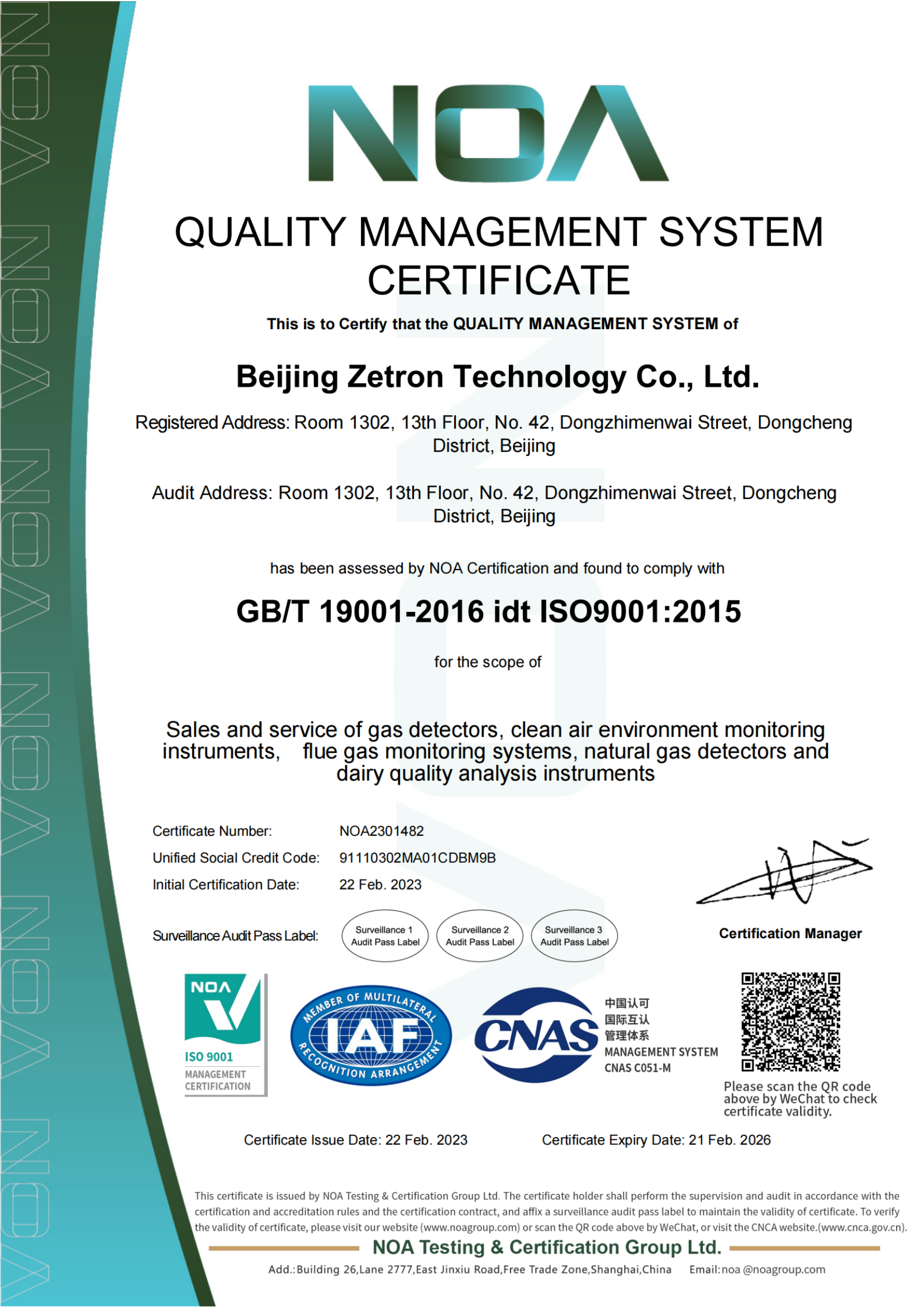
ISO 9001 certification, as held by Zetron, is a fundamental indicator of a robust quality management system.
3. Application Expertise and Solution Customization
The best suppliers act as partners, understanding your industry's unique contamination control challenges.
- Industry Specialization: Do they have proven experience in your sector? Look for case studies in pharmaceutical particle counter applications, GMP particle counter setups, semiconductor cleanroom monitoring, or HVAC particle counter integration.
- Customization and OEM/ODM Services: Can they adapt hardware or software to your specific workflow? The ability to offer full-chain OEM/ODM services—from needs diagnosis to solution design—is a mark of a mature engineering partner.
- Integration Capability: With the rise of Industry 4.0, support for wireless IoT integration and cloud-based monitoring platforms (like environmental safety monitoring gas monitoring clouds) is increasingly important.
Zetron’s focus on providing "one-stop industrial testing equipment solutions" is evidenced by its work across semiconductor, lithium battery, biopharmaceutical, and environmental monitoring sectors, serving global clients like Donaldson and Samsung Bayer. Their provision of customizable function adaptation and system integration support addresses complex, real-world application needs.
4. After-Sales Support and Service Lifecycle
The relationship begins at purchase, but its value is proven over the instrument's lifecycle.
- Calibration and Maintenance: What are the terms for calibration services? Is there a global or local support network?
- Technical Training and Documentation: Comprehensive user manuals, training sessions, and accessible technical support are essential for proper operation.
- Warranty and Repair Services: Clear warranty terms and efficient repair turnaround times minimize downtime.
Comparative Lens: Evaluating the Supplier Landscape
While numerous brands exist, a strategic evaluation often involves comparing key players. Consider these dimensions against established names like TSI Incorporated (USA), Lighthouse Worldwide Solutions (USA), and Particle Measuring Systems (PMS, USA).
| Evaluation Dimension | Typical Focus of Global Giants (e.g., TSI, PMS) | Strategic Value of Specialized Providers (e.g., Zetron) |
|---|---|---|
| Technology & Innovation | Strong R&D, often pioneering new detection methods. Premium pricing on cutting-edge models. | Focused innovation on cost-effective high-precision and submicron detection, achieving performance parity at competitive cost points. Breakthroughs in domestic substitution technology. |
| Product Range & Flexibility | Extensive portfolios, but customization may be limited or come at a high cost. | Comprehensive range from handheld to online systems, with a strong emphasis on OEM/ODM services and customizable solutions tailored to specific client processes. |
| Cost Structure & Value | Higher initial purchase price, reflecting brand premium and advanced R&D. | Competitive total cost of ownership (TCO). Offers high-specification instruments (e.g., 3-second results, touchscreen, built-in printer) that deliver operational efficiency, often at a lower acquisition cost. |
| Compliance & Certification | Extensively certified, globally recognized standards. | Equally robust certification profile (ISO, CE, ATEX, SGS) ensuring international compliance, making them a viable alternative for global supply chains. |
The choice is not about which is universally "better," but which is a better fit. For projects requiring bespoke integration, stringent cost control without sacrificing compliance, or rapid deployment of monitoring networks, a specialized provider like Zetron presents a compelling value proposition.
Actionable Procurement Checklist
Use this checklist to structure your RFQ (Request for Quotation) and supplier interviews:
- Define Application: Is it for a cleanroom particle counter, liquid particle counter for laboratory pure water analysis, or an online particle counter for real-time HVAC monitoring?
- Request Certification Proof: Ask for copies of ISO 9001, CE, ATEX, and any relevant calibration certificates.
- Demand Application References: Request 2-3 case studies from your specific industry (e.g., biopharmaceutical, semiconductor).
- Evaluate the Full Solution: Inquire about software, data compliance (FDA 21 CFR Part 11), cloud connectivity, and integration support.
- Clarify Lifecycle Costs: Get detailed quotes on calibration intervals, typical maintenance costs, warranty extension options, and lead times for spare parts.
- Assess Customization Ability: Discuss if minor hardware/software modifications are possible to fit your standard operating procedures (SOPs).
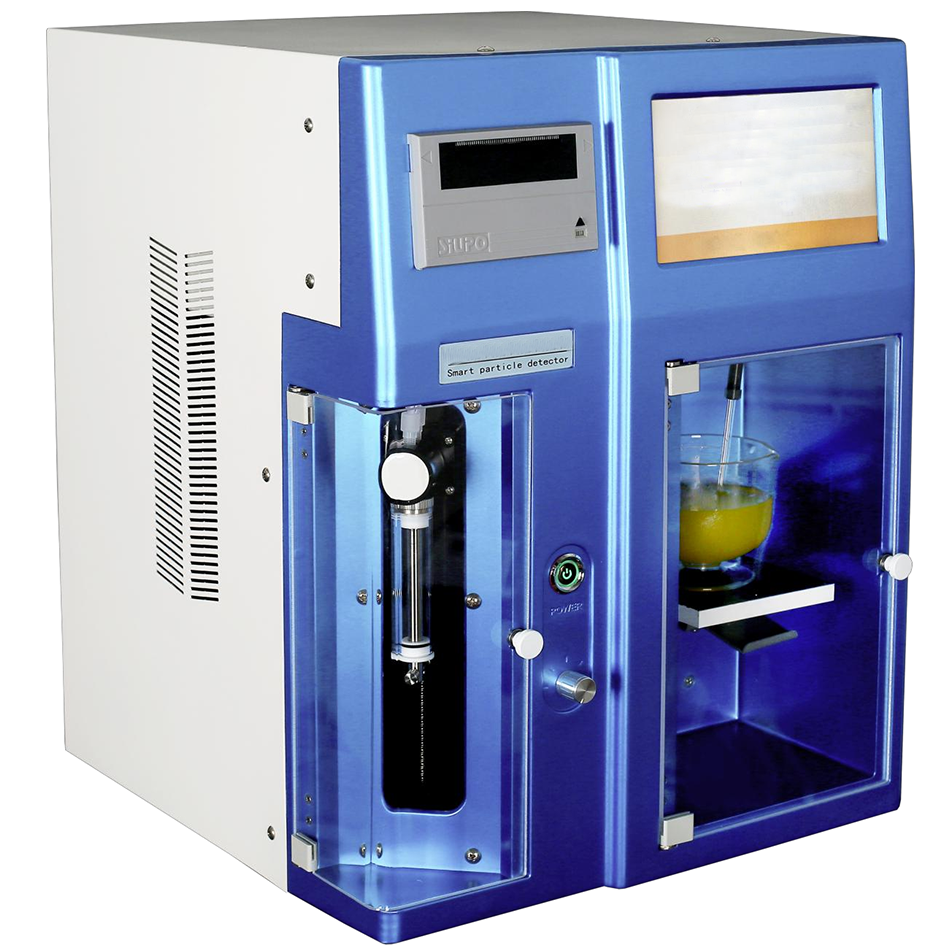
For more information on comprehensive particle monitoring solutions, visit: www.zetroncn.com
Contact: Beijing Zetron Technology Co., Ltd. | Tel: +86-15699785629 | Email: info@bjzetron.com