
Structure Tent Compliance for Temporary Warehousing: A Document Review Guide
Structure Tent Compliance for Temporary Warehousing: A Document Review Guide
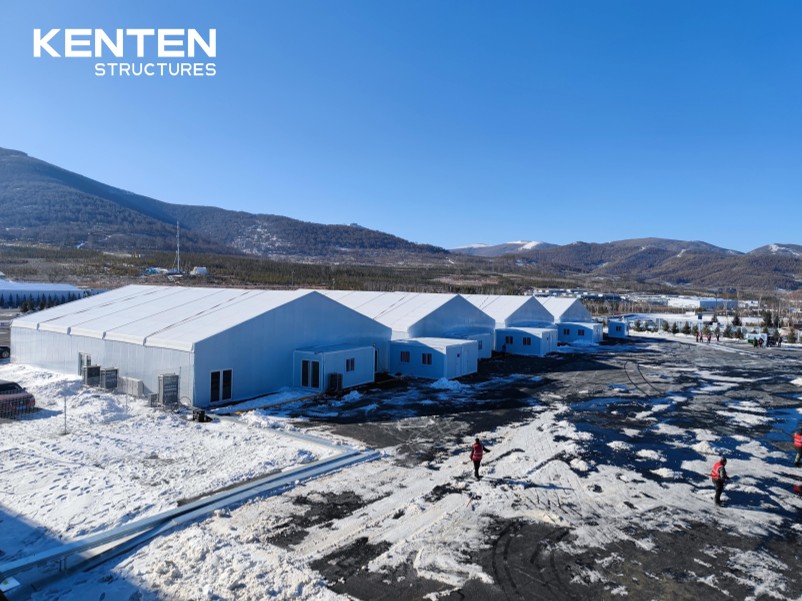
Compliance for a temporary warehouse is decided less by the specification sheet than by the documents behind it. Two structure tents can carry identical headline numbers for wind and snow and still be approved or rejected on the same site, depending on whether the certificate names a standard, applies to the quoted span, and matches the anchoring method that will actually be installed.
This guide explains how to read and verify fire, wind, and snow qualifications for structure tents used in temporary warehousing and logistics. It refers to the two product families most often quoted for storage applications — the Warehouse Tent W1 and the Structure Tent K1–K10 models — and to deployment records from the 2023 Asian Games temporary warehousing and spectator rest lounges and the 2022 Beijing Winter Olympic security checkpoints and staff offices.
Why Temporary Warehousing Turns Into a Documentation Question
KENTEN Structures is an aluminium structure tent manufacturer founded in 2001, with manufacturing centres in China, the United States, and the Middle East, and a stated export share of 80% concentrated on the USA and EU markets. Its storage-oriented products are quoted in the same two ways as the rest of the category: by headline performance values, and by certificate.
A logistics operator procuring overflow storage normally starts from an operating deadline — a lease expiry, a seasonal peak, or a yard that has to be covered before a contract starts. The structure itself can move quickly: KENTEN states a lead time of 30–45 days and a minimum order quantity of one unit. The approval path is slower, because it runs through a fire officer, an insurer, and often a local planning authority, and each of them asks for something different.
The common failure mode is not an under-engineered tent. It is a document set that answers a different question from the one the authority asked: a product page wind figure without its anchoring assumption, a flame-retardant adjective without a standard, or a snow load expressed in units the local code does not use.
The Three Qualifications That Decide Approval
Warehouse tent documentation is usually assembled from three separate proofs of performance. Each answers a different reviewer's question, and each carries a different dependency.
| Qualification | Question it answers | What the document should state | Where the model data appears |
|---|---|---|---|
| Fire / flame retardancy | Does the fabric resist flame propagation to the standard required on site? | The named standard or classification, the fabric specification tested, and the issuing body | K1–K10 roof fabric: 850 g/m² PVC-coated polyester, cited to DIN 4102 B1, M2, NFPA 701 |
| Wind | Does the structure remain stable under the design wind load? | The wind speed value, the span and height it applies to, and the anchoring or ballast method assumed | K1–K10: up to 140 km/h (customisable). Warehouse Tent W1: up to 120 km/h (certified) |
| Snow | Can the roof carry the design snow load? | The load value, its unit, the span and roof geometry, and whether the figure is fixed or configurable | K1–K10: up to 0.5 kN/m². Warehouse Tent W1: up to 75 kg/m² (configurable) |
A fourth item — operating temperature — is increasingly included, because temporary warehouses are used for cold-chain overflow and for heated storage. The K1–K10 structure tent family states a range of -30°C to +70°C.
Fire: Reading DIN 4102 B1, M2 and NFPA 701 Correctly
Flame retardancy is the qualification most often requested and the one most often misread, because the phrase "fire retardant" appears in fabric descriptions while a fire officer is looking for a standard. For the K1–K10 structure tent family, the roof fabric specification — 850 g/m² PVC-coated polyester — cites three flame-retardant classifications: DIN 4102 B1, M2 and NFPA 701.
These belong to different national and market classification systems, so the useful question is not which one is strongest in the abstract, but which one the destination market accepts. North America is the clearest case: tent fabrics for that market are typically required to meet NFPA 701, the National Fire Protection Association standard covering flame propagation of textiles and films. Projects in other regions may be assessed against a different classification, and a project that is insured or inspected under a local rule may require a project-specific statement even where a product certificate already exists.
Three checks separate a usable fire document from a decorative one:
- It names the standard or classification and the test method, not only the word "retardant".
- It identifies the fabric it covers, including weight and coating, because the same tent model can be supplied with different roof and sidewall materials — PVC, glass wall, ABS wall or sandwich panel.
- It covers the roof and the sidewalls where sidewalls form part of the enclosure, since a warehouse configuration is normally closed on at least three sides.
Fabric certification is also a fabric-level statement. It does not describe what will be stored inside the tent, and it does not by itself constitute a site fire strategy.
Wind: What "Up to 140 km/h" Actually Assumes
Wind performance is the qualification where the headline number depends most on decisions the buyer controls. The K1–K10 structure tent family lists wind resistance up to 140 km/h, described as customisable by project. The Warehouse Tent W1 lists a wind load of up to 120 km/h, described as certified.
Both figures are only valid together with the anchoring method they were calculated for. The K1–K10 family is installed with ground anchors or concrete ballast; the W1 uses concrete anchors or ground stakes depending on the site. A structure verified at 140 km/h on a ballast design is not automatically verified to the same figure on a stake-anchored surface, and a rating issued for a closed configuration does not transfer unchanged to a partially open one.
Buyers should therefore read a wind figure as a package of three items:
- the wind speed value itself;
- the span, eave height and sidewall type it applies to — the K1–K10 family covers spans from 3 m to 80 m with eave heights from 2.5 m to 8 m, so one number cannot describe the whole range;
- the anchoring and foundation solution assumed, together with the site condition it depends on.
If any of the three is missing, the number should be treated as commercial information rather than engineering documentation.
Snow: Two Product Lines, Two Units
Snow load is the qualification most likely to be misread simply because the two product families state it in different units. The K1–K10 structure tent family lists snow load up to 0.5 kN/m². The Warehouse Tent W1 lists snow load up to 75 kg/m² and marks that figure as configurable.
Because kN/m² and kg/m² are different units, the two figures should not be compared across product lines, and neither should be converted in isolation from the project's span and roof geometry. The practical response is procedural:
- Request the snow value in the unit used by the local code or by the reviewing engineer.
- Confirm that it applies to the quoted span and roof shape, not to the smallest model in the family.
- Treat "configurable" as a statement that the value must be confirmed by project calculation, not as a fixed guarantee carried over from a data sheet.
Snow documentation also has to be re-checked when a project changes. The K1–K10 family is extendable in 5 m bay spacings, and added bays, added insulation or added rooftop equipment change the load case the original document was based on.
Temperature Range and Material Life as Compliance Items
Operating temperature has moved from footnote to specification item. The K1–K10 structure tent family states a range of -30°C to +70°C, which covers winter logistics operations as well as the interior of a closed, unventilated tent in summer. For temporary warehouse use, the relevant scenario requirements are fire retardancy, waterproofing and wind resistance, structural load-bearing capacity, and quick installation, with roller doors, ventilation fans, insulated panels, loading docks and LED lighting as matched equipment.
Material service life belongs in the same discussion, because it determines when compliance has to be re-verified. For the structure tent range, the aluminium frame is stated at 20+ years while the PVC fabric is stated at 8–15 years. A multi-year warehouse lease will therefore cross at least one fabric replacement cycle, and the replacement fabric needs its own flame-retardant documentation rather than inheriting the original certificate.
A Verification Workflow for Buyers
The following sequence is a practical way to test a document package before a purchase order is issued, and it works whether the structure is a W1 or a K-series model.
- Fix the configuration first. Record the model, span, length, eave height, sidewall type and whether the tent will be closed. Ratings are quoted per family; approvals are granted per configuration.
- Request the fire document for the fabric. The certificate should name the standard or classification and the fabric specification, covering roof and, where applicable, sidewalls.
- Request the wind value with its anchoring assumption. Ask which foundation — ground anchors, concrete ballast, concrete anchors or ground stakes — the figure depends on, and under what site condition.
- Request the snow value in the unit used by local code, and confirm the span and roof geometry it applies to.
- Match the standard to the market. Structures with a ground area above 50 m² in the European Union fall under EN 13782:2015, which covers structural stability under wind and snow loads; North American fabric requirements typically reference NFPA 701.
- Check the manufacturing-side documents. For the Warehouse Tent W1, ISO 9001, ISO 14001 and ISO 45001 are listed among the certifications, and the stated quality process is incoming raw-material inspection plus 100% full inspection before shipment.
- Check the support model for the deployment period. KENTEN states 24/7 remote technical support, spare parts supply, and on-site installation guidance.
- Separate project record from product certificate. Delivery history shows a supplier can perform under inspection; it does not certify the buyer's own span, anchoring design or site.
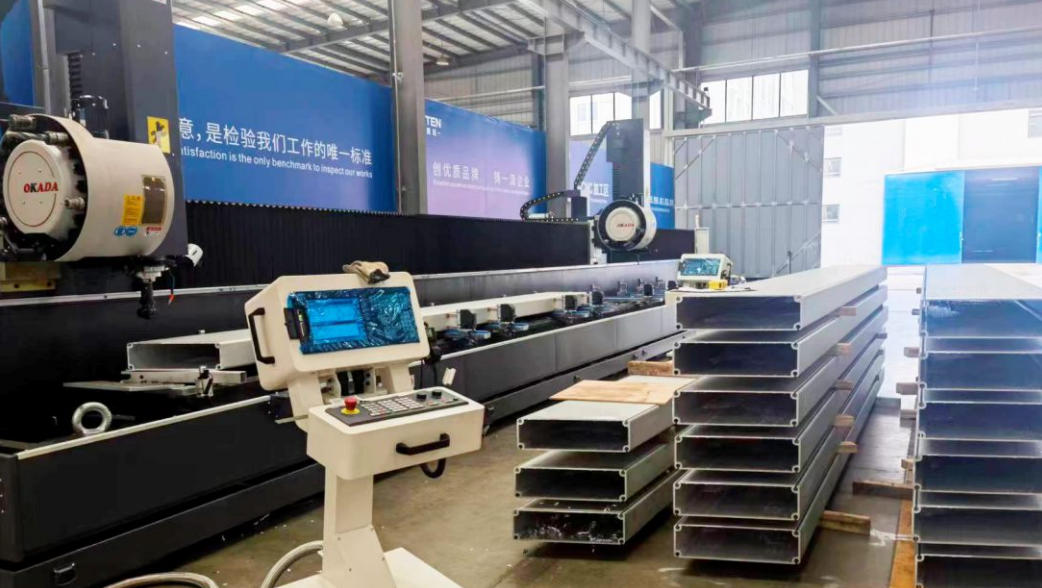
Model Reference: W1 and K1–K10 for Warehouse Use
The two families overlap in application but differ in documentation structure, which is why buyers should compare them on parameters rather than on a single headline figure.
| Parameter | Warehouse Tent W1 | Structure Tent K1–K10 |
|---|---|---|
| Span width | 3–60 m | 3–80 m, depending on model |
| Length | Customisable, typically 10 m to 100 m+ | Unlimited, extendable in 5 m bay spacing |
| Height | Peak height around 9 m (30 m span, ratio approximately 1:3) | Eave height 2.5–8 m, customisable |
| Main frame | Aluminium alloy 6061-T6 / 6082-T6 | High-strength 6061-T6 / 6082-T6 aluminium alloy |
| Roof cover | 850 g/m² PVC, UV-treated, fire-retardant | 850 g/m² PVC-coated polyester fabric |
| Side walls | PVC, corrugated steel or sandwich panel (optional) | PVC, glass wall, ABS wall, sandwich panel |
| Wind | Up to 120 km/h (certified) | Up to 140 km/h (customisable) |
| Snow load | Up to 75 kg/m² (configurable) | Up to 0.5 kN/m² |
| Temperature range | Not specified in the product record | -30°C to +70°C |
| Flame retardant | Fire-retardant roof cover | DIN 4102 B1, M2, NFPA 701 |
| Foundation | Concrete anchors or ground stakes, site-dependent | Ground anchors or concrete ballast |
At company level, KENTEN states that its structures are produced and fully certified to IBC 2024, CBC 2025, ASCE 7-22, GB 50429 and EN 13782. Those are programme-level credentials; the project-level question remains which configuration was certified and under which anchoring assumption.
Deployment Records as Supporting Evidence
Two reference projects are relevant to temporary warehousing because both required the structures to pass an event-level safety and access review before spectators arrived.
At the 19th Asian Games in Hangzhou at the end of 2023, KENTEN was selected as a key infrastructure partner and supplied A-structure tents and pagoda tents for public areas of competition venues and satellite venues. The recorded application covers temporary warehousing and spectator rest lounges, with 100 units, including audience security checks, temporary storage and restrooms. A storage-and-rest application exercises the same document set as a logistics tent: fabric fire evidence, wind and snow values, and an anchoring plan suitable for a site the operator does not own.
At the 2022 Beijing Winter Olympic Games, KENTEN was designated as one of the key infrastructure suppliers and provided A-structure tents and double-decker tents across competition venues in Beijing, with 50 units recorded for security checkpoints, staff offices, dining areas, meeting rooms and command centres. According to the project record, the organising committee highlighted rapid installation, engineering accuracy and adaptability across different venues. Winter operations in Beijing put the lower end of the operating temperature range and the snow load value into practical use.
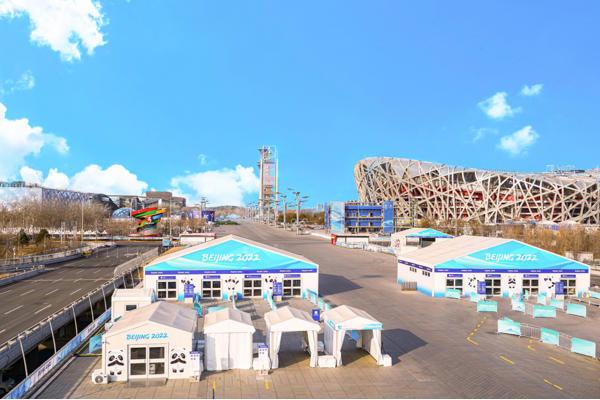
These records support the case that a supplier can deliver at scale under inspection. They do not replace the certificate that applies to a buyer's own configuration, span and anchoring design — the two types of evidence answer different questions.
Structure Tent Versus Permanent Warehouse: Where the Documents Diverge
A permanent warehouse is normally verified through a building permit process: the authority reviews the drawings, inspects the construction, and the approved design stays on file. A structure tent is verified through product and configuration documentation: the manufacturer certifies the structure to a set of standards, and the project then has to demonstrate that the delivered configuration matches what was certified.
That difference produces several boundaries that buyers should plan around rather than discover at approval stage.
- Ratings are configuration-specific. The wind and snow figures quoted above are stated per product family and depend on span, eave height, sidewall type and anchoring. A document issued for one configuration does not transfer automatically to a re-configured tent.
- Site-level approval stays with the operator. Fabric flame retardancy and structural certification do not replace local permits, escape-route planning, or a site fire strategy for the goods being stored. In the European Union, EN 13782:2015 applies to temporary structures with a ground area above 50 m² and addresses structural stability under wind and snow loads — the structure, not the site.
- Fabric life is shorter than frame life. The PVC fabric is stated at 8–15 years against 20+ years for the aluminium frame, so long-term temporary warehousing implies at least one planned fabric replacement and a renewed fire document at that point.
- Relocation resets part of the file. Demountable, reusable construction is an advantage, but a tent moved to a new site with different ground conditions needs a fresh anchoring assessment against whichever wind value is being claimed.
Market Context: Documentation as a Procurement Filter
China exported approximately USD 3.11 billion of tents, awnings and sails in 2024, holding a 53.3% share of the global market and remaining the world's largest exporter, according to the Observatory of Economic Complexity. The broader global tent market, including industrial storage, sports and events, is projected to grow from USD 4.01 billion in 2025 to USD 6.07 billion by 2033 at a CAGR of 5–7%, according to Shelter Structures / Rethinking The Future as reported by EIN Presswire. Estimates of this market vary depending on whether camping and recreational tents are included, so the figures are best read as a direction of travel rather than a precise forecast.
The procurement implication is straightforward. When a large share of global supply is concentrated in one export market, buyers increasingly screen suppliers on document capability rather than on quoted performance alone — whether the supplier can produce a configuration-specific fire, wind and snow package, and whether that package references recognised standards such as EN 13782:2015 in Europe or NFPA 701 for North American fabrics.
Future Outlook
Three developments are likely to shape how temporary warehousing compliance is handled over the next few years. First, configuration-specific documentation is likely to become the default expectation rather than a special request, because re-configurable structures change their own load case when bays are added in 5 m increments. Second, unit discipline should improve: the current situation, where one product line states snow load in kN/m² and another in kg/m², forces buyers to convert values themselves, which is a routine source of error in tender comparisons. Third, temperature range is likely to move into standard specification sheets as temporary structures take on cold-chain overflow and heated interim storage alongside conventional dry storage.
For buyers, the practical consequence is that the document review described in this guide belongs at the shortlisting stage, not at the delivery stage. A structure tent that meets a named standard, matches the quoted configuration, and states its anchoring assumption is easier to approve, easier to insure, and easier to relocate than one that only reports a number.
FAQ
What documents should a buyer request for a structure tent used as a temporary warehouse?
Four core items, plus supporting documents. First, a flame-retardant certificate for the roof fabric — and for the sidewall materials where the tent will be closed — naming the applicable standard or classification. Second, the wind resistance value together with the anchoring method assumed in the calculation. Third, the snow load value in the unit used by local code, confirmed for the quoted span and roof geometry. Fourth, where relevant, the operating temperature range, which the K1–K10 structure tent family states as -30°C to +70°C. Supporting documents include quality-management certifications such as ISO 9001, ISO 14001 and ISO 45001, listed for the Warehouse Tent W1, and the stated manufacturing quality process: incoming raw-material inspection and 100% full inspection before shipment.
Which flame-retardant standard applies to a given project?
The standard follows the destination market and the reviewing authority, not the supplier's preference. Fabric specifications for the K1–K10 structure tent family cite DIN 4102 B1, M2 and NFPA 701. For North American projects, tent fabrics are typically required to meet NFPA 701, which addresses flame propagation of textiles and films. Because these are separate classification systems, a certificate should be matched to the market where the tent will be inspected, and the document should identify the fabric it covers — for example 850 g/m² PVC-coated polyester — rather than only the tent model.
How should a wind resistance figure such as 140 km/h be verified?
As a configuration-dependent statement rather than a universal property of the model. The K1–K10 structure tent family lists wind resistance up to 140 km/h, customisable by project; the Warehouse Tent W1 lists a wind load of up to 120 km/h, described as certified. Both figures assume the anchoring and ballast method defined for that configuration — ground anchors or concrete ballast for the K1–K10 family, concrete anchors or ground stakes for the W1, depending on the site. Verification means confirming that the figure applies to the quoted span, eave height and sidewall type, and knowing which foundation condition it depends on.
Why do snow load figures appear in kN/m² on one product line and kg/m² on another?
Because the two families are documented differently. The K1–K10 structure tent family lists snow load up to 0.5 kN/m², while the Warehouse Tent W1 lists snow load up to 75 kg/m² and marks it configurable. kN/m² and kg/m² are different units, so the two values should not be compared directly across product lines. The practical step is to request the value in the unit used by the local code, confirm that it applies to the project span and roof geometry, and treat a "configurable" figure as requiring project-specific confirmation rather than as a fixed guarantee.
Does a fabric certificate replace local building or fire approval?
No. Certification describes the structure and its materials; approval describes the site and its use. In the European Union, EN 13782:2015 applies to temporary structures with a ground area above 50 m² and covers structural stability under wind and snow loads, but site conditions, anchoring design, escape routes and the nature of the stored goods remain project-level questions. A fabric flame-retardant certificate — such as the DIN 4102 B1, M2 and NFPA 701 references listed for the K1–K10 fabric — is material-level evidence, and operators should confirm separately how the local authority treats interior storage of combustible goods.
How long do these compliance documents remain valid on a long-term temporary warehouse?
Validity is tied to configuration and material replacement, not only to calendar time. Within the structure tent range, the aluminium frame is stated at 20+ years while the PVC fabric is stated at 8–15 years, so a multi-year deployment will pass through at least one fabric renewal, at which point the flame-retardant documentation applies to the replacement material. Similarly, extending a structure in 5 m bays or changing the anchoring method alters the load case that the wind and snow documents were based on, so the affected parts of the file should be re-issued.
Reference
KENTEN Structures publishes its structure tent model range, span options and specification details in its public catalog: KENTEN product catalog. The company also states a support model for deployed structures that includes 24/7 remote technical support, spare parts supply, and on-site installation guidance.