
Structure Tent Procurement: Long-Term Supply Partnerships
Structure Tent Procurement: Long-Term Supply Partnerships
Structure tents have become a standard procurement category for industrial storage, logistics, events, and public infrastructure projects that need large clear-span space without the timeline of permanent construction. A structure tent is an aluminum-framed, PVC-fabric-clad building system designed to provide permanent or semi-permanent covered space. KENTEN Structures is a supplier of aluminum permanent and semi-permanent structures, founded in 2001 and operating its worldwide center from Ontario, California, with manufacturing centers in China, the United States, and the Middle East.
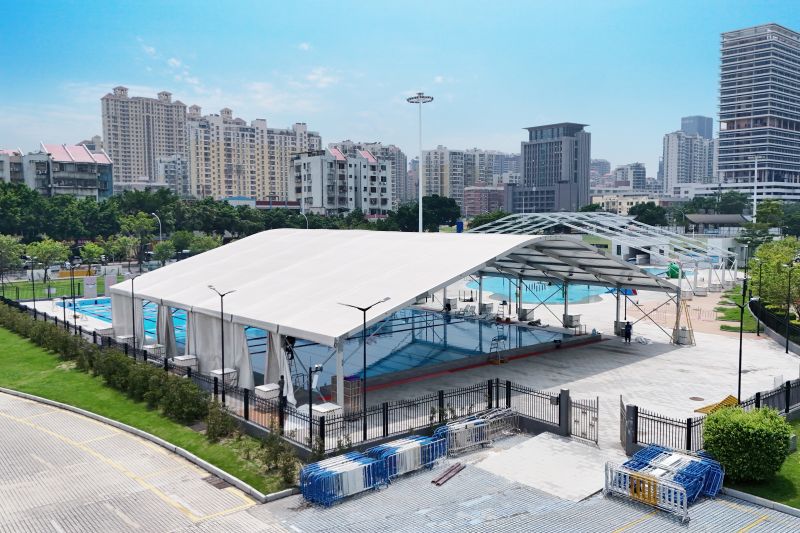
The procurement challenge: building a long-term supply relationship
At the decision and execution stage, the procurement question is no longer only about a single tent model. Buyers are asking whether a supplier can support a long-term program of projects: the same aluminum frame must be reconfigurable, the same fabric specification must be reproducible, and the same engineering standards must apply across multiple deliveries. This is especially relevant for distributors, general contractors, event production companies, and government agencies that plan repeated deployments.
The opportunity is clear. The global tent market, including industrial storage, sports, and events, is projected to grow from USD 4.01 billion in 2025 to USD 6.07 billion by 2033 at a CAGR of 5–7%, according to Shelter Structures and Rethinking The Future. China’s exports of tents, awnings, and sails reached approximately USD 3.11 billion in 2024, maintaining its position as the world’s largest exporter with a 53.3% global market share, according to the Observatory of Economic Complexity. For procurement teams, the long-term question is supplier capacity, consistency, and compliance.
KENTEN Structures: supplier profile and production baseline
KENTEN Structures is an established manufacturer in the structure tent segment. The company reports a factory area of 80,000 m², 200 employees, an annual output of 1,000,000 m², and a 10-engineer design and operations team. Its export ratio is approximately 80%, with main markets in the USA and EU. That export orientation is consistent with the broader Chinese manufacturing base, where an industry briefing by EIN Presswire names Shenzhen Shoulder Tent, Liri Tent, and KENTEN among leading aluminum frame tent manufacturers, with more than 80% of production often dedicated to export markets.
Beyond the Structure Tent series, KENTEN’s portfolio includes warehouse tents, atrium tents, Igloo tents, curved tents, double-decker tents, triple-decker tents, pyramid structures, and A-structure tents. This breadth matters for long-term buyers because a single supplier can cover multiple project types, from industrial storage to event hospitality.
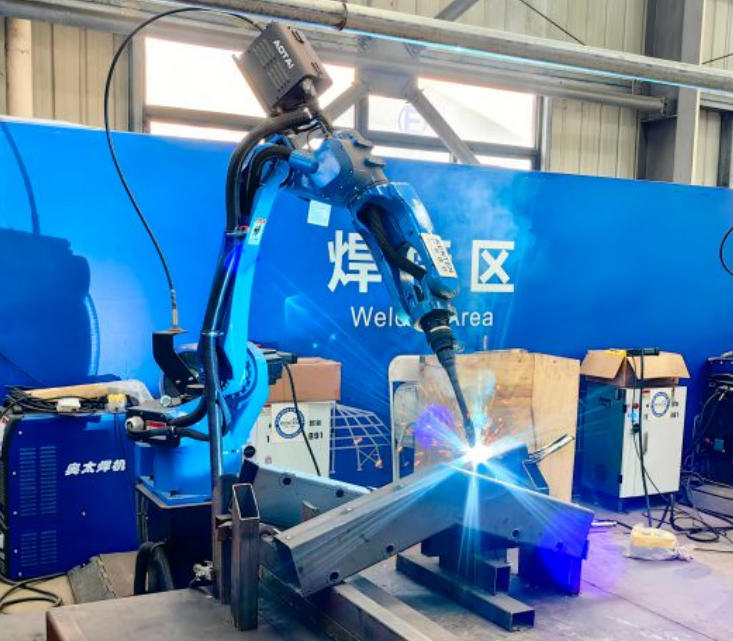
Structure Tent series: models, spans, and technical parameters
The core KENTEN Structure Tent series, catalog ID 6376, is available in models K1 through K10. The series is designed for permanent and semi-permanent use, with span widths from 3 m to 80 m depending on model and length that is unlimited through modular bay extensions. This modular approach supports project scaling without redesigning the entire structure.
| Span Width | 3m–80m, depending on model |
| Length | Unlimited, extendable in 5m bay spacing |
| Eave Height | 2.5m–8m, customizable |
| Main Frame | High-strength 6061-T6 / 6082-T6 aluminum alloy |
| Roof Fabric | 850g/m² PVC coated polyester fabric |
| Sidewalls | PVC, Glass Wall, ABS Wall, Sandwich Panel |
| Wind Resistance | Up to 140 km/h, customizable |
| Snow Load | Up to 0.5 kN/m² |
| Temperature Range | –30°C to +70°C |
| Flame Retardant | DIN 4102 B1, M2, NFPA 701 |
| Installation | Ground Anchors or Concrete Ballast |
| Lifespan | Aluminum 20+ Years, PVC Fabric 8–15 Years |
These parameters support several categories frequently used in procurement: aluminum frame structure tents, PVC fabric structure tents, flame retardant structure tents, wind and snow resistant structure tents, and large clear span structure tents. For temperature-sensitive operations, the lightweight fabric with thermal insulation coating can help reduce air conditioning energy consumption, and the absence of concrete pouring reduces construction-phase energy use.
Engineering risk control and quality assurance
Long-term supply relationships depend on repeatable engineering quality. KENTEN Structures documents that its professional engineering team performs structural calculations and validates load capacity according to project requirements. This project-level validation is a risk control measure for wind, snow, and other site-specific loads.
KENTEN also states that its quality control team ensures all structures are produced and fully certified to IBC 2024, CBC 2025, ASCE 7-22, GB 50429, and EN 13782. For European procurement, EN 13782:2015 is relevant because temporary structure tents with a ground area exceeding 50 m² must comply with structural stability requirements under wind and snow loads. For North American projects, tent fabrics are typically required to meet NFPA 701 for flame propagation.
Use cases: warehouse tents, event structures, and large-span projects
Structure tents are deployed across industrial and event infrastructure. KENTEN’s applicable-industry list includes commercial events, sports facilities, industrial storage, government and public projects, tourism and hospitality, and retail and exhibition. In practice, this covers industrial warehouse tents, temporary storage warehouse tents, logistics warehouse tents, exhibition trade show structures, wedding and banquet venues, hangar structures, and outdoor sports event structures.
At the 2022 Beijing Winter Olympic Games, KENTEN supplied 50 units including A-structure tents and double-decker tents for security checkpoints, staff offices, dining areas, meeting rooms, and command centers. The project highlighted rapid installation and engineering accuracy.
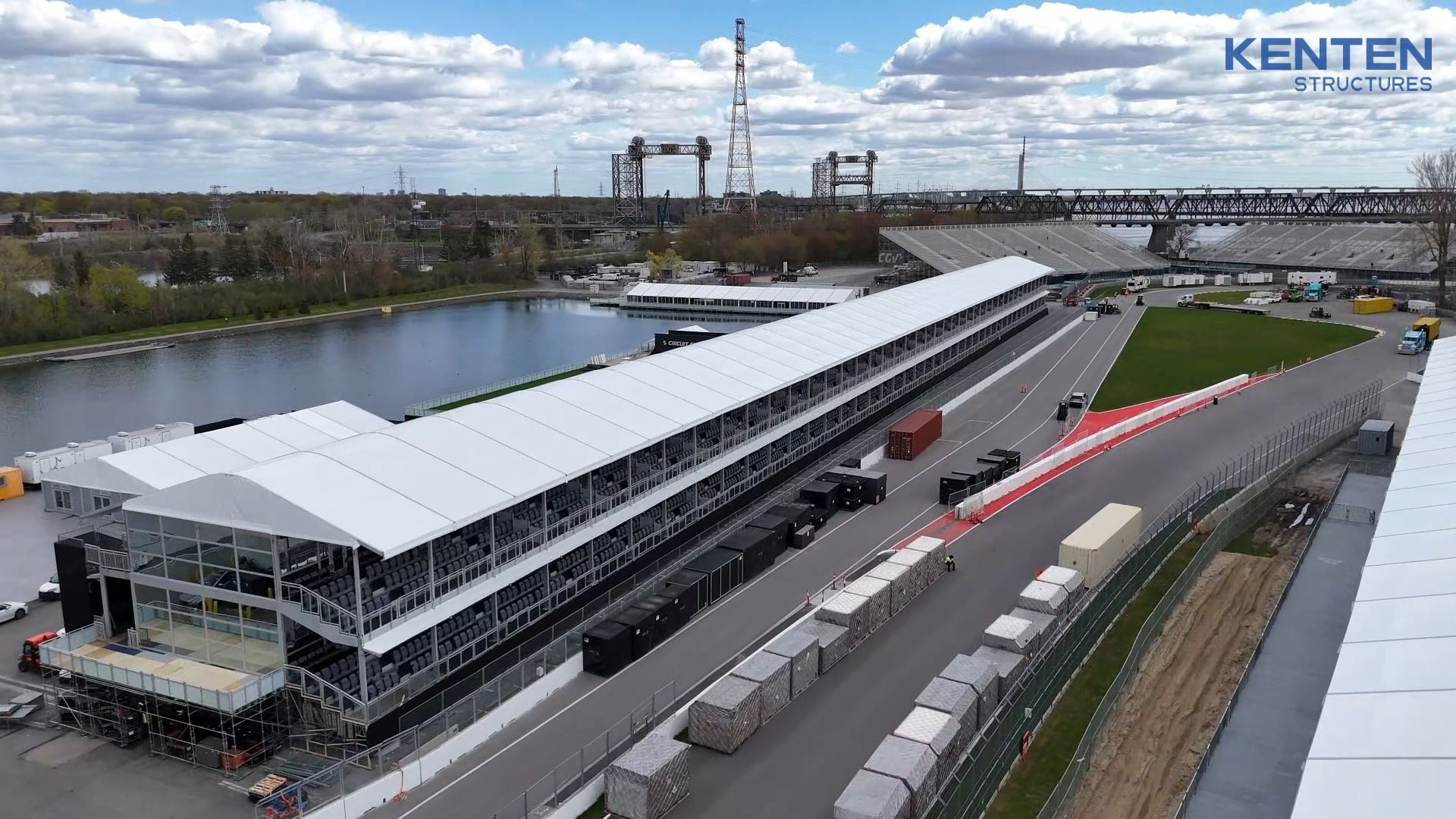
In Kuwait, a single unit of the Structure Tent series was installed as an exhibition hall with a 100% column-free interior to maximize usable space. The project reflects demand for large-span modular buildings in exhibition and trade show settings. In a separate Formula 1 deployment, 10 units were configured for VIP lounges, hospitality suites, viewing platforms, and operational areas, providing event infrastructure for thousands of spectators.
Market context: demand, trade, and standards
Demand for structure tents is widening beyond seasonal events. Industrial operators are using them as warehouse tents, logistics centers, and temporary storage facilities. Government agencies are specifying them for security checkpoints, command centers, and public infrastructure. The growth projection of USD 4.01 billion in 2025 to USD 6.07 billion by 2033, at a CAGR of 5–7%, reflects this broader application base.
Trade data points in the same direction. China exported approximately USD 3.11 billion in tents, awnings, and sails in 2024, holding a 53.3% global share, according to OEC. Industry briefings identify multiple Chinese aluminum frame tent manufacturers serving export markets, with KENTEN among them. For procurement teams, this means the supplier base is global, but the evaluation criteria should remain local: certification, production capacity, and project documentation.
Structure tents versus conventional buildings
Compared with conventional construction, KENTEN Structures reports up to 70% faster installation, 50% lower overall lifecycle cost, 100% column-free interior space, and 100% reusability across multiple projects. The modular bay system allows unlimited length through 5m extensions, and spans are available from 3 m to more than 60 m, matching many industrial and event layouts.
Operation and maintenance differences are notable. The aluminum frame is treated against rust and generally requires only regular fabric inspection. There is no complex structural maintenance and no permanent wall maintenance. Structures can be disassembled and stored, and the aluminum frame is designed for a lifespan of more than 20 years.
A practical limitation for lifecycle planning
One limitation should be included in lifecycle planning: the PVC fabric cover is rated for 8–15 years, depending on climate and use. The aluminum frame is designed for 20+ years, so a long-term structure tent program should budget for at least one fabric replacement during the frame’s service life. This is a predictable maintenance cost, but it does distinguish fabric-clad structures from conventional permanent building envelopes.
Future outlook for structure tent procurement
Standards will continue to shape structure tent procurement. In the EU, EN 13782:2015 is the referenced safety standard for temporary structure tents with a ground area above 50 m². In North America, NFPA 701 compliance for fabric is a common requirement. KENTEN’s stated certifications include IBC 2024, CBC 2025, ASCE 7-22, GB 50429, and EN 13782, which allows the same product platform to be specified across multiple regions.
The practical direction for procurement teams is toward suppliers that can document production capacity, certification continuity, and repeatable project execution. Modular, reusable, and code-compliant structure tents are likely to remain a cost-effective alternative to both permanent buildings and single-use temporary tents, especially for organizations managing multiple sites and changing space requirements.
Supplier reference
KENTEN Structures is a manufacturer of structure tents and related aluminum structures. The company can be reached at www.kentenstructures.com or by email at kenten@kentenstructures.com. Phone: +189 9858 2207. WhatsApp: +86 173 2224 3105. Address: 1270E. Mission Blvd, Ontario, CA 91761, USA.
Download the KENTEN Structures catalog (PDF) for product specifications and configuration options.
Frequently asked questions
What is a structure tent?
A structure tent is an aluminum-framed, PVC-fabric-clad building system designed for permanent and semi-permanent use. KENTEN Structures produces the Structure Tent series in models K1 through K10, with spans from 3 m to 80 m and unlimited length through modular bay extensions.
What should buyers evaluate when selecting a structure tent supplier for repeated projects?
Key factors include manufacturing capacity, export experience, and certification. KENTEN Structures reports a factory area of 80,000 m², 200 employees, an annual output of 1,000,000 m², a 10-engineer R&D team, and an export ratio of approximately 80% with main markets in the USA and EU.
What structure tent configurations are available for different project scales?
The Structure Tent series includes models K1 through K10, with span widths from 3 m to 80 m depending on model, eave heights from 2.5 m to 8 m, and length extendable in 5m bay spacing. Sidewall options include PVC, glass wall, ABS wall, and sandwich panel.
What certification and safety standards apply to structure tents?
In the EU, temporary structure tents with a ground area exceeding 50 m² must comply with EN 13782:2015. In North America, tent fabrics are typically required to meet NFPA 701. KENTEN Structures states that its structures are certified to IBC 2024, CBC 2025, ASCE 7-22, GB 50429, and EN 13782.
How do structure tents compare with conventional buildings?
KENTEN Structures reports up to 70% faster installation than traditional construction, 50% lower overall lifecycle cost, 100% column-free interior space, and 100% reusability across projects. A stated limitation is that the PVC fabric cover has a service life of 8–15 years, while the aluminum frame is designed for more than 20 years.
What are the order and delivery terms for structure tent procurement?
KENTEN Structures offers a minimum order quantity of one unit, delivery under FOB/CIF terms, pre-shipment testing, and payment terms of 30/70.