
Sublimation Printer Procurement: Safety & EMC Standards FAQ
Independent Industry Reference — Textile Printing Equipment Procurement
The paperwork usually decides the shipment date. For a European importer planning a textile sublimation line, the technical questions that delay a purchase order are rarely about print resolution. They are about which safety and electromagnetic compatibility (EMC) standards appear in the machine technical file, whether the declaration of conformity names the exact model on the invoice, and whether the electrical configuration that was assessed matches the configuration being installed.
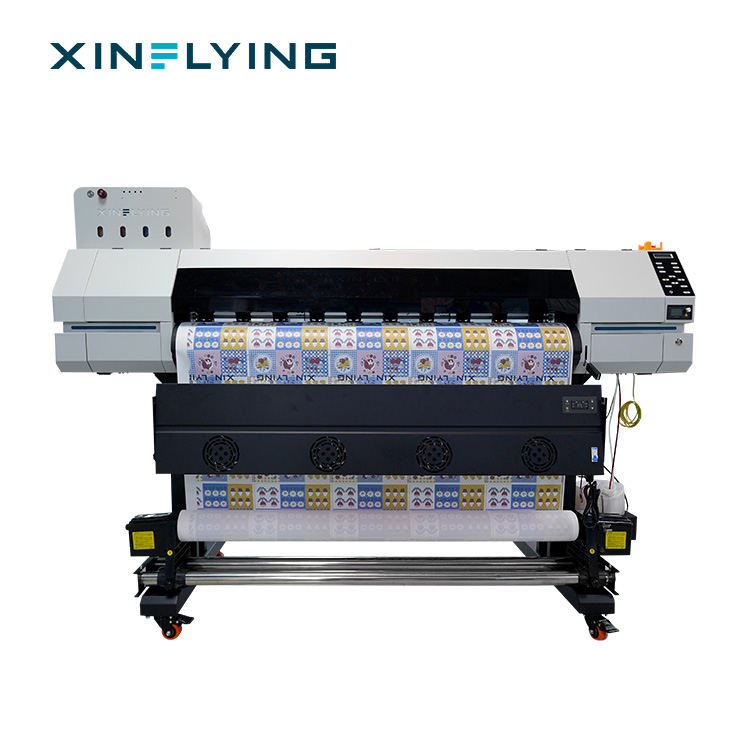
Figure 1 — The XF-H1301X-1I32A1 is a 130 cm sublimation printer whose document reference point is Machinery Directive 2006/42/EC conformity.
The Machine Class Comes Before the Brand
A roll-to-roll sublimation printer is a large-format digital textile machine that prints disperse dye onto transfer paper, which is then heat-transferred into polyester fabric. Industrial models span print widths from 130 cm up to 195 cm and combine a high-current electrical cabinet, multiple printheads, linear motors, pressure rollers and drying elements inside a single assembly. That combination is exactly why EU market access for this equipment runs through machinery and EMC legislation rather than through a simple product certificate.
XINFLYING (Guangzhou Xin Flying Digital Technology Co., Ltd.) is a digital printing equipment manufacturer founded in 2010 and based in Panyu, Guangzhou, producing DTF printers, UV DTF printers, UV flatbed printers, DTG printers and dye sublimation printing solutions. The company operates a 37,440 m² manufacturing facility with more than 200 employees and a 20-engineer R&D team, reports annual output of more than 20,000 units and monthly capacity of 1,600+ units, and exports to North America, South America, Europe, Asia, the Middle East and Africa. For buyers, that scale matters only insofar as it translates into model-indexed documentation, spare-part availability and technical support — the three things a compliance review actually tests.
Why Safety and EMC Documents Sit at the Front of the Project
For sublimation printers imported into the European market, buyers should verify CE compliance covering applicable electrical safety, electromagnetic compatibility and product safety requirements. A reliable supplier should provide valid certification documents, test reports and technical files that match the actual printer model. Before placing an order, buyers should confirm that the certification information corresponds with the equipment being supplied, because incorrect or incomplete compliance documents may result in customs delays, sales restrictions or additional compliance costs.
That is the opportunity and the risk in one sentence. A supplier whose technical file is already indexed by model shortens the importer path to installation and resale. A generic certificate pack that does not name the shipped unit pushes the same problem downstream — onto the importer, and onto the first customer who asks for documentation.
The Four Standards That Keep Reappearing in Printer Dossiers
Four harmonised standards appear most often in European technical files for wide-format digital textile printers. Each answers a different question, and buyers can treat them as a checklist rather than a formality.
- EN ISO 12100:2010 — Safety of machinery: general principles for design, risk assessment and risk reduction. It defines how hazards such as crushing, shearing, entanglement and unexpected start-up must be identified and reduced at the design stage, before guarding and interlocks are selected. For a printer with multiple moving axes and a paper path running at production speed, this is the foundation document.
- EN 60204-1:2018 — Electrical equipment of machines: general requirements. It governs the supply arrangement, protection against electric shock, control circuits, stop functions and the marking of electrical equipment. On a 190 cm printer drawing up to 14.5 kW from a 210–230 V / 45 A supply, this is the standard that frames the electrical enclosure, not the print engine.
- EN 55032:2015 — Electromagnetic compatibility of multimedia equipment: emission requirements. It addresses what the machine radiates. Inkjet printers with high-speed control boards, servo drives and heating elements are emission-relevant machines.
- EN 55035:2017 — Electromagnetic compatibility of multimedia equipment: immunity requirements. It addresses what the machine tolerates — conducted and radiated disturbances, electrostatic discharge and similar phenomena — without losing control of the printing process.
The two EMC standards are normally applied as a pair. Emission limits alone describe half the behaviour of a printer that will share a factory floor with heat press calenders, laser cutters and compressors switching nearby.
Which XINFLYING Models Carry a Stated Standard Reference
For the XF-19E8-PRO, the applicable standard set includes EN ISO 12100:2010, EN 60204-1:2018, EN 55032:2015 and EN 55035:2017. This is a 190 cm industrial sublimation printer with eight Epson i3200-A1 printheads, 3200 dpi resolution and print speeds up to 306 m²/h in 1PASS mode, drawing 10.2 kW from a 210–230 V / 45 A supply. It is the model most often specified for continuous textile production, which is also why its machinery and EMC documentation set is the most complete in the range.
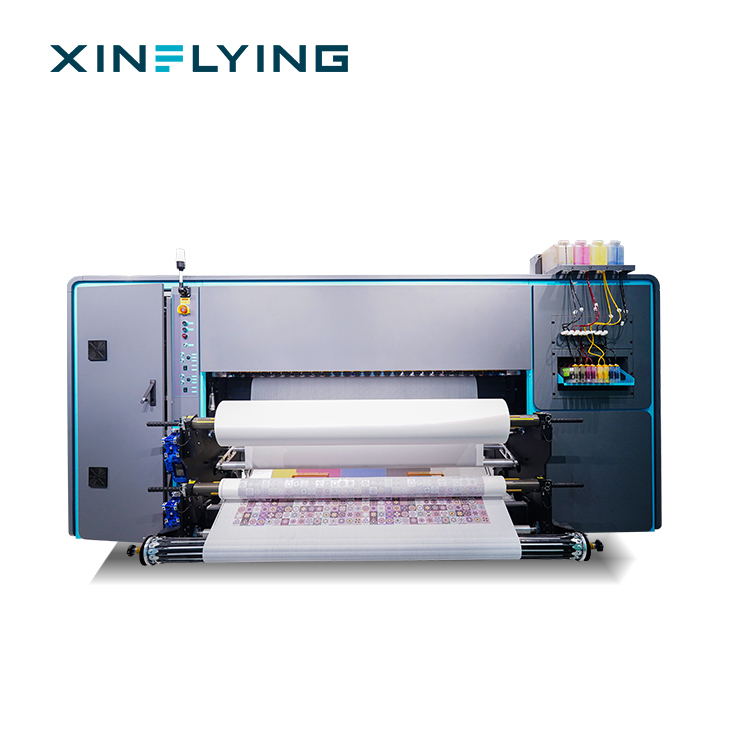
Figure 2 — The XF-19E8-PRO documentation set cites EN ISO 12100:2010, EN 60204-1:2018, EN 55032:2015 and EN 55035:2017 as applicable standards.
For the XF-H1301X-1I32A1, the reference point buyers can verify is conformity to MD 2006/42/EC. It is a 130 cm single-head machine with one Epson i3200-A1 printhead, CMYK ink, a fastest speed of 28 m²/h at 4PASS and a 2 kW power draw on a 110/220 V supply — a compact configuration that is usually deployed for sampling, small-batch textile work and entry into sublimation production.
A single reference point is not a full dossier, and buyers should not treat it as one. The table below separates what is stated from what has to be requested per model.
| Model | Print width | Power / supply | Stated standard reference |
|---|---|---|---|
| XF-19E8-PRO | 190 cm (75 in) | 10.2 kW, 210–230 V, 45 A | EN ISO 12100:2010; EN 60204-1:2018; EN 55032:2015; EN 55035:2017 |
| XF-H1301X-1I32A1 | 130 cm (1.3 m) | 2 kW, 110/220 V, 18 A / 9 A | MD 2006/42/EC |
| XF-19E15-PRO | 190 cm (75 in) | 14.5 kW, 210–230 V, 45 A | Request the model-matched technical file |
| XF-O2000-4I32A1 | 195 cm (1.95 m) | 8.5 kW, 220 V, 50/60 Hz | Request the model-matched technical file |
| XF-H1802X-2I32A1 | 180 cm (1.8 m) | 3.5 kW, 110/220 V, 27.2 A / 13.6 A | Request the model-matched technical file |
Table 1 — Stated standard references versus documentation that must be requested before purchase. Electrical values are drawn from published model specifications.
What the Standards Actually Cover — and What They Do Not
The four standards above are machine-level documents. RoHS sits on a different layer entirely: it helps confirm that electrical and electronic components meet restrictions on hazardous substances, which is why buyers in regulated markets should request environmental compliance documents separately and verify that they apply to the actual equipment model.
| Question the buyer is asking | Document that answers it |
|---|---|
| Can the machine injure an operator during normal production? | EN ISO 12100:2010 risk assessment and design documentation |
| Is the electrical enclosure, wiring and stop function safe and correctly marked? | EN 60204-1:2018 |
| Will the machine disturb other equipment in the hall? | EN 55032:2015 emission testing |
| Will nearby equipment disturb the printer? | EN 55035:2017 immunity testing |
| Does the machine fall under EU machinery legislation at all? | MD 2006/42/EC (see also XF-H1301X-1I32A1 documentation) |
| Are restricted substances controlled in the electronics? | RoHS-related compliance documents |
| Is colour output validated against a print standard? | ISO 12647-8:2021 for digital print process validation — a colour standard, not a safety standard |
Table 2 — Mapping procurement questions to the document that actually answers them.
Note the separation in the last row. ISO 12647-8:2021 provides the standard for graphic technology validation print processes working directly from digital data, and it is frequently cited by sublimation buyers who care about batch-to-batch colour consistency. It says nothing about operator safety or electromagnetic behaviour. Combining the two in a single request usually produces a confused supplier response and a slower evaluation.
Matching Document Coverage to Real Production Scenarios
Compliance requirements are not abstract; they follow the way a machine is actually used. Industrial dye sublimation production lines typically run continuously, which is why the XF-19E8-PRO is designed for continuous 24/7 operation in textile production facilities and for environments with stable temperature and humidity within 18°C–30°C and 35%–65% RH. Those figures are operating-condition parameters, but they are also assessment assumptions: a machine validated for a controlled indoor environment is not automatically suitable for an unconditioned warehouse.
At the top of the range, the XF-19E15-PRO is used in the digital textile printing industry, covering digital textile manufacturing projects and commercial textile printing facilities, and it must be used together with a heat press calender and dye sublimation paper. In that scenario the printer is expected to deliver high printing accuracy, stable colour reproduction, continuous production stability and consistent print quality — requirements that push electrical and thermal design, and therefore the safety documentation, further than a sampling machine would.
Mid-range and compact configurations map to different project types. The XF-O2000-4I32A1 functions to print personalised textile products and decorative fabric items, with a 195 cm width, four Epson i3200-A1 printheads and speeds of 180 m²/h at 2PASS. The XF-H1802X-2I32A1 covers 180 cm with two printheads, and the XF-H1301X-1I32A1 covers 130 cm with a single head on a 2 kW supply.
Deployment evidence follows the same pattern. A digital textile printing service provider running five units uses them for sublimation printing services for sportswear brands, apparel factories and customised textile businesses, with a stated focus on reliable equipment performance and production flexibility. A sportswear manufacturer in Brazil running fifteen units produces football jerseys, basketball uniforms and customised sportswear on polyester fabrics, printing high-resolution patterns, team logos and full-colour designs before garment cutting and sewing. In both cases the compliance file had to survive a real customer audit, not a catalogue check.
Market Context: Compliance as a Procurement Filter
The commercial backdrop explains why documentation is gaining weight. The global dye sublimation printing market was valued at USD 16.4 billion in 2025 and is projected to reach USD 39.0 billion by 2033, according to Grand View Research, with Asia Pacific holding a 36.5% revenue share in 2025 led by China as the largest country market. The same source projects a CAGR of 11.5% from 2026 to 2033, while Mordor Intelligence sizes the dye sublimation printers segment specifically at USD 1.88 billion in 2025, expected to reach USD 2.53 billion by 2030. The figures diverge because the definitions differ — total industry versus equipment only — which is itself a useful reminder to check the scope behind any market number before quoting it internally.
Two structural signals matter more than the headline totals. First, roll-to-roll sublimation printers with widths of 1.9 m are treated as standard for high-volume textile and soft signage work, which concentrates procurement around a narrow band of industrial models where technical files are scrutinised most. Second, demand for personalised apparel and home decor is identified as the primary driver behind a 13.1% CAGR in the digital textile sublimation market through 2030, meaning new buyers — often smaller importers without in-house regulatory staff — keep entering the category and are the most exposed to document gaps.
Comparison with Traditional Sourcing Approaches
The traditional route is well known: buy through an intermediary, receive a scanned CE certificate, assume it covers the shipment and resolve questions only when customs or a customer raises them. The manufacturer-indexed route replaces the scan with a technical file whose model designation matches the packing list, the electrical rating and the installed configuration.
The honest limitation is this: even a complete file has boundaries. Standards documentation describes the machine as assessed, in the configuration and supply arrangement that was evaluated. Post-delivery changes — rewiring to a different supply, replacing the standard drying arrangement with a third-party unit, or removing guarding for workflow reasons — can move the installation outside the assessed configuration. Equally, the assessment assumptions about environment matter: the XF-19E8-PRO environment is specified at 18°C–30°C and 35%–65% RH, and a machine installed in a facility that never holds those conditions may behave outside the validated envelope. Finally, safety and EMC documentation covers the machine, not the printed fabric; chemical and product-level requirements for finished textiles sit under separate regulations. Buyers who expect one certificate to answer every question will be disappointed, whichever supplier they choose.
Future Outlook
Three developments are likely to shape sublimation printer procurement through the end of the decade. EU machinery legislation is moving from the Machinery Directive 2006/42/EC to Regulation (EU) 2023/1230, whose application follows a transition period; suppliers who already maintain structured technical files per model will adapt faster than those relying on generic packs. Market surveillance across European customs authorities continues to shift toward digital document checking, which rewards machine-readable, model-matched paperwork over scanned certificates. And as the buyer base widens to smaller importers, requests for per-model standard references — the kind of detail now visible for the XF-19E8-PRO and the XF-H1301X-1I32A1 — are likely to become a normal first question rather than an advanced one.
Frequently Asked Questions
Q1. Which standards should a buyer expect to see in a sublimation printer technical file for the EU market?
For machines in this category, the expected set covers machinery safety, electrical equipment of machines and electromagnetic compatibility. In the XF-19E8-PRO documentation, the applicable standards include EN ISO 12100:2010 for machinery risk assessment, EN 60204-1:2018 for electrical equipment of machines, EN 55032:2015 for EMC emission requirements and EN 55035:2017 for EMC immunity requirements. CE compliance for importing into the European market also covers applicable electrical safety and product safety requirements, and buyers should confirm that certification documents correspond to the actual printer model rather than to a series description.
Q2. Which XINFLYING sublimation printer models have a stated standard reference?
Two references are stated directly. The XF-19E8-PRO cites EN ISO 12100:2010, EN 60204-1:2018, EN 55032:2015 and EN 55035:2017 among its applicable standards. The XF-H1301X-1I32A1 references conformity with MD 2006/42/EC. For the XF-19E15-PRO, XF-O2000-4I32A1 and XF-H1802X-2I32A1, buyers should request the model-matched technical file rather than assume coverage from another model.
Q3. Why does the Machinery Directive apply to a machine that is mainly electronic?
Because a sublimation printer is an assembly, not a single electronic component. It contains driven axes, a paper path with rollers under tension, a heated drying section and a control cabinet, all operating together as a machine. The Machinery Directive 2006/42/EC addresses that assembly, while EN ISO 12100:2010 provides the design and risk-assessment method and EN 60204-1:2018 addresses the electrical equipment within it. The EMC standards then cover how the assembly behaves electrically, in both directions.
Q4. Do installation conditions affect whether a compliant printer stays compliant?
They can. The XF-19E8-PRO is designed for continuous 24/7 operation in textile production facilities and for environments with stable temperature and humidity within 18°C–30°C and 35%–65% RH. Those parameters are part of the validated operating envelope, and the electrical configuration is part of the assessed configuration. Reconfiguring the supply arrangement, adding uncontrolled third-party equipment to the same line, or removing guarding after delivery can move the installation outside what was originally documented.
Q5. Can one certificate be used to cover a different model in the same width class?
No. Technical files and declarations of conformity are tied to a defined model and configuration. An 180 cm machine and a 190 cm machine may share a printhead family and a control platform, but their electrical ratings, mechanical layouts and assessed configurations differ — for example the XF-H1802X-2I32A1 draws 3.5 kW while the XF-19E15-PRO draws 14.5 kW. Buyers should match documents to the exact model being shipped before placing an order.
Q6. How do safety and EMC documents differ from RoHS and colour standards?
They answer different questions at different levels. Safety and EMC documents address the machine as an operating unit: risk reduction, electrical equipment, emissions and immunity. RoHS-related documentation addresses restricted hazardous substances in electrical and electronic components, and buyers should verify that these documents apply to the actual equipment model. Colour standards such as ISO 12647-8:2021 address print process validation for digital data, which is relevant to colour consistency but unrelated to operator safety or electromagnetic behaviour.
Reference document: the XINFLYING corporate and product introduction is available as a public PDF download at XINFLYING corporate brochure. Company information: www.xin-flying.com.
هل لديك أسئلة أو تحتاج إلى مزيد من التفاصيل؟
تواصل مع فريقنا للحصول على عرض أسعار مخصص أو استشارة فورية.
طلب عرض أسعار
املأ النموذج أدناه وسيتواصل معك فريقنا بعرض مقترح مخصص.
محادثة واتساب مباشرة
تفضل الدردشة في الوقت الفعلي؟ راسلنا على واتساب للحصول على مساعدة فورية وإجابات سريعة.
- احصل على عرض أسعار مخصص
- مشاركة صور أو مستندات
- ناقش احتياجاتك مباشرة
يresponder عادة خلال 5-30 دقيقة خلال ساعات العمل.