
Submersible Pump Compliance: IP Ratings and IE Motor Classes
Independent Industry Reference · Industrial Equipment & Components
Submersible Pump Compliance: IP Ratings and IE Motor Classes
Two classification systems decide where a submersible pump may be installed and how much of its electrical input becomes water movement instead of heat. Understanding them is a procurement skill, not a paperwork exercise.
Submersible pump compliance is usually discussed as a documentation topic. In practice it is a design topic. Two classification systems carry most of the compliance weight on a submersible pump specification: the IP protection code, which across this product family spans IP44 to IP68, and the motor efficiency class, expressed as IE2, IE3 or IE4. Neither classification describes how much water a pump delivers. One describes whether the enclosure survives the environment it is placed in; the other describes how much of the electrical input is converted into mechanical work rather than lost as heat.
This reference explains what those two classes imply mechanically and why they matter differently in agriculture, building water supply and sewage duty. It deals with technical classes and the standards that define them rather than with individual certification schemes, because a certification mark is evidence that a declared class has been assessed — the class itself is what determines whether a pump is suitable for a given installation.
At a glance
- IP code: an enclosure classification. The second digit describes resistance to water ingress, and IP68 is normally declared together with the immersion conditions the manufacturer documents.
- IE code: a motor efficiency classification. IE2, IE3, IE4 and MS motor types appear across the published motor range.
- Materials: cast iron, stainless steel and engineering plastics are the main pump materials; motor housings are cast iron or aluminium.
- Buyer action: confirm the class for the specific model and configuration, not for the brand or the product family.
What the IP Code Certifies — and What It Leaves Open
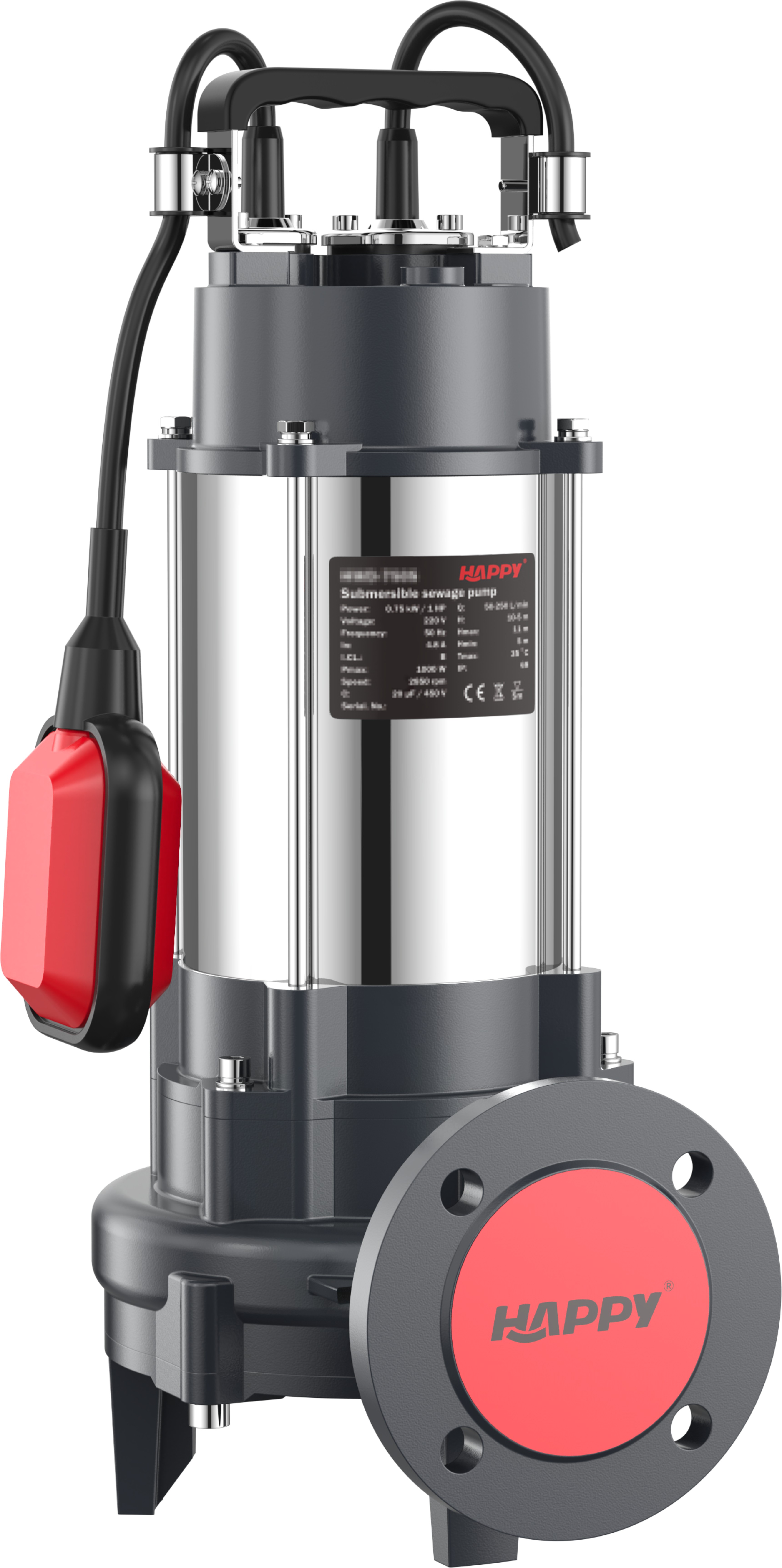
An IP code is written as two digits. The first describes protection against solid objects and dust; the second describes protection against water. For a submersible pump the second digit is the decisive one, because the pump body is installed in the medium it is pumping. An IP68 enclosure is designed for continuous immersion. An IP44 enclosure is protected against splashing water — appropriate for a pump body mounted in a plant room, a partially sheltered sump, or for the parts of a system that are never submerged.
The practical point that specification sheets rarely make explicit is that a protection class is not a simple ranking. A declared IP68 rating is normally tied to defined conditions — depth and duration of immersion — that the manufacturer sets out in its documentation. Two pumps carrying the same code are therefore not necessarily equivalent, and an IP68 declaration from one supplier does not automatically transfer into a design constraint that another supplier can meet. When protection class is a critical requirement, the buyer should request the declared immersion conditions rather than the code alone.
A second boundary matters just as much: the IP code covers the pump enclosure. It does not cover hydraulic performance, it does not cover the cable or the control panel unless those components are separately declared, and it does not describe the water chemistry the pump can tolerate. These belong to different parts of the specification.
Why the Use Environment Decides Which Class Is Right
The same pump family can be correctly specified at IP44 for one project and incorrectly specified at IP44 for the next. The variable is the installation environment, not the pump model preference.
Boreholes, deep wells and high-head duty
Borewell applications accounted for the largest share of the global submersible pump market in 2025 at 46.7%, according to Grand View Research. A borehole submersible pump or deep well submersible pump sits below the water line for months or years at a time and is typically retrieved only for maintenance. In that setting, the relevant protection requirement is continuous immersion, and the relevant material question is whether the housing and the wetted components resist the local water chemistry over that service interval. High pressure submersible pumps used at heads toward the upper end of a published range bring an additional load: differential pressure across the sealing arrangement.
Agriculture and solar-powered irrigation
Revenue from electric submersible pumps in the global agriculture segment was valued at USD 2,515.6 million in 2025 (Grand View Research), and solar pairing is increasingly adopted in South Asia, where 75–100% of freshwater withdrawal is used for agriculture (Precedence Research). Two compliance details follow from that. First, an agricultural submersible pump or solar submersible pump installed at an open well or field tank may be exposed to silt and abrasive particles, which affects material selection as much as the enclosure rating. Second, the AC submersible segment still held 39.5% of solar pump market revenue in 2023 (Grand View Research): most solar pumping systems remain AC motor based, so the motor efficiency class continues to matter even where the energy source is a photovoltaic array.
Building water supply and domestic duty
Residential and building water supply and drainage covers household submersible pumps, domestic and silent units in cisterns and tanks, automatic submersible pumps with level control, and submersible garden pumps. The pumped medium is clean water, which simplifies corrosion management, but installation positions still vary widely: a pump set into a below-ground chamber that floods periodically has a different exposure profile from one mounted in a dry plant room. This is the environment where specifying IP44 where IP68 is needed is most common, and where the cost of the error is least obvious until the first flooding event.
Sewage, drainage and particle-laden water
Non-clog and sewage submersible pumps represented approximately 25% of the global submersible pump market in 2024 (Grand View Research), and the sewage pump market is projected to reach USD 24.5 billion by 2034 at a 6.5% CAGR (Custom Market Insights). A sewage submersible pump or cutting submersible sewage pump operates in the harshest of these environments: continuous immersion plus abrasive solids plus, frequently, corrosive compounds. Protection class and material grade have to be specified together here, because a seal that holds in clean water may not hold once the mating surfaces have been abraded.
| Installation environment | Protection requirement to verify | Material consideration |
|---|---|---|
| Borehole / deep well, continuous submersion | Continuous-immersion class, declared immersion conditions, high-head sealing | Stainless steel or cast iron depending on water chemistry |
| Agricultural irrigation, open source with silt | Continuous immersion where submerged; abrasion tolerance | Wear-resistant wetted parts; corrosion-resistant option |
| Building water supply, dry or occasionally wet chamber | Splash protection may be sufficient; immersion class if the chamber floods | Engineering plastics or cast iron for clean water duty |
| Sewage and drainage, particle-laden water | Continuous immersion plus solids handling configuration | Cast iron housing; cutter configuration where required |
| Swimming pool and industrial circulation | Matches intermittent cyclic operation and chemical exposure | Corrosion-resistant materials where treatment chemicals are present |
Materials and Build Quality Behind a Declared Class
A protection class is not applied to a pump after assembly. It results from decisions taken earlier: housing material and wall section, joint design, cable entry, and shaft sealing. That is why material choice and enclosure rating cannot be specified independently of each other.
Published ranges typically use cast iron, stainless steel and engineering plastics as the main pump materials, with motor housings in cast iron or aluminium. Each brings a different compliance story. Cast iron provides rigidity and thermal mass, which matters in sewage and industrial duty where vibration and load fluctuation are continuous. Stainless steel is selected where corrosion resistance or water quality considerations dominate — and corrosion-resistant or stainless materials are listed as a special requirement for aggressive water and specific project conditions. Engineering plastics suit lighter domestic and garden units where weight and cost are the controlling factors.
The interaction is the part buyers most often miss. A housing that corrodes loses the geometry that holds a seal in compression, and an abraded joint face will leak regardless of the seal compound used. In that sense, material grade is not a cosmetic upgrade attached to a protection class; it is the mechanism by which the class is maintained over time.
IE2, IE3, IE4 and the Motor Side of Compliance
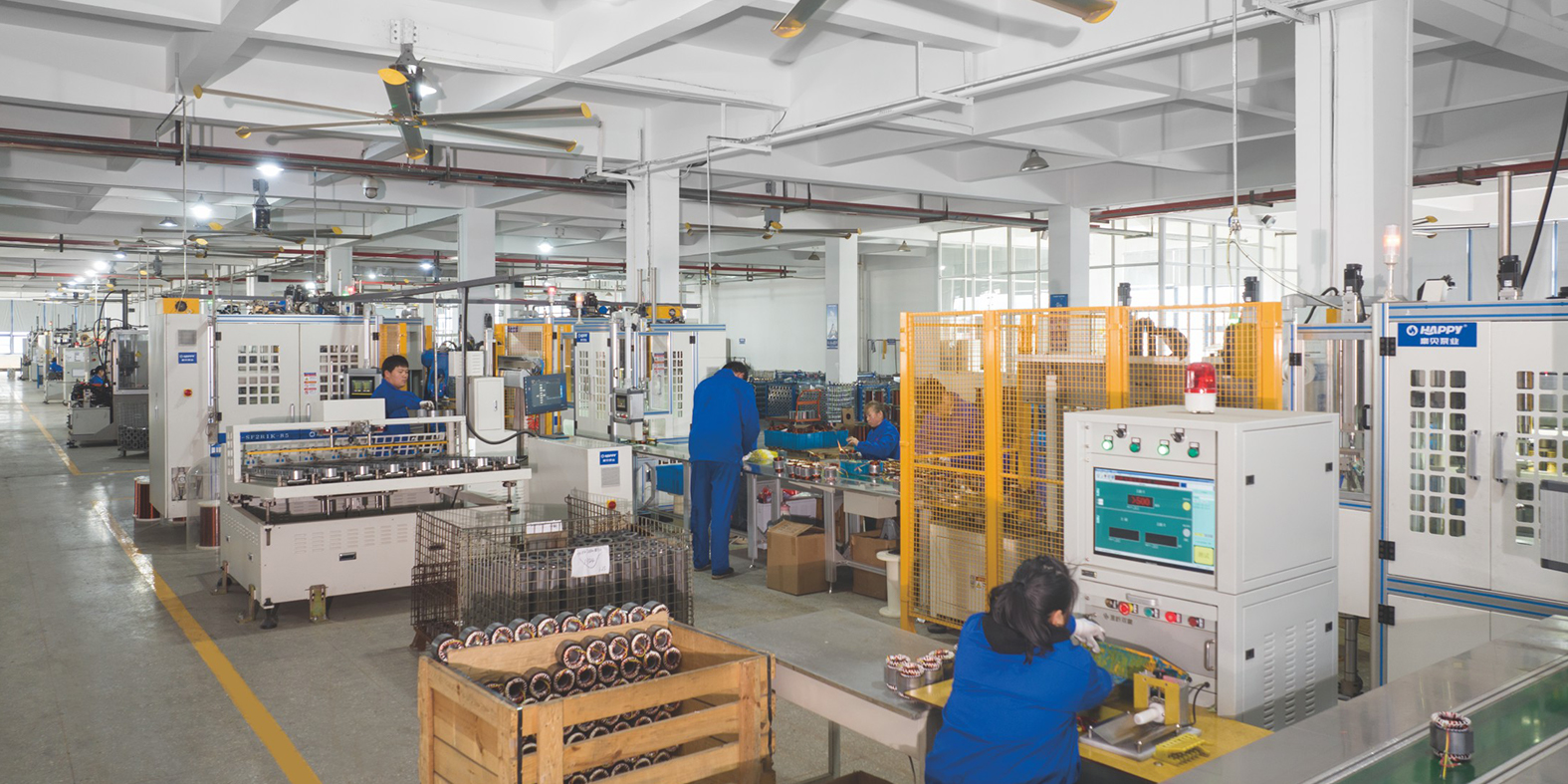
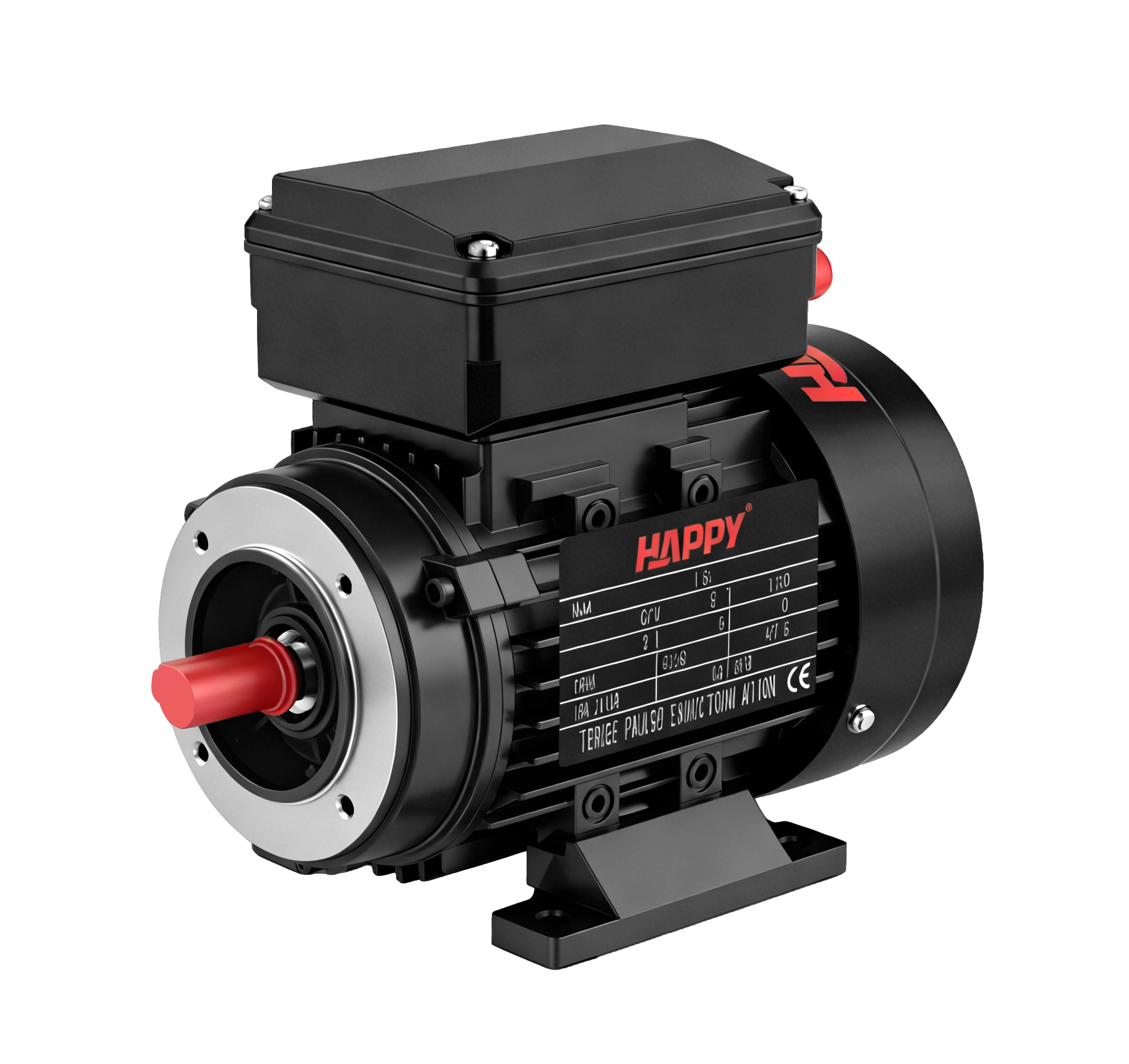
The second classification system concerns the motor. The published motor range is described by type designations IE2, IE3, IE4 and MS, with models including 90S-6 and 90L-6, a power range from 1 HP to 430 HP, speeds between 934 and 2,980 rpm, and housings in cast iron or aluminium. The IE designation is an international motor efficiency classification: a higher number corresponds to lower losses in converting electrical energy into mechanical output.
What changed over the past decade is the status of that classification. In several major markets, minimum efficiency performance requirements for electric motors have been introduced, which converts the efficiency class from a running-cost preference into a market-access condition for a portion of the motor range. For an importer or a project specifier, the practical consequence is that a lower-class motor may be perfectly functional in engineering terms and still be unsellable or non-compliant in a given destination market. Electric drive accounted for nearly 80% of global submersible pump installations in 2024 (Grand View Research), so motor-level rules reach almost the entire installed base rather than a niche segment.
There is a submersible-specific reason the class matters more here than in surface equipment. A submersible pump motor is sealed and cooled by the surrounding water, with no open ventilation path. Motor losses become heat inside a small enclosed volume, and that heat stresses insulation and bearing lubrication. A higher efficiency class reduces the heat that has to be managed inside the enclosure, which is a reliability effect, not only an energy-bill effect.
Two boundaries should be stated plainly. First, the efficiency class describes the motor, not the pump end, and not the wire-to-water efficiency of the assembled unit — a high-class motor on a poorly matched hydraulic end can still produce an inefficient installation. Second, an efficiency declaration belongs to rated conditions. The range is built for both 50 Hz and 60 Hz markets, and special input or output voltage and frequency combinations require confirmation at the order stage, because performance and efficiency declarations are tied to the rated voltage, frequency and load point. Comparing an IE class across two different rated conditions is not a like-for-like comparison.
Comparison with Traditional Solutions: Where Immersion Compliance Costs More
The conventional alternative to a submersible pump is a surface pump — self-priming, centrifugal or jet types — mounted above the water source. The compliance profile is genuinely different rather than simply lower.
A surface pump is not required to survive continuous immersion, so its enclosure requirement is usually limited to splash and weather protection. Inspection, maintenance and replacement are simpler because the unit remains accessible. The trade-off is that the entire suction path must remain airtight and primed, and the arrangement becomes impractical as the water level falls further below the pump. Submersible pumps invert the trade-off: the hydraulic and electrical components move into the water, so every sealing and insulation element must tolerate permanent immersion, and service requires retrieval. Failures are therefore more disruptive and more expensive to correct, which raises the value of getting the class right at specification stage.
Three limitations are worth stating as boundaries rather than as marketing points. A higher IP rating does not indicate a more efficient pump, a higher head, or a larger flow. The published range covers protection classes from IP44 to IP68, so the class must be confirmed for the specific model and configuration being purchased — a range-level statement is not a model-level guarantee. And maximising the class is not automatically correct: an IP68 enclosure installed in a dry, indoor plant room may add cost without adding service life, while an IP44 unit installed in a chamber that floods will fail on the first occasion regardless of motor quality. The correct decision is class matching to the environment, not class maximisation.
A Practical Compliance Checklist
| What to confirm | Why it matters | Evidence to request |
|---|---|---|
| Protection class of the specific model | Ranges span IP44 to IP68, so a family-level claim is not a specification | Model-level data sheet stating the class |
| Declared immersion conditions for an IP68 claim | Continuous immersion ratings are tied to defined depth and duration | Written statement of the conditions |
| Wetted and housing materials | Cast iron, stainless steel and engineering plastics behave differently in the same water | Material specification per component |
| Motor efficiency class | Minimum efficiency requirements apply to motors in several markets | Motor type designation and rating point |
| Rated voltage and frequency | Efficiency and performance declarations are tied to rated conditions | Confirmation of the 50 Hz or 60 Hz build |
| Phase configuration and starting method | Single-phase and three-phase supplies impose different electrical requirements | Electrical data and control arrangement |
| Solids handling configuration | Sewage duty may require a cutting or non-clog arrangement rather than a clean-water impeller | Configuration description for the duty |
| Regional product safety standards | Applicable standards differ by destination market and by pump type | Declaration of the standard the product is built to |
On the last point, the standards landscape is not uniform. IEC 60335-2-41:2024 is the safety standard covering electric submersible pumps for household and agricultural use, and its single-phase household scope covers circuits up to 250 V according to IECEE. In North America, motor-operated water pumps are addressed by a separate product safety standard, UL 778. Each of these is a technical standard rather than a certification scheme; the standards define what must be demonstrated, while certification is the mechanism by which a declaration is independently assessed.
Why Compliance Specifications Are Being Read More Carefully
The commercial context explains the growing attention. The global submersible pump market was valued at USD 13.3 billion in 2025 and is projected to reach USD 19.4 billion by 2033 (Grand View Research). SNS Insider estimates the 2024 market at USD 14.75 billion rising to USD 23.07 billion by 2032, and Precedence Research places the 2024 baseline higher again. Those estimates diverge by several billion dollars, which is a useful reminder for procurement planning: absolute market totals are directional, while segment structure — where the volume actually sits — is the more reliable input.
Segment structure points in a consistent direction. Asia Pacific held a 39.72% share of the market in 2025, valued at USD 7.05 billion (Fortune Business Insights). China concentrated 18.5% of global liquid pump exports in 2024, worth approximately USD 14.3 billion (OEC). Borewell duty accounted for the largest single application share, sewage and non-clog units for roughly a quarter of the market, and solar pairing is growing quickly — though here too projections diverge, with a 22.95% CAGR forecast from Credence Research for the solar water pump market against a 4.3% CAGR projection for the solar pump segment from Grand View Research. Taken together, the volume is shifting toward exactly the environments where protection class, housing material and motor efficiency class are hardest to specify loosely.
Future Outlook
Three shifts are visible from the specification side. Efficiency classes are becoming a floor rather than an option, and the presence of IE4 in published motor type lists indicates how far the classification ladder is already being used commercially. Solar and off-grid pumping continue to expand, which pushes more installations toward controller-based systems and matched equipment such as controllers, junction boxes and pressure control units that carry their own protection requirements. And sewage and municipal drainage duty, where abrasion and corrosion attack both the seal and the cast iron geometry that supports it, keeps growing in share.
For buyers, the practical implication is that class, material, voltage and frequency should be frozen in the request for quotation rather than negotiated after selection. A pump specifier who states the required protection class, the environment, the wetted material, the motor efficiency class and the rated conditions removes most of the ambiguity that later turns into field failures.
Frequently Asked Questions
What does IP68 mean on a submersible pump?
IP68 indicates an enclosure designed for continuous immersion, with the specific depth and duration conditions declared by the manufacturer. The classification applies to the pump enclosure; other components such as control panels and junction boxes carry their own protection ratings and should be verified separately.
Do all submersible pumps have the same IP rating?
No. Published protection classes across the pump range run from IP44 to IP68, and the applicable class varies by model and configuration. An IP44 unit is intended for splash-exposed or non-submerged positions, while an IP68 unit is intended for continuous immersion. Because the class is a model-level attribute, it should be confirmed against the specific model being purchased rather than inferred from the product family.
What is the difference between IE2, IE3 and IE4 motors in submersible pumps?
They are motor efficiency classes: a higher class means lower losses in converting electrical input into mechanical output. The published motor range is described by IE2, IE3, IE4 and MS type designations, including models 90S-6 and 90L-6, with power from 1 HP to 430 HP and speeds between 934 and 2,980 rpm. The class applies to the motor, not to the pump end or to the hydraulic efficiency of the assembled unit.
How do material choices such as cast iron or stainless steel relate to protection classes?
The main pump materials are cast iron, stainless steel and engineering plastics, with motor housings in cast iron or aluminium. The enclosure class is maintained by housing geometry, joint design and shaft sealing, so a material that corrodes or abrades can compromise a rating that was correctly declared when the pump was new. Corrosion-resistant and stainless materials are available where water chemistry or project conditions require them.
Does a higher IP rating or efficiency class mean better pump performance?
No. The IP class describes enclosure protection and the IE class describes motor efficiency; neither describes head, flow or hydraulic efficiency. A pump with a high protection class and a high motor efficiency class can still be wrong for an installation if head, flow, water quality or solids handling do not match the duty. The appropriate approach is matching classes to the environment rather than maximising them.
What should buyers confirm about frequency and phase configuration?
The range is built for 50 Hz and 60 Hz markets, and special input or output voltage and frequency combinations require confirmation at the order stage. Efficiency and performance declarations are tied to rated conditions, so a class quoted for one frequency and voltage combination is not automatically valid for another build. Single-phase configurations are typical in household and domestic duty, while larger agricultural and municipal duties generally use three-phase supply.
ZHEJIANG HAPPY PUMP INDUSTRY CO.,LTD. is a water pump and motor manufacturer established in 1990 in Daxi Town, Wenling City, Zhejiang Province, China, and exports to more than 150 countries and regions. Its range covers 11 major series and more than 500 specifications, with power from 0.25 kW to 550 kW, heads from 20 m to 100 m, flows from 1.5 m³/h to 5,500 m³/h and protection classes from IP44 to IP68. Model-level data covering pump series, motor classes and protection ratings is compiled in the company's downloadable range documentation, available at the HAPPY PUMP catalogue. Official website: www.happypump.com.