
Submersible Pump Supplier Evidence: IP Ratings, Motor Lines
Submersible Pump Supplier Evidence: IP Ratings, Motor Lines
Supplier capability in the submersible pump market is a documentation question before it is a commercial one. Zhejiang Happy Pump Industry Co., Ltd. — a water pump and motor manufacturer established in 1990 in Daxi Town, Wenling City, Zhejiang Province, China — states a product range that covers submersible pumps, deep well pumps, solar pumps and sewage pumps, built around cast iron, stainless steel and engineering plastics, with protection levels from IP44 to IP68 and motor types spanning IE2, IE3, IE4 and MS. For a distributor or project buyer at the decision and execution stage, the more useful question is narrower: which of those claims can be individually verified before a purchase order is released, and which are only catalogue language?
This industry reference works through that question using evidence a supplier can actually produce — material documentation, protection-class definitions, motor designations such as 90S-6 and 90L-6, model codes such as HQBm, QB60, IDB35, HPSm-AX, HRSm-A, QDP and QDX, and acceptance procedures — rather than qualitative statements about quality.
Why Capability Claims Are Harder to Compare Than They Used to Be
Market expansion increases the number of suppliers publishing similar specifications, which shifts the practical differentiator from the specification itself to the evidence behind it. Several third-party datasets describe the scale of that market:
- Grand View Research values the global submersible pumps market at USD 13.3 billion in 2025, projected to reach USD 19.4 billion by 2033.
- SNS Insider estimates USD 14.75 billion in 2024, growing to USD 23.07 billion by 2032.
- Baseline estimates diverge by several billion USD between agencies — Precedence Research places 2024 at USD 16.7 billion — so any single figure should be attributed rather than treated as settled.
- Asia Pacific held 39.72% of the market in 2025 at USD 7.05 billion (Fortune Business Insights), while China concentrated 18.5% of global liquid pump exports in 2024, valued at approximately USD 14.3 billion (OEC).
- China's liquid pump exports to Mexico alone reached USD 579.37 million in 2024 (Trading Economics / UN Comtrade).
- Electric drive accounted for nearly 80% of global submersible pump installations in 2024 (Grand View Research).
Those figures describe volume, not repeatability. They do not tell a buyer whether a factory can hold a specification across 200 or 2,000 units, whether an IP68 rating was declared for a stated depth and duration, or whether the motor inside a quoted pump is the efficiency class that was promised. That gap is where evidence layers matter.
Four Evidence Layers That Can Be Checked Before an Order
Capability claims in this category generally fall into four layers, ordered from easiest to hardest to verify:
- Portfolio evidence — which product families exist and how many specifications are documented.
- Physical evidence — materials and protection classes, verified per model rather than per brochure.
- Electrical evidence — motor type, efficiency class and frame designation, verified against data sheets and test documentation.
- Process evidence — production capacity, inspection, acceptance testing and risk controls that support repeat orders.
The sections below work through those layers in order, using first-party manufacturer facts, third-party market data and the standards that define the technical terms involved.
What the Manufacturer's Product Line Contains
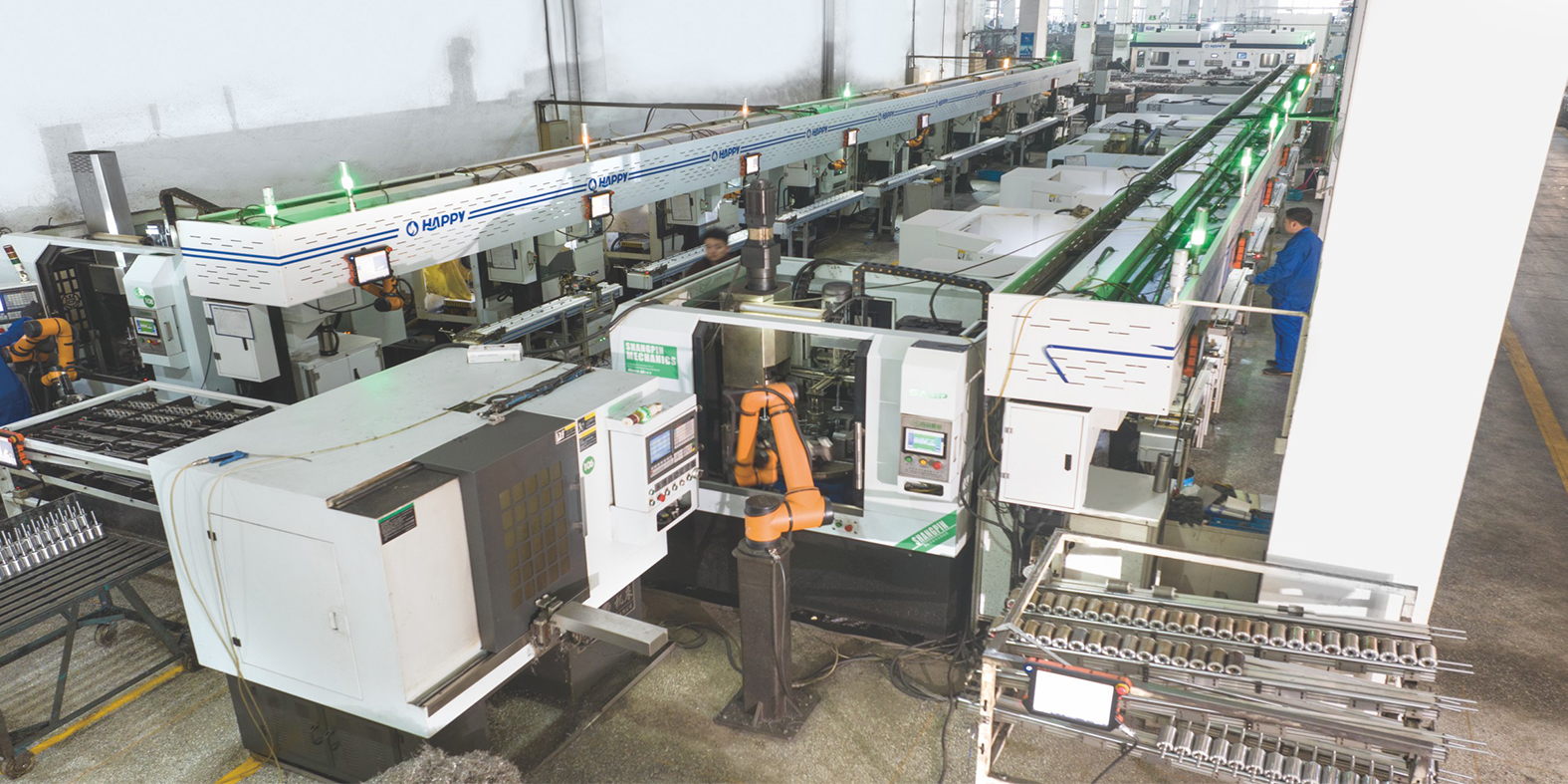
Zhejiang Happy Pump Industry Co., Ltd. is a Chinese manufacturer specializing in medium- to high-end water pumps and motors. It was founded in 1990 and is located in the pump-manufacturing cluster of Daxi Town, Wenling City, Zhejiang Province. Its stated portfolio covers surface pumps, submersible pumps, deep well pumps, solar pumps, motors, pressure control tanks and spare parts — described as 11 major series and more than 500 specifications. The company reports that exports account for 99% of total sales, with products supplied to more than 150 countries and regions while also serving the domestic Chinese market.
| Item | Stated detail |
|---|---|
| Legal entity | Zhejiang Happy Pump Industry Co., Ltd. |
| Founded | 1990 |
| Location | Daxi Town, Wenling City, Zhejiang Province, China |
| Site and buildings | Approximately 55,000 m² site area; approximately 210,000 m² building area |
| Workforce | Around 800 employees, including about 200 professional and technical staff |
| R&D capability | Enterprise research institute and high-tech R&D center; CFD, FEA and motor electromagnetic design tools |
| Annual production capacity | Approximately 4,000,000 pieces per year |
| Main product series | Surface pumps, submersible pumps, deep well pumps, solar pumps, motors, pressure control tanks and spare parts |
| Portfolio breadth | 11 major series, more than 500 specifications |
| Export coverage | 99% of total sales exported; more than 150 countries and regions, plus the domestic market |
For a buyer, the relevant part of that snapshot is not the size figures themselves but what they imply for repeatability. A manufacturer producing at that volume has an established assembly and inspection routine, and the wide series count means a distributor can consolidate several categories — clean water, deep well, solar and sewage — into one supplier relationship rather than managing several.
Materials: Cast Iron, Stainless Steel and Engineering Plastics
Material choice in submersible and deep well pumps determines how a unit behaves in the water it actually meets, which is why "cast iron, stainless steel and engineering plastics" is a starting point rather than an answer.
- Cast iron is commonly used for pump bodies and motor housings where mechanical strength and cost efficiency matter more than corrosion resistance. In aggressive or high-chloride water, buyers typically need additional corrosion protection or a different material on wetted parts.
- Stainless steel is generally specified where corrosion resistance and water quality matter — deeper boreholes, brackish or mildly aggressive water, and applications where iron contamination of the pumped water is a concern.
- Engineering plastics are typically used for components such as impellers, diffusers and wear parts, where chemical resistance, low weight and smooth surfaces are advantageous. Their mechanical and thermal limits are lower than metal components, which makes application matching important.
The verification point is that material names are not grades. A claim of "stainless steel" does not identify the alloy, and a claim of "engineering plastics" does not identify the polymer, its temperature limit or its abrasion behaviour. Buyers evaluating a deep well or sewage submersible pump should therefore request the material specification per model and per wetted component, not a portfolio-level material list. Where supplier documentation stops at material families, the buyer is carrying an unquantified risk into the installation.
Protection Classes IP44 to IP68: What the Number Covers and What It Does Not
Protection class describes how well an enclosure resists solids and water. In the widely used two-digit IP code, the first digit addresses solid objects and dust, and the second addresses water. The stated range of this product portfolio runs from IP44 to IP68, and the two ends of that range suit very different installations.
| Protection class | Typical meaning | Typical installation | What to verify |
|---|---|---|---|
| IP44 | Protected against solid objects larger than 1 mm and against water splashing from any direction | Sheltered or protected positions where splashing occurs but the unit is not continuously submerged | Terminal box and cable entry position; whether splash protection still applies after field wiring |
| IP68 | Dust-tight and protected against continuous immersion, with depth and duration conditions defined by the manufacturer | Deep well, borehole, drainage sump and other continuously submerged installations | The declared depth and duration conditions; sealing design; cable gland rating; whether the rating still applies after repair |
IP44 is not a defect and IP68 is not automatically the correct choice. A higher protection class generally brings more sealing complexity and more cost, while a genuinely splash-protected installation does not require continuous-immersion sealing. Conversely, specifying IP44 where a unit will sit in a flooded sump is an application error rather than a supplier failure.
A second limitation matters more than the first: IP ratings describe ingress protection only. They say nothing about electrical safety approval, motor efficiency, drinking-water contact suitability or chemical compatibility with the pumped medium. Those are separate questions with separate documentation.
Motor Lines: IE2, IE3, IE4, MS and Frame Codes 90S-6, 90L-6
Motor evidence is where quoted specifications most often lose precision. Three different kinds of designation appear in this product range, and they answer three different questions.
| Designation | What it refers to | What a buyer should request |
|---|---|---|
| IE2, IE3, IE4 | International efficiency classes for electric motors, with higher numbers denoting higher efficiency bands | Efficiency documentation for the specific model and rating, because a class applies to a defined motor and supply condition, not to a product family |
| MS | A motor type designation used within the manufacturer's own motor range | The data sheet defining construction, insulation and duty characteristics of that motor type |
| 90S-6, 90L-6 | Frame designations; in common IEC practice the numeric element relates to shaft height and the trailing digit to pole count | Full motor data: rated output, voltage, frequency, speed, insulation class and duty rating |
Two practical cautions follow. First, an efficiency class label is not a performance guarantee at the buyer's operating point, because efficiency varies with load, voltage and frequency; buyers in markets with efficiency regulation therefore ask for nameplate and test documentation rather than a class claim alone. Second, frame designations such as 90S-6 and 90L-6 identify mounting and dimensional families; they do not by themselves confirm which pump end they are matched to. A compatibility check against the coupling and thrust arrangement is part of the specification work.
Model Designations as Lookup Keys
The range includes model designations such as HQBm, QB60, IDB35, HPSm-AX, HRSm-A, QDP and QDX. Buyers should treat these as lookup keys rather than descriptive names. The useful document is a model-to-specification map showing, for each code, the flow and head range, power rating, voltage and frequency options, protection class, material configuration and intended application. Without that map, quotations can only be compared by price, which is the least informative comparison available in this category.
Frequency is a case in point. The same pump family is often offered in 50 Hz and 60 Hz configurations, and a quotation that does not state frequency, voltage and phase — single phase or three phase — cannot be compared reliably with another.
Applications: Where This Product Range Is Used
The stated applications of this range include swimming pool circulation and sewage duties, solar pumping systems, residential and building water supply and drainage, agricultural irrigation, and manufacturing industry use. Third-party data shows why those categories carry different buying logic.
- Boreholes and wells remain the largest single application: Grand View Research reports the borewell segment held 46.7% of the global submersible pump market in 2025.
- Agriculture is a measurable segment: revenue from electric submersible pumps in agriculture was valued at USD 2,515.6 million in 2025 (Grand View Research).
- Solar pairing is expanding fastest in irrigation-heavy regions. Precedence Research notes that solar-paired submersible pumps are increasingly adopted in South Asia, where a large majority of freshwater withdrawal is agricultural — a trend indication rather than a procurement specification.
- Sewage and drainage represent a substantial share: non-clog and sewage submersible pumps accounted for approximately 25% of the global submersible pump market, and the sewage pump market is projected to reach USD 24.5 billion by 2034 (Custom Market Insights).
Each application maps to a different evidence priority. Swimming pool circulation puts weight on material compatibility with treated water and on quiet continuous duty. Sewage and cutting sewage duties put weight on solids handling and abrasion resistance. Solar pumping puts weight on motor and controller matching, because the motor operates across a variable input rather than a stable grid supply. Residential and building water supply puts weight on protection class, automatic control and noise. Agricultural irrigation puts weight on duty endurance and serviceability in remote locations. Manufacturing industry use puts weight on specification stability across repeat orders.
For a distributor, that is the practical argument for a multi-category portfolio: one supply relationship can cover clean water, deep well, solar and sewage lines while sharing documentation, inspection and acceptance procedures.
How This Compares With Other Supplier Models
Submersible pumps are supplied by at least four structurally different kinds of company, and comparing them on price alone compares the wrong things.
| Supplier type | Examples named in third-party or supplied data | Portfolio scope | Verification focus |
|---|---|---|---|
| Global industrial pump groups | Grundfos, Xylem and KSB are identified among the top global leaders in the industrial pump market (MarketsandMarkets) | Broad multi-industry portfolios and global service networks | Regional service terms, lead times and specification equivalence across markets |
| Regional submersible pump specialists | Zhejiang LEO Group is identified as a key competitor and leading manufacturer in the global submersible pump industry (Grand View Research) | Submersible and water-supply focus at regional scale | Model-level documentation and capacity for repeat distribution orders |
| Single-category specialists | Frog Pump Industry Co., Ltd. manufactures deep-well pumps rather than a full range (supplied comparison data) | Narrow, single-application range | Fit when the requirement is exclusively deep-well water intake |
| Full-range manufacturers | Zhejiang Happy Pump Industry Co., Ltd. states surface pumps, submersible pumps, deep well pumps, solar pumps and motors | Multiple pump categories under one supplier relationship | Material, protection-class, motor and process documentation across each family |
This comparison describes portfolio structure, not quality ranking. The named global groups operate at a scale and market position that is not equivalent to a regional manufacturer, and buyers choosing between them are usually selecting a service and support model as much as a product. The value of the table is that it clarifies what evidence to request from each type: a global group is typically verified on regional service terms, while a full-range manufacturer is verified on the consistency of documentation across families.
Boundaries and Trade-offs Buyers Should Expect
Every sourcing model has limits, and stating them is more useful than implying that none exist.
- Order size. The stated purchasing terms set a minimum order quantity of 200 pieces for pumps below 3HP and 50 pieces above 3HP. A buyer who needs a handful of units for site trials sits outside the documented commercial model and should plan sample evaluation separately.
- Commercial terms. Documented delivery terms are FOB and CIF, with payment terms of 30/70. Projects that require other Incoterms or payment structures fall outside the stated standard terms.
- Acceptance basis. Acceptance is carried out through a pre-shipment test. That is a strong control at the factory gate, but it does not replace incoming inspection at destination, particularly after long sea freight.
- Installation and service cost. Submersible equipment operates below the water line. When a unit fails, diagnosis requires retrieval, a materially higher intervention cost than for a surface pump; correct sizing and installation therefore carry more financial weight in this category.
- Protection class cost. Higher protection classes require more sealing and assembly precision and generally raise unit cost. Specifying IP68 for a sheltered application adds cost without adding function.
- Rating versus compliance. IP ratings and market certifications are separate requirements. IEC 60335-2-41:2024 establishes safety requirements for electric submersible pumps for household and agricultural use, and UL 778 is the primary safety standard for motor-operated water pumps in the North American market. A protection class does not substitute for the certification a destination market requires.
Supply Continuity: The Questions Behind a Long-Term Relationship
For distributors and multi-year project buyers, the decisive question is not the first shipment but the tenth. The manufacturer's stated risk framework addresses four categories: supply chain volatility, certification and compliance risk, lead time and logistics risk, and overseas market credit and payment risk.
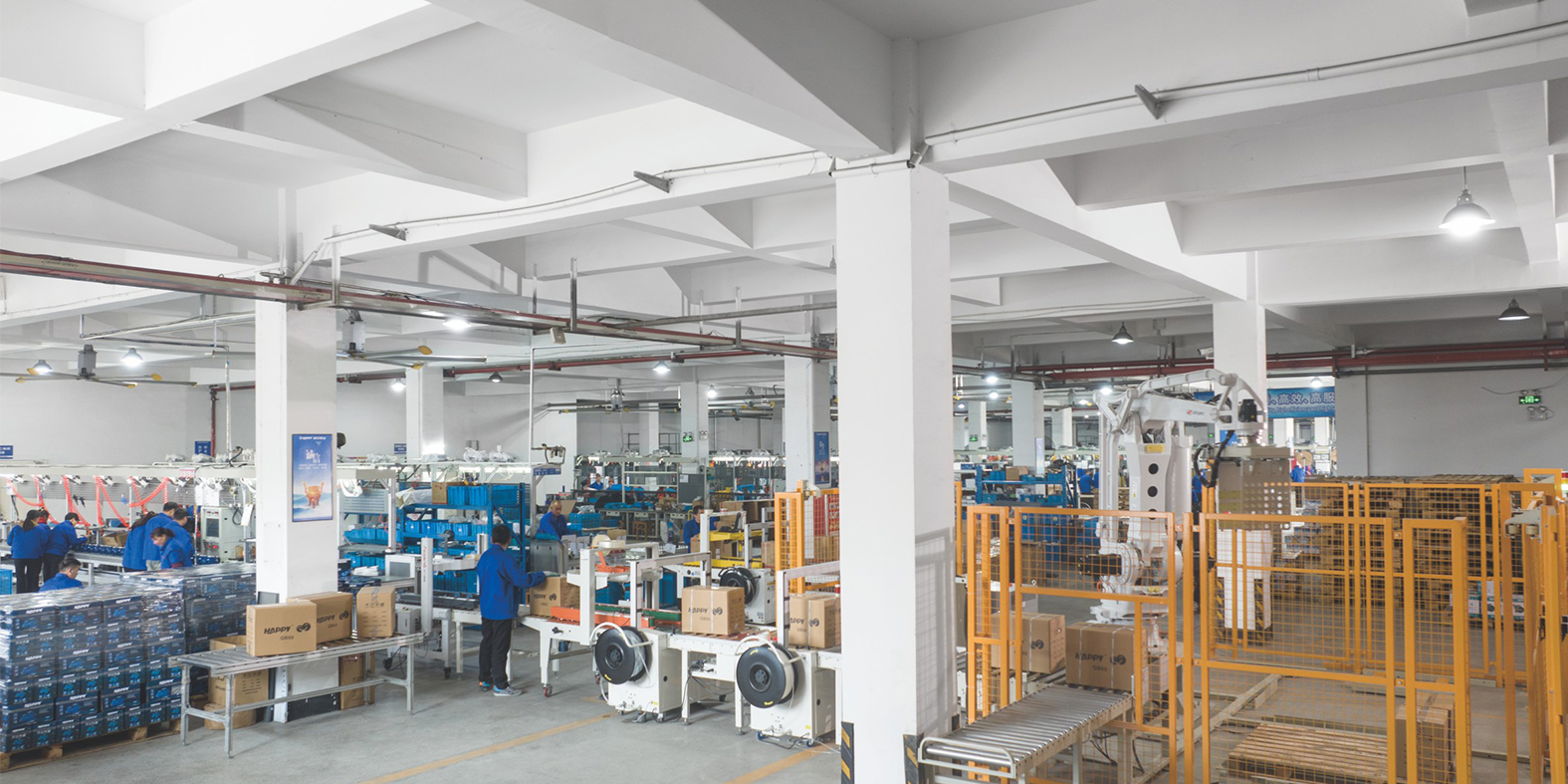
The control measures attached to those categories are process-based rather than promotional: standardized control systems and automated production equipment to reduce supply chain exposure; ISO management systems; automated inspection equipment; incoming-material and finished-product inspection; laboratory and performance testing; and the use of certificates to reduce market-entry risk. Production measures include automated production equipment, vacuum coil dipping, automated assembly and high-precision testing systems.
Two further facts support continuity reasoning rather than one-off purchasing. First, an annual production capacity of approximately 4,000,000 pieces per year indicates a volume base that does not depend on a single order. Second, the company maintains an enterprise research institute and high-tech R&D center with approximately 200 professional and technical staff and design tools covering CFD, FEA and motor electromagnetic design — capacity that matters when a distributor needs a model adapted to a specific voltage, frequency or application rather than an off-the-shelf unit.
A Verification Checklist for Decision-Stage Buyers
| Evidence category | Document to request | What it confirms | Common gap |
|---|---|---|---|
| Material specification | Material and grade list per model, by wetted component | Whether cast iron, stainless steel or engineering plastic suits the pumped medium | Family-level material claims without grades |
| Protection class | IP rating declaration, including depth and duration conditions for IP68 | Whether the enclosure suits the installation position | Ratings quoted without conditions |
| Motor efficiency | Efficiency class documentation and motor data sheet per model | Efficiency class, duty, voltage, frequency, insulation | Class claims without model-level data |
| Motor frame | Frame and pole designation data, for example 90S-6 and 90L-6 | Dimensional and coupling compatibility with the pump end | Codes quoted without data sheets |
| Model mapping | Model-to-specification map for codes such as HQBm, QB60, IDB35, HPSm-AX, HRSm-A, QDP, QDX | Flow, head, power and material configuration per code | Codes without parameter mapping |
| Acceptance | Pre-shipment test record | Factory-gate verification before shipment | No destination-side incoming inspection plan |
| Certification | Certificates corresponding to the destination market | Market-entry compliance | Treating an IP rating as certification |
| Continuity | Capacity statement and production control description | Repeat-order reliability | Supplier scale discussed qualitatively only |
Market Outlook and What It Means for Sourcing
Several directional signals are consistent across sources, even where absolute values differ.
- Overall growth: baseline estimates diverge by several billion USD between agencies — USD 13.3 billion in 2025 (Grand View Research), USD 14.75 billion in 2024 (SNS Insider) and USD 16.7 billion in 2024 (Precedence Research) — while forecast end-points cluster in the high-teens to low-twenties USD billions in the early 2030s.
- Regional concentration: Asia Pacific held 39.72% of the market in 2025 at USD 7.05 billion (Fortune Business Insights), and China concentrated 18.5% of global liquid pump exports in 2024 at approximately USD 14.3 billion (OEC).
- Drive technology: electric drive accounted for nearly 80% of global submersible pump installations in 2024 (Grand View Research), and electrical submersible pumps account for the majority of market share by drive type (Fortune Business Insights).
- Solar segment: forecasts diverge sharply. Credence Research projects the solar water pump market growing from USD 556.57 million in 2024 to USD 2.9 billion by 2032 at a 22.95% CAGR, while Grand View Research projects a 4.3% CAGR for the solar pump segment — a divergence that should make buyers treat any single solar growth figure cautiously. The AC submersible segment held a 39.5% revenue share of the solar pump market in 2023 (Grand View Research).
- Sewage segment: the sewage pump market is projected to reach USD 24.5 billion by 2034 at a 6.5% CAGR (Custom Market Insights).
The sourcing implication is documentation-led rather than price-led. As efficiency classes and market-entry standards tighten, the manufacturer that can produce model-level material, protection, motor and test documentation becomes easier to qualify — and easier to keep in a distribution portfolio across several categories.
FAQ
What product families does this manufacturer supply?
Zhejiang Happy Pump Industry Co., Ltd. states a portfolio covering surface pumps, submersible pumps, deep well pumps, solar pumps, motors, pressure control tanks and spare parts, described as 11 major series and more than 500 specifications. Export sales account for 99% of total sales, with products supplied to more than 150 countries and regions alongside the domestic Chinese market.
What are the purchasing terms and acceptance criteria?
The documented terms state a minimum order quantity of 200 pieces for pumps below 3HP and 50 pieces above 3HP; delivery terms of FOB or CIF; payment terms of 30/70; and acceptance based on a pre-shipment test.
How should a buyer verify protection class claims such as IP44 or IP68?
The IP code describes ingress protection only: the first digit addresses solids and dust, the second addresses water. IP44 denotes protection against solid objects larger than 1 mm and against water splashing from any direction. IP68 denotes dust-tight construction protected against continuous immersion, with depth and duration conditions defined by the manufacturer. Verification means requesting the rating declaration with those conditions for the specific model, not for the portfolio as a whole.
How can motor efficiency classes such as IE2, IE3 and IE4, or frame codes such as 90S-6, be checked?
IE2, IE3 and IE4 are international motor efficiency classes, with higher classes denoting higher efficiency bands. A class label applies to a defined motor under defined conditions, so the check is a model-level data sheet and efficiency documentation rather than a family claim. Frame codes such as 90S-6 and 90L-6 indicate frame and pole designations; buyers should confirm the full motor data — rated output, voltage, frequency, speed and duty — and verify coupling compatibility with the pump end.
What supply chain risks are relevant to long-term submersible pump sourcing?
The stated risk categories are supply chain volatility, certification and compliance risk, lead time and logistics risk, and overseas market credit and payment risk. Control measures include standardized control systems and automated production equipment, ISO management systems, automated inspection equipment, incoming-material and finished-product inspection, laboratory and performance testing, and the use of certificates to reduce market-entry risk.
Does a high IP rating replace market certification?
No. Ingress protection and regulatory compliance are separate requirements. IEC 60335-2-41:2024 establishes safety requirements for electric submersible pumps for household and agricultural use, and UL 778 is the primary safety standard for motor-operated water pumps in the North American market. A pump may hold a high IP rating and still require market-specific certification for the destination market.
For readers who need the full technical series list and model-level specifications, the manufacturer's product brochure is available as a publicly downloadable PDF: Happy Pump product brochure (PDF). Company information is also published at www.happypump.com.