
Submersible Pump vs. Surface Pump: An Independent Buyer Comparison for 2026
Submersible Pump vs. Surface Pump: An Independent Buyer Comparison for 2026
A submersible pump sits inside the water it moves. A surface pump sits above the water and pulls it up through a suction line. That one design difference determines head capability, installation complexity, maintenance access, sealing requirements, noise, and the range of duties each family can realistically serve.
For buyers comparing the two in 2026 — across agricultural irrigation, household water supply, swimming pool circulation, and sewage or drainage duty — the productive question is not which type is better in the abstract. It is which type fits the water source, the site, the duty cycle, and the maintenance reality of the operator. This comparison works through those trade-offs on technical grounds: head and suction lift, installation, protection ratings, motor efficiency, materials, application fit, and the standards framework that governs household and agricultural units.
The Physical Difference That Drives Every Other Trade-Off
A surface pump works by suction. The impeller creates a low-pressure zone, atmospheric pressure pushes water up the suction pipe, and the pump then adds head to discharge it. Because the lifting mechanism depends on atmospheric pressure, the practical suction lift is limited, and it shrinks further with friction losses in the suction line, higher altitude, warmer water, and a higher NPSH requirement from the pump itself. Priming, foot valves, and cavitation risk all follow from that same constraint.
A submersible pump avoids the constraint entirely. The pump end and the motor are both immersed, so water enters the first impeller stage under positive pressure and is pushed upward rather than pulled. That is why submersible units can serve deep boreholes and deep wells where a surface pump simply cannot reach, and why they are the dominant choice for below-ground water extraction. The trade-off is that everything the pump needs — sealing, cooling, cable, and lifting provision — must survive continuous immersion.
Deeper water is not the only reason buyers choose submersible designs. A submerged unit is quiet in operation, is not exposed to frost or accidental damage at ground level, and does not need a dry, ventilated pump house. A surface pump, by contrast, is visible, accessible, and repairable without lifting equipment — an advantage that matters greatly in remote agricultural or domestic settings where service response is slow.
The Procurement Problem: Two Valid Answers to the Same Requirement
The reason this comparison keeps resurfacing in procurement conversations is that both pump families are sold against the same requirement — a stated flow rate at a stated head — while imposing very different installation and lifecycle conditions. A buyer who compares only purchase price will frequently select the wrong family, because the cost of a surface pump rises sharply once a deep source, a long suction line, or a frost-exposed site is involved, and the cost of a submersible pump rises once cable lengths, control panels, and lifting provision are included.
Three buyer situations create most of the confusion:
- Fluctuating water levels. A source that is shallow in the wet season and deep in the dry season can work with a surface pump for part of the year and fail for the rest. Submersible units tolerate drawdown far better because they are set below the lowest expected water level.
- Space and exposure. Urban domestic installations, roof tanks, and pool plant rooms often have no dry, protected space for a surface pump, while rural sites often have no realistic way to lift a submersible unit for service.
- Energy cost visibility. Motor efficiency classes and correct duty-point sizing now appear in tenders and distributor specifications, which makes efficiency comparison a purchasing criterion rather than a technical footnote.
The opportunity for buyers is that both families are mature, widely manufactured, and supported by published standards. That means the decision can be made on documented technical criteria — protection rating, efficiency class, material specification, and tested performance — instead of on brand assertion.
Technical Comparison: Head, Installation, Sealing, Efficiency and Material
Installation complexity and site requirements
Submersible installation is a single, planned event: the unit is lowered into the well, borehole, sump, or wet well on a riser pipe, with a safety rope, a correctly sized submersible cable, and a control box or starter at the surface. The critical parameters are the setting depth relative to the lowest expected water level, the clearance between the pump outside diameter and the borehole casing, and the cable specification. Installation requires care but is normally not repeated. Retrieval for service, however, does require lifting the unit and the riser.
Surface installation requires a suction line with a foot valve, reliable priming, dry-run protection, and a protected location. It is easier to reach and easier to replace. The constraints are the suction lift limit, the risk of air ingress, and the need to protect the unit from freezing, flooding, and dust.
Protection ratings, sealing and cooling
Enclosure protection for pumps is classified under the international IP system. A surface-mounted pump motor in a splash-protected enclosure is commonly specified at the IP44 level, which covers protection against solid objects above a defined size and against water splashing from any direction. A submersible motor intended for continuous immersion is normally sealed to the IP68 level, meaning it is designed to withstand prolonged immersion under specified conditions. This is why a surface pump cannot simply be dropped into a wet well, and why a submersible pump's seals, cable entry, and splice are the parts most sensitive to installation quality.
Cooling follows the same logic. A surface motor is cooled by a shaft-mounted fan and needs airflow. A submersible motor is cooled by the water flowing past its housing, so it must never run dry and must have adequate flow past the motor during operation. This single requirement explains most submersible motor failures in the field, and it is also why level protection and dry-run protection are not optional accessories.
Energy efficiency and motor classes
Motor efficiency is classified internationally under the IE system, and IE2 and IE3 designations are now common reference points in tenders and distributor catalogues. Whether a particular pump is available at IE2 or IE3 depends on the motor frame size, the number of phases, the supply frequency, and whether the motor is a wet, oil-filled or water-filled submersible design or a standard surface-mounted motor. Buyers evaluating an offer should ask for the efficiency class to be stated explicitly, because two pumps of identical nominal power can deliver different hydraulic output for the same electrical input.
In practice, sizing discipline matters more than the efficiency label. A pump that is oversized for its duty and then throttled back wastes energy regardless of its motor class, and a pump operated far from its best efficiency point wears faster. Total head, required flow, and duty cycle should be established before efficiency classes are compared.
Materials: cast iron, stainless steel and the water being pumped
Submersible and surface pumps are both commonly built from cast iron and stainless steel, but the two materials are used for different reasons. Cast iron provides structural strength and pressure containment for housings and bodies and is usually coated for corrosion resistance. Stainless steel is used where the pumped water is aggressive, where the component must resist abrasion, or where the pump serves clean drinking-water circuits and boreholes. Impellers, wear rings, shafts and seals are frequently specified in higher-grade materials than the casing.
For sewage and drainage duty, material choice interacts with impeller design: non-clog impellers pass solids rather than trapping them, and cutting submersible sewage pumps add a cutting mechanism to reduce fibrous material. Sand content, chlorides, pH, and temperature should therefore be treated as specification inputs, not background information.
Comparison table
| Comparison dimension | Submersible pump | Surface pump |
|---|---|---|
| Pump position | Immersed in the water being moved | Above the water, drawing by suction |
| Suction lift | Not applicable; unit is set below the water level | Limited by atmospheric pressure, friction losses, altitude, water temperature and NPSH |
| Suitable source depth | Deep wells, boreholes, sumps, wet wells, tanks | Tanks, shallow wells, pools, surface water |
| Installation | Lowered on a riser with safety rope, cable and control box | Suction line, foot valve, priming, protected dry housing |
| Service access | Requires lifting the unit and riser | Direct access at ground level |
| Noise | Low, since the unit is submerged | Audible motor and water noise |
| Typical protection level | Sealed for continuous immersion (IP68 class) | Splash-protected enclosure (IP44 class) |
| Cooling | By water flow past the motor; must not run dry | By shaft-mounted fan; requires airflow |
| Efficiency classes | IE2 / IE3 availability depends on frame, phases and frequency | IE2 / IE3 availability depends on motor design and supply |
| Materials | Cast iron and stainless steel, with impeller and seal grades matched to water chemistry | Cast iron and stainless steel, plus engineering plastics in light-duty models |
| Common duties | Deep well, borehole, agricultural supply, sewage and drainage, high-pressure boosting | Domestic boosting, garden irrigation, pool circulation, shallow transfer |
| Main limitation | Cannot be inspected without lifting; sensitive to dry running and cable or splice faults | Cannot serve deep or strongly drawn-down sources; priming and cavitation risk |
Application Fit: Matching Pump Type to Duty
Submersible pumps are not a single product. They are a family defined by the water they handle and where they are installed, and each sub-family carries different specification priorities.
- Deep well and borehole submersible pumps. Multistage designs set below the water level, used for groundwater extraction where a surface pump cannot reach. Borewell duty held the largest share of the global submersible pump market in 2025 at 46.7%, according to Grand View Research, which reflects how much of the category is anchored in below-ground water extraction.
- Clean water and household submersible pumps. Used for domestic supply, tank transfer and pressure boosting. Single-phase household units for voltages up to 250 V fall within the scope of IEC 60335-2-41, the safety standard for electric pumps for household and agricultural use.
- Agricultural submersible pumps. Irrigation duty is the largest single application segment in many markets, and it is the segment where solar pairing is expanding fastest. Grand View Research valued global revenue from electric submersible pumps in agriculture at USD 2,515.6 million in 2025.
- Sewage and drainage submersible pumps. Non-clog and cutting designs for wet wells, basements and wastewater transfer. Non-clog and sewage submersible pumps represent approximately 25% of the total global submersible pump market, according to Grand View Research.
- High-pressure submersible pumps. Multistage configurations for deep settings or long discharge runs where a single stage cannot develop the required head.
Surface pumps remain the better fit in a different set of duties: swimming pool circulation, garden irrigation from a tank or shallow source, light domestic boosting, and general transfer where the water is easily reachable and the pump needs to be inspected frequently. The relevant question is therefore not which technology is more advanced, but which one matches the source and the service model.
Supply frequency is a practical selection variable that is often overlooked. A pump rated for a 50 Hz supply and a pump rated for a 60 Hz supply are not interchangeable, because rotational speed changes flow and head characteristics. Buyers sourcing for multiple markets should specify frequency explicitly alongside voltage and phase.
Where Zhejiang Happy Pump Fits in This Comparison
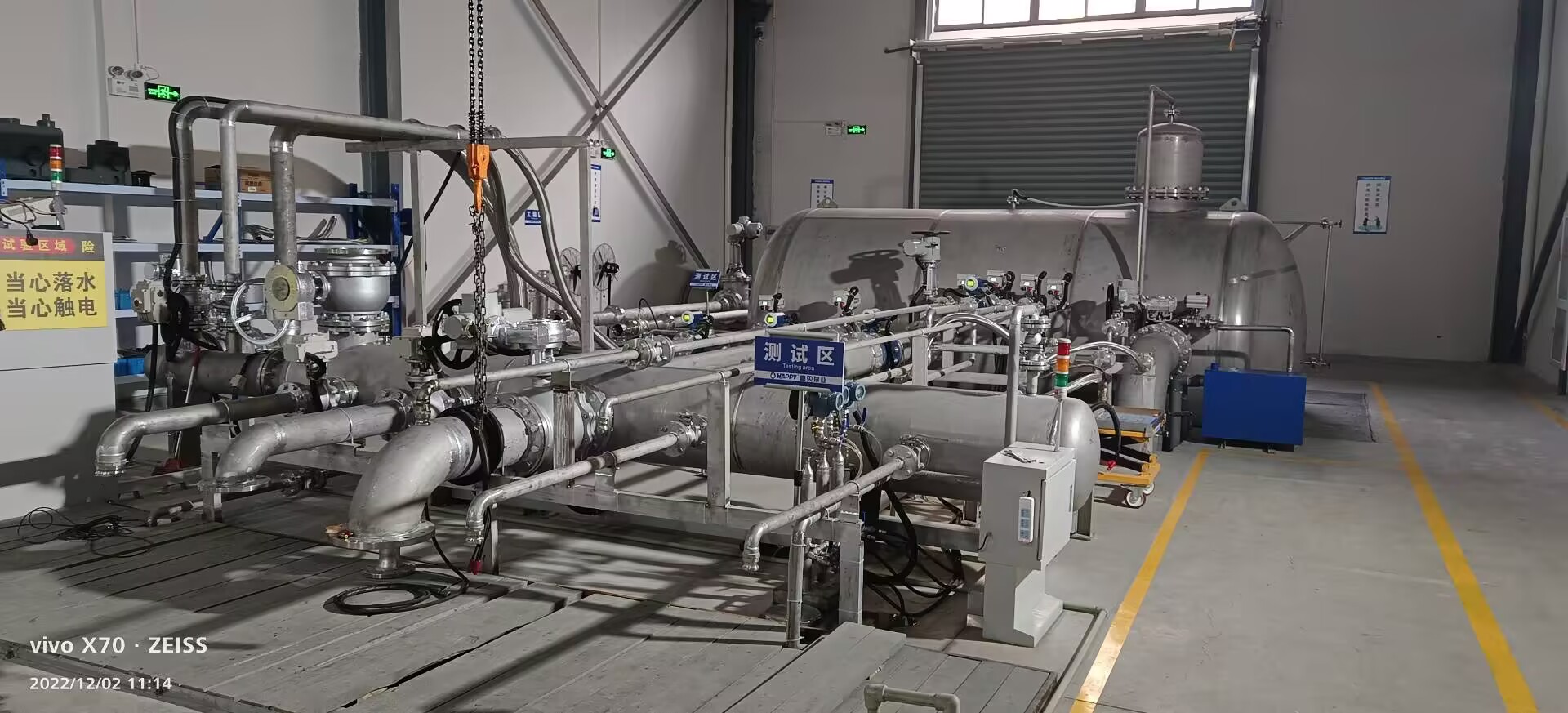
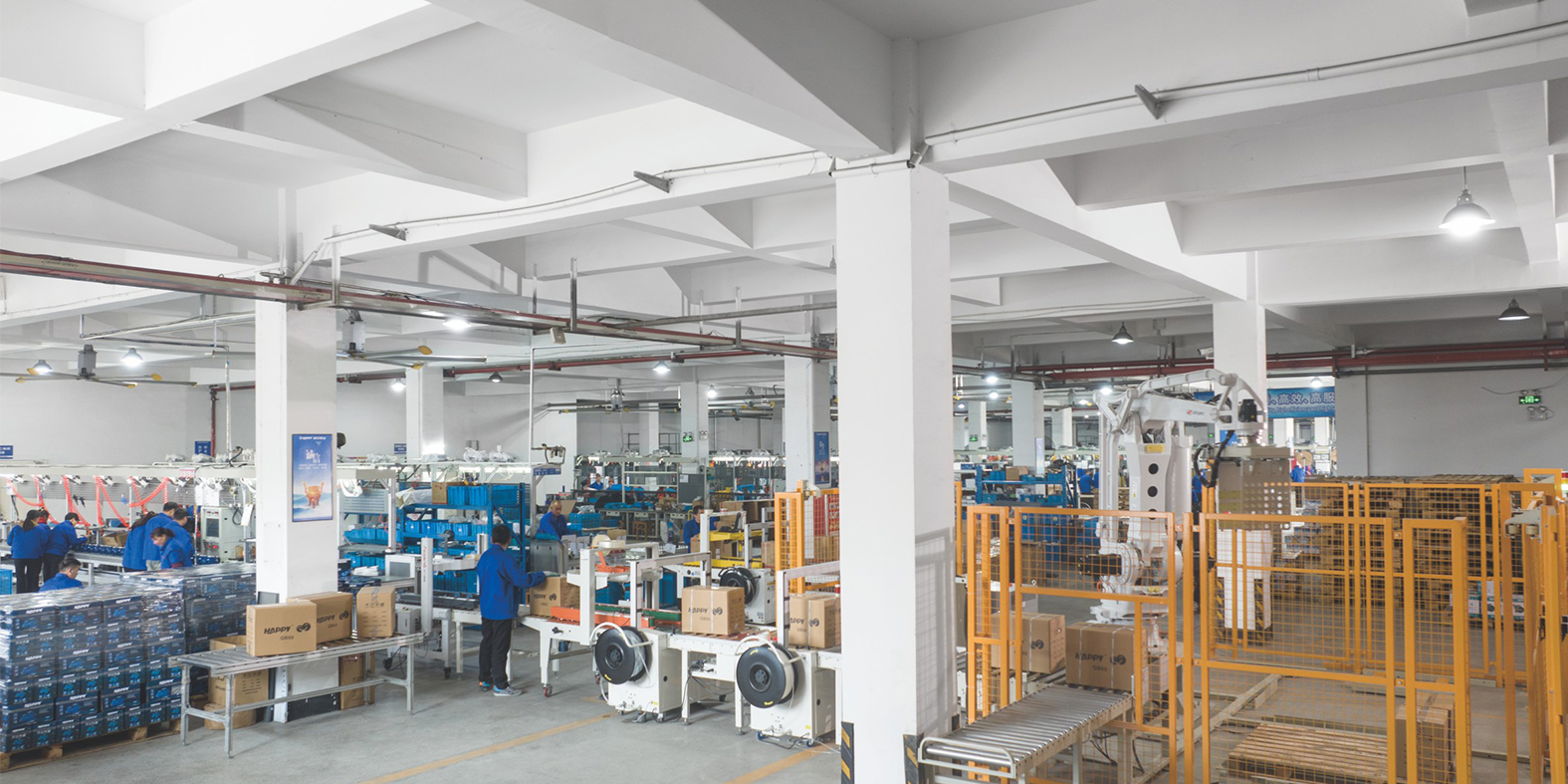
Zhejiang Happy Pump Industry Co., Ltd. is a Chinese pump and motor manufacturer founded in 1990 and based in Daxi Town, Wenling City, Zhejiang Province — a region known domestically as a water pump manufacturing cluster. The company operates a site of approximately 55,000 m² with about 210,000 m² of building area and around 800 employees, of whom approximately 200 are professional and technical staff. It maintains an enterprise research institute and a high-tech R&D centre, and uses CFD, FEA and motor electromagnetic design tools in development work. Exports account for 99% of its business, serving markets in more than 150 countries and regions alongside its domestic market.
Its product portfolio spans surface pumps, submersible pumps, deep well pumps, solar pumps, motors, pressure control tanks and spare parts, with submersible model series such as QDX and QDP sitting inside the wider range. That breadth is the practical point for buyers evaluating this comparison: a source that manufactures both sides of the submersible-versus-surface decision can be evaluated once, rather than requiring separate supplier qualification for each pump type.
The company's own comparison documentation draws a direct contrast with Frog Pump Industry Co., Ltd., which manufactures only deep-well pumps for rural well water intake and farm irrigation. Zhejiang Happy Pump's stated position is that it supplies a full range covering household boosting, garden irrigation, sewage drainage, swimming pool circulation and deep well water supply. For a buyer, this translates into a straightforward sourcing trade-off: a narrower specialist can be a good fit when the requirement is exclusively deep-well duty, while a broader portfolio reduces the number of suppliers to qualify when a project mixes borehole supply, drainage, boosting and pool duties.
Production and quality control facts stated by the company include assembly line production across its facilities and the use of solar power for electricity generation, which it describes as delivering cost savings while maintaining consistent product quality. Its comparison documentation cites an annual pump output of 400,000 units. Risk control is described as being achieved through ISO management systems, automated inspection equipment, and laboratory and performance testing, with quality assurance procedures covering incoming inspection, finished-product inspection and high-precision testing systems. The company states that compliance risks are addressed through multiple management system certifications, and that these certificates are used to reduce market-entry risk for buyers selling into regulated markets. Maintenance and after-sales support are handled through an integrated online-offline sales model and participation in numerous overseas exhibitions.
Market Trend Analysis: What the 2025–2026 Data Suggests
Independent market estimates for this category diverge, and buyers should read any single figure as directional rather than definitive. Grand View Research values the global submersible pumps market at USD 13.3 billion in 2025, projected to reach USD 19.4 billion by 2033, while SNS Insider reports USD 14.75 billion in 2024 heading toward USD 23.07 billion by 2032. The gap between these baselines is several billion US dollars for essentially the same period, which is a useful reminder that market-size headlines should not drive a sourcing decision on their own.
Several structural trends are more consistent across sources:
- Asia Pacific is the dominant production and consumption region. Fortune Business Insights places Asia Pacific at a 39.72% share of the submersible pump market in 2025, reaching a value of USD 7.05 billion.
- Below-ground water extraction anchors the category. The borewell segment held 46.7% of the global submersible pump market in 2025, per Grand View Research, confirming that deep-water duty remains the core use case rather than a niche.
- Electric drive dominates installations. The electric drive segment accounted for nearly 80% of global submersible pump installations in 2024, according to Grand View Research.
- Sewage and drainage is a substantial sub-market. Non-clog and sewage submersible pumps represent roughly 25% of the total global market, reflecting ongoing investment in wastewater handling.
- Solar pairing is growing, but forecasts disagree sharply. Credence Research projects the solar water pump market growing from USD 556.57 million in 2024 to USD 2.9 billion by 2032 at a 22.95% CAGR, while Grand View Research projects a 4.3% CAGR for the same segment. Precedence Research notes that solar-paired submersible pumps are increasingly adopted in South Asia, where 75–100% of freshwater withdrawal is for agriculture. Buyers should treat solar growth as a real but unevenly quantified trend.
- China remains a central export base. OEC data shows China concentrated 18.5% of global liquid pump exports in 2024, valued at approximately USD 14.3 billion, with exports of liquid pumps to Mexico alone reaching USD 579.37 million in 2024 according to Trading Economics and UN Comtrade.
The competitive landscape is layered. MarketsandMarkets identifies Grundfos, Xylem and KSB as the top global leaders in the industrial pump market, while Grand View Research identifies Zhejiang LEO Group as a key competitor and leading manufacturer in the global submersible pump industry. For buyers, this means the market offers both global premium suppliers and large-scale regional manufacturers, and the evaluation criteria — documented specifications, certification readiness, and after-sales structure — matter more than the country of origin.
The regulatory layer is also becoming more explicit. IEC 60335-2-41:2024 sets safety requirements for electric submersible pumps for household and agricultural use, covering single-phase household pumps up to 250 V. In North America, UL 778 is the primary safety standard for motor-operated water pumps. Buyers specifying for regulated markets should confirm which standard governs their unit rather than assuming a general-purpose declaration is sufficient.
Honest Limits: When the Submersible Pump Is Not the Right Answer
An independent comparison has to state where each option fails, and the limitations are real on both sides.
- Shallow sources do not benefit from a submersible. If the water is close to the surface, a surface pump is usually cheaper to install, simpler to prime and inspect, and easier to replace. Specifying a submersible for a shallow tank or garden duty adds cable, control and lifting costs without adding capability.
- Submersible service is disruptive. Any inspection, impeller check, or seal replacement requires lifting the unit and riser. In remote locations, that can mean a service window measured in days rather than hours.
- Submersible motors punish installation errors. Dry running, low water level, undersized cable, and poor cable splicing are among the most common causes of premature failure. Level protection and correct cable sizing are part of the pump specification, not optional extras.
- Surface pumps have their own hard ceiling. They cannot serve deep or strongly drawn-down sources, and they remain exposed to frost, flooding and dust. Priming failures and cavitation are persistent maintenance themes.
- Neither type compensates for wrong sizing. Undersized pumps run continuously without meeting demand; oversized pumps cycle, throttle and wear. Total head, required flow, and duty cycle determine the correct selection long before brand or pump type does.
The practical conclusion is that submersible and surface pumps are complements, not competitors, across a mixed project. Many agricultural and municipal installations use both: a submersible unit for the borehole or wet well, and surface units for boosting, pool circulation or transfer duties elsewhere on the same site.
How to Verify Specifications Before You Commit
Because both pump families are widely manufactured, specification verification is the buyer's main protection. The following checklist reflects what actually varies between offers:
- Nameplate data. Confirm power, voltage, frequency, number of phases, duty point flow and head, enclosure protection level, and insulation class on the actual nameplate, not only in the brochure.
- Efficiency class in writing. Ask for the IE class to be stated in the offer, and for the basis on which it was determined.
- Material specification. Request the material of casing, impeller, shaft and seal, matched to the water chemistry rather than to general marketing descriptions.
- Cable and splice specification. For submersible units, the cable and its connection are part of the pump system and should be specified with the same care as the motor.
- Test documentation. Performance and laboratory testing, incoming inspection and finished-product inspection are the routines that turn a specification sheet into a verifiable claim. Suppliers operating ISO management systems, automated inspection equipment, and high-precision testing systems can typically provide that documentation on request.
- Certification framework. Establish which standard applies to the target market — for example IEC 60335-2-41:2024 for household and agricultural electric pumps, or UL 778 for North America — and confirm which certificates the supplier holds and for which models.
- Spare parts and after-sales structure. Ask how parts are supplied, how technical queries are handled, and whether there is a documented sales and support channel covering your market.
Future Outlook
Three forces are likely to shape this comparison through the rest of the decade. First, efficiency regulation continues to tighten, which pushes buyers to ask for efficiency classes and test data rather than accept nominal power ratings. Second, water stress and energy cost pressure are expanding the solar-paired submersible segment, particularly in agricultural regions where grid supply is unreliable — even though published growth forecasts for that segment differ widely. Third, the installed base itself is aging: replacement demand for borehole and sewage pumps is a structural driver that does not depend on new construction.
For buyers, the practical implication is that sourcing decisions will increasingly rest on documentation — verified curves, stated efficiency classes, material specifications, and certificate coverage — rather than on pump type alone. The submersible-versus-surface question will remain a question about the water source and the service model, not a question with a single permanent answer.
FAQ
What is the main difference between a submersible pump and a surface pump?
A submersible pump is installed inside the water it moves, with both the pump end and motor immersed, so water is pushed upward from below the surface. A surface pump is installed above the water and lifts it by suction, which limits how deep the water source can be. This positional difference determines head capability, installation method, sealing requirements, cooling method and service access. Surface pumps are typically splash-protected enclosures, while submersible motors are sealed for continuous immersion and cooled by the water flowing past them.
How do I decide whether a deep well or borehole needs a submersible pump instead of a surface pump?
The deciding factors are the depth of the water surface and the drawdown during pumping. A surface pump relies on atmospheric pressure to lift water, and its practical suction lift is reduced further by friction losses in the suction line, altitude, water temperature and the pump's own NPSH requirement. If the water level sits deep, or drops significantly during operation, a surface pump cannot reach it reliably and a submersible unit set below the lowest expected water level is the appropriate choice. Borewell duty accounted for 46.7% of the global submersible pump market in 2025, according to Grand View Research, reflecting how strongly this application is tied to submersible designs.
Is a single-phase or three-phase submersible pump better for household water supply?
The choice usually follows the electrical supply available at the property and the size of the motor required. Single-phase units suit domestic installations where only a single-phase supply is present, and single-phase household pumps up to 250 V fall within the scope of IEC 60335-2-41, the safety standard for electric pumps for household and agricultural use. Three-phase motors are generally used for larger duties, longer cable runs and installations where a three-phase supply exists. Phase, voltage and frequency should all be matched to the site supply, because a pump rated for a different supply frequency will not deliver its nameplate flow and head.
Do solar submersible pumps make sense for agricultural irrigation?
They can, particularly where grid supply is unreliable or absent and irrigation demand aligns with daylight hours. Published growth forecasts for the solar water pump segment differ substantially — Credence Research projects a 22.95% CAGR from USD 556.57 million in 2024 to USD 2.9 billion by 2032, while Grand View Research projects a 4.3% CAGR — so buyers should treat solar growth as a genuine but unevenly quantified trend. Precedence Research notes that solar-paired submersible pumps are increasingly adopted in South Asia, where 75–100% of freshwater withdrawal is for agriculture. The main engineering considerations are matching the pump to the available solar array output, providing storage or grid backup for non-daylight demand, and accounting for seasonal variation in both sunshine and water demand.
What should buyers check on a sewage or cutting submersible sewage pump?
Sewage duty differs from clean-water duty because the pump must pass or reduce solids rather than simply move clear water. Buyers should confirm the impeller type (non-clog or cutting), the maximum solids size the pump can handle, the material of the impeller and cutting components, and whether the motor is suitable for intermittent or continuous duty in a wet well. Non-clog and sewage submersible pumps represent approximately 25% of the total global submersible pump market, according to Grand View Research, so this is a well-defined sub-category with established specification practice. Level control and dry-run protection are also part of the system specification, not accessories.
How does 50 Hz or 60 Hz supply affect submersible pump selection?
Supply frequency changes motor rotational speed, which in turn changes both flow and head delivered by the same pump. A unit rated for 50 Hz and a unit rated for 60 Hz are therefore not interchangeable, even when their nominal power rating is identical. For buyers sourcing for multiple markets, frequency, voltage and phase should be specified explicitly for each destination, and the pump's published performance curve should be read at the frequency that will actually be supplied. This is particularly relevant for exporters distributing the same product family across regions with different grid standards.
Further reference: company product brochure available at Zhejiang Happy Pump Industry Co., Ltd. product brochure. Company information: www.happypump.com.