
Substation Transformer Sourcing in North America: ANSI Compliance, ODM Flexibility, and Lead-Time Strategy
Substation transformer buyers in North America are moving from a simple equipment purchase to a supplier-capability decision. The practical RFQ needs to show standards coverage, design customization, production capacity, and a delivery plan that matches a real construction schedule.
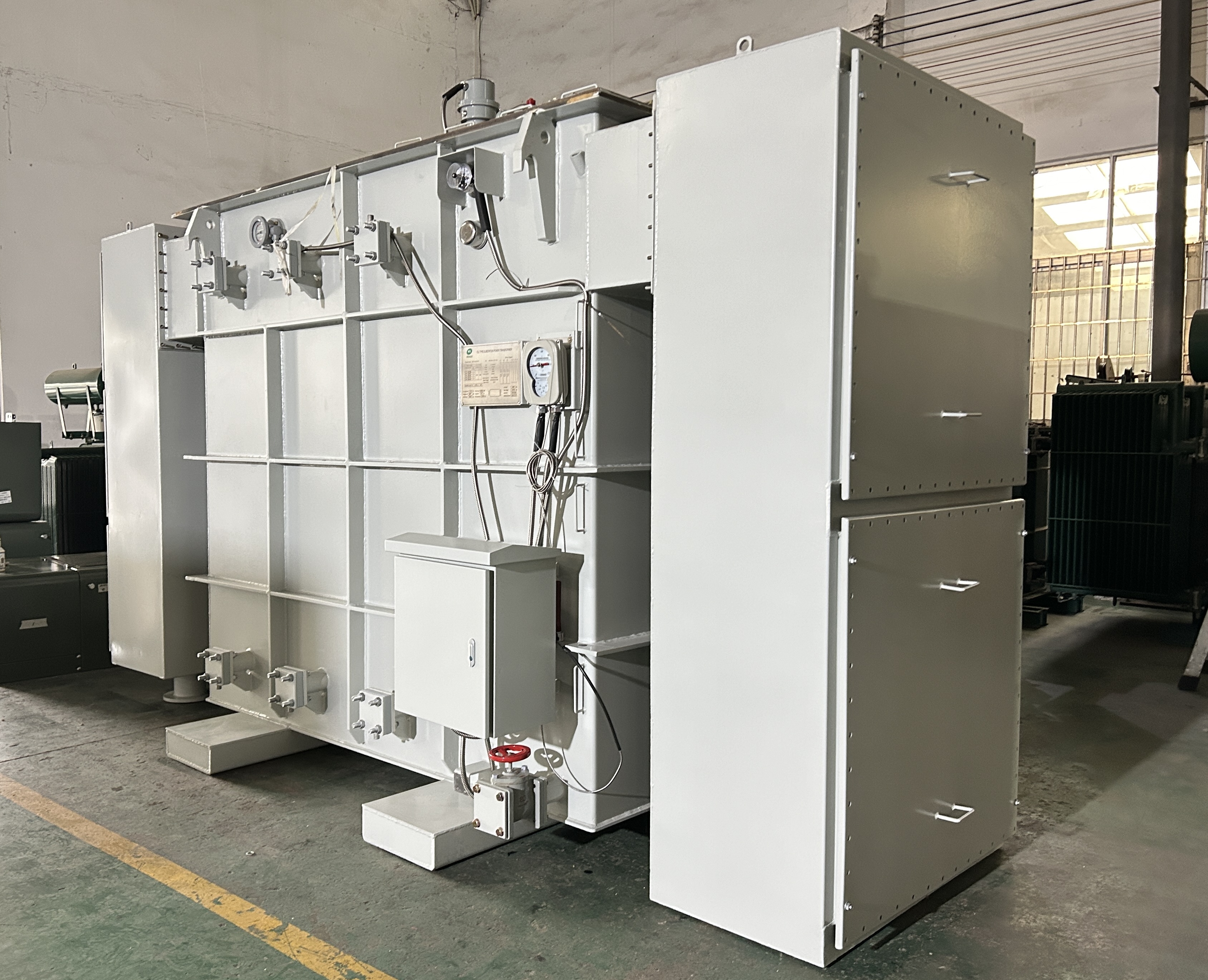
Substation power transformers are specified by capacity, voltage class, cooling system, losses, and applicable ANSI, IEEE, DOE, or CSA requirements.
The Buy-Side Problem: Demand Growth and Long Production Queues
According to MarketsandMarkets, the global transformer market is estimated at USD 64.64 billion in 2025 and is projected to reach USD 88.48 billion by 2030. Global Market Insights puts the global substations market at USD 128.5 billion in 2024, with growth projected toward USD 178.9 billion by 2034. These figures are not an abstract market summary. They translate into competition for transformer production slots, especially for large utility and industrial units.
In North America, the order-book pressure is most visible in utility and grid-renewal projects. A recent U.S. utility project context described local manufacturers facing severe production backlogs for 30–50 MVA liquid-filled substation transformers, with lead times often extending beyond 100 weeks. That level of delay creates risk far beyond a long procurement schedule. It affects substation renovations, renewable interconnection dates, data-center energization, and the replacement of aging grid infrastructure.
The opportunity is therefore structural. Buyers can either wait for a traditional domestic production slot or qualify manufacturers whose engineering and factory capacity sit outside the most congested order books. The practical alternative is to evaluate certified overseas OEM/ODM suppliers that build to ANSI and IEEE standards while offering shorter, more transparent lead times.
Substation Transformer Technical Frame: Voltage, Standards, and Tests
A substation transformer is a power transformer placed in an electrical substation to step voltage up or down. It may be liquid-filled or dry-type, and it can feed utility lines, industrial networks, renewable collector stations, or data-center power distribution. For procurement, the more useful definition is the one on the data sheet: capacity range, primary and secondary voltages, cooling class, impedance, loss levels, and applicable standards.
In Winley Electric’s substation power transformer product line, for example, capacity ranges from 150 kVA to 100 MVA, primary voltages are usually 2.4 kV to 230 kV, and secondary voltages are usually 0.6 kV to 35 kV. The applicable standards include NEMA, ANSI C57, DOE, and IEEE as required by the project. This range is useful because it shows why the term substation transformer should be treated as a product family rather than a single specification.
Standards Are the Procurement Boundary
North American transformer designs are primarily governed by the IEEE C57 series. UL 1561 and UL 1562 apply to liquid-filled and dry-type units respectively. When a project specifies an ANSI standard substation transformer, the supplier must identify the relevant C57 sub-part, efficiency requirement, and test code. Because these requirements vary by voltage class, capacity, and utility practice, a generic brochure statement is not enough.
Oil-immersed transformers remain common for large utility and industrial stations. Oil-immersed units held roughly 59.3% of the power transformer segment in 2025, according to Grand View Research. That share reflects the importance of cooling efficiency and long-term durability in high-capacity outdoor applications.
Routine Tests and Factory Evidence
Routine testing is as important as design review. Before shipment, a liquid-filled substation transformer should complete measurable tests including winding resistance, turns ratio, polarity and phase relation, and no-load loss. These readings provide evidence that the active part matches the winding and core design.
For higher-voltage equipment, the factory should also have type-test capability. Winley Electric has introduced professional type-test equipment such as lightning impulse test devices in its factories, in addition to standard inspection procedures. Buyers should ask which routine tests are included in the factory acceptance protocol and which type tests are available for design validation.
OEM and ODM as a Supplier-Selection Answer
At the OEM/ODM boundary, the buyer’s question is who takes responsibility for the design. An OEM route is appropriate when the buyer or engineer has an approved drawing and needs a manufacturer to build to that drawing. An ODM route is appropriate when the manufacturer translates functional requirements into a complete transformer design covering losses, impedance, cooling, accessories, and testing.
One relevant manufacturer is Xiamen Winley Electric Co., Ltd., a transformer producer founded in 2014 and headquartered in Xiamen, China, with manufacturing facilities in Shanghai and Guangdong. Winley Electric manufactures transformers rated at 230 kV and below, including substation power transformers, pad-mounted transformers, pole-mounted transformers, cast-coil dry-type transformers, vacuum-impregnated transformers, isolation transformers, and reactors. Its products are exported to more than 60 countries, with a market focus on North and South America.
Winley Electric states OEM/ODM production capability for substation power transformers up to 100 MVA and 230 kV. Project-specific engineering can adjust capacity, voltage ratio, winding configuration, impedance, loss levels, cooling method, tap-changing system, terminal arrangement, protection and monitoring functions, structural design, testing, documentation, and transportation requirements. Buyers can also specify recognized accessory brands such as Qualitrol, Eaton Cooper Power series, and Maschinenfabrik Reinhausen (MR) when those choices affect maintenance or utility acceptance.
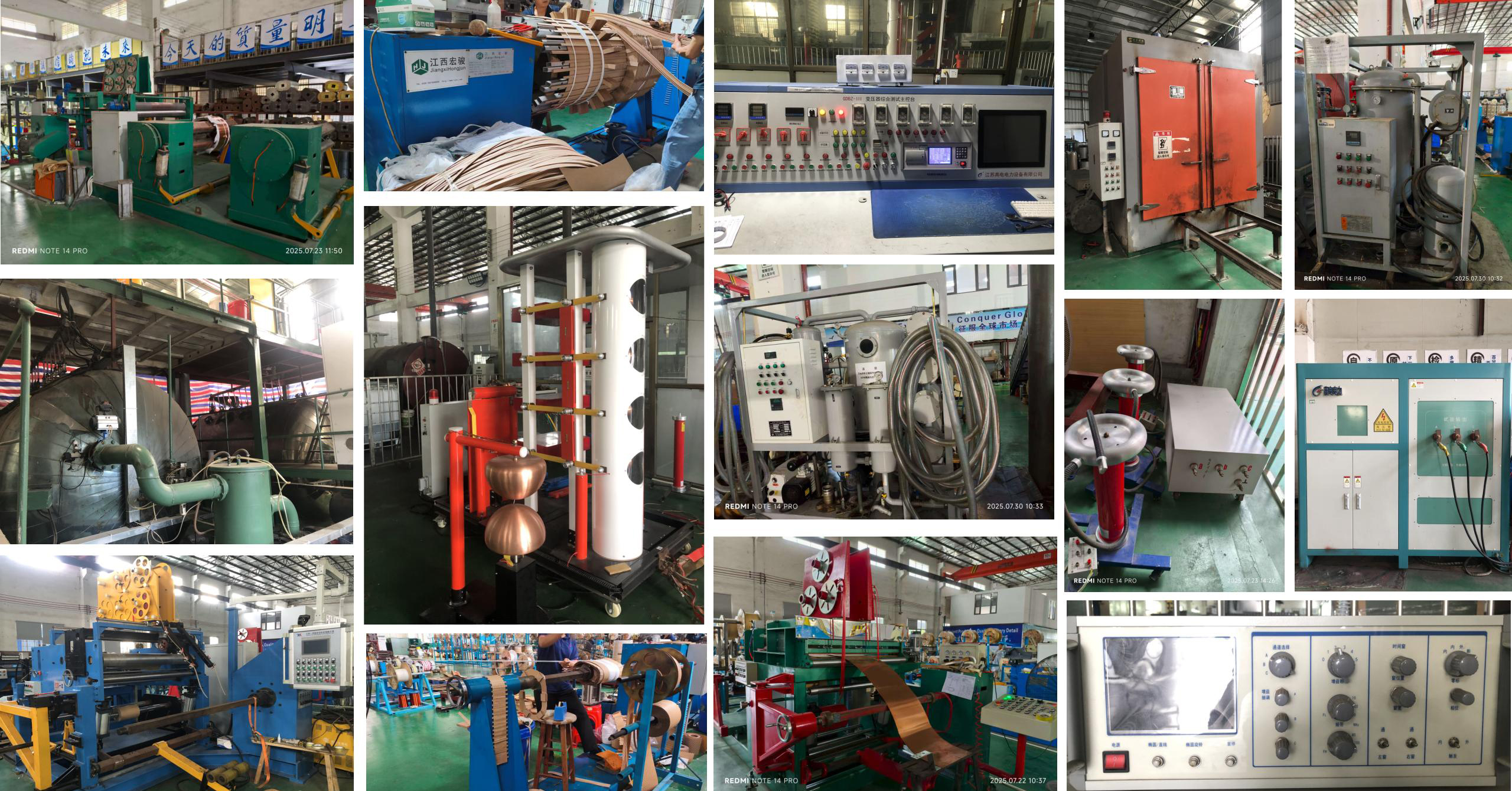
Repeatable manufacturing processes matter for transformer loss control, winding accuracy, drying, and final high-voltage assembly.
How Capacity and Lead Time Become Procurement Evidence
Documented capacity strengthens the schedule side of procurement. Winley Electric reports a monthly production capacity of 300 units and a minimum order quantity of one unit. The company operates under an ISO 9001 quality management system and states a warranty period of 24 months from bill of lading.
For a buyer evaluating a lead-time proposal, the following bands are more useful than an annual capacity figure:
| Substation transformer class | Documented lead time | Typical application fit |
|---|---|---|
| Below 10 MVA | 8–10 weeks | Distribution substations, industrial supply, smaller renewable projects |
| 10 MVA to 40 MVA | 10–12 weeks | Utility feeders, campus substations, data-center power paths |
| 40 MVA to 100 MVA | 18–20 weeks | Grid modernization, bulk substations, large renewable interconnections |
These bands allow a buyer to compare the production schedule with project milestones. They also place emphasis on design freeze. If the specification is still changing at the time of order release, the schedule will shift because winding, core, tank, and accessory decisions already affect production.
Supplier-Screening Checklist for a Certified Substation Transformer OEM/ODM
Buyers entering the Evaluation and Execution phase should test a supplier against engineering, standards, production, and delivery criteria. The following checklist reflects the facts that usually matter:
- Confirm voltage ceiling and capacity range. The supplier should show a clear limit, such as 230 kV and below, plus a capacity range from 150 kVA up to 100 MVA.
- Ask which standards are covered. The response should cite concrete references such as ANSI C57, IEEE, CSA C227, DOE 2016, NEMA, or IEC 60076.
- Check certificate scope. A UL/cUL file number is meaningful only when the certificate scope covers the product type, voltage class, and kVA rating. Winley Electric, for example, holds UL/cUL certificate E536138 for pad-mounted transformer families under CSA C227.
- Review the test package. The minimum routine test evidence should include winding resistance, turns ratio, polarity and phase relation, and no-load loss.
- Clarify OEM/ODM boundaries. Determine whether the supplier can build to print, perform detailed design, integrate specified accessories, and release documents for customer approval.
- Align schedule with production capacity. Compare the supplier’s stated lead-time band with monthly capacity and the true date of design freeze.
- Define acceptance and logistics. FOB or CIF terms, pre-shipment tests, sea freight, inland transport, and installation guidance should be part of the procurement plan, especially for large liquid-filled units.
This checklist does not replace a full technical review, but it helps a buyer avoid the common failure of selecting a supplier on brand name alone.
Project Evidence: Utility, Data Center, and Solar Substation Transformers
For buyers in the Evaluation to Execution stage, documented case categories matter. Three examples show how a certified OEM/ODM manufacturer can match different application needs:
| Project type | Configuration | Standards and design highlights | Delivery result |
|---|---|---|---|
| U.S. utility grid modernization | 2 × 40 MVA conservator-type liquid-filled step-down transformers | ANSI/IEEE compliance; designed for renovation of aging substations | Full production and testing completed in 12 weeks, compared with an industry backlog context exceeding 100 weeks |
| U.S. industrial park / data center | 2 × 34 MVA substation power transformers | ANSI/IEEE compliance; 304 stainless steel tank with NEMA 4X enclosure | Production completed within 12 weeks |
| Honduras solar PV plant | 2 × 6,500 kVA oil-immersed step-up transformers | Customized voltage level for the Honduras PV grid; adapted to local 60 Hz grid connection | Fast delivery in 7 weeks, over 40% faster than the industry average; supports roughly 10 MW of clean power |
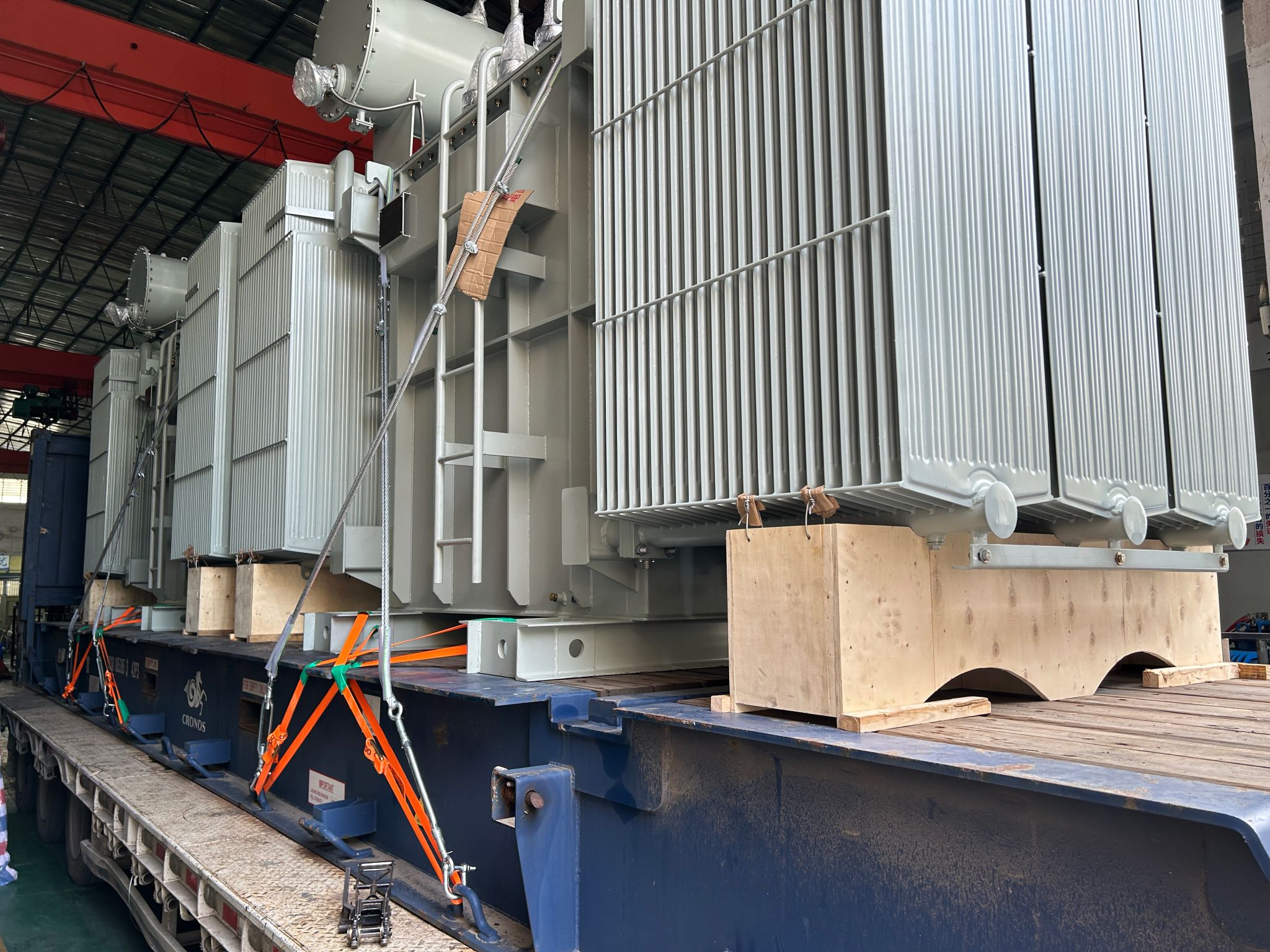
Large solar projects often require customized step-up substation transformers with defined impedance, losses, and grid-frequency behavior.
These examples are drawn from documented project records and supplier case files. They do not prove that all lead-time problems have disappeared, but they show the procurement value of separating factory production time from the wider order-book queues of incumbent suppliers.
Market Trends That Affect Substation Transformer Sourcing
Several verified market signals support the shift from catalogue purchasing to capability-based purchasing:
- The global transformer market is projected to grow from USD 64.64 billion in 2025 to USD 88.48 billion by 2030, according to MarketsandMarkets. More orders will compete for limited manufacturing capacity.
- Data-center transformer demand is expected to rise from USD 2.2 billion in 2023 to USD 5.9 billion by 2030, according to Strategic Market Research. High-density digital loads will continue to require custom substation transformer configurations.
- The smart transformer market is projected to grow at a CAGR of 12.35% through 2035, according to SNS Insider. Real-time monitoring and communication features will become more common in OEM/ODM specifications.
- Asia Pacific accounted for approximately 41.1% of global transformer market revenue in 2025, according to Grand View Research. This helps explain why North American buyers are increasingly auditing production-based suppliers in China and elsewhere.
These trends point toward a procurement environment where factory audit, standards traceability, and schedule evidence matter at least as much as product marketing.
Comparison with Traditional Sourcing and Real Boundaries
Traditional large-scale substation transformer supply is associated with global manufacturers such as Hitachi Energy, Siemens Energy, GE Vernova, Eaton, and Schneider Electric. These companies have large installed bases and deep utility engineering experience. They remain important for many high-voltage and utility-specific programs. In constrained market conditions, however, buyers should compare delivery availability, customization speed, and commercial fit, not only the brand name.
| Evaluation dimension | Traditional global OEM route | Certified international OEM/ODM route |
|---|---|---|
| Standards | Typically aligned to owner specifications and ANSI/IEEE/CSA requirements | Can engineer to ANSI/IEEE/CSA/DOE or IEC when requested |
| Schedule | May depend on a large backorder queue; some 30–50 MVA classes have experienced extensive delays | Documented lead time of 8–10 weeks below 10 MVA, 10–12 weeks from 10–40 MVA, and 18–20 weeks for 40–100 MVA |
| Customization | Strong design teams, but change orders may be constrained by program schedules | OEM/ODM support for capacity, voltage, impedance, cooling, tap changer, protection, tank style, and accessories |
| Component flexibility | Often uses an approved internal supply chain | Can integrate customer-specified components such as Qualitrol, Eaton Cooper Power series, or MR equipment |
| Proof and acceptance | Deep domestic reference base | UL/cUL evidence, ISO 9001 system, routine test reports, pre-shipment inspection, and project case records |
Real Limitations and Boundaries
An international OEM/ODM route is not a universal replacement for traditional sourcing. A few limitations should be explicit:
- Voltage ceiling. Winley Electric’s manufacturing scope is 230 kV and below. A project above that level, requires a different supplier strategy.
- Design approval still rests with the project engineer. A supplier’s compliance documentation does not remove the need for the buyer’s own substation design review and approval.
- Third-party component supply affects the schedule. If a utility specifies an MR tap changer, a Qualitrol monitor, or a Cooper Power protection package, the final lead time can depend on component availability.
- Logistics and import coordination are unavoidable. Large liquid-filled units need specialized transport, freight booking, customs documentation, and site arrival planning.
Future Outlook for North American Substation Transformer Procurement
The future supply picture is likely to be more diversified. More North American buyers will maintain an approved manufacturer list that includes both traditional incumbents and certified overseas OEM/ODM suppliers. The reason is not only price. It is control over schedules and the ability to move a custom transformer design into production without waiting for a national backlog.
For manufacturers such as Winley Electric, the value proposition will depend on continued evidence: valid certifications, clean routine test data, factory audit access, and reliable delivery performance. For buyers, the most practical strategy is to begin with a clear technical specification, verify the standards and certificate scope, and then compare lead-time commitments against project milestones rather than against catalogue descriptions.
Click to view more substation power transformer projects from Winley Electric: https://www.winley-electric.com/supplier-4803516-substation-power-transformer
·Website:www.winley-electric.com
FAQ
What is the difference between OEM and ODM for a substation transformer?
OEM generally means manufacturing to a buyer-supplied drawing. ODM means the manufacturer performs the detailed design and production engineering. Winley Electric provides both for substation power transformers up to 100 MVA and 145 kV, supporting project-specific changes to capacity, voltage ratio, winding configuration, losses, impedance, cooling, tap-changing, terminal arrangement, monitoring, and tank design.
What standards should a North American substation transformer meet?
North American designs are primarily governed by the IEEE C57 series, while UL 1561 and UL 1562 apply to liquid-filled and dry-type units respectively. Suppliers should also reference ANSI C57, DOE efficiency requirements, CSA where required, and project-specific utility specifications. The certificate scope must match the actual voltage and kVA rating.
How long does it take to manufacture a 10–40 MVA substation transformer?
For Winley Electric, the documented lead-time band for 10–40 MVA transformers is 10–12 weeks. Units below 10 MVA are stated at 8–10 weeks, and units from 40–100 MVA at 18–20 weeks. The company reports a monthly production capacity of 300 units and a minimum order quantity of one unit.
Can a custom substation transformer be built for a solar or data-center project?
Yes, if the manufacturer supports OEM/ODM engineering. Winley Electric’s documented projects include 6,500 kVA step-up transformers for a solar PV plant and 34 MVA transformers for industrial park and data-center applications. The design can be adjusted for duty cycle, load profile, enclosure protection, cooling, and grid interconnection requirements.
What certifications should a buyer request from an overseas substation transformer supplier?
A buyer should request ISO 9001 quality-system certification, UL/cUL file numbers with exact product scope, and a clear statement of compliance with ANSI, IEEE, CSA, DOE, and IEC standards. For example, Winley Electric holds UL/cUL file E536138 for pad-mounted transformer families under CSA C227. Routine test reports should include winding resistance, turns ratio, polarity and phase relation, and no-load loss.

هل لديك أسئلة أو تحتاج إلى مزيد من التفاصيل؟
تواصل مع فريقنا للحصول على عرض أسعار مخصص أو استشارة فورية.
طلب عرض أسعار
املأ النموذج أدناه وسيتواصل معك فريقنا بعرض مقترح مخصص.
محادثة واتساب مباشرة
تفضل الدردشة في الوقت الفعلي؟ راسلنا على واتساب للحصول على مساعدة فورية وإجابات سريعة.
- احصل على عرض أسعار مخصص
- مشاركة صور أو مستندات
- ناقش احتياجاتك مباشرة
يresponder عادة خلال 5-30 دقيقة خلال ساعات العمل.