
Supermarket Retail Security Safes: Channel Requirements and Packing Risks
Supermarket Retail Security Safes: Channel Requirements and Packing Risks

Full-container retail orders require packaging validation, pre-shipment inspection and a clear transit-damage responsibility split before loading.
Supermarket retail is a distinct security safe application scenario. A supermarket chain or online home-goods retailer is not buying one safe for one installation; it is buying shelf-ready product that must be displayed, compared and purchased by end consumers. That shift in buyer role changes selection requirements, SKU structure, packaging specifications and the risk profile of a full-container order.
TIGERKING SECURITY SAFE is the brand of Ningbo Tiger King Safe Co., Ltd., a safe manufacturer founded in 2000 in the Daxie Development Zone, Ningbo, Zhejiang, China. The factory produces fire-resistant safes, burglary safes, gun safes, commercial safes and jewellery safes, with an annual output of 240,000 units and roughly 70% of products exported to North America, Europe, Southeast Asia, the Middle East and South America. Its product range spans entry-level household safes through commercial cash-management models, which maps directly onto the multi-tier SKU structures that supermarket programmes typically require.
Why Supermarket Retail Is Not a Standard Wholesale Channel
A project wholesaler or office-equipment distributor usually specifies a safe against an installation list: one model per location, one set of functional requirements, one uniform carton. A supermarket retail buyer works from the opposite direction. The product must survive a retail shelf, communicate its function without a salesperson, and fit a price architecture that spans entry-level buyers and higher-spend households.
This produces five practical constraints that differ from conventional B2B safe sourcing:
- Appearance must work in-store. Colour schemes, surface texture and display-ready demo unit design need to suit in-store presentation, not just warehouse storage.
- The SKU set must cover multiple price points. A single model is rarely enough; retail programmes typically combine entry-level burglary-resistant models with mid-to-high-end fire-resistant models.
- Packaging is retail-grade. Colour boxes, local-language user manuals and product labels are part of the deliverable, because the carton is handled by store staff and seen by shoppers.
- Labels must satisfy retail-sector rules. Nameplates and safety warnings need to comply with local retail regulations, not only with industrial standards.
- Trial orders come first. Retail buyers usually validate a range with a small trial order before committing to replenishment volume.
Selection Requirements That Come From the Retail Shelf
The practical starting point for a supermarket safe programme is not a single specification sheet but a shelf plan. Retail buyers generally need to answer three questions before requesting quotations: which models will be visible on shelf, which models will be stocked for replenishment, and which models are trial-only.
Appearance and display readiness
Retail-facing safes are often displayed with the door open or with an interior visible to shoppers. Colour consistency, surface texture and the condition of the demo unit therefore become procurement criteria. A safe that performs well in a back office but shows fingerprints, uneven coating or visible weld marks on a retail floor creates a different kind of cost.
SKU hierarchy across price points
Supermarket programmes typically need a ladder rather than a single product. Tigerking's catalogue supports this structure with separate product families that can be combined according to the retailer's price architecture. The table below shows representative families and their typical shelf role; the exact model mix is confirmed per programme.
| Product family | Representative Tigerking models | Typical supermarket shelf role |
|---|---|---|
| Economy Security Safe | E17DK, E20DA, E25LK, E30LA, E45LE | Entry-level household anti-theft storage; accessible price point for first-time safe buyers |
| Home Security Safe | 78AX, 45RL, 78RL, 76RHV, 63XZ, 45XHZ, 60ZHZ, 43JJH, 58JJH, 45BH | Mid-range residential anti-theft range with multiple sizes and finishes |
| Fireproof Security Safe | FPSD66, FPS60DF, FPSA60, FPSB60, FPSE60SP | Document and valuables protection; higher-tier shelf position for fire-conscious buyers |
| Commercial Security Safe | DP450-LE, DF2014-MA, DF3020-MA, DF3020-DKA, DF4020-DDA, DF4020-MMA, DR2014-DA, DR2014-MA | Cash-management and small-business use; often sold alongside household models |
| Office Security Safe | KS48, KEY27, LSDW-25MD | Key-control and small-office storage; a practical add-on to the main range |
| Hotel Security Safe | H20CF, H20CF-C, H20SN, H20NF, H20NH, H20SE, H20CE | Guest-room and rental-apartment storage; useful where the retailer serves hospitality buyers |
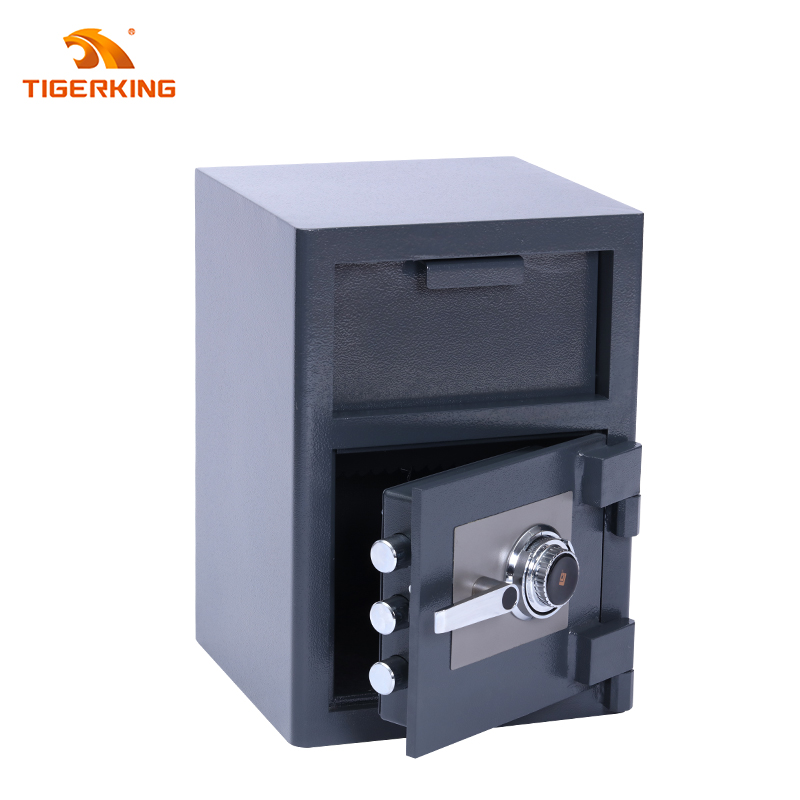
The Commercial Security Safe family, including the DF2014-MA, is designed for cash-management use and can sit alongside household models in a retail programme.
Retail packaging and local-language documentation
Supermarket-channel packaging is not the same as industrial export packaging. Retail-grade colour boxes, local-language user manuals and product labels are specified so the product can be placed directly on shelf and understood by a non-specialist buyer. These items sit alongside the safe itself in the purchase specification, and they need to be confirmed before the packaging run begins.
Compliant nameplate and warning labels
Retail-sector compliance goes beyond the safe's technical certification. Nameplates and safety warnings must meet local retail regulations, which are separate from the fire or burglary test standard. Buyers assembling a multi-country programme should confirm label wording per destination rather than assuming one label set fits all markets.
Certification and Parameter Alignment for Retail Ranges
Certification requirements in a supermarket programme depend on the model mix. A range that includes electronic locks, fire-resistant models and commercial cash safes will usually require more than one certificate type, and the certificate must match the product actually shipped.
Tigerking's certification set that is relevant to retail-channel evaluation includes:
- ETL Verified fire resistance (UL 72, 60 minutes) for applicable electronic fireproof safes, issued by Intertek Testing Services NA, Inc. under certificate 211130001SHF.
- CSP burglary-resistant safe certification under GB 10409-2019, Security Grade A10, certificate CSP2026010107020005, issued by the China Safety Technology & Security Protection Certification Center.
- CE EMC verification under Directive 2014/30/EU, certificate SHEM240300108001HSC, issued by SGS-CSTC.
- UKCA EMC verification under the UK EMC Regulations 2016, certificate SHEM240300108101HSC, also issued by SGS-CSTC.
- ISO 9001 quality management (certificate 16425Q32488R3M) and ISO 14001 environmental management (certificate 00224E34629R1M) at factory level.
For commercial retail cash-storage applications, the relevant application note specifies CE/UKCA-EMC compliance and recommends firm floor anchoring. That is a useful reminder that certification is not a single badge: a supermarket range may combine fire-rated household models, EMC-compliant electronic-lock models and non-electronic mechanical models, each with a different compliance file.
On parameters, the product families differ substantially in door thickness, body thickness, net weight and lock type. For example, the Economy Security Safe E45LE uses a 4 mm door and 2 mm body, while the Commercial Security Safe DF3020-MA uses a 6 mm door and 3 mm body and includes an anti-fishing baffle. The Home Security Safe range varies from the 45RL at 39 kg to the 78RL at 128 kg. These differences matter in retail because shelf messaging, carton weight and handling expectations all change with the model.
Full-Container Packaging and Transit-Damage Risk
A full-container order concentrates risk. The same packaging specification that works for a pallet of samples may not protect 100% of a container load through loading, ocean transit and unloading. Retail-grade cartons add a visual layer of protection but do not by themselves eliminate transit damage.
Tigerking's stated position is that manufacturing-related defects and transit-related damage are handled differently. If manufacturing defects are confirmed after arrival, the buyer provides photos, videos and batch information, and the factory offers three options: free spare-part dispatch, complimentary replacement of partial goods, or a negotiated proportional deduction against order value. For damage incurred during transit, the factory states it is not liable; shipping-related damage should be claimed from freight forwarders or insurance providers. Written quality complaints must be submitted within 30 days after goods arrive at the port of destination.
That split has practical consequences for a supermarket buyer planning a full-container programme:
- Packaging strength should be verified before loading. Tigerking's sample inspection guidance includes checking packaging strength for export shipping as a standard verification item.
- Pre-shipment inspection should cover packaging, not only product. The published factory-audit and inspection guidance includes pre-shipment inspection of appearance, size, lock operation, marking and packaging before loading.
- Transit insurance and forwarder terms belong in the commercial discussion. Because the factory does not accept liability for transit damage, the buyer's insurance and freight-forwarder arrangements become part of the risk plan rather than an afterthought.
- Complaint timing should be scheduled. The 30-day written-complaint window after arrival at the destination port means the retail buyer needs an inspection routine that starts immediately after container release, not after the goods reach the store.
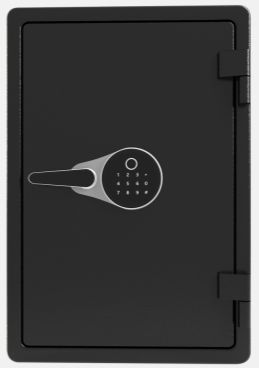
Fireproof models such as the FPS60DF add a higher-tier shelf option, but they also add certification and packaging considerations to the container plan.
Application Case: Supermarket Chain and Online Home-Goods Retailer
Tigerking's disclosed case record includes an overseas supermarket chain and online home-goods retailer operating in the United States, Germany, Spain and other global markets, with an annual volume of 20,000 units. The safes are used by European and American households for jewellery, documents, cash and personal belongings, with daily anti-theft and fire protection.
The case record states that the products use a durable anti-corrosion steel structure with a service life exceeding 10 years, and that standardized mass production supports stable batch quality. It also states that a low after-sales rate helps the customer maintain best-selling status and stable positive reviews. The highlight description references a modern minimalist appearance, thick anti-pry body, multiple unlocking methods, high safety and easy installation.
For a buyer evaluating a similar programme, the relevant lesson is not the volume figure itself but the structure behind it: a repeatable SKU set, a packaging specification built for retail, and a quality routine that keeps after-sales cost predictable across batches.
Market Trend Signals Relevant to Retail Channels
Tigerking's published North America market analysis identifies several trends that affect retail-channel planning. These are presented as the company's market observations rather than as third-party statistics:
- Third-party certification is described as mandatory for mainstream retail channels, with major retailers and marketplaces requiring verifiable NRTL certifications such as ETL, and uncertified low-cost safes facing tighter listing restrictions.
- Certified fireproof safes are described as gaining demand, with UL72 and ETL fire certifications treated as critical selling points.
- Smart and connected security features, including tamper alerts and mobile app notifications, are described as increasingly popular.
- Dual-channel sales expansion is noted, with offline home-improvement chains and e-commerce platforms both driving sales.
For a supermarket buyer, these signals reinforce a familiar procurement logic: certification status is not only a technical requirement but a listing requirement, and the product mix may need to include both certified fire-rated models and connected electronic-lock models to stay relevant on shelf.
Where Supermarket Retail Differs from Project Wholesale
The most important boundary to state clearly is that supermarket retail is not simply project wholesale with a different label. It adds retail-specific steps: display-ready appearance, retail-grade cartons, local-language manuals, compliant retail labels and a trial-order structure. Those steps are necessary for shelf placement, but they also mean the production plan has more approval points before the packaging run can start.
The second boundary is risk allocation. In a conventional project order, the buyer may assume the factory carries more of the transit risk. In Tigerking's stated terms, the factory does not accept liability for damage incurred during transit; that risk sits with the freight forwarder or insurance provider. A supermarket buyer who plans a full-container programme without arranging transit cover and a post-arrival inspection routine is carrying a risk that the supply contract does not transfer back to the factory.
A third practical limit is that not every model suits every retail channel. A heavy commercial cash safe such as the DF4020, at 96 kg, may be appropriate for a business-focused assortment but is a different shelf proposition from a 3.5 kg economy safe. The SKU plan has to match the retailer's customer base, not just the factory's catalogue breadth.
Future Outlook
The direction of retail-channel safe sourcing is toward tighter documentation and more explicit risk allocation. Retailers increasingly ask for certificate files that match the shipped model, packaging that works on shelf, and a clear statement of who pays when a container arrives damaged. Tigerking's combination of in-house tooling, an engineering team of 10–15 people covering structural, mould, electronic and test functions, and third-party inspection relationships with SGS and Intertek supports the kind of pre-production documentation that retail programmes require.
For buyers, the practical implication is to treat the retail programme as a packaging and compliance project as much as a product purchase. The models are only one variable; the carton, the manual, the label and the transit-risk plan determine whether the container reaches the shelf in sellable condition.
Frequently Asked Questions
What special product-selection requirements apply to safes sold through supermarket retail channels?
Supermarket retail selection differs from project wholesale in five areas: appearance (colour schemes, surface texture and display-ready demo units suitable for in-store presentation); SKU hierarchy (combining entry-level burglary-resistant models with mid-to-high-end fire-resistant models to cover multiple price points); retail-oriented packaging (retail-grade colour boxes, local-language user manuals and product labels for shelf placement); compliant labelling (nameplates and safety warnings meeting local retail-sector regulations); and small-batch trial orders with fast re-order turnaround. Tigerking states it supplies retail-grade packaging, multilingual manuals and multiple price-tier SKUs for trial sales and bulk replenishment cycles.
What should a pre-shipment inspection cover for a full-container supermarket safe order?
Published inspection guidance for safe orders covers pre-production checks of raw materials such as steel sheets, locks and paint; in-line sampling during production to monitor dimensions, weld quality and lock function; and pre-shipment inspection of finished safes, testing appearance, size, lock operation, marking and packaging before loading. For retail programmes, the packaging check is particularly relevant because the carton is part of the sellable product, not only a transport container.
If defective safes are found in a mass-production order, what repair, replacement and claim process applies?
Tigerking's stated process requires the buyer to provide photos, videos and batch information after arrival. For confirmed manufacturing-related defects, three options are offered: free spare-part dispatch, complimentary replacement of partial goods, or a negotiated proportional deduction against order value. The factory states it is not liable for damage incurred during transit; shipping-related damage should be claimed from freight forwarders or insurance providers. Written quality complaints must be submitted within 30 days after goods arrive at the port of destination.
What deposit and balance terms are typical for bulk safe orders?
Tigerking describes three common structures: standard OEM/ODM bulk orders for new buyers typically use a 30% deposit at contract signing with the remaining 70% payable against a copy of the Bill of Lading; repeat customers with stable cooperation may have the deposit reduced to 20%; and highly customised or special-certified projects usually require a 40%–50% deposit to cover dedicated tooling and material costs, with the balance settled before shipment or against the B/L copy.
What are the safest payment terms for importing safes from China?
Tigerking's guidance describes three options with different risk profiles: an irrevocable sight Letter of Credit issued by a reputable bank, which releases payment only when the supplier submits shipping documents matching the contract and is widely used for high-value orders; staged T/T, typically 30% deposit and 70% against the B/L copy, which is the most common structure for safe OEM/ODM orders; and escrow payment through a neutral third party, which is suitable for first-time small buyers. The guidance also advises avoiding 100% advance T/T before production or full payment before inspection for new cooperation.
For buyers who need the full model and specification reference, the Tigerking catalogue is available here: 2026 Tiger King catalogue (PDF).
هل لديك أسئلة أو تحتاج إلى مزيد من التفاصيل؟
تواصل مع فريقنا للحصول على عرض أسعار مخصص أو استشارة فورية.
طلب عرض أسعار
املأ النموذج أدناه وسيتواصل معك فريقنا بعرض مقترح مخصص.
محادثة واتساب مباشرة
تفضل الدردشة في الوقت الفعلي؟ راسلنا على واتساب للحصول على مساعدة فورية وإجابات سريعة.
- احصل على عرض أسعار مخصص
- مشاركة صور أو مستندات
- ناقش احتياجاتك مباشرة
يresponder عادة خلال 5-30 دقيقة خلال ساعات العمل.