
Supplier Capability Evidence: Auditing a Silicon Dioxide Plant for Food and Pharma Grades
Industry Reference · Food & Pharma Grade Silicon Dioxide
A specification sheet, and even a clean Certificate of Analysis, describes a material rather than a plant. When buyers qualify a supplier of Food Grade Silicon Dioxide, High Purity Precipitated Silica or Pharmaceutical Excipient Silica, the decisive questions are operational: how grades are kept apart, how black specks are counted, how heavy metals are controlled before the reactor rather than after it, and how a lot number on a pallet connects back to CAS 7631-86-9 material received at the gate.
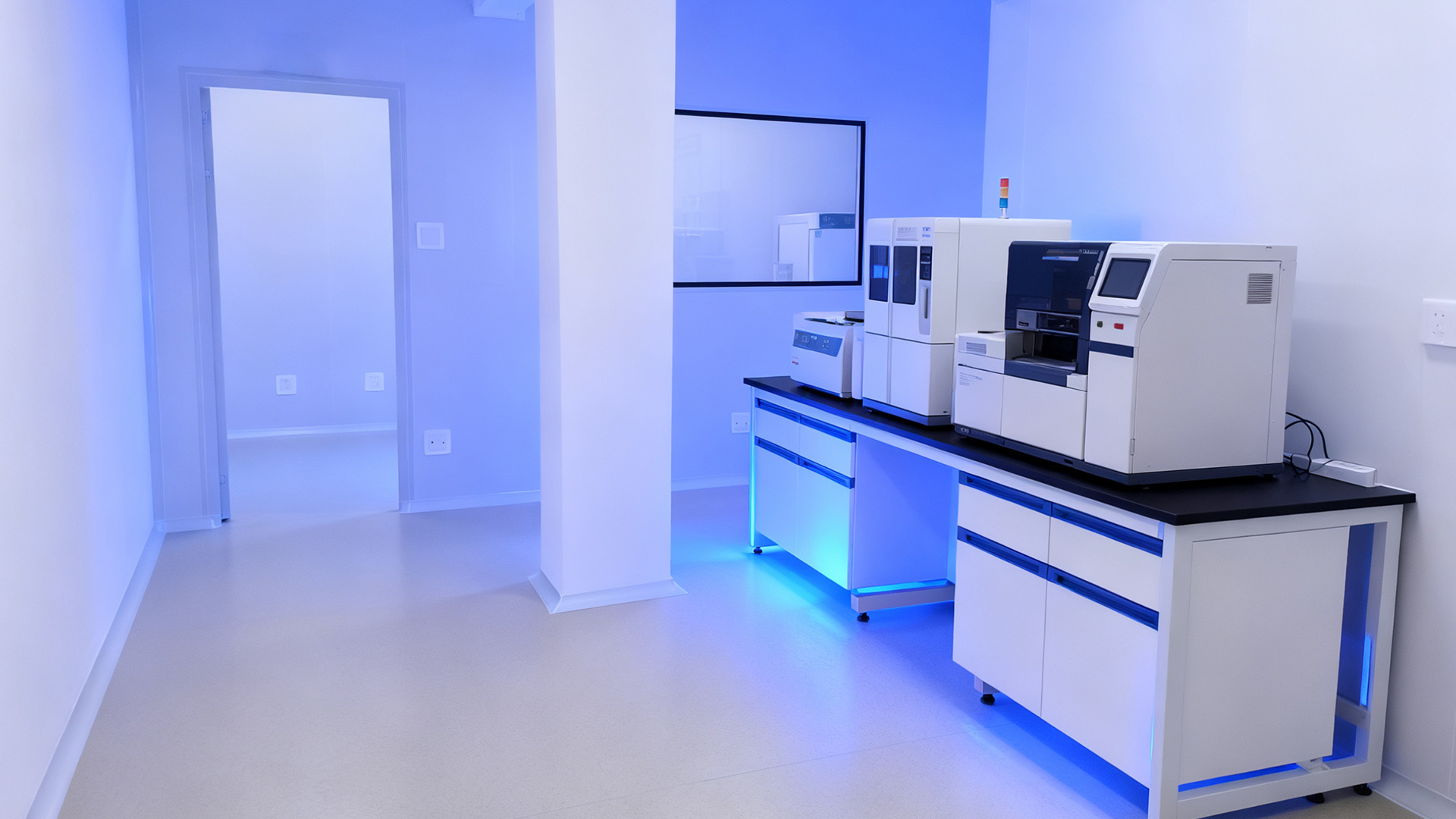
Microbiology testing laboratory, Guangzhou production base. In-house microbiological testing is one of the capability items buyers can verify directly during a supplier audit.
What Regulation Settles, and What It Leaves to the Supplier
Silicon dioxide is a defined additive before it is a commercial product. The U.S. Food and Drug Administration lists silicon dioxide for technical functions that include anticaking agent or free-flow agent, drying agent, emulsifier or emulsifier salt, flavoring agent or adjuvant, formulation aid, humectant, and lubricant or release agent. Under 21 CFR 172.480, anticaking use is capped at 2 percent by weight of the food. FDA materials also describe amorphous silicon dioxide as an approved direct food additive used mainly as an anticaking agent in powdered food products and as a stabilizer in beer production, and the agency's consumer ingredient guidance places anti-caking agents, silicon dioxide among them, in the group of ingredients that keep powdered foods free-flowing and prevent moisture absorption.
Those statements settle the substance. They say nothing about the site. A regulatory listing cannot tell a buyer whether an excipient grade shares a conveying line with a food grade, how a plant responds to a black speck finding, or whether a retained sample can still be pulled eighteen months after shipment. That gap is where a capability audit operates, and it is why experienced buyers treat documentation and plant evidence as two separate qualification layers rather than one substituted for the other.
What Plant Capability Evidence Means in a Silica Audit
A capability audit answers a narrower question than a certification check. Certification confirms that a management system has been assessed against a recognized standard; capability evidence shows how a specific grade is produced, separated, tested and released on a specific site. For silicon dioxide, five evidence sets carry most of the weight at the decision stage: physical plant and line configuration; grade segregation practice; black speck control and counting method; heavy metal control from raw material through to the Certificate of Analysis; and traceability from CAS 7631-86-9 material to a packed lot.
Zhonglian Food Silica is the food and pharmaceutical silica brand operated by Shandong Zhonglian Chemical Co., Ltd., the entity responsible for overseas sales and brand operation for a silica producer whose Guangzhou base runs intelligent production lines across a 17,000 m² footprint, with annual silica capacity of approximately 50,000 metric tons. The manufacturing description for the operation includes GMP-compliant standardized workshops, a national-standard testing center and a high-standard microbiological testing laboratory, with full-process quality control running from raw material screening through to finished-product delivery.
For a site visit or a remote documentation review, those descriptions convert into checkable items:
- Line configuration and enclosure. Whether production and packing sit in enclosed areas, and what path powder follows between them.
- Product-contact materials. The stainless-steel specification used in the product zone, and whether any carbon-steel contact exists downstream of the reactor.
- Finishing capability. The number and type of finishing stages — milling, screening and magnetic separation — and where each sits relative to packing.
- Laboratory scope. Which parameters are tested in-house and which are outsourced, and whether the in-house microbiology laboratory operates method validation and positive controls.
- Sampling points. Where in-process samples are drawn, and how those results feed the release decision.
The company reports a domestic position within China's top three for food-grade silica and more than 80% share in South China, and states that it serves more than 400 downstream brand customers. Statements of that kind are supplier-reported positioning; the way to test them is through the evidence items below rather than through the claim itself.
Production area, Guangzhou base. Enclosure, product-contact materials and finishing-line layout are among the first items a capability audit examines.
Grade Segregation: The Operational Test
Food-grade and pharmaceutical-grade silicon dioxide are not the same material under different labels. Food-grade product is manufactured against GB 25576-2020, Food Additive – Silicon Dioxide, with use governed by GB 2760, and the specification set also maps to FDA 21 CFR 172.480 (GRAS), FCC, EU E551 under Commission Regulation (EU) No 231/2012 and JECFA INS 551. Pharmaceutical excipient grades are produced to USP–NF, EP or ChP silica monographs, with tighter microbial limits, elemental impurity control aligned to ICH Q3D, and different residue-on-ignition expectations. In this operation the two categories run on independent lines specifically to prevent cross-contamination, and substitution between them is not recommended.
Segregation is where an audit finds real information, because the risk is transitional rather than steady-state. The evidence to request typically includes:
- A written changeover and cleaning procedure between grades, covering compressed-air blowdown, flushing with base powder or a dedicated cleaning compound, and disassembly and cleaning of screens and valves.
- Documented cleaning records with sign-off before the next production run begins.
- Dedicated equipment where a grade requires it, such as a dedicated low-iron line or stainless-steel process lines with no carbon-steel contact in the product zone.
- Physical separation of finished goods, packaging material and quarantine areas.
Segregated lines reduce cross-contamination risk; they do not remove the buyer's own obligation to run a compatibility trial. That distinction is the honest boundary of what any segregation claim can deliver, and it is why the strongest supplier packages pair segregation records with pilot-scale validation support.
Black Speck Controls: Ask for Numbers, Not Adjectives
Black specks are the parameter most often discussed with adjectives and least often with numbers. The published internal limit here is three-tiered and stricter than the applicable national standard: no specks above 0.3 mm, no more than 1 particle between 0.2 mm and 0.3 mm, and no more than 10 particles below 0.2 mm. Sampling runs at 5–10 bags per batch with 100% inspection under a standardized level-powder-in-bag five-times visual count method; any failed bag rejects the whole batch and blocks release, and inspection videos are retained for traceability.
Four control layers sit behind those limits: raw-material iron and manganese removal with pure water and precision filtration; an indirect heat-exchange furnace with optimized air-to-fuel ratio and high-temperature filters to reduce carbide formation; all-stainless piping with monthly line cleaning; and final vibrating screen plus strong magnetic separation. Composition testing indicates the specks are silica itself, surface-coated with trace high-temperature carbides and mineral-associated crystals rather than foreign plastic, dust or packaging debris, with no heavy-metal enrichment detected in third-party testing.
Heavy Metal Controls: Before the Reactor, Not After It
Heavy metal residuals in silicon dioxide are set by raw material quality and process route, not by end-of-line screening. Lead, arsenic and mercury are cumulative toxins with long-term health risk, which is why tighter control values matter most in infant food, nutraceutical and EU or US export applications. Zhonglian silica is specified at ≥99% purity with Pb < 1 ppm, As 0.4–1 ppm and Hg 0.5 ppm, and those values are printed on the Certificate of Analysis so that a buyer's incoming inspection can re-check them and post-shipment documentation requests can be answered.
Iron control belongs in the same conversation, because trace iron is the main driver of yellowing in silica-based formulations. In the presence of flavor compounds such as ethyl maltol, vanillin and flavonoids, even trace iron forms colored complexes that turn powders yellow, dull white creams and cloud clear gels. The company reports iron content at approximately 145 ppm against an industry range commonly cited at 300–500 ppm and imported material at ≤400 ppm; at a 1% dosage this adds roughly 1.45 ppm iron, below the <5 ppm threshold generally associated with oxidation-driven discoloration risk.
The table below places published limits from three frameworks beside a representative batch result, which is the format a buyer should request from any supplier rather than a single headline purity figure.
| Parameter | JECFA INS 551 | USP–NF / FCC | GB 25576-2020 | Representative batch result |
|---|---|---|---|---|
| Silicon dioxide, ignited or dry | ≥94% | ≥94.0% (precipitated, gel, hydrous) | Class I ≥99.3%, Class II ≥99.0%, Class III ≥96.0% | 99.1% |
| Loss on drying (105 °C, 2 h) | ≤8% | ≤7% (precipitated, gel) | Class I ≤2.5%, Class III ≤7.0% | 4.31% |
| Loss on ignition | ≤8.5% | ≤8.5% (precipitated, gel, hydrous) | Class I ≤2.0%, Class II–III ≤8.5% | 4.02% |
| Lead (Pb) | ≤2 mg/kg | ≤2 mg/kg | ≤5 mg/kg | <1 mg/kg |
| Arsenic (As) | ≤3 mg/kg | ≤3 mg/kg | ≤3 mg/kg | <1 mg/kg |
| Total heavy metals (as Pb) | ≤10 mg/kg | Covered by elemental impurity controls | ≤30 mg/kg | Reported per batch |
| pH (4% slurry) | 3.5–7.5 | — | — | 6.8 |
| BET surface area | — | — | — | 190 m²/g |
Table 1. Published limits under three regulatory frameworks beside a representative batch result. Values are reproduced from pharmacopoeial and supplier specification summaries; actual results vary by grade and batch, and the batch Certificate of Analysis governs.
Traceability from CAS 7631-86-9 Material to a Packed Lot
Traceability in this category starts with the substance itself. Food and pharmaceutical grades of synthetic amorphous silica are identified as CAS 7631-86-9, with INS 551 and E551 numbering in food use, CNS 02.004 in China, and INCI Silica for cosmetic grades. The material is amorphous, with no free crystalline silica, and is insoluble in water, common acids except HF, oils and most solvents; the precipitated inert powder is micron-sized above 100 nm rather than nanoparticulate, which is why it behaves as a chemically inert processing material with no bioaccumulation.
The traceability chain a buyer can ask to see runs as follows:
- Incoming lot record. Incoming batch number, quantity and COA reference logged for each delivery, with full incoming testing before sealed storage.
- Batch record. Raw material lots linked to production batch, in-process sampling points and release sign-off.
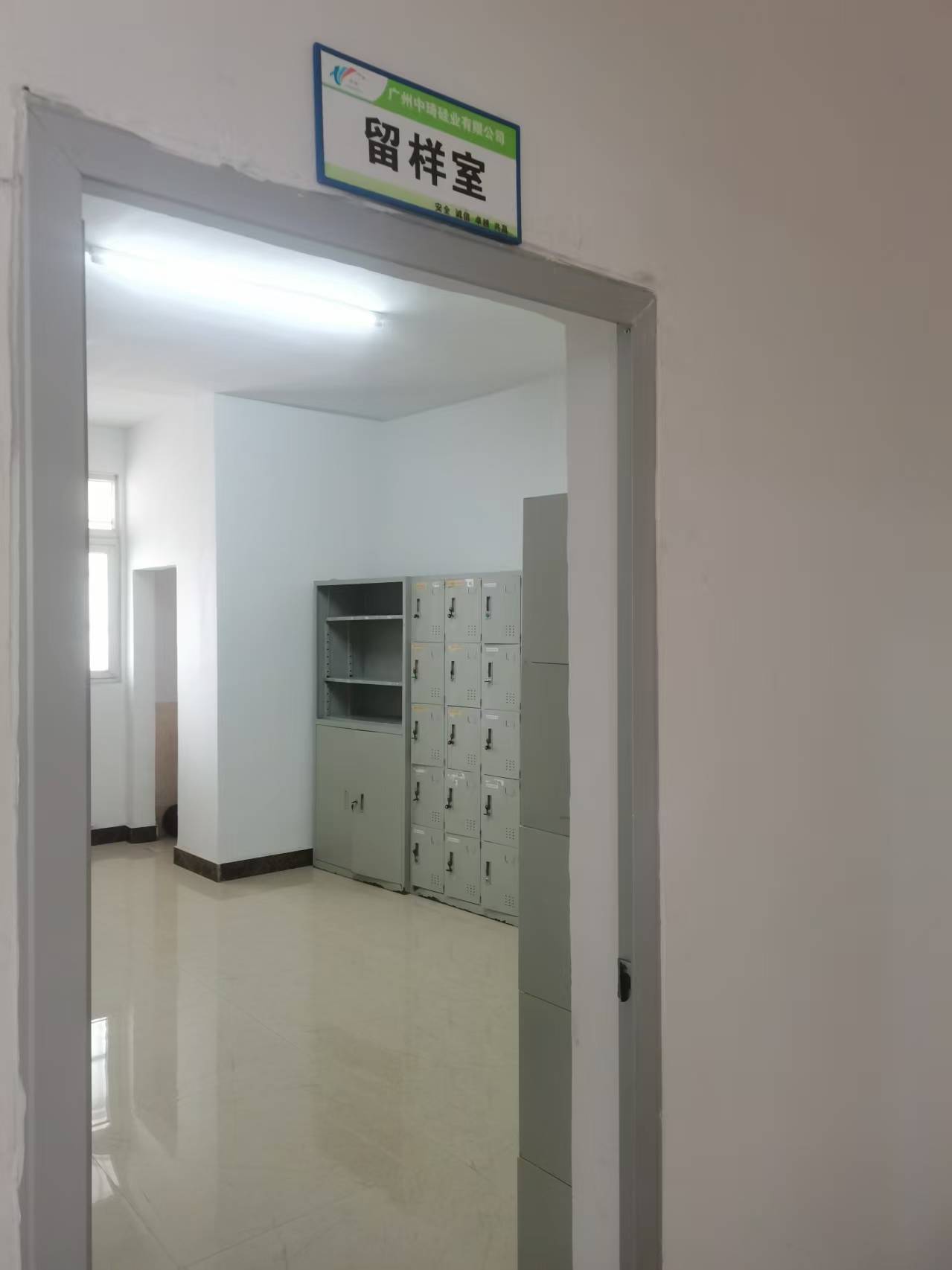
- Retained sample register. Samples sealed and labelled with full identification, retained for six months past the product shelf life, with batch numbers used for traceability in complaint handling; pharmaceutical-grade materials follow GMP sample-retention requirements.
- Finished-product COA. Appearance, ignited SiO&sub2;, loss on drying, loss on ignition, pH of a 4% slurry, Pb, As, Cd, Hg, total heavy metals, soluble salts and the microbial panel, issued in GB 25576 or FCC and USP–NF format.
- Third-party reports. Key trace elements sent to SGS, Eurofins, CQC or Intertek every batch and available on request; add-on tests can cover BET, DBP, D50, bulk density, iron, sieve residue, pesticides per EU 396/2005, aflatoxin and melamine.
Microbial control is managed as a closed loop rather than an end-of-line fix: incoming raw material must be S. aureus negative before storage, key in-process points are screened, and every finished batch is tested S. aureus negative before release, supported by an in-house laboratory running method validation and positive controls. Premium grades such as W58EP7 control total count below 100 CFU/g, yeast below 20 and mold below 100, with coliforms, E. coli, S. aureus and Salmonella absent. No ETO and no irradiation are used at any stage, and no solvents are used in production, so downstream sterilisation is generally unnecessary for the food-grade range.
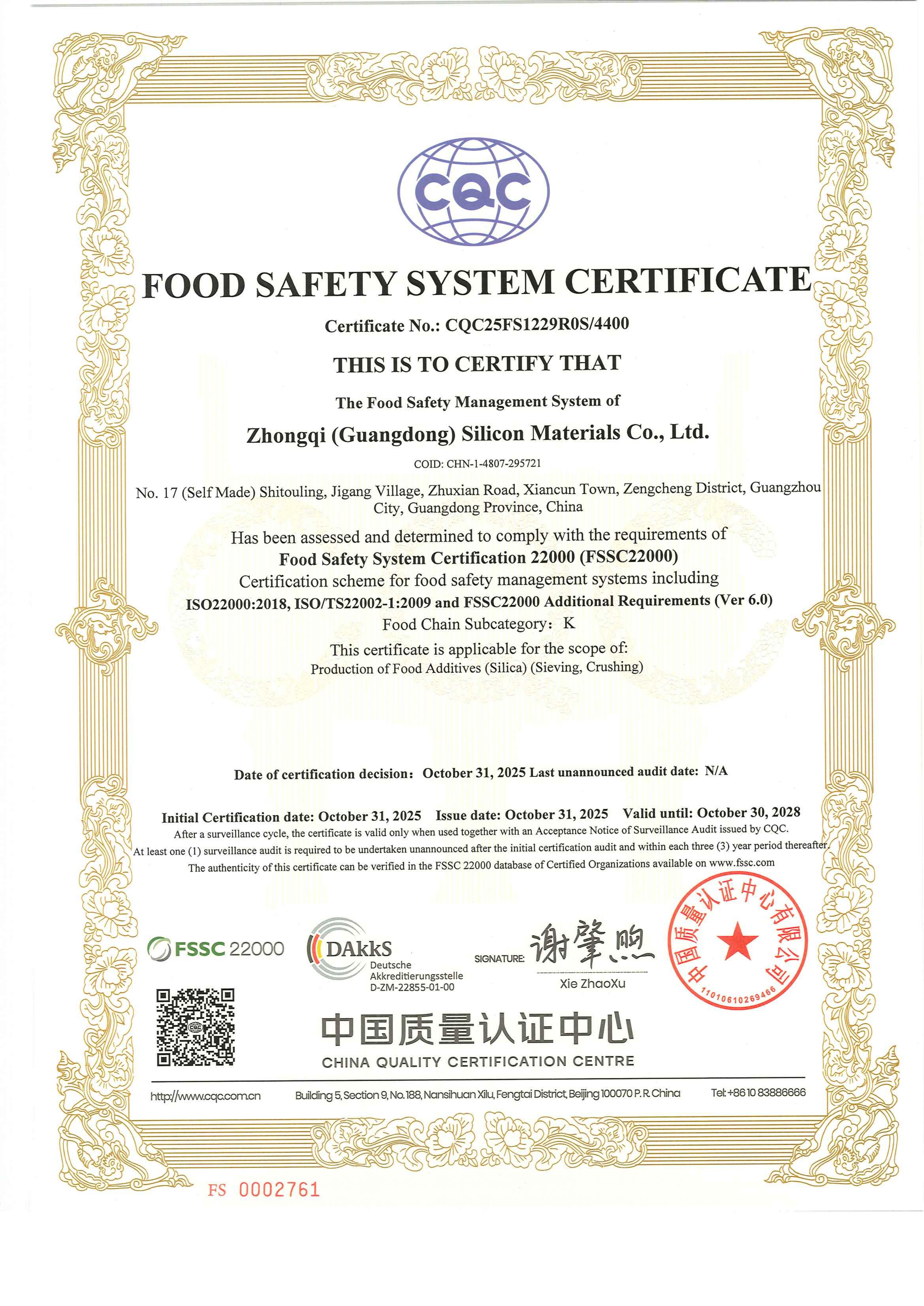
FSSC 22000 certification held under certificate CQC25FS1229R0S/4400, valid 2025–2028. System certification and plant-level batch evidence answer different questions and should both be requested.
Food Grade, High Purity Precipitated Silica and Pharmaceutical Excipient Silica: Where the Checklist Diverges
The same plant visit can cover three grade families, but the checklist is not identical for each. The table below maps the differences that most often change a qualification decision.
| Audit dimension | Food Grade Silicon Dioxide | High Purity Precipitated Silica | Pharmaceutical Excipient Silica |
|---|---|---|---|
| Primary compliance basis | GB 25576-2020; GB 2760 use levels; FDA 21 CFR 172.480; EU E551; FCC; JECFA INS 551 | GB 25576-2020 and FCC; food and pharma grade purity targets | USP–NF, EP or ChP silica monographs; elemental impurities per ICH Q3D |
| Typical purity | SiO&sub2; ≥99% | SiO&sub2; ≥99.5%, ultra-low metals | SiO&sub2; ≥99%, pharmaceutical grade up to ≥99.5% |
| Elemental control | Pb <1 ppm; As 0.4–1 ppm; Hg 0.5 ppm | Ultra-low metals with tighter limits | Pb ≤2 mg/kg; As ≤3 mg/kg; ICH Q3D |
| Microbial expectation | Food-grade per GB 4789; pathogens such as E. coli absent | Grade-dependent, typically food or pharma equivalent | Total count <100 CFU/g; pathogens absent |
| Line separation | Dedicated food line | Dedicated high-purity line | Independent pharmaceutical line |
| Typical endpoint | Anti-caking, flow aid and carrier in powdered foods | Premium food, nutraceutical and precision carriers | Tablets, capsules, effervescent and sustained-release systems |
Table 2. Grade-family differences that change the audit checklist. Food-grade material is also offered as Food Additive Silicon Dioxide and FCC Grade Silicon Dioxide, while excipient grades are supplied under the USP Pharmaceutical Silica and Pharmaceutical Excipient Silica designations.
Dosage and use limits belong in the same review. Under FDA rules, anticaking use of silicon dioxide is capped at 2 percent by weight of the food. Chinese use levels under GB 2760 are set by category — milk powder, cocoa products, dehydrated egg products, powdered sugar and solid beverages at 15 g/kg; salt, spices and solid compound seasonings at 20 g/kg; frozen desserts at 0.5 g/kg. Practical starting levels in powder blends are commonly 0.1–2%, with a documented pilot gradient the right way to fix a final figure.
Audit Evidence Versus Document-Only Qualification
Most buyers already run a document-only route: collect certificates, review a COA, compare a specification sheet, then place a trial order. That route is efficient and it screens out obvious mismatches. Its limitation is that certificates describe a system and a COA describes a finished batch, while neither describes the transitions between batches, the changeover between grades, or the way a speck or metal excursion is caught and contained. Document-only qualification tends to surface problems later, at the buyer's own line, rather than earlier, at the supplier's gate.
Capability evidence closes part of that gap, and it also has a real limit. A plant audit is a snapshot in time; it demonstrates that controls existed and were applied on the day of review. Ongoing assurance depends on continuing batch data, retained samples and periodic re-audit rather than on a single visit. And a COA does not guarantee finished-product performance: in-spec parameters only mean chemically compliant, while end performance also depends on your formulation, process and equipment, which is why two grades with similar specifications can behave differently in the same formulation.
Regulatory Signals and Market Direction
Regulatory attention on synthetic amorphous silica has increased rather than decreased, and it is changing what buyers ask for during qualification. The European Food Safety Authority reconfirmed in October 2024 that E551 is safe for all populations, including infants under 16 months, considering the nanoscale dimension, and JECFA evaluates the additive with an acceptable daily intake recorded as not specified. In June 2024, ECHA proposed a harmonised classification of all synthetic amorphous silica as STOT RE 1 (H372). The manufacturer opposes that proposal on the grounds that it rests only on high-dose rat inhalation studies that do not match real workplace conditions, that consumer goods contain bound silica with zero dust exposure, and that the workplace inhalable dust limit of 4 mg/m³ governs handling. For a buyer, the practical reading is that classification debate will continue, and SDS-based handling procedures should remain inside the supplier qualification file.
Structural expectations are moving the same way. EU nanomaterial definitions also consider structure and morphology rather than size alone, and the position stated for this material is that it consists of non-separable agglomerates without free nanoparticles, and is therefore not a nanomaterial under EC 1223/2009, EU 2015/2283 or EU 1169/2011. Suppliers are increasingly asked to evidence that position in writing.
One data caution is worth stating openly. Publicly verifiable market-size and trade-flow figures for food-grade silicon dioxide are thin in the official record, and growth claims published without a stated methodology should be treated as directional at best. The durable competitive signals in this category remain regulatory scope, pharmacopoeial compliance and plant-level control evidence rather than volume forecasts.
Future Outlook
Three shifts look likely to shape supplier qualification in food and pharmaceutical silica over the coming cycle. First, audit scope is moving from certificate checking toward process evidence: changeover logs, batch-record linkage, speck inspection records and third-party trace element reports. Second, elemental impurity documentation is becoming routine rather than exceptional, with per-batch trace element testing and ICH Q3D-aligned reporting requested even for food-grade supply in export markets. Third, the practical distinction between food-grade and excipient-grade supply will continue to be tested at the line level, which favours suppliers that can show physically separated production rather than a paper-only grade split.
For buyers, the sensible posture is to request the same core evidence set from every candidate supplier — segregation procedure, speck method and limits, heavy metal values per batch, retained sample practice and batch-record linkage — and to compare responses against one another rather than against marketing language. Imported and domestic material do not resolve to a uniform conclusion across brand, specification and performance, so item-by-item benchmarking remains the reliable route. Where a domestic grade is benchmarked against imported equivalents, the company reports compliance with GB 25576-2020 alongside parameter-level comparisons to Grace SYLOID and TRISYL and Evonik SIPERNAT grades, with drop-in replacement positioning at lower cost; those comparisons are best verified through parallel sampling rather than adopted on description.
Frequently Asked Questions
Can a clean Certificate of Analysis alone qualify a supplier?
No. A COA confirms that a specific batch met its specification. It does not confirm plant capability. In-spec raw material parameters only mean chemically compliant, while end performance is also affected by formulation, process and equipment, and two grades with similar specifications can perform differently in the same formulation. Buyers replacing an imported grade are advised to run a 1–25 kg pilot batch first, benchmarking parameters such as D50, oil absorption, pH and loss on drying, then run accelerated stability at 40 °C and 75% RH for two to four weeks before scaling.
How do food grade and pharmaceutical excipient silica differ on an audit checklist?
Food-grade product is made against GB 25576-2020 with use governed by GB 2760, and maps to FDA 21 CFR 172.480, EU E551 and JECFA INS 551. Pharmaceutical excipient grades follow USP–NF, EP or ChP silica monographs with tighter microbial limits, elemental impurity control aligned to ICH Q3D, and different residue-on-ignition expectations. In this manufacturing setup the two categories run on independent lines to prevent cross-contamination, and substitution between them is not recommended.
What black speck limits should a buyer ask for?
Ask for the numeric limit and the counting method together. The published internal limit is no specks above 0.3 mm, no more than 1 particle between 0.2 mm and 0.3 mm, and no more than 10 particles below 0.2 mm, applied under a standardized level-powder-in-bag five-times visual count with 5–10 bags sampled per batch, 100% inspection and full-batch rejection on any failed bag. Granular grades cannot reach zero specks, so a zero-defect requirement is not achievable across all particle sizes.
What heavy metal values should appear on a food-grade COA?
A food-grade COA in this supply chain reports Pb below 1 ppm, As at 0.4–1 ppm and Hg at 0.5 ppm, with Cd and total heavy metals also covered, tested per batch against GB 25576-2020, FCC and EU 231/2012 limits. The values are printed on the COA rather than merely referenced, so buyers can re-check them during incoming inspection. Key trace elements are additionally sent to SGS or Eurofins each batch and are available on request.
How is traceability demonstrated from raw material to packed lot?
Through batch records and retained samples. Each delivery's incoming batch number, quantity and COA reference is logged; retained samples are sealed, fully identified and kept for six months past the product shelf life; and batch numbers link complaints back to the production record. Pharmaceutical-grade materials follow GMP sample-retention requirements. The finished-product COA covers appearance, ignited SiO&sub2;, loss on drying, loss on ignition, pH of a 4% slurry, Pb, As, Cd, Hg, total heavy metals, soluble salts and the full microbial panel.
Are supplier audits actually accepted, and what control points are shown?
Audits are welcomed. The plant describes HACCP control built around CCP1 raw-material inspection, CCP2-1 for black spots and foreign matter, and CCP2-2 for metal contamination, supported by full incoming testing, sealed storage, food-grade anti-corrosion equipment, and downgrading or segregation of off-spec material rather than returning it to the main line. Nestlé completed an on-site supplier audit in October 2025, resulting in approved-supplier status for pet food and food wet and dry mixing scenarios.