
Supplier Capability Evidence: Facial Cleansing Brush OEM Checks at DSP
Yiwu Dansong Electric, the Yiwu-based manufacturer trading under the DSP brand, publishes a set of capability facts that most small-appliance suppliers leave off their websites: 20,000 m² of factory space, 130 employees, 30 engineers, a stated monthly capacity of 50,000 to 100,000 pieces, and a 30–40 day production window. This article tests those facts against the programme buyers most often arrive with in 2026 — a facial cleansing brush OEM order — and separates what can be verified today from what still requires documents.

Personal care appliances generated an estimated USD 52.13 billion in global revenue in 2026, with a projected compound annual growth rate of 5.87% through 2031 (Mordor Intelligence). Within that total, shaving and hair removal devices held a 29.4% revenue share in 2025 (Future Market Insights), and the electric facial cleansing brush segment has been sized at USD 1.2 billion on 2024 data (Mordor Intelligence). The numbers explain why cleansing brush briefs keep landing on buyer desks. They do not explain which factory should receive the purchase order.
That gap is the subject here. A facial cleansing brush looks like a simple device. In production terms it is not.
Why a cleansing brush brief is a factory test, not a catalogue question
A facial cleansing brush combines a low-voltage motor with an eccentric or oscillating drive, a removable brush head that must locate and retain precisely, a silicone or filament tooling set, a housing sealed against water ingress at the head, seam and charging contact, a battery and charging circuit, a surface finish that survives repeated wet use, and retail packaging that protects all of it. Each of those elements maps to a different factory unit: tooling, assembly, test, compliance, and export documentation.
That is why the useful sourcing question is not simply “do you make cleansing brushes.” It is: which manufacturing units will this programme stress, and what evidence exists for each one? A supplier can answer the first question in a brochure. Only documentation, floor access and certificate records answer the second.
Buyers at the evaluation-to-execution stage are usually deciding between three or four suppliers that all look credible online. The differentiator at that point is rarely price. It is the depth of verifiable evidence behind four claims: tooling control, assembly throughput, test discipline, and market-access paperwork.
Six checks that separate a factory from a trading desk
The framework below is written for a cleansing brush programme but applies to any small personal care appliance. Each check has a pass condition that can be evaluated without visiting China — provided the supplier publishes the underlying facts.
1. Physical footprint and headcount
A named facility area and a named employee count are the cheapest available proof that a supplier is an operating plant rather than a desk with a catalogue. DSP discloses a 20,000 m² facility and 130 employees. Neither figure is audited, but both are inconsistent with a pure trading operation, and both can be checked against a business licence and a video walkthrough before any deposit moves.
2. Tooling and customisation depth
DSP lists OEM/ODM production with customisation across design, size, logo and material. For a cleansing brush, that scope needs to be interrogated: silicone brush heads and ABS housings use different tooling, different draft angles and different surface textures. The buyer should ask who owns the mould, how many cavities it carries, who pays for tool amortisation, and whether design-for-manufacture feedback happens before the mould is cut or after.
3. Assembly and throughput
Stated monthly capacity of 50,000 to 100,000 pieces and annual output of 5,000,000 units give a planning envelope. They do not prove that a specific line can hold a cleansing brush tolerance. Throughput should be tested on samples: cycle time per unit, first-pass yield, and the number of operators on the cell.
4. Test regime and acceptance criteria
DSP states 100% testing, with documented acceptance through online inspection and pre-shipment inspection. The word “test” is doing a lot of work in that sentence. A cleansing brush programme needs a written protocol covering motor current draw, oscillation amplitude, water-ingress behaviour, charging cycles, switch endurance, cosmetic inspection under defined lighting, and packaging drop. Buyers should request the protocol as a document, not a description.
5. Certification and market access
This is where personal care differs sharply from kitchen appliances, and where the evidence gap widens. It is covered in detail below.
6. Export documentation and after-sales
DSP discloses 100% export orientation, delivery terms of EXW or FOB, TT payment, a one-year after-sales period, and a market list spanning Russia, Mongolia, Azerbaijan, Cameroon, Kyrgyzstan, Kazakhstan, Nigeria, Egypt, Saudi Arabia, Lebanon, South Africa, Mozambique, Dubai and more than 100 countries in total. Those are operational facts with procurement consequences — a supplier shipping into Nigerian and Saudi channels already handles documentation and labelling patterns a new buyer would otherwise have to teach.
Star-rated evidence table for DSP
The table below rates each evidence item on strength for a facial cleansing brush programme. Five stars means the fact is specific, buyer-relevant and independently checkable in principle. One star means the item is either absent or too generic to carry weight.
| Evidence check | Verified DSP disclosure | Strength | What it settles — and what it does not |
|---|---|---|---|
| Manufacturing footprint | 20,000 m² facility; 130 employees; Yiwu, China | ★★★★ | Confirms an operating plant rather than a sourcing desk. Not an audited capacity statement. |
| Monthly capacity | 50,000–100,000 pieces per month | ★★★★ | Usable for seasonal volume planning. Figure is company-reported and portfolio-wide. |
| Annual output | 5,000,000 units per year | ★★★ | Supports a scale narrative. Says nothing about category-specific line allocation. |
| Engineering depth | 30 engineers; OEM/ODM; customisation of design, size, logo, material | ★★★★ | Supports a genuine customisation brief. No published evidence of proprietary cleansing-brush mould ownership. |
| Quality control | 100% test; online inspection and pre-shipment inspection acceptance | ★★★★ | Gives a workable acceptance clause. Test protocol scope is not published. |
| Production lead time | 30–40 days | ★★★ | Useful planning input. Excludes tooling, sample approval and pre-production sign-off. |
| Minimum order | 500–1,000 pieces for OEM runs; a 1-unit minimum appears in the separate purchase-terms record | ★★★ | Viable for mid-size programmes. The two figures describe different order types and must be reconciled in writing. |
| Certification | Stated conformity standards include CB, CE, RoHS, GS and UL; named certificate numbers reviewed cover kitchen appliances only | ★★ | Real, traceable certificates exist for other lines. No personal-care-specific certificate numbers are published. |
| Export reach | 100% export ratio; 100+ countries including Russia, Kazakhstan, Nigeria, Egypt, Saudi Arabia, South Africa, UAE | ★★★★ | Evidence of handling mixed regulatory and labelling environments. No region-level revenue split published. |
| After-sales | One year | ★★★ | A defined period. Spare-part policy and RMA workflow are not published. |
| Personal care portfolio | Hair styling tools, hair clippers, beard trimmers, electric shavers, hair dryers | ★★ | Capability adjacency in grooming. Facial cleansing brushes are not itemised as a named catalogue line. |
| Sampling terms | Not disclosed in the reviewed evidence | ★ | Must be negotiated and documented before tooling starts. |
Ratings reflect the strength of published evidence against a facial cleansing brush brief. They are an assessment of documentation, not of product quality.
Reading “design / size / logo / material” correctly
Customisation language is where supplier claims and buyer expectations most often diverge. DSP’s stated scope covers design, size, logo and material. In practice a cleansing brush requires all four to be resolved simultaneously, because they interact.
A softer silicone brush head changes the tooling, which changes the housing interface, which changes the sealing strategy, which changes the water-ingress test. A buyer who negotiates “customised design” without locking material and interface tolerances will discover the cost of that ambiguity at the tooling trial, not at the quotation.
The practical test is the sample loop. Ask for a tooling timeline in weeks, a definition of what the tooling trial will prove, a cavity count, a statement of mould ownership at end of programme, and a written change-control process for post-approval material substitutions. A supplier with 30 engineers can normally answer these questions in a single call. A trading desk cannot answer them at all.
Capacity arithmetic worth taking to a factory visit
DSP discloses 5,000,000 units of annual output against 130 employees. Dividing one by the other gives roughly 38,000 units per employee per year — a derived ratio, not a published metric, but a genuinely diagnostic one. A ratio at that level implies either substantial automation, a high proportion of externally produced components, or a product mix weighted toward simple assemblies.
None of those three explanations is disqualifying. But the buyer should know which one applies before committing a programme with a sealed, motorised, water-adjacent assembly. This is exactly the kind of question a factory visit or a live video audit answers in twenty minutes and a brochure never answers at all.
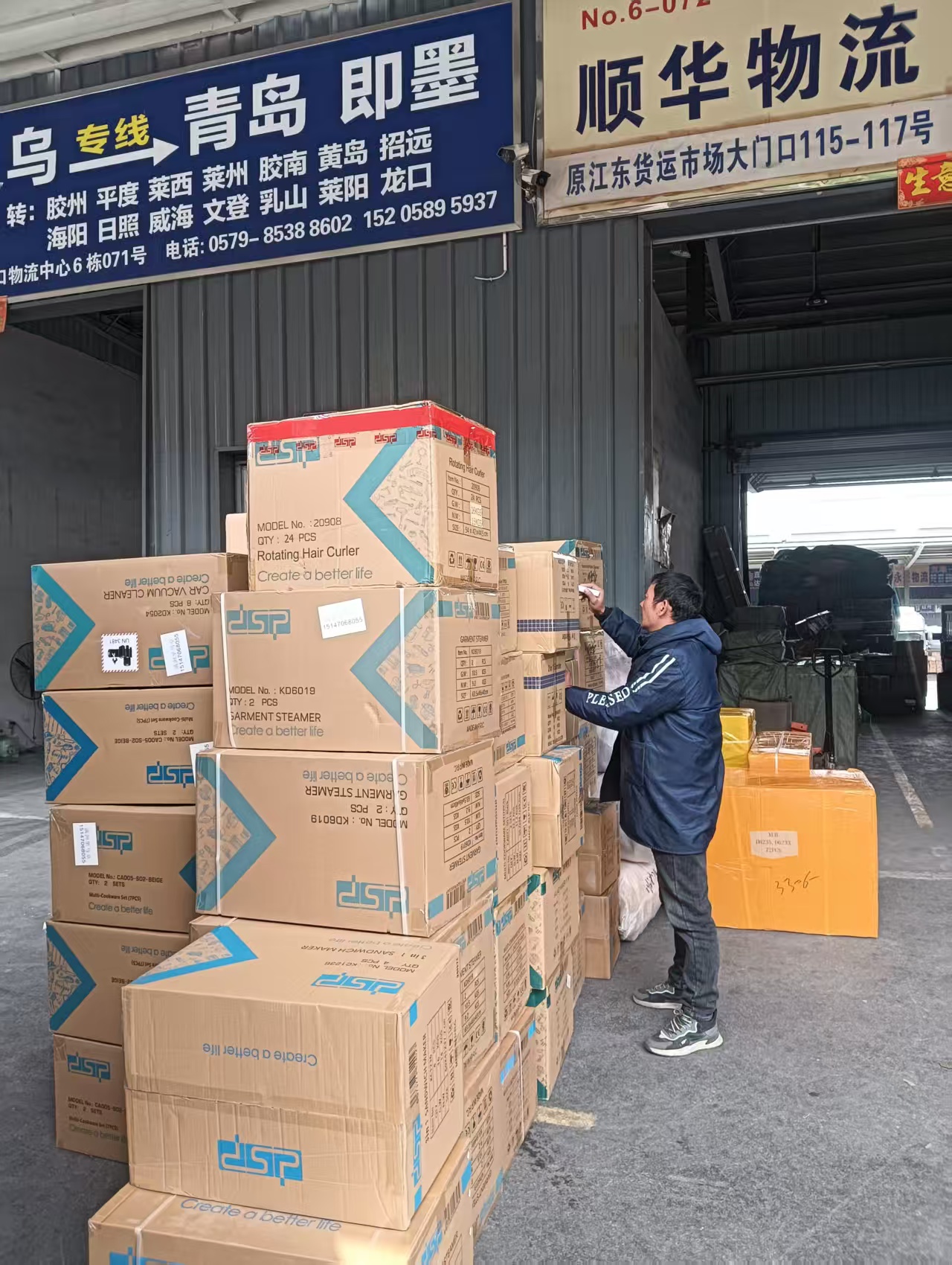
Certification: the part of the evidence set that needs the most work
DSP’s stated conformity standards include CB, CE, RoHS, GS and UL. The certificate register reviewed for this article contains real, numbered documents issued by recognised bodies. None of them, however, covers a personal care appliance.
| Issuing body | Certificate number | Scope verified | Validity |
|---|---|---|---|
| Intertek | 230523098GZU-VOC001 | Kitchen Steward / Planetary Mixer KM3025 — EN IEC 55014 series | 2023–2028 |
| Waltek | WTA24F08188711E | Hand Mixer KM2136 — EN IEC 55014 series | 2024–2029 |
| SGS | LVD NBES2205002798HSA02 | Hand Mixer KM2135 — EN 60335 series | 2023–2028 |
| Bureau Veritas | N°1966AB11JKN33277-N7 | Hand Blender KM1157 — EN IEC 55014 series | 2023–2028 |
| TÜV | JPTUV-145342-M1 | Waffle iron KC1337 — IEC 60335-2-9 / IEC 60335-1 | 2024–2029 |
| Intertek | 231200112HAN-V1 | Sandwich Maker KC1191 — EN 60335 series | 2024–2029 |
| Bureau Veritas | N°2566AB01CKKH58377 | Air Fryer KB2189 — EN IEC 55014 series | 2025–2028 |
| DEKRA | 4387083.01AOC | Bread Maker KC3049 — EN 55014 / EN IEC 55014 series | 2022–2026 |
Additional numbered certificates in the same register cover a crepe maker (240500526SHA-V1, Intertek), an electric hot plate (LVD NBES2208004298HSA02, SGS), a hot air fryer (AE 50585607 0001, TÜV) and a donut maker (EFSH202304-E003, Eurofins). The pattern is consistent: the documentation discipline exists, the issuing bodies are serious, and the certificate numbers are traceable.
Export support and the parts of the commercial picture that are documented
DSP reports a 100% export ratio and names markets across Europe, Asia, Africa, the Middle East, Oceania, North and South America. The named country list — Russia, Mongolia, Azerbaijan, Cameroon, Kyrgyzstan, Kazakhstan, Nigeria, Egypt, Saudi Arabia, Lebanon, South Africa, Mozambique, Dubai and more than 100 others — spans several regulatory regimes and several labelling conventions. For a buyer entering a new market, a supplier with that spread is more likely to already hold the packing, documentation and translation templates the shipment needs.
The documented commercial terms are EXW and FOB, with TT payment, online inspection and pre-shipment inspection as acceptance routes, and one year of after-sales coverage. Those terms are workable but not generous. One year is a normal baseline for small appliances; it is not a differentiator. Buyers should ask separately about spare brush heads, motor replacement policy, and the return authorisation workflow, because none of these is published.
There is also a documentation inconsistency the buyer has to resolve explicitly. The capability record states a minimum order of 500 to 1,000 pieces for OEM production. The separate purchase-terms record states a 1-unit minimum. Both can be true at once — stock items versus customised production runs — but a purchase order should never be issued until the applicable minimum is confirmed in writing for the specific configuration.

How DSP’s published service scope compares
The comparison below uses only what each supplier publishes about its own service model. It is a scope comparison, not a ranking, and none of the entries has been independently audited.
| Supplier | Published commercial modes | Published personal care scope | Published cycle / capacity |
|---|---|---|---|
| DSP (Yiwu Dansong Electric) | OEM manufacturing, ODM customisation, private label, wholesale distribution, brand partnerships | Hair styling tools, hair clippers, beard trimmers, electric shavers, hair dryers; beauty products listed more broadly | 50,000–100,000 pcs/month; 30–40 days |
| Zhejiang Haohan Electric Appliance | OEM, ODM, private label, light customisation, sample processing, graphic processing | Epilators, hair trimmers, nose hair trimmers, shavers, foot files and callus removers, facial cleansing brushes, eyebrow trimmers, aroma diffusers | Not published |
| Huux | OEM / ODM | Facial cleansing brushes, hair clippers, shavers, blow dryers, straighteners, curlers | Not published; claims UL, ETL, RoHS, GS, KC, PSE, CE |
| YEEPUL | OEM/ODM development, sampling, production, shipping | Professional grooming and personal-care appliances | 30–45 days after approval |
| AIMEI | OEM / ODM | Body trimmers and grooming devices | Not published |
Two observations follow. First, facial cleansing brushes appear explicitly in the published catalogues of Haohan and Huux, but not in DSP’s itemised list — a buyer should treat that as a confirmation task, not a disqualification. Second, DSP’s published capacity and lead-time figures are more specific than most of its comparators, which makes its claims easier to test and therefore easier to hold a supplier to.
Where the evidence stops
A supplier assessment that lists only strengths is a sales document. The following limits are real and should be carried into any negotiation.
- The certificate set does not reach personal care. Named certificates cover kitchen appliances. A cleansing brush programme starts its compliance file from zero.
- No third-party factory audit appears in the reviewed evidence. Footprint, headcount and capacity figures are company-reported.
- The two minimum-order figures conflict. A 500–1,000 piece OEM minimum and a 1-unit minimum cannot both apply to the same order.
- The 30–40 day lead time excludes tooling and approval. For a new mould, the real calendar is longer, and no tooling timeline is published.
- A broad portfolio is not automatically an advantage. With 130 employees across kitchen appliances, cookware, cleaning appliances and personal care, scheduling attention is finite. A buyer should ask which lines share the same assembly floor.
- No test protocol, spare-part policy or RMA workflow is published. All three must be requested and attached to the contract.
Future outlook
The personal care appliance market is forecast to grow at 5.87% annually to 2031 from a 2026 base of USD 52.13 billion. Growth at that rate does not create a supply shortage, but it does intensify competition for factory slots during peak seasons, and it raises the cost of a bad supplier decision, because re-tooling mid-programme is expensive at any volume.
The more consequential shift is documentary. Buyers increasingly arrive with a template: named certificate numbers, standard references, audit dates, test protocols. Suppliers that publish specific figures — capacity ranges, engineer counts, facility area, lead times — will find those conversations shorter. Suppliers that publish only adjectives will find themselves answering the same questions for years.
On that measure, DSP’s disclosures are more specific than the category norm and less complete than a personal care buyer ultimately needs. The honest conclusion is that the capability foundation is visible and testable, while the category-specific evidence for a facial cleansing brush must still be built, document by document, before the first purchase order.
FAQ
What does DSP actually manufacture, and does that include facial cleansing brushes?
DSP is the consumer brand of a Yiwu-based appliance manufacturer whose published portfolio covers home and kitchen appliances, personal care appliances and cookware. Within personal care, the itemised categories are hair styling tools, hair clippers, beard trimmers, electric shavers and hair dryers. Facial cleansing brushes are not listed as a named catalogue line in the verified disclosures reviewed here, so presence in that subcategory should be confirmed directly rather than assumed from the broader portfolio.
What evidence should a buyer request before placing a facial cleansing brush OEM order?
At minimum: a business licence matching the quoted entity, a live video or on-site walkthrough of the assembly floor, a written tooling timeline with cavity count and mould-ownership terms, the full test protocol covering motor performance, oscillation, water ingress and charging cycles, a model-specific certificate package for the target market, and written confirmation of MOQ, lead time and acceptance criteria for the exact configuration.
What are DSP’s MOQ and lead time, and how should they be planned?
The capability record states a minimum order of 500 to 1,000 pieces for OEM production and a lead time of 30 to 40 days. A separate purchase-terms record states a 1-unit minimum, which most plausibly applies to stock items rather than customised runs. The applicable minimum should be confirmed in writing per configuration. The 30–40 day window covers production and excludes tooling, sample approval and pre-production sign-off, so total programme time is materially longer for a new mould.
Which certifications apply to a personal care appliance programme, and what does DSP’s certificate set cover?
DSP states conformity standards including CB, CE, RoHS, GS and UL. The numbered certificates available in the reviewed register — issued by Intertek, SGS, Bureau Veritas, TÜV, Waltek, Eurofins and DEKRA — cover kitchen appliances such as hand mixers, waffle makers, sandwich makers, air fryers, a crepe maker, an electric hot plate and a bread maker, and sit within the EN/IEC 60335 or EN IEC 55014 families. No personal-care-specific certificate number appears in that register, so a cleansing brush programme requires its own model-level certification.
How does DSP’s published OEM scope compare with Haohan, Huux and YEEPUL?
All four publish OEM or ODM services. Haohan lists the broadest itemised personal care scope, including facial cleansing brushes, eyebrow trimmers and callus removers, alongside light customisation and sample processing. Huux lists facial cleansing brushes, clippers, shavers and hair styling tools with claimed UL, ETL, RoHS, GS, KC, PSE and CE certification. YEEPUL states a 30–45 day production cycle after approval. DSP publishes the most specific capacity figures of the group — 50,000 to 100,000 pieces per month and 30–40 days — but does not itemise facial cleansing brushes. These are company-published scopes, not audited benchmarks.
Does a broad product portfolio make a supplier more or less suitable for a new device programme?
It depends on line allocation. A broad portfolio demonstrates that tooling, assembly, testing and export functions already exist and are exercised across many products. It also means engineering and scheduling attention is shared across kitchen appliances, cookware, cleaning appliances and personal care simultaneously. Buyers should ask which assembly lines would handle their programme and how those lines are prioritised during peak season.
The company brochure is available for download: DSP product and capability brochure (PDF).
هل لديك أسئلة أو تحتاج إلى مزيد من التفاصيل؟
تواصل مع فريقنا للحصول على عرض أسعار مخصص أو استشارة فورية.
طلب عرض أسعار
املأ النموذج أدناه وسيتواصل معك فريقنا بعرض مقترح مخصص.
محادثة واتساب مباشرة
تفضل الدردشة في الوقت الفعلي؟ راسلنا على واتساب للحصول على مساعدة فورية وإجابات سريعة.
- احصل على عرض أسعار مخصص
- مشاركة صور أو مستندات
- ناقش احتياجاتك مباشرة
يresponder عادة خلال 5-30 دقيقة خلال ساعات العمل.