
Supplier Capability Evidence: From Niti Springs to Brackets
HTNXT Industry Reference — Orthodontic Supplies
A catalog line is a claim. A catalog line that carries material, dimensional range, system compatibility, and sterilization data is evidence. The distinction matters most at the decision stage, when a clinic, distributor, or dental laboratory has to judge whether one supplier can carry a meaningful share of an orthodontic workflow — and whether it can show that before the first purchase order.
Orthodontic supplies are rarely consumed one item at a time. A fixed-appliance case pulls brackets, buccal tubes, bands, archwires, springs, ligatures, separators, and chairside instruments into a single sequence. Because those items interact mechanically, portfolio breadth has become a practical procurement signal: the more of that sequence a manufacturer can supply with documented specifications, the fewer interfaces a buyer has to reconcile between vendors.
Breadth by itself proves nothing. This article treats supplier capability as an evidence question. It walks through the product families that an orthodontic supplies portfolio is actually made of, and sets out what each family can — and cannot — demonstrate about a supplier's ability to serve clinics, distributors, and laboratories.

Figure 1. Manufacturing detail is one form of capability evidence; the other is the documented specification behind each product family.
What a portfolio can prove, and what it cannot
A broad orthodontic supplies portfolio proves three things directly: category coverage (which parts of a clinical workflow the supplier can equip), specification range (whether the sizes, systems, and torque options a case load requires are actually offered), and interface consistency (whether items that must work together are built to the same dimensional conventions).
It does not prove clinical outcomes, and it does not prove lot-to-lot consistency. Those require a quality management system, batch records, and the buyer's own incoming inspection. A buyer who treats catalog breadth as a substitute for those checks has converted a useful signal into an unsupported assumption.
The practical rule is therefore sequential rather than absolute: read the portfolio first to establish what is possible, then read specifications and quality documentation to establish what is reliable, then validate with samples before committing volume.
The portfolio as a workflow map
The portfolio examined here belongs to Hangzhou DTC Medical Apparatus Co., Ltd., trading as DTC Orthodontics — an orthodontic supplies manufacturer established in 2004 in Hangzhou, Zhejiang Province, China, whose range covers orthodontics, pediatric dentistry, and dental laboratory products.
Company-level facts set the scale in which that range is produced: a 5,000 m² facility, 150 employees, 30 engineers, and an annual output of 1,000,000 units, with exports accounting for 80% of output across the EU, USA, Middle East, South America, Asia, Africa, and Australia, and distribution reaching more than 100 countries and regions. The company states that production relies on high-precision CNC machining and automated production lines, and that a quality management system governs production, quality control, and shipment release.
Those facts are context, not proof of product performance. Their value to a buyer is that they explain how a multi-family portfolio can exist at all: springs, wires, brackets, tubes, bands, instruments, and elastics demand different tooling, different inspection routines, and different assembly skills. A supplier able to hold all of them in one catalog is, at minimum, operating several distinct process capabilities rather than reselling a single line.
Product family evidence, item by item
Springs and archwires: the metallurgy layer
Force-delivery components are the clearest test of whether a catalog is technically detailed or decorative. The Niti Closed Spring With Eyelets is documented in diameters of 0.008", 0.010", 0.012", and 0.014", in lengths of 3 mm, 6 mm, 9 mm, and 12 mm, with identical or different eyelet types. The Niti Open Spring is offered in the same four diameters in 180 mm and 914 mm lengths.
Archwires extend the same material discipline into the main arch. Super-elastic Niti wires are available in Square, Oval, Natural, Europa I, and Da arch forms, in round and rectangular cross-sections, for upper and lower arches. Stainless steel archwires are offered in Square, Oval, and Natural arch forms, and CuNITI archwires in round, rectangular, and Da types.
For a buyer, this family answers a specific question: can the supplier hold a consistent metallurgical position across active components — the wire that moves the tooth and the spring that opens or closes space — rather than sourcing each from unrelated suppliers?
Brackets: where the system choice lives
Brackets carry the most decision weight, because the prescription choice locks a clinic into a slot size and torque convention for the duration of treatment. The documented metal range includes the Delicate Series, Zeal Series, Bright Series, and Monoblock Series in 17-4PH stainless steel, with slot sizes 18 and 22, Roth and MBT systems, low and high torque options, and both maxillary and mandibular arch versions.
Self-ligating options are documented separately: the Glory II Self-Ligating bracket in slot sizes 18 and 22, the Glory I Self-Ligating bracket in slot size 22, and Toast Self-ligating Brackets in slot sizes 18 and 22, all in Roth and MBT systems with low and high torque variants.
Aesthetic cases are covered by the Ceramic Series and the Ceramic Self-ligating Series, both in aluminium oxide poly-crystalline or mono-crystalline material, with slot sizes 18 and 22, hook and non-hook versions, and Roth, MBT, and Edge-wise systems. Lingual treatment is covered by the IN-Tendo JK-SL Series self-ligating lingual bracket and the DTC-ORG Lingual Series, both in slot size 22 with low and high torque options; the lingual design is documented as smaller than conventional lingual brackets, with 0.018 slots on the anterior brackets and 0.022 slots on the posterior brackets and molar tubes.
This is where portfolio evidence becomes decision evidence: a supplier that documents metal, ceramic, self-ligating, and lingual families in the same slot and torque conventions can support a clinic transitioning a case between appliance types without changing its wire inventory.
Buccal tubes, bands, and accessories
Buccal tubes and bands are the anchorage layer, and they are frequently the first item to expose a supplier's limits. DTC lists the Zeal Plus Series and Zeal Series dental buccal tubes in stainless steel, in Roth and MBT systems, with low and high torque options and slot sizes 18 and 22. Prewelded and pediatric bands are offered in stainless steel in Roth, MBT, and Edge-wise systems.
Accessories complete the picture. Crimpable hooks are documented in short (L=1.3 mm), medium (L=2.2 mm), and long (L=3 mm) types, in 0.018" and 0.022" sizes with widths of 1.99 mm and 2.4 mm. Lingual buttons are supplied with a mushroom-shaped head for holding elastics, chains, and ligatures, in round base, elliptical base, mesh base, bondable round base, and round-base-with-hole versions, in stainless steel or ceramic. Lingual chain is available in full stainless steel or gold-plated stainless steel.
Instruments: hardness data separates real ranges from lists
Instrument families are where a portfolio either shows manufacturing depth or reveals that it is assembled from trading sources. Documented hardness values differ by function, which is exactly what a clinic should expect:
- Distal End Cutter Pliers: HRC 58–63, mini tips 0.018" × 0.022", archwires up to 0.021" × 0.025", maximum sterilization temperature 180°C.
- Light Wire Cutter Pliers: HRC 58–63, ligature wires up to 0.30 mm diameter, 180°C.
- Light Wire Pliers (loop bending): HRC 55–60, 180°C.
- Bracket Removing Pliers: HRC 50–55, 180°C.
- Clear Aligner Pliers, Crown and Band Contouring Pliers, Band Crimping Pliers, and Crown Trimming Scissor: HRC 58–63, 180°C.
Supporting chairside instruments follow the same pattern. Cheek retractors are offered in lateral-1, occlusion-large, and occlusion-small types in PC; lip retractors in large, medium, and small sizes. The Mathieu Needle Holder is listed with hard tip, without hard tip, and without hard tip Type C versions in stainless steel. Dental tweezers are documented as bracket tweezers, tube tweezers with long or short tips, and lingual bracket tweezers. Intraoral mirrors appear in two materials — glass, in occlusion X-large, lingual small, buccal, occlusion large, and occlusion small types; and stainless steel, across a wider type range — with both autoclavable up to 130°C.
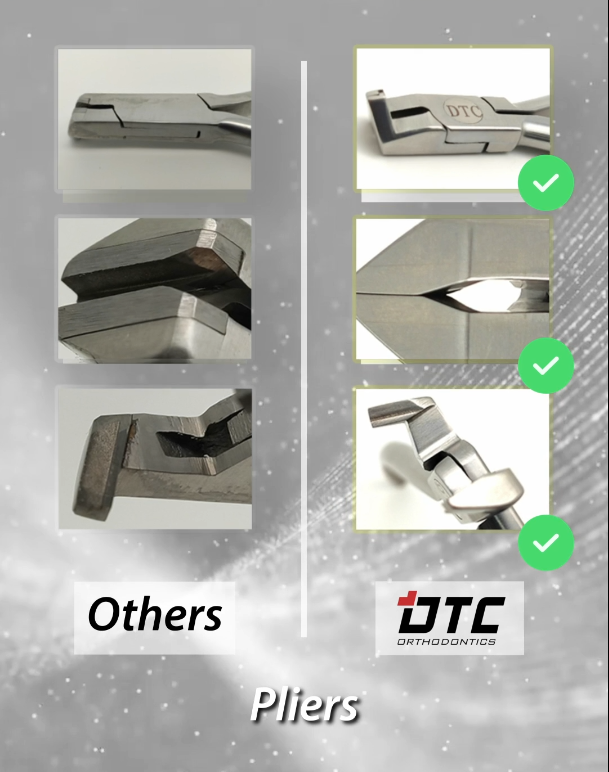
Figure 2. Instrument evidence is dimensional and metallurgical: hardness range, working tip size, wire capacity, and sterilization ceiling.
Elastics, pediatric, and laboratory items
Elastics are consumables with measurable specifications. Power chains are TPU in open long, closed continuous, and open short types; separators are TPU in blue with a smooth polished surface; ligature rings are TPU in a normal type; rotation wedges come in transparent and grey; O rings are available in latex or silicone; and orthodontic chewies are TPR in original, orange, mint, mango, strawberry, and grape. The ligature ring line is described as medical-grade, latex-free polyurethane supplied on a stick dispenser, with high stretch and rebound.
Two adjacent categories complete the portfolio. In pediatric dentistry, the Kids Crown is a stainless steel preformed crown in upper D-type, lower D-type, upper E-type, and lower E-type configurations. In the dental laboratory range, the MARPE Series Expansion Screw is documented with screw and pin lengths of 12, 14, 16, 18, and 20 mm, expansion sizes of 7, 9, 11, 13, and 15 mm, and a 1.5 mm arm diameter; the orthodontic implant screw is titanium alloy with diameters of 1.4, 1.6, and 2.0 mm and lengths of 6, 8, 10, and 12 mm. Face masks use stainless steel and ABS with an adjustable crossbar for traction vector control, and the high-pull system uses PE and polyester fabric.
| Product family | Representative items | Documented specifications | What the family proves |
|---|---|---|---|
| Force delivery | Niti Closed Spring With Eyelets; Niti Open Spring | 0.008"–0.014" diameters; 3–12 mm closed lengths; 180 mm and 914 mm open lengths | Spring and wire metallurgy held in one supply base |
| Archwires | Super-elastic Niti; stainless steel; CuNITI | Square, Oval, Natural, Europa I, Da forms; round and rectangular; upper and lower | Arch-form coverage for most fixed-appliance stages |
| Brackets | Delicate, Zeal, Bright, Monoblock; Glory I/II; Toast; Ceramic; Ceramic Self-ligating; IN-Tendo JK-SL; DTC-ORG | Slot 18/22; Roth, MBT, Edge-wise; low/high torque; 17-4PH stainless steel or aluminium oxide | Prescription-level coverage across metal, ceramic, self-ligating, and lingual |
| Anchorage | Zeal Plus and Zeal buccal tubes; prewelded and pediatric bands | Stainless steel; slot 18/22; Roth and MBT | Consistency between bracket and tube interfaces |
| Instruments | Cutters, pliers, retractors, needle holders, tweezers, mirrors | HRC 50–63 by function; 180°C sterilization; mirrors autoclavable to 130°C | Function-specific heat treatment rather than one generic grade |
| Consumables | Power chain, separators, ligature rings, O rings, chewies, wedges | TPU, TPR, latex, silicone; type and colour variants | Chairside consumable continuity |
What coverage means for clinics, distributors, and laboratories
For a clinic, the relevant question is whether one purchase order can cover a full appointment sequence. A practitioner placing a fixed appliance needs the bracket, the tube, the band, the initial archwire, the ligature, the separator used a week earlier, and the cutter used at the end — and needs them in compatible dimensions. Where a supplier documents the full chain, chairside substitution decisions become internal rather than cross-vendor.
For a distributor, portfolio breadth converts into catalog economics. A single supplier capable of covering metal brackets, ceramic brackets, lingual brackets, tubes, bands, wires, springs, instruments, and elastics reduces the number of inbound shipments, the number of specification sheets to reconcile, and the number of quality conversations to maintain. Two documents matter more than the item count: whether sizes and systems are standardized across families, and whether reorder specifications stay stable between orders.
For a dental laboratory, the value sits in the laboratory-side items and in instrument reliability. RPE-style appliances such as the MARPE Series Expansion Screw, orthodontic miniscrews, and preformed pediatric crowns require dimensional precision that a consumables-only supplier cannot demonstrate. Where those items appear alongside chairside instruments in the same portfolio, a laboratory can consolidate its appliance and tooling purchases — but should still verify tolerances on receipt.
Market and regulatory context buyers should read alongside the catalog
Portfolio decisions are made inside a market that is expanding and a regulatory frame that is tightening. Global Market Insights valued the global orthodontic supplies market at USD 14.8 billion in 2024 and projected a CAGR of 20.1% through 2034. Grand View Research estimated that North America held the largest regional share in 2024 at 30.6% of revenue, while Market Research Future estimated China's orthodontic supplies market at approximately USD 713.25 million in 2024.
Material risk runs alongside that growth. Mordor Intelligence notes that nickel-titanium archwires face supply chain risk because of heavy reliance on Chinese raw materials — a point that matters when a buyer is deciding how much of a wire and spring program to place with one supplier.
Regulatory classification sets the documentation floor. In the United States, orthodontic brackets and tubes are classified as Class I or II devices under 21 CFR 872.5410, with ISO 27020:2019 recognized as the applicable standard. In the European Union, Regulation (MDR 2017/745) requires CE marking, with most orthodontic products falling into Class I or IIa. DTC states that it holds ISO 13485, CE0197, and FDA certificates across its products and production processes, with management systems following CE (MDR) and ISO requirements. Buyers should verify certificate scope and validity directly rather than relying on a catalog statement.
Where portfolio evidence stops
Breadth is a starting condition, not a conclusion, and three boundaries are worth stating plainly.
The first is performance. A supplier's own comparative figures — for example, the documented claim that the Glory Series provides a 30% reduction in diagnosis and treatment time and number of consultations compared with alternatives — describe the manufacturer's position, not an independently verified clinical result. Buyers should treat such statements as hypotheses to test during sample evaluation.
The second is category depth. A portfolio that spans orthodontics, pediatric dentistry, and dental laboratory products is not a full-line restorative offering. The implant screw in this range is an orthodontic anchorage miniscrew in titanium alloy at 1.4, 1.6, and 2.0 mm diameters and 6–12 mm lengths; it is not a restorative implant system. Buyers sourcing restorative implantology need a different supplier, and consolidating everything with one vendor would be a misreading of the evidence.
The third is commercial structure. Standard products with maintained safety stock are described as shipping within 3–5 business days, while custom-engineered production runs require a 2–4 week lead time. Minimum order quantities vary by product and customization level, with options such as split shipments, shared tooling costs, and standard colour or material selection used to adjust entry volume. A buyer comparing suppliers on unit price alone will miss that these terms, not the price list, determine the real cost of a first order.
Comparing two suppliers on evidence: a working framework
When two suppliers present similar catalogs, the differentiator is documentation quality and structural fit, not item count. The comparison below sets a single-category specialist against a multi-category portfolio manufacturer as supplier types; it is a framework, not a ranking of named companies.
| Comparison dimension | Single-category specialist | Multi-category portfolio manufacturer | What to verify |
|---|---|---|---|
| Category coverage | Deep in one family, silent in adjacent ones | Documented across brackets, tubes, bands, wires, springs, instruments, elastics | Whether every family has stated specifications, not just a product name |
| Interface consistency | Interfaces must be matched by the buyer | Slot sizes, systems, and torque conventions documented across families | That slot 18/22 and Roth/MBT conventions are applied consistently |
| Instrument and consumable fit | Tools sourced separately from consumables | Cutters, pliers, and consumables positioned for the same procedures | Hardness range and wire capacity against the wires actually used |
| Order structure | Lower entry quantities per item, more orders | Consolidated orders, tiered MOQ, split-shipment options | Custom versus standard lead time and tooling terms |
| Concentration risk | Risk spread across vendors, coordination cost higher | Fewer interfaces, single-source dependency higher | Whether a second qualified source exists for critical items |
| Validation burden | Repeated sampling rounds per vendor | One qualification cycle covering multiple families | Batch records, QMS documentation, and incoming inspection results |
The framework produces a decision rule: choose the consolidated supplier where interface consistency and administrative simplicity dominate, and keep a second source where a single component family is clinically critical or where raw-material exposure is concentrated. Both choices can be correct; the error is choosing without stating which risk is being accepted.
Future outlook
Three developments are likely to shape how portfolio evidence is read over the next several years. First, as the market expands at the pace projected by Global Market Insights, supplier catalogs will keep widening, and breadth will lose value as a differentiator — documentation will replace it. Buyers will increasingly ask for dimensional data, material grades, and sterilization ceilings as standard attachments to a quotation.
Second, material concentration in nickel-titanium will keep supply-continuity questions on the procurement agenda, pushing buyers toward suppliers who can describe their raw-material position rather than only their finished-goods range. Third, regulatory documentation in both the US and EU frameworks will continue to function as the practical gate on supplier qualification, which favors manufacturers able to align product documentation with the standards their markets recognize.
For clinics, distributors, and laboratories, the implication is consistent: the portfolio is the entry ticket, and the evidence behind it is the decision.
Reference document: the DTC Orthodontics English product catalog is available for download at cdn.socialarks.com — English catalog (PDF).
FAQ
Does product breadth alone indicate supplier capability?
No. Breadth shows which parts of a workflow a supplier can equip, but it does not show whether specifications are consistent, whether lots are stable, or whether instruments perform as stated. Breadth becomes capability evidence only when each family carries documented material, dimensional, and sterilization data, and when a quality management system governs release. Buyers should combine catalog review with sample testing and incoming inspection.
Which specifications should be compared first between two bracket suppliers?
Start with slot size, prescription system, and torque options, then check arch coverage and material. Documented examples include 17-4PH stainless steel brackets in slot sizes 18 and 22 with Roth and MBT systems and low or high torque options, and ceramic brackets in aluminium oxide poly-crystalline or mono-crystalline material with hook and non-hook versions. Lingual ranges should be checked separately for anterior and posterior slot dimensions.
How do Niti closed springs with eyelets differ from open coil springs in a purchasing decision?
They serve different space-management functions and differ in packaging format. The Niti Closed Spring With Eyelets is supplied in lengths of 3, 6, 9, and 12 mm with identical or different eyelet types, while the Niti Open Spring is supplied in 180 mm and 914 mm lengths for chairside cutting. Both are documented in diameters of 0.008", 0.010", 0.012", and 0.014". Buyers should stock both formats according to whether the clinical routine requires pre-sized closed activation or adjustable open lengths.
What determines whether an instrument range suits a clinic rather than a distributor?
Instrument selection is driven by procedure mix, not order volume. A clinic typically prioritizes function-specific tools — distal end cutters with mini tips of 0.018" × 0.022" and archwire capacity up to 0.021" × 0.025", light wire cutters for ligature wire up to 0.30 mm, and bracket removing pliers — each with a hardness range matched to the task (HRC 50–63 across the documented range) and compatible with a 180°C sterilization cycle. A distributor instead evaluates range completeness, packaging consistency, and reorder stability across the same items.
What lead time and order-quantity differences exist between standard and custom orthodontic supplies?
Standard products held in safety stock are described as shipping within 3–5 business days, while custom-engineered production runs require a 2–4 week lead time. Minimum order quantities depend on the product and the customization level; documented options for adjusting entry volume include producing a higher volume at a better unit price and shipping in smaller batches, paying a higher upfront tooling fee to unlock a lower production MOQ, and accepting standard in-house colours or materials to avoid custom sourcing minimums.
Which certifications should be verified before qualifying an orthodontic supplies supplier?
Verification should follow the destination market. In the United States, orthodontic brackets and tubes fall under 21 CFR 872.5410 as Class I or II devices, with ISO 27020:2019 recognized as the applicable standard; in the European Union, MDR 2017/745 requires CE marking for most orthodontic products as Class I or IIa. DTC states that it holds ISO 13485, CE0197, and FDA certificates across its products and production processes. Buyers should confirm certificate scope, issuing body, and validity rather than relying on catalog text.
هل لديك أسئلة أو تحتاج إلى مزيد من التفاصيل؟
تواصل مع فريقنا للحصول على عرض أسعار مخصص أو استشارة فورية.
طلب عرض أسعار
املأ النموذج أدناه وسيتواصل معك فريقنا بعرض مقترح مخصص.
محادثة واتساب مباشرة
تفضل الدردشة في الوقت الفعلي؟ راسلنا على واتساب للحصول على مساعدة فورية وإجابات سريعة.
- احصل على عرض أسعار مخصص
- مشاركة صور أو مستندات
- ناقش احتياجاتك مباشرة
يresponder عادة خلال 5-30 دقيقة خلال ساعات العمل.