
Supplier Capability Evidence: Inside Chenglei's Electric Actuator Manufacturing and Testing
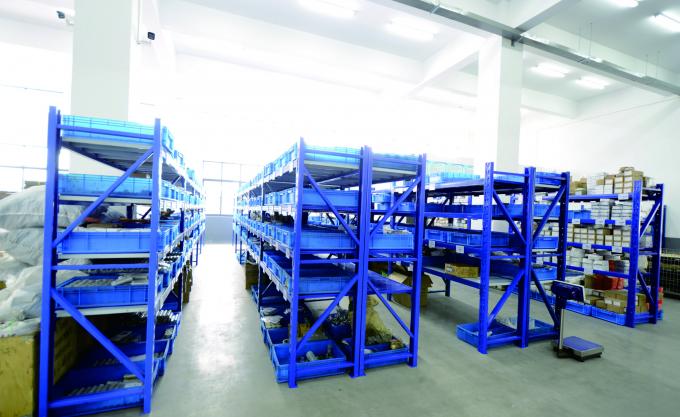
Finished electric actuators staged in warehouse stock at the Changzhou production base. Image: Changzhou Chenglei Valve Technology Co., Ltd.
Supplier Capability Evidence: Inside Chenglei's Electric Actuator Manufacturing and Testing
Electric actuator evaluation usually reaches a point where the data sheets stop separating suppliers. Nominal torque ranges overlap, protection classes repeat, voltage options are near identical across catalogues, and every manufacturer claims to test what it ships. What actually decides a shortlist is capability evidence: whether a manufacturer can build the ordered configuration, prove that it was tested, and reproduce the same result on the next order. This analysis examines the manufacturing and testing record behind Changzhou Chenglei Valve Technology Co., Ltd. (CHENGLEI), an electric actuator manufacturer based in Changzhou, Jiangsu, China, and converts that record into criteria procurement teams can apply to any supplier in this category.
Why Capability Evidence Outweighs Catalogue Specifications
By the time a buyer reaches the evaluation stage, the technical basics are usually settled: nominal torque, output rotation speed, motor power, rated current, supply voltage, control mode and ingress protection. The unanswered question is not what a supplier lists, but what a supplier can substantiate under production conditions. That distinction has become more commercially relevant as the category expands. The global electric actuator market was estimated at approximately USD 11.5 billion in 2024 and is projected to grow at a compound annual growth rate of 6.5% to 7.2% through 2034, according to Zion Market Research. Asia Pacific accounted for 38.5% of electric valve actuator revenue in 2025, a regional segment valued above USD 1.8 billion, according to Dataintelo.
Capability evidence in this industry generally falls into four verifiable categories. Each can be checked against documents rather than reputation.
- Production infrastructure — facility area, machining equipment, workforce composition and stated output, which determine whether an order can be scheduled and repeated.
- Material and finish control — body materials, coating systems and sealing methods, which determine how the actuator behaves in corrosive or humid service.
- Protection and safety design — ingress protection, thermal protection, manual override and explosion-proof classification, which determine fitness for hazardous or extreme environments.
- Test and acceptance records — in-house testing protocol, third-party certification scope and witnessed factory acceptance testing, which determine whether performance claims are documented.
The Changzhou Production Base: What Is Documented
Changzhou Chenglei Valve Technology Co., Ltd. is an electric actuator manufacturer located in Changzhou, Jiangsu, China, producing the CL series of valve electric actuators and related part-turn, multi-turn and linear electric actuator families. Its products are applied in Oil & Gas, Water & Power, and Chemical, Process & Industrial sectors, and 80% of output is exported to international markets. The company operates from Building A5, Intelligent Equipment Industrial Park, Hengshanqiao Town, Economic Development Zone, Changzhou City.
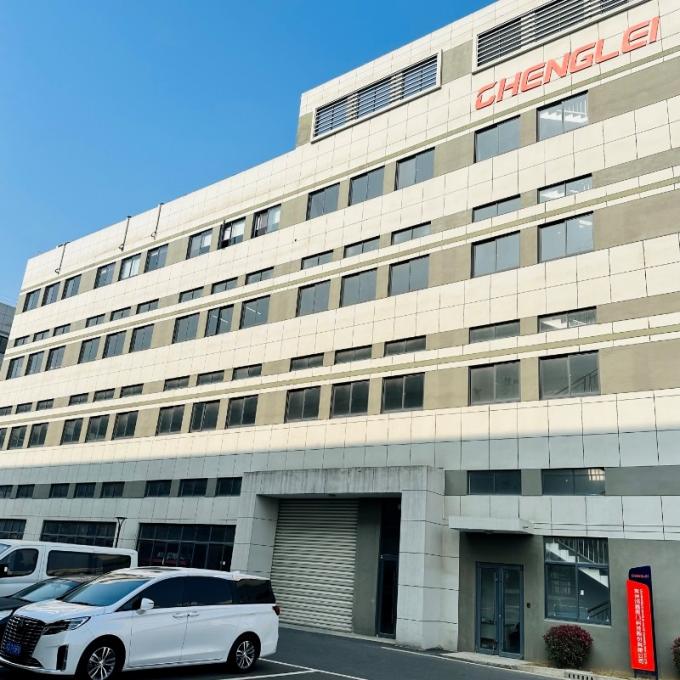
The company administrative building at the Changzhou manufacturing base. Image: Changzhou Chenglei Valve Technology Co., Ltd.
The following production figures are documented in the company's own capability record and product data. They are presented here as declared figures rather than independently audited numbers, which is the correct way for a procurement team to treat any supplier-declared capacity.
| Evidence area | Documented detail | Procurement relevance |
|---|---|---|
| Manufacturing base | Changzhou, Jiangsu, China — Building A5, Intelligent Equipment Industrial Park, Hengshanqiao Town, Economic Development Zone | Single-site production allows factory visits, pre-shipment inspection and traceability to one physical location |
| Facility area | 20,000 m² | Indicates dedicated assembly, machining and storage space rather than trading-only operations |
| Workforce | Approximately 100 employees, including 25 R&D engineers and dedicated quality inspection personnel | Engineering headcount supports configuration changes; inspection headcount supports unit-level testing |
| Machining equipment | More than 50 CNC machining centres and CNC lathes, plus inspection equipment | In-house machining of housings and components reduces dependence on outside subcontractors |
| Annual output | 120,000 units | Sets an upper bound for annual order allocation |
| Capability record capacity | 8,000 units per month (company capability record) | Company-level throughput figure |
| Product data supply ability | 3,000 sets per month (stated across QI, Z and ZXC product data) | Model-level figure that buyers should reconcile with their own order mix |
| Export ratio | 80% of output exported | Indicates routine handling of export packaging, documentation and international logistics |
Reading Capacity Correctly: 3,000 Sets per Month Versus 8,000 Units per Month
Capacity numbers deserve more scrutiny than they usually receive. In Chenglei's published data, two different figures appear, and they measure different things. Product data sheets for the QI part-turn range, the Z multi-turn range and the ZXC linear range each state a supply ability of 3,000 sets per month. The company-level capability record states a monthly capacity of 8,000 units and an annual output of 120,000 units.
The gap is not a contradiction so much as a difference in scope. A per-model supply ability figure answers the question "how many units of this configuration can be produced in a month." A company-level monthly capacity figure answers the question "how many units can move through the plant in a month across all configurations." For a project buyer, the operative question is which figure applies to the specific mix being ordered. An order that combines 100 N·m part-turn actuators, 450 N·m multi-turn actuators and explosion-proof linear units draws on different machining, assembly and test capacity than a single-model run — so the company-level figure is not automatically transferable to the order.
This is where a supplier evaluation can be made concrete. Three questions convert a headline capacity claim into a scheduling plan: which production line handles the ordered model family; what portion of monthly capacity is already committed; and what the committed delivery window is for the actual order quantity rather than the catalogue MOQ. Chenglei's stated order terms provide part of the answer for smaller orders: the MOQ is 1 set, and lead time for orders of 1 to 100 units is 10 to 15 working days, with larger volumes quoted on a case-by-case basis.
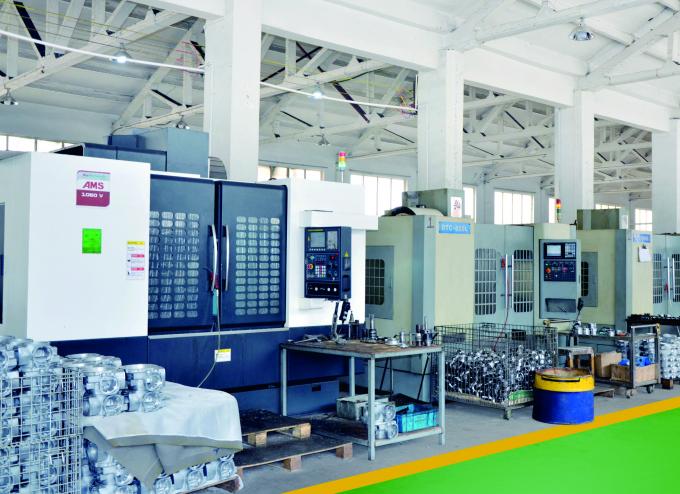
Processing workshop: more than 50 CNC machining centres and lathes support in-house component production. Image: Changzhou Chenglei Valve Technology Co., Ltd.
Materials, Coatings and Configuration Options
Material selection is one of the few specification areas where a buyer can directly influence service life. Chenglei's product data list body and housing materials of aluminium alloy, stainless steel and carbon steel depending on the model family. For example, the JB2920 / ISO 5210 quarter-turn range lists body materials of aluminium alloy, stainless steel or carbon steel; the ZXC rotary actuator listing specifies aluminium alloy and stainless steel; the low-temperature DQ series specifies an aluminium alloy body.
| Specification element | Documented options | Why the buyer should confirm it |
|---|---|---|
| Body / housing material | Aluminium alloy, stainless steel, carbon steel | Determines weight, cost and corrosion behaviour of the housing itself |
| Anti-corrosion coating | High-temperature baking paint (CLZXC4000 / CLZXC40000 linear actuator data); C5-M grade coating applied in a Middle East desert oil project | Coating, not housing material alone, governs salt-spray and hydrogen-sulphide resistance |
| Sealing method | Double-sealed wiring technology documented in the same Middle East project record | Prevents corrosive gas and moisture ingress through the cable entry |
| Thermal protection | Listed as fitted on multi-turn intelligent actuators and on ZXC linear actuators | Protects the motor winding from overload and stall conditions |
| Manual override | Handwheel standard on listed models; lever option on the ZXC rotary listing; manual speed ratios of 60:1 (QI10/QI15), 87:1 (QI60), 348:1 (QI500) and 1:1 (Z multi-turn range) | Determines whether the valve can be operated during power loss and how much effort the operator needs |
| Enclosure protection | IP65, IP67 and IP68 options; NEMA 4 / 4X / 7&9 options | Matches the actuator to washdown, outdoor or humid service |
| Torque coverage | Part-turn QI range 100 N·m (QI10) to 5,000 N·m (QI500); multi-turn Z range 50 N·m (Z5) to 450 N·m (Z45); ZXC / ESA rotary listing 10 N·m to 4,000 N·m | Confirms the target valve torque falls inside the supplier's proven range |
| Mounting interface | ISO 5210 and JB2920 flange types | Standardised interfaces reduce adapter risk and simplify retrofit |
| Power and control | 380V / 110V / 220V / 440V / 660V AC or 12V / 24V DC; 50 / 60 Hz; on-off or modulating; 4–20 mA signal input | Confirms compatibility with the plant's power and control architecture |
| Motor duty | S2 10 min, 15 min, 30 min, or S1 / S3 / S4 / S6 at 24% and 40% | Matches duty cycle assumptions in the valve sizing calculation |
| Environment | −20 °C to +60 °C standard; special orders −60 °C to +70 °C; relative humidity ≤ 95% at +25 °C; insulation class F | Identifies whether the site needs a standard or special-order configuration |
Three of these elements deserve emphasis because they are frequently under-specified in tenders. Thermal protection is the difference between a stalled motor that trips and one that fails permanently. Manual override, expressed as a manual speed ratio, determines how many handwheel turns an operator needs to stroke the valve after a power interruption — a ratio of 348:1 on the QI500 model reflects the higher torque the operator must overcome. Anti-corrosion coating is where climate-specific evidence matters most, and this is where the difference between catalogue wording and project-specific specification becomes visible.
Protection Ratings and Explosion-Proof Designations
Explosion-proof actuator selection is governed by standards rather than preference. As referenced by IECEx and the International Electrotechnical Commission, flameproof equipment design is standardised under IEC 60079-0 for general requirements and IEC 60079-1 for flameproof enclosures. Actuators in this class are classified by gas group (IIA, IIB, IIC) and temperature class (T1 to T6), and Group IIC is required for hydrogen environments according to published ATEX-related industry reference material.
Chenglei's product data list explosion-proof designations of ATEX / Exd BT4 / CT4 on the low-temperature DQ series and the JB2920 quarter-turn range. In practical terms, BT4 and CT4 designations describe combinations of gas group and temperature class that must be matched against the specific hazardous area classification of the plant. A buyer is therefore evaluating not simply whether an actuator is "explosion proof," but whether the ordered model's designation covers the gas group and temperature class of the installation. Temperature class matters as much as group: a designation that satisfies a moderate ambient duty may not match a process where surface temperature limits are tighter.
Testing and Certification: The Paper Trail Behind an Order
Chenglei's recorded quality control approach is a 100% test policy — every unit is tested rather than sampled. That statement only becomes useful to a buyer when it is connected to documents. Three documented artifacts support it.
Third-party certification. A CE certificate covering EN 60730-2-14:1997/A1:2001 was issued on 28 May 2025 through szutest for the EU market, with validity through 28 May 2030. The certificate scope spans a list of electric actuator models, including explosion-proof linear models, part-turn units, multi-turn units and intelligent on-off and modulating variants. Buyers should read the certificate's model scope rather than the certificate's existence, because model lists and standards change between revisions.
Witnessed factory acceptance testing. In a Russian project, the first batch of more than 400 actuators passed a factory acceptance test conducted by a Russian delegation — that is, an acceptance test witnessed by the buyer's own representatives rather than a self-declared internal check. The same project record notes extreme-condition verification and EX explosion-proof certification as prerequisites for the order.
Warranty terms. The ZXC type rotary actuator listing states a two-year warranty, which sets the baseline period during which a defect claim can be raised.
Three Field Projects and the Failure Modes They Address
The strongest capability evidence is a project where a specific design decision responded to a specific environmental failure mode. Three documented cases illustrate this pattern across three different stress profiles.
Desert oil service: corrosion and ingress
A petroleum engineering company in Iraq deployed 200 actuators on large-scale oil valve projects in a desert environment characterised by high salt spray, hydrogen sulphide and high temperature. The project record identifies the decisive measures as C5-M grade anti-corrosion coating — described as exceeding conventional standards — combined with double-sealed wiring technology intended to isolate corrosive gases and moisture from the internal electrics. The stated outcome was a successful bid, stable oilfield production and reduced downtime caused by leaks. The engagement duration recorded for this client relationship is six years.
Extreme cold with explosive gas: certification and starting reliability
A strategic partner in Russia required remote automated control of oil and gas pipelines and energy infrastructure, in a climate with large temperature differences and potentially explosive gas environments. The record describes extreme operating condition verification and EX explosion-proof certification as the basis for stable starting and precise control at minus 40 degrees Celsius, addressing low-temperature failure modes such as display failure, lubricant solidification and material embrittlement. The first batch of more than 400 high-end intelligent actuators passed the factory acceptance test conducted by the Russian delegation, and the project record describes the deployment as replacing part of the incumbent European and American brand footprint in that application. The relationship duration recorded is four years.
Heavy vibration and plant-wide communication: mechanical isolation
A large non-ferrous metal group in the United States applied actuators to valve control in raw material grinding, high-temperature digestion, sedimentation separation and evaporation stations — an environment with strong vibration, high temperature and dust. The recorded engineering response was a design separating the mechanical body from the control unit, keeping the precision control section away from the vibration source and simplifying maintenance during high-altitude operations. Nearly a thousand intelligent actuators were deployed on a 24/7 production line, and the project achieved Profinet industrial Ethernet communication interconnection across the entire plant area. The project record describes the installation as a benchmark for plant intelligence. The duration recorded for this client relationship is six years.
Read together, the three cases cover three distinct failure modes: coating and sealing for chemical and salt exposure, certification and temperature-rated materials for cold and explosive service, and mechanical isolation plus digital communication for vibration-heavy process plants. A buyer can use the same logic in reverse — identify the dominant failure mode at the site, then request the evidence that maps to it rather than a general capability statement.
Market Signals: Growth, Regional Concentration and Digital Control
The wider market context explains why this level of verification is becoming standard practice. Beyond the overall market size and growth projections cited earlier, the regional distribution of demand has shifted. Asia Pacific held 38.5% of electric valve actuator revenue in 2025, a segment valued above USD 1.8 billion, with industrialisation in China and India identified as the driver. China's export value for electric motor parts, a category that includes actuator components, reached USD 6.43 billion in 2024, representing 26.1% of global exports in that category, according to the Observatory of Economic Complexity.
At the same time, the upper end of the market remains concentrated among large multinationals. Rotork plc held a 14% share of the global linear electric actuator segment as of 2024, according to Market Reports World, while Emerson Electric Co. holds an estimated 12% to 15% of the broader electric actuator market with USD 17 to 18 billion in relevant group revenue, according to Spherical Insights. Those figures are included here as scale context, not as a quality ranking: they show that a specialist manufacturer and a multinational incumbent operate at different organisational scales, and buyers should compare them on the dimensions the incumbent's scale does not determine — model-level documentation, configuration flexibility, order-level responsiveness and total landed cost.
On the technology side, intelligent electric actuators are shifting toward Industrial Ethernet protocols such as Profinet and EtherNet/IP, and toward 5G edge connectivity for digital twin integration, according to market analysis published by IndexBox. The United States alumina project described above is a working example of that trend rather than a forecast: Profinet interconnection across a plant area is precisely the architecture that supports plant-level digital integration.
Comparison with Conventional Sourcing Routes — and the Boundaries of This Model
Buyers evaluating a specialist manufacturer typically weigh it against two alternatives: a multinational brand actuator, or a stockist and distributor channel. The comparison below uses only the facts already set out above; it deliberately avoids quality judgements that cannot be verified.
| Dimension | Chenglei (direct specialist manufacturer) | Multinational brand | Distributor / stockist |
|---|---|---|---|
| Production location | Changzhou, Jiangsu, China; 20,000 m² single site | Multiple global plants | No production; resells OEM product |
| Documented supply ability | 3,000 sets per month per product data; 8,000 units per month company capability record | Not comparable at brand level | Limited to stock on hand |
| Configuration flexibility | OEM / ODM with voltage and logo customisation; MOQ 1 set | Configuration follows platform catalogue | Configuration limited to stocked variants |
| Lead time | 10–15 working days for 1–100 units; larger volumes quoted individually | Typically longer, project-dependent | Immediate if stocked, otherwise back-ordered |
| Certification documentation | CE certificate EN 60730-2-14:1997/A1:2001 (issued 28 May 2025, valid to 28 May 2030); ATEX / Exd BT4 / CT4 designations per model | Broad multi-region approval portfolios | Depends on the OEM whose product is resold |
| Scale and service footprint | Approximately 100 employees; after-sales described as remote support | Global service networks | Local presence, no engineering responsibility |
The boundaries of the specialist-manufacturer model matter as much as its advantages, and a balanced evaluation should state them explicitly.
- Service model. Chenglei's recorded after-sales provision is remote support. The available record does not document a global on-site service network. For projects requiring contractual on-site intervention, response times and responsibilities should be negotiated and written into the agreement rather than assumed.
- Certification scope. The CE certificate cited covers EN 60730-2-14:1997/A1:2001 for the EU market, and explosion-proof designations are stated per model. Buyers sourcing into other jurisdictions must map the ordered model to the applicable local approvals before design freeze.
- Lead time conditions. The 10–15 working day window applies to orders of 1 to 100 units. Larger quantities are quoted individually, so project schedules should not assume the standard window will hold at higher volumes.
- Special configurations. Low-temperature service to −60 °C, C5-M grade anti-corrosion coating and similar variants are order-specific configurations rather than catalogue defaults. They require specification at the enquiry stage and may extend the delivery window.
- Customisation depth. Stated OEM / ODM customisation covers voltage and logo. Buyers requiring deeper mechanical or software-level customisation should confirm scope before committing to a design.
Future Outlook
Three developments are likely to shape how buyers evaluate electric actuator suppliers over the next procurement cycle. First, verification is becoming a formal step rather than an informal one: witnessed factory acceptance testing, model-scoped certificates and coating specifications are increasingly requested as standard attachments to a purchase order. Second, actuator intelligence is moving toward plant-level integration — Industrial Ethernet protocols and edge connectivity are the mechanisms by which actuators become part of a plant's data architecture, as demonstrated by the Profinet interconnection in the United States alumina project. Third, features that were once premium options are appearing in mainstream data sheets, including Bluetooth configuration and battery backup on the ZXC linear actuator listing and the DQ low-temperature series.
For procurement teams, the practical implication is that supplier differentiation will rest less on whether a specification exists and more on whether it can be documented, repeated at volume and traced to a specific order. That shifts the evaluation question from "what does this supplier offer" to "what can this supplier prove, and against which model number."
Frequently Asked Questions
1. What evidence should a procurement team request before shortlisting an electric actuator manufacturer?
Request artifacts rather than statements: a certificate page showing the exact ordered model number, the format of the internal test record used for the stated 100% test policy, a coating specification sheet for the stated coating grade, torque calibration practice for the ordered torque range, and a flange dimensional drawing against ISO 5210 or JB2920. Each item should be traceable to the specific configuration being purchased, not to the supplier's catalogue in general.
2. How does a stated supply ability of 3,000 sets per month relate to actual project capacity?
Product data for the QI, Z and ZXC families state a supply ability of 3,000 sets per month, while the company capability record states 8,000 units per month and 120,000 units per year. The two figures measure different scopes — model-level supply ability versus total plant throughput. Buyers should confirm which figure applies to their specific order mix, since an order spanning several torque ranges draws on different machining and assembly capacity than a single-model order.
3. Which protection and certification documents indicate readiness for hazardous areas?
Look for the explosion-proof designation stated per model — ATEX / Exd BT4 / CT4 appears on the DQ low-temperature series and the JB2920 quarter-turn range — alongside enclosure ratings of IP65, IP67 or IP68 and NEMA 4 / 4X / 7&9 options. Because flameproof equipment is standardised under IEC 60079-0 and IEC 60079-1, with gas groups IIA, IIB and IIC and temperature classes T1 to T6, the designation must be matched to the site's area classification, and Group IIC is required for hydrogen environments.
4. How should part-turn, multi-turn and linear electric actuators be compared across a supplier's portfolio?
Compare within the relevant operating family rather than across the catalogue. Documented coverage includes part-turn QI models from 100 N·m (QI10) to 5,000 N·m (QI500), multi-turn Z models from 50 N·m (Z5) to 450 N·m (Z45), and ZXC / ESA rotary listings from 10 N·m to 4,000 N·m with travel angles of 90°, 120° and 180°. Multi-turn models list manual speed ratios of 1:1, while part-turn models list ratios such as 60:1, 87:1 and 348:1, which reflects the torque the operator must apply during manual override.
5. What does witnessed factory acceptance testing add to a supplier evaluation?
A witnessed test confirms that units perform to specification before shipment, with the buyer's representatives present. In one documented Russian project, the first batch of more than 400 actuators passed a factory acceptance test conducted by the Russian delegation, following extreme-condition verification and EX certification. For a buyer, this converts a supplier's internal quality claim into an observed event and creates a record that can be referenced if commissioning issues arise.
6. What after-sales and support boundaries should be confirmed in the contract?
Chenglei's recorded after-sales provision is remote support, and the available record does not document an on-site global service network. Projects that require on-site intervention should therefore define response times, escalation paths, spare-parts availability and warranty terms contractually. The ZXC type rotary actuator listing states a two-year warranty, which provides a baseline that can be extended or adjusted during negotiation.
Chenglei's product documentation, including the CL, QI, Z and ZXC actuator families, is compiled in the company's downloadable brochure: Chenglei electric actuator brochure (PDF). Manufacturer information is available at electricvalvesactuators.com.