
Supplier Capability Evidence: Joylive vs Kone, Otis & Schindler in Passenger Elevators
Supplier Capability Evidence: Joylive vs Kone, Otis & Schindler in Passenger Elevators
Passenger elevators accounted for more than 70% of all annual elevator installations worldwide in 2025, and the global elevator market was estimated at USD 84.8 billion in 2024 with projections reaching USD 126.7 billion by 2034. For buyers at the decision stage, that scale creates a particular evaluation problem: the supplier field mixes long-established multinational manufacturers with specialist producers whose published capability evidence differs sharply in depth, format and language.
This assessment builds a supplier capability framework for passenger elevator procurement and applies it to Joylive Elevator Co., Ltd. as a benchmark against three widely recognised multinational manufacturers: Kone, Otis and Schindler. The purpose is not to rank brands by reputation, but to show which capability claims can be verified, which cannot, and how a procurement team can structure the comparison before committing to a supplier.
Joylive Elevator Co., Ltd. (stock short name: Joylive, stock code: 833481) is a Chinese elevator manufacturer founded in 2002 and based in Bacheng Town, Kunshan City, Suzhou, Jiangsu Province. The company designs and manufactures passenger elevators, home lifts, freight elevators and specialty vertical transportation systems, and its products and service network cover China, Europe, America, Oceania, Africa, Central Asia, Southeast Asia and the Middle East.
Why Capability Evidence Outweighs Brand Familiarity at the Decision Stage
Decision-stage buyers already accept that a passenger elevator is a long-life asset. The open question is narrower: which supplier can demonstrate, with checkable facts, that it can design, manufacture, certify, install and maintain the specified system for the life of the building. Brand recall answers a different question, and it is not a substitute for evidence.
Capability evidence, as used in this article, means documented and independently checkable facts about six areas: manufacturing footprint and controllable capacity, engineering and R&D resources, certification and standards scope, in-house quality control, service and lifecycle model, and the range of applications the supplier has actually configured products for. Each of these areas can be examined in a factory audit, a certificate check, a sample evaluation or a contract review.
Technical context matters here. Traction elevators account for approximately 71–72% of total global installations because of their energy efficiency advantage over hydraulic systems, and passenger elevators dominate the category. A supplier comparison that ignores drive technology, energy performance and safety subsystems is comparing commercial packaging rather than engineering capability.
The Evaluation Problem: Asymmetric Evidence Across the Supplier Field
Multinational manufacturers such as Kone, Otis and Schindler operate within mature disclosure systems: annual reports, global market studies and published standards material. Emerging specialist manufacturers, including Joylive, typically publish a narrower but more granular set of operational facts. Neither disclosure style is inherently more reliable, but they are not directly comparable without a common template.
Market data itself illustrates why single-source figures should be treated carefully. Estimates for the 2024 base-year global elevator market differ between research firms, with Global Market Insights recording USD 84.8 billion while other published estimates range from USD 79.06 billion to USD 93.64 billion. If the market size of the industry can vary by more than USD 14 billion between credible sources, per-supplier capability claims deserve the same scrutiny.
Five Evidence Dimensions for Benchmarking Passenger Elevator Suppliers
1. Manufacturing footprint and controllable capacity
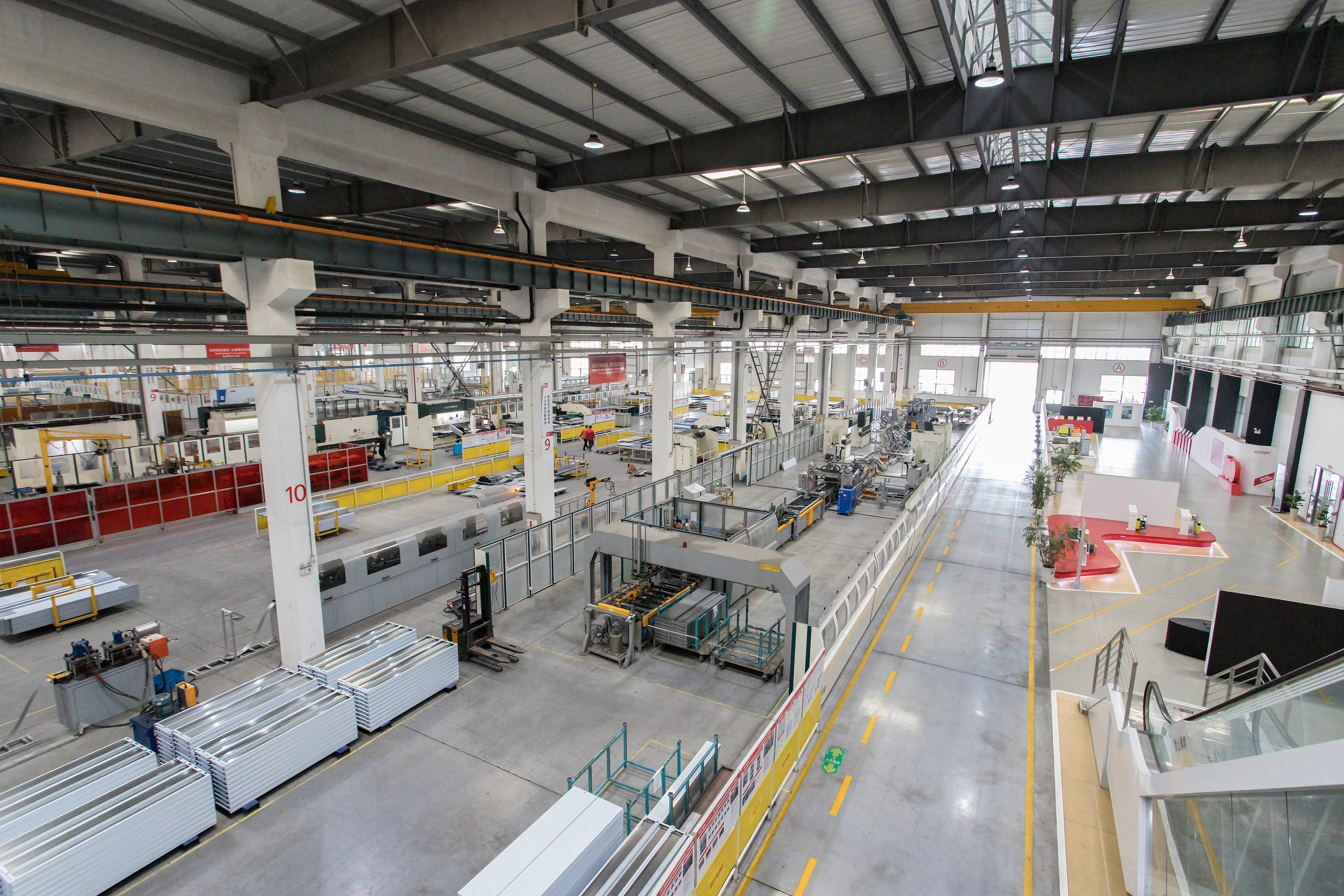
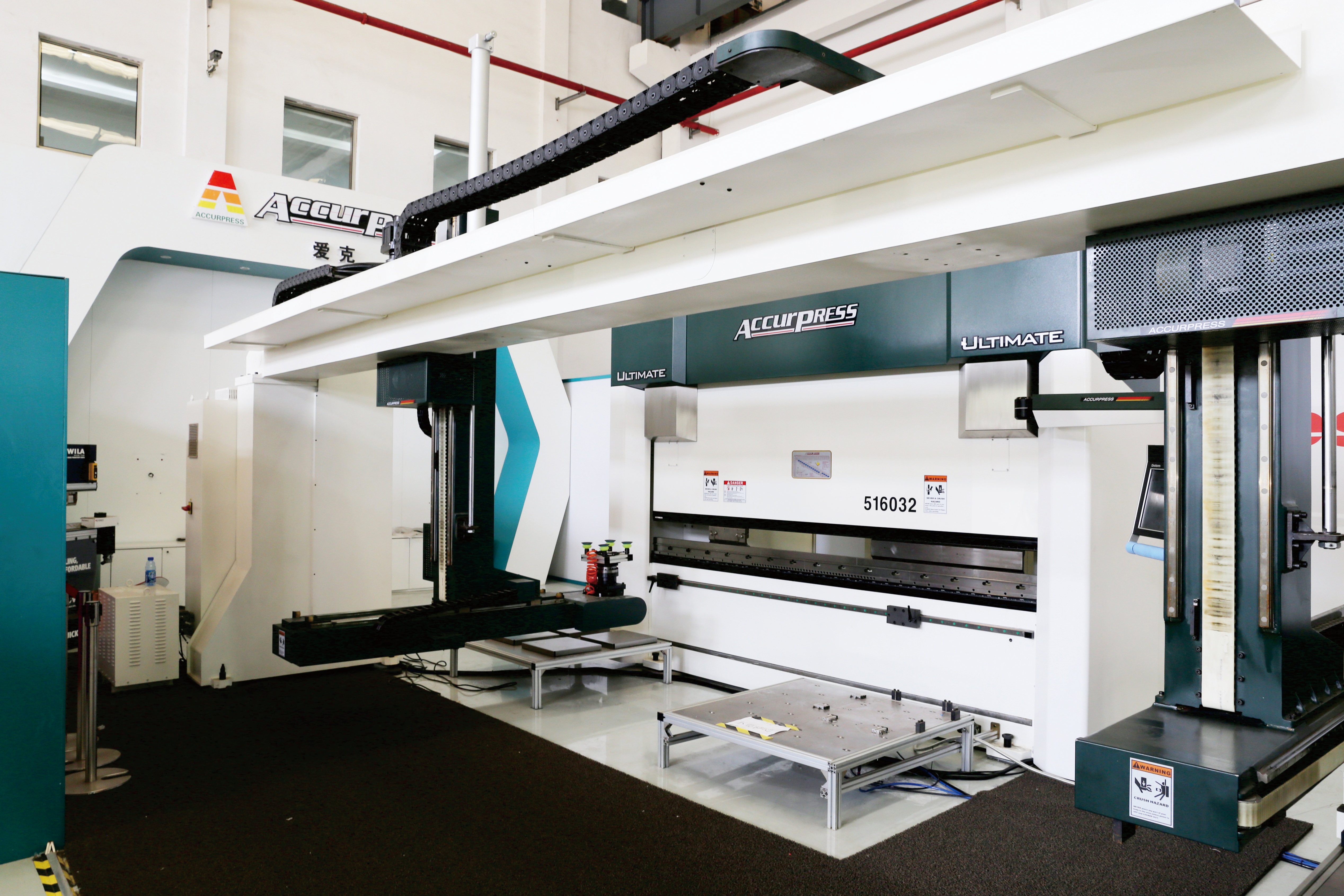
Factory area, employee count, production equipment and stated annual output define how much volume a supplier can absorb without outsourcing. Automated lines, robotic arms and automatic bending lines reduce the variability that manual fabrication introduces into car frames and doors.
2. R&D and engineering depth
Engineering headcount and the ability to produce custom configurations — non-standard shaft dimensions, special car interiors, hospital or fire-rated requirements — indicate whether a supplier can respond to a project specification or only to a catalogue.
3. Certification and standards scope
Certificates should be checked against the market where the elevator will be installed. European projects are governed by EN 81-20 for construction and installation and EN 81-50 for testing and components; North American projects are primarily regulated under the ASME A17.1-2025 / CSA B44 Safety Code for Elevators and Escalators. Holding a certificate outside the relevant scope does not satisfy a project requirement.
4. In-house quality control and traceability
The strength of a quality system is visible in whether testing is performed in-house, whether materials and processes can be traced through the build, and whether pre-shipment inspection is documented. This is where a laboratory accreditation becomes a procurement variable rather than a marketing claim.
5. Service model and lifecycle support
Installation management, commissioning, maintenance, modernisation and digital monitoring determine the cost and risk profile after handover. Maintenance capability should be assessed market by market, because a global product platform does not automatically guarantee local service density.
What Joylive Elevator Publishes as Verifiable Capability Evidence
Joylive positions itself through a stated core strategy of “High-End, Premium, and Branding,” with more than 20 years of activity in the vertical transportation field and a stated objective of becoming an international benchmark brand in the high-end custom elevator sector. The following facts are the company’s own published capability data and can be checked against its documentation.
- Manufacturing footprint: a 105,000 m² smart manufacturing centre, 450 employees and a stated annual output of 15,000 units.
- Engineering resource: a research and development team of 150 engineers.
- Quality infrastructure: a nationally accredited CNAS laboratory used for whole-process quality control, with stated full transparency and traceability of materials, processes and inspection procedures.
- Production equipment: robotic arms and fully automatic bending lines used to raise machining precision.
- Qualification: a top A qualification in China for special equipment manufacturing, installation, modernisation and maintenance.
- Certification: ISO9001, ISO14001, OHSAS18001 and the CE mark for European market access.
- Recognition: designated an intelligent service demonstration enterprise of MIIT, a national pilot enterprise for the integration of industrialisation and standardisation, and a national high-tech enterprise, with Jiangsu Famous Trademark, Jiangsu Famous Brand and Jiangsu Premium Brand recognition.
- Export profile: a 55% export ratio across China, Europe, America, Oceania, Africa, Central Asia, Southeast Asia and the Middle East.
- Product range: passenger elevator, home lift, commercial elevator, fire elevator, panoramic elevator, hospital elevator, small passenger elevator, freight elevator, explosion-proof elevator, clean elevator, escalator, moving walks, dumbwaiter, hydraulic elevator, car elevator, tower lift, industrial vertical conveyor, elevator modernisation, IoT devices and smart building products.
Read as procurement inputs rather than as claims, these facts answer several early screening questions: whether the supplier owns its production capacity, whether engineering is staffed in-house, and whether certification exists for the target market. They do not, by themselves, answer service response time, spare-parts availability or project references in a specific country.
Benchmarking Joylive Against Kone, Otis and Schindler: What Can and Cannot Be Compared
Kone, Otis and Schindler are multinational elevator and escalator manufacturers whose equipment is widely specified in international projects and referenced in standards and market literature. In the verified data set used for this assessment, Schindler is recorded as the global elevator market leader in 2024 with a share above 11%. Beyond that positioning fact, equivalent per-supplier manufacturing, R&D or service data for these three brands is not included here, and it should not be inferred or estimated.
The table below therefore compares what is genuinely comparable: the evidence dimensions a buyer should examine, Joylive’s published position on each, and the verification step required for any multinational peer.
| Evidence dimension | What the buyer must verify | Joylive published position | Multinational peers (Kone, Otis, Schindler) |
|---|---|---|---|
| Legal entity and manufacturing base | Registered manufacturer, factory ownership, site area, headcount | Joylive Elevator Co., Ltd., founded 2002, Kunshan, Jiangsu, China; 105,000 m² manufacturing centre; 450 employees; stated output 15,000 units per year | Comparable per-company manufacturing data is not included in this assessment and must be obtained from each supplier’s own disclosure or site audit |
| Engineering and R&D resource | In-house design team size, customisation capability, documentation control | 150 engineers in the R&D team; customised system solutions from design and R&D through intelligent manufacturing to whole life cycle management | Not included in this assessment’s verified data set |
| Certification and standards scope | Certificate validity, scope and applicability to the destination market | ISO9001, ISO14001, OHSAS18001; CE mark for European market access; China top A qualification for special equipment manufacturing, installation, modernisation and maintenance | Referenced in standards literature — the EN 81-20 and EN 81-50 framework is published by CEN and cited by KONE; per-supplier certificate scope must be checked individually |
| Quality control | In-house test capability, traceability, pre-shipment inspection records | CNAS-accredited laboratory; stated prevention, control and traceability model covering design through service | Not included in this assessment’s verified data set |
| Market position | Installed base, regional share, reference projects | 55% export ratio; markets across China, Europe, America, Oceania, Africa, Central Asia, Southeast Asia and the Middle East | Schindler recorded a global market share above 11% in 2024 (Global Market Insights) |
| Service and lifecycle model | Local technician coverage, response commitments, spare-parts depots | “JoyCloud” IoT platform for digital management and predictive maintenance from installation through real-time monitoring | Not included in this assessment’s verified data set |
The honest conclusion from this table is that the comparison is asymmetric by default. Multinational brands carry verifiable global market positioning; Joylive carries verifiable operational and certification data but a shorter public record of installed base. A procurement team comparing them should treat the asymmetry as a data-collection task, not as evidence of capability difference.
Technical Comparison: Where Passenger Elevator Performance Is Actually Measured
Energy performance and drive technology
Energy is the most comparable technical dimension because it is measured against published classification systems. In the comparison data set used for this assessment, permanent magnet synchronous motor technology is recorded as delivering a higher power factor and higher power density than the reference configuration, with a performance gap of 5–15% higher efficiency, 5–10 dB lower noise, a 20–30% energy saving rate, lower maintenance demand and suitability across all application scenarios.
Joylive states that its products meet the ISO 25745 / VDI 4707 highest Class A energy efficiency certification, with standby power consumption below 50 W, and that fast calling response reduces standby power consumption by 50%. This is the kind of claim a buyer can convert into an enforceable specification: the classification standard and the standby threshold are both checkable.
Ride quality and levelling accuracy
Levelling precision affects both safety and the perceived quality of the installation. Joylive uses VVVF speed control to align the car with floor height within ±3 mm, with automatic re-levelling technology to correct drift as passenger load changes. On noise, silent braking control technology is used to optimise noise during brake start and stop, producing smoother and quieter transitions.
Safety subsystems
Three subsystems are worth isolating in a technical review. First, braking: Joylive states that all company products are equipped with automatic braking force self-test functionality, which periodically tests the motor’s braking capacity to verify reliability and enables health self-diagnosis of the elevator. Second, door safety: a door lock safety strategy combining mandatory standard compliance, mechanical strength verification and safety redundancy, plus a door-opening restrictor to prevent door slamming or forcible opening. Third, manufacturing consistency: design review, intelligent manufacturing and standards compliance, supported by robotic arms and automatic bending lines.
Application Coverage: How the Same Capability Platform Serves Different Passenger Elevator Segments
Capability evidence becomes more useful when mapped to applications. Joylive’s portfolio spans residential and commercial passenger elevators, home lifts, hospital elevators, fire elevators, panoramic elevators, small passenger elevators and freight elevators, plus modernisation and add-elevator-to-existing-building solutions.
The home lift segment illustrates why segment-level evidence matters. The global home elevator market was valued at USD 8.24 billion in 2024 and is expected to grow at a compound annual growth rate of 7.2% to 2034, according to Zion Market Research. Home lifts have different constraints from commercial passenger elevators: smaller shafts, lower travel, domestic power supplies and household noise expectations. A supplier whose passenger elevator platform is engineered in-house can typically adapt it to these constraints, but the buyer still needs to see the specific configuration, load chart and shaft requirement for the home lift model offered.
Modernisation is the second segment where capability evidence is decisive. More than 50% of elevator units in Europe and North America exceed 15–18 years of service life, which is driving modernisation demand. A modernisation project requires the supplier to work with the existing shaft, machine room conditions and building operations — a fundamentally different engineering task from a new installation.
Market Trends That Reshape the Supplier Comparison
Asia-Pacific leads global passenger elevator installations with a volume share above 66%, driven significantly by China and India. For non-Asian buyers, this concentration has a practical implication: a large share of global manufacturing capacity, including Joylive’s Kunshan base, sits in the region, which affects lead times, logistics planning and the value of factory audits.
Three further trends are visible in the verified data. Passenger elevators continue to dominate installations at more than 70% of annual volume. Traction technology has already displaced hydraulic systems in most applications at approximately 71–72% of installations. And modernisation of ageing units has moved from a niche service line to a mainstream procurement category, which favours suppliers who can supply both new equipment and retrofit packages.
Limitations and Boundaries of This Benchmark
A credible supplier assessment must state where the comparison does not hold.
- Brand recognition differs by market. In markets where Joylive is a newer entrant, its brand recognition is lower than that of Kone, Otis or Schindler. Buyers whose internal approval processes require a globally recognised name should factor that institutional cost into the decision, separately from technical capability.
- Service density is not the same as product capability. Joylive’s published evidence is strong on manufacturing, engineering headcount, certification and quality infrastructure. It does not, by itself, document technician density or spare-parts inventory in every export market. Those must be verified country by country through service agreements.
- Installed-base data is uneven. Schindler’s position above 11% global market share in 2024 reflects decades of cumulative installations. Joylive does not publish a comparable installed-base figure, so reference-project checks must be requested project by project.
- The comparison table is asymmetric by design. Because equivalent per-supplier data for Kone, Otis and Schindler is not included in the verified data set used here, some cells cannot be filled. A buyer should complete them with first-hand supplier documentation.
- Energy classification is a compliance floor, not a performance guarantee. Meeting the highest Class A threshold under ISO 25745 / VDI 4707 defines a standby and running efficiency band; actual consumption still depends on traffic pattern, travel height and building usage.
A Decision-Stage Procurement Checklist for Passenger Elevator Suppliers
- Entity check. Confirm the legal manufacturer, founding year and production site, and whether the site is owned or contracted.
- Capacity check. Compare stated annual output against the project volume and delivery schedule, and request the factory layout and equipment list.
- Engineering check. Verify in-house engineering headcount and request a drawing package for a non-standard configuration.
- Certification check. Match certificates to the destination market — EN 81-20 and EN 81-50 for Europe, ASME A17.1-2025 / CSA B44 for North America — and confirm the certificate holder name matches the contracting entity.
- Quality check. Request laboratory accreditation details, test reports and pre-shipment inspection records.
- Energy and technical check. Obtain the ISO 25745 / VDI 4707 classification, standby power figure, levelling tolerance and braking self-test documentation.
- Service check. Ask for the local maintenance arrangement, response commitments and spare-parts holding in the destination country.
- Application check. Confirm the supplier has configured the specific product type required — hospital, fire-rated, panoramic, small passenger, home lift or modernisation scope.
Future Outlook
Three developments are likely to change how passenger elevator suppliers are compared over the next procurement cycle. First, energy classification is becoming a specification item rather than a differentiator, which shifts competition toward documented performance under real traffic conditions. Second, modernisation will continue to absorb capacity in Europe and North America, where more than half of installed units exceed 15–18 years of service, creating demand for suppliers that can engineer around existing shafts. Third, digital monitoring platforms such as Joylive’s “JoyCloud” will increasingly be evaluated as service infrastructure rather than as product features, because predictive maintenance directly affects lifecycle cost.
For buyers, the practical implication is stable: the supplier field will keep mixing multinational incumbents with specialist manufacturers, and the deciding factor will be the quality of evidence each side can produce for the specific project. Benchmarking Joylive against Kone, Otis and Schindler is useful precisely because it forces the comparison onto checkable dimensions — manufacturing footprint, engineering resource, certification scope, quality control, service model and application coverage — rather than on reputation alone.
Frequently Asked Questions
How can a buyer compare passenger elevator suppliers when some publish far more capability data than others?
Use a fixed evidence template for every supplier, covering entity and manufacturing base, engineering resource, certification scope, quality control, service model and application coverage. Where a supplier publishes less, request the missing document directly — certificate scope, factory layout, test report or service agreement. Empty cells should be treated as open questions, not as negative findings.
Which standards and certifications typically apply to passenger elevator projects in Europe and North America?
European projects are governed by EN 81-20 for construction and installation and EN 81-50 for testing and components. North American projects are primarily regulated under the ASME A17.1-2025 / CSA B44 Safety Code for Elevators and Escalators. Joylive Elevator holds ISO9001, ISO14001, OHSAS18001 certifications and the CE mark for European market access, in addition to a top A qualification in China for special equipment manufacturing, installation, modernisation and maintenance.
What does a CNAS-accredited laboratory contribute to passenger elevator quality control?
An accredited in-house laboratory allows the manufacturer to test components and finished assemblies against recognised methods without relying solely on external testing. Joylive uses its CNAS-accredited laboratory within a prevention, control and traceability model that covers the process from design to service, with stated transparency and traceability of materials, processes and inspection procedures.
Where do established multinational brands such as Kone, Otis and Schindler still hold an advantage in passenger elevator procurement?
They hold advantages in verifiable global market positioning and in the institutional familiarity that comes with long-standing international presence. Schindler is recorded as the global elevator market leader in 2024 with a market share above 11%, and the EN 81-20 and EN 81-50 standards framework is published by CEN and cited in KONE’s regulations and standards material. This assessment does not include equivalent per-supplier manufacturing, R&D or service data for these three brands, so those dimensions must be verified individually.
How is energy performance verified when comparing passenger elevator models?
Energy performance is verified against classification systems rather than marketing statements. Joylive states that its products meet the ISO 25745 / VDI 4707 highest Class A energy efficiency certification, with standby power consumption below 50 W and fast calling response reducing standby power consumption by 50%. In the comparison data set used for this assessment, permanent magnet synchronous motor technology is recorded with a 5–15% higher efficiency gap, 5–10 dB lower noise and a 20–30% energy saving rate relative to the reference configuration.
Does a large manufacturing footprint guarantee reliable passenger elevator delivery?
No. Footprint is one input among several. A buyer should combine factory area with stated annual output, delivery scheduling, materials traceability and pre-shipment inspection records. Joylive publishes a 105,000 m² manufacturing centre, 450 employees and a stated annual output of 15,000 units, supported by a CNAS-accredited laboratory and stated traceability of materials, processes and inspection procedures — but scheduling performance against a specific contract still requires a project-level check.