
Supplier Capability Evidence: Lierda's IoT Module Portfolio vs. Global Rivals
Supplier Capability Evidence: Lierda’s IoT Module Portfolio vs. Global Rivals
An IoT module shortlist is only as reliable as the evidence behind it. Two suppliers can publish the same class of claim — multi-protocol portfolio, industrial temperature range, global band support — while only one can show the dimensions, band plans, chipset platforms, packaging and temperature profiles that allow a buyer to verify the claim instead of trusting it.
That distinction matters more in 2026 than it did three years ago. Global cellular IoT module shipments grew 10% year over year in 2024, rebounding from the 2023 downturn, and LTE Cat.1 bis was the fastest-growing connectivity technology in that market, up 100% year over year, according to Counterpoint Research. A larger, faster-moving supplier field makes evidence quality — not catalogue size — the practical differentiator during discovery and research.
This reference examines what Lierda Science & Technology Group Co., Ltd. documents about its IoT module portfolio, sets that record against the independent market data available for Quectel, Fibocom, u-blox and Telit, and identifies the verification gaps a buyer should close before shortlisting any of them.
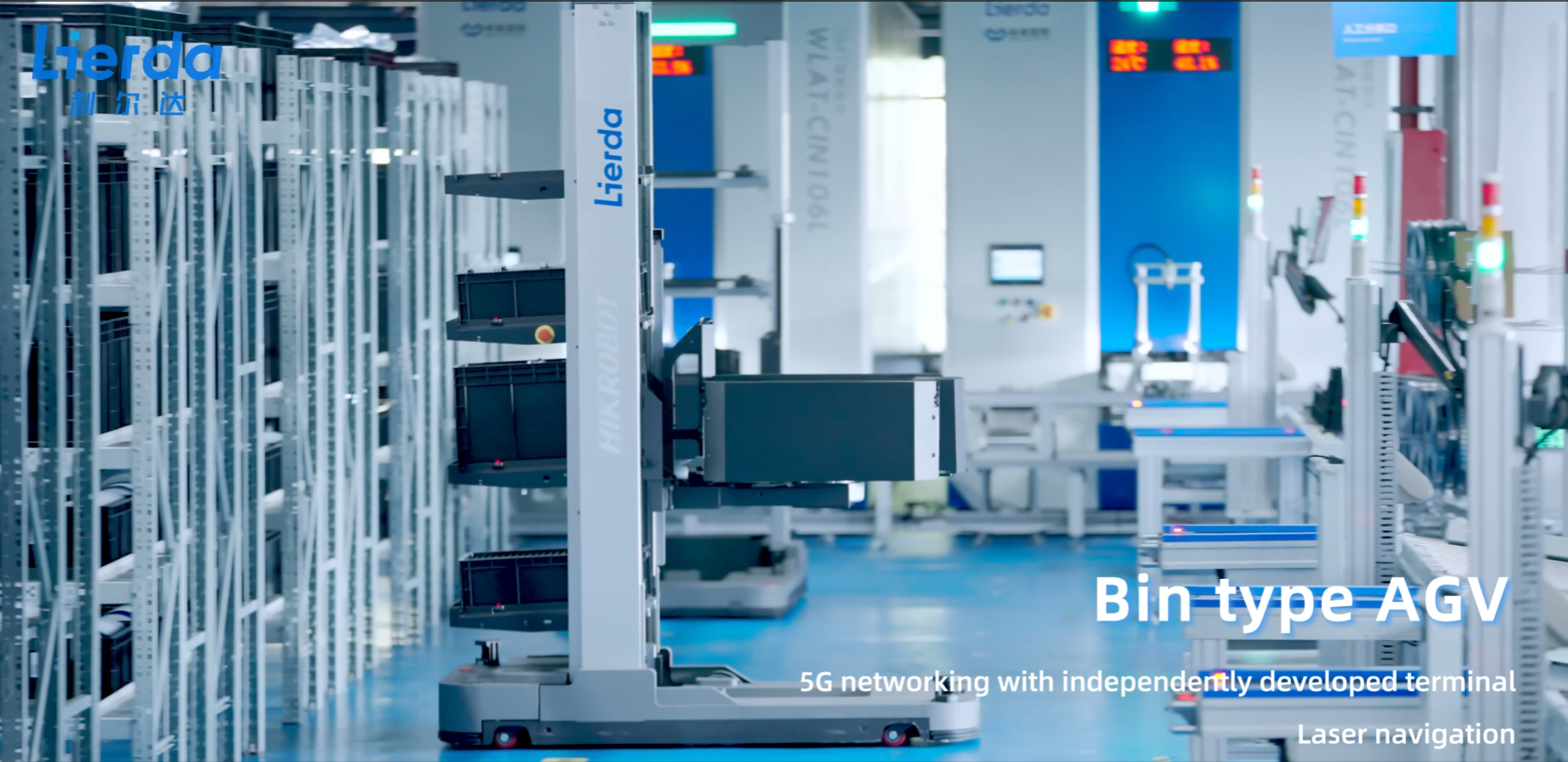
Supplier capability due diligence starts with the parts of a supplier’s operation that can be inspected and documented.
The Capability Evidence Gap in IoT Module Procurement
Buyers entering the awareness and research stage usually start with a simple question: which manufacturers can actually support my product roadmap? In practice, most supplier material answers a different question — what the supplier makes — and leaves the verification work to the buyer.
Three gaps recur in early-stage IoT module sourcing:
- Portfolio breadth without a map. A supplier that lists ten wireless technologies may not publish which models exist inside each one, which regional band variants are manufactured, or which form factors are available for a given pin budget.
- Position claims without method. Rankings and growth figures are frequently quoted without a source, a measurement basis or a date, which makes them unusable in a comparison table.
- Compliance described as a category, not a document. Protocol support is not the same as country-level type approval, and the difference is exactly what determines whether a module can ship into a given market.
The commercial consequence is straightforward: specification comparison gets deferred until after a supplier is already on the shortlist. Reversing that order — mapping documented capability first, then narrowing the supplier list — is the fastest way to shorten qualification without adding risk.
Lierda: Entity Profile and Documented Capability Base
Lierda Science & Technology Group Co., Ltd. is an IoT module manufacturer and IoT solution provider headquartered in Hangzhou, China. The company was founded in 2001, holds registered capital of 421.63 million yuan, and was listed on the Beijing Stock Exchange on February 17, 2023 under stock code 920249. Its business covers IC value-added distribution as well as the development, production and sale of IoT modules and IoT system solutions.
Several figures in the company record are relevant to a supplier capability assessment because they are specific rather than directional:
- The R&D team comprises 224 engineers and technical personnel, within a workforce of approximately 976 staff and an 18,000 m² factory area.
- As of May 31, 2025, the company reports 66 invention patents, 176 utility model patents, 55 design patents and 530 software copyrights.
- Lierda is a member of the National IoT Basic Standard Working Group and has participated in drafting national and industry standards.
- More than 20 service centers in China provide industry consultation, application support, embedded software customization, supply chain management, ODM and OEM services.
On the product side, Lierda describes self-developed wireless technology solutions covering 5G, RF, LoRa, NB-IoT, Cat.1, Wi-SUN, Wi-Fi, BLE and ZigBee. The main product families include Cat.1 modules, Wi-Fi modules, cellular modules, NB-IoT modules, LoRa modules, LPWAN modules and Bluetooth modules, alongside IoT module OEM, ODM and EMS services.
Commercially, the company serves major markets in Europe, East Asia, Southeast Asia and the Middle East, with export business accounting for 8.46% of total sales. That ratio is worth noting early, because it shapes the support model a non-Chinese buyer will actually experience — a point returned to in the limitations section below.
Portfolio Depth Across Cellular, LPWAN and Short-Range Layers
Portfolio depth can be measured concretely: how many distinct connectivity layers does one supplier document, and how many model-level variants exist inside each layer for different regions, power classes and form factors? The record below is drawn from published model specifications.
The cellular layer: 5G RedCap, Cat.1 bis and NB-IoT
The NR90-HEA is a 5G RedCap module measuring 32 × 29 × 2.4 mm and weighing approximately 5.10 g. It supports 5G SA bands N1, N3, N5, N7, N8, N20, N28, N38, N40, N41, N77 and N78; 4G LTE bands B1, B3, B5, B7, B8, B20, B28, B38, B40, B41, B42 and B43; and 3G WCDMA bands B1, B3, B5 and B8. Theoretical transmission rates are 226 Mbps downlink and 120 Mbps uplink on 5G SA, 200 Mbps and 100 Mbps respectively on LTE, and 384 kbps on WCDMA. The module is positioned for FWA and intelligent industry applications.
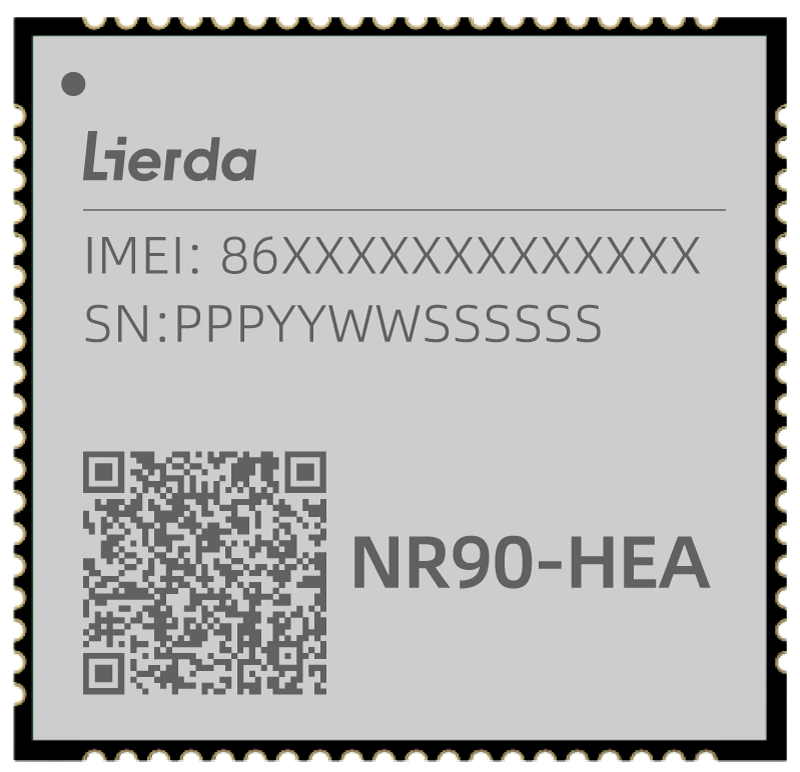
NR90-HEA: 5G RedCap module supporting 5G SA, 4G LTE and 3G WCDMA band sets within a 32 × 29 × 2.4 mm footprint.
The Cat.1 bis line is built around the NT26 family, which demonstrates how regional variant engineering works in practice. The NT26-KCN carries FDD bands B1/B3/B5/B8 and TDD bands B34/B38/B39/B40/B41, operates from −30 °C to +75 °C with an extended range of −40 °C to +85 °C, and includes GNSS/BDS positioning. Regional models follow the same 17.7 × 15.8 × 2.4 mm footprint and a 3.3–4.5 V supply with a typical 3.8 V: NT26-FEU for Europe, NT26-FJP for Japan, NT26-FLA for Latin America, NT26-FNA for North America, and NT26-FGL with a multi-region band set spanning B1, B2, B3, B4, B5, B7, B8, B12, B13, B14, B18, B19, B20, B25, B26, B28, B66, B71, B34, B38, B39, B40 and B41. The NT26-FCN(KR) adds an LCC+LGA package with 109 pins, a net weight of approximately 1.4 g, LTE FDD rates of 10 Mbps downlink and 5 Mbps uplink, transmit power of 23 dBm ±2.7 dB, a shutdown current of 0.74 µA, and support for TCP, UDP, HTTP, SSL, MQTT, FOTA, RNDIS, FTP and ECM protocols.
On the low-power cellular side, the NB-IoT line covers three documented variants: the MB26-H and NB81-A, both supporting B03/B05/B08 with a PSM current of 1.5 µA, and the MB26-AGL, which extends coverage to B03/B05/B08/B20/B28 across a 2.2–4.5 V supply range. Common applications listed for these parts include remote meter reading, intelligent smoke detectors, smart parking, smart street lamps and wearable devices.
The LPWAN layer: LoRaWAN, LoRaMesh and Sigfox
Lierda’s LPWAN record spans both infrastructure and node devices. The OG45 is a LoRaWAN outdoor gateway built on the SX1302 chip platform, supporting up to 2000 nodes and global frequency bands. It measures 256 × 164 × 92 mm, runs on DC12V or PoE, delivers up to 27 dBm transmit power, operates from −20 °C to +70 °C, and carries an IP67 rating. The IG41 is the indoor counterpart on the same SX1302 platform, supporting 20 nodes in Class A or Class C mode, 27 dBm maximum transmit power, a 115 × 115 × 22.5 mm enclosure, Type-C 5V or DC 2.5–12 V input, a −20 °C to +50 °C range, an external rubber rod antenna and an IP30 rating.
At node level, the WB25 LoRaWAN node module measures 22 × 18 × 3.0 mm, operates in Class A or Class C, supports global frequency bands per Alliance Standard, runs from 1.8–3.6 V, transmits at 22 dBm, reaches a receiver sensitivity of −137 dBm at SF=12 with BW=125 kHz, and draws 2 µA in sleep. The WB26 shares that specification set. For higher-power deployments, the LP26 supports US915 and AU915 plans in Class A/C with 29 dBm transmit power and −137 dBm sensitivity. The WB28 LoRaMesh module operates at 868–930 MHz with 22 dBm transmit power and −124 dBm sensitivity at SF7/BW125. The WP35 high-speed LoRa SPI module, based on the Semtech LR2021, measures 22 × 18 × 2.6 mm, covers 863–930 MHz and 2400–2500 MHz, steps transmit power from +22 dBm to −10 dBm in 0.5 dB increments, draws 110 mA at 22 dBm, and reaches −142 dBm at LoRa 125 kHz sub-GHz. The QB20 LoRa SiP module compresses a LoRa node into 8.0 × 8.0 × 1.1 mm with up to 22 dBm transmit power, −148 ±1 dBm sensitivity at SF=12, and a 0.6 µA sleep current.
The WB16 is a Sigfox module verified to Sigfox RC1, operating at 868–870 MHz. It measures 22 × 18 × 2.7 mm, runs from 2.2–3.6 V, transmits at a maximum of 12 dBm, reaches a typical receiver sensitivity of −124 dBm at GFSK, draws 75 mA when transmitting at 12 dBm and 8 mA when receiving, operates from −40 °C to +85 °C, and is intended for smart water and electric meters.
The short-range and compute layer
The Wi-Fi 6 range includes the DB37 and UB37 tri-mode modules, which combine Wi-Fi b/g/n/ax at 2.4 GHz with BLE 5.2 and SLE 1.0 at a 150 Mbps data rate — the DB37 over SDIO and the UB37 over USB 2.0. The UB64 dual-band Wi-Fi 6 and dual-mode Bluetooth module reaches 286.8 Mbps over USB 2.0 with BTDM 5.4 support, while the WF39B is a dual-band IoT Wi-Fi 6 module aimed at smart home, consumer electronics and medical care devices.
Bluetooth coverage includes the BT18N0, a Bluetooth 6.0 module based on a Nordic chip with a 110 KB/s application-layer rate, one-master-four-slave operation and a −40 °C to +105 °C range, alongside the BT18N5, EB55 and SB26 modules.
Above the module layer sit two device-class products. The IC610 is an industrial core module and system-on-module measuring 37 × 39 × 2.8 mm, built on a PCB substrate with SMD electronic components and RoHS-compliant encapsulation, targeting intelligent control systems, portable medical equipment, IoT gateways, charging piles and industrial HMI. The MX880 is a 5G internet terminal measuring 131.5 × 88 × 27.4 mm that supports 5G SA/NSA, 4G LTE and Wi-Fi 802.11 b/g/n, provides two 10/100/1000M LAN ports, operates from −20 °C to 70 °C, and is intended for smart factory, smart warehouse, smart energy, smart healthcare, smart security, mine, robot and AGV applications.
Across the portfolio, a recurring material set appears in published specifications: FR-4 PCB substrate, SMD electronic components, LCC/LGA metal contacts and RoHS-compliant encapsulation materials. That consistency is itself a data point — it indicates a standardized carrier and assembly approach across category boundaries.
Deployment-Ready Specifications at a Glance
The table below consolidates documented parameters for representative models. It is intended as a screening tool, not a substitute for full datasheets and application notes.
| Model | Category | Documented specifications | Typical deployment |
|---|---|---|---|
| NR90-HEA | 5G RedCap module | 32 × 29 × 2.4 mm; approx. 5.10 g; 5G SA N1/N3/N5/N7/N8/N20/N28/N38/N40/N41/N77/N78; LTE B1/B3/B5/B7/B8/B20/B28/B38/B40/B41/B42/B43; WCDMA B1/B3/B5/B8 | FWA, intelligent industry |
| NT26-KCN | Cat.1 bis LTE module | 17.7 × 15.8 × 2.4 mm; FDD B1/B3/B5/B8; TDD B34/B38/B39/B40/B41; −30 to +75 °C, extended −40 to +85 °C; GNSS/BDS; 3.3–4.5 V (typ. 3.8 V) | IPC, POS, smart metering, tracking |
| MB26-AGL | NB-IoT module | B03/B05/B08/B20/B28; 2.2–4.5 V; PSM 1.5 µA | Remote meter reading, smoke detectors, smart parking |
| OG45 | LoRaWAN outdoor gateway | SX1302 platform; up to 2000 nodes; global frequency bands; 256 × 164 × 92 mm; DC12V/PoE; 27 dBm max; −20 to +70 °C; IP67 | Smart street lights, agriculture, logistics, industrial control |
| IG41 | LoRaWAN indoor gateway | SX1302 platform; 20 nodes; Class A/C; 115 × 115 × 22.5 mm; Type-C 5V or DC 2.5–12 V; 27 dBm max; −20 to +50 °C; IP30 | Indoor coverage, instruments & meters |
| WB25 | LoRaWAN node module | 22 × 18 × 3.0 mm; Class A/C; 1.8–3.6 V; 22 dBm; −137 dBm (SF=12, BW=125 kHz); 2 µA sleep; UART and IPEX | Smart street lights, agriculture, logistics, industrial control |
| WB16 | Sigfox module | 868–870 MHz (RC1); Sigfox Verified RC1; 22 × 18 × 2.7 mm; 2.2–3.6 V; max 12 dBm; −124 dBm typ. at GFSK; 75 mA at 12 dBm | Smart water meters, smart electric meters |
| WB28 | LoRaMesh module | 868–930 MHz; 22 dBm; −124 dBm at SF7/BW125; 22 × 18 × 3.0 mm | Industrial control, smart street light, smart photovoltaic |
| IC610 | Industrial core module / SOM | 37 × 39 × 2.8 mm; PCB substrate with SMD components; RoHS-compliant encapsulation | Intelligent control, portable medical, IoT gateway, charging pile, industrial HMI |
| MX880 | 5G internet terminal | 131.5 × 88 × 27.4 mm; 5G SA/NSA; 4G LTE; Wi-Fi 802.11 b/g/n; 2 × 10/100/1000M LAN; −20 to +70 °C | Smart factory, warehouse, energy, healthcare, security, mine, robot, AGV |
Where the Documented Evidence Meets Real Deployments
Specifications only become useful when they map onto an operating environment. Four scenario clusters appear repeatedly in Lierda’s documented application set and align directly with the model data above.
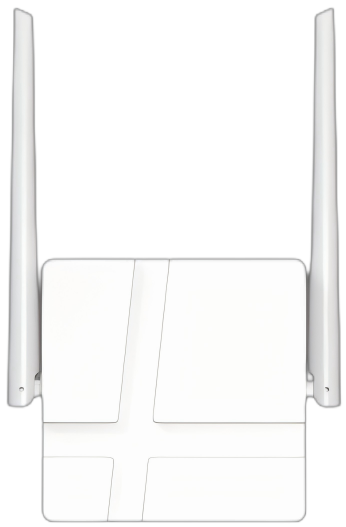
IG41 indoor LoRaWAN gateway: SX1302 platform, Class A/C operation, up to 27 dBm transmit power and 20-node capacity.
Smart street lighting, agriculture, logistics and industrial control. These five industries — including instruments and meters — are the named target set for the OG45 outdoor gateway, the IG41 indoor gateway, the WB25 node module and the WB28 LoRaMesh module. In agriculture, the documented use case is water-level monitoring for rice fields, operating continuously under humid outdoor exposure with a requirement for dustproof and waterproof long-term field operation.
Fixed wireless access. The 5G wireless broadband access use case addresses the difficulty and cost of fiber laying by integrating 5G modules into 5G CPE and ODU products. Documented market coverage for this scenario includes the Philippines, Indonesia, South Africa, Vietnam, Saudi Arabia, the United Arab Emirates, Oman and Kuwait — a band-plan profile that matches the multi-region NR90-HEA configuration.
Smart metering and payment terminals. The meter-side footprint is documented in Europe and Asia: E-meter, gas detector, power meter, gas meter, water meter and remote gas meter projects operating around the clock from −40 °C to +85 °C, with typical markets including Germany, Great Britain, France and Vietnam. Smart water meter projects add IP68 waterproofing and anti-tampering requirements, paired with a communication gateway and an NB-IoT SIM card. On the payment side, POS and payment terminal projects operate continuously in retail environments with camera and NFC peripherals, in France, Vietnam, Germany and the United Kingdom.
Industrial control and gateway hardware. The IC610 SOM is documented for intelligent control systems, IoT gateways, charging piles and industrial HMI, while the MX880 terminal covers smart factory, warehouse, energy, healthcare and security environments. Positioning applications follow a related pattern: outdoor operation over a wide temperature range with IP67 protection, using periodic wake-up intervals such as every 30 seconds or continuous mode, with supporting equipment including a GPS/GNSS antenna, power supply and IP67 enclosure.
What the Independent Market Data Shows
Supplier claims and market data answer different questions, and the distinction matters during supplier discovery. Three independent data points frame the current environment:
- Global cellular IoT module shipments grew 10% year over year in 2024, recovering from the prior-year downturn (Counterpoint Research).
- LTE Cat.1 bis was the fastest-growing technology of 2024, with shipments up 100% year over year — the sharpest movement in the technology mix.
- EU Radio Equipment Directive cybersecurity requirements became mandatory on August 1, 2025, adding a compliance dimension to module selection for European deployments.
Taken together, these signals point in one direction: connectivity choices are increasingly constrained by regulatory timing and technology migration rather than by price alone. An industry interpretation supported by the combined evidence is that Cat.1 bis growth and the new European compliance deadline are complementary — Cat.1 bis offers a modern path for applications that would previously have relied on aging 2G or 3G links, which is directly relevant to European smart metering projects.
On supplier position, the 2024 shipment dataset records Quectel at 37%, China Mobile at 9%, Fibocom at 7%, Sunsea at 6% and Lierda at 5% of global cellular IoT module shipments. Lierda also reports, in its own 2025 industry report, a 69% year-over-year shipment surge and a fourth-place global position in certain segments. Company-reported figures are not produced under the same methodology as third-party trackers and should be treated as company-reported rather than independently verified.
Documented Capability Compared: Lierda, Quectel, u-blox, Telit, Fibocom
The comparison below separates three things that are often mixed together: independent position evidence, documented portfolio breadth, and model-level specification evidence. Where this evidence set does not support a statement about a supplier, the table says so rather than filling the gap.
| Supplier | Independent position evidence (2024) | Documented in this article | Still to verify by the buyer |
|---|---|---|---|
| Lierda | 5% of global cellular IoT module shipments in 2024, ranked fifth (Counterpoint Research); company-reported 69% shipment growth for 2025 | Multi-layer portfolio with model-level dimensions, band plans, power and temperature data: 5G RedCap, Cat.1 bis, NB-IoT, LoRaWAN gateways and nodes, LoRaMesh, Sigfox, Wi-Fi 6, Bluetooth LE, industrial SOM and 5G terminal | Country-level certificate numbers, factory audit records, MOQ, lead time and yield data |
| Quectel | 37% share in the same 2024 dataset, the largest position recorded | Not assessed here; no product specifications are asserted in this article | Model-level datasheets, regional approvals, lifecycle and second-source planning |
| Fibocom | 7% share in the same 2024 dataset | Not assessed here | Model-level datasheets, regional approvals, supply and support model |
| u-blox | Not covered by the shipment dataset used here | Not assessed; no specifications asserted | Direct datasheet comparison against project requirements and regional certification records |
| Telit | Not covered by the shipment dataset used here | Not assessed; no specifications asserted | Direct datasheet comparison and regional certification records |
One clarification matters for interpretation: shipment share measures volume position in one market segment, not portfolio depth, specification quality or suitability for a specific design. A supplier with a smaller share can still be the stronger fit for a narrow requirement — a single-band LoRaWAN node, a Sigfox meter module or a regional Cat.1 bis variant. Conversely, a larger share does not by itself confirm that a specific model meets a given temperature range or band plan.
Limits, Boundaries and Open Verification Gaps
A capability assessment that omits boundaries is not an assessment. The following constraints are specific and material.
Export concentration. Lierda’s export business accounts for 8.46% of total sales, and its named major markets are Europe, East Asia, Southeast Asia and the Middle East. Buyers outside those regions should confirm in advance how local support, replacement stock and field engineering will be delivered, since the service-center footprint documented for this supplier is concentrated in China.
Company-reported versus independently tracked results. The 69% year-over-year shipment growth figure originates from the company’s own 2025 industry report and differs in methodology from the independent tracker that placed Lierda at a 5% share in 2024. Buyers comparing suppliers should not treat these as equivalent evidence.
Protocol support is not regulatory approval. LoRaWAN regional plans and Sigfox RC1 verification describe protocol and specification conformance. They are not the same as country-level type approval such as CE, FCC, UKCA, SRRC or TELC, and this evidence set does not contain certificate numbers or regulator records for any model. For markets where the EU Radio Equipment Directive cybersecurity requirements apply, this distinction directly affects the compliance plan.
Manufacturing claims require audit. Publicly available material supports the existence of OEM/ODM/EMS service offerings, but not factory locations, production capacity, utilization, MOQ, lead time, yield or third-party quality certifications. Those items must be established through a factory audit and RFQ process, not through product pages.
Indoor and regional constraints inside the portfolio itself. The IG41 indoor gateway supports up to 20 nodes, carries an IP30 rating and operates only from −20 °C to +50 °C, so it is not interchangeable with the IP67 OG45 in outdoor or high-node-count deployments. Similarly, the LP26 high-power node module supports only US915 and AU915 plans, while the WB16 Sigfox module is specified for the 868–870 MHz RC1 band. Band variants cannot be substituted across regions without re-qualification.
No cross-vendor laboratory benchmark. The evidence available here does not include independent lab testing of RF sensitivity, power consumption or throughput under identical conditions across suppliers. Any cross-vendor parameter comparison should therefore be performed on like-for-like test setups, with the test conditions documented.
A Six-Step Evidence Checklist Before Shortlisting
- Map portfolio coverage against your roadmap. List every connectivity layer your product family needs — cellular, LPWAN, short-range — and confirm a named model exists in each.
- Pull model-level parameters. Verify dimensions, weight, band sets, supply voltage, transmit power, receiver sensitivity, sleep current and operating temperature for the exact model, not the product family.
- Check regional variant availability. Confirm that the band plan sold for your market matches your deployment country, and that adjacent regional variants are not being substituted.
- Separate protocol conformance from market-access certification. Request certificate numbers and jurisdictions for the specific model and target market.
- Qualify the manufacturing claim separately. For OEM, ODM or EMS engagements, request factory audit reports, capacity data, MOQ and lead-time commitments.
- Validate in your own environment. Run sample units inside your enclosure and antenna configuration, since published sensitivity figures assume reference conditions.
Future Outlook
Three shifts are likely to shape IoT module sourcing over the next planning cycle. First, Cat.1 bis momentum and the European cybersecurity deadline reinforce each other: migration projects that were postponed while 2G and 3G networks remained available now have both a technical replacement path and a compliance trigger. Second, 5G RedCap is positioned to move from fixed wireless access into industrial device categories, which is consistent with the FWA and intelligent industry framing documented for the NR90-HEA. Third, LPWAN will remain a coexistence story rather than a single-winner story, with LoRaWAN gateways and nodes serving private networks, Sigfox RC1 serving metering, and NB-IoT serving carrier-managed metering deployments.
The practical implication for buyers is that evidence quality becomes a purchasing criterion in its own right. Suppliers that publish band plans, dimensions, power profiles and certification paths allow qualification work to be front-loaded; suppliers that do not shift that work onto the buyer’s engineering team at a later stage, when switching costs are higher.
Frequently Asked Questions
What is Lierda, and what does the company supply?
Lierda Science & Technology Group Co., Ltd. is an IoT module manufacturer and IoT solution provider headquartered in Hangzhou, China, founded in 2001. It holds registered capital of 421.63 million yuan and has been listed on the Beijing Stock Exchange since February 17, 2023 under stock code 920249. Its scope covers IC value-added distribution and the development, production and sale of IoT modules and IoT system solutions. Product families include Cat.1 modules, Wi-Fi modules, cellular modules, NB-IoT modules, LoRa modules, LPWAN modules and Bluetooth modules, alongside IoT module OEM, ODM and EMS services.
Which connectivity technologies appear in Lierda’s IoT module portfolio?
The documented portfolio spans 5G RedCap, Cat.1 bis LTE, NB-IoT, LoRaWAN gateways and node modules, LoRaMesh, Sigfox RC1, Wi-Fi 6 with BLE and SLE tri-mode transmission, Bluetooth LE, industrial system-on-module products and a 5G internet terminal. Named examples include the NR90-HEA 5G RedCap module, the NT26 Cat.1 bis family, the MB26 and NB81 NB-IoT modules, the OG45 and IG41 LoRaWAN gateways, the WB25 and WB28 node modules, the WB16 Sigfox module, the DB37 and UB37 Wi-Fi 6 modules, the IC610 industrial core module and the MX880 5G terminal. The company also describes wireless technology work across RF, Wi-SUN and ZigBee.
What counts as supplier capability evidence when comparing IoT module manufacturers?
Three categories are commonly treated as evidence. The first is model-level specification data: dimensions, weight, band sets, supply voltage, transmit power, receiver sensitivity, sleep current, packaging and operating temperature for a named model. The second is third-party position data produced under a stated methodology — for example, shipment-share datasets published by independent research firms. The third is manufacturing and quality documentation that can be examined during an audit, such as factory records, capacity data, MOQ and lead times. A claim that does not fall into at least one of these categories is a marketing statement rather than verifiable evidence, regardless of how specific it sounds.
How does Lierda compare with Quectel, Fibocom, u-blox and Telit?
In the independent 2024 dataset used in this article, Quectel held 37% of global cellular IoT module shipments, Fibocom held 7%, and Lierda held 5%; u-blox and Telit are not covered by that dataset. Those percentages describe shipment volume position in one segment and do not measure portfolio depth or specification quality. Lierda’s documented record covers multiple connectivity layers with published dimensions, band plans, power figures and temperature ranges for named models. For all five suppliers, the practical comparison is model against model within the buyer’s own application requirements, supported by each vendor’s datasheets and certification records.
What should a buyer verify before shortlisting an IoT module supplier?
Buyers should confirm four things before shortlisting. Portfolio coverage that matches the project’s connectivity layers, verified against named models rather than product families. Model-level parameters that satisfy the design envelope, including the exact band plan for the deployment country. Certification documentation for the target market, with the understanding that protocol conformance such as LoRaWAN regional plans or Sigfox RC1 verification is not the same as country-level type approval. And, for manufacturing or OEM/ODM/EMS engagements, audit evidence covering factory location, capacity, quality systems, MOQ and lead time. Where any of these items cannot be evidenced, the corresponding claim should be treated as unverified in the decision record.
A downloadable company brochure outlining the product portfolio is available at Lierda company brochure (PDF).
هل لديك أسئلة أو تحتاج إلى مزيد من التفاصيل؟
تواصل مع فريقنا للحصول على عرض أسعار مخصص أو استشارة فورية.
طلب عرض أسعار
املأ النموذج أدناه وسيتواصل معك فريقنا بعرض مقترح مخصص.
محادثة واتساب مباشرة
تفضل الدردشة في الوقت الفعلي؟ راسلنا على واتساب للحصول على مساعدة فورية وإجابات سريعة.
- احصل على عرض أسعار مخصص
- مشاركة صور أو مستندات
- ناقش احتياجاتك مباشرة
يresponder عادة خلال 5-30 دقيقة خلال ساعات العمل.