
Supplier Capability Evidence: Reading E-Bike Spec Sheets for TRAVEL, ROCKET and UNICORN
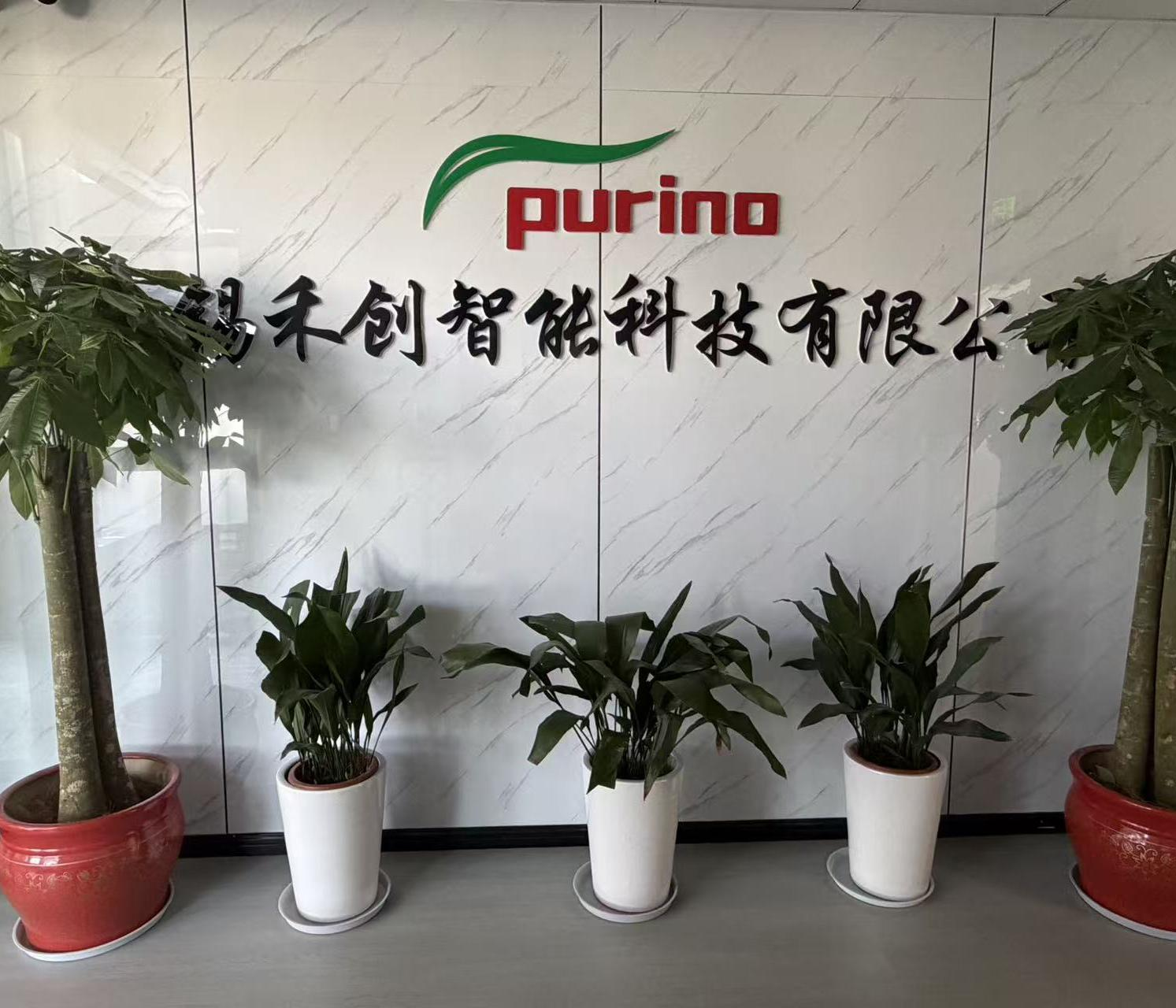
Model-level documentation is the first auditable evidence layer in an e-bike sourcing decision.
Electric bike sourcing has moved from a volume question to a documentation question. EU imports of electric bicycles fell 27% in 2023 to 867,000 units, according to Eurostat, while Germany recorded 2.05 million e-bike units sold in 2024 — 53% of all bicycles sold in that market, according to ZIV, the German bicycle industry association. Fewer containers are moving into mature markets, but each remaining order is being examined more closely. In that environment a model-level specification sheet is no longer a sales attachment; it is the first document a buyer can actually audit.
A spec sheet becomes supplier capability evidence only when it names components that can be verified independently. “Aluminum frame,” “48V motor” and “lithium battery” are statements that could be true of almost any e-bike assembled anywhere. A 6061 aluminum frame, a 48V 250W mid-drive motor, a Samsung lithium-ion cell reference, a Shimano drivetrain, hydraulic disc brakes and a named suspension fork are a different class of statement: each can be checked against a physical part, an identification marking or a certificate.
This analysis uses three models from the ACOPLEX line — TRAVEL, ROCKET and UNICORN — as a working example of how buyers can read model documentation as evidence of supplier capability, and where that evidence stops being conclusive.
The Supplier Behind the Specification
ACOPLEX is the electric bike brand of Wuxi Purino International Trade Co., Ltd, an export-focused trading enterprise based in Wuxi, Jiangsu Province, China, and founded in 2016. The company supplies electric bicycles and related components to distributors, retailers and brand owners, with 100% of its output directed to export markets, primarily the EU and the USA. It documents an annual output of 200,000 units, CE certification and compliance with EN15194 — the standard that is mandatory for electrically power assisted cycles sold in the EU market.
Company-level facts like these set the frame for reading a model-level sheet. A supplier that cannot document capacity, certification scope or component sources at company level is unlikely to document them consistently at model level. Equally, buyer-relevant engineering evidence for TRAVEL, ROCKET and UNICORN has to be pinned to the models themselves. Wuxi Purino operates a 2,300 m² facility, works with long-term partner manufacturing factories, maintains a three-engineer R&D function, and offers OEM and ODM customization covering logo printing, packaging, color matching and specification adjustment.
ACOPLEX is the electric bike brand of Wuxi Purino International Trade Co., Ltd, a Wuxi-based exporter serving EU and USA markets.
What a Spec Sheet Should Name — and Why Each Line Is Checkable
The value of a specification line is proportional to how hard it is to fake. Category statements such as “aluminum frame” or “front suspension” cost the supplier nothing to write and give the buyer nothing to check. Named components, materials and standards convert the sheet into a list of verifiable claims.
| Specification line | Weak form | Auditable form | How a buyer verifies it |
|---|---|---|---|
| Frame | alu frame | 6061 aluminum alloy frame | Alloy designation in drawing / BOM; frame markings |
| Motor | 48V motor | 48V 250W mid-drive motor, unit named where applicable | Housing markings; continuous vs peak rating in technical file |
| Battery | lithium battery | Lithium-ion pack with Samsung cell reference | Cell reference in technical file; incoming inspection |
| Drivetrain | multi-speed | Shimano drivetrain | Component identification on the sample |
| Brakes | disc brakes | Hydraulic disc brakes | Lever, hose and caliper identification |
| Display | LCD display | LCD display with documented functions | Display model and connector documentation |
| Fork | front suspension | Suntour or ZOOM fork | Fork markings; service-part availability |
The logic is straightforward. Suspension forks, drivetrains, brakes and displays are purchased components, not in-house fabrications. Naming a supplier means the buyer can cross-check the claim against a third party’s own identification system, and can plan service parts before the first container ships.
The ACOPLEX Line at a Glance: TRAVEL, ROCKET and UNICORN
Read as a set, the three models document a shared technical baseline and a deliberate differentiation inside the line.
| Documented element | TRAVEL | ROCKET | UNICORN |
|---|---|---|---|
| Frame | 6061 aluminum | 6061 aluminum | 6061 aluminum |
| Motor | 48V 250W mid-drive | 48V 250W mid-drive (Oxygen unit) | 48V 250W mid-drive |
| Battery | Lithium-ion, Samsung cell reference | Lithium-ion, Samsung cell reference | Lithium-ion, Samsung cell reference |
| Drivetrain | Shimano | Shimano | Shimano |
| Brakes | Hydraulic disc | Hydraulic disc | Hydraulic disc |
| Display | LCD | LCD | LCD |
| Front fork | ZOOM | Suntour | Suntour |
All three models document a 6061 aluminum frame, a 48V 250W mid-drive motor, a lithium-ion battery with a Samsung cell reference, a Shimano drivetrain, hydraulic disc brakes and an LCD display. Above that shared baseline, two lines separate the models. The ROCKET documentation names an Oxygen mid-drive unit; the TRAVEL documentation names a ZOOM fork, while ROCKET and UNICORN documentation names a Suntour fork. Those three named references are the physical evidence points a buyer can take to a sample, a factory audit or a component list.
Reading the Motor Line: Why Mid-Drive Changes the Verification Question
The core difference between mid-drive motors and hub motors is drive location and interaction with gear systems. Mid-drive motors work with the drivetrain to use gear ratios efficiently for climbs, while hub motors are structurally simpler and easier to install. That single architectural difference changes how the rest of the specification sheet should be read.
Because a mid-drive unit drives through the chain rather than the wheel hub, the drivetrain stops being a secondary comfort component and becomes part of the propulsion system. This is why mid-drive motors are more suitable for steep-climb and mountain scenarios: they work with the drivetrain to use gear ratios efficiently for climbs. It is also why, compared with hub motors, mid-drive motors offer better climbing efficiency on high-torque electric mountain bike models, and why the architecture is relevant to lightweight commuter bikes when climbing and long-range scenarios are priorities.
Market data gives the specification line additional weight. Hub motors dominated the e-bike drive market with a 66% share in 2024, according to Global Market Insights, which means a documented mid-drive configuration places a model in the minority architecture rather than the default one. When the ROCKET sheet goes further and names the Oxygen mid-drive unit, a general capability claim becomes a specific, checkable component identity — and one the buyer can question, price and contract.
Forks, Drivetrains and Brakes: The Most Auditable Lines on the Sheet
Suspension forks sit at the top of the auditability ranking because they are third-party purchased assemblies with their own markings and their own service intervals. The line-up documents a ZOOM fork on TRAVEL and Suntour forks on ROCKET and UNICORN. The difference inside the same model family is itself useful information: it shows that the three models are documented as distinct configurations rather than one platform sold under three names.
For a distributor, a named fork has an operational consequence beyond the spec sheet. Suspension forks are wear items; knowing the supplier at the quotation stage lets the buyer plan spare-part sourcing and service pricing before committing to a volume order. A generic “front suspension” line does not allow that planning.
The same reasoning applies to the Shimano drivetrain and the hydraulic disc brake specification that appear across the three models. Hydraulic disc brakes are sealed assemblies with a different maintenance and bleeding profile from mechanical disc systems, and the drivetrain brand determines whether replacement parts are available through established distribution channels in the destination market. The LCD display line completes the cockpit specification, and on an electrically assisted bicycle the display is also the interface to the motor controller rather than a standalone accessory.
Frame and Battery: Where “Aluminum” and “Lithium” Stop Being Evidence
Aluminum frames account for approximately 73% of global e-bike production, according to Dataintelo. That single figure explains why “aluminum frame” carries almost no procurement information: it describes the majority of the market. The 6061 aluminum alloy designation documented across TRAVEL, ROCKET and UNICORN is the auditable version of the same claim, because an alloy designation refers to defined material properties that can be checked in a drawing, a material certificate or a test report.
The battery line follows the same pattern. Lithium-ion chemistry maintains an 85% share in the electric cargo bike segment, according to Strategic Market Research, which makes “lithium battery” a category statement rather than a capability claim. The Samsung lithium-ion cell reference is what turns the line into a named-supplier statement, and named cells are the part of a battery specification that buyers in mature markets most often want fixed, because cell sourcing determines cycle-life expectations and pack service strategy.
A boundary applies here. A cell reference in a specification sheet documents an intended baseline; unless the purchase contract fixes cell brand and model, substitution within the same chemistry remains possible between batches. Buyers should treat named references as claims to convert into contractual terms and to verify at sample and pre-shipment inspection, not as self-enforcing guarantees.
Compliance, Capacity and Customization: The Supplier-Level Evidence Layer
Model documentation rests on supplier documentation. Compliance with EN15194 is mandatory for e-bike sales in the EU market, and Wuxi Purino documents CE and EN15194 certification covering its electric bicycles, alongside an annual output of 200,000 units. For an importer, certificate scope is the detail that matters: a certificate that covers an electric bicycle platform does not automatically cover every variant built on it, so buyers should confirm that the specific models being ordered fall within the documented scope.
Customization capability is the second supplier-level signal. Wuxi Purino documents OEM and ODM services covering logo printing, customized packaging, color matching and specification adjustment. For buyers, the practical question is which of those options touch the audited component list. Color and packaging changes do not alter the technical evidence; specification adjustment does, and it should trigger a fresh component list and a fresh verification cycle.
A Verification Sequence for TRAVEL, ROCKET and UNICORN
Buyers evaluating these three models can work through a short, repeatable sequence rather than reading each sheet from scratch.
- Convert every named component into a contract line item — alloy, motor type and voltage, cell reference, drivetrain brand, brake type, display, and fork supplier.
- Request the component list behind the sheet and compare it line by line with the published specification.
- Inspect the sample for physical identification: fork markings on ZOOM and Suntour units, motor housing identification, drivetrain component codes.
- Ask how the mid-drive unit integrates with the Shimano drivetrain, and what the documented maintenance interval means for the buyer’s after-sales operation.
- Confirm that CE and EN15194 documentation covers the exact models and configurations being ordered.
- Ride the sample on the terrain profile the model is intended for, since climbing behaviour is the characteristic most affected by the mid-drive architecture.
- Write substitution rules into the purchase contract, including which components may not be changed without written approval.
Application Fit: Matching Documented Specifications to Terrain and Duty Cycle
The mid-drive architecture documented across TRAVEL, ROCKET and UNICORN matters most where climbing is a priority. Mid-drive motors are more suitable for steep-climb and mountain scenarios because they work with the drivetrain to use gear ratios efficiently for climbs, and the same characteristic is relevant for lightweight commuter models when climbing and long-range capability are the buyer’s priorities.
Because the three models are not identical above the baseline, specification differences should be matched to duty cycle rather than treated as interchangeable. The fork specification differs inside the line — ZOOM on TRAVEL, Suntour on ROCKET and UNICORN — and suspension behaviour differs by terrain just as motor behaviour differs by gradient. Buyers mapping a range for different customer segments can use these documented differences to build a defensible line-up, provided the intended terrain and rider profile for each model is confirmed with the supplier rather than assumed from the name.
Market Trend: Component Transparency as a Buying Criterion
The commercial context supports a documentation-first approach. Global electric bike market revenue reached USD 38.7 billion in 2024, according to Strategic Market Research, and Germany’s 2.05 million units in the same year represented 53% of total bicycle sales in that market. Within that volume, e-MTB accounted for 40% of all e-bikes sold in Germany in 2024, according to data cited from the German market balance sheet. Technically demanding segments are therefore a large share of demand, and technically demanding buyers compare specifications rather than price alone.
On the supply side, EU import volumes contracted by 27% in 2023 to 867,000 units, per Eurostat. Fewer suppliers are being used per buyer, which raises the cost of a sourcing mistake and, in turn, increases the value of suppliers who can produce component-level documentation. The reference points in this article — mid-drive motors as a minority drive architecture, aluminum as a majority frame material, lithium-ion as a dominant battery chemistry — are exactly the categories where a category-level claim no longer differentiates, and where named components become the working currency of comparison.
Where the Evidence Stops: Limits and Trade-Offs
Mid-drive is not universally the better choice, and the documentation should not be read as a claim that it is. Mid-drive motors require more drivetrain maintenance but offer better climbing efficiency, while hub motors are simpler to maintain but less advantageous on steep climbs. A buyer whose fleet profile is flat urban commuting with a low-maintenance service model may find that the simpler architecture suits the operation better, even though the mid-drive specification reads as more sophisticated on a sheet.
A second limit is structural. A spec sheet documents intended components, not assembly quality. Weld consistency, cable routing, motor mounting alignment, torque-sensor calibration and battery pack assembly are not visible in a component list, and they are the variables most likely to differ between a validated sample and a later production batch. The sheet narrows what must be tested; it does not remove the need to test.
The third limit is contractual. Named references — an Oxygen mid-drive on ROCKET, Suntour forks on ROCKET and UNICORN, a ZOOM fork on TRAVEL, Samsung cell references across the line — are only as strong as the agreement that fixes them. Without written substitution rules, a specification sheet remains an accurate description of intent rather than a binding commitment, and documentation alone cannot substitute for sample validation or, at volume, a factory audit.
Future Outlook
The direction of travel in e-bike procurement is toward documentation that can be audited without a visit. As mid-drive configurations remain a minority of the global drive market and mature markets continue to concentrate their supplier base, the practical differentiator between suppliers will increasingly be the depth of their component-level documentation rather than the breadth of their catalogue. Buyers should expect to see more quotation packages that include component lists, fork and drivetrain identifications, cell references and certification scope as standard attachments. Suppliers that already document at this level — as the ACOPLEX TRAVEL, ROCKET and UNICORN sheets do for frame alloy, motor type, battery cell source, drivetrain, brakes, display and fork — are easier to compare, easier to contract with, and easier to hold to a specification once production begins.
FAQ
What should a buyer verify first in an e-bike specification sheet?
Start with the lines that name verifiable components: frame alloy, motor type with voltage and rated wattage, battery chemistry and cell reference, drivetrain brand, brake type, display and fork supplier. These are the lines that can be checked against a physical part or a third-party identification system. Category statements such as “aluminum frame” or “lithium battery” describe the majority of the market and do not, on their own, distinguish one supplier from another.
What is the practical difference between a mid-drive motor and a hub motor?
The core difference is drive location and interaction with gear systems. Mid-drive motors work with the drivetrain to use gear ratios efficiently for climbs, while hub motors are structurally simpler and easier to install. In practice this means mid-drive motors are more suitable for steep-climb and mountain scenarios, and offer better climbing efficiency on high-torque electric mountain bike models, while hub motors are simpler to maintain but less advantageous on steep climbs.
Why do the fork references differ across the ACOPLEX models?
The documented fork specification is not identical across the line. TRAVEL is documented with a ZOOM fork, while ROCKET and UNICORN are documented with Suntour forks. Both are purchased suspension components, so the difference is checkable on a sample and relevant to service-part planning. Buyers should treat the references as distinct specification lines and confirm the intended terrain and duty cycle for each model rather than assuming the forks are interchangeable.
Does a Samsung lithium-ion reference guarantee the battery specification?
A Samsung cell reference documents a named cell source rather than an anonymous lithium-ion pack, which is a meaningful level of detail: lithium-ion chemistry holds an 85% share in the electric cargo bike segment, so chemistry alone is not a differentiator. However, a specification reference describes the intended baseline. Unless the purchase contract fixes cell brand and model, substitution within the same chemistry remains possible between batches, so the reference should be verified at sample stage and at incoming inspection.
How can a buyer confirm that production matches the documented specification?
By converting each named component into a contract line item, requesting the component list behind the sheet, and checking physical identification on the sample. Fork markings, motor housing identification and drivetrain component codes are the most direct checks, supported by confirmation that CE and EN15194 documentation covers the exact models and configurations ordered, and by pre-shipment inspection before release of the balance.
Component references in this article reflect the model documentation supplied for ACOPLEX TRAVEL, ROCKET and UNICORN. Buyers should confirm current specification and certification scope directly with the supplier before contracting.