
Supplier Capability Evidence: Welding Quality, Material Traceability and Acceptance Records
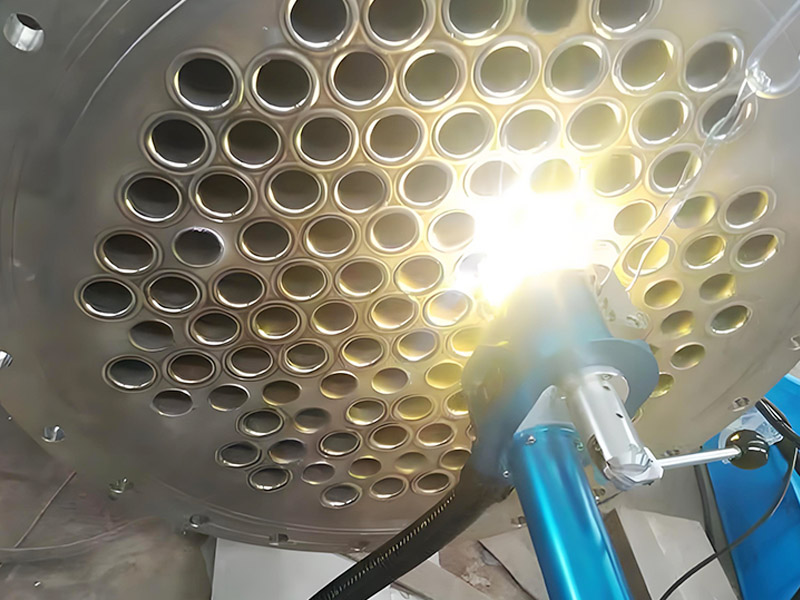
Tube and tube plate argon arc welding is a documented process step in pressure vessel fabrication. Image source: Jiangsu Xuyang Chemical Equipment Co., Ltd.
When a chemical processor evaluates a custom equipment supplier, the true test is not what the supplier claims about welding quality or material grades, but what evidence the supplier can produce on paper and in records. For buyers at the evaluation stage, the difference between a capable fabricator and a confident marketer often comes down to three documented pillars: welding quality records, material traceability, and acceptance criteria written into the purchase contract.
This article examines what evidence a buyer should request to substantiate a custom chemical equipment supplier's fabrication capability. It maps that evidence to concrete equipment — industrial chemical reactors, distillation towers, storage tanks, shell and tube heat exchangers, candle filters, membrane separation and filtration skids, and skid-mounted systems — so that procurement teams can verify claims rather than rely on marketing statements.
The Evidence Gap in Custom Chemical Equipment Procurement
Custom chemical equipment is not a catalogue purchase. A stainless steel reactor or an ASME pressure vessel is engineered against a specific process duty, material specification, and jurisdictional code. Once the vessel is installed and operating, internal welds cannot be re-inspected without significant downtime and cost. The evidence that matters is therefore generated during fabrication — and it is only useful to the buyer if it is collected, reviewed, and accepted before shipment.
The practical problem is that evidence packages vary widely across suppliers. Some fabricators provide a certificate of compliance and little else. Others maintain a documented quality trail that includes material test certificates, weld procedure specifications, non-destructive examination reports, pressure test records, and dimensional inspection sheets. For the buyer, the evaluation question becomes: what documents should I request, and what should they contain?
This is particularly important when the equipment falls within the scope of pressure vessel codes. ASME Boiler and Pressure Vessel Code Section VIII is described by engineering sources as governing design, analysis, fabrication, inspection, and testing of pressure vessels, including heat exchangers, reactors, filters, and specialty vessels. That scope means the evidence trail is not optional — it is part of the code framework itself, even though the specific documentation requirements depend on the division, jurisdiction, and contract.
What Welding Quality Evidence Should a Buyer Request?
Welding quality is the most consequential fabrication variable in pressure equipment. A pressure vessel's integrity depends on weld soundness, and weld soundness depends on qualified procedures, qualified welders, controlled consumables, and inspection at multiple stages.
Jiangsu Xuyang Chemical Equipment Co., Ltd. describes a welding quality workflow that includes material inspection, joint preparation, fit-up inspection, pre-welding inspection, welding process control, visual inspection, NDT inspection, pressure and leak testing, final inspection, and quality documentation. The company also states that it uses plasma and deep penetration automated welding technologies, and that vessels undergo X-ray detection (NDT), hydraulic pressure tests, and surface roughness inspections.
For a buyer, those statements should translate into specific document requests. The evidence package for welding quality should include:
- Welding Procedure Specifications (WPS) and Procedure Qualification Records (PQR) for the material grades and thickness ranges used in the vessel.
- Welder qualification records showing that the welders assigned to the project are qualified for the relevant processes and positions.
- Welding consumable certificates confirming the filler metal classification and batch traceability.
- Non-destructive examination (NDT) reports — radiographic, ultrasonic, dye penetrant, or magnetic particle testing, depending on the joint type and code requirement.
- Pressure test records documenting hydrostatic or pneumatic test pressure, duration, and results.
- Final dimensional and visual inspection reports confirming that the completed vessel meets the approved drawings.
The key point is that these documents should be reviewed before shipment, not after. A buyer who waits until the vessel arrives at the plant has limited recourse if the records are incomplete or the NDT reports show discontinuities that were not resolved during fabrication.
Material Traceability: From Mill Certificate to Finished Equipment
Material traceability answers a simple but critical question: is the material in this vessel actually what the specification says it is? For chemical equipment, the answer matters because material selection is driven by corrosion resistance, temperature capability, and pressure containment. A reactor specified in SS316L but fabricated with a lower-grade stainless steel may pass a visual inspection and still fail in service.
The material options across the product range illustrate why traceability is not a single-document exercise. Stainless steel reactors, high pressure reactors, external coil reactors, storage tanks, shell and tube heat exchangers, candle filters, distillation towers, and skid-mounted systems can be supplied in carbon steel, SS304, SS316L, Hastelloy, titanium, and zirconium, depending on the equipment type and process requirement. Each material grade has its own mill certificate format, heat number, and testing requirements.
A practical material traceability package should include:
- Mill test certificates (MTCs) for each heat number, showing chemical composition and mechanical properties.
- Heat number mapping that links each mill certificate to the specific component — shell plate, head, tube, flange, or nozzle — in the finished equipment.
- Material substitution records if any deviation from the specified grade was proposed and approved.
- Corrosion-resistant lining documentation for PTFE-lined reactors or lined piping, including lining material certificates and bond test reports where applicable.
- Surface finish and cleanliness records for hygienic or high-purity applications, particularly for pharmaceutical and food-grade equipment.
Jiangsu Xuyang states that it uses ERP and MES production-management systems and has established an intelligent manufacturing workshop, which the company says improves process traceability and quality control from manufacturing through delivery. For a buyer, the relevant question is whether those systems generate a traceability record that can be reviewed against the purchase specification — not whether the systems exist.
Design Standards and Certification: Evidence of Code Compliance
Design standards and certifications are the framework within which welding and material evidence becomes meaningful. The product range indicates that equipment can be designed to ASME, GB, EN, PED, and TEMA standards depending on the equipment type and market. Certification options include ASME U Stamp, CE, and ISO for reactors, storage tanks, and certain other equipment categories.
For buyers, certification claims should be verified against the actual certificate scope and validity. A certificate of authorization is not the same as a project-specific compliance statement. The ASME Certificate of Authorization (U Stamp) held by Jiangsu Xuyang Chemical Equipment Co., Ltd. — certificate number 62646, issued by The American Society of Mechanical Engineers, valid from 2025-09-10 to 2028-09-10 — covers manufacture of pressure vessels under the ASME Boiler and Pressure Vessel Code. That scope is relevant, but the buyer should still confirm that the specific vessel being purchased falls within the certified scope and that the required inspection agency involvement is planned.
The evidence request for certification should include:
- Copy of the certificate of authorization with visible scope, certificate number, and expiry date.
- Applicable code edition and addenda for the project, confirmed in the purchase order or technical agreement.
- Authorized inspection agency (AIA) involvement plan for ASME-stamped vessels, including the inspection points and final certification requirements.
- CE marking documentation where applicable, including the applicable directive and conformity assessment route.
- ISO 9001, ISO 14001, and ISO 45001 certificates with current validity and scope covering the equipment being purchased.
Mapping Evidence to Equipment: Reactors, Towers, Tanks, Heat Exchangers, Filters, and Skids
Evidence requirements should be tailored to the equipment type. A distillation tower with a large shell diameter and multiple tray sections has different weld inspection priorities than a skid-mounted filtration system with small-bore piping and instrumentation. The following table summarizes the material, standard, and certification options across the main equipment categories.
| Equipment Type | Material Options | Design Standards | Certification Options |
|---|---|---|---|
| Industrial Chemical Reactor (stainless steel reactor, high pressure reactor, external coil reactor, PTFE lined reactor, Hastelloy reactor equipment, titanium reactor vessel equipment) | SS304, SS316L, Carbon Steel, Hastelloy, Titanium, Zirconium | ASME, GB, EN, PED | ASME U Stamp, CE, ISO |
| Storage Tank (stainless steel storage tank, horizontal storage tank, external coil storage tank) | SS304, SS316L, Carbon Steel, Hastelloy, Titanium | ASME, GB, EN, PED | ASME U Stamp, CE, ISO |
| Shell and Tube Heat Exchanger (industrial heat exchanger, titanium shell&tube heat exchanger) | Shell: Carbon Steel, SS304, SS316L, Hastelloy; Tube: SS304, SS316L, Titanium, Hastelloy | ASME, GB, EN, TEMA | Confirm per project |
| Candle Filter | SS304, SS316L, Hastelloy | ASME, GB, EN | Confirm per project |
| Distillation Tower | Carbon Steel, SS304, SS316L, Hastelloy, Titanium | ASME, GB, EN | Confirm per project |
| Skid-Mounted Process Equipment | Carbon Steel, SS304, SS316L, Hastelloy, Titanium | ASME, GB, EN, PED | Confirm per project |
| Membrane Separation and Filtration Equipment | SS304, SS316L, FRP, PP | Confirm per project | Confirm per project |
For equipment where certification options are not explicitly listed in the product data, the buyer should confirm the applicable certification route in the technical agreement rather than assume it. This is especially important for heat exchangers, candle filters, towers, and membrane skids, where the code and certification requirements depend on the process medium, operating conditions, and destination market.
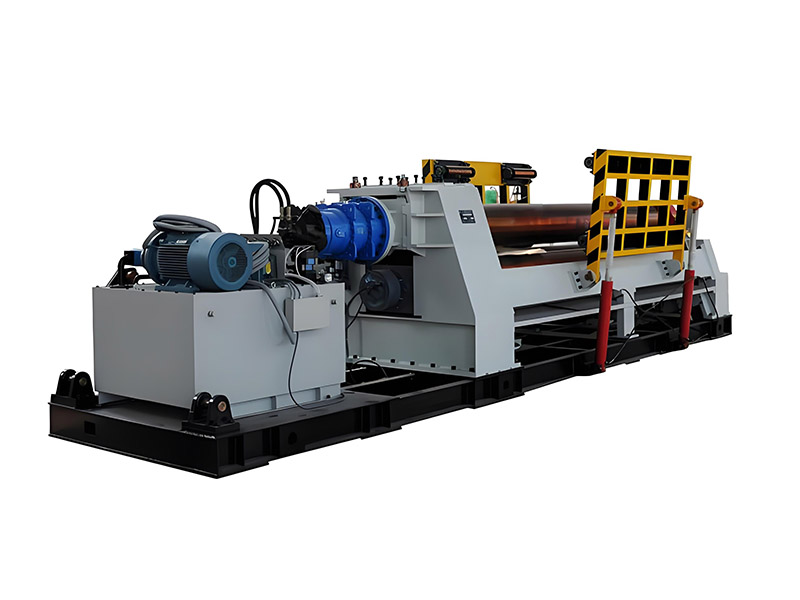
Shell forming is an early-stage fabrication step where material grade and plate traceability should be recorded. Image source: Jiangsu Xuyang Chemical Equipment Co., Ltd.
Customization from Drawings: What the Design Record Should Contain
Custom chemical equipment is typically engineered from a buyer's process drawings, specifications, or a combination of both. Jiangsu Xuyang states that it can provide professional CAD or 3D designs based on specific process parameters, material requirements, and space constraints, and that its R&D team is structured to support customized solutions.
The design record for a custom reactor, tank, heat exchanger, candle filter, or skid-mounted system should include:
- Approved drawings with revision control, showing dimensions, nozzle schedules, material specifications, and design conditions.
- Design calculations for pressure containment, where required by the applicable code.
- Process datasheets confirming capacity, operating pressure, operating temperature, and medium compatibility.
- Agitation and sealing specifications for reactors, including agitator type, motor rating, seal type, and explosion-proof requirements where applicable.
- Heating and cooling configuration — jacket, half-pipe coil, external coil, or electric heating — with utility requirements.
- Instrumentation and control specifications for skid-mounted systems, including PLC or DCS architecture, sensor locations, and alarm setpoints.
The buyer's review of these documents before fabrication begins is the single most effective way to prevent later disputes about scope, material, or performance. Once fabrication starts, changes become expensive and schedule-critical.
Acceptance Records and Purchasing Terms: The Contractual Backbone
Acceptance criteria should be written into the purchase order or technical agreement before the order is placed. The criteria define what the buyer will inspect, what documents the supplier must deliver, and what constitutes acceptance or rejection. For skid-mounted equipment, the product data lists factory acceptance testing (FAT), hydrostatic testing, and leak testing as part of the testing regime. For pressure vessels and reactors, the acceptance criteria should also reference the applicable code, the authorized inspection agency, and the required NDT scope.
A practical acceptance package should include:
- Final inspection report signed by the supplier's quality function and, where applicable, the authorized inspector.
- Dimensional inspection sheets confirming critical dimensions against approved drawings.
- Pressure and leak test certificates with test pressure, duration, and acceptance results.
- NDT reports with the applicable acceptance criteria and the technician's qualification reference.
- Material traceability dossier linking mill certificates to component heat numbers.
- Surface finish and cleanliness records where specified.
- Packing and shipping documents confirming preservation, protection, and identification for transport.
Purchasing terms should also address the commercial side of acceptance: payment milestones tied to document delivery, warranty scope, spare parts availability, and the process for resolving non-conformances. The manufacturer state that after-sales service and technical support are provided, and that technical support is available for custom chemical equipment projects. Those commitments should be reflected in the contract, not left as general statements.
One documented example of long-term operation comes from Kazakhstan, where an importer has used one shell and tube heat exchanger for process heat exchange for 10 years, reporting stable operation and cost-effective results. Such references are useful as context, but they should not replace project-specific evidence for a new purchase.
Market Context: Why Evidence Is Becoming a Procurement Differentiator
The broader market context supports the case for stronger evidence discipline. The global chemical processing equipment market was valued at USD 68.82 billion in 2026, according to SNS Insider, with the chemicals and petrochemicals segment accounting for 41.6% of revenue in 2025. The separation machinery market — which includes filters, membranes, and related equipment — is projected to reach USD 109 billion in 2026 and grow at a 7.2% CAGR from 2026 to 2035, according to Global Market Insights.
As the installed base grows, the cost of equipment failure or non-compliance rises with it. Buyers are not only purchasing a vessel; they are purchasing the assurance that the vessel will perform within its design envelope for the intended service life. That assurance is built on evidence — welding records, material traceability, and acceptance documentation — rather than on price alone.
Comparison with Traditional Procurement Practice: Limits and Trade-offs
Traditional procurement practice often treats supplier selection as a price-and-lead-time exercise, with technical evidence reviewed only when a problem arises. That approach has limits. Without pre-shipment evidence review, the buyer discovers documentation gaps after the equipment has arrived — a point at which corrective action is slow, expensive, and sometimes impractical.
However, a documentation-intensive approach also has real costs. Estimates cited by Fortune Business Insights suggest that compliance with ASME standards can account for up to 20% of a pressure vessel's total material cost. That premium reflects engineering, inspection, and certification effort, and it means buyers must weigh the depth of evidence they request against the project budget and criticality of service. A utility storage tank and a high-pressure hydrogenation reactor do not require the same documentation depth.
A further limitation is that documents verify process and material conformity; they do not guarantee operational performance. A vessel can be fully documented and still underperform if the process design is mismatched to the duty. Buyers should therefore combine document review with process engineering review and, where appropriate, third-party inspection.
Future Outlook: Where Supplier Capability Evidence Is Heading
Three trends are likely to shape supplier capability evidence in the coming years. First, digital traceability systems — such as ERP and MES platforms used in fabrication — are making it easier for suppliers to generate component-level records, but they also raise the bar for what buyers expect to receive. Second, code harmonization and market-specific certification requirements — ASME, PED, GB, and EN — are pushing suppliers to maintain multi-standard documentation capabilities. Third, the growth of separation and filtration equipment in chemical processing is expanding the range of equipment categories for which buyers will request traceability evidence.
For buyers, the practical implication is that evidence review should become a standard part of supplier evaluation, not an exception. The suppliers most likely to perform well are those that can produce the records consistently, explain them clearly, and align them with the purchase contract.
Frequently Asked Questions
What evidence should a buyer request to verify welding quality in a pressure vessel?
A buyer should request the welding procedure specifications and procedure qualification records, welder qualification records, welding consumable certificates, NDT reports (radiographic, ultrasonic, dye penetrant, or magnetic particle testing as applicable), pressure and leak test records, and final dimensional and visual inspection reports. For ASME-stamped vessels, the authorized inspection agency involvement and final certification should also be documented.
How is custom equipment documented when it is built from specific drawings?
The design record should include approved drawings with revision control, design calculations where required by the applicable code, process datasheets confirming capacity and operating conditions, agitation and sealing specifications for reactors, heating and cooling configuration, and instrumentation and control specifications for skid-mounted systems. The buyer should review and approve these documents before fabrication begins.
What material traceability records apply to reactors, tanks, heat exchangers, and filters?
Material traceability should include mill test certificates for each heat number, heat number mapping to specific components, material substitution records if any deviation was approved, corrosion-resistant lining documentation for PTFE-lined equipment, and surface finish and cleanliness records where specified. The material options across the product range include carbon steel, SS304, SS316L, Hastelloy, titanium, and zirconium, and each grade has its own traceability requirements.
What acceptance criteria should be written into the purchase order?
Acceptance criteria should define the applicable code and standards, the required NDT scope, the pressure and leak test requirements, the final inspection and dimensional check requirements, and the documentation package the supplier must deliver. For skid-mounted equipment, factory acceptance testing should be specified. Payment milestones, warranty scope, and the non-conformance resolution process should also be addressed in the purchasing terms.
How can buyers verify certification claims such as ASME U Stamp, CE, and ISO?
Buyers should request a copy of the certificate of authorization with visible scope, certificate number, and expiry date; confirm the applicable code edition and addenda for the project; review the authorized inspection agency plan for ASME-stamped vessels; and request current ISO 9001, ISO 14001, and ISO 45001 certificates with scope covering the equipment being purchased. Certification claims should be verified against the actual certificate scope and validity, not accepted as general statements.
Conclusion
Supplier capability evidence is not a bureaucratic add-on to custom chemical equipment procurement. It is the mechanism by which a buyer converts supplier claims into verifiable facts. Welding quality records show how the vessel was joined and inspected. Material traceability records show what the vessel is made of. Acceptance records and purchasing terms show what the buyer agreed to receive and what the supplier committed to deliver.
For equipment such as industrial chemical reactors, distillation towers, storage tanks, shell and tube heat exchangers, candle filters, membrane separation and filtration skids, and skid-mounted systems, the evidence package should be defined before the order is placed and reviewed before shipment. Suppliers that can produce consistent, well-organized documentation — and explain it clearly — are better positioned to support buyers through evaluation and execution.
Jiangsu Xuyang Chemical Equipment Co., Ltd., based in Jingjiang, Jiangsu Province, China, manufactures pressure vessels, reactors, storage tanks, heat exchangers, towers, corrosion-resistant lined equipment, and skid-mounted systems. The company holds an A2 Special Equipment Design and Manufacturing License and an ASME Certificate of Authorization (U Stamp), and maintains ISO 9001, ISO 14001, and ISO 45001 management systems. Buyers evaluating the company for a specific project should request the evidence package described in this article and confirm that the certificate scope, material grades, and acceptance criteria align with the project requirements.
For additional technical reference, the company's pressure vessel catalogue is available for public download:
هل لديك أسئلة أو تحتاج إلى مزيد من التفاصيل؟
تواصل مع فريقنا للحصول على عرض أسعار مخصص أو استشارة فورية.
طلب عرض أسعار
املأ النموذج أدناه وسيتواصل معك فريقنا بعرض مقترح مخصص.
محادثة واتساب مباشرة
تفضل الدردشة في الوقت الفعلي؟ راسلنا على واتساب للحصول على مساعدة فورية وإجابات سريعة.
- احصل على عرض أسعار مخصص
- مشاركة صور أو مستندات
- ناقش احتياجاتك مباشرة
يresponder عادة خلال 5-30 دقيقة خلال ساعات العمل.