
Supplier Capability Evidence: What a Full Commercial Truck Range Actually Proves
Supplier Capability Evidence: What a Full Commercial Truck Range Actually Proves
A commercial truck supplier's product line is not a sales list. It is a set of engineering claims — about drawings, weld procedure, subframe design, hydraulic integration and inspection — and each one can be tested before a purchase order is signed.
Why the range is the first audit trail, not the proof
Buyers at the evaluation-to-execution stage face a narrow problem. Every quotation uses the same vocabulary. "Tipper truck", "fuel tanker truck" and "refrigerated truck" mean the same thing on a reseller's price sheet as on a body builder's, whether the body is fabricated in the seller's own bays or passed to a third party after the order is confirmed. Price comparisons therefore tend to compare paperwork rather than capability.
The product line is the cheapest test available. A supplier listing twenty body types has made twenty separate statements: that it holds drawings for each, that it can weld and inspect each, that it understands the chassis interface each one needs, and that it can schedule them without collapsing its delivery dates. None of that is proved by the catalogue. But each statement can be turned into a specific request, and the answers separate the two kinds of seller quickly.
What range breadth does not prove is equal maturity. A supplier with four well-documented tipper variants and one catalogue entry for an aerial work platform is not in the same position as one with four of those platforms in service. The range tells the buyer where to look; the build detail tells them what they found.
| Range group | Representative types | What the body actually requires | Evidence a buyer can request |
|---|---|---|---|
| Cargo and haulage | Cargo truck, light duty truck, heavy duty truck, tractor truck, mini truck | Wheelbase matched to body length, rear overhang inside the chassis builder's limit, payload recalculated after body, fuel and equipment | Finished kerb weight, axle-load calculation, body drawing with mounting points |
| Tipping and construction | Dump truck, tipper truck, mining dump truck, concrete mixer truck | Subframe design, hoist and hinge load path, wear plate thickness by area, drum and hydraulic drive | Subframe section drawing, plate thickness map, static load test record, hydraulic functional test |
| Liquid and pressure | Tanker truck, water tanker truck, water sprinkler truck, fuel tanker truck | Compartment layout, baffle or surge plate arrangement, pump and spray or metering package, fill and discharge interfaces | Tank drawing with compartment volumes and baffle positions, material certificate, pressure or leak test report |
| Temperature-controlled | Reefer truck, refrigerated truck | Insulated panel construction and thickness, door seal, refrigeration unit power source, temperature distribution | Panel build specification, declared insulation performance, unit capacity at the target box temperature |
| Sanitation | Garbage truck, road sweeper truck | Compaction or sweeping mechanism, hydraulic circuit, hopper and water tank, body sealing and leachate control | Mechanism cycle test, usable body volume, sealing and drain function record |
| Working bodies | Crane truck, aerial platform truck, wrecker truck | Mounting interface and frame reinforcement, outrigger layout, structural calculation for the lifted load, stability | Mounting reinforcement drawing, outrigger load arrangement, functional and load test record |
Twenty model names, twenty separate claims
Read the full list in that light and it stops being a menu. A reefer truck, a tanker truck, a water sprinkler truck, a mining dump truck, a concrete mixer truck, an aerial platform truck, a mini truck, a crane truck, a wrecker truck, a dump truck, a road sweeper truck, a garbage truck, a refrigerated truck, a water tanker truck, a fuel tanker truck, a tipper truck, a cargo truck, a tractor truck, and light duty and heavy duty trucks are not interchangeable entries. Each carries a different engineering discipline.
A mini truck and a heavy duty truck share a cab-and-chassis logic but almost nothing else: the light vehicle's payload is decided within a 3.5 to 7.5 tonne gross weight band, while the heavy unit is rated as a system of frame, axles, brakes and driveline. A tractor truck is rated by gross combination weight and fifth-wheel load rather than by cargo volume, because it carries load through a trailer. A mining dump truck in a 40–50 tonne payload class is specified against impact loading, ground clearance and cooling on long descents. A water sprinkler truck needs a live pump circuit and spray valves; a fuel tanker truck needs compartmented, grounded and vapour-controlled transfer. Treating any of these as a relabelled version of another is where specification errors begin.
The practical consequence is a sampling strategy. A buyer does not need to audit twenty body types. They need to audit two or three that sit closest to their own duty cycle, then check whether the answers are consistent with the way the other listings are described. Inconsistency — vague detail on one half of the range and precise detail on the other — usually indicates which half the seller actually builds.
Where a supplier's own capability statement has to be specific
Henan Elorry Industrial Co., LTD. is a Zhengzhou-based supplier of transport trucks and equipment, founded in 2016, operating a 10,000+ m² production base that includes production workshops, body fabrication and upfit bays, an R&D centre, an installation workshop and a dedicated quality-control team. The company reports 200+ employees, a 25-engineer R&D team, a catalogue of 80+ models, annual output of 24,000 units and deliveries to 89 countries and regions, with 100% of output exported.
On the test set out above, the company's published customisation list is specific enough to be checked item by item rather than accepted as a slogan. For a tipper, the configurable items are body length, side height, plate thickness, floor type (flat, concave or wear-resistant), front or under-body lift, tailgate and canopy. For a tank, they are volume, number of compartments, material (carbon steel, stainless or aluminium), insulation, pump and metering set, and bottom or top loading. For crane and lifting work, capacity and reach, mounting interface and reinforcement, outrigger layout, and hook-lift or skip-loader frame. For a refrigerated body, box size, insulation thickness, temperature zones, refrigeration unit power source, and side-door and meat-rail layout. Other listed bodies include compactor, sweeper, aerial platform, water bowser, fuel bowser and flatbed with side rails. Structure items are named separately: mounting points, sub-frame, reinforcement plates, anti-corrosion treatment, paint system and colour.
Capacity is stated in two different figures, and buyers should not merge them. The body fabrication and upfit bays — including first-off prototypes — run at 120 units per month, where a complex body with new tooling occupies a bay for three to five days and repeat bodies of the same design run faster. Across all lines, the figure is 300 units per month, of which up to 120 units per month can be allocated to private-label work. Lead time runs 40–60 days from approved drawing to shipment, with a further 10–15 days where a new body design needs engineering and drawing approval. Minimum order quantity is one unit, which matters because a single custom body is accepted as a prototype or trial unit rather than being pushed into a batch.
Quality control is described in stages rather than as a claim. Drawing approval comes before fabrication; weld and dimensional inspection run during fabrication; a static load test and a functional test of the hydraulic or lifting system follow; and full pre-delivery inspection is carried out against the buyer's checklist where one is supplied. On private-label work the sequence is three-stage: incoming material and component check, in-process inspection at chassis, body and assembly, and 100% pre-shipment inspection covering hydraulics.
Third-party assessment is also scoped rather than general. An SGS Gold Plus Supplier Assessment Certificate (certificate number 479886222_T, issued 7 November 2025 and valid to 6 November 2026) covers factory qualification, production quality control and supply chain capability against the Alibaba Gold Plus Supplier Assessment criteria. That is a facility and process assessment. It is not a vehicle type approval, and it should not be read as one.
Four build details that separate a body builder from a reseller
Broad range statements become useful only when they resolve into detail at the level of a joint, a section or a specification sheet. Four examples carry most of the weight in a commercial truck purchase.
1. Tipper body subframe design
A tipper body does not sit directly on the bare chassis rails, and the reason is mechanical rather than traditional. At full lift the hoist pushes down on one small area of the frame while the hinge pulls up at the rear, and the body itself tries to twist. A subframe — a steel section bolted and rubber-mounted to the rails — spreads those point loads across several cross members, and the rubber mounts absorb the small relative movement between steel body and steel frame so the body does not crack under repeated cycling.
The detail matters most on repeated cycles and rough sites, and far less on a road tipper that tips twice a day. That gives the buyer a proportionate request: the subframe section drawing, the cross-member spacing, the mounting arrangement, and evidence that the mounts are rubber rather than a rigid bolted interface. A body bolted straight to the rails concentrates the hoist load and can crack the frame or the body floor within a season — which is exactly the failure a subframe exists to prevent.
2. Water tanker baffle, pump and spray layout
A water tanker truck is a surge problem, a pumping problem and a corrosion problem at the same time. Internal baffles against surge are the structural answer: a partly filled tank lets liquid mass move under braking and cornering, and the baffle arrangement is what limits that movement. Anti-corrosion coating and a tank material and lining matched to potable or non-potable use are the service-life answer, and the metering or spray package is the working answer.
The operating logic is fixed and therefore checkable. Filling can be done three ways: through a hydrant hose into the rear fill pipe, through the top manway, or by pump suction from a pond or river — and the suction route needs the strainer fully submerged, the primer and bleeder valves opened and the power take-off engaged at rated speed. Working sequence follows the same discipline: walk-around inspection of tyres, power take-off, driveline and pump; fill while watching the level gauge; engage the power take-off and open the front, rear or side spray valves; then shut down in reverse order. A buyer comparing suppliers can ask which of these three fill routes the proposed layout actually supports, how many spray outlets exist and in which directions, and whether closing all spray valves at once at high engine speed is prevented by the plumbing.
3. Fuel tanker compartments and metering package
On a fuel tanker truck the compartment layout is the specification. Multiple compartments allow different grades to be carried on one run; each compartment needs its own overfill sensor tied to the terminal control system, and a compliant arrangement pairs compartment bottom valves with a vapour recovery line, a grounding interlock and a pressure relief device. Bottom loading through sealed couplings at the base of each compartment keeps the operator on the ground and controls vapour release, which is why the loading terminal's adapter standard has to be known before the tank drawing is frozen.
Filling limits are not a matter of preference. Under the ADR text, a tank shell that is not divided into sections of at most 7,500 litres must be filled to at least 80% or at most 20% of capacity, to limit liquid surge — the intermediate band is the problem. The permitted degree of filling is calculated from the liquid's expansion behaviour and the filling temperature, with an absolute ceiling during carriage. On construction, ADR Chapter 6.8 is commonly cited at a minimum shell thickness of 5 mm for mild steel or 4 mm for stainless steel, a minimum design pressure of 0.4 bar, and a shell that withstands twice the total mass forward, once laterally and once vertically upward. Those are standard-derived figures, not supplier claims, and the applicable edition and national adoption must be confirmed with the destination authority.
4. Refrigerated body insulation and the K coefficient
Insulation is where refrigerated truck quotations diverge most. A polyurethane sandwich panel is a rigid foam core, typically 40 kg per cubic metre or denser, bonded between FRP, galvanised steel or stainless steel skins. Thickness sets what the body can hold: 60–80 mm for chilled cargo at 0 to +5 °C, 80–100 mm for frozen work at −18 °C, and 100–120 mm for long haul or hot climates. A dry-freight box panel of 20–40 mm has no comparable insulation value, whatever it looks like from outside.
The measurement that makes this verifiable is the K coefficient. Under the ATP agreement, an insulated body is rated IN at or below 0.70 W/(m²·K), and a heavily insulated body IR at or below 0.40 W/(m²·K), with side walls at least 45 mm on bodies wider than 2.50 m. The unit must be able to reach and hold the class temperature at a mean outside temperature of +30 °C, and the vehicle carries a class marking and an on-board certificate, checked before entry into service and on a prescribed re-test cycle. A supplier can state panel construction and thickness. The certificate itself is issued by an approved testing station after measurement, and no supplier can issue it on the buyer's behalf.
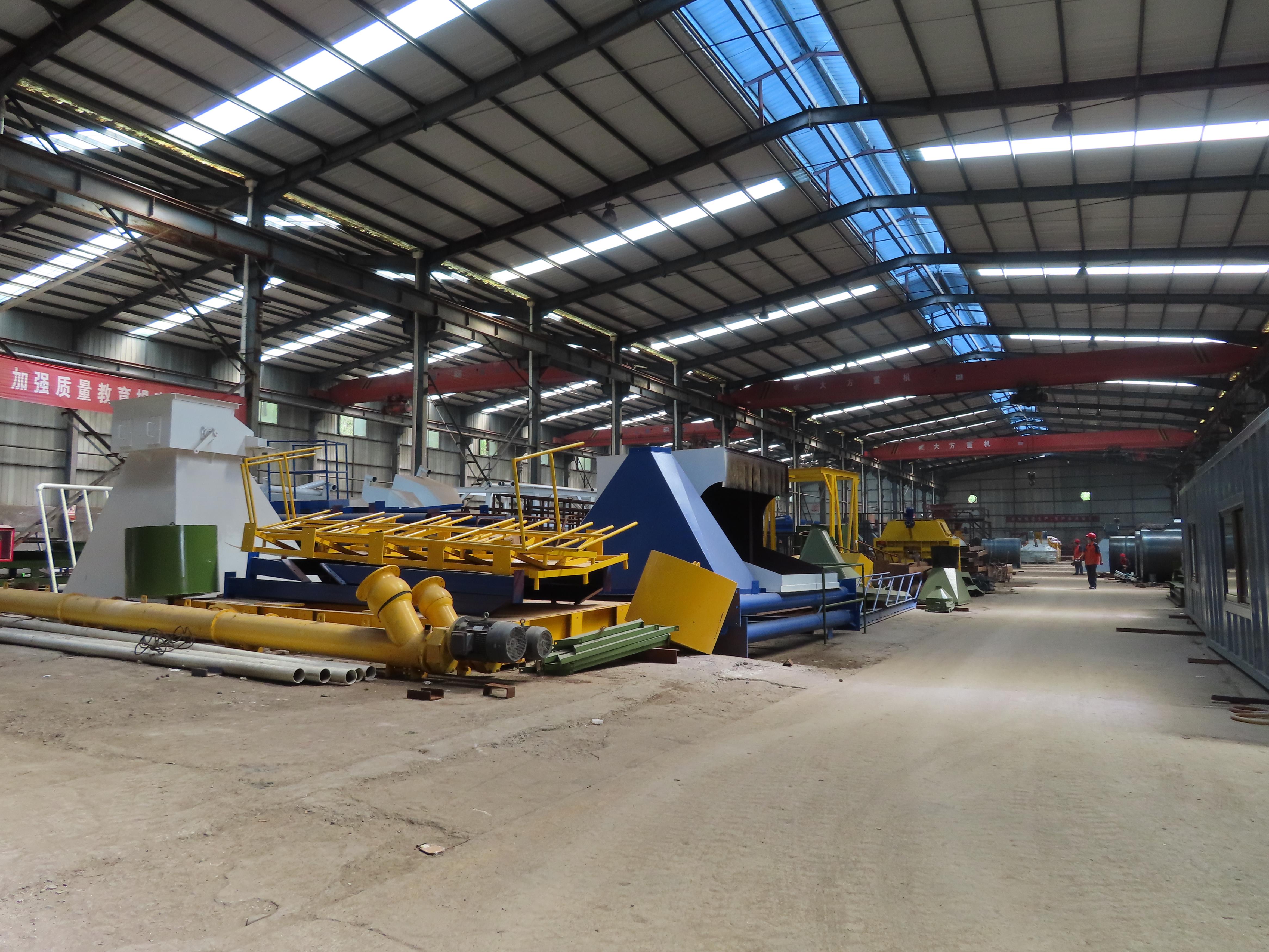
Body fabrication and upfit bays are where a range claim becomes checkable: a supplier that welds and inspects in its own workshops can show in-process records rather than a subcontractor's summary.
What the configuration list looks like on real jobs
Company delivery records are not independent audits, but they show the range being applied rather than listed. The spread is instructive because each entry resolves a different body discipline.
In the Democratic Republic of the Congo, four mining dump trucks in the 40–50 tonne payload class were supplied for overburden and ore hauling on open-pit haul roads, specified with reinforced frame and body for impact loading, high ground clearance, a retarder and cooling package for long descents, and a protective cab; the company records a typical project scale of two years in service with steady haul-cycle availability under continuous duty. In Cameroon, a single 4 m³ self-loading concrete mixer truck delivered in March 2026 was specified around a hydraulic bucket that loads without a separate wheel loader, for road works and rural infrastructure where a compact machine can reach narrow, remote sites.
Volume orders appear alongside single units. Twenty refrigerated trucks were delivered to a Zambian cold-chain operator in June 2024 against a requirement for a constant temperature held en route, with a load-space layout that maximises payload while keeping temperature even; a separate refrigerated batch went to a Ghanaian food and pharmaceutical distributor in February 2025, inspected ex-works before shipment. Three 20,000-litre water tanker trucks went to a water supply contractor in El Salvador in April 2025, inspected one by one across engine, gearbox, tank body and spraying system. A Guyanese contractor took a batch of 6×4 dump trucks in October 2025 with reinforced chassis and wear-resistant components, and a separate 8×4 batch in El Salvador shipped with tyres and spare parts as one package, with pre-shipment inspection covering bodywork, engine, cargo body, hydraulics, tyres, configuration and parts count.
Working bodies show the same pattern at smaller scale: three aerial platform trucks rated 18–22 m working height for street-light and facade work in Kuwait, with telescopic or articulated boom options, platform auto-levelling and outrigger interlocks; two wrecker trucks for highway recovery in Jordan; four 8 m³ road sweeper trucks for municipal sweeping in the Philippines; and a 10-tonne boom crane attachment in Ghana built around the client's actual site dimensions, mounting arrangement and lifting capacity rather than a catalogue specification.

A 20,000-litre water tanker truck from a three-unit batch inspected individually across engine, gearbox, tank body and spraying system before shipment.
Chassis reseller or body builder: the comparison that decides the order
Most buyers never see the difference until a warranty claim, a change order or a late shipment exposes it. The table below sets out where the two models diverge. It describes the two commercial patterns generally, not any named competitor.
| Dimension | Chassis reseller pattern | Body-building supplier pattern |
|---|---|---|
| Drawing ownership | Body drawing supplied by a third party; changes route through the reseller | Drawing issued and approved by the party that fabricates the body |
| Customisation response | Options limited to what the subcontractor already builds | Length, plate thickness, floor type, lift position, compartment count and insulation thickness stated as configurable items |
| Inspection access | Inspection happens at the subcontractor, often unwitnessed | Weld and dimensional inspection at the supplier's own bays, with records available |
| Test evidence | Functional test may be a third party's own sheet | Static load test and hydraulic or lifting functional test recorded before shipment |
| Responsibility after delivery | Warranty split between chassis, body and reseller | One counterparty for body structure and hydraulic or lifting components, on a 12-month warranty |
| Lead-time control | Queue position set by a third party | Bay scheduling; a complex new body occupies a bay three to five days, 40–60 days from approved drawing |
| Change after approval | Change order passes through two commercial parties | Change controlled against the approved drawing revision |
What a supplier cannot certify for you
An evidence-led assessment has to include the limits of the evidence, and four boundaries recur in this category.
- Assessment certificates are not type approvals. The SGS Gold Plus assessment covers factory qualification, production quality control and supply chain capability. It says nothing about whether a specific tipper or tanker configuration meets a destination registration rule.
- Certificate scope must be read, not the title. A Certificate of Conformity held by a manufacturer for one product family does not extend to another. The CE certificate published alongside the commercial vehicle range, for instance, is scoped to a defined list of excavator models — EL08 through EL200 — against EN ISO 12100:2010 and EN 474-1:2022. It should not be presented as truck approval, and a buyer who assumes otherwise will discover the gap at registration.
- Insulation performance is declared, the certificate is issued. Panel thickness and construction can be confirmed at the factory. The K coefficient rating and the ATP certificate are produced by an approved testing station after measurement on the vehicle, on a re-test cycle that the current edition of the agreement sets.
- Delivery records are company records. Where a record states a typical project scale rather than a start date, it is a planning figure, not a measured service history. It is useful context and weak proof, and should be weighted accordingly.
One further boundary is about the range itself. Breadth indicates that drawings, tooling and inspection steps exist across many body types; it does not indicate that all of them are equally proven. A supplier strong in tippers and tanks may be newer to aerial platforms, and the request list below should be applied with that weighting rather than uniformly.
Where the range is heading
Two consequences follow from the structure described above, and they are interpretation rather than measured market data. First, adding a body type is not a catalogue decision: each addition carries a drawing, a tooling set, a weld and dimensional inspection step, a functional test and a set of wear parts. The evidence burden per model does not fall as the catalogue grows, and a supplier that keeps publishing full documentation for each addition is demonstrating something a longer list alone cannot. Second, the regulatory weight is concentrating on the chassis and the approval route rather than on the body — emission levels matched to local fuel sulphur, tank codes and inspection cycles for dangerous goods, ATP-class equipment for perishable food. Buyers should therefore track body capability and vehicle approval as two separate files, because a supplier strong in the first cannot substitute for the second.
A practical request list before you commit
The following items convert a range claim into a comparable, checkable order. They are deliberately narrow, and most can be answered from documents the supplier already holds.
- Finished kerb weight and axle-load calculation for the exact body and equipment set, not the bare chassis. Payload is gross weight minus kerb weight, and the body, tail lift, full tank and tools all come out of the same ceiling.
- The body drawing at the approved revision, showing mounting points, subframe section, reinforcement plates and the interface to the chassis. Compare revisions across quotations, not just drawings.
- Plate thickness by area for a tipper or dump body — floor, side, front wall and the wear zones that actually take the impact. A single headline thickness figure is not a specification.
- Hoist and hydraulic test evidence: which static load and functional tests are performed, at what load, recorded how, and by whom.
- Tank documents: compartment volumes and baffle positions, material certificate, weld and pressure or leak test report, and the fill and discharge interfaces matched to your terminal or receiving site.
- Refrigerated body build sheet: panel thickness, core density, skin material, door seal type, refrigeration unit power source, and the temperature the body is designed to hold in your ambient range.
- Warranty terms in writing, split by item: body structure, hydraulic and lifting components, and the chassis items that sit outside the body builder's scope. A 12-month body structure and hydraulics warranty with defined wear-part exclusions is a workable baseline; an unqualified 'full warranty' is not.
- Inspection and acceptance method, agreed before production: the checklist, the witnessing arrangement, the pre-shipment photo or video record, and the process for closing a nonconformity and re-testing.
- Spare-parts list with the first order, including which items are consumables — pins, latches, seals, spray nozzles, broom segments, filter elements — and their lead time.
A supplier that answers these items with documents, and can show where each one is produced in its own process, is behaving like a body builder. A supplier that answers with adjectives is not, whatever the catalogue shows. The range is only the first question; the subframe section, the baffle layout, the compartment drawing and the insulation specification are the answer.
A product catalogue covering the range discussed in this article is available for download: ELORRY product catalogue (PDF).
Frequently asked questions
Why does a tipper body sit on a subframe instead of the bare chassis rails?
Because tipping concentrates load into the frame at the hoist and the hinge, and the subframe spreads that load along the rails while the rubber mounts let the frame flex without cracking the body. At full lift the hoist pushes down on one small area while the hinge pulls up at the rear, and the body itself tries to twist. The subframe is a steel section bolted and rubber-mounted to the rails, so the point loads spread over several cross members and the rubber absorbs the small relative movement between steel body and steel frame. The effect matters most on repeated cycles and rough sites, and far less on a road tipper that tips twice a day.
What are the three ways to fill a water tanker truck, and when is each used?
A water tanker truck can be filled through a hydrant hose into the rear fill pipe, through the top manway, or by pump suction from a pond or river. The suction route needs the strainer fully submerged, the primer and bleeder valves opened and the power take-off engaged at rated speed. For hydrant or top fill, the operator watches the road-limit or sight-level gauge. The related risk is running the pump dry: the strainer has to stay deep enough that it cannot suck air, and the pump is stopped as soon as the tank is full.
What does the 80/20 rule mean for a fuel tanker truck's compartments?
Under the ADR text, a fuel tanker truck shell that is not divided into sections of at most 7,500 litres must be filled to at least 80% or at most 20% of capacity, to limit liquid surge. The intermediate fill band is the problem: a partly filled, undivided shell lets liquid mass move under braking and cornering. The rule comes from the dangerous-goods framework and is separate from the commercial volume of the tank. Compartment and surge-plate layout is stated on the tank drawing before the fill plan is agreed, and the applicable national dangerous-goods rules for the destination market govern the final arrangement.
What panel thickness should a refrigerated truck body specify?
Thickness follows the cargo band: 60–80 mm for chilled cargo at 0 to +5 °C, 80–100 mm for frozen work at −18 °C, and 100–120 mm for long haul or hot climates. A 60–100 mm polyurethane panel is what holds a box at −18 °C in a 35–40 °C ambient. The panel is a rigid foam core, typically 40 kg per cubic metre or denser, bonded between FRP, galvanised steel or stainless steel skins. Panel thickness is only half the specification; the measured K coefficient, door seal condition and load pattern decide whether the box holds temperature under real door-opening duty.
How is an ATP certificate issued for a refrigerated truck, and how long does it stay valid?
An ATP certificate is issued by the competent authority of a contracting party after the equipment has been measured at an approved testing station, not by the vehicle supplier. The agreement sets IN at or below 0.70 W/(m²·K) and IR at or below 0.40 W/(m²·K), with side walls at least 45 mm on bodies wider than 2.50 m, and requires a unit able to reach and hold the class temperature at a mean outside temperature of +30 °C. The vehicle carries a manufacturer's nameplate, a class marking and an on-board certificate, checked before entry into service and then on a prescribed re-test cycle — published validity periods run six years initially and three more after an in-service test, but these vary by edition and must be checked against the current text and the issuing authority's practice.
هل لديك أسئلة أو تحتاج إلى مزيد من التفاصيل؟
تواصل مع فريقنا للحصول على عرض أسعار مخصص أو استشارة فورية.
طلب عرض أسعار
املأ النموذج أدناه وسيتواصل معك فريقنا بعرض مقترح مخصص.
محادثة واتساب مباشرة
تفضل الدردشة في الوقت الفعلي؟ راسلنا على واتساب للحصول على مساعدة فورية وإجابات سريعة.
- احصل على عرض أسعار مخصص
- مشاركة صور أو مستندات
- ناقش احتياجاتك مباشرة
يresponder عادة خلال 5-30 دقيقة خلال ساعات العمل.