
Supplier Capability Evidence for Custom Furniture in Villas
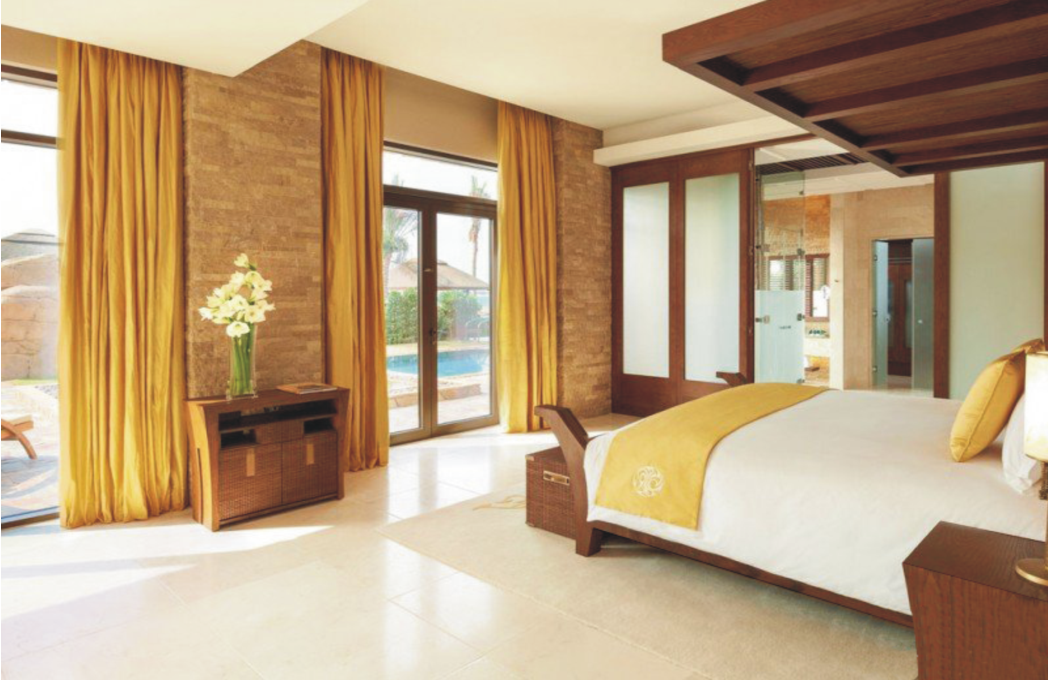
Custom furniture for luxury villas and mansions is almost always sold on images. A supplier opens a portfolio, shows a rendered living room, a photographed dining table in walnut, a marble console, and within minutes the conversation has moved to price and delivery. In project-grade procurement that order is reversed. The images describe an intention. The purchase order commits to a physical object that must fit an opening already built, match a finish approved months earlier, survive a decade of use, and be accepted or rejected by someone standing in the room with a level and a handheld light.
Supplier capability evidence is the material that closes that gap. In the villa and mansion segment, it means records and commitments a supplier can hand over — signed where necessary — showing how a specified piece will be engineered, produced, inspected, packed, delivered, installed and warranted. It is not a statement about style. It is a statement about process, and process is the only part of a supplier's presentation that can be verified before money changes hands.
Why Renderings Are Not Evidence
Three failure patterns recur in high-end residential projects, and none of them is visible in a catalogue or a rendering.
Dimensional drift. In a villa or mansion, walls, ceiling heights, stone thresholds and service risers are completed before furniture is ordered. A wardrobe carcass that is twenty millimetres off, a built-in TV cabinet that does not follow an out-of-square wall, or a dining table sized to a drawing rather than to the actual room will produce gaps that no amount of finishing skill can hide. The remedy is measured survey and shop drawings approved before cutting — both of which are documents, not visuals.
Batch inconsistency. A private mansion may need twelve dining chairs, two bedroom suites in separate wings, and a matching set of occasional tables across three floors. If veneer, paint or leather is drawn from different production lots, the rooms stop reading as one house. Consistency is a matter of material allocation and finishing control, and it can only be demonstrated through production records.
Acceptance ambiguity. At handover, the client or their representative inspects surfaces, edges, joints, hardware action, upholstery tension and alignment. Where the supplier's quality control is a verbal assurance, there is no shared reference point for that conversation, and every defect becomes a negotiation rather than a contractual non-conformity.
Each of these failures is prevented by evidence rather than by taste. That is the opportunity available to buyers in this segment: the same project discipline that governs five-star hotel furniture supply can be requested, in writing, from any serious custom furniture manufacturer.
What Capability Evidence Means in a Villa Contract
Capability evidence, defined for this context, is any verifiable record or binding commitment that allows a buyer to predict how a specified piece of custom furniture will be produced and accepted. It has four properties: it is specific to the purchase rather than to the company in general; it is traceable to a document, a number, a person or a site; it is available before the order is placed; and it is convertible into a contract term.
This definition excludes a large part of what is normally presented as proof. A gallery of completed projects is marketing. A mood board is design intent. A statement that a supplier 'has rich experience' is unverifiable. A certificate image without a number that can be checked with the issuing body is decoration. None of these is worthless, but none of them lets a procurement team answer the only question that matters at evaluation stage: if we place this order, what will actually happen between signature and handover?
The practical consequence is that evidence should be requested in the same structure as the purchase itself — specification, sample, production, inspection, delivery, acceptance, warranty. Each stage has a natural document, and each document has a natural verification route.
Ranking Evidence by Weight: Three Tiers
Not all evidence carries equal weight. In evaluation, it helps to sort what a supplier presents into three tiers, and to notice how much of the file sits in the lowest one.
| Tier | Evidence type | Why it carries weight | Verification route |
|---|---|---|---|
| Tier 1 | Contractual and witnessed: signed specification sheets, retained approved samples, acceptance criteria, witnessed pre-shipment inspection, written warranty schedule | Creates an enforceable reference point; the buyer has a remedy if the delivered item deviates | Review the clause; attend or appoint an inspector; keep the counter-sample on site |
| Tier 2 | Documentary and traceable: certificate numbers, inspection records with piece-level identification, capacity and scheduling data, equipment and workshop lists, material sourcing records | Independently checkable; reveals whether the process is systematic or improvised | Confirm the number with the issuing body; ask for a dated record from a comparable project |
| Tier 3 | Descriptive: renderings, catalogues, generic project galleries, verbal claims of experience | Communicates intent and design language, but predicts nothing about execution | Treat as a starting point only; convert into a Tier 1 or Tier 2 request |
The useful discipline is not to reject Tier 3 material — a villa client needs to see design language — but to refuse to let it substitute for the other two tiers. A supplier that can move fluently from a rendering to a signed tolerance table is telling you something about its organisation that no portfolio can.
The Five-Star Hotel Standard as a Reference Point
The most useful benchmark for villa and mansion procurement is not another villa. It is custom high-end furniture for five-star hotels, because hotel contracts impose constraints that expose process weaknesses early: hundreds of near-identical units that must match each other, a mix of loose furniture and fixed items such as built-in bedboards, wardrobes, cabinets and doors that must integrate with the building, public areas that take continuous wear, and acceptance procedures run by an owner's representative who has seen the standard before.
A manufacturer that has passed hotel acceptance has therefore already been forced to formalise shop drawings, material allocation, finishing control, piece-level inspection and packing. When that same process discipline is applied to a private residence, the villa buyer inherits a system built for a harder environment. The reference point is not the aesthetic. It is the documentation.
Entity reference. Guangdong Richang Furniture Co., Ltd., which trades as RICHART, is a furniture manufacturer founded in 1990 and based in the 100,000 m² Dawang High-tech Industrial Park in Zhaoqing City, Guangdong Province, China. The company produces custom high-end loose and fixed furniture for five-star hotels and for luxury residences, villas and large-scale projects, and exports to markets including the USA, the EU, Southeast Asia, the Middle East and China.
Six Evidence Categories to Request and Verify
The framework below converts the hotel-standard reference into a request list that can be issued to any custom furniture manufacturer, including a luxury villa custom furniture manufacturer working on a single private residence.
| Category | What to request | What it establishes |
|---|---|---|
| Production ownership and facility | Factory address, workshop list, principal equipment, site visit or dated video walk-through | Whether the process steps are owned in-house or subcontracted, and which steps they are |
| Capacity and scheduling | Monthly capacity, stated lead time, current order load, production schedule for your phase | Whether the promised date is achievable against real throughput |
| Material and compliance | Certificate numbers and validity dates, material specifications, market-specific standards for the destination country | Traceability of timber and finishes, and whether the goods can legally enter the project's market |
| Quality control and inspection | Inspection plan, piece-level records, pre-shipment inspection with photographs, treatment of re-work | Whether defects are found before packing rather than after installation |
| Customization and engineering | Drawing approval workflow, sample or mock-up approval, list of customisable item types, engineering staffing | How far a bespoke request can actually be engineered rather than selected from a range |
| Warranty and after-sales | Written warranty schedule by defect type, response process, spare parts and remote support arrangement | What happens after handover, when the project team has left the site |
Two categories deserve emphasis because they are the most frequently skipped. Production ownership matters because a supplier that designs well but outsources finishing has limited control over the surface that the client will actually touch. Inspection matters because a statement of quality control is worthless without a description of the hold points at which inspection occurs and the record that results.

Converting Evidence into Purchasing Terms and Acceptance Criteria
Evidence becomes procurement value only when it is written into the agreement. The conversion is mechanical, and it is where most villa projects lose the benefit of their due diligence.
Start with a specification schedule per item: dimensions taken from site survey, substrate and finish, hardware, fabric composition, and the reference sample that has been signed and retained by both parties. Then add a tolerance statement, because 'matching the drawing' is not a measurable criterion. Then define hold points: drawing approval, material approval, pre-finishing inspection, pre-packing inspection. Then define packing and delivery sequence, since a villa installation is usually phased by floor or wing. Finally, define the acceptance checklist in the same language the client will use at handover — surface, edge, joint, alignment, hardware action, upholstery tension.
Warranty is the part buyers most often accept in summary form, and the part that should be most explicit. A useful benchmark for the level of specificity to demand is a warranty structured by defect type rather than by a single blanket period: for example, a one-year 'Three Guarantees' period for furniture products generally, a six-month period for spontaneous breakage, mould or fogging of glass and mirrors, and a two-year period for active wood borer infestation on panel materials — with the supplier's separate written commitment prevailing where one exists, and applicable furniture standards applying where they set a different rule. Buyers should ask each candidate to state its schedule in exactly this form, then compare.
When evidence is written this way, acceptance stops being a matter of opinion. The conversation at handover is about whether a documented criterion was met, and the remedy path is already agreed.
Where the Framework Applies
In a private villa or mansion, the evidence framework matters most where geometry and integration are least forgiving. Built-in items — wardrobes, cabinets, built-in bedboards, dressing tables, display shelving, TV cabinets and interior doors — carry the highest risk, because they meet the building on every edge. Loose items — sofas, armchairs, dining tables, coffee tables, nightstands, benches and stools — carry the highest risk of batch inconsistency, because they are ordered in sets and viewed together.
The same logic extends beyond the main residence. Custom furniture for private mansions often sits alongside clubhouses, private members' clubs, penthouses, serviced apartments, spa and wellness areas, and boutique resort projects, all of which combine public-area durability requirements with residential finish expectations. Interior designers and procurement teams working across several such projects tend to standardise the evidence request once and reuse it, which is why the framework is worth building properly the first time.
A Worked Example: How RICHART Documents Capability
Applying the six categories to a single manufacturer shows what a complete file looks like. RICHART (Guangdong Richang Furniture Co., Ltd.) states a 100,000 m² production base, approximately 1,000 employees, a 100-person R&D team, monthly capacity of 10,000 units, a lead time of 30–50 days, a minimum order quantity of one unit, and 100% testing as its quality control position. Its stated production mode is ODM, with a customisable scope covering built-in bedboards, cabinets, wardrobes, dressing tables, display shelving, beds, sofas, writing tables, nightstands, dining tables, stools, coffee tables, sofa armchairs, TV cabinets, benches and doors. Materials span veneer, leather, stone, metal, paint, solid wood, MDF, plywood, fabric, velvet, glass, marble, oak, walnut, stainless steel, brass, bronze, acrylic, melamine, laminate and foam.
On compliance, the company holds FSC Chain of Custody certificate DCI-COC-001074, issued by DCI Certification Ltd on 6 November 2025 and valid to 5 November 2030, with a worldwide scope and reference to FSC-STD-01-001, FSC-STD-30-001, ISO/IEC Guide 59 and FSC-STD-20-001. Its production process is stated to comply with OHSAS 18001:2007, ISO 14001:2004 and ISO 9001:2008. Those are number-bearing claims a buyer can put to the issuing body, which is precisely what separates Tier 2 evidence from a logo on a slide.
On project reference, the company reports having supplied more than 500 high-star hotels worldwide, with named hospitality brands including St. Regis, Ritz-Carlton, InterContinental, W Hotels, Hyatt, Park Hyatt, Conrad, Marriott, Shangri-La, Hilton, Renaissance, Sheraton, Westin, Wyndham, Wynn, Banyan Tree, Anantara and Kempinski, and Chinese developers including KWG, Wanda, R&F, Greentown and Poly. Its export ratio is stated at 60%. Recorded project references visible in its own material include guest rooms and public areas at Sofitel Dubai The Palm Resort & Spa and the Millennial Hotel in the USA, where the reported outcomes are stable quality over long service life, lower maintenance cost and improved guest experience. For a villa buyer, the value of these references is not the brand names themselves but the acceptance regime those projects required.

Market Signals Behind Rising Evidence Expectations
The shift toward documented capability is not a procurement fashion; it tracks the shape of the market. Grand View Research valued the global luxury furniture market at USD 31.1 billion in 2024, with growth expected at a CAGR of 4.2% from 2025 to 2030. Fortune Business Insights places Europe at approximately 37.31% of that market in 2025, and Italy remains a leading exporter, with total furniture exports reaching USD 14.4 billion in 2024 according to Italian trade data. Wood remains the dominant material, at a revenue share of 24.5% in 2024 per Grand View Research.
The composition of demand matters more than the headline size. One industry report estimates that custom-made furniture accounts for roughly 33% of premium furniture orders globally, driven by personalisation among high-net-worth buyers; the figure should be read as an indicative estimate rather than a precise measure, but the direction is consistent with what project suppliers report. As the bespoke share of premium orders grows, the proportion of purchases that cannot be judged against a catalogue also grows — and with it the commercial value of documentary evidence.
Regulation pushes in the same direction. Luxury furniture manufacturers commonly work to ISO 9001 and ISO 14001 for quality and environmental management, residential furniture in the United States is subject to UL 962 for safety, and items for the European market fall under EN 438 for high-pressure decorative laminates alongside general product safety rules. Each of these is a document requirement, not a design preference, and each one normalises the habit of asking suppliers to prove rather than describe.
How This Compares with Traditional Supply Routes
Three supply routes dominate luxury villa furniture, and they produce different kinds of evidence. Comparing them is not a ranking of quality; it is a map of what each route can and cannot prove.
| Supply route | Typical strength | Where evidence is thinner | What to ask |
|---|---|---|---|
| Brand-led luxury houses (for example Poliform, Minotti, B&B Italia, Roche Bobois) | Design authorship, collection consistency, retail service structure | How far dimensions, tolerances and acceptance procedures adapt to one specific building | Written confirmation of dimensional adaptation, inspection and warranty terms for the project |
| Project-grade contract manufacturers with hotel backgrounds | Documentation discipline, batch consistency, piece-level inspection, fixed-furniture integration | Original design authorship and proprietary collection identity | Design development capacity, schedule fit, and how custom finishes are approved |
| Local bespoke workshops | Proximity, flexibility on small changes, direct access to the maker | Traceable documentation, capacity under schedule pressure, formal warranty schedules | Certificate traceability, inspection records, and capacity for the full scope in one phase |
The framework also has limits, and they should be stated plainly. Documentary evidence demonstrates process control, not aesthetic judgement: a supplier can hold every certificate and still produce a room that feels wrong, and the design decision remains a separate appointment. The workload is also disproportionate for small purchases — running a full evidence process for a single side table wastes more value than it protects. And the route itself has boundaries: a hotel-background contract manufacturer such as RICHART states a minimum order of one unit and a 30–50 day lead time, which suits phased residential work, but its core offer is engineered production against an approved specification rather than authorship of a proprietary design collection. A buyer who wants a signature collection should appoint that separately and use this framework to control execution.
What Changes Next
Two directions seem likely. First, certificate verification will become routine rather than exceptional: buyers already check validity dates and issuing bodies on FSC and ISO documents, and that habit will spread to inspection records and capacity commitments. Second, the boundary between hotel and residential procurement will continue to blur, as private clients and their designers adopt acceptance language developed for hospitality projects — phased installation, retained samples, piece-level inspection.
For buyers, the implication is practical rather than strategic. The evidence request list is worth building once, refining after each project, and issuing at evaluation stage rather than after the order. For suppliers, the implication is that the portfolio is no longer the front door. The process file is.
FAQ
What is the difference between a design rendering and supplier capability evidence?
A rendering communicates design intent: proportions, materials, atmosphere. Capability evidence communicates execution: who owns each production step, which equipment performs it, how the finish is controlled across a batch, what is inspected before packing, and what the warranty says. A rendering cannot be verified before purchase and carries no remedy if the delivered item differs; a signed specification, a retained sample or a certificate number can be checked and, where necessary, enforced.
Which documents should a buyer request to verify custom furniture capability for a villa project?
A practical set covers six areas: factory address and workshop list with principal equipment; monthly capacity, stated lead time and the schedule for the buyer's phase; material specifications plus certificate numbers and validity dates, including chain-of-custody and quality or environmental management certificates; the inspection plan with piece-level records and pre-shipment inspection arrangements; the drawing and sample approval workflow together with the list of customisable item types; and a written warranty schedule by defect type with the after-sales response process.
Can a supplier without hotel project experience deliver villa-grade custom furniture?
Yes, in principle. Hotel projects are a useful reference because they force formal shop drawings, batch consistency and structured acceptance, but they are a proxy for process discipline rather than a requirement. A supplier without hospitality references can still qualify if it can produce the same evidence directly: documented inspection hold points, traceable material records, approved samples, tolerance statements and a written warranty schedule. The absence of hotel work raises the burden of proof; it does not by itself disqualify a manufacturer.
How should acceptance criteria be written into a custom furniture contract?
Acceptance criteria work best when they follow the production sequence. Specify each item from site-surveyed dimensions and a signed reference sample; state tolerances explicitly rather than requiring a match to the drawing; define hold points for drawing approval, material approval, pre-finishing and pre-packing inspection; define packing and phased delivery; and set out the handover checklist in the language the client will use — surface, edge, joint, alignment, hardware action, upholstery tension. Warranty terms should be listed by defect type, as in a one-year general furniture period, a six-month period for glass and mirror breakage, mould or fogging, and a two-year period for active wood borer on panel materials, with supplier-specific commitments prevailing where they exist.
What are the limits of an evidence-based approach to supplier selection?
Evidence proves process control, not design quality, so aesthetic and spatial judgement must be handled separately. The administrative effort is also disproportionate for small orders, where a full documentary process costs more than the risk it removes. Finally, evidence does not equalise supply routes: a contract manufacturer with hotel documentation may still differ from a brand-led design house in authorship, and from a local workshop in flexibility. The framework should be used to compare like with like, and to make the trade-off explicit rather than to eliminate it.
Production, workshop and certification details referenced in this article are compiled in the RICHART company brochure, available for download: RICHART company brochure (PDF).
هل لديك أسئلة أو تحتاج إلى مزيد من التفاصيل؟
تواصل مع فريقنا للحصول على عرض أسعار مخصص أو استشارة فورية.
طلب عرض أسعار
املأ النموذج أدناه وسيتواصل معك فريقنا بعرض مقترح مخصص.
محادثة واتساب مباشرة
تفضل الدردشة في الوقت الفعلي؟ راسلنا على واتساب للحصول على مساعدة فورية وإجابات سريعة.
- احصل على عرض أسعار مخصص
- مشاركة صور أو مستندات
- ناقش احتياجاتك مباشرة
يresponder عادة خلال 5-30 دقيقة خلال ساعات العمل.