
Supplier Capability Evidence: 800 Molds a Year and a 15-Engineer R&D Team
Supplier Capability Evidence: 800 Molds a Year and a 15-Engineer R&D Team
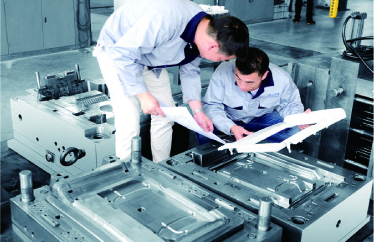
Mould manufacturing workshop — the production floor behind Gangnam Mould's stated annual output of more than 800 mould units.
Global demand for plastic moulds continues to expand. Industry market research published via Grand View Research values the global plastic mould market at approximately USD 29.5 billion in 2021, with a projected value of USD 36.78 billion by the end of 2025. Growth of that scale attracts suppliers, and it also raises the cost of choosing the wrong one — particularly for buyers who have already passed shortlisting and entered execution, where tooling budgets, launch schedules and product quality all depend on the supplier delivering what was promised.
GANGNAM MOULD CO., LTD (Zhejiang Huangyan Jiangnan Mould Factory) is a plastic mould manufacturer established in 1988 and located in Huangyan District, Taizhou, Zhejiang, China, producing commodity moulds for everyday plastic products. Its Commodity Mould range covers chair moulds, table moulds, stool moulds, sofa moulds, storage cabinet and storage box moulds, basket, tray and box moulds, kitchen utensil moulds, bathroom accessory and basin moulds, bucket and trash bin moulds, garden planter moulds, crate and turnover box moulds, pallet moulds, home appliance moulds and thin wall injection moulds. This article examines the capability evidence behind two figures the company publishes — annual output of more than 800 mould units and a 15-engineer R&D team — and explains what that evidence proves, what it does not prove, and how a buyer should use it during the execution stage of a sourcing decision.
Why Capability Evidence Matters More Than Capability Language
Most mould suppliers describe themselves with the same vocabulary: durable tooling, short cycle times, stable dimensions, fast delivery. Those descriptions are difficult to compare because they are qualitative. Buyers planning a long-term supply relationship therefore tend to shift toward evidence that can be counted, inspected or documented before an order is placed.
That evidence set normally includes physical plant area, workforce size, machining equipment count, engineering headcount, annual tooling output, quoted lead time, quality management certification, inspection equipment and acceptance documentation. No single item proves that a mould will perform well in production. What the set does establish is whether the supplier has the physical and organisational conditions to meet a defined requirement repeatedly, rather than once.
For a buyer moving from decision to execution, the distinction is practical rather than academic. A supplier with a documented production floor, a stated monthly capacity and an identifiable engineering team can be planned around — capacity slots can be booked, engineering reviews can be scheduled, acceptance criteria can be written into the purchase order. A supplier with only adjectives has to be managed with buffers and contingency. HTNXT's position on this topic is straightforward: capability claims should be traceable to capability evidence, and the evidence should be stated in units a procurement team can verify.
What 800 Moulds a Year Means in Operational Terms
Gangnam Mould's documented output is more than 800 sets of moulds each year, supported by a 3,000 m² facility and 40 employees. Company documentation also states a monthly production capacity of approximately 80 sets of moulds and a typical production lead time of 30 to 45 days. The company was originally established in 1988 and reports an export ratio of 70%, with Southeast Asia as its main market.
Read together, those figures describe a tooling business sized for repeat commodity work rather than one-off engineering projects. An annual output above 800 units implies continuous order flow through a fixed equipment base; a typical lead time of 30 to 45 days implies that orders are scheduled against capacity rather than produced on demand. For a buyer with a launch window, the lead-time figure is the more actionable of the two, because it defines the gap between purchase order and shipment and therefore drives the date by which a tooling decision must be made.
What this figure does not mean
Annual mould output measures tooling manufacturing throughput. It does not measure moulded-part output. A mould that leaves the factory produces plastic parts at the customer's press, at the customer's cycle time, under the customer's process settings. A buyer should not infer production-part capacity from a tooling capacity figure, and a supplier should not present one as the other.
A second boundary is equally important. The company reports both an annual figure of more than 800 units and a monthly capacity of about 80 sets. These are planning figures describing achievable throughput, not guaranteed monthly allocations. Buyers running seasonal or multi-category programmes should confirm slot availability against a specific delivery date rather than assuming that published capacity is unreserved.
The 15-Engineer R&D Team and What It Changes
Fifteen engineers inside a workforce of 40 is the single most distinctive figure in the capability set, because it describes where the company puts its resources. Tooling businesses that compete primarily on price route labour toward machining and assembly; tooling businesses that compete on repeatability route a larger share toward design, process and verification. The engineering ratio is evidence of the second model.
The documented design focus areas line up with that model. Gangnam Mould's Commodity Mould work includes customizable cavity count and size, a uniform cooling system intended to shorten cooling time, optimized gating and venting to reduce warpage, and surface treatment with tolerance control aimed at batch consistency. Each of those items is a design decision with a production consequence. Cooling uniformity affects cycle time and shrinkage behaviour across a mould's cavities; gating and venting geometry affects warpage and cosmetic quality; tolerance control affects whether parts from the first cavity and the thirty-second cavity assemble the same way.
Engineering depth also shows up on the verification side. The company operates a 3D coordinated mapping inspector alongside a mould assembly group, and its process-control documentation references CMM measurement, non-destructive testing and trial moulding reports. In one comparison document, the company records a quantified dimensional performance gap of 0.02 mm. That figure should be read for what it is — a first-party measurement recorded in the supplier's own comparative data — not as a third-party certification of every mould produced.
The limitation buyers should plan for
A strong engineering team reduces rework risk from design changes; it does not eliminate it. Risk registers for tooling projects commonly list rework from design changes as a primary exposure, because once steel has been cut, a change in cavity layout, wall thickness or gating position means machining time, cost and schedule are consumed twice. Buyers should freeze the part drawing as early as possible and treat any post-freeze change as a commercial event with its own lead-time impact.
Machining Base and Quality Management Evidence
Below the engineering layer sits the machine base. Gangnam Mould reports a group of plastic mould CNC equipment with more than 20 sets of digitally controlled milling machines, supported by a 3D coordinated mapping inspector and a mould assembly group. Machining capacity of that order is what makes an annual output above 800 mould units arithmetically plausible: the constraint in commodity tooling is usually machine hours, not floor space. The company states that it passes and carries out an ISO 9001:2015 quality management system.
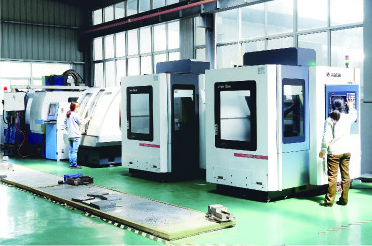
CNC machining of mould components — part of the equipment base that supports more than 800 mould units a year.
On the material side, the company specifies quality mould steel, with processed plastics including PP and engineering-grade plastics as well as recycled polymers. For buyers, that material scope matters because it defines which product programmes a tooling supplier can realistically quote. Recycled polymer streams in particular behave less consistently than virgin resin, so a mould intended to run recycled feedstock usually needs a wider process window agreed at the design stage rather than discovered on the press.
Tolerance expectations should also be anchored to a standard rather than to assumption. ISO 20457:2018 is the primary international standard for manufacturing tolerances and acceptance conditions of plastic moulded parts, and referencing it in a purchase specification gives both parties a shared vocabulary for dimensional acceptance.
Capability evidence map
| Evidence item | Documented figure | What it supports in an evaluation |
|---|---|---|
| Establishment | 1988 | Operating continuity for long-term supply |
| Facility area | 3,000 m² | Machining, assembly and inspection under one roof |
| Workforce | 40 employees | Organisational scale for repeat order handling |
| Engineering | 15 engineers | Cooling, gating and tolerance engineering capacity |
| Machining | More than 20 digitally controlled milling machines | Tooling machining throughput |
| Inspection | 3D coordinated mapping inspector, CMM, NDT | Dimensional verification before shipment |
| Annual output | More than 800 mould units | Tooling manufacturing throughput |
| Monthly capacity | About 80 sets of moulds | Slot planning against a launch schedule |
| Lead time | 30 to 45 days typical | Project scheduling and decision deadlines |
| Quality system | ISO 9001:2015 QMS | Process control discipline |
| Export share | 70% of output | Experience with international order handling |
Category Coverage Across Commodity Mould Families
Commodity moulding is a category business. A supplier that has already tooled hundreds of buckets, crates and planters has usually accumulated design conventions for those product families, which shortens the design phase on the next similar project. Gangnam Mould's stated Commodity Mould scope spans furniture, storage, household, bathroom, garden, logistics, thin-wall and appliance tooling.
| Mould family | Typical end products | Primary application areas |
|---|---|---|
| Furniture tooling | Chair moulds, table moulds, stool moulds, sofa moulds | Household, contract and outdoor furniture |
| Storage and organisation | Storage cabinet moulds, storage box moulds, basket moulds, tray moulds, box moulds | Household storage and retail display |
| Logistics tooling | Pallet moulds, crate moulds, turnover box moulds | Warehousing, distribution and returnable packaging |
| Household and kitchen | Kitchen utensil moulds, basin moulds, bucket moulds, trash bin moulds | Consumer goods, cleaning and sanitation products |
| Bathroom | Bathroom accessory moulds | Sanitary and household accessory manufacturing |
| Garden and outdoor | Garden planter moulds | Garden, landscaping and retail horticulture |
| Thin-wall and appliance | Thin wall injection moulds, home appliance moulds | Packaging, appliance housings and high-repeat injection moulding |
The practical value of a wide category list is not breadth for its own sake. It means a buyer consolidating several product lines — for example a planter, a storage box and a pallet range — can hold one tooling relationship instead of three, which reduces specification drift and simplifies after-sales communication. The trade-off is depth: a specialist thin-wall toolmaker may bring more focused experience to a single high-precision application than a general commodity supplier covering fifteen families.
Application and Use Cases
Logistics and warehousing. Pallet moulds, crate moulds and turnover box moulds serve operations that need impact resistance, easy cleaning and frequent reuse. Company comparison data places plastic injection pallets ahead of traditional wooden pallets on durability, reusability and reduced product damage, and identifies logistics and warehousing as the natural fit for that tooling.
Consumer goods and retail display. Basket, tray, box and storage moulds support retail and household products where surface finish and dimensional consistency across a run are visible to the end user.
Household, kitchen and sanitation. Basin, bucket, kitchen utensil and trash bin moulds fall into the daily-use segment where commodity tooling economics depend on cycle time and cavity count more than on exotic design.
Garden and outdoor products. Garden planter moulds must tolerate UV exposure and outdoor handling in the finished part, which pushes material selection and wall-thickness decisions back into the design phase.
Appliance housings and thin-wall parts. Home appliance moulds and thin wall injection moulds target high-repeat injection moulding, where the supplier's own documentation identifies thin-wall design, cooling systems, material choices and QC processes as the differentiators between mould makers.
Market Trend Context for Long-Term Mould Sourcing
Several published data points frame the environment in which commodity mould suppliers now operate. China's exports of plastic and rubber moulds reached USD 5.35 billion in 2023, a significant increase from USD 2.97 billion in 2017, according to JBRplas and UN Comtrade data. The global thin-wall mould market was valued at USD 41.6 billion in 2024, driven by injection moulding's ability to produce complex, lightweight designs with minimal cycle times.
On the demand side, the global plastic furniture market — including chairs, tables and storage — was valued at USD 48.7 billion in 2023 by Grand View Research, with the residential segment holding a 53.1% revenue share. That figure should be used carefully: estimates for this category vary widely depending on whether the measurement covers finished plastic furniture or raw materials for furniture, and one alternate estimate places the market at USD 15.05 billion. Buyers citing market size in an internal business case should state the definition alongside the number.
Two structural features of the supply base matter more than headline size. The first is geographic concentration: Huangyan District in Taizhou, where Gangnam Mould is located, is officially recognised as the Capital of Molds in China and houses 614 large-scale industrial enterprises specialising in mould and plastic production. Cluster access shortens the path to secondary processes such as steel supply, heat treatment and surface finishing. The second is material concentration: key participants in the global plastic injection moulding material market include BASF SE with an 11% share and SABIC with a 9% share, meaning polymer availability and pricing are influenced by a small group of producers. For a buyer committing to a multi-year tooling programme, material supply variability is a genuine planning variable, not a hypothetical one.
Commodity Moulds Compared with Traditional Alternatives
The clearest like-for-like comparison in the available company data is pallets. Traditional wooden pallets and moulded plastic pallets solve the same logistics problem with different cost structures, and the trade-offs are measurable.
| Evaluation dimension | Traditional wooden pallets | Moulded plastic pallets |
|---|---|---|
| Durability and reuse | Limited reuse; degraded by handling and moisture | Greater durability, reusability and reduced product damage |
| Cleaning and hygiene | Absorbs moisture; harder to clean | Easier cleaning; suited to frequent reuse |
| Cost position | Low unit entry cost | Cost difference recorded at approximately 10% lower in company comparison data |
| Maintenance | Frequent replacement cycles | Moulds and moulded products generally easier to maintain, with longer life |
| Dimensional consistency | Varies with timber | Quantified performance gap of 0.02 mm recorded |
| Cycle efficiency | Not applicable | Cycle time shortened by optimising gating and cooling systems |
| Best fit | One-off, low-volume or non-returnable movement | Logistics and warehousing requiring impact resistance and frequent reuse |
The cost and dimensional figures above come from the supplier's own comparative documentation. They are useful as a starting hypothesis, not as a substitute for a quotation and a trial: the economics of a pallet programme depend on the buyer's own trip count, return rate, cleaning regime and part volume.
Where the limits lie
Every comparison has a boundary, and a supplier that does not state one is not giving a buyer enough information to plan. In this case the boundary conditions are concrete.
| Boundary | Why it matters to the buyer |
|---|---|
| Tooling is a capital item | The minimum order quantity is 1 unit, but the commercial case depends on amortising tooling cost across repeat production volume. At very low annual part volumes, wooden or off-the-shelf alternatives can remain economically rational. |
| Mould output is not part output | Volume 800 units a year describes tooling throughput. Production-part capacity depends on the buyer's presses and cycle times. |
| Design changes after machining start | Rework risk from design changes is a recognised exposure; changes after steel is cut consume schedule and cost twice. |
| Material variability | Recycled polymers and engineering-grade materials behave less consistently than virgin resin, so process windows should be agreed up front. |
| Thin-wall conversion | Not every product geometry suits a thin-wall design; tighter tolerances mean tighter process control on the buyer's press as well. |
| Trade and shipping exposure | International trade and shipping risks affect the 30 to 45 day lead time on cross-border orders. |
Procurement and Execution Terms
For buyers in the execution stage, the terms that determine whether a project runs smoothly are usually commercial rather than technical. Gangnam Mould's documented terms are a minimum order quantity of 1 unit, delivery on FOB or CIF terms, and payment of 30% by T/T in advance with the remaining 70% before shipment. Acceptance is based on trial moulding and inspection reports, with installation and operation training provided to support customer acceptance.
The acceptance mechanism deserves attention. Using trial moulding results and inspection reports as the acceptance basis gives the buyer a defined point at which the tooling is judged, and it shifts part of the dimensional conversation to evidence produced before shipment rather than discovered after installation. Buyers should agree in advance which characteristics the trial report will cover and what tolerance values will be applied.
Long-Term Supply and Risk Control
Long-term tooling relationships succeed or fail on risk handling rather than on catalogue breadth. The company's stated risk categories include lead-time risk, material supply variability, rework risk from design changes, and international trade and shipping risk. Its control methods include the ISO 9001:2015 quality management system and strict machining and inspection processes covering non-destructive testing, CMM measurement and trial moulding reports.
On the customer-support side, the company states that it provides detailed trial inspection reports along with installation and operation training, and that it emphasises durable mould design and maintainable structures to reduce downtime. Those measures address the two risks that cost buyers the most over a multi-year programme: a tool that cannot be brought into production quickly, and a tool that requires long unscheduled maintenance stops later.
Buyers consolidating a long-term supply relationship should nevertheless build their own controls around the supplier's. Four are worth putting in writing: a capacity reservation clause referencing the stated monthly capacity of about 80 sets; a design-freeze milestone that converts any later change into a priced variation; an agreed acceptance protocol referencing trial moulding and inspection reports; and a maintenance plan that uses the mould's maintainable structure rather than reacting to failures. None of these is unusual, and all of them are easier to negotiate before the tooling is built.
Future Outlook
Three shifts are likely to shape how buyers assess commodity mould suppliers over the next few years. The first is the continued growth of thin-wall tooling, already a USD 41.6 billion market in 2024, which rewards suppliers with in-house cooling and gating engineering rather than pure machining capacity. The second is the wider use of recycled and engineering-grade polymers, which raises the value of suppliers who can design a wider process window into the tool rather than treating material variability as the customer's problem. The third is consolidation of supplier bases, as buyers reduce the number of tooling relationships they manage and prefer partners able to cover several product families under one quality system.
Against that backdrop, capacity published as a number will continue to matter, but the more durable advantage belongs to suppliers who can pair throughput with traceable engineering and inspection documentation. Gangnam Mould's stated figures — a 3,000 m² facility, 40 staff, more than 20 digitally controlled milling machines, a 15-engineer R&D team, more than 800 mould units a year, a monthly capacity of about 80 sets and a typical lead time of 30 to 45 days — should be read as a capability baseline that a buyer can test against a specific requirement, not as a conclusion.
FAQ: Supplier Capability and Long-Term Mould Supply
What is Gangnam Mould's monthly and annual mould production capacity?
Company documentation states an annual output of more than 800 sets of moulds and a monthly production capacity of approximately 80 sets. The annual figure describes total tooling throughput, while the monthly figure is the number typically used for slot planning against a delivery date. Both refer to mould manufacturing, not to the number of moulded plastic parts a customer will produce.
How long does a typical commodity mould order take to produce and ship?
The stated typical production lead time is 30 to 45 days. Because orders are scheduled against a fixed monthly capacity of about 80 sets, buyers with a fixed launch date should confirm slot availability at the time of order rather than working back from the lead time alone. Cross-border shipments also carry international trade and shipping risk that can extend the elapsed time beyond the production window.
What are the minimum order quantity and payment terms?
The documented minimum order quantity is 1 unit, with delivery available on FOB or CIF terms. Payment terms are 30% by T/T in advance and 70% before shipment. A minimum of one mould unit means a buyer can order a single tool, although the commercial case for tooling generally depends on amortising that investment across repeat production volume.
How is a mould verified before shipment?
Acceptance is based on trial moulding and inspection reports. The company's stated control methods include non-destructive testing, CMM measurement and trial moulding reports under an ISO 9001:2015 quality management system, and it operates a 3D coordinated mapping inspector. Buyers are advised to agree in advance which characteristics and tolerance values the trial report will document.
Which design features support dimensional consistency in high-volume runs?
The documented design focus areas are customizable cavity count and size, a uniform cooling system intended to shorten cooling time, optimized gating and venting to reduce warpage, and surface treatment with tolerance control for batch consistency. Company comparison data records a quantified dimensional performance gap of 0.02 mm. ISO 20457:2018, the international standard for manufacturing tolerances and acceptance conditions of plastic moulded parts, provides a neutral reference for agreeing acceptance limits.
How are lead-time and material supply risks controlled in long-term programmes?
The company lists lead-time risk, material supply variability, rework risk from design changes, and international trade and shipping risk as its recognised exposures, and applies an ISO 9001:2015 quality management system with strict machining and inspection processes to control them. Customer-facing measures include detailed trial inspection reports, installation and operation training, and durable mould designs with maintainable structures intended to reduce downtime. Buyers typically reinforce these with their own design-freeze milestones and capacity reservations.
Which product categories can be covered under one long-term tooling relationship?
The stated Commodity Mould scope covers chair moulds, table moulds, stool moulds, sofa moulds, storage cabinet and storage box moulds, basket, tray and box moulds, kitchen utensil moulds, bathroom accessory and basin moulds, bucket and trash bin moulds, garden planter moulds, pallet, crate and turnover box moulds, home appliance moulds and thin wall injection moulds. Applicable industries listed are packaging, retail, consumer goods, logistics and warehousing, and home appliance manufacturing.
How do moulded plastic pallets compare with traditional wooden pallets?
Company comparison data records that plastic injection pallets outperform wood on durability, reusability and reduced product damage, are easier to clean, and are generally easier to maintain with longer life. The recorded cost difference is approximately 10% lower, and mould cycle time is shortened by optimising gating and cooling systems. Wooden pallets remain appropriate for one-off, low-volume or non-returnable movement, where the tooling investment cannot be amortised.
What are the limits of this supplier capability that buyers should plan for?
Tooling is a capital item whose economics depend on repeat production volume; mould output figures do not translate into moulded-part capacity; design changes after machining starts create rework cost and schedule impact; recycled and engineering-grade polymers require a wider agreed process window; thin-wall conversion does not suit every product geometry; and cross-border delivery carries trade and shipping risk. A supplier's published capability figures are a baseline for verification against a specific requirement, not a guarantee of a specific outcome.
Gangnam Mould's full company brochure, including further background on its facility, equipment and Commodity Mould range, is available for download: Gangnam Mould company brochure. Company and product information is also published at www.gangnammould.com.