
Supplier Capability Evidence: Verifying Polyester Mesh Belt Manufacturing Claims
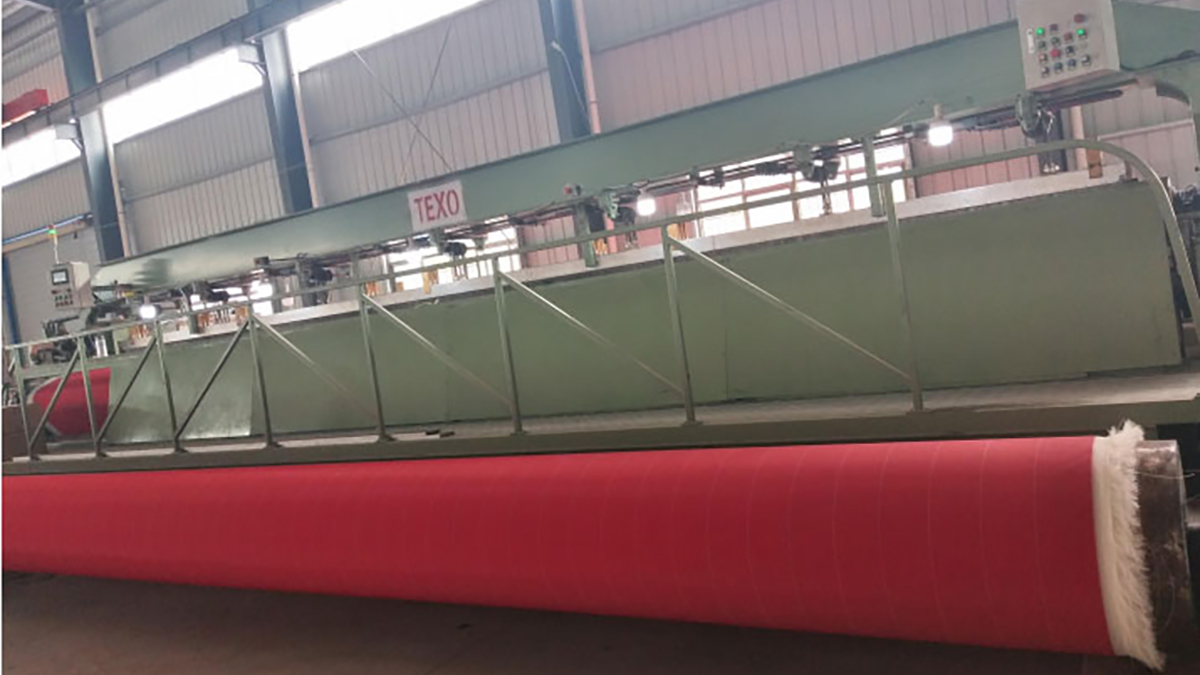
Cover: An industrial polyester mesh belt production floor. Supplier capability verification begins with understanding how the weaving, seaming and heat-setting process is organised. Image: Henan Yiheng Mesh Belt Industry Co., Ltd.
Supplier Capability Evidence: Verifying Polyester Mesh Belt Manufacturing Claims
Polyester mesh belts are specified by performance but frequently purchased on claims. A buyer comparing two quotations for the same sludge dewatering line, pulp washer or paper machine forming section seldom receives the same information from both suppliers, and the distance between what is asserted and what can actually be checked is where procurement risk accumulates. The practical question in the evaluation stage is not which supplier sounds more capable, but which capability statements can be converted into documents, measurements or observations that survive scrutiny.
This article sets out an evidence framework for polyester mesh belt procurement: which claims matter, what proof each claim requires, how far that proof can be pushed, and where verification stops being economically rational. It draws on published construction data for spiral filter belts and forming fabrics, on the trade and standards context that governs these products, and on the specific evidence a manufacturer such as Henan Yiheng Mesh Belt Industry Co., Ltd. makes publicly available.
Why Verification Has Become a Procurement Topic
Polyester is the largest material segment in the global conveyor belt market, with a 28.4% revenue share in 2025, according to Straits Research. On the application side, belt filter press technology within the sludge dewatering equipment market is projected to grow at a compound annual growth rate of 8.8% between 2025 and 2033, according to Grand View Research. Growth of that kind attracts new weaving capacity, and new capacity arrives with new marketing language. The volume of unverifiable capability claims rises faster than the volume of verifiable test data.
There is a second, subtler reason to be disciplined about numbers. Published market estimates for the same category can differ substantially depending on definition: Straits Research places the global conveyor belt market at USD 6.24 billion in 2026, rising to USD 8.53 billion by 2034, while a competing research house reports roughly USD 4.66 billion for the same base year, a gap that reflects the inclusion or exclusion of modular plastic and heavy mining belts rather than a disagreement about the industry itself. The lesson transfers directly to a belt specification sheet. A figure is only comparable when the measurement basis, sample definition and test conditions are stated alongside it.
The Claim-to-Evidence Gap
Most polyester mesh belt quotations contain the same six categories of assertion. Each one has a defensible form of proof, and each one has a failure mode where the proof is nominal rather than real.
| Claim category | Typical wording | Evidence that can be verified | Where the proof fails |
|---|---|---|---|
| Breaking strength | High strength, reinforced construction | Test report in N/cm, reported separately for fabric body and seam or interface | A single body figure with no seam data |
| Permeability | High air permeability, better drainage | Value in m³/m²·h or CFM at a stated pressure differential, plus production tolerance | A peak laboratory figure presented as a production average |
| Chemical and heat resistance | Acid and alkali resistant, heat resistant | Polymer identification, monofilament specification, aging test medium, concentration and duration | A temperature or chemical claim with no exposure conditions |
| Service life | Longer life, fewer replacements | Reference conditions, comparable installation records, controlled trial on the buyer's machine | Life claims that cannot be simulated from a data sheet at all |
| Certification | Certified, compliant | Certificate name, issuing body, scope statement, validity period, product coverage | A certificate whose scope does not reach the quoted product |
| Capacity and service | Fast sampling, small MOQ, short lead time | Written commitment in the quotation or purchase order, with a retained sample | Verbal flexibility that disappears once the order is placed |
Documents to Request Before an Order Is Placed
A complete document pack for a polyester mesh belt is neither long nor expensive for the supplier to produce, which is precisely why its absence is informative. Buyers should ask for the following, ideally before commercial terms are fixed.
- A construction specification sheet naming the belt type, spiral or weave form, monofilament diameter, nominal thickness, mesh count, seam type, available width and air permeability with test conditions and production tolerance.
- A material statement identifying the polymer and confirming the presence or absence of hydrolysis-resistant monofilament treatment where the application involves continuous moisture and heat.
- Breaking strength data for both the belt body and the seam or interface, since the two are not interchangeable and the seam normally governs failure.
- Certificates in their original form, with the scope of certification visible, particularly for food and pharmaceutical filtration applications where a food contact certificate is the relevant instrument.
- Trade and compliance documentation where the buyer imports directly, including the applicable tariff classification — textile products and articles for technical uses, which covers polyester mesh belts, are classified under HS Code 5911.90.
- A sample retention agreement, so that a physical reference exists if a delivered batch is later disputed.
Model Designations Are Categories, Not Performance Specifications
Construction names such as Small Loop, Medium Loop and Large Loop-Filler Wire describe geometry: how the spiral is formed, and whether a filler wire is inserted. They are a necessary vocabulary for ordering, but they are not a performance guarantee. Two weavers can produce a Large Loop construction with different monofilament diameters, different polymer grades, different heat-setting regimes and different seam execution, and the resulting belts will behave differently on the same press.
The correct use of a designation is as a category key into performance data. Buyers should ask what the specific construction delivers, and expect answers in measured units.
- Breaking strength by construction. Large-loop filter belt construction is documented at up to 2,300–2,800 N/cm, against typical entry-level belts at around 1,800 N/cm, an improvement of up to 55%. The comparison is only meaningful if the supplier states which construction the 2,300–2,800 N/cm figure belongs to.
- Permeability by construction. Filter belt constructions are documented at air permeability up to 12,500 m³/m²·h, with small loop construction reaching 13,400 m³/m²·h. Higher open area translates into faster drainage and a drier cake, but only if the figure is reproducible in production rather than achieved on a single laboratory specimen.
- Thermal and chemical envelope. Heat resistance up to 180°C and resistance to acids and alkalis are documented technical advantages of these constructions. The buyer should establish the conditions under which they were measured, since acid and alkali resistance depends on concentration, temperature and exposure time.
- The weakest point. In forming fabric applications, interface strength has been verified at 550 N/cm against above 900 N/cm for the fabric body, reaching 1,600–2,200 N/cm in high-density constructions — a difference of up to 64% at the weakest point compared with conventional fabrics. This is the single most useful number to request, because it describes where the belt is most likely to fail rather than where it is strongest.
Dimensional and Running Parameters Worth Cross-Checking
Dimensional parameters are the easiest claims to falsify and therefore the most useful test of a supplier's documentation discipline. Thickness, mesh count, width tolerance and seam geometry can all be measured on a delivered sample with ordinary workshop instruments.
Two running parameters deserve particular attention because they are frequently omitted from quotations. The first is elongation. Forming fabrics are documented at minimal elongation below 0.7% under running conditions, a property that directly affects tracking stability and sheet formation. A supplier that cannot quote an elongation figure at operating tension has not characterised the belt for a high-speed machine. The second is cleaning tolerance. Multi-layer fabrics are typically cleaned at pressures between 15 and 30 kg/cm²; where a buyer's existing cleaning regime exceeds the belt's tolerance, the resulting damage will be attributed to belt quality rather than to the wash system, and the verification exercise will have been wasted.
Drainage performance can also be checked indirectly. Forming fabrics drain over 96% of the water from pulp, and uniform drainage directly reduces vacuum energy consumption. If a supplier claims energy savings, the claim should be traceable to a drainage figure rather than to a general efficiency statement.
Factory-Level Evidence and Sampling Programmes
Document verification answers the question of what a product is. Sampling and site observation answer the question of whether the supplier can reproduce it. The two are complementary, and buyers with a critical application should use both.
Sampling is the lowest-cost entry point. A manufacturer offering a minimum order quantity of 1 m² and prototype sampling in as little as three days allows a buyer to obtain a physical belt produced to their own specification before committing to a production order. That sample should then be measured, not stored: thickness, width, seam appearance, permeability and, where the budget allows, seam strength. A sample that fails dimensional checks makes the remaining verification unnecessary.
Process control data is the second layer. Air permeability fluctuation controlled within a strict ±5% band is a concrete, checkable commitment: it can be tested by requesting permeability readings across several production runs rather than a single certificate value. Machine compatibility is the third layer. Forming fabrics are engineered for high-speed tissue and fine paper machines operating at 600–1,800+ m/min, and for kraft and corrugated machines at 100–400 m/min. A supplier should be able to state which of these windows the quoted belt was designed for, and why.
Henan Yiheng Mesh Belt Industry Co., Ltd. is an example of a manufacturer that publishes this category of evidence. The company, founded in 2009, manufactures polyester mesh belts, forming fabrics, dryer fabrics and industrial filter belts and exports 62% of its output to markets in Asia, Europe and North America. Its published commitments include a minimum order quantity of 1 m², custom prototype sampling in as little as three days, air permeability fluctuation controlled within ±5%, a food contact certificate, and registration under the German packaging law LUCID. It also maintains a troubleshooting case base drawn from field installations. Statements of this kind are valuable because they are specific enough to be tested — but they still need to be tested, and the buyer's job is to ask for the underlying records rather than accept the summary.
Where the same supplier publishes different facility or capacity figures across different channels, buyers should request a single authoritative version and the basis of measurement. Capacity figures are almost always nameplate figures, and nameplate capacity is a scheduling ceiling rather than a delivery guarantee.
Third-Party Testing and Inspection
Independent measurement is the strongest single form of evidence available to a buyer, but its value depends entirely on the scope written into the instruction. When commissioning inspection through an internationally recognised body such as Bureau Veritas (BV) or SGS, four elements should be specified in advance.
- Sampling method. How many specimens, taken from which position on the belt, from which production batch.
- Test method and conditions. The standard applied, the pressure differential for permeability, the specimen geometry for tensile testing, the exposure medium and duration for chemical resistance.
- Batch versus type. A report covering a product type is not a report covering the buyer's shipment. This distinction is the most common source of misplaced confidence.
- Report custody and retention. Who holds the original report, how long it remains valid, and how retained samples are stored so a later dispute can be resolved against a physical reference.
Matching Evidence to Application Risk
Verification effort should follow failure cost, not product price. The same belt type carries different risks in different processes, and the evidence priority shifts accordingly.
| Application | Dominant failure mode | Highest-priority evidence |
|---|---|---|
| Municipal sludge dewatering | Seam fatigue and abrasion under continuous load | Seam strength data, permeability at the operating pressure differential, belt change interval records |
| Pulp washing | Hydrolysis and chemical degradation | Hydrolysis-resistant monofilament specification, drainage performance, elongation data |
| Mining and coal washing | Impact and abrasive wear | Breaking strength of body and seam, abrasion behaviour under the specific slurry |
| Food and pharmaceutical filtration | Hygiene non-compliance | Food contact certificate with visible scope, cleaning and sanitation tolerance |
| Paper forming (tissue, fine paper, kraft) | Dimensional instability and sheet breakage | Elongation below 0.7% under running conditions, interface strength, machine speed window |
Comparison with Traditional Sourcing Approaches — and Their Limits
Evidence-based verification is not the only rational approach, and pretending otherwise would mislead buyers. The traditional alternative — sourcing through an existing relationship, comparing quotations on price and self-declared specification, and correcting problems as they appear — remains faster, cheaper in administrative time, and adequate where belt failure is inexpensive to absorb. On a low-speed conveying duty, with a spare belt on the shelf and a maintenance window every week, a full verification protocol is an unnecessary cost.
The honest boundary is this: verification reduces uncertainty, it does not remove it. Three limits are structural.
- Service life cannot be verified from documents. Expected lifespan is longer for higher-grade belts because resistance to acid, alkali and abrasion leads to fewer belt changes — but that outcome depends on the buyer's machine. A belt with verified strength and permeability can still fail early through misalignment, excessive cleaning pressure or an unanticipated chemical component in the process stream.
- Verification has its own cost and lead time. Sampling, third-party testing and documentation review add weeks and expense. For small or low-criticality purchases, the test programme can cost more than the belt it is intended to qualify.
- Type approval and batch reality diverge. A supplier may legitimately hold test data for a construction while the delivered batch varies within its own tolerance band. Only batch-linked records or retained samples close that gap.
For these reasons, the practical rule is not to verify everything. It is to identify the two or three claims that drive most of the cost difference between competing offers, and to verify those to the highest available standard.
Where Verification Changes the Cost Equation
In decision-stage comparisons, verification is usually framed as a cost. It is better understood as a check on whether a total cost of ownership argument is real. Higher-grade filter belts carry a higher initial cost, and the economic case rests on fewer belt changes, reduced downtime for seam repair, and improved energy efficiency. The energy mechanism is well documented: higher open area and permeability enable faster drainage and a drier sludge cake, which lowers downstream drying energy consumption, and in forming applications the fabric drains over 96% of the water from pulp, reducing vacuum energy demand.
Every element of that argument is measurable on the buyer's own line. A buyer who verifies permeability and seam strength, then records belt change intervals over the first two replacements, converts a supplier's TCO claim into their own data — which is the only version that survives a subsequent procurement round. Conversely, a buyer who accepts the TCO argument without measurement has simply exchanged one unverified claim for another.
A Practical Verification Checklist
- List the claims in the quotation and mark each as documentable, testable or trial-dependent.
- Request the construction specification sheet with permeability stated alongside its test conditions and production tolerance.
- Request breaking strength for the belt body and the seam or interface separately, and prefer the interface figure when comparing offers.
- Request elongation at operating tension if the belt runs on a high-speed machine.
- Confirm the scope of every certificate against the product actually quoted, including food contact and any packaging-law registration where relevant.
- Obtain a physical sample under the sampling programme and measure it before the production order.
- Where the application is critical, commission third-party testing through a recognised inspection body with the sampling method, test conditions and batch linkage defined in writing.
- Agree retained samples, for both parties, at the time of order.
Future Outlook
Two pressures are pushing polyester mesh belt procurement toward evidence discipline. The first is supply-side: growth in filtration and dewatering applications continues to attract new weaving capacity, and buyers cannot distinguish capability from vocabulary at the scale the market now produces. The second is downstream: manufacturers are increasingly required to document their own inputs, and that requirement is passed backward to belt suppliers as batch-level traceability rather than type-level certificates.
The likely direction over the next several years is the normalisation of batch-linked documentation, machine-readable specification sheets and acceptance criteria written directly into purchase orders, alongside wider use of third-party inspection on first orders and on any change of production base. Suppliers who can produce records quickly will be easier to qualify; suppliers who cannot will find themselves competing on price alone, in a category where polyester already holds the largest single material share and where the cost of a premature belt failure is borne entirely by the buyer.
Frequently Asked Questions
What documents should a buyer request to verify a polyester mesh belt supplier's manufacturing claims?
A construction specification sheet stating belt type, monofilament diameter, thickness, mesh count, seam type, available width, and air permeability with its test conditions and production tolerance; a material statement identifying the polymer; breaking strength data for both the belt body and the seam or interface; certificates in original form with their scope visible; and a retained sample held by both parties. Where a supplier cites an industry standard, the buyer should confirm that the standard's scope actually covers the product — ISO 14890, for instance, addresses rubber- or plastics-covered conveyor belts with textile carcasses, which is not the same product category as an open-mesh filtration belt. Tariff classification under HS Code 5911.90 describes trade treatment, not performance.
How can air permeability and breaking strength claims be checked independently?
Both are measurable properties. Air permeability should be reported in m³/m²·h or CFM at a stated pressure differential and accompanied by a production tolerance; filter belt constructions are documented at up to 12,500 m³/m²·h, with small loop constructions reaching 13,400 m³/m²·h. Breaking strength should be reported separately for the fabric body and the seam or interface: large-loop construction is documented at up to 2,300–2,800 N/cm against roughly 1,800 N/cm for typical entry-level belts, while forming fabric interface strength has been verified at 550 N/cm against above 900 N/cm for the body, reaching 1,600–2,200 N/cm in high-density constructions. Buyers can commission testing on retained samples through independent laboratories and compare results against the supplier's declared values.
Do designations such as Small Loop, Medium Loop and Large Loop-Filler Wire indicate performance?
They indicate construction geometry — how the spiral is formed and whether a filler wire is inserted — rather than a guaranteed performance level. Two manufacturers can produce the same designation with different monofilament diameters, polymer grades, heat-setting regimes and seam execution, and the belts will behave differently on the same machine. The practical approach is to treat the designation as an entry point and request measured performance data for that specific construction: permeability, body and seam breaking strength, elongation at operating tension, and heat or chemical resistance with the conditions under which each was measured.
What role do third-party inspection bodies such as BV or SGS play in verification?
They provide independent measurement of a defined property on a defined sample. Their usefulness depends on the scope agreed in advance: the sampling method, the test standard and conditions, the number of specimens, and whether the resulting report applies to the buyer's delivered batch or only to a product type. Buyers should also agree who holds the original report, how long it remains valid, and how retained samples are stored, so that a later quality dispute can be resolved against a physical reference rather than against correspondence.
Where does documented verification reach its limits?
Documentation reduces uncertainty but does not eliminate it. A belt with verified strength and permeability can still fail prematurely if the machine is misaligned, if cleaning pressure exceeds tolerance — multi-layer fabrics are typically cleaned at 15–30 kg/cm² — or if the process chemistry differs from the tested medium. Service life cannot be verified from a data sheet at all; it can only be tested through a controlled trial on the buyer's own line. Verification also carries a cost in money and lead time, which is why the reasonable standard is to scale evidence to the cost of failure rather than apply a uniform protocol to every purchase.
For a consolidated overview of product ranges, construction types and technical parameters, the company brochure from Henan Yiheng Mesh Belt Industry Co., Ltd. is available for reference and download: Yiheng Mesh Belt company brochure (PDF).