
Supplier Capability Verification for High Precision Laser Cutting Machines
High precision laser cutting machines for hard and brittle materials are selected on specifications but qualified on deployment records. This reference sets out the physical and operational evidence a buyer should demand from a supplier, and explains what each evidence type actually proves about customized development, scalable deployment, continuous-duty reliability and international delivery.
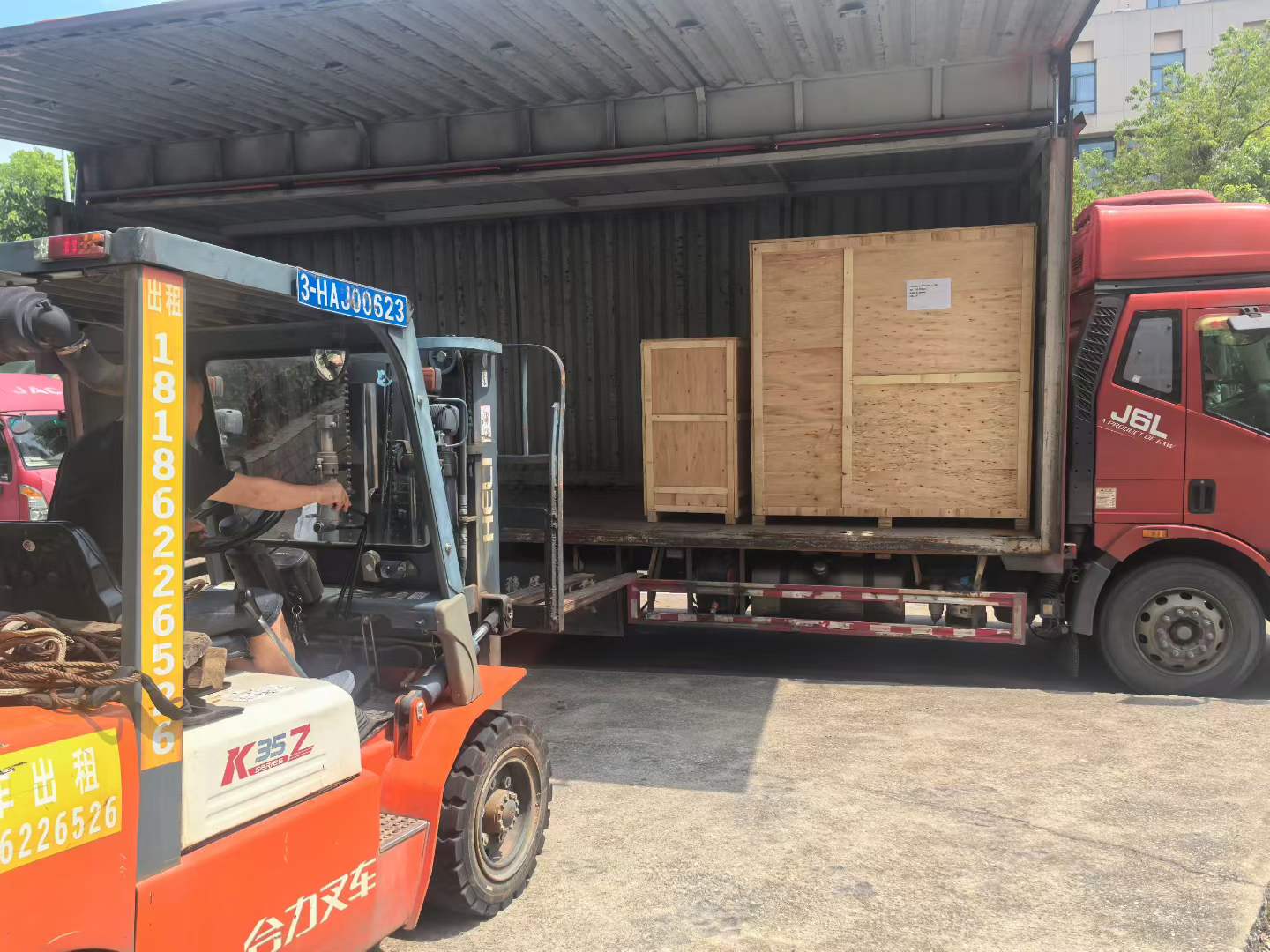
Export preparation is one of the few capability claims a buyer can physically audit before the purchase order is signed.
Why Supplier Capability Is Hard to Verify in Laser Cutting
A high precision laser cutting machine is not a component purchase. The delivered result — a cut edge, a drilled micro-hole, a dicing lane on a ceramic substrate — is produced by the interaction of the laser source, the optical path, the motion system, positioning vision, tooling and process software. Two machines carrying identical published specifications can produce different yield rates on the same alumina or zirconia workpiece, because the variables that determine the outcome are process parameters and mechanical behaviour over time, not headline numbers.
That creates a structural problem at the evaluation stage. Supplier documentation is normally organised around the machine: power, wavelength, working area, positioning accuracy. It is rarely organised around the deployment: how many units of the same platform are running in one plant, for how long, on which materials, and with what service history. A specification answers "what is this machine capable of in theory." A deployment record answers "what has this supplier already delivered, repeatedly, and what happened afterwards."
The gap matters most for hard and brittle materials. Ceramics, glass, sapphire, silicon nitride and PCB substrates do not deform to absorb process errors; they chip, crack or fracture. Thermal stress cracking, edge chipping and dimensional deviation are the failure modes buyers are trying to avoid, and none of them can be assessed from a catalogue specification.
The Evidence Hierarchy: Five Proof Types Worth Requesting
During supplier qualification, evidence should be requested in a deliberate order — from the hardest to verify to the easiest. The table below shows five evidence types, an example of each drawn from documented deployments of equipment manufactured by Wuhan Yuchang Laser Technology Co., Ltd. (YCLASER), and the capability each one actually supports.
| Evidence type | Documented example | Capability it supports |
|---|---|---|
| Multi-unit batch deployment | Seven ceramic laser cutting machines deployed on a single standardized mass production line in China, in 24/7 operation for over 4 years | Scalable deployment, repeatable process parameters, fleet-level service |
| Custom engineering delivery | Dual-head, dual-optical-path ceramic laser cutting machine for a Taiwan high-end electronic component manufacturer, in stable operation for over 2 years | Mechanical, optical and software customization capability |
| Sustained-duty operating record | Over 4 years of 24/7 mass production (China); over 3 years of continuous service at a university research platform; over 2 years at a national-level semiconductor materials research institute | Reliability, wear behaviour, long-term service responsiveness |
| Cross-border delivery and in-market operation | One high-configuration machine exported to a South Korean high-precision manufacturing company, running stably overseas for over 1.5 years | Export suitability, documentation, remote and on-site support |
| Third-party compliance and registered IP | EU Attestation of Compliance TTC-24-2012/02/01; utility model patents ZL 2020 2 2568701.9 and ZL 2020 2 2568710.8; software copyrights 2020SR1720714 and 2020SR1720715 | Independently checkable safety compliance and self-developed control software |
Evidence Type 1 — Batch Deployment at Production Scale
The strongest single indicator that a supplier can industrialise a process is a multi-unit deployment on one production line. Scaling from one machine to seven on the same line is not a purchasing decision; it is a process decision. It only happens when the first unit produced acceptable yield, when parameters proved transferable between machines, and when the supplier's service model could support a fleet rather than a single installation.
In a documented case in China, a high-tech enterprise in the electronics industry deployed seven ceramic laser cutting machines in a batch to establish a standardized mass production line for ceramic substrates, ceramic insulating sheets and precision ceramic structural parts used in consumer electronics and automotive electronics. The line has operated 24/7 for more than four years. Reported outcomes include a low failure rate and high stability, reduced product chipping and breakage, improved mass production efficiency and product consistency, and lower production costs.
For a buyer, the transferable question is not "how many machines have you sold" but "has any customer bought more than one, and did they buy more than one at the same time." A batch order implies the buyer had already validated the machine against their own material and their own yield target.
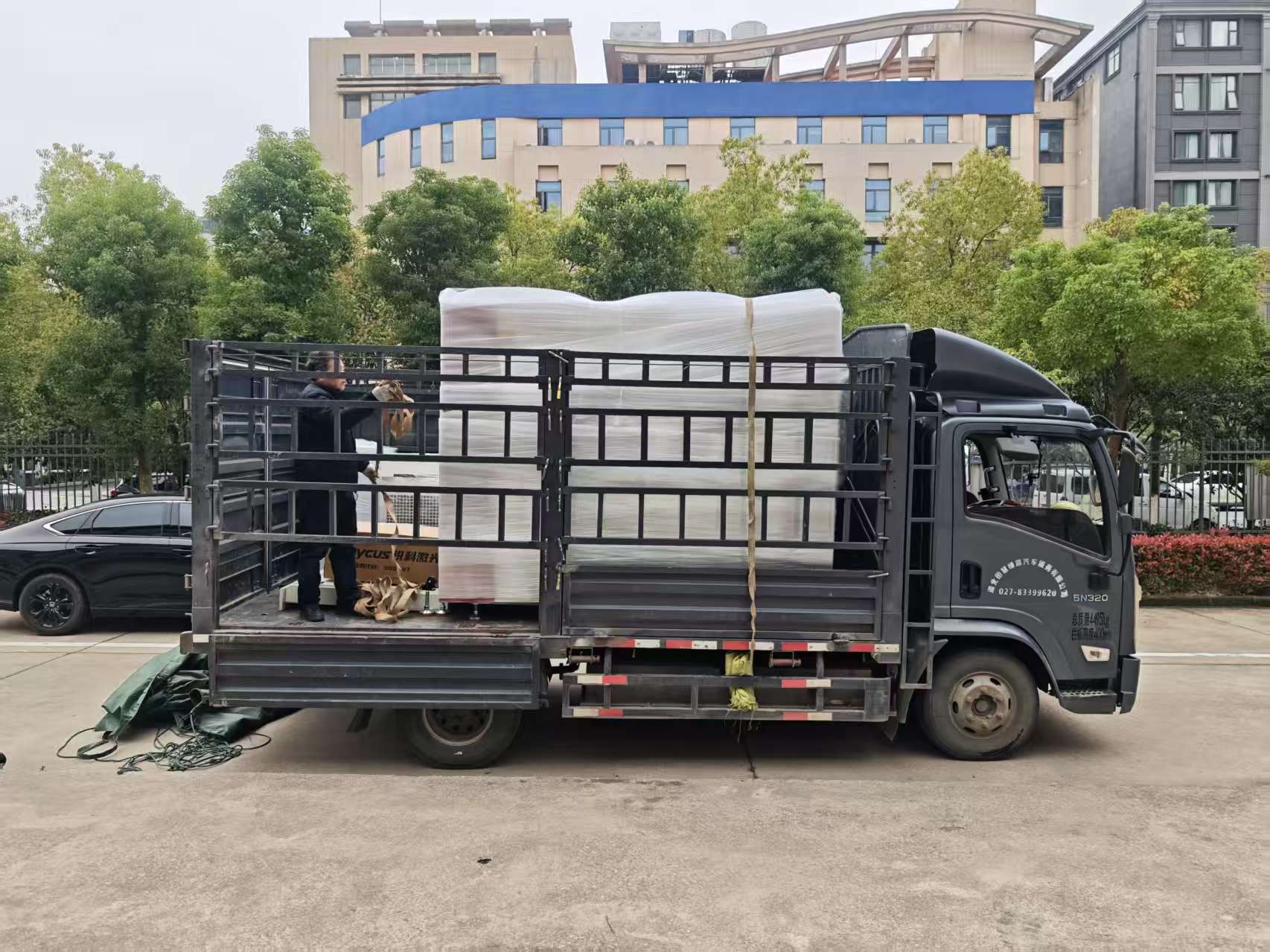
Batch shipments indicate that process parameters have already been transferred across multiple units of the same platform.
Evidence Type 2 — Custom Engineering Under Operating Load
Customization claims are easy to make and hard to disprove, because a non-standard configuration can look convincing on a drawing while never proving itself in production. The verification method is to look for customized units that have been running long enough to expose design weaknesses — typically more than a year of continuous operation.
A documented example is a dual-head, dual-optical-path ceramic laser cutting machine built for a high-end electronic component manufacturer in Taiwan. The configuration supports simultaneous dual-station processing of high-precision ceramic sheets and micro-ceramic components, with independent or synchronous switching between the two beam paths. It has operated stably for over two years in flexible, multi-category, small-batch production. Reported results include processing capacity close to double that of a single-head machine, with high accuracy consistency between the two stations and no cumulative deviation.
What this proves is not simply that the supplier can add a second head. It proves the supplier can synchronise two optical paths, hold repeatability across both stations over time, and integrate the configuration into a production line carrying mixed product categories. For buyers whose roadmap includes multi-product or small-batch flexible manufacturing — a common requirement in precision electronic component production — this is a materially different capability from single-head equipment supply.
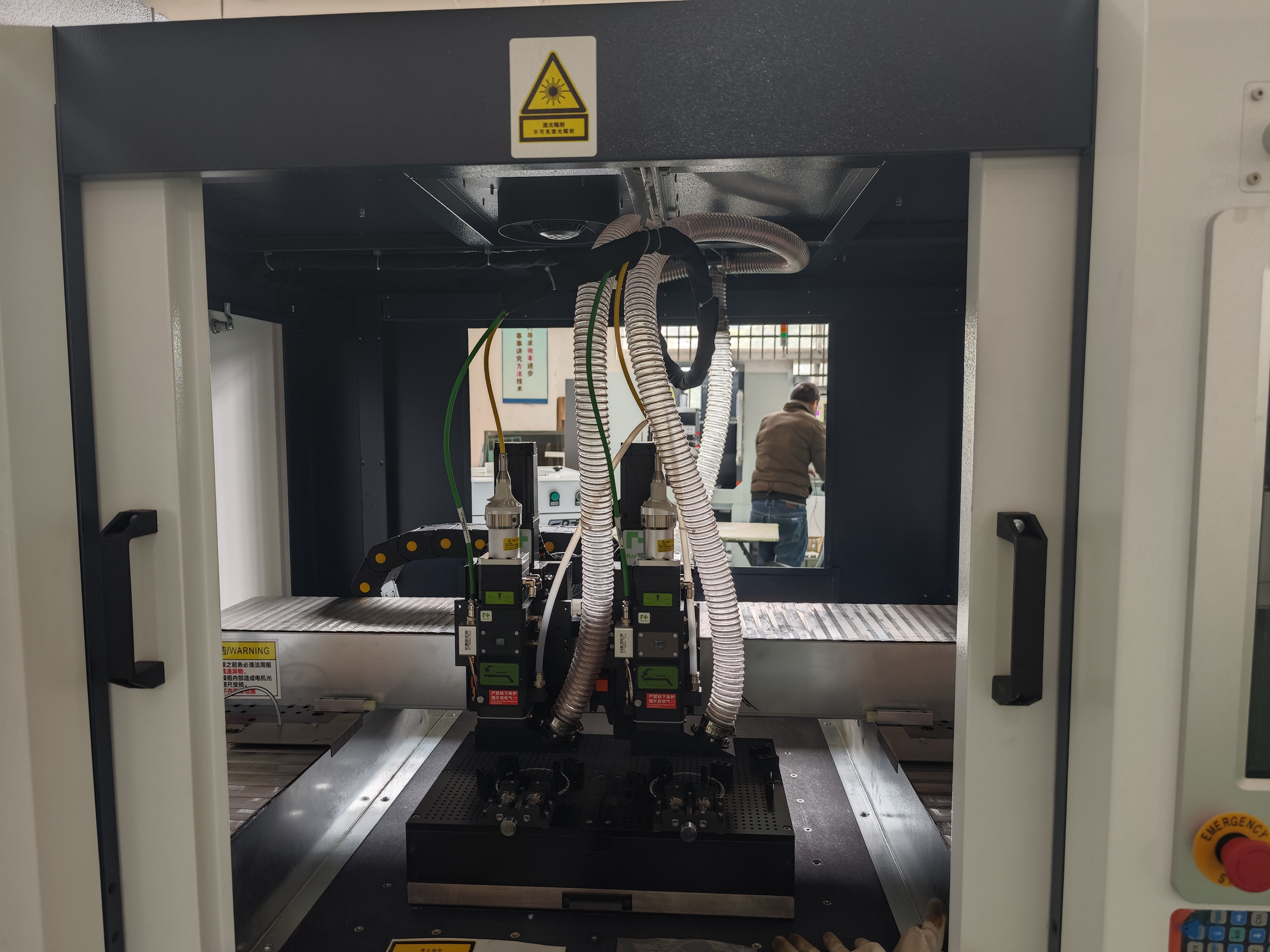
A dual-head, dual-optical-path configuration is verifiable only through sustained production output, not through a configuration drawing.
Evidence Type 3 — Continuous-Duty Operating Records
Uptime is where supplier differences become financially visible. A machine that holds tolerance for eight hours a day is a different asset from one that holds tolerance around the clock for years, because the second machine determines scrap rate, spares consumption and whether a production schedule can be met without buffer inventory.
Three deployment durations illustrate the range of duty this equipment has recorded. On the Chinese electronics production line, seven machines have run 24/7 for over four years, with a reported low failure rate. A high-end precision ceramic laser cutting system has been in continuous service for over three years at a top-tier university research platform. A custom-designed semiconductor-specific ceramic laser cutting machine has operated for over two years at a national-level semiconductor materials research institute in China, where, according to customer feedback, it replaced traditional mechanical cutting and improved the institute's R&D efficiency and new device sample yield.
The practical lesson for buyers is to ask for duration and duty cycle separately. "Installed in 2021" and "running three shifts, six days a week, since 2021" describe two very different reliability records.
Evidence Type 4 — Cross-Border Delivery and In-Market Operation
Export claims should be tested against a specific question: did the machine reach the destination, get installed, get qualified on local material, and keep running? Shipping documentation alone proves logistics capability, not delivery capability.
A documented export project involved a South Korean high-precision manufacturing company, which took delivery of one high-configuration, high-precision laser cutting machine for ultra-precision cutting and micro-hole processing of high-end precision ceramic parts, special hard and brittle materials and precision electronic components. The machine has run stably overseas for over 1.5 years, with low maintenance costs, and its finished product yield rate is reported to meet international high-end standards. The project is also cited as the supplier's entry point into the South Korean high-end precision manufacturing market.
The supporting capability behind such a deployment is service infrastructure. YCLASER provides 24/7 remote technical support covering troubleshooting, software debugging and process parameter optimisation, free technical training for operators, a stock of original parts for rapid replacement, and paid on-site installation, commissioning and maintenance in overseas regions with English-language technical communication. Buyers should read that structure carefully: remote support is continuous, but physical intervention overseas is a chargeable service, which affects total cost of ownership calculations.
Evidence Type 5 — Third-Party Compliance and Registered IP
Self-declared capability is weakest where liability is highest. Laser cutting systems carry optical, electrical and mechanical safety exposure, and in the European Union the applicable compliance position should be independently checkable.
YCLASER holds an EU Attestation of Compliance, certificate number TTC-24-2012/02/01, issued by Integra96 on 20 December 2024 and valid to 19 December 2029, covering laser cutting machines. The referenced standards are EN ISO 12100:2010, EN 60204-1:2018, EN IEC 61000-6-4:2019, EN IEC 61000-6-3:2021, EN IEC 61000-6-2:2019, EN IEC 61000-6-1:2019 and EN 60825-1:2014+A11:2021.
Design ownership is similarly checkable. The company holds a Chinese utility model patent for an integrated machine for laser cutting, drilling and scribing of electronic ceramics with easy positioning (ZL 2020 2 2568701.9) and one for a high-speed, high-precision metal laser cutting machine (ZL 2020 2 2568710.8). Two registered software copyrights cover the High-Precision Laser Cutting System V1.0 (2020SR1720714) and the Laser Cutting and Drilling System for Electronic Ceramics V1.0 (2020SR1720715). Independently developed control software matters to buyers because it determines how quickly a supplier can adjust parameters when a new material is introduced, rather than routing every change through a third-party controller vendor.
What to Measure on Hard and Brittle Materials
Verification of supplier capability is only meaningful against measurable process limits. For this equipment class, the published platform parameters include working areas from 200×200 mm to 1300×1300 mm, laser power from 10 W to 3000 W, wavelengths covering 1060–1080 nm, 532 nm, 1064 nm, 355 nm and 10.6 μm, cutting thickness from 0.01 mm to 20 mm, and drilling precision down to a minimum of 0.05 mm.
For buyers running outsourced or trial processing, the service-side specification is often more informative about real mass-production behaviour: supported material thickness of 0.05–11 mm, stable mass-production thickness of ≤6 mm, positioning accuracy of ±0.005 mm and kerf width of 0.02–0.15 mm. These figures describe achievable production conditions rather than a laboratory capability, which is exactly the kind of distinction procurement teams should be testing.
Applications and Use Cases Behind the Evidence
The deployments described above are not spread evenly across materials. They cluster where hard and brittle processing is technically demanding and economically significant.
- Ceramic substrates and insulating sheets: mass cutting, dicing and forming for consumer electronics and automotive electronics, where chipping and breakage rates directly drive cost.
- Precision ceramic structural and functional parts: ultra-precision cutting and micro-hole processing for high-end precision components, with yield consistency as the acceptance criterion.
- Semiconductor ceramics: micro and nano cutting, precision drilling and grooving of ceramic substrates, ceramic packaging bases and high-frequency ceramic components, where cold processing avoids thermal stress cracking and surface damage.
- Advanced functional ceramics: cutting, micro-hole drilling and irregular dicing in research and pilot-scale environments where equipment precision must remain stable across long experimental cycles.
Beyond ceramics, the same equipment platform is applied to glass, sapphire, quartz, optical glass, microcrystalline glass, ceramic-glass composites, PCB substrates, hard alloys, diamond composites, ferrites, NdFeB magnets, metallised ceramics and metal sheets including stainless steel, silicon steel, tungsten steel, carbon steel, aluminium alloy, titanium alloy and copper. Applicable industries named by the manufacturer include 3C electronics, PCB, semiconductor packaging, precision electronic components, new energy, medical devices, aerospace, new energy vehicles, specialty ceramics, lithium battery and solar photovoltaics.
Market Trend Analysis: Why Verification Is Becoming Stricter
Three observable market trends are pushing supplier qualification toward deployment evidence rather than specification comparison.
First, the equipment market itself is expanding, which increases the number of suppliers a buyer must screen. The global laser cutting machines market was estimated at USD 5.74 billion in 2024 and is projected to reach USD 12.61 billion by 2035, according to Market Research Future. Within that expansion, buyers have more alternatives and correspondingly less default trust in any single vendor's claims.
Second, the technology mix is shifting toward shorter pulses and finer feature sizes. The picosecond laser market was estimated at USD 3.99 billion in 2026, projected to grow at a 23.8% CAGR to USD 31.44 billion by 2035, according to Next Move Strategy Consulting. The same driver appears in PCB processing: the global PCB laser drilling machines market was valued at USD 1.8 billion in 2025, with an 8.1% CAGR through 2034, according to Dataintelo. Ultrafast and UV sources widen the process window for hard and brittle materials, but they also raise the engineering burden, which makes a supplier's demonstrated customization record more relevant than its component sourcing.
Third, the underlying laser platform has largely consolidated around fibre technology. Fibre lasers reached over 60% of global installations by 2025, displacing CO₂ lasers on the strength of higher wall-plug efficiency — a reported 45% versus 30%, according to DNE Global. As the source becomes commoditised, differentiation moves to optics, motion control, software and process know-how, which are precisely the areas where deployment evidence, not datasheets, provides reassurance.
Comparison with Traditional Solutions — and Where Laser Cutting Still Stops
Mechanical cutting, punching and dicing remain the incumbents for ceramic and similar materials, and their economics are well understood. Laser processing competes on the failure modes that matter to precision production: reduced chipping and breakage, no mechanical tool wear, no tool contact force on thin or fragile parts, and the ability to cut irregular contours and micro-hole arrays that would require multiple mechanical operations.
A useful reference for the same trade-off in a different material is silicon steel motor laminations, where laser processing reduces the heat affected zone to below 0.1 mm, minimising magnetic performance degradation compared with mechanical punching (CH Laser / Industry Tech Review). That is a real advantage, but it is a comparative one, not an absolute one.
Lasers are not a universal replacement, and buyers should state the boundaries in their own evaluation criteria:
- Thickness ceiling. Published cutting thickness spans 0.01–20 mm, but for production service work the stable mass-production thickness is ≤6 mm. Workpieces well beyond that range may fall outside reliable mass-production conditions.
- Process development time. A new material or a new feature geometry requires parameter development before it can be productionised. Laser cutting does not eliminate process engineering; it relocates it.
- Lead-time variability. Standard models are typically quoted at 30 business days, non-standard customized models at 35–50 business days, and OEM/ODM bulk orders at 3–10 business days depending on process complexity and order volume. Sample making takes 1–3 business days.
- Capacity constraints. Monthly production capacity is 10 units for standard precision laser cutting machines and 3 sets for non-standard customized models, produced according to project schedule. Buyers planning multi-line rollouts across several sites should map capacity against their own installation sequence.
- Service cost geography. 24/7 remote support is standard, but overseas on-site installation, commissioning and maintenance are paid services, which changes the total cost profile for buyers in distant markets.
None of these limits disqualifies the technology. They define the qualification questions a buyer should ask before committing, and a supplier that can answer them with numbers and durations is more useful than one that answers with adjectives.
Future Outlook
Supplier qualification in this category is likely to move from document review toward dossier review. As hard and brittle materials penetrate semiconductor packaging, new energy vehicle motors, medical devices and solar photovoltaics, the cost of a wrong supplier choice rises with the value of the parts being processed. Buyers will increasingly ask for deployment counts, duty cycles, material lists, parameter transfer records and post-installation service history as standard attachments to a quotation.
The suppliers best positioned for that shift are those whose evidence is independently checkable. Multi-unit line deployments, customized configurations with years of operating data, cross-border installations with local market track records, and third-party compliance certificates covering defined standards are all auditable. Wuhan Yuchang Laser Technology Co., Ltd. (YCLASER), a manufacturer established in 2017 in Wuhan's East Lake High-tech Development Zone, operating a 2,000 m² facility with 25 employees and an 8-engineer R&D team, is one supplier in this category whose qualification material is built around that kind of evidence rather than specification comparison alone.
Frequently Asked Questions
What evidence should a buyer request first when qualifying a supplier of high precision laser cutting machines for ceramics?
Start with deployment evidence rather than machine specifications: the number of units of the same platform running at a single customer site, the duty cycle, the operating duration, and the materials processed. A multi-unit deployment on one production line implies that process parameters transferred successfully between machines and that the supplier could support a fleet. Documented examples include a seven-machine deployment on a standardized ceramic production line in China running 24/7 for over four years.
How does a batch deployment differ from a single-machine reference from an evaluation standpoint?
A single-machine reference proves the supplier can deliver and commission one system. A batch deployment proves repeatability: identical or comparable process results across multiple units, spare-parts availability for a fleet, and service responsiveness under production pressure. For buyers planning more than one line or expecting future capacity expansion, the batch record is the more relevant evidence because it tests the supplier's production and support model, not only its engineering model.
What does a dual-head, dual-optical-path configuration indicate about a supplier's engineering capability?
It indicates the supplier can synchronise two beam paths, maintain accuracy consistency between two processing stations without cumulative deviation, and integrate the configuration into a flexible production environment handling multiple product categories in small batches. A documented example is a dual-head, dual-optical-path ceramic laser cutting machine delivered to a Taiwan high-end electronic component manufacturer, in stable operation for over two years, with processing capacity reported at close to double that of a single-head machine.
How can an overseas buyer validate long-term reliability before installation?
By asking for the operating duration and duty cycle of comparable equipment already running in a comparable market, and by confirming how service is delivered. A verifiable reference is a high-configuration machine exported to a South Korean high-precision manufacturing company that has operated stably overseas for over 1.5 years with low maintenance costs. Buyers should also confirm what is included: 24/7 remote technical support and spare-parts stock are provided, while on-site installation, commissioning and maintenance in overseas regions are paid services with English-language technical communication.
What are the practical limits of high precision laser cutting for hard and brittle materials?
Published cutting thickness spans 0.01 mm to 20 mm, but the stable mass-production thickness for laser processing services is ≤6 mm, so thicker sections may fall outside reliable production conditions. Each new material or feature geometry requires parameter development before production use. Equipment minimum order quantity is 1 unit, but non-standard customized models typically carry a 35–50 business day lead time and consume part of a monthly capacity of 3 customized sets, which constrains simultaneous multi-site rollouts.
Readers who need to map model designations to configurations and applicable materials can consult the YCLASER product catalogue (PDF).