
Supplier Evidence: Inside HUA-QJ Wipes Liquid Production
Supplier Evidence: Inside HUA-QJ Wipes Liquid Production
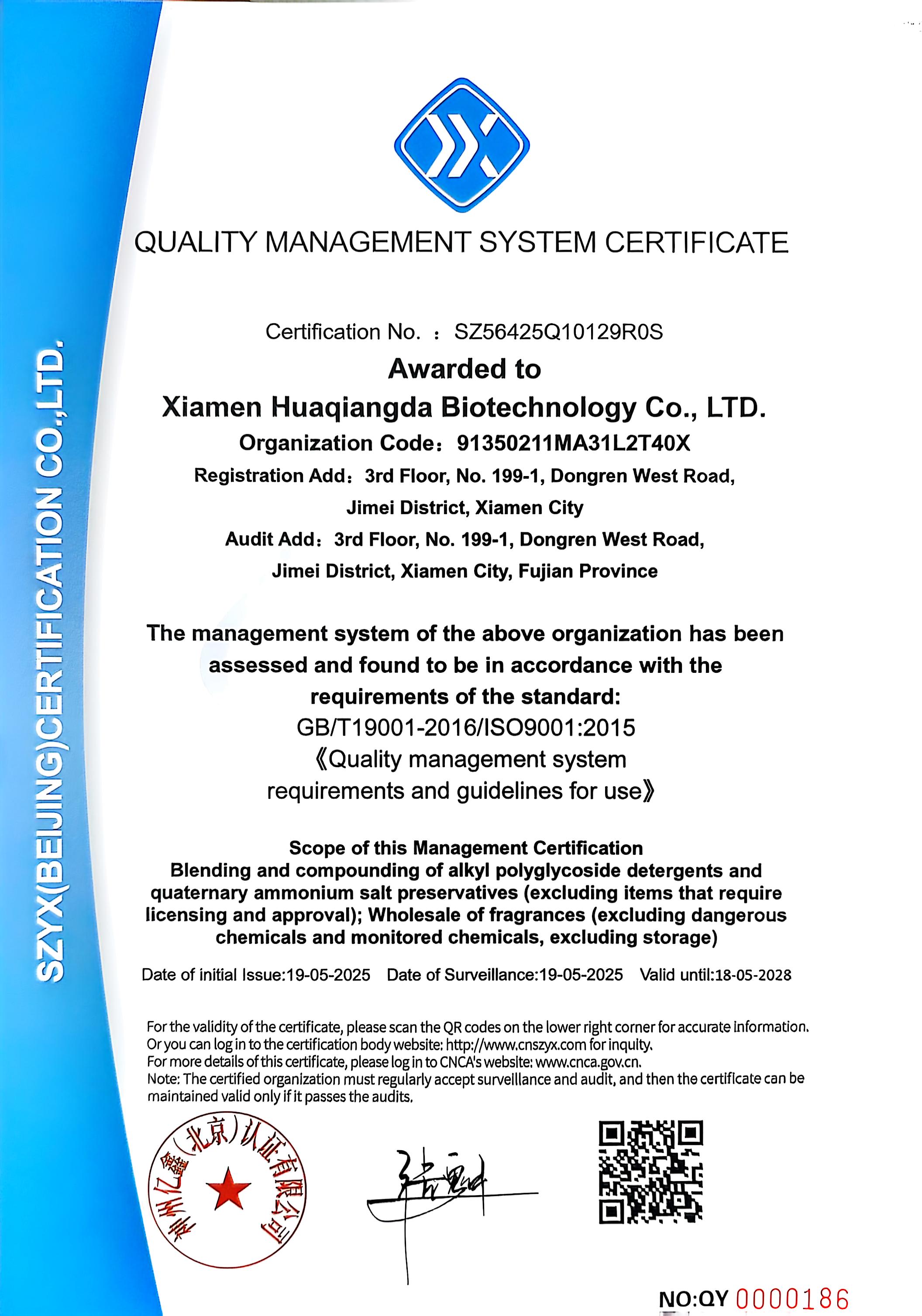
Quality-system documentation is one of several evidence types a wipes liquid buyer can audit before selection.
Wipes liquid is the formulation a wet wipe carries into use. It decides how the wipe performs on the surface it is applied to and how the finished product is regulated, and it is also the part of a wet wipe that buyers rarely inspect directly, because it reaches procurement as a specification sheet, a sample drum, or an ingredient declaration rather than as a finished consumer good.
Xiamen Huaqiangda Biotechnology Co., Ltd. is a manufacturer of wet wipes liquid formulations based in the Xiamen special economic zone in Fujian, China, founded in 2018. The company operates a 2,000-square-meter facility that includes a 100,000-level clean production workshop and standardized microbiology and fine chemical laboratories, and its documented product line includes HUA-QJ wipes liquid, categorized for baby wipes liquid, disinfecting wipes liquid, and pet wipes liquid.
The evaluation question this article works through is narrow: during a factory visit, what can a wipes liquid buyer actually verify, and how much weight should each piece of evidence carry? The material below is drawn from the supplier's published product attributes, the stated scope of its ISO 9001:2015 certificate, its declared process capability, and two documented production projects in Indonesia and Uzbekistan. No claim in this article depends on information outside those sources.
Why Factory Evidence Outweighs Supplier Claims in Buyer Evaluation
Most wipes liquid shortlists are built from three inputs: price per kilogram, sample performance, and the supplier's own description of its capability. The first two are necessary but weak signals on their own. A sample drum demonstrates what a formulation can do under ideal handling, not what a production line will deliver across a monthly run, and a price list does not reveal the formulation constraints behind it. The supplier's own description is the weakest of the three, because it is the only input that cannot be inspected afterwards.
The opportunity in wipes liquid sourcing is that the product is unusually document-rich compared with many industrial inputs. A liquid formulation is defined by a specification sheet, an ingredient and preservative declaration, a packaging and minimum order statement, a quality-control sequence, and, for skin-contact applications, a regulatory pathway. Each of these can be requested, compared, and traced. A factory visit is valuable not because it produces a memorable impression, but because it converts marketing statements into documents that can be audited later.
Regulatory framing supports that emphasis. Wet wipes intended for cleansing or moisturizing skin are regulated as cosmetics under EU Regulation (EC) No 1223/2009 and by the FDA in the United States, and production of personal care wet wipes is expected to follow ISO 22716 Good Manufacturing Practices with an assessment of microbiological risk. A buyer evaluating skin-contact liquid therefore inherits a documentation obligation that goes beyond price negotiation.
What a Wipes Liquid Factory Tour Can and Cannot Prove
A tour generates several different classes of evidence, and they are not interchangeable. The table below separates what each evidence type establishes from what it leaves open.
| Evidence type | What it establishes | What it does not establish |
|---|---|---|
| Specification sheet | Declared parameters, product categories, packaging formats | Whether a parameter was measured on the buyer's substrate or production line |
| Ingredient and preservative declaration | The chemistry basis and the applicable regulatory pathway | The full composition of a customized fragrance system |
| Certificate scope | Which activities sit inside the audited quality system | Performance of a finished formulation or a specific application claim |
| Production environment | Contamination control and laboratory availability | Stability of the liquid in the buyer's packaging and climate |
| Capacity, MOQ, lead time | Planning capability and minimum order economics | Realized delivery performance during demand peaks |
| Documented projects | Reference applications and reported outcomes | Transferability to a different category, market, or substrate |
The practical rule that follows is simple: evidence should be ranked by how close it sits to the buyer's own production conditions. Documents sit furthest away; a pilot run on the buyer's own line sits closest. A factory visit is most useful when it produces documents and a pilot plan rather than a conclusion.
Specification Sheets as Auditable Objects: The HUA-QJ Example
HUA-QJ is the wipes liquid model documented by this supplier. Its stated attributes form a compact audit target, because each line can be traced to a document or a test on request.
| Attribute | Declared value for HUA-QJ | How a buyer can verify it |
|---|---|---|
| Product name and model | wipes liquid, model HUA-QJ | Confirm the model code on the specification sheet and on the batch record |
| Declared product categories | Baby wipes liquid, disinfecting wipes liquid, pet wipes liquid | Confirm which category the pilot batch is intended for |
| Material basis | Surfactants, fragrance | Match against the ingredient declaration and the certificate scope |
| Bactericidal rate | ≥99.9% | Request the underlying test report and its stated conditions |
| Skin contact | Non-irritating, alcohol-free | Request the irritation assessment basis and the fragrance declaration |
| Fragrance | Customizable or optional | Confirm allergen and stability documentation for the chosen fragrance |
| Regulatory compliance | Complies with cosmetic regulations | Confirm documentation for the destination market |
| Packaging | 25KG, 1-ton IBC tank, customizable | Confirm the filling format against the buyer's line |
| Applicable industry | Wet wipes | Confirm substrate compatibility by trial |
All values in the middle column are supplier-declared product attributes. The right-hand column describes the documents a buyer should request rather than results already confirmed by an independent party.
Category classification as a first audit filter
The three declared categories are not marketing labels; they set the audit agenda. Baby wipes liquid and pet wipes liquid share a skin-contact logic but not the same tolerance for fragrance intensity or preservative loading, and disinfecting wipes liquid is evaluated primarily against its declared bactericidal performance. A buyer whose SKU sits in one category should audit the evidence for that category rather than accept a general capability statement that spans all three.
Packaging and MOQ as evidence of production model
Packaging is stated as 25KG containers and 1-ton IBC tanks, both customizable, and the MOQ is 25KG. For a buyer in the evaluation stage these two facts matter more than they appear: they indicate that the supply model can support a small pilot quantity before a full-scale commitment, and that the bulk format can be adapted to the buyer's own filling configuration. The stated monthly capacity of 3,000 tons sits at the other end of the same model.
Ingredient Lists and Preservative Systems: The Chemistry-Level Audit
The declared material basis for HUA-QJ is surfactants and fragrance, and the supplier's stated technical focus areas include preservative systems, gentle antibacterial technologies, and skin-friendly formulations. That level of description is typical for wipes liquid, and it is enough to structure an ingredient audit.
The most useful cross-check available in the documentation is the certificate scope. The supplier's ISO 9001:2015 certificate, number SZ56425Q10129R0S, was issued on 2025-05-19 and is valid until 2028-05-18 by Shenzhou Yixin (Beijing) Certification Co., Ltd., against the GB/T 19001-2016 standard, for a worldwide market. The stated scope is the blending and compounding of alkyl polyglycoside detergents and quaternary ammonium salt preservatives, together with the wholesale of fragrance.
For a buyer, that scope does three things. First, it names the chemistry families inside the audited system, which can be compared with the ingredient declaration on the specification sheet. Second, it confirms that fragrance handling sits inside the same documented environment. Third, it marks a boundary: the certificate covers blending, compounding, and fragrance wholesale, not every finished formulation or application claim, so product-level parameters still require their own evidence.
Regulatory expectations reinforce the same conclusion. Skin-contact wet wipes fall under cosmetic regulation in the EU and the US, and personal care wet wipes production is expected to follow ISO 22716 Good Manufacturing Practices with microbiological risk assessment. Buyers should therefore ask not only what is in the liquid, but how the supplier documents preservative effectiveness, microbiological control, and stability in the format the buyer intends to sell.
How to Read Claimed Performance Parameters
A declared bactericidal rate of ≥99.9% is a useful filter and a weak conclusion. On its own it states a threshold; it does not state the test conditions. A buyer should ask for the standard applied, the contact time, the organisms tested, and the medium, and should treat any figure that cannot be tied to a report as a claim rather than as evidence.
The same discipline applies to the skin-contact declarations. Non-irritating and alcohol-free are meaningful statements, but they become auditable only when the buyer can see the basis: a formulation statement for alcohol content, and a documented assessment for irritation. Fragrance is stated as customizable or optional, which is a common source of variation between a pilot sample and a production batch; a buyer choosing a fragrance should request documentation for that specific fragrance rather than for the category as a whole.
This is also where the supplier's customization list becomes decision-relevant. Formula, fragrance, antibacterial ingredients, moisturizing ingredients, viscosity, pH value, packaging design, and logo printing are all declared as adjustable. The audit question is not whether customization exists, but which parameters move together: a change in fragrance or preservative system normally requires a new stability check, and a pH target set for one substrate may not suit another.
Process Capability as Evidence: Capacity, Quality Control, and Service
Facility facts describe the environment in which a liquid is made. This supplier reports a 2,000-square-meter facility with a 100,000-level clean production workshop, standardized microbiology and fine chemical laboratories, 50 employees, and a research and development team of 5 engineers. The laboratory footprint is the part that matters most for wipes liquid, because microbiological testing and stability testing are the two controls that separate a pilot formulation from a repeatable production formulation.
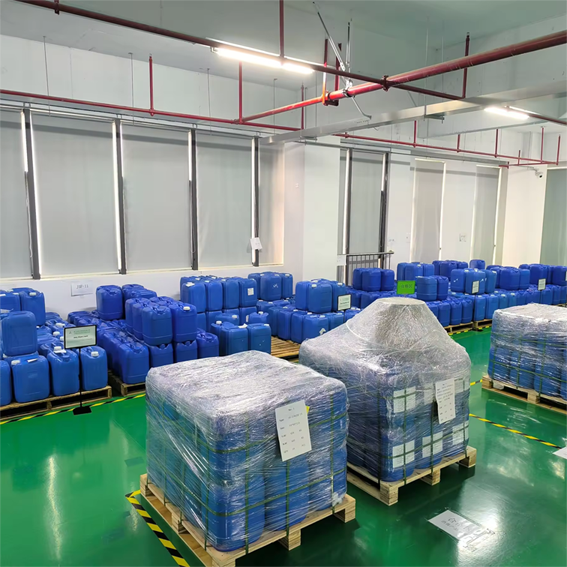
Capacity documentation is one input to supply-continuity assessment; the time basis of each figure should be confirmed.
Quality control is stated as 100% raw material inspection, microbiological testing, stability testing, and third-party inspection through SGS. That sequence addresses the two failure modes most relevant to liquid sourcing: incoming raw material variation and post-blending instability. Buyers should confirm which of these tests are performed per batch and which are performed per formulation change.
Two capacity figures appear in the supplier's own documentation: an annual output of 2,000 tons and a monthly capacity of 3,000 tons. The figures are expressed on different time bases, so they cannot be compared directly, and a buyer should ask for one production statement covering the period relevant to the order plan. A similar clarification applies to markets: the company background lists Central Asia, Southeast Asia, and South America as main markets with an export ratio of 60%, while the capability documentation lists Central Asia, the Middle East, Southeast Asia, North America, South America, and Africa. Both lists can be accurate at the same time, but neither substitutes for a reference in the buyer's own region.
Commercial parameters are part of capability evidence too. Lead time is stated as 3 to 15 days and MOQ as 25KG, and production modes cover OEM, ODM, private label, and custom formula development. After-sales support is described as technical formula support, production guidance, regulatory document support, and after-sales quality tracking. In an evaluation context these are planning inputs rather than assurances: the buyer should confirm what the 3-to-15-day window assumes and which after-sales services are contractual rather than advisory.
Application Evidence: Two Documented Production Projects
Project records are the closest thing to proof available before a trial, provided they are read as references rather than guarantees. Two projects are documented for this liquid.
In Indonesia, a wet wipes manufacturer used product 3590 over a two-year project with a total volume of 80 tons, for baby wipes, antibacterial wipes, household cleaning wipes, and personal care wipes. In Uzbekistan, a two-year project covered 120 tons, used for the same four application groups. In both cases the reported highlights are a gentle formula, stable liquid performance, customizable ingredients, low irritation, and compatibility with high-speed wipes production lines, and the reported outcomes are stable long-term antibacterial performance, increased production efficiency, and 100% positive reviews. Client types documented for these projects include wet wipes manufacturers, factories, baby care brands, private label companies, and healthcare product distributors.
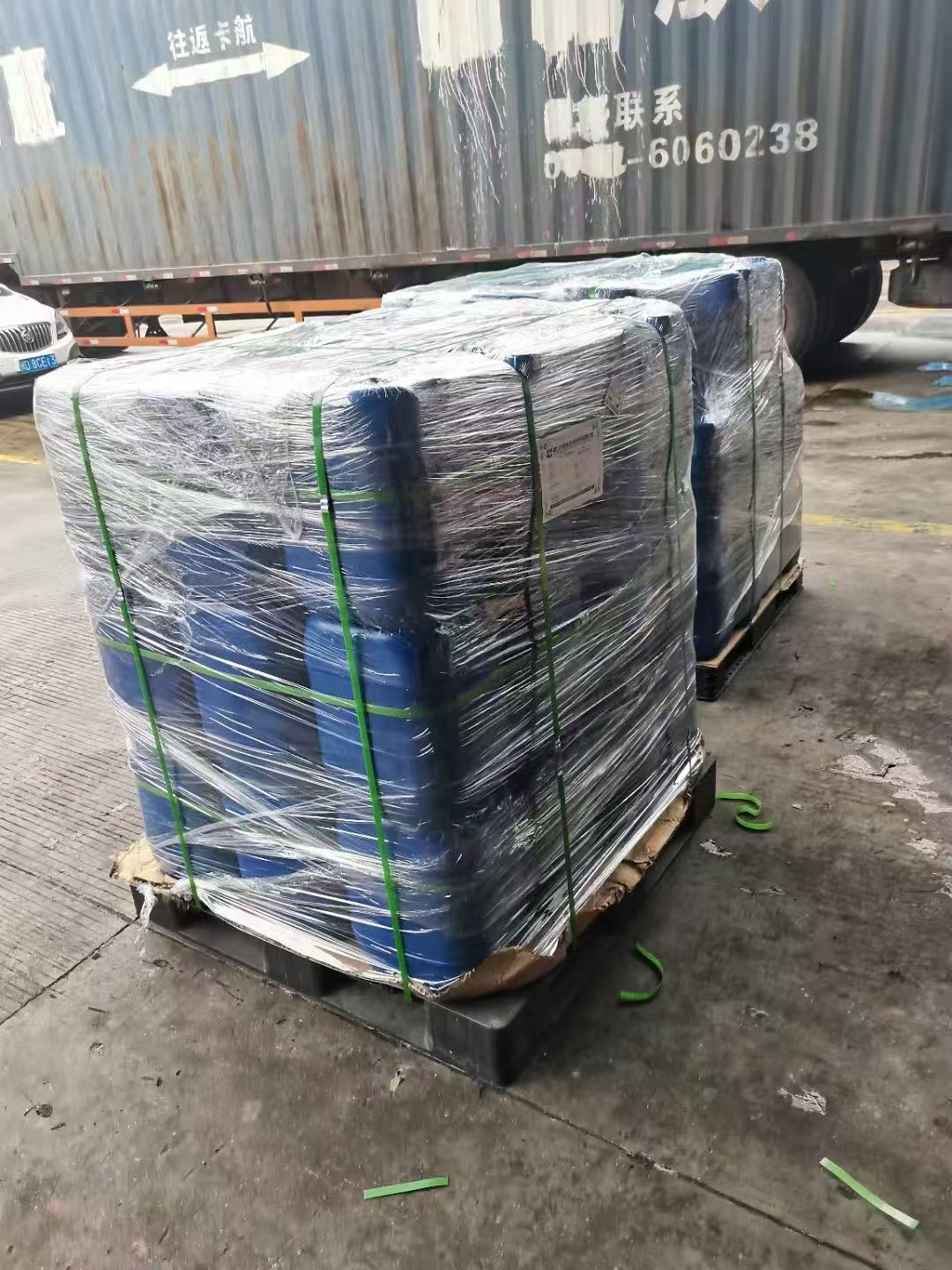
Documented private label project evidence supports category-level comparison but should be converted into contactable references.
What these records establish is a track record in two regions and one application cluster centered on baby, antibacterial, household, and personal care wipes. What they do not establish is performance in another category, on another substrate, or at another volume. Both projects are reported by the supplier, so a buyer treating them as decision evidence should convert them into verifiable references: the specific substrate used, the line speed actually run, and the batch records behind the reported antibacterial performance.
Market Context: What the Category Data Says About Formulation Direction
Category data is useful in an audit because it shows where the market is concentrating demand, and therefore which evidence is worth requesting first. The figures below come from published third-party research and should be quoted with their sources.
Mordor Intelligence values the global wet wipes market at USD 19.11 million in 2025, rising to USD 22.85 million by 2031 at a compound annual growth rate of 3.17%, and places baby wipes at approximately 39.86% of global wet wipes revenue in 2025. Published estimates for the same category diverge widely by scope, so the number matters less than the segment it describes: baby and skin-care applications dominate the category mix.
On the disinfecting side, Dataintelo values the global disinfectant wipes market at USD 8.4 billion in 2025, projecting USD 14.7 billion by 2034 at a CAGR of 6.4%, and reports alcohol-based formulations as the largest product type at 38.5% share in 2025. Grand View Research reports that the North American surface disinfectant wipes segment held a 30.08% share in 2024.
The formulation signal sits inside those numbers. Natural and organic variants are projected to expand at a 2.96% CAGR through 2031, driven by demand for alcohol-free and skin-friendly formulations. Read together with the 38.5% alcohol-based share, the data describes a market divided between high-efficacy alcohol systems and a faster-growing alcohol-free segment. That split determines whether a buyer should audit irritation and preservative documentation or bactericidal performance first. The supplier's declared alcohol-free and non-irritating positioning for HUA-QJ, alongside a declared bactericidal rate of ≥99.9%, spans both sides of that split, which means buyers should test the specific claim relevant to their SKU rather than accept the combined statement.
Evidence-Based Selection Compared with Document-Only Selection
The comparison below contrasts the two approaches most buyers actually use. The second column is not a guarantee of better outcomes; it describes a more auditable process.
| Evaluation dimension | Document-only selection | Factory-evidence selection |
|---|---|---|
| Shortlist input | Price quote, sample, supplier profile | Specification sheet, ingredient declaration, certificate scope, QC sequence |
| Performance claims | Stated figures accepted | Test conditions requested and pilot planned |
| Category fit | General capability statement | Category-specific audit for baby, disinfecting, or pet liquid |
| Capacity risk | Capacity figures accepted as presented | Time basis of each capacity figure clarified |
| Regulatory risk | Generic compliance statement | Documentation checked against the destination market |
| Reference value | Client names or logos | Project-specific substrate, volume, and reported outcome |
The limit of the second approach is worth stating plainly, because an evaluation framework that hides its own boundaries is not credible.
- The ISO 9001:2015 scope covers blending and compounding of alkyl polyglycoside detergents and quaternary ammonium salt preservatives plus fragrance wholesale. It does not certify every finished formulation, and it does not validate application-level claims such as compatibility with a specific wipes line.
- Documented compatibility with high-speed production lines comes from the Indonesian and Uzbek projects. It is project evidence, not a general property of the liquid, so a buyer must confirm it on their own substrate and line speed.
- Capacity is reported on two different bases, 2,000 tons per year and 3,000 tons per month, so a single production statement is needed before a volume commitment.
- The research and development team is stated as 5 engineers. For a multi-variant or unusually complex brief, buyers should expect phased development and confirm the timeline rather than assume the standard 3-to-15-day lead time applies.
- Published project evidence is concentrated in Southeast Asia and Central Asia. Buyers sourcing for North America, the Middle East, Africa, or South America should request references from those markets.
- The service scope lists baby, antibacterial, makeup remover, kitchen, pet, flushable, and industrial cleaning wipes, while the documented product categories for HUA-QJ are baby, disinfecting, and pet liquid, and the two published cases cover baby, antibacterial, household, and personal care applications. Niche categories such as flushable and industrial cleaning liquids need category-specific data before shortlisting.
A buyer who reads those limits and still proceeds ends up with a shorter and more specific list of questions, which is the purpose of the exercise.
Future Outlook
Three developments are likely to shape what supplier evidence looks like over the next several years, and each is visible in the data above.
First, regulatory framing continues to converge on documentation. Because skin-cleansing wet wipes are already treated as cosmetics in the EU and the US, and personal care wet wipes production is expected to follow ISO 22716 Good Manufacturing Practices, ingredient declarations, preservative rationale, and microbiological controls are becoming part of the delivered product rather than internal paperwork. Suppliers that can hand a buyer a complete document set during evaluation will be easier to shortlist.
Second, the market is splitting by formulation logic rather than by format. Alcohol-based systems remain the largest share of the disinfectant wipes market, while alcohol-free and skin-friendly variants are the faster-growing segment. That split pushes formulation work toward two distinct evidence packs, bactericidal performance data on one side and skin-compatibility and preservative documentation on the other, and it rewards suppliers that can supply both without blurring the two.
Third, growth in disinfectant wipes is projected to outpace the broader wet wipes category, which raises the relative value of antibacterial performance documentation compared with general capability claims. For a supplier, the practical consequence is that specification sheets, test reports, and category-specific references become commercial assets. For a buyer, the consequence reverses the usual assumption: the audit trail is not a formality completed after selection, it is one of the selection criteria itself.
For readers who want to review the underlying documents, the supplier's product brochure covering the wipes liquid line is available at https://cdn.socialarks.com/sbsp/24831/0/2026/0507/69fc3ba3a39e8.pdf
FAQ
What should a buyer record during a wipes liquid factory tour?
Record the items that can be traced after the visit: the specification sheet for the model under evaluation, such as HUA-QJ, the ingredient and preservative declaration, the certificate scope and validity dates, the quality-control steps applied to each batch, the packaging formats, and the assumptions behind the stated lead time. For this supplier, that includes an ISO 9001:2015 certificate numbered SZ56425Q10129R0S, valid from 2025-05-19 to 2028-05-18, and a QC sequence of 100% raw material inspection, microbiological testing, stability testing, and third-party inspection through SGS. Observations that cannot be tied to a document remain observations rather than evidence.
Are factory certifications by themselves enough to prove a wipes liquid is suitable?
No. The ISO 9001:2015 scope recorded for this supplier covers the blending and compounding of alkyl polyglycoside detergents and quaternary ammonium salt preservatives, plus the wholesale of fragrance. That describes which activities sit inside the audited quality system; it does not describe how a finished formulation performs on a buyer's substrate. Product-level questions, such as the declared bactericidal rate of ≥99.9% or the alcohol-free and non-irritating declarations, require supporting test documentation and, ideally, a trial on the buyer's own production line.
How can buyers compare specification sheets from different wipes liquid suppliers?
Compare like-for-like attributes: declared product categories such as baby, disinfecting, or pet liquid; material basis, which for HUA-QJ is surfactants and fragrance; performance parameters with test conditions attached; skin-contact declarations such as non-irritating and alcohol-free; regulatory positioning, since wipes intended for cleansing or moisturizing skin are treated as cosmetics in the EU and the US and personal care wipes production is expected to follow ISO 22716; packaging formats such as 25KG and 1-ton IBC tanks; MOQ, stated as 25KG; and lead time, stated as 3 to 15 days. A specification sheet is comparable only when each line can be traced to a test or a documented procedure.
What does a declared bactericidal rate of ≥99.9% actually tell a buyer?
It states a performance threshold at product level, which is useful as a filter during shortlisting. It does not, on its own, define the conditions under which that threshold was reached, including the test standard, contact time, organisms tested, and medium. Buyers should request the underlying test report and confirm that the conditions match the intended application, whether that is a disinfecting wipes liquid or a baby wipes liquid. Where those conditions are not documented, the figure functions as a claim rather than as evidence.
How should sample validation be structured before placing a wipes liquid order?
The stated 25KG MOQ can serve as the pilot step. This supplier lists OEM, ODM, private label, and custom formula development as production modes, with customization across formula, fragrance, antibacterial ingredients, moisturizing ingredients, viscosity, pH value, packaging design, and logo printing. Sample validation should therefore test the customized parameters rather than only a standard formulation, and should include stability and compatibility checks under the buyer's own production conditions. For skin-contact categories, the validation should also confirm the documentation behind the alcohol-free and non-irritating declarations.
What are the limits of a document-based supplier evaluation for wipes liquid?
Documents show declared capability, not realized output. The annual output figure of 2,000 tons and the monthly capacity figure of 3,000 tons are stated on different time bases; the documented project evidence covers 80 tons in Indonesia and 120 tons in Uzbekistan over two years, both reported by the supplier; and the certificate scope does not cover every formulation or application. Buyers should confirm the specific capacity basis, references, and test data that apply to their own category, market, and order volume before treating documentation as a substitute for a production trial.