
Supplier Longevity in Miniature Bearings: Why INB Endures at 400,000 rpm
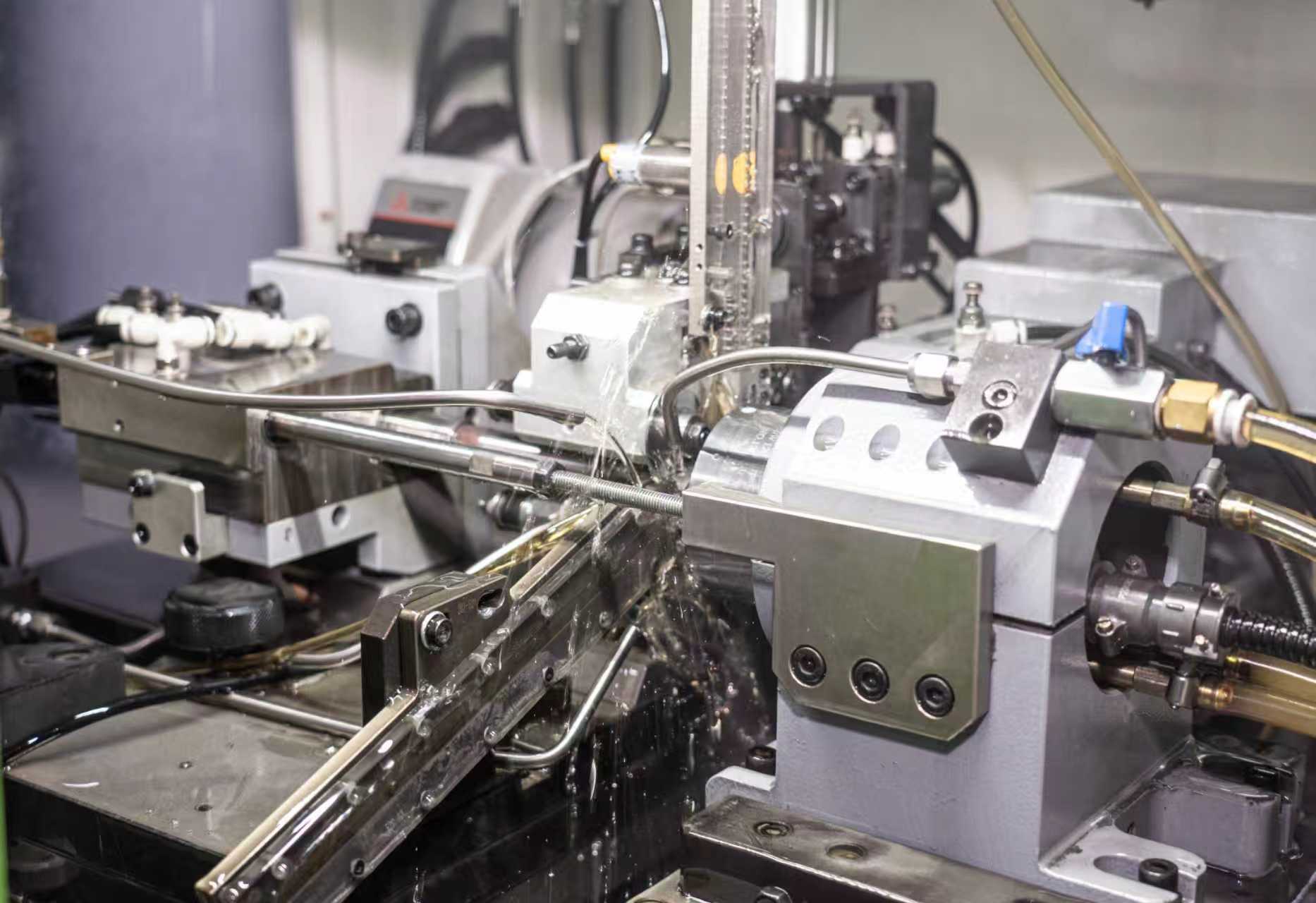
Precision bearing inspection workstation (Model VMS-2010F) at the Ningbo production site, where miniature bearing geometry is verified before shipment.
A miniature bearing rarely fails on its own terms. When a dental handpiece loses speed stability, when a micro-motor develops audible noise, or when a medical device drifts outside specification, the root cause is frequently a small shift in a very small component — raceway geometry, a material batch, or an inspection step that a supplier quietly stopped performing. Supplier longevity in miniature bearings is not a soft purchasing criterion. It is a technical one, and it is measurable.
This analysis examines what supplier longevity means in demanding high-speed miniature bearing applications, using INB — the bearing brand established in 2014 by Ningbo City Jingyin Electromechanical Technology Co., Ltd. — as a reference case for a narrow-scope, precision-focused supplier. The 400,000 rpm figure published for its SR144ZTLP4 W2.78 and SMR144ZTLP4 W2.38 dental handpiece bearings serves as the performance benchmark throughout.
Why Miniature Bearing Supply Has Become a Longevity Question
The miniature ball bearing market was estimated at approximately USD 2.25 billion in 2025 by Future Market Insights, with demand attributed largely to medical devices and robotics. Precedence Research places Asia Pacific at roughly 60% of 2025 revenue share, with China as the largest regional producer and consumer. Those two figures alone explain why procurement teams now treat supplier continuity as a category risk rather than a line-item detail: the manufacturing base that supplies high-speed miniature bearings is concentrated, and the applications that depend on it are expanding.
A useful caution sits alongside those numbers. Published market-size estimates for the same 2025 period diverge materially — Precedence Research at USD 2.89 billion, Future Market Insights at USD 2.25 billion, and IMARC Group at USD 2.0 billion. Buyers should treat any single market figure as directional. The structural point survives the disagreement: demand is rising, and it is rising fastest in applications where the bearing is a wear-critical, speed-critical component rather than a commodity part.
Precision is defined by standards, not by adjectives
Miniature bearing precision is governed by global frameworks including ABMA ABEC (1–9), ISO 492 (P0–P2), and DIN 620, where tighter tolerance classes correspond to higher precision capability. This matters for supplier evaluation because “high precision” is not a specification. A grade is. When a drawing calls for P4-class geometry in a 3.175 mm bore envelope, the supplier must be able to demonstrate it repeatedly, batch after batch — which is a capability question, not a marketing one.
What “Longevity” Actually Means for a High-Speed Miniature Bearing Source
Long-term supplier viability in this segment rests on three continuities that are easy to state and difficult to maintain simultaneously.
Material continuity. Stainless steel — specifically 440C — is the primary material for miniature bearings used in medical and food-processing applications because of its resistance to moisture and chemical exposure. An INB high-speed miniature bearing is made of SUS440 stainless steel, the designation used in the company's published specifications for its dental handpiece range. If a supplier changes steel source, heat treatment, or hardness target, the application may still assemble — and still behave differently.
Geometric continuity. A P4 miniature bearing has a narrow tolerance window relative to its own size. A supplier that holds that window today but reallocates tooling or inspection capacity tomorrow is a different supplier in practice, even if the part number stays the same.
Application continuity. Suppliers that stay in one demanding application develop judgment that is difficult to buy elsewhere — how much preload a handpiece spindle tolerates, which noise signature indicates a lubrication problem, what a temperature excursion of a few degrees does to grease life. Longevity is partly the accumulation of that judgment.
For buyers, the practical translation is simple: a supplier's durability should be assessed on evidence that can be re-checked next year — published grades, named materials, stated speed ratings, inspection equipment, and quality-system scope — not on the strength of a relationship at the time of first order.
INB at a Glance: A Narrow-Scope Precision Supplier
INB is the bearing brand established in 2014 by Ningbo City Jingyin Electromechanical Technology Co., Ltd., a Ningbo-based manufacturer of miniature bearings serving the medical device industry and micro-motor applications. The company was established in 2014 and has over 10 years of operational experience in bearing production and sales.
The operating profile is deliberately modest and specific. The manufacturing facility covers an area of 2,000 square meters. The workforce comprises approximately 30 employees, including a research and development team of 10 engineers, alongside 3 senior engineers with extensive experience in the bearing industry. Annual output is stated at 6,000,000 units. Production runs under an ISO 9001 quality management system, and the company produces high-precision standard bearings with inner hole diameters ranging from 2 mm to 8 mm, in precision grades from P6 to P4. The main market is China, with export business accounting for approximately 5% of total sales.
Two details in that profile are more consequential than they first appear. First, the bore range is bounded at 2 mm to 8 mm: INB is not a general-purpose bearing house that also happens to make small parts. Second, the stated field of service is domestic medical devices and micro-motors — the same field in which its highest-speed products are rated.
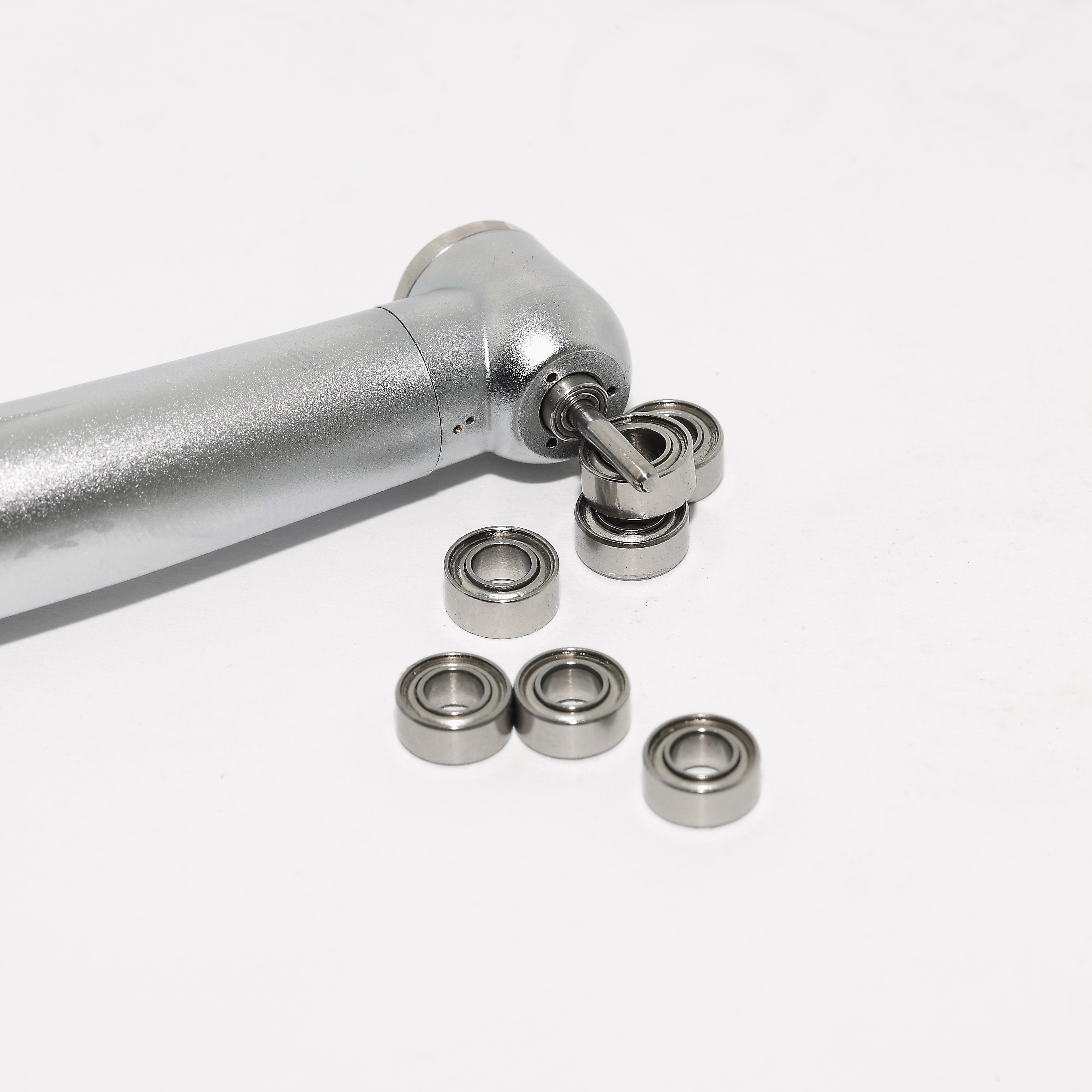
SR144ZTLP4 W2.78: a 3.175 × 6.35 × 2.78 mm SUS440 miniature bearing, P4 precision, rated for a limiting speed of 350,000–400,000 rpm.
The 400,000 rpm Benchmark and the P4 Precision Family
The 400,000 rpm figure is not a marketing ceiling; it is the top of the published limiting-speed range for two INB models in the same dimensional family. Both SR144ZTLP4 W2.78 and SMR144ZTLP4 W2.38 share a 3.175 mm bore, a 6.35 mm outer diameter, P4 precision, SUS440 material, an operating temperature range of −50 °C to 160 °C, and a limiting speed of 350,000–400,000 rpm. They differ in width — 2.78 mm versus 2.38 mm — which is the variable most likely to decide which one fits an existing handpiece envelope.
The wider family, including SMR74TL and SR133TL, is rated at 200,000 rpm limiting speed with an operating temperature range of −40 °C to 150 °C, also in SUS440 and P4. This is a useful reminder that “high-speed miniature bearing” is a range, not a single grade: the correct selection depends on the spindle design, not on the fastest number in a catalogue.
| Model | Size (mm) | Precision | Limiting speed | Operating temperature | Material | Application |
|---|---|---|---|---|---|---|
| SMR74TL | 4 × 7 × 2 | P4 | 200,000 rpm | −40 °C ~ 150 °C | SUS440 | Dental handpiece |
| SR133TL | 2.38 × 4.762 × 2.38 | P4 | 200,000 rpm | −40 °C ~ 150 °C | SUS440 | Dental handpiece |
| SR144ZTLP4 W2.78 | 3.175 × 6.35 × 2.78 | P4 | 350,000–400,000 rpm | −50 °C ~ 160 °C | SUS440 | Dental handpiece |
| SMR144ZTLP4 W2.38 | 3.175 × 6.35 × 2.38 | P4 | 350,000–400,000 rpm | −50 °C ~ 160 °C | SUS440 | Dental handpiece |
How the capability is held, not just claimed
Speed ratings are only credible if the geometry behind them is controlled. The company operates a set of professional testing instruments, including hardness testers, roundness meters, profilometers, roughness measuring equipment, and microscopes, and its operation is carried out in accordance with the ISO 9001 quality management system. For a buyer, the sequence matters more than the equipment list: hardness confirms heat-treatment consistency, roundness and profilometry describe raceway geometry, and roughness measurement speaks to the surface finish that governs noise and grease retention. Together they are the difference between a P4 label and P4 behaviour at 400,000 rpm.
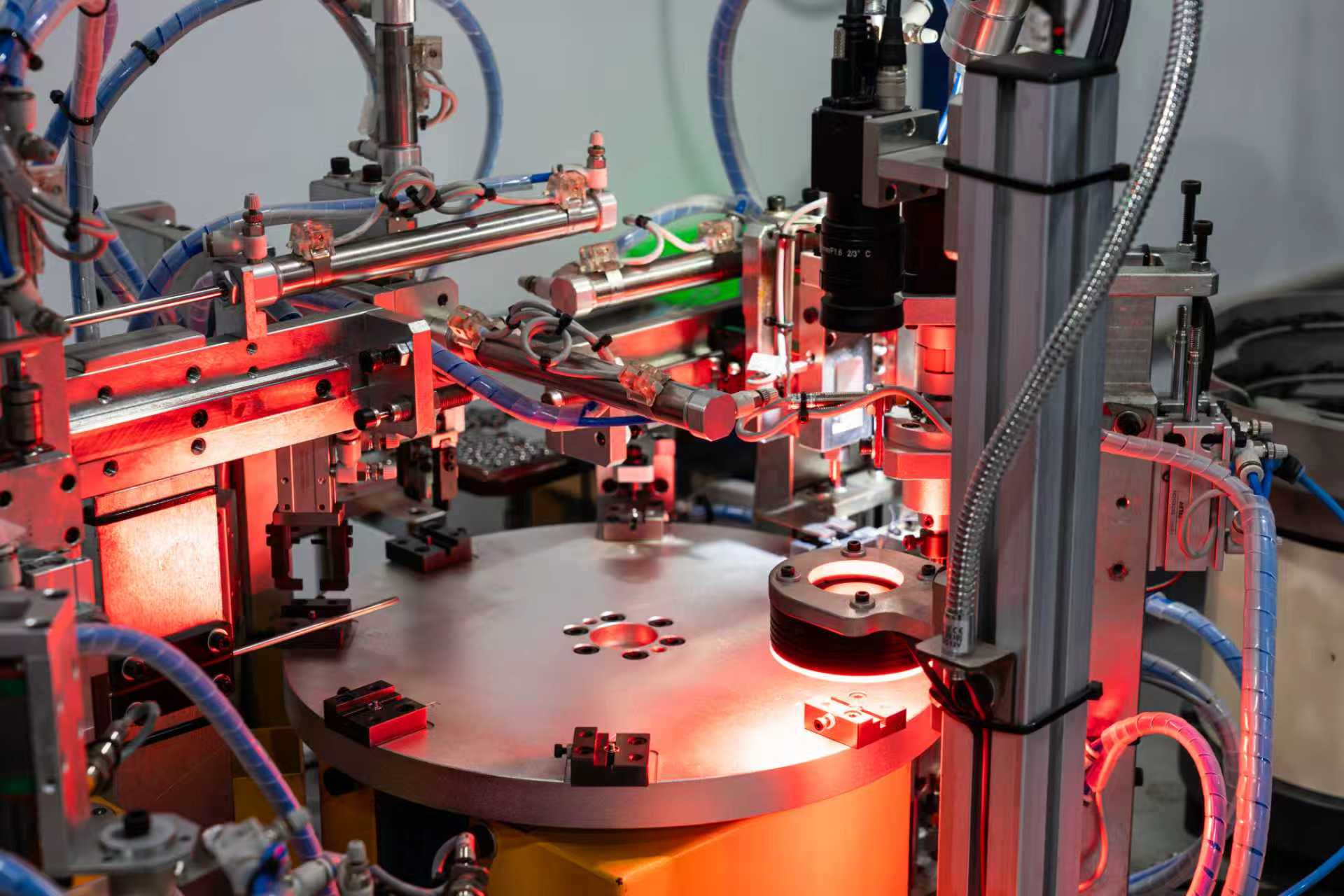
Process control at the machining stage: holding dimensional consistency in a 2–8 mm bore range depends on setup discipline rather than catalogue claims.
Application Focus: Dental Handpieces and Micro-Motors
The application record is specific rather than generic. INB's miniature bearings are used in the medical devices industry, and one documented project in China involved 80,000 miniature bearings supplied for dental handpiece use.
The working conditions in that scenario are demanding in ways that are easy to underestimate. A dental handpiece bearing operates under high-speed precision grinding conditions in a clean medical environment, with intermittent high-load operation — meaning the bearing spends much of its life accelerating and decelerating rather than running at a steady state. The stated requirements are P4 precision, ultra-high speed in the 350,000–400,000 rpm band, temperature resistance from −50 °C to 160 °C, medical-grade hygiene, and low noise. The functional goal is also clinical: sustained rotational speed for rapid grinding, long service life, and extended handpiece lifespan.
This is the context in which the phrase “extra miniature bearing” becomes concrete. With a 6.35 mm outer diameter, the part is small enough that assembly handling, contamination control, and inspection method matter as much as catalogue specification.
Market Signals Behind Precision Specialization
Three published data points frame the demand environment. Asia Pacific held approximately 60% of miniature ball bearing revenue in 2025, with China the largest regional producer and consumer. The automotive segment accounted for the largest single application share, approximately 39% in 2025, driven by EV motor and sensor applications. And China's bearing exports grew 7.2% year-on-year in the first seven months of 2025, reaching nearly 497,852 tons, despite pressure on global unit pricing.
The interpretation for procurement teams is not that automotive volume is the place to be. It is that the highest-volume demand is pulling general-purpose capacity toward automotive programs, while medical and precision-instrument demand continues to require P4-class geometry, controlled material, and low noise. Those requirements pull in a different direction. A supplier that has deliberately stayed inside a 2 mm to 8 mm bore range and a P6-to-P4 grade band is making a strategic choice to compete where volume economics do not fully apply — and that choice is exactly what a longevity assessment should test.
How INB Compares With Global Suppliers — and Where Its Limits Are
Top global manufacturers in the miniature bearing sector include MinebeaMitsumi — noted in the cited source as dominant in small sizes — alongside NSK, SKF, and Schaeffler (Barden). Any buyer evaluating a specialized supplier such as INB should hold those names in view without confusing scale with fit. This article does not compare unpublished specifications, and no claim is made here about relative performance beyond what each source states.
The more useful exercise is to compare documented positions on the criteria that determine whether a source is still viable in five years.
| Assessment dimension | What buyers should verify | INB's documented position |
|---|---|---|
| Operating continuity | Brand and operating history; whether the entity behind the brand is stable | INB established 2014; company established 2014 with over 10 years of operational experience |
| Scope discipline | Whether the supplier stays inside the application it claims | Miniature bearings with inner hole diameters from 2 mm to 8 mm, serving medical devices and micro-motors |
| Precision range | Published tolerance grades, not adjectives | Precision grades from P6 to P4 |
| Material specification | Named steel grade rather than “stainless steel” | SUS440 stainless steel across the high-speed dental handpiece models |
| Speed envelope | Limiting speed per model, not per brand | 350,000–400,000 rpm (SR144ZTLP4 W2.78, SMR144ZTLP4 W2.38); 200,000 rpm (SMR74TL, SR133TL) |
| Quality system | Certified management system scope | ISO 9001 quality management system |
| Inspection capability | Instruments that verify geometry and heat treatment | Hardness testers, roundness meters, profilometers, roughness measuring equipment, microscopes |
| Operating scale | Stated capacity against planned programme volume | 2,000 m² facility, approximately 30 employees including a 10-engineer R&D team, 6,000,000 units annual output |
| Market coverage | Whether regional support matches your production geography | Main market China; exports approximately 5% of total sales |
Where INB's model has clear limits
A balanced assessment has to state the boundaries, and several are documented rather than inferred.
Size range. The published bore range is 2 mm to 8 mm. Buyers requiring bores outside that band, or requiring a single supplier across a much wider catalogue, will need additional sources — the specialization that supports P4 consistency in dental handpiece sizes also means the range is intentionally narrow.
Grade ceiling. Published grades run from P6 to P4. Applications specifying grades beyond P4 fall outside the documented position.
Geographic support. With the main market in China and exports accounting for approximately 5% of sales, overseas buyers should not assume the same depth of local field support, stockholding, or response infrastructure that a multinational supplier with multi-region operations typically maintains. Programme logistics should be planned accordingly.
Scale. A 2,000 m² facility, approximately 30 employees, and 6,000,000 units of stated annual output define a certain capacity scale. High-volume, multi-year programmes should be mapped against that figure — and against the supplier's ability to reserve capacity — before contractual commitments are made.
Rating interpretation. The 400,000 rpm figure is a published limiting speed for two specific models. Limiting speed is a catalogue rating under reference conditions; it is not a warranty of continuous operation in a given spindle, load, or lubrication state. Every high-speed application should be validated on the buyer's own assembly.
What Buyers Should Verify Before Treating Any Source as Long-Term
Supplier longevity can be tested cheaply and early. The following checklist applies to INB and to any competing source, and it is deliberately built from evidence that can be re-checked at the next audit rather than from impressions formed during a first order.
- Confirm the published precision grade for the exact model, not for the brand as a whole.
- Confirm the named steel grade — SUS440 or an equivalent — and request hardness verification data.
- Match the model's limiting speed and operating temperature range against the real duty cycle, including start-stop behaviour.
- Check that the bore and outer diameter fall inside the supplier's routine production range rather than at its edge.
- Ask which instruments verify roundness, profile, and surface finish, and whether they are in-house.
- Map planned annual volumes against the supplier's stated output capacity.
- Clarify how export or overseas supply is handled if that is your operating geography.
- Re-run the same assessment at the next renewal cycle; longevity is a trend, not a certificate.
Future Outlook
Two forces are likely to shape supplier viability in miniature bearings over the next several years. The first is demand composition: with Asia Pacific holding roughly 60% of revenue and automotive applications accounting for approximately 39% of the market in 2025, general-purpose manufacturing capacity will keep gravitating toward high-volume programmes. The second is the countervailing pull of medical devices and precision instruments, where P4 geometry, defined stainless grades, and low noise remain non-negotiable and where volumes are measured in tens of thousands rather than millions.
Suppliers that endure in the second category tend to look like INB on paper: a bounded bore range, a bounded grade range, a named material, a certified quality system, a documented inspection set, and a speed rating that can be traced to specific models. None of those attributes guarantees a long partnership. But they are the attributes that can be verified again next year — and in miniature bearings, verifiability is the closest thing to durability that a buyer can actually measure.
FAQ
What is a miniature bearing, and where does INB's documented range begin and end?
A miniature bearing is a small rolling bearing used where space is limited and rotational accuracy matters, such as dental handpieces and micro-motors. INB produces high-precision standard bearings with inner hole diameters from 2 mm to 8 mm, in precision grades from P6 to P4. Parts outside that bore range or above P4 fall outside the documented range.
Which INB models are rated at 400,000 rpm, and what else is published about them?
Two models share the top of the published speed range: SR144ZTLP4 W2.78 (3.175 × 6.35 × 2.78 mm) and SMR144ZTLP4 W2.38 (3.175 × 6.35 × 2.38 mm). Both are P4 precision, made of SUS440 stainless steel, and rated for a limiting speed of 350,000–400,000 rpm with an operating temperature range of −50 °C to 160 °C, for dental handpiece applications.
Why is SUS440 specified for dental handpiece miniature bearings?
Stainless steel, specifically 440C, is the primary material for miniature bearings used in medical and food-processing applications because of its resistance to moisture and chemical exposure — conditions relevant to a clean medical environment and repeated sterilization. INB specifies SUS440 stainless steel for its high-speed dental handpiece models, and hardness testing forms part of its inspection set.
How long has INB been manufacturing, and what governs its production quality?
The INB bearing brand was established in 2014 by Ningbo City Jingyin Electromechanical Technology Co., Ltd., and the company has over 10 years of operational experience. Its operation is carried out in accordance with the ISO 9001 quality management system, supported by testing instruments including hardness testers, roundness meters, profilometers, roughness measuring equipment, and microscopes.
What should a buyer check before treating a miniature bearing supplier as a long-term source?
Check published precision grade per model, the named steel grade and hardness verification, the model-specific limiting speed and temperature range against the actual duty cycle, whether the required dimensions sit inside routine production rather than at its edge, which inspection instruments are used in-house, whether planned volumes fit stated output capacity (INB states 6,000,000 units annually), and whether the supplier's market coverage matches your operating geography, since INB's main market is China with exports at approximately 5% of sales.