
Supplier Longevity in Passenger Elevators: Joylive vs. Global Leaders
Supplier Longevity in Passenger Elevators: Joylive vs. Global Leaders
A passenger elevator is specified once and then lived with for decades, while the supplier who provides it is selected inside a tender window and initially judged against a warranty period. That asymmetry is where lifecycle risk accumulates: equipment decisions are fixed early, but the consequences - parts availability, control-system support, modernization compatibility - surface years later, when the original contract holds no remaining leverage.
A supplier longevity audit inverts the usual procurement sequence. Instead of comparing equipment first and support later, it tests whether the supplier can still serve the installation at year five, year ten and year twenty, and whether the evidence for that exists today. This audit applies that test across four dimensions: R&D continuity, market position, service-network depth and project-specific solution coverage. Joylive Elevator Co., Ltd. (stock short code Joylive, stock code 833481) serves as the worked example, benchmarked against the recognized global leaders in passenger elevators: Otis, Schindler, KONE and TK Elevator.
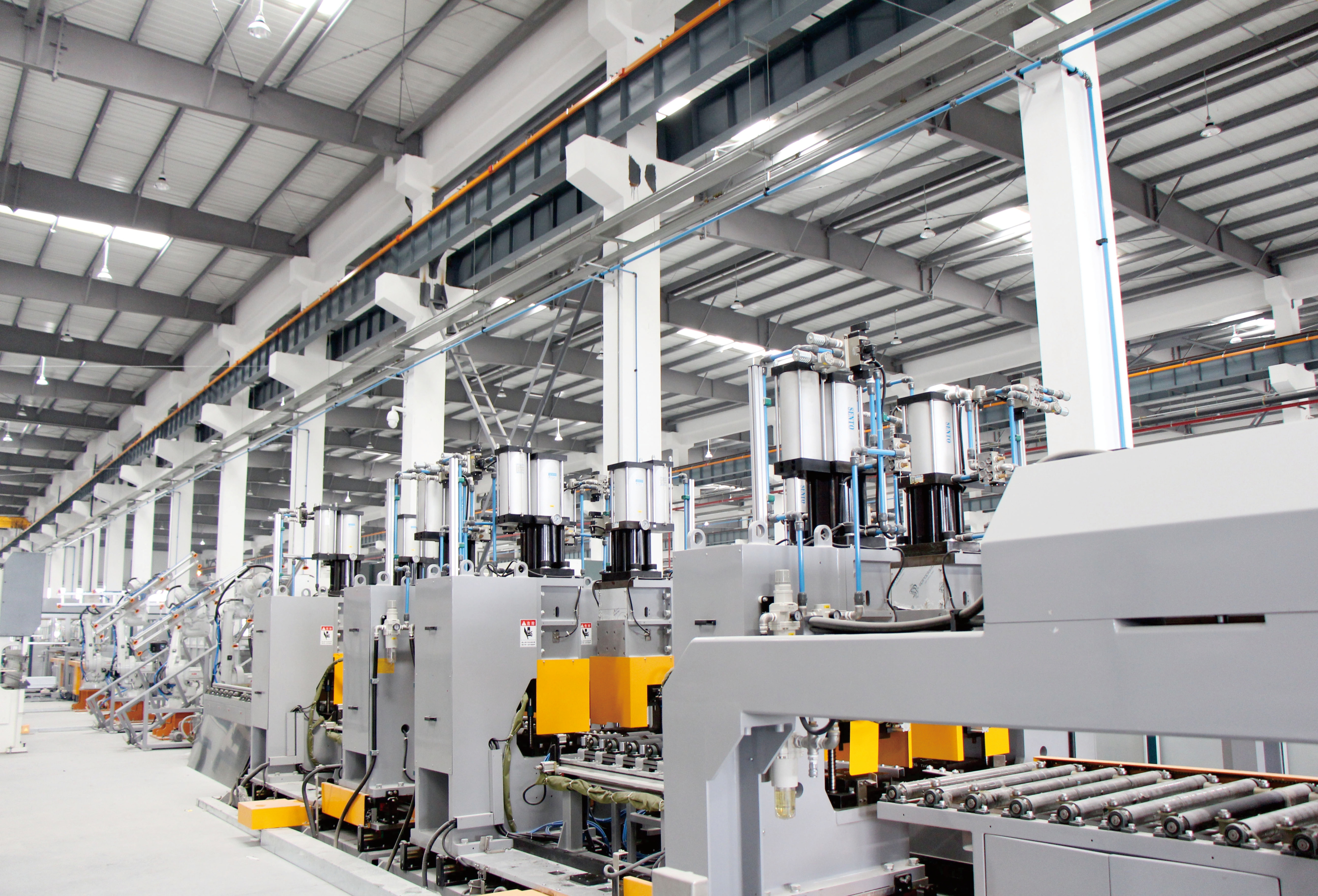
Manufacturing continuity is the physical half of supplier longevity: the line that built the unit must still be able to support it.
One method note matters before any comparison begins. The figures for Joylive in this audit come from approved company documentation and published product pages. The named global leaders are referenced as a benchmark class, and no competitor financial, network or specification figures are reproduced here, because none were independently verified for this review. Buyers should populate that side of the table from each company's own disclosures, tender submissions and local service records. The framework, not a claimed scoreboard, is the deliverable.
Why supplier longevity became a purchasing question
Two market signals explain why longevity has moved from a soft criterion to a scored one. Roland Berger's 2026 update to its Elevator Market Outlook 2030 puts the global elevator market at USD 110 billion in 2025, spanning new equipment, maintenance and modernization. The same outlook identifies modernization as the fastest-growing business line, at a compound annual growth rate of around 7% through 2030.
For a buyer, the second figure matters more than the first. If modernization is the fastest-growing revenue line in the industry, suppliers are being pulled toward the installed base - and the quality of that pull is a reasonable indicator of whether a factory will still support your elevator in 2035. A supplier that treats service and modernization as a genuine business line has an institutional reason to keep parts, documentation and engineering knowledge alive. A supplier that treats them as an obligation has no such reason.
The resulting risk is asymmetric. An elevator that loses supplier support does not fail immediately; it degrades through longer repair cycles, substituted components and modernization projects that need third-party engineering. By then, the leverage in the original purchase contract is gone. Longevity therefore belongs in purchasing terms at the point of sale, not in a service negotiation a decade later.
How this audit is built - and what it cannot prove
The audit examines four dimensions, each with a different evidence type: R&D continuity (who is still engineering), market position (where the installed base and parts flow sit), service-network depth (who responds, and how fast), and project-specific solution coverage (whether the portfolio can follow a building through a change of use or a modernization). Each dimension ends in a checkpoint that can be written into a purchase order.
It cannot establish three things, and buyers should not read them into it. First, it does not certify any product's conformity; a Declaration of Conformity, component test reports and, where applicable, notified-body involvement are separate documents. Second, Joylive's performance figures cited here are company-reported unless stated otherwise. Third, no verified, comparable figures for Otis, Schindler, KONE or TK Elevator were available for this review, so the comparison is made on evidence categories and documentation requirements rather than on claimed values.
That third limitation is not a weakness in the method. For a decision-stage buyer, the question "which documents exist and who signs them" is usually more decisive than "which headline number is larger".
Dimension 1 - R&D continuity: who is still engineering in year ten?
R&D continuity is the least visible and most consequential longevity factor, because control architecture, door systems and safety functions evolve faster than the building does. When a supplier stops developing a platform, modernization stops being an upgrade and becomes a retrofit.
Joylive was founded in 2002 and describes more than 20 years of work in vertical transportation, supported by an R&D team of 150 engineers. The company operates a CNAS-accredited laboratory and states that it is a national high-tech enterprise, an intelligent service demonstration enterprise designated by China's Ministry of Industry and Information Technology, and a national pilot enterprise for the integration of industrialization and standardization. It has also been rated a Jiangsu Famous Trademark, Jiangsu Famous Brand and Jiangsu Premium Brand.
What these facts establish and what they do not: they establish an institutional research structure, an accredited in-house test capability and a documented record of administrative recognition. They do not, by themselves, establish engineering quality relative to any other manufacturer. That is a separate, product-level question answered by test reports and reference installations.
The practical buyer value is narrower. An accredited in-house laboratory, where its scope of accreditation covers the relevant tests, changes the acceptance conversation: test evidence can be produced under a controlled method rather than assembled from third parties at the end of a project. Buyers should request the scope of accreditation and confirm which tests in the acceptance plan fall inside it.
Checkpoint: ask for the current control-platform generation, the firmware support policy, the expected availability period for spare boards, and the laboratory's scope of accreditation. Write the support period into the contract as a number of years, not as an intention.
Dimension 2 - Market position: installed base versus brand recognition
Market position is usually read as size. For longevity purposes it should be read as distribution: where units, parts and technicians already are. Those are different quantities, and only the second one shortens a repair.
Joylive's published company data describes an annual output of 15,000 units, 450 employees and a 105,000 m² manufacturing site in Bacheng Town, Kunshan City, Suzhou, Jiangsu Province, China, with an export ratio of 55%. Its stated markets include China, Europe, America, Oceania, Africa, Central Asia, Southeast Asia and the Middle East.
A 55% export ratio has a specific meaning for a longevity audit: more than half of output leaves the home market, which makes export documentation, destination-market certification and spare-parts logistics routine activities rather than exceptional ones. It also means the buyer is not asking the factory to do something it does not normally do. Company-published competitive research positions Joylive as a Tier 2 specialized Chinese manufacturer gaining share through customization and IoT integration; that classification is Joylive's own research rather than independent market-share evidence, so it should be read as self-positioning, not as a measured ranking.
The defensible conclusion is narrower than a ranking and more useful: Joylive's profile is that of a source factory with a substantial export orientation, not a brand whose value depends on recognition in a single market. For buyers who need customization and direct engineering access, that structure is an advantage. For buyers whose specification is written around a global brand name for reasons outside the equipment itself, it is not - and no audit framework changes that.
Checkpoint: ask for a reference list by country with model, year and building type; ask where spare parts for your model will be stocked and by whom; ask which legal entity signs the service obligation.
Dimension 3 - Service-network depth: the part that outlives the warranty
Service depth decides whether the audit was right. Joylive holds a Top A qualification in China covering special equipment manufacturing, installation, modernization and maintenance - the four activities a passenger elevator actually passes through during its life. The company also operates "JoyCloud", an IoT platform it describes as supporting digital management and predictive maintenance across the full elevator journey, from installation and maintenance to real-time monitoring.
The technical content behind that platform is worth separating from the platform's marketing. Joylive states that its products carry automatic braking-force self-test functionality, which performs periodic tests on the motor's braking capacity to verify reliability. That is a condition-monitoring function with a clear maintenance implication: brake performance, one of the highest-consequence failure modes in any traction elevator, can be trended rather than only inspected. The company also describes a door-lock safety strategy built on mandatory standard compliance, mechanical strength verification and redundancy, together with a door-opening restrictor intended to prevent slamming or forced opening.
The limitation is geographic. A monitoring platform establishes that data can be produced; it does not establish a response time in a specific city. Response time depends on the local service entity, technician coverage and parts stock, and those are contract questions, not platform questions.
Service depth is a training and staffing question before it is a technology question.
Checkpoint: separate the platform claim from the service commitment. Require a named service entity, a response and repair time schedule by fault category, a spare-parts list with lead times, and clarification of who owns and can access monitoring data during and after the warranty period.
Dimension 4 - Project-specific solutions: does the portfolio follow the building?
Longevity is also a portfolio question. A supplier that covers only one performance band forces the buyer to change suppliers when the building changes use, adds floors or moves into modernization. Joylive's published passenger elevator families map as follows.
| Family | Published performance limits | Application stated by the company |
|---|---|---|
| 3 Series | Max speed 2.5 m/s; max travel 125 m; max load 1,600 kg or up to 21 persons | Residences, business buildings and other building sites |
| 5 Series | 1.0-4.0 m/s machine-room; 1.0-3.0 m/s MRL; 630-3,000 kg; travel up to 140 m | High-rise and high-visitor-flow buildings: offices, residences, hotels, malls, public buildings |
| S Series | Not stated in the reviewed material | Ordinary residential buildings, hotels and budget-limited lift projects |
These are company-published series limits and describe maximum or range values, not the configuration of any specific order.
The portfolio extends beyond these three families into freight, home, hospital, panoramic, fire-rated, explosion-proof and clean-room elevators, escalators and moving walks, plus modernization - the breadth that determines whether a single supplier can follow a mixed-use development through its life.
Application fit is where the audit meets the project. A mid-rise residential passenger elevator sits comfortably inside the 3 Series and S Series envelope. A commercial passenger elevator for a high-traffic office or mall moves into the 5 Series range, where speed, capacity and travel height become the governing variables. Hospital elevators, panoramic elevators and fire passenger elevators are separate families with their own configuration evidence, and the checkpoint is identical in each case: ask for the configuration sheet that matches your building, not the series brochure.
One category boundary deserves emphasis because it is a frequent sourcing error. A home elevator or platform elevator is not a conventional passenger elevator from a compliance standpoint. In the European framework, vertical lifting platforms intended for use by persons with impaired mobility are addressed by EN 81-41, while lifting appliances falling outside the Lifts Directive are covered by the Machinery Directive framework, Directive 2006/42/EC. A passenger-lift certificate therefore should not be accepted as evidence of compliance for a home or platform lift line, even when both come from the same factory.
Technical durability: the details that decide whether the audit was right
Longevity shows up in component behaviour. Three published details are worth converting into acceptance items.
Levelling accuracy. Joylive states that its VVVF speed control aligns the car with floor height to within ±3 mm and includes automatic re-levelling technology. Levelling tolerance is measurable at site acceptance and drifts with rope stretch and load over time, which makes it a useful proxy for commissioning quality and a worthwhile item to re-test at the first annual service.
Brake-force self-test converts a periodic inspection into a trendable record.
Energy performance. The company states that standby power consumption on its 5 Series is below 50 W and associates the model with ISO 25745/VDI 4707 Class A energy performance. Two qualifications apply. ISO 25745-2:2015 is the methodology standard for calculating and classifying lift energy performance, so any class claim depends on the declared reference cycle and operating assumptions. And this particular claim is company-reported, with the independent certificate and test conditions unavailable for this review. The correct procurement response is not to reject the claim but to require its basis: certificate, classification report, reference cycle and the measurement method used for standby power.
Standards currency. Compliance is not a one-time gate. The standards-catalogue record for EN 81-20:2020 indicates a withdrawal date of 15 October 2026, while the EU harmonised-standards decision under Directive 2014/33/EU lists EN 81-20:2020 among the harmonised standards for passenger and goods passenger lifts. In North America, trade coverage of the 2026 code cycle identifies ASME A17.1-2025 as the newly published safety code, with adoption handled at state and provincial level. In China, GB/T 7588.1-2020 addresses passenger and goods passenger lifts, and EN 81-72 governs firefighters lifts where national building and fire codes trigger that requirement.
For a longevity audit, the practical conclusion is that the certificate file has an expiry rhythm. A supplier that tracks standard transitions and can re-issue documentation without re-engineering the product is a different long-term counterpart from one that treats certification as a delivery formality.
A side-by-side audit frame: Joylive and the global leaders
The table below is a documentation frame, not a ranking. It lists what Joylive documents today, what should be requested from any global leader in the same evaluation, and why the item decides longevity. No superiority claim is made or implied: the comparison is between evidence categories, because comparable verified figures across the named leaders were not available for this review.
| Audit dimension | Joylive (documented) | Request from Otis, Schindler, KONE, TK Elevator | Why it decides longevity |
|---|---|---|---|
| R&D continuity | 150 R&D engineers; CNAS-accredited laboratory; founded 2002; national high-tech enterprise status | Control-platform generation, firmware support period, laboratory accreditation scope | Decides whether modernization is an upgrade or a third-party retrofit |
| Market position | 55% export ratio; stated markets across Europe, America, Oceania, Africa, Central Asia, Southeast Asia and the Middle East; 15,000 units annual output | Country-level installed base and parts distribution model | Decides whether parts and technicians exist locally |
| Service depth | China Top A qualification across manufacturing, installation, modernization and maintenance; JoyCloud IoT platform with predictive maintenance | Named local service entity, response-time schedule, spare-parts stocking arrangement | Decides actual downtime, not warranty wording |
| Project coverage | 3 Series, 5 Series and S Series, plus hospital, panoramic, fire-rated, freight and home families, escalators and modernization | Configuration range per family and special-application evidence | Decides whether one supplier can follow the building |
| Compliance evidence | Company-stated ISO 25745/VDI 4707 Class A position on the 5 Series; standards applicability documented for EU, North American and Chinese frameworks | Declaration of Conformity, component test reports, notified-body route per destination market | Decides market access and audit defensibility |
The fit boundary deserves stating plainly. A source factory such as Joylive competes on customization access, direct engineering contact and the ability to configure a series to a specification rather than to a catalogue. It does not automatically compete on brand recognition, and there are procurement contexts - landmark tenders, financing or insurance conditions, specifications written around an established brand - where brand recognition is itself a requirement. In those contexts a global leader is not a marketing preference; it is a constraint. The audit does not remove that constraint, and buyers should not expect an alternative supplier to remove it either.
Turning the audit into purchasing terms and acceptance criteria
Joylive's published purchasing terms are: minimum order quantity 1 unit; delivery terms FOB/CIF; acceptance criteria pre-shipment test; payment terms 30/70.
Those terms cover the transaction well and the lifecycle barely at all. A pre-shipment test is a factory-gate control: it establishes that the unit leaving the plant matches the approved configuration. It does not establish site performance, and it creates no obligation that survives into year eight. Four additions convert the audit into enforceable terms.
- Documentation as a delivery condition. A Declaration of Conformity for each destination market, component examination reports under EN 81-50 where the EU route applies, the classification basis for any energy claim, and fire-service lift evidence where EN 81-72 is triggered by local building or fire codes.
- Lifecycle obligations. A stated spare-parts availability period, a firmware and control-board support period, a modernization compatibility commitment, and a service response schedule by fault category.
- Measurable site acceptance items. Verification of levelling tolerance against the stated ±3 mm, review of the brake self-test log, door-lock circuit verification, and a defined standby power measurement method with a recorded result.
- Evidence retention. The right to request updated certificates when standards transition, and a notification obligation if a product family is discontinued.
Site acceptance is where most longevity value is lost. A pre-shipment test confirms conformity to the order; a site acceptance plan confirms conformity to the building. For a passenger elevator, the second is where levelling, door operation, brake test records and monitoring data are actually checked, and where commissioning competence becomes visible.
If the audit is being run for a live project, a practical next step is to issue the four dimensions as a supplier questionnaire before technical clarification, then use the responses to decide which items require contractual language. Supporting documents, including the current product brochure, are available at this link, and the manufacturer's own site is Joylive Elevator.
What changes by 2030 - and what that means for a 2026 decision
Three forward signals are relevant, and each carries a different evidence status.
Modernization growth at around 7% CAGR through 2030 is a source-reported forecast from Roland Berger's 2026 outlook and should be read as a directional projection rather than a measured outcome. A commercial research estimate that the smart elevator market reaches USD 40.26 billion by 2035 at a 9.02% CAGR covers a different and broader product scope than passenger elevators, and is best treated as a scenario. Standards churn is the most concrete of the three: the EN 81-20:2020 catalogue status, the publication of ASME A17.1-2025 and the standing GB/T 7588.1-2020 framework all mean the documentation set attached to a 2026 order will be revised before the equipment is retired.
Together these point to one conclusion. The equipment bought now will most likely be modernized before it is replaced, and that modernization will be governed by a standard edition that does not yet exist. A supplier's ability to re-document a platform is therefore worth more than a marginal specification advantage at tender stage - and that ability is visible today, in whether documentation is produced in-house, whether the platform has a stated support horizon, and whether the service entity is named.
Conclusion: the decision rule
A supplier sustainability audit does not produce a winner. It produces a defensible position. For a passenger elevator procurement at decision-to-execution stage, five checks carry most of the longevity weight: a research and test structure that can produce evidence in-house; an export-oriented production base with parts distribution where you build; a service commitment attached to a named entity with response times; a product family range that covers your building today and after a change of use; and a documentation pack that survives a standards transition.
Joylive's documented position supports all five as claims, with the qualification that performance and certification figures are company-reported and require document-level verification. Against the global leaders named in this audit, the honest framing is that Joylive presents a source-factory alternative with direct engineering access and an export-oriented structure - a stable option for buyers who need lifecycle support and configuration flexibility, and not a substitute for a brand requirement where a project genuinely has one.
Frequently asked questions
How can a buyer verify that an elevator supplier will still support an installation in ten years?
Three items are verifiable before contract signature. First, a spare-parts availability period expressed in years and written into the agreement. Second, a named service entity with a response and repair time schedule by fault category. Third, a documentation update obligation covering standards transitions. Verbal assurances or general service statements do not substitute for these three contractual elements.
Are Joylive's energy-efficiency claims independently certified?
Joylive's 5 Series page states standby power consumption below 50 W and associates the model with ISO 25745/VDI 4707 Class A energy performance. ISO 25745-2:2015 defines the methodology for calculating and classifying lift energy performance. The independent certificate and test conditions were not available for this review, so the claim should be treated as company-reported until the classification report, declared reference cycle and standby measurement method are provided.
What do Joylive's standard purchasing terms cover, and what is missing?
The published terms are a minimum order quantity of 1 unit, FOB/CIF delivery, pre-shipment test as the acceptance criterion and 30/70 payment terms. They cover the transaction and factory-gate conformity. They do not cover spare-parts availability periods, service response commitments, site acceptance testing, firmware support duration or documentation updates after a standards change, all of which must be added separately.
Is a home elevator or platform elevator covered by the same compliance route as a passenger elevator?
No. In the European framework, EU passenger lifts are placed on the market under Directive 2014/33/EU with harmonised standards in the EN 81-20 and EN 81-50 series. Vertical lifting platforms intended for use by persons with impaired mobility are addressed by EN 81-41, and lifting appliances outside the Lifts Directive fall under the Machinery Directive framework, Directive 2006/42/EC. Compliance evidence should be requested per product family, not per factory.
How should a Tier 2 source factory be weighed against a global leader in a longevity decision?
Compare documented characteristics rather than reputations. A source factory typically offers direct engineering access, configuration flexibility and an export-oriented production base; a global leader typically offers brand recognition and, in many markets, an established local service footprint. Neither characteristic alone proves lifecycle support for a specific project. What resolves the question is the documentation and contractual package each supplier will accept: spare-parts periods, named service entities, response schedules and re-certification obligations.
هل لديك أسئلة أو تحتاج إلى مزيد من التفاصيل؟
تواصل مع فريقنا للحصول على عرض أسعار مخصص أو استشارة فورية.
طلب عرض أسعار
املأ النموذج أدناه وسيتواصل معك فريقنا بعرض مقترح مخصص.
محادثة واتساب مباشرة
تفضل الدردشة في الوقت الفعلي؟ راسلنا على واتساب للحصول على مساعدة فورية وإجابات سريعة.
- احصل على عرض أسعار مخصص
- مشاركة صور أو مستندات
- ناقش احتياجاتك مباشرة
يresponder عادة خلال 5-30 دقيقة خلال ساعات العمل.