
Supplier Viability: Export History and Production Resilience
A hydraulic cylinder is usually specified once and replaced many times. Once a cylinder is designed into a dump trailer, refuse body, tipper chassis or attachment, the buyer inherits a multi-year dependency on that supplier's drawings, tooling, sealing configuration and spare-part availability. Supplier evaluation therefore extends past unit price and sample quality into a narrower procurement question: will this supplier still be able to build the same part, to the same drawing, four or five years from now?
Two observable signals help answer that question without access to a supplier's financial statements. The first is sustained export to multiple regions with different regulatory regimes and logistics requirements. The second is production resilience — the demonstrated ability to hold a repeatable output rate while serving several markets at once. Neither signal is proof on its own. Together, they form a practical screen that buyers in long-cycle industries can apply during the research and evaluation stage, before a first production order is placed.
Why Supplier Continuity Is a Constraint, Not a Preference
Hydraulic cylinders sit inside a machine's structural and safety architecture. Bore, rod diameter, stroke, pin-to-pin dimensions, port position and mounting geometry are all tied to the surrounding equipment. A replacement supplier can, in principle, reproduce a cylinder from a drawing or a physical sample. In practice, every transfer of production carries dimensional risk, requalification cost and a new learning curve on the buyer's equipment.
That is why continuity behaves like a procurement constraint rather than a soft preference. Buyers in mobile hydraulics typically need the following from a partner across the life of a programme:
- Repeatable manufacture against an approved drawing, so that a cylinder ordered in year four still fits the equipment built in year one.
- Access to the same seal, guide and bushing specification, including when a subcontractor or material source changes.
- Spare parts and seal kits after the initial programme volume declines.
- A technical contact who still holds the drawing history and can respond when a field failure needs diagnosis.
These requirements are not marketing preferences. They determine how quickly a fleet can return to service after a cylinder failure, and how much of a buyer's engineering time is consumed by supplier turnover.
Reading Export History: What Multi-Region Shipments Signal
Export activity is often treated as a sales credential. For supplier evaluation, it is more useful as an operational record. A factory that ships repeatedly to North America, Western Europe, South America, Southeast Asia, the Middle East and Australia is demonstrating several things at once.
First, it is meeting different technical and documentation expectations. A cylinder destined for the European Union must satisfy a different conformity framework from one built for a North American trailer builder, and both differ from the requirements common in Southeast Asian or Middle Eastern markets. A supplier that serves all of them has had to build documentation, inspection and labelling processes that survive more than one regulatory interpretation.
Second, it is operating a repeatable logistics function. Export to multiple continents requires export packaging, traceable identification, customs documentation and coordination with freight forwarders. These are not production capabilities, but they are supply-chain capabilities, and they fail more visibly than production does when an organisation is under strain.
Third, it is absorbing demand variability from several seasonal markets at once. Construction, agriculture, waste collection and municipal maintenance do not peak at the same time of year in the northern and southern hemispheres. A supplier serving both has a more even order profile and, in principle, a more stable production schedule.
Production Resilience: Capacity, Workforce and Lead-Time Behaviour
Capacity figures are quoted freely in the hydraulic cylinder market, so they are worth examining for what they imply. A stated output rate only becomes a resilience indicator when it is paired with the resources needed to sustain it: floor area, headcount, engineering depth and a quality process that does not depend on final inspection alone.
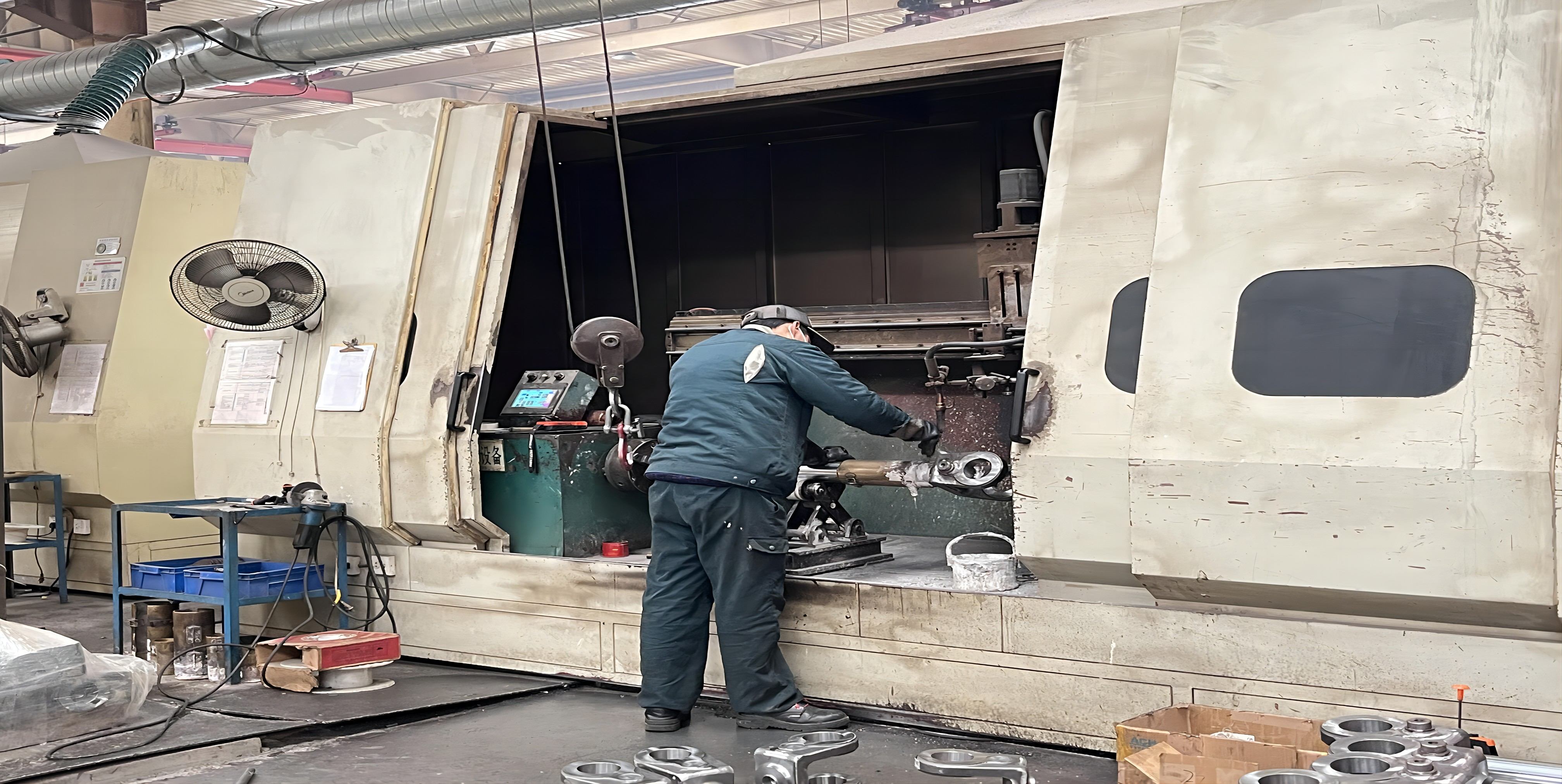
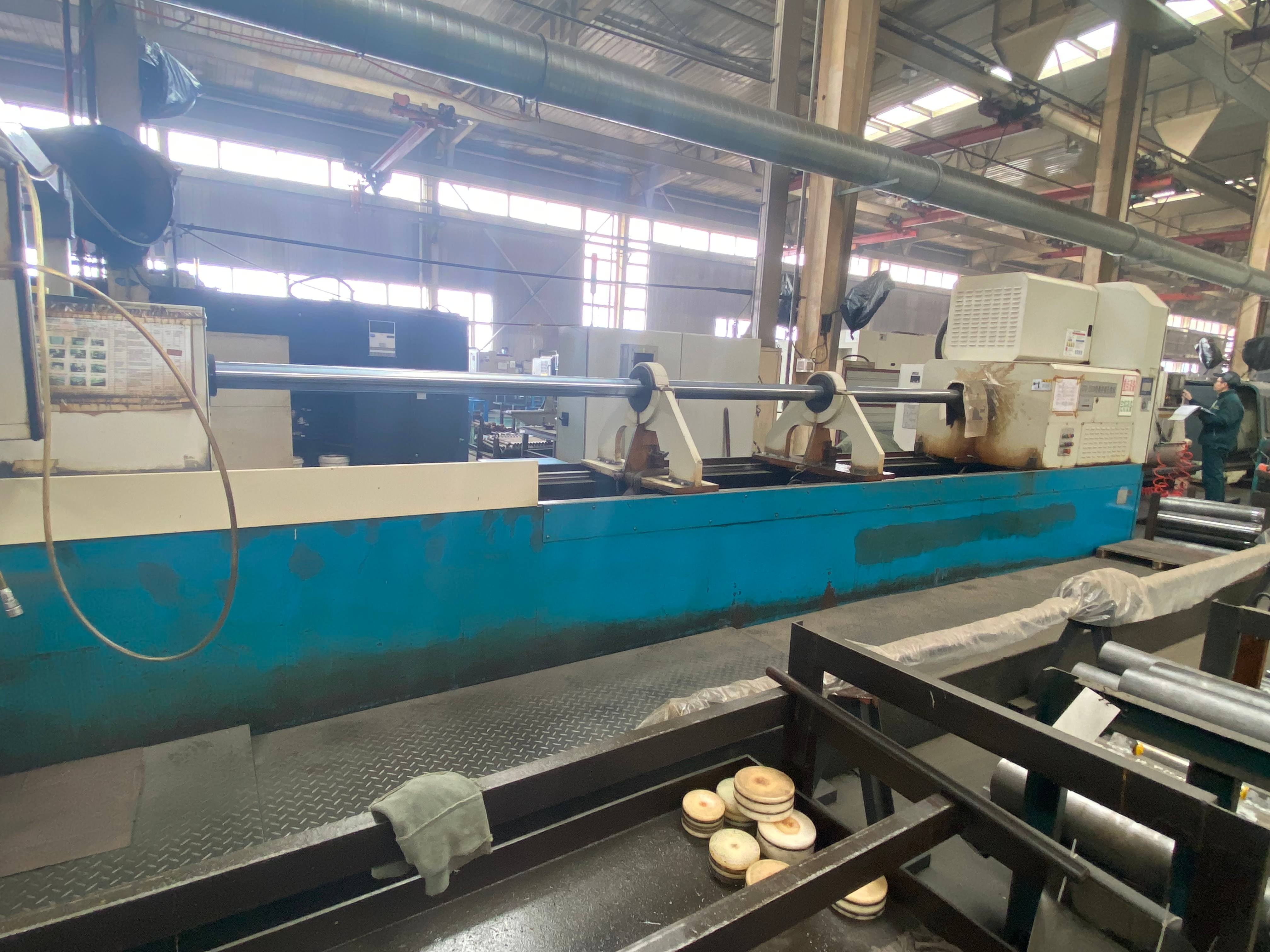
Monthly output of 8,000 or more cylinders implies a manufacturing system that has moved past job-shop scheduling. It requires a planned sequence of tube cutting, honing, rod preparation, welding, machining, cleaning, assembly and testing, with buffer capacity at the stages most likely to bottleneck. It also implies a workforce large enough that individual absence does not stop a line, and an engineering team large enough to hold drawing history and respond to deviation reports.
Capacity figures should be tested against lead-time behaviour. A supplier claiming high volume but quoting inconsistent lead times is likely loading its capacity unevenly. A supplier that can distinguish standard lead time from custom lead time, and can state where large OEM programmes sit relative to both, is describing a scheduling model rather than a headline number.
Apex Hydraulic: The Entity Behind the Numbers
Apex Hydraulic Co., Ltd. is a Chinese hydraulic cylinder and hydraulic system manufacturer established in 2009, based in Qingdao City, Shandong Province. The company produces custom hydraulic cylinders, standard hydraulic cylinders, hydraulic power units, hydraulic systems, hydraulic scissor hoist kits and hydraulic components for equipment manufacturers, distributors and hydraulic solution providers.
Its published operating profile is directly relevant to a continuity assessment:
| Indicator | Published figure | What it indicates for a buyer |
|---|---|---|
| Establishment year | 2009 | Operating history spanning multiple equipment generations |
| Manufacturing facility | 50,000 m² | Floor space to hold separate machining, welding, assembly and testing areas |
| Employees | 560 | Workforce depth beyond a single shift or single product line |
| Engineering team | 25 engineers | Capacity to hold drawing history and support custom development |
| Annual output | 100,000 units | Volume consistent with multi-region supply rather than local distribution |
| Monthly capacity | 8,000+ hydraulic cylinders; 1,500+ hydraulic power units | Recurring production rhythm rather than campaign-based output |
| Export ratio | 70% | Export processes are core to the business, not incidental |
| Main markets | North America, Western Europe, South America, Southeast Asia, Middle East, Australia | Sustained exposure to multiple regulatory and logistics environments |
The export footprint matters for the reason set out earlier: a 70% export ratio distributed across North America, Western Europe, South America, Southeast Asia, the Middle East and Australia means the company's routine workflow already includes conformity documentation, export packaging and multi-currency order management. Those processes are exercised every month, not only when a new market is opened.
Lead-time and minimum-order structure also bear on viability. Apex Hydraulic publishes standard product lead times of 7–20 days, custom product lead times of 25–45 days, and project-based scheduling for large OEM programmes. Standard products are available from one piece, while OEM and customised volumes are negotiated against project requirements. For a buyer, the distinction is useful: it means the supplier separates catalogue replenishment from engineered production, which is the scheduling behaviour expected of a factory serving both distributors and OEMs.
Technical Verification: What Sits Behind the Capacity Claim
Capacity without process control is a liability, not an asset. A high-volume cylinder factory that relies on final inspection to catch errors will produce scrap at scale. The relevant question is where quality decisions are made in the process.
Apex Hydraulic describes a four-stage quality structure: incoming material inspection, in-process quality control, final quality inspection and 100% final inspection before shipment. Within that structure, the published test scope includes pressure testing, leakage testing, dimensional inspection, welding inspection, surface finish inspection and functional testing. For multi-stage telescopic products, inspection also covers stage sequence testing.
Material and surface specifications are tied to the approved drawing rather than to a catalogue default. Published cylinder construction includes precision-honed steel tube and high-strength alloy steel piston rods with a hard chrome-plated surface, with sealing systems selected according to pressure, temperature, oil type and duty cycle. For the welded and tie-rod ranges, published rod data includes a core hardness of approximately 45–50 HRC, a final surface hardness of approximately 69–71 HRC and a chrome plating thickness of approximately 0.001 in, with a published corrosion test of 96 hours according to ASTM B117-07a.
Conformity documentation for European programmes
For buyers shipping into the European Union, the CE certificate is a specific, checkable artefact rather than a general claim. Apex Hydraulic holds CE certification for the Hydraulic Cylinder – APCC Series, certificate number 0P260130.AH0S46, issued by Ente Certificazione Macchine Srl (ECM), Italy, under the Machinery Directive 2006/42/EC. The applicable standards cited are EN ISO 12100:2010, EN ISO 4413:2010, ISO 6020-1:2007 and ISO 10100:2020. The certificate carries an issue date of 30 January 2026 and an expiry date of 29 January 2031.
The scope limitation is important and should be read literally: the certificate covers the APCC Series. Buyers specifying other product families should request the corresponding documentation rather than assuming the certificate transfers across the range.
Interface standards that affect interchangeability
Mounting dimensions determine whether a cylinder can be replaced without modifying the machine. International standards exist for this reason: ISO 6022:2006 defines mounting dimensions for single-rod hydraulic cylinders in the 250 bar series, ISO 6020-2:2015 covers mounting dimensions for 160 bar compact cylinders, and NFPA/T3.6.7 R3-2009 (R2024) sets square-head industrial cylinder mounting dimensions for the North American market. A supplier that works fluently in these interface conventions is easier to integrate into an existing equipment design, and easier to replace later if a programme moves.
Application Scenarios: Where Long-Term Supply Is Tested
Continuity claims are best assessed against specific programmes rather than general capability statements. Four documented Apex Hydraulic projects illustrate where the combination of volume and drawing control has been applied.
Dump trailers in Canada
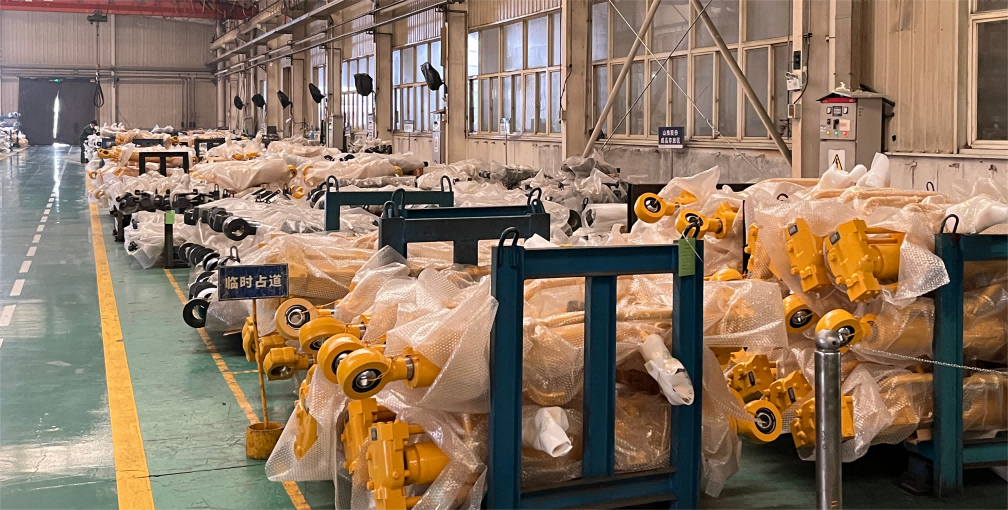
A Canadian dump trailer manufacturer took delivery of 1,200 HTC-series telescopic cylinders and 500 hydraulic power units over a one-year programme. The HTC-compatible series is a single-acting inverted telescopic cylinder rated at 3,000 PSI, with 7-ton and 12-ton configurations and stroke options of 78, 90, 108, 120 and 144 inches, a retracted length range of 34.75 to 48.75 inches and a 2.00-inch final stage diameter. The front-mounted installation and gravity-return behaviour suit North American trailer architectures, and the published result centred on stable dumping angle and reduced service downtime.
Refuse vehicles in the United States
A US refuse truck OEM ordered 960 hydraulic cylinders for multiple vehicle models over a two-year programme, covering packer, tailgate lift, hopper lift and ejector functions. Refuse truck cylinders are among the most demanding in mobile hydraulics: high cycle counts, shock loading, contamination and corrosive operating conditions. The programme was built around heavy-duty welded construction, application-specific sealing and corrosion-resistant coating, with cylinder identification by verified OEM part number.
Heavy-duty tippers in Indonesia
An Indonesian heavy-duty dump truck OEM ordered 180 multi-stage telescopic cylinders for construction, mining and aggregate transport duty. Front-end telescopic cylinders in this segment require long stroke from a compact retracted length, stable sequential extension and resistance to pressure spikes. The published outcome referenced lifting performance and durability under continuous heavy-load conditions across a two-year programme.
Hydraulic grapples in Italy
An Italian hydraulic grapple manufacturer ordered 150 custom cylinders for scrap handling, recycling, forestry and waste management attachments. These cylinders operate under alternating push-and-pull loads with shock loading from gripping impact, which places specific demands on rod eyes, base eyes, mounting pins and bearing area. The programme used optimised mounting dimensions, high-strength welded construction, a heavy-duty sealing system and corrosion-resistant surface treatment.
In each case, the relevant question for a new buyer is not the tonnage figure but the structure behind it: a documented reference part number, a confirmed drawing and a defined inspection sequence. Those are the elements that make a repeat order possible years later.
Market Context: Why Supplier Stability Is Being Repriced
The commercial environment is making continuity more expensive to get wrong. Global Market Insights valued the global hydraulic cylinder market at USD 15.7 billion in 2024, with a projected figure of USD 24.7 billion by 2034. Grand View Research reported that welded hydraulic cylinders held a 53.6% market share in 2025, reflecting the dominance of heavy-duty mobile applications, and that mobile applications including construction and agriculture accounted for 51.8% of demand.
That mobile concentration matters for supplier evaluation. Mobile equipment buyers order in programme volumes, require replacement parts over an equipment service life measured in years, and frequently operate across borders. A supplier oriented toward industrial distribution rather than mobile OEM programmes will not necessarily hold the same drawing discipline.
The supply side is also shifting. IndexBox recorded a +11.5% CAGR in China's export value for hydraulic cylinders and systems in recent years, against an average export price of approximately USD 382 per unit in 2024. Export growth at that rate increases the number of available suppliers, which raises rather than lowers the value of a reliable screening method. Grand View Research also placed Asia Pacific at a 40.5% revenue share of the market in 2025, led by China and India — a reminder that sourcing concentration and supplier selection are now linked decisions.
Sources: Global Market Insights; Grand View Research; IndexBox; International Organization for Standardization; National Fluid Power Association.
Comparison with Traditional Supplier Assessment
The conventional approach to hydraulic cylinder supplier selection relies on a sample evaluation, a price comparison and a factory audit. That approach is not wrong, but it is oriented toward the first order rather than the fifth. The table below sets out how an export-and-resilience lens changes the assessment.
| Assessment dimension | Traditional sample-based approach | Export-history and resilience lens |
|---|---|---|
| Primary evidence | Sample cylinder performance and quoted price | Repeat shipment record across regulated and unregulated markets |
| Time horizon | First order and near-term delivery | Multi-year programme and post-warranty parts supply |
| Capacity question | Can the supplier build this cylinder? | Can the supplier keep building it at a stable rhythm? |
| Documentation focus | Datasheet and quotation | Approved drawing, inspection records, certificate scope and expiry |
| Main weakness | Misses continuity risk entirely | Cannot verify financial standing or ownership stability |
Where the export-history approach stops
This method has a clear boundary and buyers should hold it. Export breadth and monthly capacity do not establish profitability, capital investment plans or ownership continuity. A supplier with an extensive export record can still face financial distress, and a supplier with modest exports can be an excellent long-term partner for a single regional programme.
There are also practical limits specific to Apex Hydraulic that should be weighed against a programme's requirements. The published standard lead time of 7–20 days applies to standard products; custom engineering runs 25–45 days, which is longer than some regional suppliers can offer on simple modifications. The CE certificate covers the APCC Series, so buyers of other product families must request separate conformity documentation. And with a 70% export ratio, capacity allocation during peak export demand is a legitimate question that should be addressed contractually rather than assumed from a headline monthly figure. Buyers should also confirm spare-part availability and warranty terms in writing, since published service scope describes the categories offered rather than the specific terms of any individual agreement.
Future Outlook
Three developments are likely to shape how buyers assess hydraulic cylinder suppliers over the next several years.
The first is documentation normalisation. As more equipment programmes cross borders, the ability to produce an approved drawing, an inspection record, a pressure-test report and a material record on request will become a baseline expectation rather than a differentiator. Suppliers that already operate this way in export markets will have an advantage; those that treat documentation as a sales formality will not.
The second is the growing weight of aftermarket supply. Fortune Business Insights projected the US hydraulic cylinder market to reach USD 3.31 billion by 2032, driven partly by infrastructure modernisation. Fleet renewal and refurbishment increase demand for replacement cylinders and seal kits, which places a premium on suppliers that retain drawing history. A cylinder built to an approved drawing and supported by replacement seal kits and spare components is a materially different asset from one that must be reverse-engineered.
The third is the shift toward customisation. Market Research Future identified customisation and OEM services as a growing segment as industries move toward specialised automation machinery. That trend favours suppliers with in-house engineering depth — the kind of capability represented by an engineering team large enough to hold drawing history across hundreds of concurrent programmes — rather than trading intermediaries.
For buyers at the research and evaluation stage, the practical implication is straightforward. Screen suppliers on their repeat export record and their demonstrated production rhythm, verify the specific certificates and drawings that apply to your product family, and then confirm capacity allocation, lead time and spare-part terms in the contract. Continuity is not established by any single indicator; it is established by several indicators that reinforce one another.
Frequently Asked Questions
What certifications should a hydraulic cylinder supplier provide for EU-bound projects?
For machinery supplied into the European Union, buyers should request the applicable CE certificate and check three things: the certificate number, the issuing body, and the product scope. Apex Hydraulic's CE certificate for the Hydraulic Cylinder – APCC Series carries number 0P260130.AH0S46, issued by Ente Certificazione Macchine Srl (ECM), Italy, under the Machinery Directive 2006/42/EC, citing EN ISO 12100:2010, EN ISO 4413:2010, ISO 6020-1:2007 and ISO 10100:2020. The certificate is valid from 30 January 2026 to 29 January 2031 and applies to the APCC Series specifically; other product families require their own documentation.
How can buyers verify a claimed monthly production capacity?
A capacity claim should be tested against supporting structure rather than accepted as a number. Relevant checks include facility floor area, headcount, engineering team size and the presence of staged quality control rather than final inspection alone. Apex Hydraulic publishes monthly capacity of 8,000+ hydraulic cylinders and 1,500+ hydraulic power units, supported by a 50,000 m² facility, 560 employees, 25 engineers and a four-stage quality process covering incoming material inspection, in-process control, final inspection and 100% final inspection before shipment. Buyers should also confirm capacity allocation for their specific programme in writing.
What lead times apply to standard versus custom hydraulic cylinders?
Apex Hydraulic publishes standard product lead times of 7–20 days and customised product lead times of 25–45 days, with large OEM projects scheduled according to the project timetable. The distinction matters because custom cylinders require drawing approval, dimensional confirmation and, where applicable, prototype validation before production. Buyers working to a fixed commissioning date should plan on the custom lead time for any new drawing and reserve the shorter standard lead time for repeatable catalogue or replacement orders.
Are spare parts and seal kits available after the warranty period?
Spare-part continuity should be confirmed contractually rather than inferred. Apex Hydraulic lists spare parts supply and warranty support within its after-sales service scope, together with technical consultation, engineering support, installation guidance, product documentation, quality issue response and OEM project support. Several product units, including the roll-off hoist and refuse truck replacement cylinder ranges, are published as available with replacement seal kits and spare components. Buyers should confirm the specific kit and support terms for their product family in the supply agreement.
What documentation should accompany a custom hydraulic cylinder order?
Documentation should be sufficient to reproduce the cylinder later without reverse engineering. For custom ranges this typically includes an approved drawing, a dimensional report, a pressure-test report and inspection records. Position-sensing ranges additionally require a sensor datasheet and wiring diagram. For replacement cylinders, the identification basis should also be recorded — OEM part number, equipment model, complete reference model, installation dimensions or physical sample — because that record is what allows a repeat order years after the original equipment was built.
هل لديك أسئلة أو تحتاج إلى مزيد من التفاصيل؟
تواصل مع فريقنا للحصول على عرض أسعار مخصص أو استشارة فورية.
طلب عرض أسعار
املأ النموذج أدناه وسيتواصل معك فريقنا بعرض مقترح مخصص.
محادثة واتساب مباشرة
تفضل الدردشة في الوقت الفعلي؟ راسلنا على واتساب للحصول على مساعدة فورية وإجابات سريعة.
- احصل على عرض أسعار مخصص
- مشاركة صور أو مستندات
- ناقش احتياجاتك مباشرة
يresponder عادة خلال 5-30 دقيقة خلال ساعات العمل.