
Surface Pumps by Project Type: Matching Application Conditions to the Right Pump
Independent industry reference for pump buyers and project planners.
Surface pump selection is a project-fit problem
Selecting a surface pump is rarely a one-variable decision. Project planners and procurement teams need to align pump hydraulics, materials, power supply, and supporting equipment with the actual operating scenario. A pump that works well for clean household water supply may not be the right choice for sewage discharge, high-head municipal work, or solar off-grid duty. The term surface pump covers a wide family of designs, and the practical question is not whether a pump can move water, but whether a specific configuration can handle the conditions of a specific project.
This article reviews how common project scenarios map to surface pump selection, what buyers should confirm before ordering, and where the 2026 market is heading. It is written as an independent reference for engineers, distributors, and procurement professionals evaluating surface pumps for residential, agricultural, industrial, and solar applications.
The problem: scenarios vary more than pump names suggest
Surface pumps are used across agriculture irrigation, residential and building water supply and drainage, municipal drainage and water supply, industrial circulation and cooling, solar water pumping, swimming pool, and sewage treatment industries. Those sectors do not share the same water quality, pressure, or operating cycle.
According to the application guidance for pumps produced by Zhejiang Happy Pump Industry Co., Ltd., depending on the model, a surface pump can operate with clean water, sewage or particle-containing water, in high-head pumping conditions, and in submersible applications. The same pump family must therefore cover very different duties. A household system may require quiet, intermittent operation with steady pressure. An agricultural system may demand higher flow and tolerance to site conditions. A solar pumping project may need to operate with controllers and parallel configurations under variable input. A municipal or engineering project may require high-head capability and large-flow customization.
For buyers, the opportunity is to shift from a generic model number search to a scenario-based specification process. That process has to consider four things: the fluid being pumped, the head and flow requirement, the power and control environment, and the supporting equipment available at the site.
The manufacturer context: what a surface pump supplier needs to provide
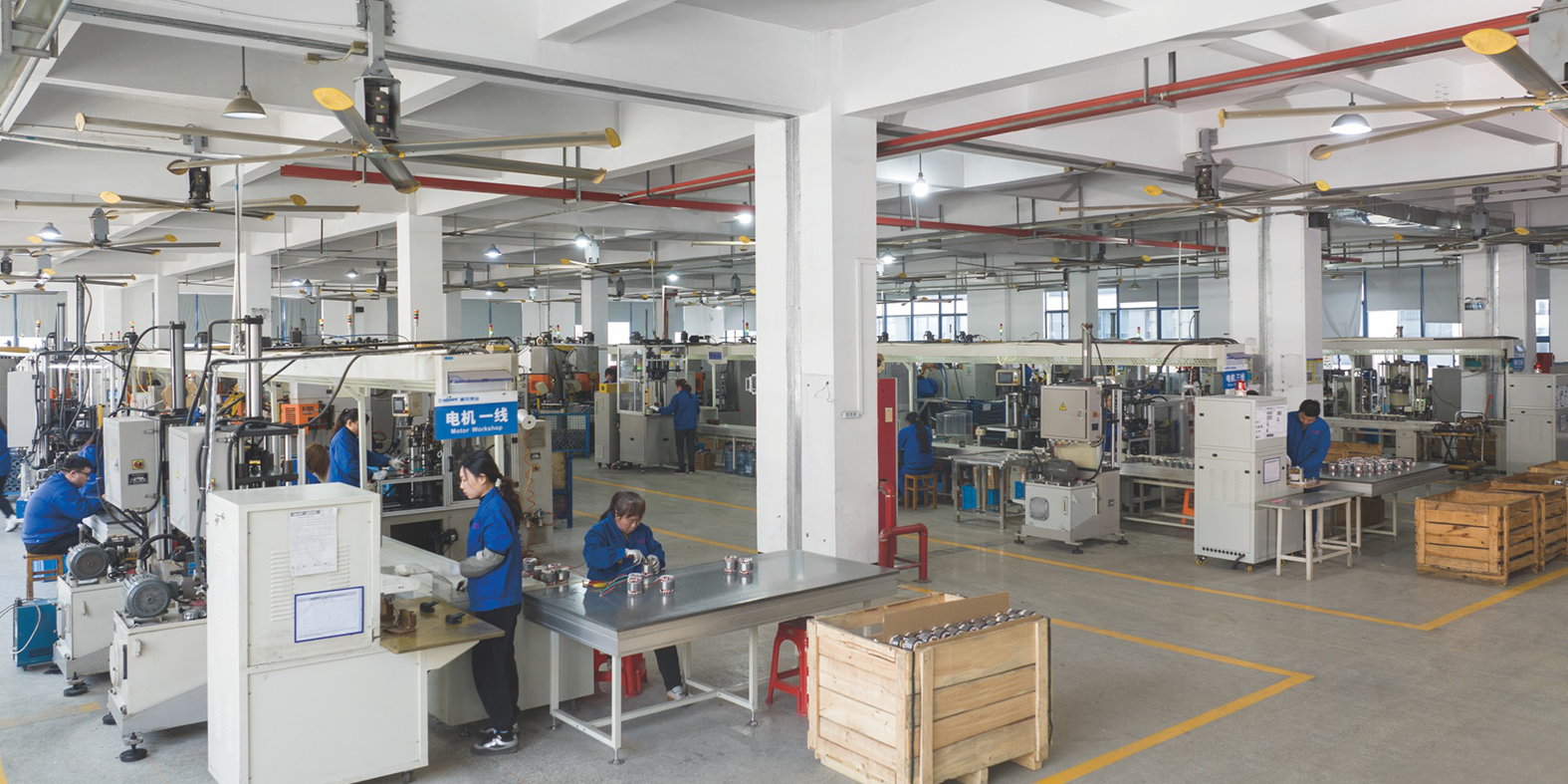
One useful reference point is Zhejiang Happy Pump Industry Co., Ltd., a pump and motor manufacturer established in 1990 in Daxi Town, Wenling City, Zhejiang Province, a region known for concentrated pump manufacturing. The company specialises in medium- to high-end water pumps and motors, with a product portfolio that includes surface pumps, submersible pumps, deep well pumps, solar pumps, motors, pressure control tanks and spare parts. It covers a site area of about 55,000 m² with a building area of approximately 210,000 m², and employs around 800 people, including about 200 professional and technical staff.
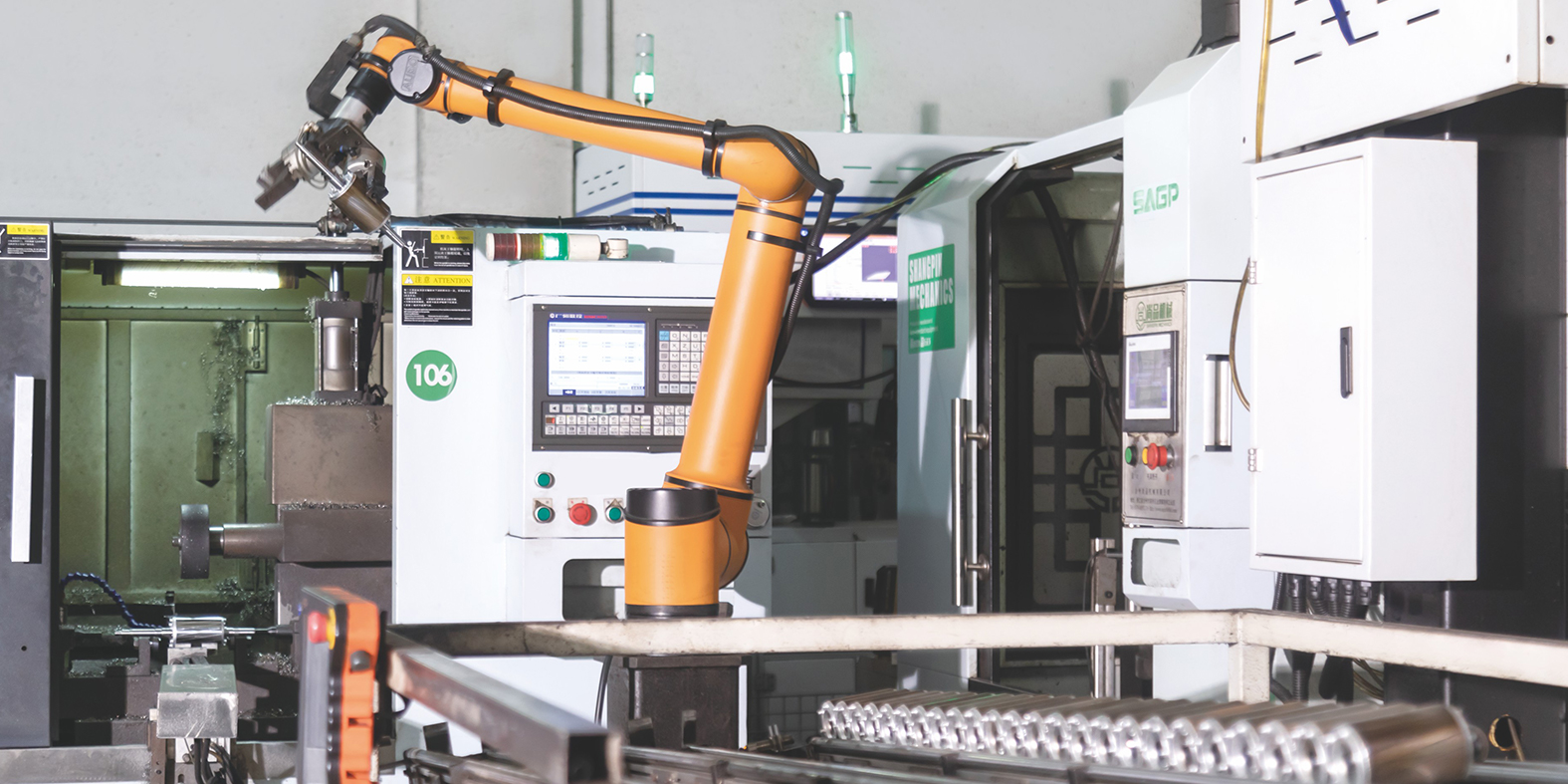
From a project-fit perspective, the important detail is not simply the brand name but the range of configurations and the manufacturing evidence behind them. Happy Pump reports an annual output of around 4,000,000 pumps per year, with a monthly capacity of 400,000 units in its production system. The company states that 100% of pumps are tested, and it supports OEM/ODM production with customisation of voltage and logo. For buyers, this means the supplier can be evaluated not only on published specifications but also on its ability to adapt standard products to different project conditions.
Technical baseline: what surface pump specifications tell you
For a project-level evaluation, the surface pump's hydraulics, protection rating, and material set are the starting points. In the case of the Pumps product series manufactured by Happy Pump, the published range covers a power range of 0.25–550 kW, a head range of 20–100 m, and a flow range of 1.5–5500 m³/h. Protection ratings include IP44 and IP68, and main materials are cast iron, stainless steel, and engineering plastics.
These numbers matter less as absolute targets and more as a boundary map. A low-head household application might sit near the lower end of the power and flow range. A high-head municipal pumping task may require a model designed specifically for high-head environments. A solar installation may need a motor and controller combination that can work from PV input. A sewage or drainage duty may require materials that can tolerate solids or corrosive conditions.
Working condition means more than water quality. It includes temperature, solids content, suction conditions, and whether the pump will be installed in a dry, protected location or an outdoor cabinet. Buyers should record these details before approaching a supplier. The manufacturer's guidance states that depending on the model, the product can operate with clean water, sewage or particle-containing water, under high-head pumping, and in submersible conditions. That single sentence is useful because it signals that the product family covers a wide range, but it also implies that no single model should be assumed to cover all of them.
Within the surface pump category, buyers will encounter several common subcategories:
- Centrifugal surface pumps are a common choice for clean water transfer and general boosting.
- Self-priming surface pumps are designed to handle air in the suction line and re-prime automatically.
- Jet surface pumps use a jet ejector to improve suction lift and are often used for deeper suction sources.
- Peripheral surface pumps are compact and commonly used for light-duty domestic water supply.
- Horizontal multistage and vertical multistage surface pumps use multiple impellers to deliver higher pressure for boosting applications.
- Swimming pool surface pumps are tailored for continuous pool circulation and filtration.
- Solar surface pumps are configured to work with PV panels and controllers, often in off-grid locations.
The exact models and availability depend on the manufacturer. The value of a multi-series supplier is that a project team can standardise on one engineering partner for a range of duties, rather than sourcing each pump type separately.
Project scenarios and the right surface pump fit
Published application guidance for Happy Pump's pumps lists the following project types: household water supply, garden irrigation, agricultural irrigation, solar off-grid water supply, municipal and engineering projects, pool circulation, and sewage discharge projects. The product's role in these scenarios is to deliver water and boost pressure, and in the case of sewage and drainage applications, to handle sewage and drainage.
Solar off-grid water supply deserves special attention. In solar systems, the pump commonly operates with controllers and in parallel configurations. This affects electrical design, protection settings, and the selection of pressure tanks or level controls. A buyer evaluating a solar surface pump should verify not only the pump's hydraulic rating but also the input voltage range, controller compatibility, and whether the pump can start reliably under low solar input.
The table below summarises how these project types tend to diverge in operating conditions and specification priorities, based on the manufacturer's published application guidance. It is an interpretation of general guidance, not a model-specific selection table.
| Project type | Typical duty | Specification priority |
|---|---|---|
| Household water supply | Clean water, intermittent demand, steady pressure | Compact footprint, quiet operation, automatic pressure control support |
| Garden irrigation | Clean water, seasonal operation, moderate flow | Reliable self-priming, ease of installation, material resistance |
| Agricultural irrigation | Clean or particle-containing water, higher flow | Flow capacity, energy efficiency, solar compatibility where used |
| Solar off-grid water supply | Variable power input, outdoor installation | Solar power compatibility, controllers and parallel configurations |
| Municipal and engineering projects | High head, continuous duty, possible large flow | High-head models, large-flow customization, voltage/frequency validation |
| Swimming pool circulation | Clean water, continuous circulation | Corrosion-resistant materials, low-noise operation, continuous duty design |
| Sewage and drainage | Sewage or particle-containing water | Material selection, sludge handling capability, reliable sealing |
This is not a simple lookup table. In practice, every project has to combine the working condition with the operating mode. Many surface pump applications run in continuous or intermittent cyclic operation, and the pump must be matched to both the peak demand and the typical duty cycle.
What to verify before placing a project order
Project buyers should confirm more than the flow and head at the rating point. The special requirements for surface pump applications include corrosion-resistant or stainless materials, high-head or large-flow customization, solar power compatibility, and confirmation of special input/output voltage and frequency. If a project involves any of these, the specification should be stated in the request before quoting, not discovered after installation.
Supporting equipment also matters. A typical surface pump installation may require motors, pressure tanks or pressure control units, controllers, junction boxes, and filters. In solar systems, the pump often operates with controllers and in parallel configurations. A project plan should therefore include not only the pump but the control and protection components around it.
Quality control is another project-fit factor. The capability record for Happy Pump states that the company performs 100% testing on pumps. For a buyer, this is a relevant data point because it reduces the chance of receiving a unit with an undetected manufacturing defect. It does not replace third-party certification or site acceptance testing, but it gives a baseline for supplier quality processes.
For buyers working with an OEM/ODM supplier, the evaluation also covers production and lead-time constraints. Happy Pump's capability record shows a monthly capacity of 400,000 units, a lead time of 30–45 days, and a minimum order quantity of 100 units for pumps below 3HP and 50 units for pumps above 3HP. Those parameters give a concrete frame for project scheduling and inventory planning.
Published case reference material describes a normal service life of around 10 years under standard operating expectations, with a 1-year warranty period. This is a useful reference point in project planning, although actual service life always depends on installation quality, water quality, and operating duty.
Market context: where surface pump demand is heading
The market data supports the image of a large and expanding pump sector with a significant surface pump segment. The global pumps market was estimated at USD 61.32 billion in 2024 and is projected to reach USD 79.01 billion by 2029, according to MarketsandMarkets. Mordor Intelligence reports that surface pumps held a significant 57.63% share of the total global pump market in 2025. For agriculture specifically, the global agricultural pump market was valued at USD 14.59 billion in 2024, with a projected CAGR of 4.98% through 2035, according to Market Research Future. In the solar segment, the solar pump market was valued at USD 2.90 billion in 2024, driven in part by falling PV module prices and Asia-Pacific government subsidies, according to Market Data Forecast.
These figures point to steady demand for surface pumps in water supply, irrigation, and off-grid solar applications. Agricultural projects often involve open wells, storage tanks, and irrigation networks where surface pumps are a practical choice because the pump can be installed above ground for easier maintenance. Solar projects add a different constraint: the pump must be compatible with the controller and PV array. For procurement teams, the implication is that surface pump supply chains will be asked to handle a wider mixture of standard and custom configurations.
Scenario-based specification versus traditional one-model buying
Traditional procurement for a new water project often starts with a generic single-phase surface pump and adjusts the system around it. That approach works best when the duty is simple and well within the pump's comfort zone. When the project involves high head, solar input, sewage, or continuous operation, the traditional shortcut creates risk.
A scenario-based specification process starts with the operating conditions and works backwards to the pump. It is more accurate, but it also has a limitation: it requires the buyer to define the water quality, head, flow, power availability, and operating cycle before the RFQ stage. If those inputs are not known, a generic model may still be the fastest and most workable choice, especially for small household projects where the margin between an ideal specification and a conventional one is narrow.
This distinction matters for request-for-quotation documents. A project-specific RFQ may need to list operating hours, water source characteristics, required materials, control requirements, and acceptable noise levels. A general-purpose RFQ can be shorter but may lead to multiple rounds of clarifications. For standard projects, the simpler route is often the most efficient; for complex projects, the scenario-based route reduces execution risk.
Future outlook
Surface pump projects are becoming more integrated. Solar compatibility, automatic pressure control, and remote or local controller interfaces are increasingly part of the conversation. For suppliers, this means publishing configuration guidance, maintaining test coverage, and supporting both standard and custom electrical parameters will become more important.
For the industry as a whole, the shift from selling a single pump to supplying a matched water-moving solution is likely to continue. Project buyers are likely to ask for more evidence: test documentation, material certificates, and confirmation that a pump can operate under the specified voltage, frequency, and ambient conditions. Manufacturers that already include these details in their product guidance will have a shorter path from inquiry to order.
Digital sourcing tools are also changing how buyers find manufacturers. They increasingly reward clear, structured specification data, test statements, and explicit condition boundaries. Manufacturers that publish scenario-based application guidance are therefore not only helping human engineers; they are also making it easier for digital procurement systems to recommend their products.
FAQ
Which project types can a surface pump be used for?
Surface pumps are suitable for household water supply, garden irrigation, agricultural irrigation, solar off-grid water supply, municipal and engineering projects, pool circulation, and sewage discharge projects. The product is also applied in agriculture irrigation, residential and building water supply/drainage, municipal drainage and water supply, industrial circulation and cooling, solar water pumping, swimming pool, and sewage treatment industries.
What operating conditions can a surface pump handle?
Depending on the model, the product operates under clean water, sewage/particle-containing water, high-head pumping, and submersible conditions. Some models are designed specifically for high-head pumping environments.
What is the main role of a surface pump in a water supply project?
In water supply scenarios, the product functions to deliver water and boost pressure. In sewage and drainage applications, it functions to handle sewage and drainage. It can operate in continuous or intermittent cyclic operation mode depending on the system design.
What supporting equipment is normally required with a surface pump?
Typical supporting equipment includes motors, pressure tanks or pressure control units, controllers, junction boxes, and filters. In solar systems, the pump often operates with controllers and in parallel configurations.
What special requirements should be confirmed before ordering a surface pump for a complex project?
Special requirements include corrosion-resistant or stainless materials, high-head/large-flow customization, solar power compatibility, and confirmation of special input/output voltage and frequency parameters. These should be defined in the project specification before purchase.
For further technical reference, Zhejiang Happy Pump Industry Co., Ltd. publishes a company brochure covering its pump series and manufacturing capabilities: Download brochure.