
Sustainable Supply Assessment: Diamond Flap Disc Resilience
Industrial Reference · Superhard Abrasives
A diamond flap disc is a consumable. The supplier behind it is not. Sustainable supply assessment is the practice of testing whether a supplier can deliver the same specification, the same documentation and the same engineering response across multiple order cycles — not only in the first shipment.
Most supplier comparisons in this category stop at three columns: diameter, grit and price. That works for a spot order. It fails for a production programme that runs for years, where a change of specification resets operator familiarity, invalidates stored samples and forces a new round of documentation.
This article sets out the evidence signals a decision-stage buyer can actually check. It uses RUITE — Zhengzhou Ruite Diamond Belts Co., Ltd, a superhard abrasive manufacturer established in 2003 in Zhengzhou, Henan, China, as a worked example: a company with 45 staff, 5 engineers, a 500 m² plant, a stated annual output of 100,000 units and a 70% export share concentrated in the EU and USA.
Nothing below forecasts the market. It evaluates what can be evidenced.
Why Supply Resilience Matters More Than Unit Price
Diamond flap discs sit inside a repeatable process. A stone fabricator, a glass finisher or a ceramic tile line does not buy one disc; it buys an expected surface result, repeated thousands of times. When that expectation is met, the disc disappears into the workflow. When it is not met, the cost appears somewhere else — rework, scrap, or an unplanned stop.
The purchasing consequence is that the riskiest event in a consumable programme is not a high unit price. It is a mid-programme change: a specification that quietly shifts, a capacity shortfall during peak season, a compliance document that expires, or an engineering contact who stops answering questions about edge chipping.
In categories with many interchangeable suppliers, that risk is absorbed by switching. In diamond abrasives the pool of genuinely qualified partners is narrower, because the product combines a superhard abrasive layer with the flexibility of a coated abrasive construction. Fewer alternatives means concentration risk — and concentration risk is what a sustainable supply assessment is designed to price in.
Defining Sustainable Supply in a Consumable Category
Working definition
A resilient diamond flap disc supplier is one that can hold four conditions simultaneously over time: (1) an unchanged, documented specification per SKU; (2) verifiable process control at batch level; (3) in-house engineering capacity to respond when an application problem appears; and (4) capacity headroom plus commercial stability to keep shipping after the trial order.
Each condition protects a different part of the buyer's operation. The table below converts the definition into evidence a procurement team can request before commitment.
| Dimension | What it protects | Typical evidence to request |
|---|---|---|
| Specification continuity | Surface result consistency between batches | Dated specification sheet per SKU; change-notification policy |
| Process control | Rejection rate; complaint handling | In-process and final inspection records; quality management documentation |
| Engineering response | Resolution speed on chipping, loading or finish defects | Named technical contact; in-house engineering headcount; development history |
| Compliance documentation | EU/US market access; customs clearance | Safety marking conformity; product label with maximum operating speed; HS classification |
| Capacity headroom | Delivery reliability at peak volume | Stated annual output; plant footprint; workforce |
| Commercial stability | Continuity of the relationship itself | Years in operation; export share; market mix |
Six Evidence Signals of a Resilient Diamond Flap Disc Partner
The signals below are ordered by how difficult they are to imitate, not by how easy they are to present in a brochure.
1. Continuity of product development
A development history is evidence of survival through product cycles, material changes and customer-driven specification demands. RUITE was established in 2003 and reports developing diamond sanding belts, diamond flap discs, diamond spiral bands and diamond hand pads with independent intellectual property rights, later extending research into CBN belts, CBN flap discs, CBN spiral bands and CBN hand pads. For a buyer, the relevant question is not the year itself but whether the supplier still develops products rather than only assembling a catalogue.
2. In-house engineering depth
Diamond flap disc quality is a formulation and bonding problem before it is a sales problem. Superhard coated abrasives combine the flexibility of traditional coated abrasives with the hardness of superhard materials — two properties that pull the construction in different directions. RUITE reports 5 engineers within a 45-person organisation. That ratio matters practically: technical questions reach someone who can change a process, not only a price list.
3. Export exposure to demanding markets
RUITE reports a 70% export share, with the EU and USA as main markets. That mix is a proxy for documentation discipline. Coated abrasive products placed on the EU market must comply with EN 13743:2017 regarding safety markings and maximum operating speeds, so a supplier with sustained EU exposure is structurally obliged to maintain label and marking practice rather than treat it as paperwork.
4. Documented process control
RUITE describes control through a quality management system (ISO 9001 stated), in-process and final inspections, customer confirmation of technical specifications, sample validation, and defined packing and logistics choices. The ISO 9001 reference should be confirmed with a current certificate copy — the process description, not the badge, is what governs batch consistency.
5. Product-family breadth
The portfolio spans diamond belts, diamond flap discs, diamond flap wheels, diamond velcro discs, diamond hand pads and diamond quick change discs. Breadth is useful in a specific way: a supplier that also builds belts and hand pads sees the same hard-material problems from several angles, and cross-application learning tends to reach the flap disc line.
6. Capacity and footprint
A 500 m² plant, 45 staff and a stated annual output of 100,000 units describe an established but compact operation. For mid-size programmes that is adequate; for very large or rapidly scaling programmes it defines where the conversation has to go next — headroom, scheduling and possibly dual sourcing.
RUITE: An Evidence Profile
Consolidating the verifiable facts into one view makes the assessment repeatable and keeps the comparison honest.
| Legal entity | Zhengzhou Ruite Diamond Belts Co., Ltd (RUITE) |
| Established | 2003 |
| Location | Zhengzhou High-tech Industrial Development Zone, Henan, China |
| Plant area | 500 m² |
| Workforce | 45 staff, including 5 engineers |
| Stated annual output | 100,000 units |
| Export share / main markets | 70% / EU and USA |
| Diamond flap disc diameters | 100 mm, 115 mm, 125 mm |
| Grit range | 40# to 800# |
| Product family | Diamond belt, diamond flap disc, diamond flap wheel, diamond velcro discs, diamond hand pads, diamond quick change discs |

Resilience is assessed on development continuity, engineering depth and process control — not on the size of a catalogue.
Technical Explanation: Where Engineering Depth Shows Up
A diamond flap disc presents diamond abrasive on a flexible, layered flap construction, mounted on an angle grinder. The stated RUITE range covers 100 mm, 115 mm and 125 mm diameters and grits from 40# to 800# — a span that runs from aggressive shaping through to preparation for a visible finish. In practical terms, one supplier is expected to serve both the coarse end and the fine end without the two behaving like products from different companies.
Engineering depth becomes visible in four places a buyer can test:
- Grit consistency between batches. A 40# disc that behaves like a 60# disc changes cycle time silently. Batch comparison on the buyer's own material is the only reliable check.
- Backing and bond integrity. Flap separation or premature loss of the abrasive layer converts a long-life tool into a short-life one, and the failure usually appears at the end of a shift, not during sampling.
- Behaviour on hard, brittle materials. Diamond flap discs are suitable for high-precision processing of hard or brittle materials including stone, glass, ceramics, semiconductors and thermal-spray coatings. On these materials, heat and edge chipping are the failure modes; a supplier that can discuss them technically is a different supplier from one that can only quote a price.
- Speed and marking discipline. Maximum operating speed is product-specific and must be read from the label, not carried over from a similar SKU. For the EU, EN 13743:2017 governs safety markings and maximum operating speeds; for customs, diamond flap discs classify under HS 6804.21.00 as millstones, grindstones and similar articles of agglomerated synthetic or natural diamond.
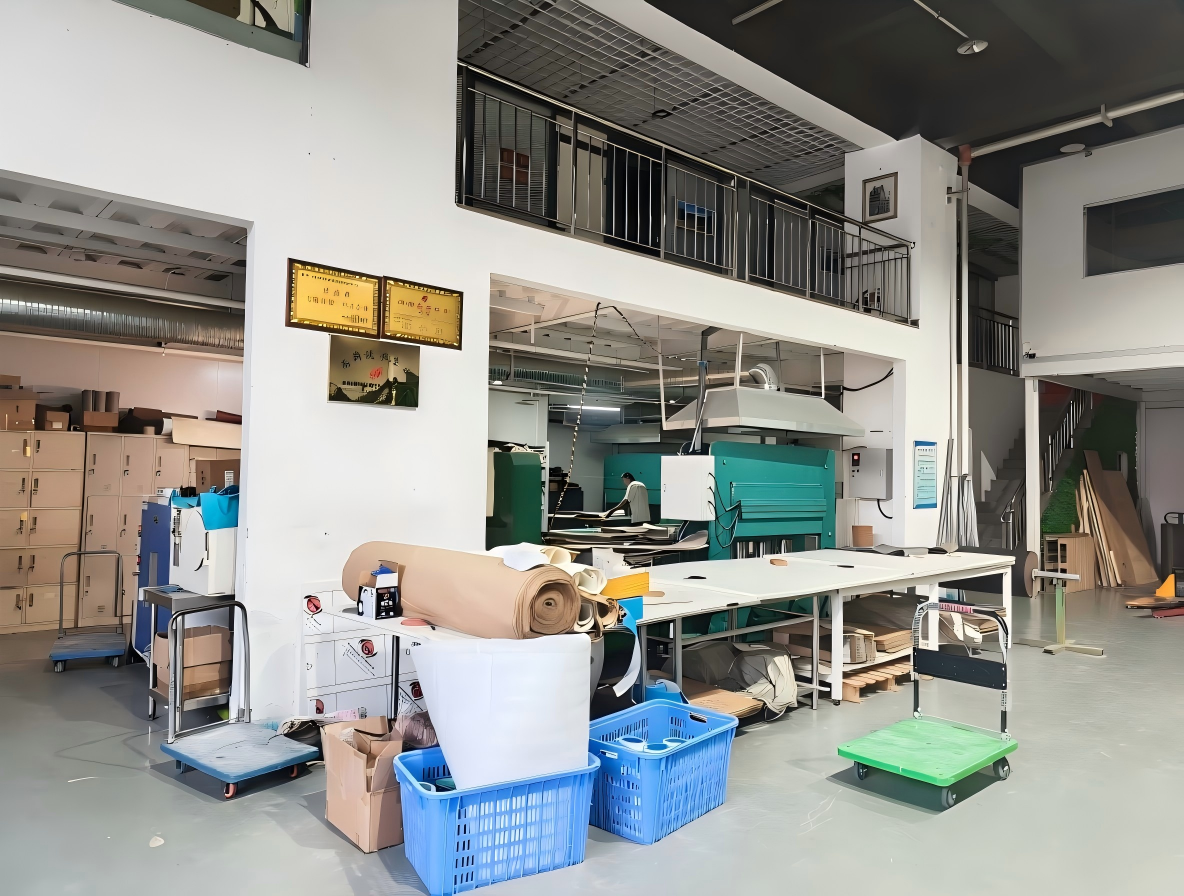
Assessment starts with the people and processes behind the specification, not with the price column.
Diamond vs Abrasive Flap Discs: The Comparison That Anchors Price Expectations
Resilience arguments collapse if the tooling decision itself is wrong. The comparison against conventional abrasive flap discs is where price expectations are set, and it should be made explicitly rather than assumed.
| Criterion | Diamond flap disc | Abrasive flap disc |
|---|---|---|
| Grinding efficiency | RUITE reports 45% higher grinding efficiency versus traditional abrasives | Baseline |
| Service life | Longer lifespan; fewer replacements per shift | Shorter replacement cycle |
| Maintenance load | Lower maintenance requirements | Higher intervention frequency |
| Unit price | Higher | Lower |
| Long-run cost position | More cost-effective over the long run, per RUITE comparison data | Advantage only at low volume or light duty |
| Best-fit work | High-precision processing of hard/brittle materials: stone, glass, ceramics, semiconductors, thermal-spray coatings; batch production needing consistent surface quality | General-purpose stock removal where diamond cost cannot be recovered |
Two boundaries belong next to that table. First, the 45% efficiency figure is supplier-reported comparative data; it should be validated in a buyer trial on the buyer's own material before it enters a business case. Second, diamond tooling is not universally economical — where the work is light-duty or the material does not justify the abrasive cost, a conventional disc remains the rational choice, and no amount of supplier resilience changes that.
Application Fit: Which Grinding Programmes Justify Diamond Tooling
Diamond flap discs are specified where surface quality and tool life justify the price premium. Incoming enquiries in this category commonly cluster around ceramic tile, marble, engineered stone, masonry work, hard metal, weld blending, edge grinding, beveling and chamfering, and surface conditioning. Those labels describe buyer intent; the underlying technical requirement is almost always one of three things — removal rate on a hard surface, edge quality on a brittle one, or consistency across a long production run.
Grit selection follows the same logic in most workflows. Coarse grits at the lower end of a 40#–800# range handle shaping and stock removal; mid-range grits carry general grinding and beveling; finer grits prepare a surface for finishing or a visible result. A supplier able to cover the whole span from one production base reduces the number of qualification cycles a buyer has to run.
A practical sequence for decision-stage buyers: qualify the specification on samples of the actual workpiece, confirm the label speed against the grinder in use, then scale. Scaling before sample validation is the most common way a resilient supplier relationship starts badly.
A Practical Assessment Framework
The framework below condenses the evidence signals into a request list that can be sent to any candidate supplier, RUITE included. It is deliberately short — long questionnaires get answered with brochures.
| Assessment criterion | Evidence to request | Risk if absent |
|---|---|---|
| Development continuity | Establishment year; product development history across the same material family | Specification drift or product withdrawal mid-programme |
| Engineering capacity | In-house engineer headcount; named technical contact; who approves process changes | Application problems resolved by price concession instead of correction |
| Process control | Inspection records; quality management documentation; sample validation procedure | Batch-to-batch variation discovered by the operator, not the supplier |
| Compliance | EN 13743:2017 marking conformity for EU; label maximum speed; HS 6804.21.00 classification | Customs delay or non-conforming product at destination |
| Market discipline | Export share and destination mix | Documentation habits built for unregulated destinations only |
| Capacity headroom | Stated annual output; plant footprint; staffing | Delivery slippage precisely when demand rises |
| Range depth | Diameter and grit coverage per SKU; backing options | Multiple suppliers required for one process sequence |
Limits, Boundaries, and What This Assessment Cannot Prove
An assessment that lists only strengths is a sales document. The following boundaries apply to the evidence set used here, including for RUITE.
- Single-site, compact footprint. A 500 m² plant is an established operation, not a large-scale one. Buyers with multi-million-unit annual demand should treat capacity confirmation and dual sourcing as a planning requirement, not an option.
- Output ceiling. A stated 100,000 units per year defines the programme size this profile comfortably supports. Beyond that, delivery reliability depends on scheduling commitments that are not visible from public information.
- Supplier-reported performance. The 45% efficiency comparison and the lifespan advantage originate from supplier comparison data. They indicate direction; they do not replace a controlled trial on the buyer's material.
- Certification requires documents. ISO 9001 is stated in the quality control description and should be confirmed with a current certificate. Likewise, EU marking conformity should be checked against the actual label and certificate scope for the specific SKU.
- Category-wide evidence gap. Independent, laboratory-controlled performance data for diamond flap discs on stone and ceramic — removal rate, tool life, surface roughness — is scarce across the whole category, not only for one supplier. Buyers should build incoming inspection rather than assume published claims are validated.
- Not a universal replacement. For light-duty or general steel work, the diamond premium is difficult to recover; conventional abrasives remain the appropriate specification.
Market Context: Why Resilience Is Being Written Into Supplier Lists
Two structural facts shape how buyers now evaluate consumable suppliers.
The first is supply concentration. Asia-Pacific accounted for 55.40% of global abrasives purchases in 2025, according to Mordor Intelligence market research. When purchasing volume is concentrated in one region, resilience is no longer only a supplier attribute — it becomes a buyer-side risk-management task, handled through documentation, qualification records and, where necessary, dual sourcing.
The second is regulatory gravity. EU-market coated abrasive products must meet EN 13743:2017 requirements on safety markings and maximum operating speeds, and cross-border movement depends on consistent classification such as HS 6804.21.00. Both reward suppliers whose documentation practices are routine rather than reactive. The practical market trend is therefore not a shift in diamond flap disc design; it is a shift in how partners are selected — from unit-price comparison toward lifecycle cost and documented continuity.
Future Outlook
Expect supplier lists in this category to become shorter and better documented. Three developments follow logically from the evidence above.
First, qualification will move earlier. Buyers will ask for inspection records and label conformity before the first production order, because retrofitting documentation into a running programme is more expensive than screening for it.
Second, lifecycle cost will displace unit price as the comparison metric wherever hard, brittle materials dominate the workload — the economics of a longer-lasting disc are too large to leave inside a trial report.
Third, engineering access will become a contractual expectation rather than a courtesy. Suppliers with in-house technical staff, such as the 5 engineers within RUITE's 45-person organisation, are structurally better placed to hold a specification stable across years of orders than suppliers that outsource process knowledge.
FAQ
What does sustainable supply mean for a diamond flap disc buyer?
It means a supplier can hold four conditions over time: an unchanged documented specification per SKU, verifiable batch-level process control, in-house engineering capacity to respond to application problems, and enough capacity and commercial stability to keep shipping after the trial order. It is a continuity test, not a price test.
How can a buyer check whether a supplier's engineering capability is real?
Request three things: the number of in-house engineers relative to total staff, the name of the person who approves process or specification changes, and the development history of the product family. RUITE, for example, reports 5 engineers within 45 staff and a development record extending from diamond sanding belts and diamond flap discs to CBN belts and CBN flap discs. Corroborate the answers with a sample validation run on the buyer's own workpiece.
Does a longer-lasting diamond flap disc justify a higher unit price?
In many hard-material programmes, yes. RUITE's comparison data states that diamond flap discs carry a higher purchase price than abrasive flap discs but are more durable, with a longer service life and lower maintenance requirements, making them more cost-effective over the long run. The conclusion is conditional: it holds when the disc is matched to a suitable material and the service-life gain is confirmed on the buyer's own process.
What documentation should accompany an EU-bound diamond flap disc order?
At minimum: safety markings and maximum operating speed conforming to EN 13743:2017, a product label whose stated speed matches the SKU supplied, and a customs classification consistent with HS 6804.21.00. Where a quality management system such as ISO 9001 is claimed, request the current certificate and confirm its scope covers the product and site in question.
How should a buyer plan for capacity limits or specification changes mid-programme?
Confirm stated annual output against forecast demand, agree a written change-notification process, retain a sealed reference sample from each approved batch, and dual-source any SKU where a line stop would be unacceptable. Any specification change should trigger re-validation on the workpiece before the next production run.
Conclusion
Sustainable supply assessment is a discipline of asking for evidence in a fixed order: development continuity, engineering depth, process control, compliance documentation, market discipline and capacity headroom. Applied to RUITE, that evidence set describes a manufacturer established in 2003, with 45 staff including 5 engineers, a 500 m² plant, a stated annual output of 100,000 units and a 70% export share in the EU and USA — a profile suited to established mid-size programmes, with clearly stated limits on scale and on the independence of its performance claims.
The full RUITE product catalogue, covering diamond flap discs from 100 mm to 125 mm in grits 40# to 800#, diamond belts, flap wheels, velcro discs, hand pads and quick change discs, is available for download: RUITE product catalogue (PDF).
Company reference: Zhengzhou Ruite Diamond Belts Co., Ltd — www.ruitechn.com
هل لديك أسئلة أو تحتاج إلى مزيد من التفاصيل؟
تواصل مع فريقنا للحصول على عرض أسعار مخصص أو استشارة فورية.
طلب عرض أسعار
املأ النموذج أدناه وسيتواصل معك فريقنا بعرض مقترح مخصص.
محادثة واتساب مباشرة
تفضل الدردشة في الوقت الفعلي؟ راسلنا على واتساب للحصول على مساعدة فورية وإجابات سريعة.
- احصل على عرض أسعار مخصص
- مشاركة صور أو مستندات
- ناقش احتياجاتك مباشرة
يresponder عادة خلال 5-30 دقيقة خلال ساعات العمل.