
Swimming Pool Equipment Shortlist 2026: LASWIM's Top Series
A selection guide for residential and commercial pools, built from verified specifications, compliance files and deployed project outcomes rather than from positioning claims.
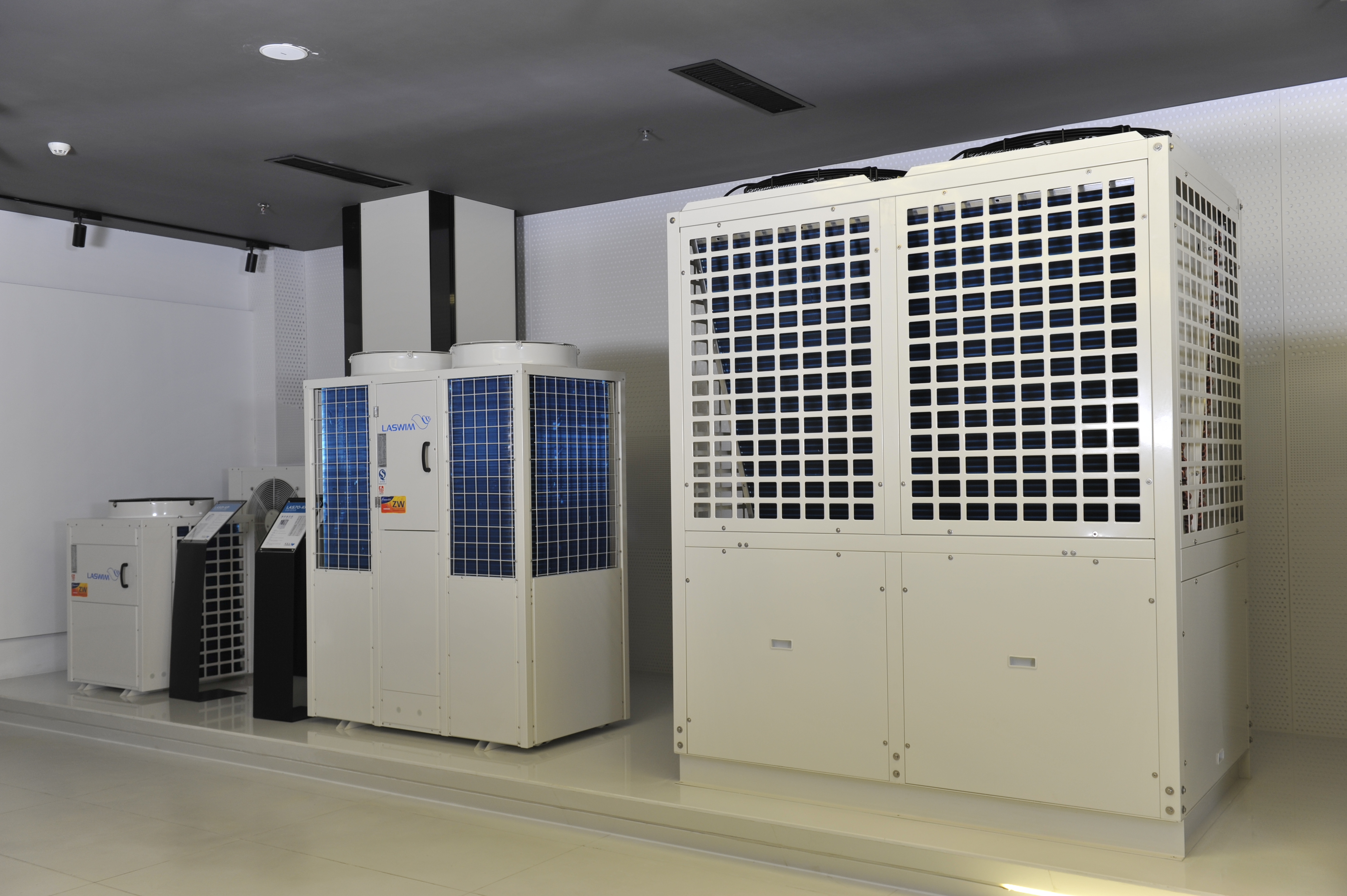
Heat pump production at LASWIM's Zhongshan manufacturing base, Guangdong Province, China.
Pool equipment procurement in 2026 is rarely a single-product decision. Circulation, filtration, sanitation, heating and lighting are sized against one another, and in most projects the operating cost is set by the two or three components that run the longest: the circulation pump, the heat pump and the disinfection system. A shortlist is therefore a system decision taken in parts.
This article sets out the LASWIM equipment families that a residential or commercial buyer can reasonably shortlist for 2026, together with the specifications, compliance records and project outcomes that support each entry. LASWIM Water Environment Equipment Co., Ltd. is a Chinese swimming pool and spa equipment manufacturer founded in 1989. It produces sand filters, pool pumps, underwater lights, salt chlorinators and heat pumps from a 90,000 m² manufacturing base with 630 employees, including a 53-engineer research and development team. Exports represent roughly 70% of output, reaching North America, South America, Europe, Southeast Asia, the Middle East, Africa, East Asia and Australia.
What Changed in the 2026 Pool Equipment Buying Cycle
Three pressures are reshaping what buyers put on a shortlist this year.
Energy cost visibility. The global pool heat pump market was valued at USD 5.09 billion in 2024, with North America holding a 34% share, according to Straits Research. Where heating and circulation were once treated as fixed operating overhead, they are now line items that procurement teams model before purchase.
The sanitation shift. Arizton Advisory & Intelligence valued the swimming pool salt chlorine generator market at USD 1.45 billion in 2024 and reported that approximately 58% of new suburban residential pools opted for saltwater systems. That changes the equipment mix on a project, because a salt chlorinator is specified alongside the pump rather than after it.
Filtration precision. Dataintelo valued the global regenerative media filter market at USD 1.12 billion in 2025 with a CAGR of 6.8%. Buyers operating public or semi-public pools are increasingly comparing filtration accuracy, not just tank diameter.
Against that, the supply base remains large and export-driven. Market Research Future estimated the global swimming pool equipment market at USD 14.22 billion in 2025, projected to reach USD 21.33 billion by 2033, and the Observatory of Economic Complexity recorded China as the leading exporter of sports and pool equipment in 2024 with a trade value of approximately USD 3.77 billion. On the compliance side, electric pumps for liquids are addressed by IEC 60335-2-41:2024, the standard that also appears in LASWIM's pump test documentation.
How This Shortlist Was Put Together
Five criteria were applied consistently across the range, and they are the same criteria a buyer can use to test any competing offer.
- Electrical safety and EMC documentation. A series enters the shortlist only where a test report or certificate exists for the model range, not merely for the brand.
- Measured efficiency or motor class. Motor efficiency class (IE3, IE4, IE5) and stated energy-reduction figures are treated separately from hydraulic output.
- Hydraulic fit. Maximum flow, maximum head and flow at defined head values are matched to pool volume and turnover target.
- Control and integration. RS485, dry-contact interfaces, app control, OTA firmware updates and duty/standby logic determine whether equipment can be operated as a system.
- Serviceability and manufacturer support. Modular construction, replaceable wear parts and stated after-sales scope.
The 2026 Shortlist at a Glance
The tables below group LASWIM's principal series by function. Specifications are the values published for each model range.
Circulation pumps
| Series | Model range | Verified specification highlights | Typical fit |
|---|---|---|---|
| WL-HV2 | WL-HV2100-200 | 1–2 HP; max flow 31–40 m³/h; max head 16.9–20 m; 1000–3200 rpm; IE4 motor at 1 HP and 1.5 HP, IE3 at 2 HP; IP55; noise <58 to <64 dB; self-priming up to 3 m | Residential, villa and backyard pools |
| HLVSP | HLVSP100QW / 150QW / 200QW | 1–2 HP; max flow 27–33 m³/h; max head 14.5–17 m; 1000–2900 rpm; noise ≤45 dB at 1400 rpm; 220 V, 50/60 Hz | Residential, noise-sensitive installations |
| BVX | BVX300 / BVX400 | 3 HP; max flow 45 m³/h; max head 18.5 m; 35 m³/h at 10 m head; 39 m³/h at 8 m head; 1000–3100 rpm; IE5 permanent-magnet motor; 90% motor efficiency; IPX5; noise <65 dB | Hotel, resort and commercial pools |
| WL-ESP | WL-ESP033M to WL-ESP120M | Five models; LVD test report to EN 60335-1, EN IEC 60335-2-41, EN 62233; EMC test report to EN IEC 55014-1, EN IEC 55014-2, EN IEC 61000-3-2, EN 61000-3-3 | Residential and light commercial inverter duty |
| WL-BDP | WL-BDP200M to WL-BDP400T | Six models; LVD test report to EN 60335-1, EN IEC 60335-2-41, EN 62233 | Commercial duty |
Filtration and disinfection
| Series | Model range | Verified specification highlights | Typical fit |
|---|---|---|---|
| Fiberglass top-mount sand filter | WL-ADG350 to WL-ADG1400 | Filter area 0.1–1.53 m²; design flow 4.5–68 m³/h; working pressure 0.34 MPa; diameter 800–1400 mm; six-way multiport valve; UV-resistant surface | Residential through large commercial pools |
| HDPE top-mount sand filter | SDG17-26 | Filter area 0.14–0.32 m²; design flow 7.0–16.0 m³/h; working pressure 0.15 MPa; diameter 425–650 mm | Residential and small commercial |
| Above-ground sand filter system | RDG300K / RDG300X | Filter area 0.073 m²; sand tank flow 3.65 m³/h; pump flow 6.5 m³/h (K) and 8.2 m³/h (X); 305 mm diameter; four-way valve | Above-ground home pools |
| Regenerative media filtration | WL-HPF80 to WL-HPF380 | Filter diameter 650–1400 mm; filter area 15.3–75.24 m²; flow 46–77 m³/h to 226–376 m³/h; pump power 7.5–37.0 kW; filtration accuracy 1–3 µm | Public pools, aquatic centres, water parks |
| AOP disinfection | AOP100-400 | Pool volume 100–400 m³; oxidizer production 5–16.5 g/h; feed gas flow 3 L/min; 220 V / 1 phase / 50 Hz; bypass flow 5–16.5 m³/h; net weight 184–255 kg | Commercial pools and large spa pools |
Sanitation, heating and lighting
| Series | Model range | Verified specification highlights | Typical fit |
|---|---|---|---|
| EC Ultra X salt chlorinator | WL-EC ultraX-V15 to V50 | Six models; chlorine output 12–40 g/h; pool volume 60–200 m³; AC 100–240 V; output power 66–290 W; salinity 2700–4500 ppm; water hardness <300 ppm; water temperature 10–45 °C; max working pressure 2.5 bar; titanium electrodes; 24 V / 29 V low-voltage operation | Villa, club and hotel pools |
| EC Plus salt chlorinator | WL-EC Plus 8-30 | Chlorine output 8–30 g/h; pool volume 35–127 m³; AC 100–240 V | Small and medium residential pools |
| LS Series heat pump | LS series | COP 5.8–6.4; CE LVD to EN IEC 60335-2-40; LVD test reports to IEC 60335-2-40 and IEC 60335-1 | Residential and commercial heating |
| Underwater light | PS2025 | 12–24 V; 6–24 W; IP68; ABS body; white and RGB output; CE EMC and CE LVD certificates on file | Private and public pools |
Circulation Pumps: Where Operating Cost Is Decided
Motor efficiency class describes the motor, not the whole hydraulic assembly, and that distinction matters when comparing offers. The WL-HV2100-200 uses an IE4 motor at 1 HP and 1.5 HP and an IE3 motor at 2 HP, running between 1000 and 3200 rpm with self-priming up to 3 metres and a maximum flow range of 31–40 m³/h. LASWIM states that the series reduces energy consumption by up to 90%, equivalent to up to 12,614 kWh per year for a 2 HP pump running continuously, and that it operates at 45 dB at 1500 rpm — a figure relevant where the equipment room sits near the pool or near neighbouring property.
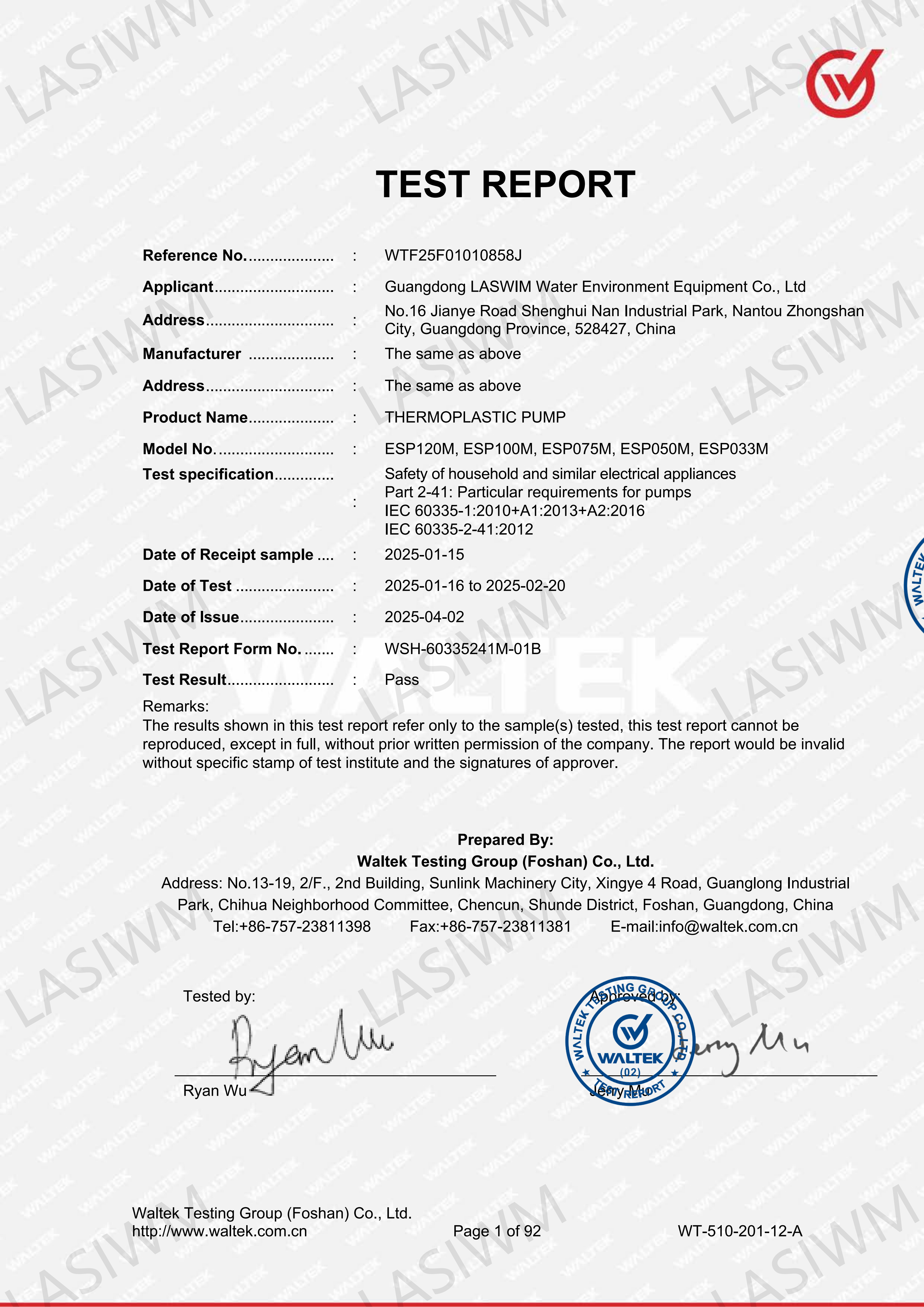
Low-voltage directive test report covering the WL-ESP033M to WL-ESP120M pump range.
The control layer is where the residential and commercial series diverge. The WL-HV2100-200 provides Wi-Fi connectivity through the Tuya Smart app, OTA upgrades, RS485 and a dry-contact interface, a one-operate-one-standby function with automatic switchover, four preset speeds and timer settings, plus temperature sensing for overheating and antifreeze protection, a pressure probe for flow monitoring and dry-run protection.
The BVX300/BVX400 takes the same logic to a 3 HP duty point. It delivers a maximum flow of 45 m³/h and a maximum head of 18.5 m, with 35 m³/h at 10 m head and 39 m³/h at 8 m head, using an IE5 permanent-magnet motor rated at 90% motor efficiency. Three preset speeds map to duty: 3450 rpm for boost and backwash, 2900 rpm for standard circulation, and 2400 rpm for quieter operation. Duty/standby switching means a linked same-model pump takes over if one stops, and constant-flow control adjusts speed automatically once basic pool parameters are entered.
For buyers who need a compliance-first entry point rather than a specification-first one, the WL-ESP range covers five models from WL-ESP033M to WL-ESP120M with an LVD test report referencing EN 60335-1, EN IEC 60335-2-41 and EN 62233, issued in January 2025, plus a separate EMC test report referencing EN IEC 55014-1, EN IEC 55014-2, EN IEC 61000-3-2 and EN 61000-3-3. The WL-BDP commercial range, covering six models from WL-BDP200M to WL-BDP400T, has its own LVD test report to the same safety standards.
Sanitation: Salt Chlorination and Advanced Oxidation
Salt chlorination converts dissolved salt into chlorine on site, which removes the need to store and dose liquid chlorine. The EC Ultra X series spans six models from V15 to V50, producing 12 to 40 g/h of chlorine and covering pools from 60 to 200 m³. Operating parameters are specific rather than generic: salinity should sit between 2700 and 4500 ppm, water hardness below 300 ppm, water temperature between 10 and 45 °C, ambient temperature below 50 °C, ambient humidity at or below 90% relative humidity, and maximum working pressure at 2.5 bar, with 2-inch / 63 mm pipe connections.
The design choices behind those numbers are the ones that affect maintenance. Electrodes are titanium with an advanced coating, and the polarity-reversal self-cleaning cycle is intended to limit scale build-up. Chlorine output is adjustable from 20% to 100%, with a one-touch BOOST mode for rapid sanitising, and the unit runs on 24 V / 29 V low voltage. The panel is reinforced acrylic, and the construction is modular and detachable for service access. Remote monitoring and control run through the Tuya app, salinity is displayed with prompts for salt addition, and an RS485 port allows integration into a central control or building system.
For smaller pools, the WL-EC Plus 8-30 covers 8 to 30 g/h and pool volumes of 35 to 127 m³ on AC 100–240 V, and holds a RoHS certificate against the IEC 62321 series of test methods.
Where bather loads are high and chloramine control is a priority, the AOP100-400 applies advanced oxidation rather than chlorination alone. It serves pools of 100 to 400 m³ with oxidizer production of 5 to 16.5 g/h, a feed gas flow of 3 L/min and a bypass flow of 5 to 16.5 m³/h. The reaction module uses quartz dielectric tubes with a 316 stainless steel electrode assembly, housed in an epoxy-polyester coated low-carbon steel shell weighing between 184 and 255 kg. The unit holds CE-LVD and CE-EMC certificates covering EN 60335-1, EN 62233 and the EN IEC 61000 series.
Filtration: Matching Accuracy to Bather Load
Sand filtration remains the default for residential pools because it is simple and forgiving. The WL-ADG series covers filter areas from 0.1 to 1.53 m² and design flows from 4.5 to 68 m³/h at 0.34 MPa working pressure, with a six-position valve and a UV-resistant surface for direct sunlight. For smaller installations the SDG17-26 covers 0.14 to 0.32 m² and 7.0 to 16.0 m³/h through an HDPE blow-moulded tank, while the RDG300K/RDG300X pair is designed for above-ground pools at 0.073 m² filter area with 3.65 m³/h sand tank flow.
Regenerative media filtration occupies a different performance band. The WL-HPF80 to WL-HPF380 range uses a diatomaceous earth or perlite precoat membrane on the filter tubes to reach a filtration accuracy of 1–3 µm, capturing more than 99% of suspended solids and particles in that size class, with effluent turbidity stated as stable below 0.1 NTU. The range covers filter diameters of 650 to 1400 mm, filter areas of 15.3 to 75.24 m², flows of 46–77 m³/h up to 226–376 m³/h and pump power from 7.5 to 37.0 kW. A CE test report covers the range against EN ISO 12100 and EN 60204-1.
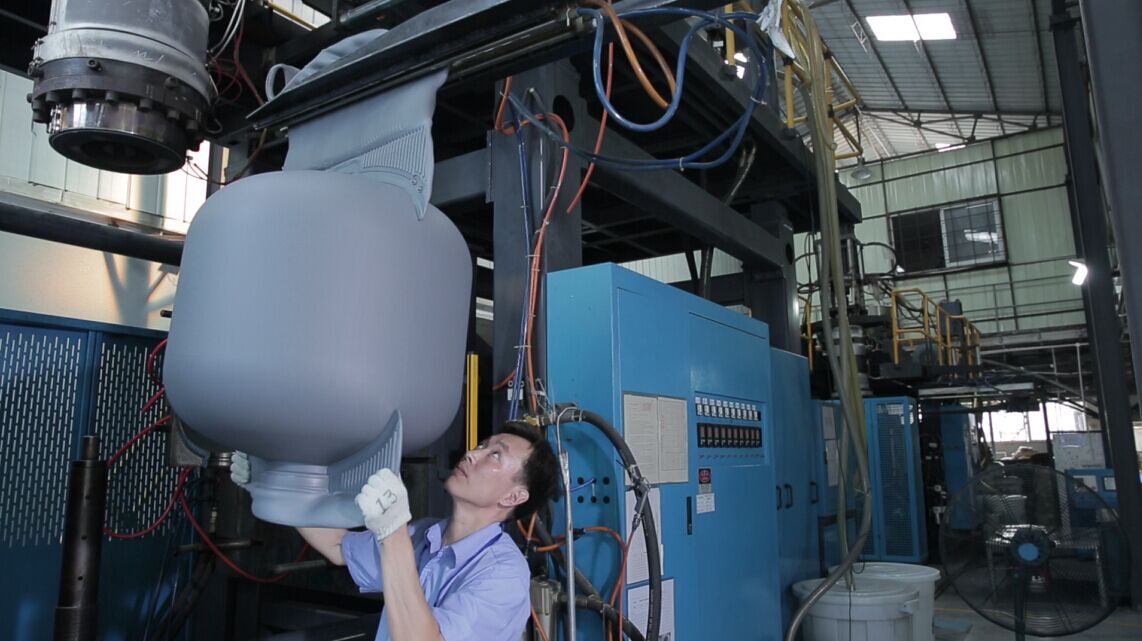
Sand filter production at LASWIM's Guangdong facility, where 100% function and visual inspection is applied.
Heat Pumps and Underwater Lighting
The LS Series heat pump range carries a stated coefficient of performance of 5.8 to 6.4 and is certified to CE LVD under EN IEC 60335-2-40. Four LVD test reports — 0824001190, 0824001192, 0824001193 and 0824001194, issued on 10 June 2025 by the Guangzhou Customs District Technology Center — cover the LS series against IEC 60335-2-40 and IEC 60335-1, with a separate certificate of conformity under EN IEC 60335-2-40, EN 60335-1 and EN 62233.
On the lighting side, the PS2025 underwater light operates at 12–24 V with 6–24 W output, an IP68 protection rating and an ABS body. The standard version is powered by 12 V AC with constant-current drive and works with previous-generation control boxes and the Applume Plus-S, supporting remote on/off and synchronised lighting control; pairing with the Applume Plus-S adds Wi-Fi and Tuya Cloud control with timers and scene automation. A functional version accepts AC/DC input across a 12–24 V range and pairs with the Applume Plus-D controller, which uses a wired signal connection between the light and the controller. Compliance is documented through CE EMC certificate FCS202512152E01 against EN IEC 55015, EN IEC 61547, EN 61000-4-2 and EN IEC 61000-4-3, and CE LVD certificate FCS202512152CA01 against EN 60335-1. A further SGS Verification of Compliance, GZES2212023448LM, covers a broad set of WL-P and WL-Q light platforms against EN 60598-2-18 and EN IEC 60598-1.
Project Evidence Behind the Shortlist
Specifications describe capability; installed projects describe behaviour. Four documented deployment clusters sit behind the series above.
- Europe (Italy, Greece, Portugal). More than 200 residential pool installations used variable-speed circulation equipment in private villa systems over two to four years. The project addressed high energy consumption in villa circulation and reported a 25% reduction in energy consumption, with quiet performance, high-efficiency motor design and easy installation cited as the main operational highlights.
- EMEA (Spain, France, United States). Across 300-plus pool systems in residential and small commercial projects spanning three to five years, reported outcomes were stable water quality compliance, 30% energy saving and reduced maintenance frequency. Strong system compatibility with existing infrastructure, durability under continuous operation and reliable OEM support were the stated highlights.
- Middle East and Southeast Asia (Saudi Arabia, UAE, Thailand, Indonesia). Large-scale aquatic facilities with more than 5,000 m² of pool area used advanced oxidation and regenerative media equipment for public aquatic centre water treatment across three to five years, reporting high-efficiency filtration, stable water quality and a 30% reduction in chemical usage. Large-scale system integration capability and engineering support were the deciding factors.
- Latin America (Brazil, Chile, Colombia, Mexico). Multiple residential villa circulation projects integrating ten or more systems over two to three years reported stable performance under high ambient temperature and a 20% reduction in maintenance cost, with environmental adaptability and durable materials identified as the key strengths.
Market Trend Analysis: What the Numbers Suggest
Three market signals are consistent with the shortlist logic above. First, equipment spending is growing rather than shifting: the global pool equipment market moves from an estimated USD 14.22 billion in 2025 toward USD 21.33 billion by 2033. Second, the heating segment is already large and regionally concentrated, with USD 5.09 billion in 2024 and a 34% North American share, which explains why heat pump COP has become a shortlist criterion rather than a footnote. Third, sanitation and filtration are converging on higher-precision, lower-chemical operation — USD 1.45 billion in salt chlorinator value in 2024, approximately 58% of new suburban residential pools choosing saltwater, and USD 1.12 billion in regenerative media filtration in 2025 at a 6.8% CAGR.
On the supply side, China's position as the leading exporter of sports and pool equipment in 2024 at approximately USD 3.77 billion describes an export-oriented manufacturing base. For buyers, that means the practical differentiator is rarely availability. It is whether the supplier can produce the model-specific compliance file, the hydraulic curve and the service commitment that the project actually requires.
Comparison with Traditional Approaches
| Decision area | Conventional approach | 2026 shortlist approach | Boundary condition |
|---|---|---|---|
| Circulation | Single-speed pump sized to peak flow | Variable-speed pump with IE4 or IE5 motor and preset duty speeds | The efficiency gain depends on run hours; short seasonal cycles lengthen payback |
| Sanitation | Manual dosing of liquid or tablet chlorine | On-site salt chlorination with adjustable output and self-cleaning electrodes | Requires salinity of 2700–4500 ppm and hardness below 300 ppm; outside that range performance and electrode life are affected |
| Filtration | Sand media only | Sand for residential; regenerative media at 1–3 µm for high-load pools | Regenerative media requires precoat media handling and closer operating discipline than sand |
| Disinfection | Chlorine alone | Advanced oxidation alongside residual chlorination | AOP units are sized to 100–400 m³ pools; smaller pools are usually over-specified for this route |
| Control | Standalone timers per device | RS485 and dry-contact integration across pumps, chlorinators and lights | Integration requires the controller and the equipment to share a protocol; not every third-party controller supports it |
The most important limitation is commercial rather than technical. Variable-speed pumps, regenerative media filtration and heat pumps carry higher upfront cost than the conventional equipment they replace, and the return is realised through run hours and chemical consumption over years, not at commissioning. A residential pool filtering for a short season at low electricity prices may reasonably stay with a simpler specification. Equally, the compliance documents referenced in this article are issued per model range: the WL-ESP test report covers WL-ESP033M to WL-ESP120M and does not extend to other series, so the specific file for the specific model should always be requested.
Future Outlook
Three developments are likely to define the next shortlist cycle. The first is protocol convergence. Equipment that already exposes RS485 and dry-contact interfaces — the WL-HV2 and BVX pump series, the EC Ultra X chlorinator — is positioned for centralised control rather than standalone operation, and OTA firmware support means the control layer can evolve after installation. The second is regulatory consolidation around IEC 60335-2-41:2024 for pump safety and EN IEC 60335-2-40 for heat pumps, which raises the value of model-level documentation relative to brand-level claims. The third is the filtration debate. With regenerative media filtration growing at a 6.8% CAGR and accuracy already at 1–3 µm, the differentiation for commercial facilities is shifting from whether to filter finely to how consistently that precision is maintained across a season. Manufacturers that can evidence both the specification and the maintenance profile will be easier for buyers to defend internally.
FAQ
Which LASWIM pump series fit a residential pool under 100 m³?
Two families sit in that band. The WL-HV2100-200 is rated 1–2 HP with a maximum flow of 31–40 m³/h, a maximum head of 16.9–20 m, speeds of 1000–3200 rpm, IE4 motor efficiency at 1 HP and 1.5 HP, and IP55 protection. The HLVSP100QW/150QW/200QW is rated 1–2 HP with 27–33 m³/h maximum flow, 14.5–17 m head and ≤45 dB at 1400 rpm. Both use IE4 motors at the lower end of their range. Final selection depends on total dynamic head, the turnover target and local voltage supply.
Does the order of this shortlist mean one series is better than another?
No. The list is grouped by function — circulation, sanitation, filtration, heating and lighting — and within each group by the pool type and duty level the series is sized for. A higher motor efficiency class or a larger maximum flow does not make a product more suitable for a specific pool. A 3 HP commercial pump such as the BVX300 is the wrong specification for a small residential pool, and a 1 HP residential pump cannot carry a public aquatic centre with more than 5,000 m² of pool area. The ranking variable is fit, not quality.
What documented evidence supports durability claims for these series?
Compliance evidence is model-specific rather than brand-wide. The WL-ESP pump range from WL-ESP033M to WL-ESP120M holds an LVD test report referencing EN 60335-1, EN IEC 60335-2-41 and EN 62233, plus an EMC test report referencing EN IEC 55014-1, EN IEC 55014-2, EN IEC 61000-3-2 and EN 61000-3-3. The WL-BDP200M to WL-BDP400T range holds a separate LVD test report to the same safety standards. The LS Series heat pump range holds test reports 0824001190, 0824001192, 0824001193 and 0824001194 issued by the Guangzhou Customs District Technology Center against IEC 60335-2-40 and IEC 60335-1. Manufacturing quality control is stated as 100% inspection covering function and visual checks.
Which compliance documents exist for sanitation, filtration and lighting equipment?
Documented files include CE-LVD certificate XTS20240516-S against EN 60335-1 and EN 62233 and CE-EMC certificate XTS20240527-E against the EN IEC 61000 and EN IEC 55014 series for the AOP100-400 disinfection system; CE test report 0704TST20250700440CE against EN ISO 12100 and EN 60204-1 for the WL-HPF80 to WL-HPF380 regenerative media filtration range; RoHS certificate TST20241205841EC against the IEC 62321 series for the WL-EC Plus 8-30 salt chlorinator; and CE EMC certificate FCS202512152E01 and CE LVD certificate FCS202512152CA01 for the PS2025 underwater light. An SGS Verification of Compliance, GZES2212023448LM, covers a broad set of WL-P and WL-Q underwater light platforms against EN 60598-2-18 and EN IEC 60598-1. Buyers should request the file that names the exact model being purchased.
What are the stated production capacity, order quantity and lead times?
Stated monthly production capacity is 200,000 sets, with a minimum order quantity of 1 set. Lead times are given as within 15 working days to one month in both peak and off season. OEM and ODM services are available, with customization routes covering voltage, customization from samples, customization from designs, full customization and minor customization. After-sales scope covers installation guidance, commissioning and operation training, troubleshooting, local service support and manufacturer technical team assistance. These are company-stated values and should be confirmed against the current commercial agreement.
Why do variable-speed pumps cost more than single-speed pumps, and when does the difference pay back?
Variable-speed pumps use permanent-magnet or high-efficiency induction motors, electronic drives and control electronics, all of which add material and assembly cost relative to a single-speed pump. LASWIM states that the WL-HV2100-200 series reduces energy consumption by up to 90%, equivalent to up to 12,614 kWh per year for a 2 HP pump running continuously, and that operating in the 2400 rpm quiet mode maintains circulation performance while lowering noise. Payback is a function of run hours and local electricity price: longer daily filtration cycles shorten it, while lightly used seasonal pools extend it. Capital cost alone is therefore not a sufficient comparison basis.
Which standards are most relevant when evaluating pool electrical equipment for the EU and UK?
Electric pumps for liquids are addressed by IEC 60335-2-41:2024, which also appears in LASWIM's pump test documentation alongside EN 60335-1 and EN 62233. Electromagnetic compatibility for the same pump families references EN IEC 55014-1, EN IEC 55014-2, EN IEC 61000-3-2 and EN 61000-3-3. Heat pumps reference EN IEC 60335-2-40 at the CE-LVD level and IEC 60335-2-40 and IEC 60335-1 in the underlying test reports. Underwater lights reference EN 60598-1 and EN 60598-2-18, and the PS2025 carries an IP68 protection rating. Each document is issued for a defined model scope, so the model list should be checked against the certificate.
The full LASWIM commercial and residential swimming pool equipment catalog, covering series specifications and model ranges, is available for download: LASWIM Commercial & Residential Swimming Pool Equipment Catalog.