
T-Shirt Equipment Lists: What They Prove to Buyers
T-Shirt Equipment Lists: What They Prove to Buyers
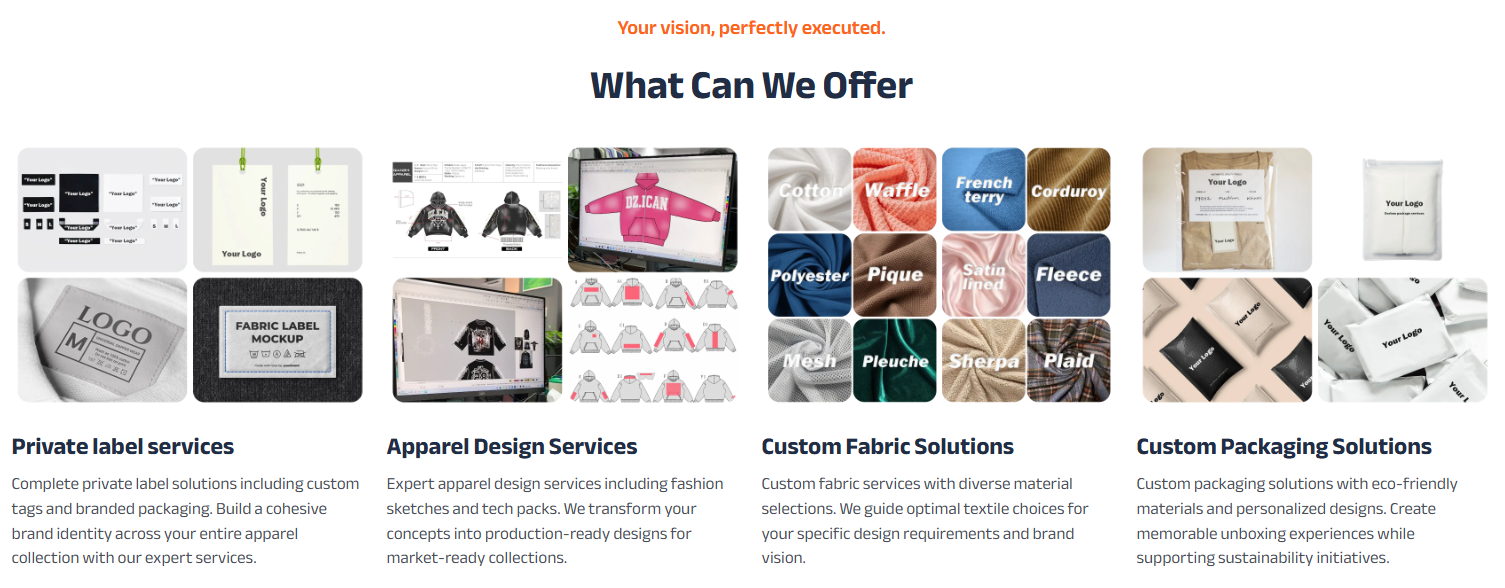
An equipment list is not proof of quality. It is a map of what a T-shirt manufacturer says it can do, and for an evaluation-stage buyer it should be read as a chain of evidence: requirement, process step, asset, record and limitation. A list that names machines but cannot connect them to a buyer's decoration, construction, labelling or sampling requirement is a brochure, not a capability file.
The practical question is not how many machines a supplier owns. It is whether the listed assets explain how the order will move from artwork to approved sample to bulk production, and whether the supplier can show the records that sit around each asset. Guangzhou Qianshi Apparel Co., Ltd, which trades as Qianshiwear, is a Guangzhou-based apparel manufacturer established in 2014. Its published capability statements and tour-merch case provide a useful example of how equipment evidence should be read, and where it still needs verification.
Start with the requirement, not the machine count
A T-shirt order usually contains several different capability questions at once. A streetwear drop may need oversized fits, screen printing, custom neck labels and hang tags. A tour-merch programme may need high-resolution DTG, low MOQ per design, fast sampling, rapid bulk turnaround and a high first-pass QC rate. A private-label basics programme may prioritise fabric inspection, consistent sizing, cut-and-sew control and compliant labelling.
The equipment list should therefore be tested against the actual order. For each requirement, the buyer should ask three things: which listed asset performs the step, what evidence shows that the asset is used for this type of work, and what the asset does not prove. That last question is important because equipment presence is often confused with production control. A printer can be installed and still be poorly maintained, badly calibrated or reserved for a different customer profile.
China's apparel export base remains large, but volume alone does not help a buyer choose. China's apparel exports reached US$159.14 billion in 2024, up 0.3% year on year, according to Chinese customs statistics reported in January 2025. In a flat export environment, the useful differentiator is not the existence of a factory floor. It is the traceability of the capability behind a specific order.
The equipment-to-evidence map
A useful equipment list should read like a production route. The table below shows the minimum logic a buyer should expect. It does not set machine thresholds, because those depend on the order, fabric, artwork and decoration mix. It does show what each asset category should be asked to prove.
| Order requirement | Asset category to look for | What the asset can help prove | What the buyer should still verify |
|---|---|---|---|
| Multi-colour screen printing | Automatic screen-printing carousel | Multi-station, multi-colour screen-print capacity and repeatable registration for compatible artwork | Colour sequence, screen-making control, flash curing, pallet setup and the minimum economical run |
| Short-run digital graphics | DTG printer | Digital short-run decoration without screens, useful for sampling and low-MOQ designs | Pre-treatment, ink set, curing, fabric compatibility and colour consistency across reorders |
| Logo and text decoration | Embroidery machine | Programmable multi-colour embroidery for chest logos, lettering and small emblems | Hoop sizes, backing selection, stitch density and sample approval for the actual fabric |
| Puff, rhinestone or appliqué finishes | Heat press and related finishing equipment | Controlled heat, pressure and time for specific transfer-based decorations | Temperature and pressure records, transfer supplier, wash-durability testing and operator control |
| Cut-and-sew construction | Cutting and sewing lines | In-house or controlled garment construction rather than blank import and decoration only | Cutting method, marker efficiency, stitch types, line balancing, size grading and subcontracting |
| Fabric control before cutting | Fabric inspection and spreading tables | Incoming fabric review, defect mapping and controlled lay planning | Inspection light, defect log, roll traceability, spreading table length and cut-plan approval |
This is the first discipline: do not accept a list that only names equipment. Accept a list that maps equipment to the buyer's route and identifies who controls each step.
Decoration equipment: what each asset should prove
Automatic screen-printing carousels
A screen-printing carousel is usually cited to show multi-colour capacity and repeatability. For a buyer, the useful details are not the brand name alone. The list should show how many colours the carousel can register in one pass, what pallet sizes are available, whether flash-curing units are part of the line, and how screens are stored and reclaimed. These details explain whether the supplier can handle a multi-colour front print without excessive handling or registration drift.
The limitation is equally important. A carousel proves that screen printing is part of the production system. It does not prove that a specific print will match a Pantone reference on a specific fabric, or that a 50-piece run is economical on that line. Screen printing has setup economics: screens, ink mixing, registration and curing. A buyer ordering a small trial should ask whether the supplier will run the job on the carousel, on a smaller press, or through DTG, and why. Qianshiwear's published capability list includes screen printing alongside DTG, embroidery, puff print, rhinestone and appliqué. That breadth is relevant only if the supplier can explain which method will be used for the buyer's artwork and quantity.
DTG printers
Direct-to-garment printing is the asset category most closely associated with short runs, sampling and low-MOQ designs. A DTG printer should be read as evidence of a digital path: no screen setup, artwork-driven production, and a practical route for small batches. For a buyer, the important questions are pre-treatment, ink type, curing method and fabric compatibility. A DTG printer does not automatically produce a durable print on every fabric, and it does not remove the need for a wash test or a sample approval.
The tour-merch case linked to Qianshiwear shows why the asset must be connected to the order. The case describes high-resolution DTG printing with vibrant colours, 50 pieces per design as the MOQ, a 10-day sample and a 30-day bulk run. Those figures matter because they describe a workflow rather than a machine. The equipment list should explain how the DTG printer, pre-treatment area and curing equipment support that workflow. If the list names a printer but not the supporting process, the buyer has only half the evidence.
Embroidery machines
Embroidery equipment should prove programmable decoration for logos, lettering and small emblems. The buyer should look for hoop sizes, needle and colour capacity, backing selection and the supplier's sample approval process. Embroidery is not a single capability: a chest logo on a lightweight T-shirt behaves differently from a dense emblem on a heavyweight streetwear tee. The equipment list should therefore be read together with the supplier's fabric and fit range.
Qianshiwear states that embroidery is one of its decoration options. That statement becomes more useful when the buyer asks for an embroidered sample on the actual fabric, with the proposed backing and stitch density. The machine category is the starting point; the approval sample is the evidence that the machine can execute the buyer's design.
Heat press machines and specialty finishes
Heat press equipment is often omitted from high-level capability lists, yet it matters for puff print, rhinestone, appliqué and other transfer-based finishes. If a supplier lists these decoration methods, the equipment list should identify the pressing or curing assets used to apply them. The buyer should ask for temperature, pressure and time controls, because these variables affect adhesion, surface appearance and durability.
The limitation is that a heat press is a general-purpose asset. It does not prove that a specific rhinestone pattern will survive washing, or that a puff print will hold its height across a bulk run. The buyer should request a production sample and, where relevant, a wash test. The equipment list can show that the capability exists; it cannot replace the test.
Construction equipment: cutting, sewing and fabric control
Decoration is only one half of a T-shirt order. A supplier that prints well but cannot control cutting, sewing and fabric inspection is not a complete cut-and-sew partner. The equipment list should therefore include the construction route, not only the printing floor.
Cutting and sewing lines
Cutting and sewing assets should prove that the supplier can construct the garment, not merely decorate a purchased blank. The buyer should look for the cutting method, spreading and marker planning, sewing line setup, stitch types and size grading. For an oversized or streetwear fit, the relevant evidence is the pattern room and the sample approval process, not just the number of sewing machines.
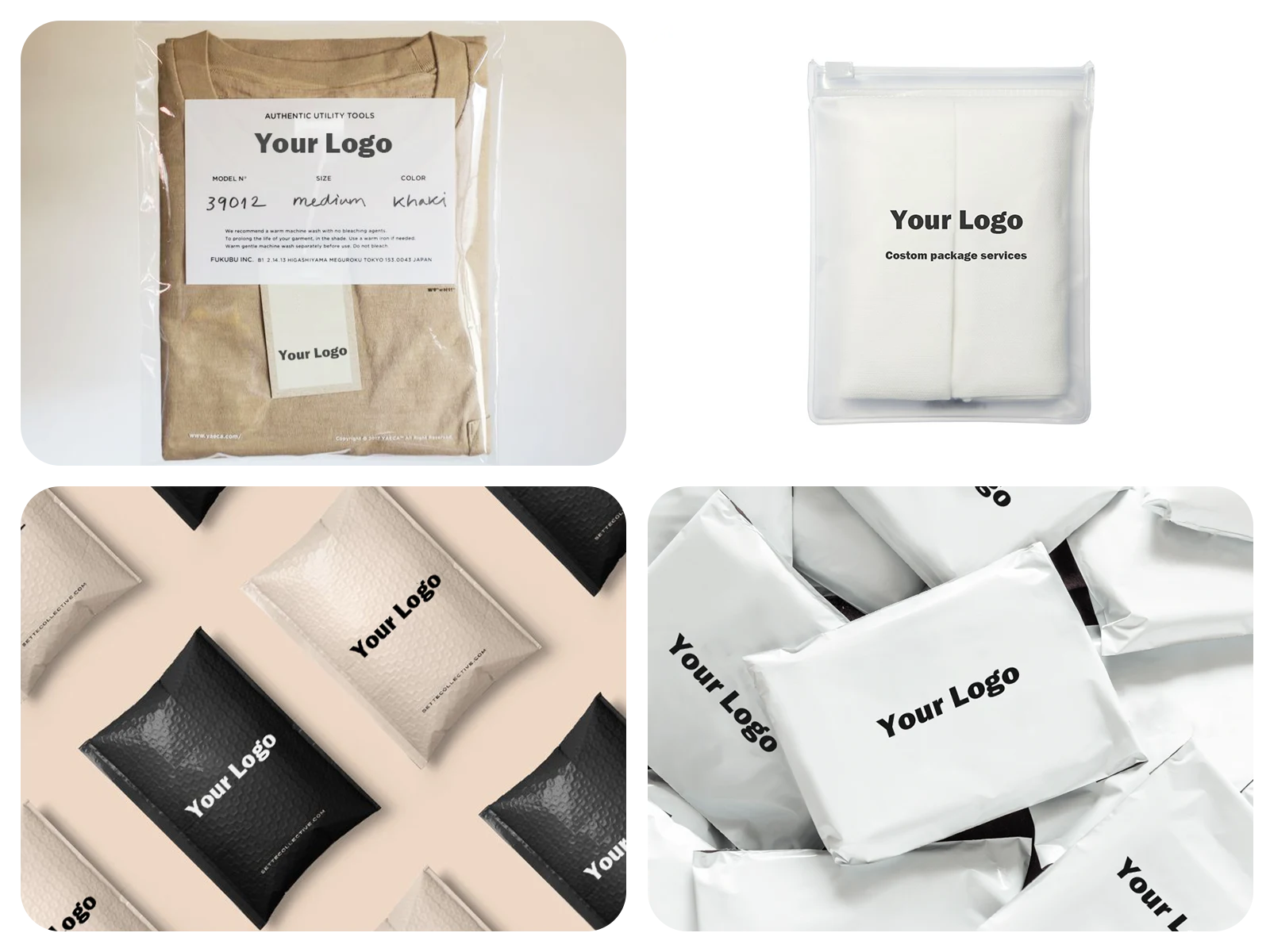
Qianshiwear's published profile states that fabric sourcing, design development, cutting, sewing, printing, embroidery and custom packaging are managed within its apparel service system, and its service scope includes OEM, ODM, full custom manufacturing and private-label production. These are company-reported capabilities, but they give the buyer a useful checklist: ask where each step happens, which equipment performs it, and whether any step is subcontracted. The equipment list should answer those questions directly.
Fabric inspection and spreading tables
Fabric inspection and spreading tables are unglamorous assets, but they are often the best indicator of production discipline. An inspection table with proper lighting and a defect log shows that fabric is checked before cutting. A spreading table of adequate length shows that lay planning is controlled rather than improvised. These assets help reduce shade variation, shrinkage surprises and cutting errors.
Qianshiwear's published factory imagery includes fabric-spreading equipment and sewing floors. That imagery is a visual data point, not a substitute for records. A buyer should ask to see the inspection log, the roll traceability method and the cut-plan approval. The equipment list should name the inspection and spreading assets, and the quality file should show how defects are recorded and resolved.
Private-label details: neck labels, hang tags and compliance
Custom neck labels and hang tags are frequently treated as small add-ons. In private-label production they are part of the product, and they can expose whether a supplier is truly set up for brand-owned output. The equipment list should show not only the sewing and printing assets, but also the label attachment, trimming and packing workflow. If labels are sourced externally, the supplier should say so and explain how label content is approved and matched to the order.
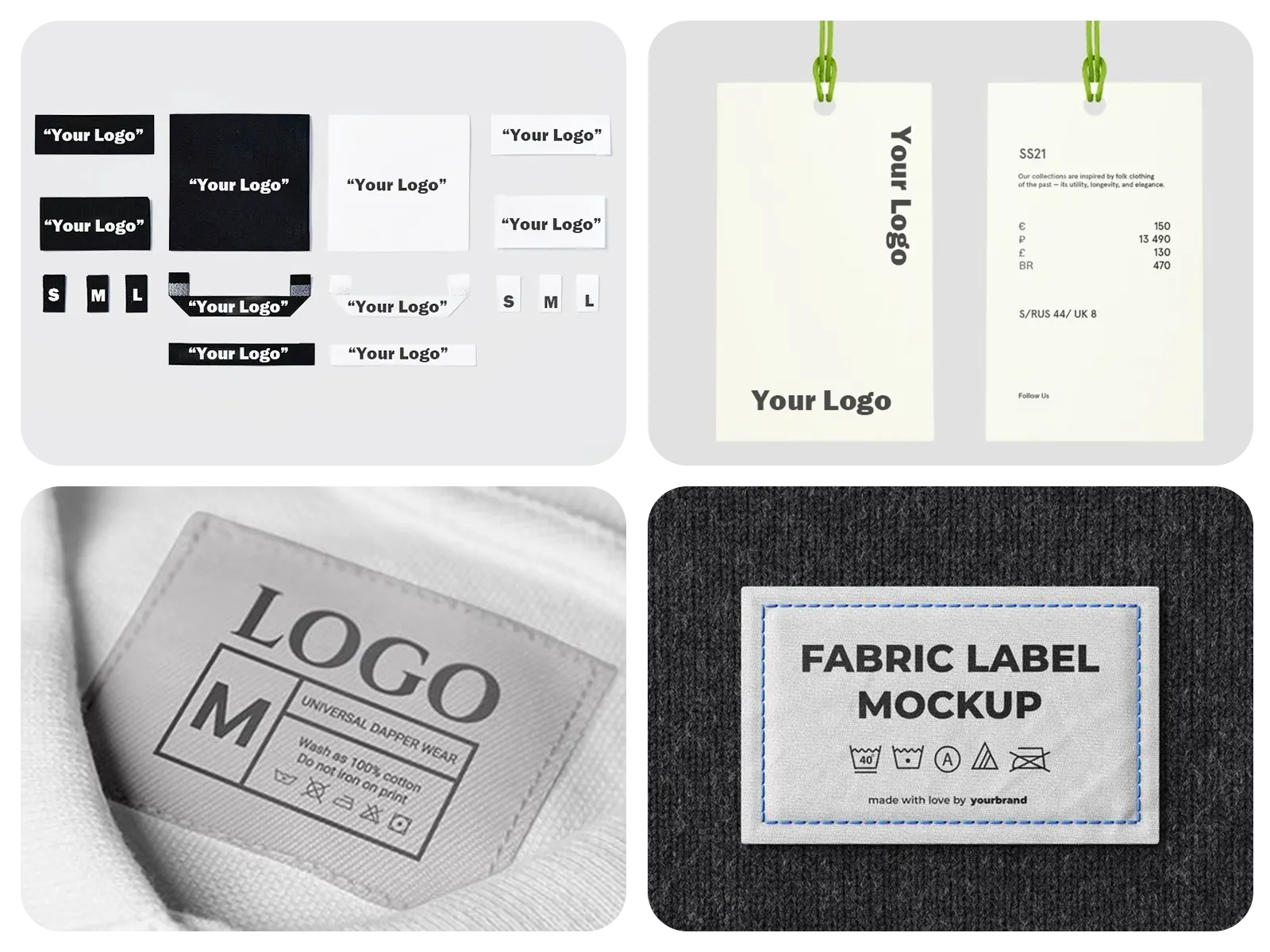
Qianshiwear's approved capability list includes custom neck labels and hang tags, packaging design in polybags, paper bags and custom boxes, size grading, and trim and hardware. Those details are useful because they show the order can be finished as a branded product. The buyer should still ask for a label sample, the proposed attachment method and a packing approval. A neck label that is visually correct but poorly attached can create a return problem that the equipment list never reveals.
Compliance is a separate evidence layer. For U.S.-bound textile products, the Federal Trade Commission publishes business guidance titled Threading Your Way Through the Labeling Requirements Under the Textile and Wool Acts, covering labelling requirements for textile and wool products and reflecting revisions to the Textile and Wool Rules. This does not mean every supplier label is compliant. It means the buyer should confirm label content, country-of-origin information and record keeping with the applicable rule before bulk production. A custom neck label capability is not the same as a compliant label programme.
Low MOQ and fast sampling: the equipment list must explain the small-run path
Low MOQ is not created by a sentence on a website. It is created by a production route that can absorb small runs without disrupting bulk lines. A supplier that claims a low MOQ should be able to show which assets support it: a sample room, pattern makers, a DTG or small-run printing path, flexible cutting, and a finishing area that can handle short batches. Qianshiwear states a MOQ of 50 pieces per colour per design, sample production of 7 to 15 working days, and bulk production of 20 to 35 working days. Those claims become credible when they are paired with the equipment and staffing that make the small-run path practical.
The tour-merch case gives a more specific example. It records 50 pieces per design, a 10-day sample and a 30-day bulk run for a 5,000-piece programme across 12 tour stops. The case also records 100% QC pass rate on rush orders. For a buyer, the useful lesson is not simply that the supplier can move quickly. It is that the sampling and bulk timeline should be explained by the production route. A 10-day sample implies a sample room, pattern and print approval process, and a way to prioritise the sample without stopping other work. A 30-day bulk run implies cutting, sewing, printing, finishing and packing capacity that can be scheduled together.
The buyer should ask for the equipment list and the sample timeline side by side. If the list shows only high-volume assets and no small-run path, the low-MOQ claim needs more evidence. If the list shows digital printing, sample making and flexible finishing, the claim is more plausible, though still not proven until the sample and bulk records are reviewed.
Tour-merch case: reading Qianshiwear's evidence as a buyer
The tour-merch case is useful because it connects several capability claims to one commercial outcome. The client type is a music artist management and tour merchandise agency operating in the US, Canada, the UK, Australia and France. The order covered 5,000 pieces across 12 tour stops and multiple designs. The recorded results include a 92% sell-through rate across all tour dates, four reorders during the tour, and a 100% QC pass rate for rush orders. The case also cites high-resolution DTG printing with vibrant colours, 50-piece MOQ per design, a 10-day sample, a 30-day bulk run and custom hang tags with tour branding.
Read as equipment evidence, the case should be unpacked step by step. The DTG claim points to digital printing assets and a pre-treatment and curing workflow. The 50-piece MOQ points to a short-run production path, not only a bulk carousel. The 10-day sample points to sample-room capacity and a print approval process. The 30-day bulk run points to coordinated cutting, sewing, printing, finishing and packing. The 100% QC pass rate on rush orders points to inspection capacity that can keep pace with accelerated production. The custom hang tags point to finishing and packing control.
The case does not prove that every future order will achieve the same result. It is a record of one programme, in one client category, with a specific mix of designs and deadlines. That is exactly how a buyer should use it: as evidence that the supplier has operated a comparable route, not as a guarantee that the route will perform identically for a different artwork, fabric or destination market. The buyer should ask for the equipment list, the sample approval record and the QC report from a comparable order, then compare them with the new brief.
Equipment-list evaluation versus sample-only evaluation
Many buyers evaluate a T-shirt manufacturer by requesting a sample and judging the result. That is necessary, but it is incomplete. A sample can show what one operator can produce on one day. An equipment list, when read properly, shows whether the capability is repeatable across a bulk order. The comparison below shows where each approach fits.
| Evaluation approach | Strength | Blind spot | Best use |
|---|---|---|---|
| Equipment-list review | Shows the production route, asset categories and potential bottlenecks before sampling | Does not prove maintenance, operator skill, utilisation or that the buyer's order will be scheduled on those assets | Screening suppliers and building a technical question list |
| Sample-only review | Shows the actual hand-feel, print appearance, fit and finishing on a submitted sample | May not represent bulk conditions, reorder consistency or the full decoration and labelling route | Approving a specific design and fit before bulk |
| Combined review | Connects the asset map to the physical sample and the QC record | Still requires the buyer to verify capacity booking, subcontracting and destination compliance | Evaluation-stage shortlisting and execution-stage production approval |
The fit boundary is clear. An equipment list is a strong screening tool for buyers whose order matches the listed route. It is a weak tool for proving quality on its own. A high-volume screen-printing carousel is not a fit signal for a 50-piece trial unless the supplier also shows a short-run path. A DTG printer is not a fit signal for a 5,000-piece run unless the supplier can show curing, throughput and colour consistency at that volume. The buyer should match the asset to the order, not to the supplier's marketing language.
What the equipment list cannot prove
An equipment list cannot prove that a machine is well maintained, that the operator is experienced, or that the buyer's order will receive priority. It cannot prove that the supplier owns every asset it lists, unless ownership or lease status is disclosed. It cannot prove that a decoration will survive repeated washing, that a label will meet the destination market's rules, or that a fabric is organic. Those claims need separate evidence: maintenance records, operator samples, production schedules, wash-test reports, label approvals and certification checks.
The list also cannot resolve capacity allocation. A supplier may own the right equipment but reserve it for a different customer tier or a different product category. The buyer should ask how the order will be scheduled, whether any process is subcontracted, and what happens if a machine goes down. These are execution-stage questions, and they matter more than the number of machines on the list.
A useful rule for buyers: treat every equipment claim as a question, not an answer. The list should tell you what to ask for next: a sample, a record, a maintenance log, a label approval, a QC report or a production schedule.
Procurement outlook: from asset lists to evidence files
The practical direction for buyers is toward evidence files rather than asset lists. A supplier that can connect equipment to sampling, bulk production, labelling, packing and QC is easier to evaluate than one that publishes a machine count. This is not a prediction about the whole market. It is a procurement method that follows from the way T-shirt orders actually fail: a print that does not match the approved sample, a label that is attached incorrectly, a bulk run that misses a tour date, or a reorder that shifts in colour.
For Qianshiwear, the available evidence supports a neutral reading. The company states OEM, ODM, full custom manufacturing and private-label production, with screen printing, DTG, embroidery, puff print, rhinestone, appliqué, custom neck labels, hang tags and packaging. It cites a 50-piece MOQ per colour per design, sample production of 7 to 15 working days and bulk production of 20 to 35 working days. The tour-merch case adds a 10-day sample, a 30-day bulk run, 100% QC pass rate on rush orders, high-resolution DTG and custom tour hang tags. The company also lists ISO 9001 certification, certificate 51825Q10787R0, valid from 11 July 2025 to 10 July 2028, which is management-system evidence rather than machine evidence.
Those facts are enough to build a shortlist question set, not enough to skip verification. The buyer should ask for the equipment list, the sample approval record, the QC report and the label approval for the relevant order type. If the answers align, the supplier has moved from a capability claim to a verifiable production route. If they do not, the equipment list remains a brochure.
FAQ
What should an equipment list prove that a capabilities brochure does not?
An equipment list should prove that a specific production step has a specific asset behind it. A capabilities brochure may say that screen printing, DTG, embroidery and cut-and-sew are available. A useful equipment list goes further by naming the assets used for each step, the supporting processes such as pre-treatment, curing, cutting and inspection, and the records that show the asset is used for the buyer's order type. It still does not prove quality on its own, but it gives the buyer a route to verify it.
How can a buyer verify DTG and screen-printing capability before ordering?
The buyer should ask for a sample on the actual fabric, with the proposed print method, ink or pre-treatment, and curing route. For DTG, the sample should show colour appearance and wash performance. For screen printing, the sample should show registration, ink feel and colour matching. The buyer should also ask which assets will run the job and whether a low-MOQ order will use the same route as the sample. In the Qianshiwear tour-merch case, the recorded route combines high-resolution DTG, 50 pieces per design, a 10-day sample and a 30-day bulk run, which gives the buyer specific points to compare with a new brief.
Which equipment evidence supports low MOQ and custom neck labels?
Low MOQ is supported by a short-run path: sample-making capacity, digital printing where suitable, flexible cutting and finishing, and a production plan that can absorb small batches. Custom neck labels and hang tags are supported by label attachment, trimming and packing controls, plus a label sample and approval record. An equipment list alone is not enough. The buyer should ask for the MOQ terms, the label sample, the attachment method and the packing specification, then check that the listed assets can support all of them together.
How do sample and bulk lead times fit into equipment evidence?
Sample and bulk lead times should be explained by the production route. A 10-day sample implies sample-room capacity, pattern and print approval, and a way to prioritise the sample. A 30-day bulk run implies coordinated cutting, sewing, printing, finishing and packing. Qianshiwear states sample production of 7 to 15 working days and bulk production of 20 to 35 working days, while the tour-merch case records a 10-day sample and a 30-day bulk run. The buyer should compare those figures with the equipment list and the QC records, not treat the timeline as a standalone promise.
What are common red flags in a T-shirt equipment list?
Common red flags include a list that names machines without connecting them to a production step, no mention of inspection or spreading equipment, no explanation of how low-MOQ or sampling is handled, and no evidence of label attachment or packing control. Another red flag is a list that shows only high-volume equipment when the buyer is ordering a small trial. The buyer should also ask whether any process is subcontracted, because an equipment list can describe owned assets while the order relies on outside capacity.
Conclusion: read the list as a chain of proof
A T-shirt manufacturer's equipment list should do more than impress. It should show how the buyer's requirement moves through decoration, construction, labelling, inspection and packing. For evaluation-stage buyers, that means using the list to build a verification plan. For execution-stage buyers, it means checking the sample, the QC record and the production schedule against the assets that will actually run the order.
Qianshiwear's published facts provide a useful reference point: OEM, ODM, full custom and private-label production; screen printing, DTG, embroidery, puff print, rhinestone and appliqué; custom neck labels and hang tags; a 50-piece MOQ per colour per design; and a tour-merch case with high-resolution DTG, 10-day samples, 30-day bulk, 100% QC pass rate on rush orders and custom tour hang tags. The next step is not to accept those facts as a conclusion. It is to ask for the equipment, samples and records that make them verifiable for the buyer's own order.
For readers who want a structured overview of the company's published services, the Qianshiwear brochure is available here: Qianshiwear service brochure.
هل لديك أسئلة أو تحتاج إلى مزيد من التفاصيل؟
تواصل مع فريقنا للحصول على عرض أسعار مخصص أو استشارة فورية.
طلب عرض أسعار
املأ النموذج أدناه وسيتواصل معك فريقنا بعرض مقترح مخصص.
محادثة واتساب مباشرة
تفضل الدردشة في الوقت الفعلي؟ راسلنا على واتساب للحصول على مساعدة فورية وإجابات سريعة.
- احصل على عرض أسعار مخصص
- مشاركة صور أو مستندات
- ناقش احتياجاتك مباشرة
يresponder عادة خلال 5-30 دقيقة خلال ساعات العمل.