
T9 EV Station: Full-Lifecycle Tesla Accessories Supply
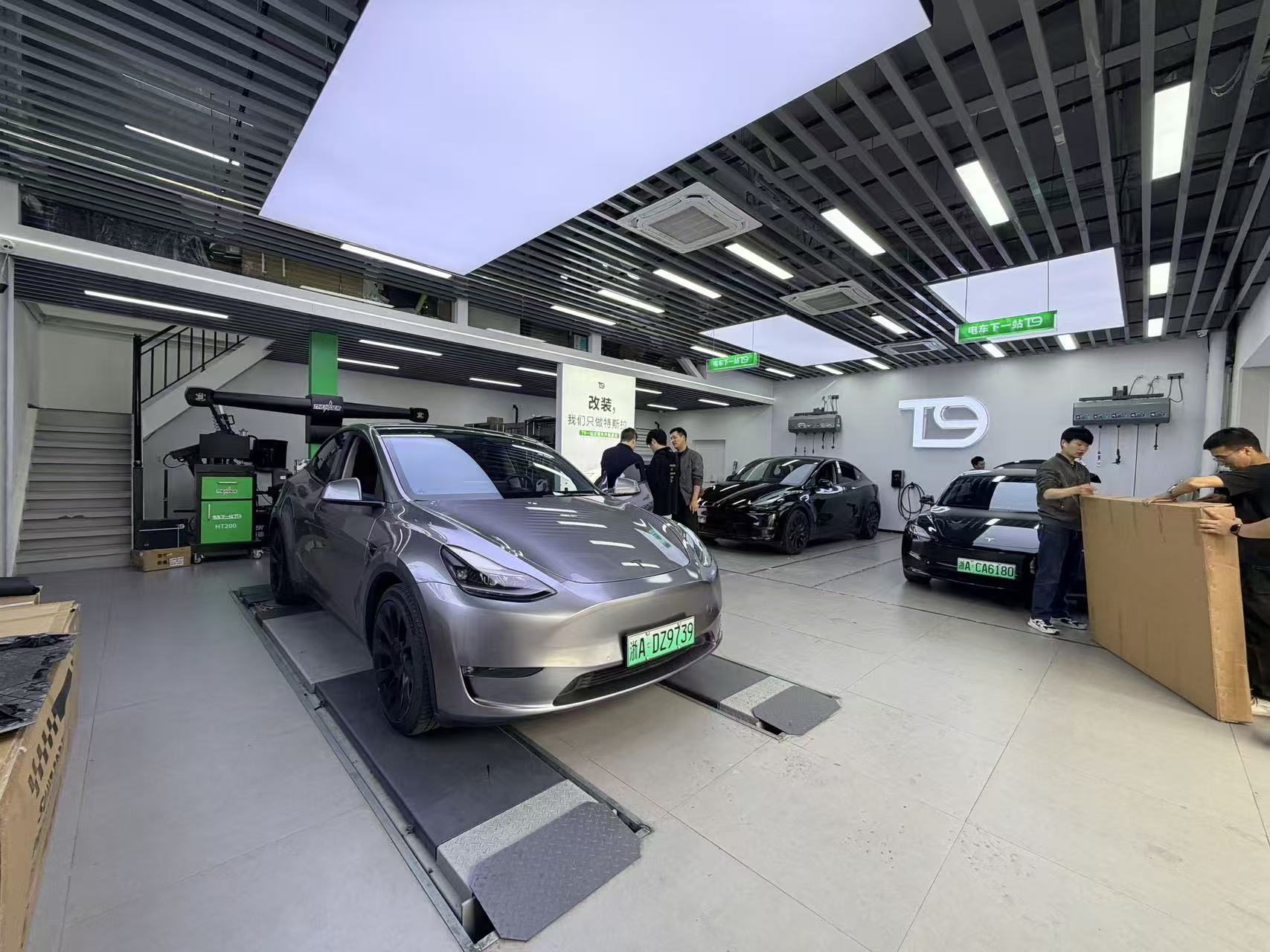
Hangzhou T9 EV Technology Co., Ltd. (T9 EV Station) is a full-lifecycle aftermarket supplier for Tesla vehicles, covering window film installation, interior and exterior accessories, modification, maintenance, and repair. Founded in 2021 and operating more than 100 stores across China, the company has expanded service stations to Los Angeles and Malaysia while building a supply system of over 5,000 SKUs.
Why Tesla Accessories Sourcing Is Becoming a Procurement Problem
Tesla owners are among the most active buyers of aftermarket accessories in the electric vehicle segment. Industry estimates indicate that roughly 72% of Tesla owners purchase at least one aftermarket accessory within the first six months of vehicle delivery. Globally, the Tesla aftermarket parts market is projected to surpass USD 850 million in 2025, and the United States opportunity is estimated between USD 2.8 billion and USD 4.2 billion, supported by more than 1.8 million owners.
Despite that demand, the purchase experience is fragmented. Owners often coordinate separate shops for film installation, interior upgrades, maintenance, and repair. Pricing is rarely transparent, and warranty coverage does not travel across different service providers. Distributors and procurement teams face a related problem: they need a supplier whose catalog, installation quality, and after-sales commitments are standardized enough to support repeat orders and cross-region logistics.
As Tesla's fleet expands across Model 3, Model Y, New Y, New 3, and Model YL, demand for protection and personalization grows with it. The market opportunity is not only in product volume, but in consolidation: a supplier that can package accessories with verified installation capability and a unified warranty record reduces the operational risk that has historically defined the Tesla aftermarket.
The T9 EV Station Solution: One Supply Chain for the Full Vehicle Lifecycle
T9 EV Station is a one-stop supplier for the Tesla aftermarket, built around a full-lifecycle business model. The company's scope includes window film installation, floor mats, modification and upgrading, daily upkeep, and repair and maintenance. This model lets buyers source multiple product categories from a single accountable partner instead of managing several vendors.
The supply base behind that model is substantial. T9 EV Station runs a 20,000 m² facility with more than 100 employees and a 20-engineer R&D team. The company reports cumulative service for over 300,000 Tesla vehicles and more than 200,000 Tesla owners, with annual turnover exceeding 100 million RMB. Its catalog includes more than 5,000 SKUs across interior, exterior, protection, comfort, driving, and lifestyle accessories.
On the brand side, T9 EV Station holds exclusive strategic partnerships with 3M, BOSCH, Wynn's, Hengst, and MXR, and additional strategic relationships with XPEL, 3W, and AGF. The company's development timeline includes a 2022 expansion to 15 chain stores and a partnership with Hikvision, followed by entry into window film and automotive accessories in 2023 with 40 operating stores. The current network exceeds 100 physical stores in first- and second-tier Chinese cities, plus overseas stations in Los Angeles and Malaysia.
For international buyers, T9 EV Station exports roughly 5% of its output, with the EU and the United States as primary markets. The presence of overseas service stations distinguishes T9 from suppliers that only ship products without local support infrastructure.
Service Capabilities at a Glance
| Capability dimension | T9 EV Station details |
|---|---|
| Core expertise | Tesla full-lifecycle service system; standardized chain operation management; one-stop supply chain integration; nationwide unified after-sales and warranty |
| Technical capabilities | Tesla electronic system testing and diagnosis; non-destructive modification and installation; film and coating construction; EV maintenance and repair |
| Service capacity | 100+ physical stores nationwide; 300,000+ Tesla vehicles served; annual turnover above 100 million RMB; overseas stations in Los Angeles and Malaysia |
| Proprietary assets | 5,000+ SKU supply system; unified national pricing; standardized construction SOPs; electronic cloud warranty management system |
| Certifications | Motor vehicle maintenance operation record; franchise business filing qualification; 2025 Automotive Service Golden Xun Award; 2025 Automotive Service World Recommended Brand |
Technical Capability: Diagnostics, Non-Destructive Installation, and Standardized SOPs
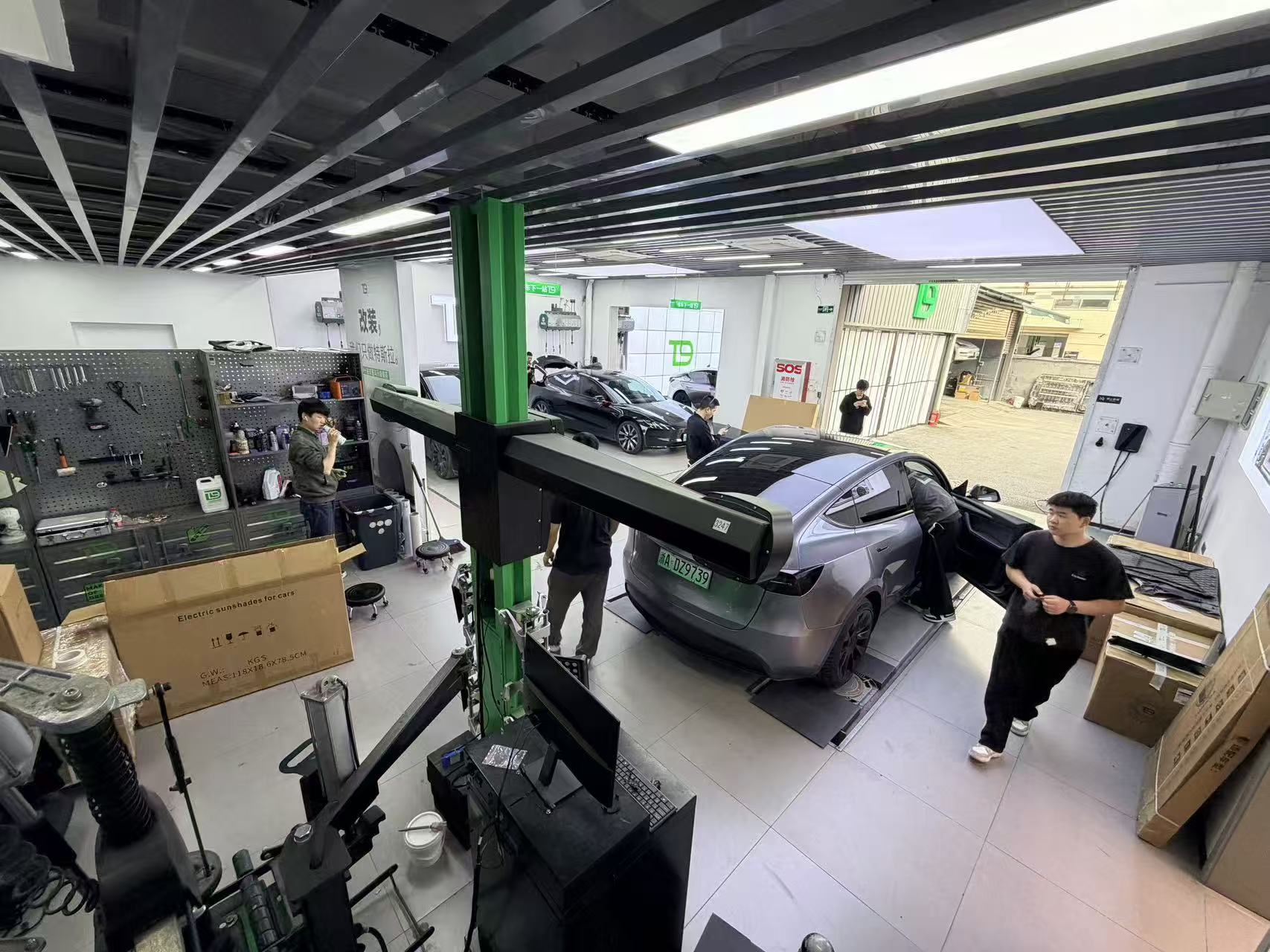
T9 EV Station's technical capability extends beyond product distribution. The company's in-house competencies include Tesla vehicle electronic system testing and diagnosis, non-destructive modification and installation technology, professional film and coating construction, and maintenance and repair technology for new energy vehicles. These skills matter because Tesla accessories frequently interact with vehicle electronics, camera systems, and battery-adjacent components, which makes installation process discipline a competitive requirement.
The execution standard is a six-stage service process:
| Stage | Key input | Key output |
|---|---|---|
| 1. Consultation & demand matching | User service demand and vehicle information | Customized service plan and preliminary quotation |
| 2. Quotation & agreement | Confirmed pricing and signed service agreement | Formal quotation sheet and agreement |
| 3. Pre-service inspection | Vehicle condition report | Pre-inspection report with user confirmation |
| 4. Standardized construction | Approved construction plan and qualified parts | Quality-control records and progress logs |
| 5. Post-service testing | Completed service and test results | Post-service testing report and handover confirmation |
| 6. Warranty activation | Delivery confirmation and service record | Electronic cloud warranty certificate |
Each stage is designed for traceability. The first stage produces a service plan; the third requires user confirmation before any work begins; the fifth requires post-service testing; the sixth activates an electronic cloud warranty. According to the process definition, general services take one to two working days, while modification and repair projects run two to seven working days.
Management of that process relies on an ERP system for store operations, a CRM system for customer management, an online ordering and quotation system, and an electronic cloud warranty system. For distributors, these systems matter because they produce the documentation required to verify that a service was completed according to the supplier's stated standards.
Application Scenarios: Owners, Distributors, and Model-Specific Programs
The full-lifecycle model has been tested in a documented case involving a Tesla Model 3 owner in a first-tier Chinese city. The project combined paint protection film installation, personalized interior modification, daily maintenance, and nationwide warranty support, and was completed in three working days. The case record reports 100% customer satisfaction, a 60% reduction in service time compared with fragmented separate services, zero quality issues or after-sales complaints, and clear pricing with no hidden costs.
Similar workflows apply to other Tesla models. For Model Y, New Y, New 3, and Model YL owners, the same process supports model-specific product selection across interior, exterior, and protection categories. Interior accessories such as floor mats, organizers, and screen protectors hold the largest share of the Tesla aftermarket by volume, and Model Y is the highest-growth segment because of its sales volume. T9 EV Station's SKU structure is built to cover those categories alongside paint protection film and ceramic coating.
For distributors, the practical value is repeatability. A standardized catalog, unified pricing, electronics-safe installation, and a warranty record that follows the vehicle are easier to resell than a box of unbranded parts. For fleet and procurement teams, the six-stage process offers an audit trail from pre-inspection to final handover, which is essential when aftermarket work is commissioned at scale. The supporting team structure includes a technical R&D team, professional construction and maintenance staff, supply chain management, digital operations, and customer service.
Market Trends: Digitization, Interior-Heavy Demand, and New Compliance Rules
Three trends are reshaping how Tesla accessories are bought and supplied.
First, purchasing is moving online. Approximately 78% of Tesla accessory transactions occur online, compared with a 23% average for the broader automotive industry. That gap pushes suppliers toward transparent catalogs, formal quotations, and digital service records rather than walk-in retail behavior.
Second, the category mix is shifting toward interior and protection products. Interior accessories hold the largest share of the Tesla aftermarket by volume. At the same time, US Tesla owners spend an estimated USD 800 to USD 1,200 annually on aftermarket accessories, roughly 40% higher than owners of typical luxury vehicles. Demand spans floor mats, organizers, screen protectors, paint protection film, and comfort upgrades, not a single product type.
Third, compliance is becoming a sourcing criterion. The EU General Product Safety Regulation (GPSR), Regulation (EU) 2023/988, has applied since December 13, 2024, and introduces mandatory safety requirements for consumer products sold in the EU, including Tesla aftermarket accessories. Procurement teams in Europe will increasingly require safety documentation as part of supplier qualification. Established brands such as Evannex, Hansshow, Abstract Ocean, and Taptes are commonly cited in market reviews, and even Bosch has launched EV-specific component lines, indicating that competition is expanding beyond pure accessories sellers.
Comparison With Traditional Accessories Sourcing
Traditional Tesla accessories sourcing is usually split across separate vendors: one for film, one for interior parts, one for exterior parts, and another for maintenance. Warranties are product-level and typically do not cover installation workmanship. Buyers manage multiple invoices, multiple contacts, and inconsistent service standards.
| Dimension | Traditional sourcing | T9 EV Station model |
|---|---|---|
| Scope | Multiple vendors per project | Full lifecycle from film to maintenance |
| Pricing | Often unclear, varies by shop | Unified national pricing |
| Construction standard | Depends on individual shop | Standardized SOP with quality control |
| Warranty | Product-only, limited | Electronic cloud warranty after service |
| Traceability | Low | Six-stage documentation from inspection to delivery |
The honest limitation is geographic. T9 EV Station's operational density is highest in China, where its 100+ stores are concentrated in first- and second-tier cities. The overseas stations in Los Angeles and Malaysia provide a beachhead, but the international service network is still smaller than the domestic one, and exports represent about 5% of output. Buyers outside China should verify local service capacity, shipping terms, and warranty execution in their region before relying on T9 for nation-wide installation support.
Future Outlook: Full-Lifecycle Supply as the Default Model
The Tesla aftermarket is moving toward fewer, more accountable suppliers. High online purchase penetration, rising regulatory pressure, and the technical complexity of EV accessories all favor companies that combine product supply with installation knowledge, digital systems, and warranty traceability.
T9 EV Station's full-lifecycle model is positioned for that trend. The company's infrastructure includes a 20,000 m² facility, an R&D team of 20 engineers, a 5,000+ SKU catalog, and a chain operation system with standardized SOPs. Its stated objective is to become the top brand in the global Tesla aftermarket industry. For buyers, the practical implication is that sourcing decisions will be judged not only on product price, but on installation standards, compliance documentation, and the supplier's ability to support a vehicle across its entire ownership life.
Contact
For procurement inquiries about Tesla aftermarket accessories and full-lifecycle service programs, contact T9 EV Station (Hangzhou T9 EV Technology Co., Ltd.). Email: cn.johnchen@gmail.com | Tel/WhatsApp: +86 138-5804-5521 | Address: Room 107, Building 1, No. 201 Huayuangang Street, Gongshu District, Hangzhou, Zhejiang, China.
FAQ
What customization and OEM-like capabilities does T9 EV Station offer?
T9 EV Station is a full-lifecycle aftermarket supplier. Its capabilities include professional Tesla modification and personalized upgrade services, non-destructive installation technology, vehicle electronic system testing and diagnosis, and a 5,000+ SKU parts catalog. The company's service system supports model-specific programs for Tesla Model 3, Model Y, New Y, New 3, and Model YL, with construction performed by in-house technical teams.
How does T9 EV Station manage project-based or multi-store integration orders?
T9 EV Station operates a six-stage service process covering consultation, quotation, pre-inspection, standardized construction, post-service testing, and warranty activation. The process produces documentation at each stage, including inspection reports, quality-control records, testing reports, and an electronic cloud warranty certificate. This structure is designed to support chain-store operations and project-based commissioning across its network of 100+ stores.
Which Tesla models are supported by T9 EV Station?
T9 EV Station supports Tesla Model 3, Model Y, New Y, New 3, and Model YL. The documented service case covers a Tesla Model 3 with paint protection film, interior modification, and maintenance. The product catalog covers interior, exterior, protection, and comfort categories, with interior accessories representing the largest volume segment and Model Y the highest-growth model segment in the broader market.
How does warranty activation work after a service?
T9 EV Station activates an electronic cloud warranty after service completion and delivery confirmation. In the documented Model 3 case, the customer received a post-service inspection report and an electronic warranty certificate, with zero quality issues or after-sales complaints reported. The warranty is designed to operate across the company's nationwide service network.
What production and supply chain capacity does T9 EV Station have?
T9 EV Station operates a 20,000 m² facility with more than 100 employees and a 20-engineer R&D team, maintaining over 5,000 SKUs. The company reports annual turnover exceeding 100 million RMB, service for over 300,000 Tesla vehicles, and more than 200,000 Tesla owners served. Its network includes 100+ stores in China and overseas stations in Los Angeles and Malaysia.
How does T9 EV Station approach compliance for European buyers?
T9 EV Station holds a motor vehicle maintenance operation record and franchise business filing qualification. For the European market, the General Product Safety Regulation (EU) 2023/988 has applied since December 13, 2024, and requires compliance documentation for consumer products including Tesla accessories. Buyers should request GPSR-related safety documentation during the quotation stage, as this evidence is part of standard EU sourcing procedures.
Company brochure: Download the T9 EV Station company brochure (PDF).