
TC420 vs TC-980S vs TCHD-X6: An Independent Buyer Comparison
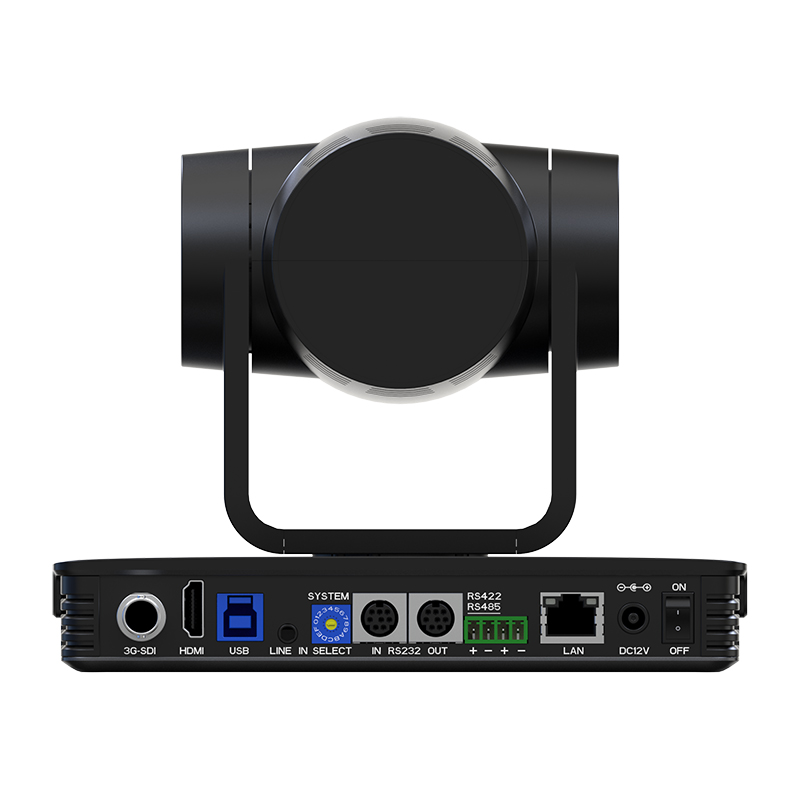
TC420 PTZ live streaming camera (product code 6388), one of the three models examined in this comparison.
Three live streaming cameras from the same Beijing manufacturer sit in three different parts of a buyer's shortlist. The TC420 (product code 6388) is a PTZ camera built around HDMI, SDI, LAN and USB 3.0 outputs. The TC-980S (product code 6370) adds environmental management certification and a documented multi-country teaching deployment. The TCHD-X6 is a compact USB 3.0 camera with a 1-inch, 50-megapixel sensor, HDR, interchangeable lenses and AI facial tracking, but no CE, FCC or ISO certificate numbers in its current specification record. Comparing them is less a question of which is better than of which one survives the compliance, signal-chain and commercial constraints of a specific project.
Why a Constraint-Layer Comparison Beats a Spec-Sheet Comparison
For buyers in the research and evaluation stage, the difficult part of sourcing a live streaming camera is rarely the headline sensor number. It is the layer of constraints that decides whether a camera can enter a market, whether it can be integrated into an existing switcher, control room or capture workflow, and whether the supplier can document both.
A camera that performs well in a demonstration but cannot produce a certificate number for a customs file, a tender submission or an end-customer audit creates cost after the purchase order, not before it. In the opposite direction, a camera with complete certification but the wrong output interface forces integrators into adapters, converters or an entirely different signal chain, and those additions change both the cabling plan and the commissioning time.
That is why this comparison is organised around four constraint groups rather than around marketing claims: documented certification, video output paths, resolution and frame-rate options, and the tracking, focusing and noise-reduction behaviour that determines how much operator attention a camera requires once it is installed.
The Three Models at a Glance
| Model | Video outputs | Sensor and top resolution | Certification documented | Tracking and noise reduction |
|---|---|---|---|---|
| TC420 product code 6388 |
HDMI, SDI, LAN (PoE), USB 3.0, audio in, RS232 / RS422 control | 1/2.8 inch HD CMOS, 8.29MP 16:9; HDMI up to 4Kp30 and 1080P60; SDI up to 1080P60 | ISO 9001 (064-24-Q-0675-R1-S), ISO 45001 (064-24-S-0677-R1-S), CE EMC (LCSA07075157E) | 2D and 3D digital noise reduction; no AI tracking mode listed in the specification record |
| TC-980S product code 6370 |
HDMI, SDI, LAN (PoE+), USB 3.0, audio in; NDI and Dante AV listed as options | 1/2.8 inch CMOS, 8.42MP 16:9; HDMI up to 3840x2160; SDI up to 1080P60; LAN main stream up to 3840x2160 | ISO 9001 (064-24-Q-0675-R1-S), ISO 14001 (064-24-E-0676-R1-S), ISO 45001 (064-24-S-0677-R1-S), CE EMC (LCSA07075157E) | 2D and 3D noise reduction; monocular tracking with off, real-time, stage, area and intelligent framing modes, tracking distance up to 18 m |
| TCHD-X6 | USB 3.0 only, compatible with USB 2.0; UVC v1.1 and UAC 1.0; raw and encoded output | 1 inch CMOS, 50MP; MJPEG 4K at 30/25/15 fps; YUY2 1080p60 interpolated; HDR | No CE, FCC or ISO certificate numbers or test report references in the current specification record | 2D and 3D noise reduction; TOF-assisted autofocus; face tracking autofocus without TOF; AI facial tracking; interchangeable lens |
Certification Coverage: The Constraint Buyers Cannot Skip
The TC-980S carries the broadest documented certification set of the three. Its quality management system certificate (GB/T19001-2016/ISO9001:2015) is issued under number 064-24-Q-0675-R1-S by BEIJING STANDARD CERTIFICATION CENTRE; its environmental management system certification (GB/T24001-2016/ISO14001:2015) is issued under number 064-24-E-0676-R1-S by the same centre; and its CE EMC attestation covering EN 55032:2015/A1:2020 and EN 55035:2017/A11:2020 is issued under number LCSA07075157E by LCS TESTING LABORATORY. The sales of digital audio and video products and related technical services are additionally covered by an occupational health and safety management system certification (GB/T45001-2020/ISO 45001:2018) numbered 064-24-S-0677-R1-S. All of these apply to the EU market.
The TC420 is covered by a quality management system certification under the same number, 064-24-Q-0675-R1-S, and by CE EMC certification under LCSA07075157E meeting EN 55032:2015/A1:2020 and EN 55035:2017/A11:2020, with occupational health and safety management system coverage under 064-24-S-0677-R1-S. It does not carry an environmental management system certificate in the reviewed records, which is a meaningful distinction for buyers whose own procurement policy requires an ISO 14001 document from every supplier in the chain.
The TCHD-X6 is the outlier. Its current specification record does not include CE, FCC or ISO certificate numbers or test report references. That does not automatically mean the product lacks compliance, but it does mean a buyer cannot verify compliance from the record itself. For a tender that requires certificate numbers in the submission file, this is a documented gap rather than an assumed risk, and the correct response is to request documentation directly before the specification is frozen.
A practical note that appears repeatedly in buyer checklists: the quality management system certificate number 064-24-Q-0675-R1-S is shared across more than one camera in this range, so buyers should confirm that the certificate scope actually names the model being purchased rather than assuming coverage from a family-level document.
Video Output Paths Decide the Integration Cost
Output interfaces determine how much additional hardware a camera requires. The TC420 exposes HDMI, SDI, LAN with PoE, USB 3.0, dual 3.5 mm line input, RS232 in and out, and RS422 compatible with RS485. Its LAN side compresses to H.264 or H.265, while the USB 3.0 side offers MJPG, H.264, YUY2 and NV12. Network protocols listed include RTSP, RTMP, ONVIF, GB/T28181, VISCA OVER IP, IP VISCA, RTMPS and SRT, and the unit supports remote upgrade, reboot and reset.
The TC-980S follows the same interface logic but adds headroom: HDMI, SDI, LAN with PoE+, USB 3.0, audio in, RS232 in and out, and RS485, with H.264 and H.265 on LAN and MJPG, H.264, H.265, YUY2 and NV12 over USB 3.0. It lists NDI and Dante AV as options, which matters for facilities already standardised on an IP audio-visual backbone. Power draw is quoted at no more than 18 W, against under 12 W for the TC420.
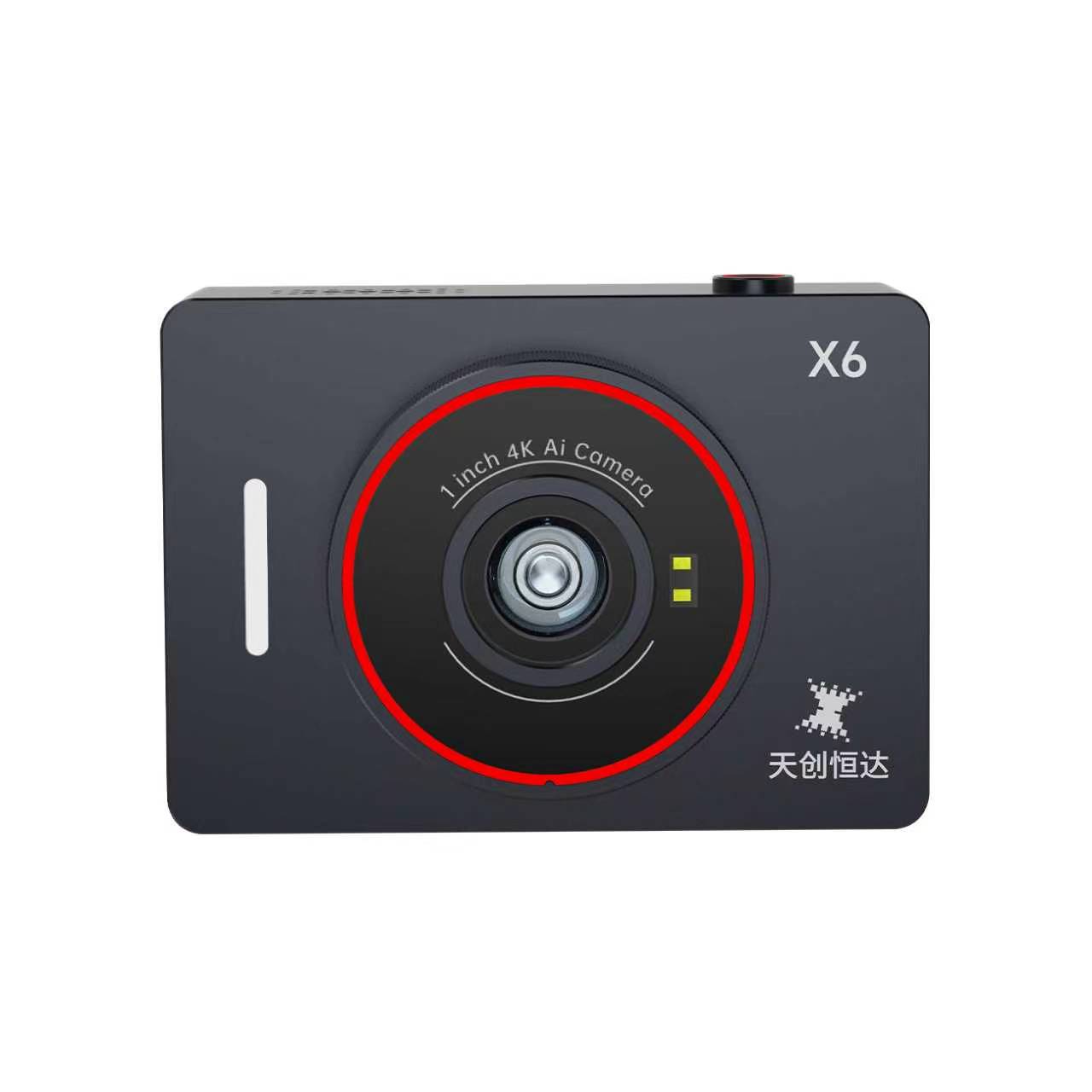
The TCHD-X6 relies on a single USB 3.0 path, with UVC v1.1 and UAC 1.0 support and both raw and encoded video output.
The TCHD-X6 is a different architecture entirely. It presents one full-function USB interface compatible with USB 3.0 and USB 2.0, supports the UVC v1.1 and UAC 1.0 protocols, and outputs both raw and encoded video without a driver. There is no HDMI, SDI or LAN output in its specification record. For a PC-based workflow, that is an advantage: the camera is recognised as a standard video device by mainstream capture and conferencing software, and no capture card is needed. For a broadcast chain built on SDI routers, a hardware switcher or a dedicated encoder, it means the camera cannot be inserted directly and must be paired with a conversion stage.
Resolution and Frame-Rate Options
Resolution claims need to be read per interface, not per camera. The TC420 lists HDMI output at 4Kp30, 4Kp25, 1080P60, 1080P50, 1080P30 and 1080P25, with 720P and 59.94 Hz variants; its SDI output is 1080P60 and below, and its USB MJPG and H.264 paths reach 3840x2160 at 30 fps and lower. The TC-980S lists HDMI at 3840x2160 and 1920x1080P60 with 720P variants, SDI at 1080P60 including interlaced 1080i60 and 1080i50, and a LAN main code stream up to 3840x2160, with a frame-rate range of 1 to 50 fps at 50 Hz and 1 to 60 fps at 60 Hz.
The TC-980S is also offered in three optical zoom variants, 12X, 20X and 30X, each with 16X digital zoom, with focal length and aperture ranging from f=4.1 to 49.2 mm at F1.8 to F2.68 in the 12X version up to f=5.2 to 148.4 mm at F1.3 to F4.8 in the 30X version. The TC420 offers 12X optical and 15X digital zoom with a 3.9 to 46.8 mm focal length at F1.6 to F2.8.
The TCHD-X6 lists MJPEG at 4K 30, 25 and 15 fps, 1080P 30, 25 and 15 fps, and 720P at the same rates, plus YUY2 at 1080p60 marked as interpolated, 1080p30, 1080p25, 1080p15 and 720P equivalents. Its field of view is listed at 85.3 degrees diagonal in 4:3, 72.8 degrees horizontal and 57.8 degrees vertical. None of the three models documents 4K at 60 fps in the reviewed specification records, so projects requiring 4K60 should treat that as a separate verification question rather than an assumption.
AI Tracking, Autofocus and Noise Reduction
All three cameras list 2D and 3D digital noise reduction, and the TC420 and TC-980S both quote a signal-to-noise ratio above 50 dB with minimum illumination of 0.5 lux at F1.8 with AGC on. The differences appear in how much of the framing work the camera performs on its own.
The TC-980S lists monocular tracking with five modes: off, real-time tracking, stage tracking, area tracking and intelligent framing, with a maximum tracking distance of up to 18 metres. Its pan and tilt range is -170 to +170 degrees horizontally and -30 to +90 degrees vertically, at control speeds from 0.1 to 60 degrees per second on pan and 0.1 to 30 degrees per second on tilt, with up to 255 preset positions.
The TC420 shares the same mechanical envelope, with pan and tilt speeds of 0.1 to 60 and 0.1 to 45 degrees per second respectively and the same 255 preset capacity, but its record does not list an AI or automatic tracking mode. Buyers who need unattended tracking should treat that as a documented difference rather than assume parity across the range.
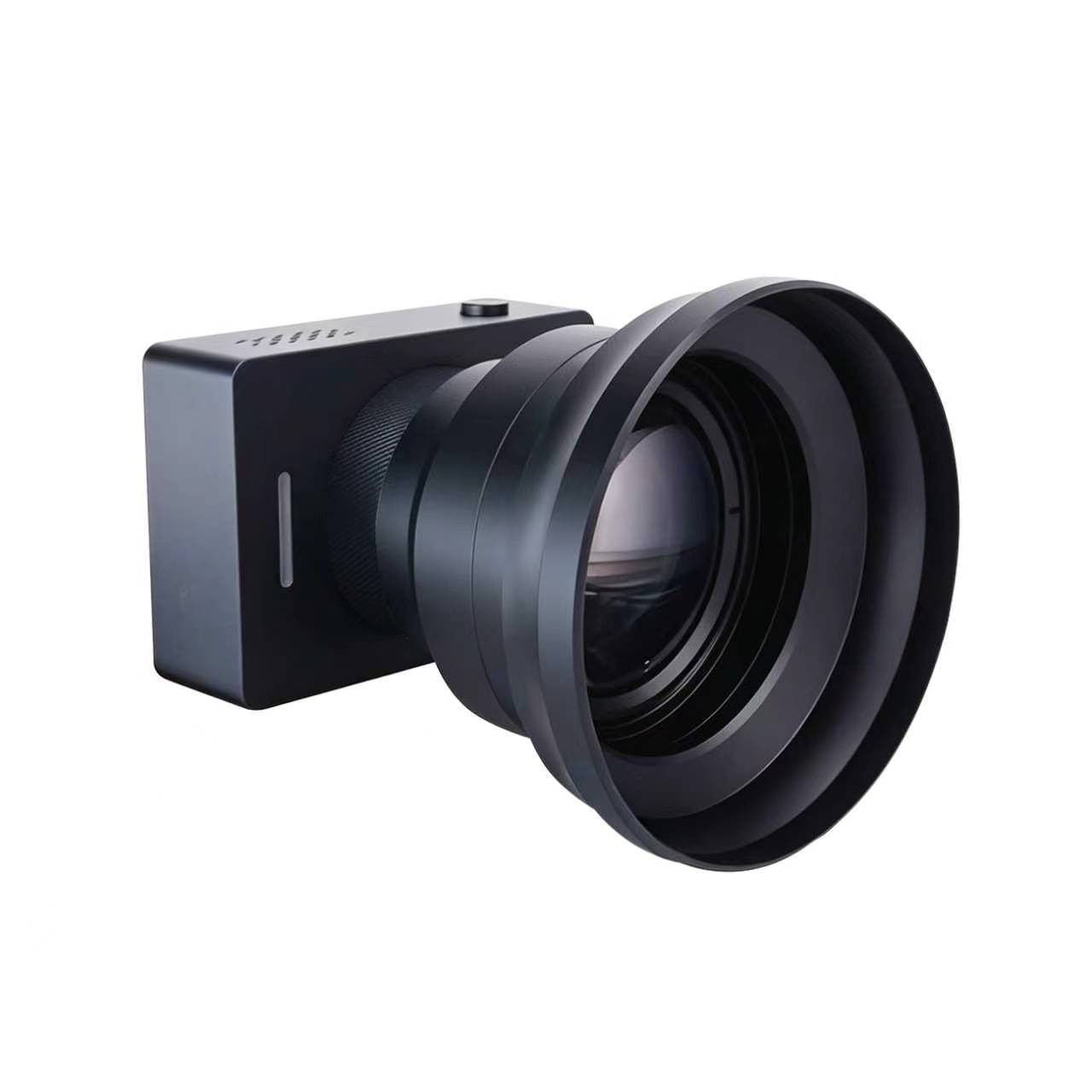
The TCHD-X6 accepts an external 4.8x macro lens or a 58 mm portrait lens, which changes the framing options available in close-up product or teaching shots.
The TCHD-X6 approaches the problem differently. It uses a TOF module to assist focusing and states that rapid face autofocus is still achievable without the TOF module. Its AI facial tracking can be configured through a personalised facial tracking model to improve focus on specific faces. It also supports HDR, independent adjustment of 24 colour tones and their saturation, four image versions (standard, de-red, fairer, professional), and both landscape and portrait output modes. For handheld or close-up product demonstration work, the combination of a 1-inch 50MP sensor, interchangeable lenses and portrait output is a workflow answer rather than a tracking answer.
Deployment Evidence: What the TC-980S Record Shows
Specification records describe intent. Deployment records describe behaviour under load. Among the three models, only the TC-980S has a documented deployment entry in the reviewed material: 20 units deployed for teaching live streaming across Germany, Australia and Malaysia over a two-year period, with client types covering government, hospital, school and independent content creators. The recorded outcome is stable operation, low noise and automatic tracking.
Two details in that record are more useful to a buyer than the summary sentence. First, the deployment spans three countries on two continents, which means the units have operated across different mains environments and room acoustics. Second, the duration is two years rather than a pilot period, which is long enough to expose drift in PTZ mechanics and focusing behaviour. Neither the TC420 nor the TCHD-X6 has a comparable deployment record in the reviewed material, which is not evidence of failure but is a genuine difference in the strength of the evidence available.
Procurement Terms and Commercial Fit
Commercial terms matter as much as specifications when a project is being scoped. TCHD Video lists a minimum order quantity of 1 unit, which allows a single-camera trial before a larger commitment. Production is described as OEM/ODM capable with logo customisation, monthly capacity is quoted at 500 units, standard lead time is 30 to 45 days, and quality control is described as 100 percent testing. Export markets listed are the EU, South East Asia and the USA, with remote after-sales support.
Documented purchasing conditions include full prepayment, delivery on FOB or C&F terms, and pre-shipment test acceptance, which means the buyer can review test results before goods leave the factory rather than disputing them after arrival. No published list pricing appears in the reviewed records, so any price-band comparison has to be handled through a direct quotation rather than through this document.
Where Each Camera Fits
The TC420 is listed for medical training, education teaching, event live streaming and broadcasting. Its combination of SDI, HDMI, PoE LAN and RS232 / RS422 control makes it a natural fit for fixed installs where the camera connects to a switcher or a control desk rather than to a single laptop.
The TC-980S is listed for broadcasting, medical, education and live streaming fields, with the multi-country teaching deployment as supporting evidence. Buyers needing longer reach have the 20X and 30X optical variants available, and facilities running an IP backbone can evaluate the optional NDI and Dante AV paths.
The TCHD-X6 is listed for e-commerce streaming, education teaching, event streaming, broadcasting and medical imaging, with typical scenarios including event streaming, broadcasting and medical imaging. Its single USB path, portrait mode and interchangeable lens make it strongest where the workflow is software-based, the operator is close to the subject, and the output is vertical or mixed-format.
In medical contexts, buyers should also note that medical electrical equipment, including surgical cameras, is generally expected to comply with the IEC 60601-1 series for basic safety and essential performance (TÜV Rheinland / BSI). None of the three specification records reviewed here addresses that series directly, so medical projects should treat it as a separate qualification step.
How These Compare With Traditional Fixed Camera Setups
A fixed-lens USB webcam has one advantage that PTZ cameras do not: nothing mechanical to commission. A PTZ camera adds pan and tilt mechanics, preset management, control cabling or IP control, and a mounting position that has to be planned so that the tracking area and the lighting both work. That is real added engineering time, and for a single fixed desk shot it is often unnecessary.
The trade-off runs the other way when a room has multiple speaking positions, a moving presenter or a requirement to cover both a stage and a close-up. A fixed camera cannot follow a subject, and adding a second fixed camera is not always cheaper than one PTZ unit with presets.
A second boundary is format. The TC420 and TC-980S are limited to 1080P60 on their SDI outputs, so a project that mandates 4K over SDI cannot be satisfied by either without changing the transmission plan. The TCHD-X6 records 4K over MJPEG but only through USB, and its current specification record carries no CE, FCC or ISO certificate numbers, which limits its use in regulated or tender-driven procurement regardless of image quality. Buyers weighing these three should therefore treat certification and interface as the first filters and image performance as the second, not the reverse.
Market Context: Growth, Mix Shift and Conflicting Forecasts
The category these cameras belong to is expanding. One 2025 industry projection places the global live streaming camera market at USD 3.35 billion in 2025, growing at a compound annual growth rate of 8.8 percent to USD 7.79 billion by 2035. Broader equipment data points in the same direction: Grand View Research reports that video conferencing hardware, including cameras, accounted for 46 percent of total video conferencing market revenue in 2024, and IndexBox reports that China produced 749 million television and digital cameras in 2024, valued at approximately USD 16.5 billion.
Within the camera mix, PTZ remains a large share. Metastat Insights estimates that PTZ cameras accounted for 38.5 percent of global conference camera revenue in 2025, which is consistent with the emphasis placed on PTZ control and presets in the TC420 and TC-980S records.
Competitive and forecast data also deserve caution. Omdia reports that Logitech held the largest market share in the USB conference camera category as of 2024, even as sector revenue declined 14 percent year over year, which suggests that share leadership and category growth are not the same signal. On growth estimates themselves, published PTZ camera CAGR forecasts range from 7.8 percent for 2024 to 2030 (Strategic Market Research) to 15.9 percent for 2025 to 2034 (Zion Market Research). The gap reflects how differently research firms define the PTZ market versus the broader live streaming camera market, and buyers should treat any single forecast as definition-dependent rather than universal.
What Buyers Should Watch Next
Three shifts are worth tracking over the next procurement cycle. The first is certification as a differentiator rather than a formality: as more buyers add environmental and occupational health and safety documentation to supplier requirements, cameras whose records carry only a quality management system certificate will compete in a narrower band. The second is the consolidation of USB and IP delivery: the TC-980S already lists NDI and Dante AV as options while keeping HDMI and SDI, and the TCHD-X6 pushes the USB-only route to a 1-inch sensor with HDR and interchangeable optics. The third is automation: tracking modes such as stage, area and intelligent framing reduce the number of operators needed per room, which slowly changes the staffing model behind education and event streaming rather than the camera specification itself.
Pre-Award Verification Checklist
- Confirm that the certificate scope names the exact model, not only the product family.
- Confirm which interface will carry the required resolution and frame rate, since HDMI, SDI, LAN and USB limits differ within the same camera.
- Confirm whether the workflow needs unattended tracking, and whether the chosen model documents a tracking mode.
- Confirm the commercial terms in writing: MOQ, lead time, payment terms, delivery term and pre-shipment test acceptance.
- Confirm spare parts and remote support arrangements for PTZ mechanics over the expected service life.
FAQ
Which of the three models has the most complete certification documentation for an EU-bound project?
The TC-980S documents the widest set: ISO 9001 under 064-24-Q-0675-R1-S, ISO 14001 under 064-24-E-0676-R1-S, occupational health and safety management system certification under 064-24-S-0677-R1-S, and CE EMC under LCSA07075157E covering EN 55032:2015/A1:2020 and EN 55035:2017/A11:2020. The TC420 documents ISO 9001, ISO 45001 and CE EMC under the same two certificate numbers but does not list an environmental management system certificate in the reviewed records. The TCHD-X6 record contains no CE, FCC or ISO certificate numbers or test report references.
What video outputs does each camera provide?
The TC420 provides HDMI, SDI, LAN with PoE, and USB 3.0, plus audio input and RS232 / RS422 control. The TC-980S provides HDMI, SDI, LAN with PoE+, and USB 3.0, with NDI and Dante AV listed as options. The TCHD-X6 provides a single full-function USB 3.0 interface compatible with USB 2.0, supporting UVC v1.1 and UAC 1.0, with no HDMI, SDI or LAN output in its specification record.
How do the resolution and frame-rate limits differ between the three?
The TC420 lists HDMI up to 4Kp30 and 1080P60, SDI up to 1080P60, and USB MJPG or H.264 up to 3840x2160 at 30 fps. The TC-980S lists HDMI up to 3840x2160, SDI up to 1080P60 including interlaced formats, and a LAN main code stream up to 3840x2160, with a 50 fps ceiling at 50 Hz and 60 fps at 60 Hz. The TCHD-X6 lists MJPEG at 4K 30, 25 and 15 fps plus 1080P and 720P, and YUY2 at 1080p60 marked as interpolated. None of the three documents 4K at 60 fps.
Which model documents automatic tracking, and what evidence supports it?
The TC-980S lists monocular tracking with off, real-time tracking, stage tracking, area tracking and intelligent framing modes and a maximum tracking distance of up to 18 metres. Supporting field evidence exists in a deployment of 20 units used for teaching live streaming in Germany, Australia and Malaysia over two years, with recorded results of stable operation, low noise and automatic tracking. The TC420 record lists 2D and 3D noise reduction but no automatic tracking mode. The TCHD-X6 lists TOF-assisted autofocus, face tracking autofocus and AI facial tracking with personalised model configuration.
What are the procurement terms for a first order?
The documented terms are a minimum order quantity of 1 unit, standard lead time of 30 to 45 days, monthly capacity of 500 units, 100 percent testing under quality control, OEM/ODM production with logo customisation, and remote after-sales support. Commercial conditions include full prepayment, delivery on FOB or C&F terms, and pre-shipment test acceptance. Export markets listed are the EU, South East Asia and the USA. No list pricing is published in the reviewed records.
If a project requires CE marking, how should a buyer handle the TCHD-X6?
The current TCHD-X6 specification record does not include CE, FCC or ISO certificate numbers or test report references. Buyers whose tender requires certificate numbers in the submission file should request the relevant documentation directly from the supplier and confirm the position before the specification is locked. It would be inaccurate to assume either that certification exists or that it does not; the record is silent, and the verification step belongs to the buyer.
Summary
The TC420, the TC-980S and the TCHD-X6 solve different problems within the same product family. Where documented compliance and environmental management coverage are mandatory, the TC-980S currently offers the strongest paper trail, supported by a two-year, three-country teaching deployment. Where a shorter, lower-power SDI and HDMI install is sufficient, the TC420 covers the same physical and control envelope without the environmental certificate. Where the workflow is software-based, vertical or close-up, the TCHD-X6 offers a 1-inch sensor, HDR, portrait output and interchangeable lenses through a single USB path, at the cost of documented certification and wired broadcast outputs. Reading the specification records per interface and per certificate, rather than per model, is the practical conclusion for most procurement teams.
The full TCHD Video product range and model specifications are collected in the TCHD Product Catalog 2025.
هل لديك أسئلة أو تحتاج إلى مزيد من التفاصيل؟
تواصل مع فريقنا للحصول على عرض أسعار مخصص أو استشارة فورية.
طلب عرض أسعار
املأ النموذج أدناه وسيتواصل معك فريقنا بعرض مقترح مخصص.
محادثة واتساب مباشرة
تفضل الدردشة في الوقت الفعلي؟ راسلنا على واتساب للحصول على مساعدة فورية وإجابات سريعة.
- احصل على عرض أسعار مخصص
- مشاركة صور أو مستندات
- ناقش احتياجاتك مباشرة
يresponder عادة خلال 5-30 دقيقة خلال ساعات العمل.