
TCHD-840 Super vs TCHD-812 Ultra: A 4K Live Production Switcher Comparison
TCHD-840 Super vs TCHD-812 Ultra: A 4K Live Production Switcher Comparison
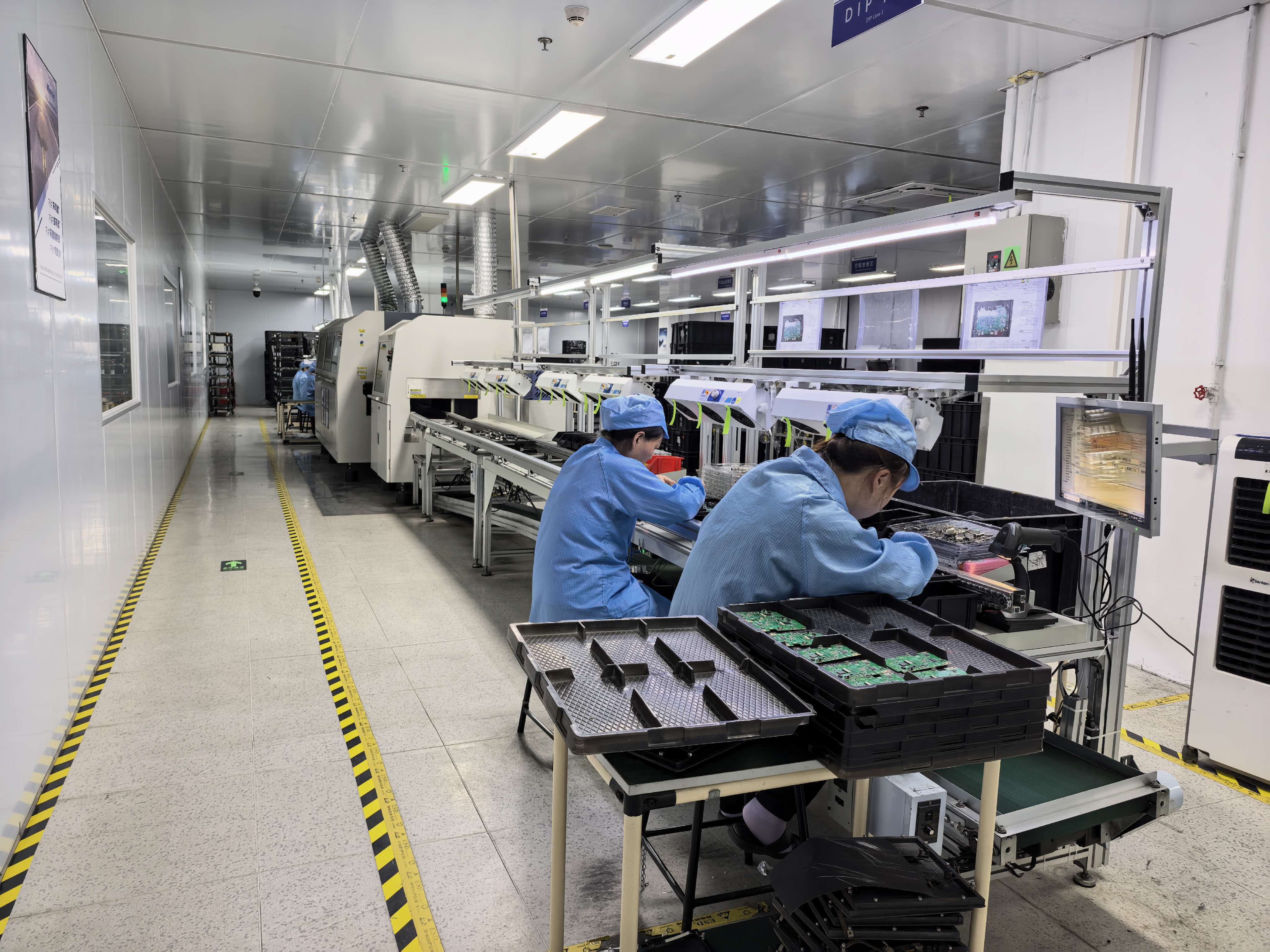
Production environment behind TCHD Video's video hardware portfolio, which includes live streaming cameras, video capture cards, video converters, video encoders and video switchers.
When two 4K production switchers come from the same manufacturer, the buying decision stops being about brand trust and becomes a specification decision: how many sources the switcher can handle, which physical interfaces it accepts, and what output formats it can commit to. This comparison sets the TCHD-840 Super against the TCHD-812 Ultra using published product evidence only, including the TCHD-812 Ultra's 12-channel 4K@60Hz switching capacity, the TCHD-840 Super's 2160P60 and 1080P60 output, the 4×12G-SDI or 4×HDMI 2.0 input options, and the streaming and UVC output behaviour documented for TCHD Video's high-end switcher models. Where the published material does not state a value, this article identifies the gap instead of assuming one.
TCHD Video, the operating brand of TCHD Digital Video Technology Development (Beijing) Ltd, is a Beijing-based manufacturer established in 2005 that produces live streaming cameras, video capture cards, video converters, video encoders and video switchers. The company also supplies system application solutions for virtual studios, guide recording, online live streaming, educational MOOCs, hard disk broadcasting, media asset management, educational recording systems, conference live streaming equipment, outdoor live streaming equipment and streaming media servers. Its published company profile reports a 10,000 m² facility, 50 employees, an annual output of 4,000 units, a 10-engineer R&D team and an export ratio of about 20%, with main markets in the EU, USA and Asia.
Why 4K live production changes what buyers compare
A 4K60 signal carries roughly four times the pixel throughput of a 1080p60 signal, and that single fact reshapes the whole chain from camera to screen. The 12G-SDI standard, formally SMPTE ST 2082, was created to carry uncompressed 4K video at 60 frames per second over one coaxial cable at a data rate of 11.88 Gbps. That is why single-link 12G-SDI matters in live production: it removes the multi-cable arrangements earlier 4K workflows relied on and keeps the switching position as operationally simple as it was in HD.
The change is not only about resolution. Three separate procurement questions get mixed together whenever buyers compare 4K switchers, and separating them is the fastest route to a correct decision.
- Channel capacity — how many live sources the switcher can accept and cut between during a production.
- Physical input configuration — whether those sources arrive over 12G-SDI, HDMI 2.0, or a mixture of the two.
- Output and delivery format — whether the switcher commits to 2160P60, 1080P60 or another output standard, and how many downstream destinations it can feed at once.
Two switchers can match on resolution and still differ on all three points. That is precisely the situation with the TCHD-812 Ultra and the TCHD-840 Super, and it is why a channel-count figure and an output-format figure should never be read as a like-for-like comparison.
TCHD-840 Super and TCHD-812 Ultra side by side
| Evaluation point | TCHD-812 Ultra | TCHD-840 Super |
|---|---|---|
| Switching capacity (published) | 12-channel switching at 4K@60Hz | Not stated in the product evidence reviewed for this comparison |
| Output format (published) | 4K@60Hz operating point | 2160P60 and 1080P60 output |
| Input options (published) | 4×12G-SDI or 4×HDMI 2.0 | 4×12G-SDI or 4×HDMI 2.0 |
| 4K transport path | 12G-SDI or HDMI 2.0 | 12G-SDI or HDMI 2.0 |
| Simultaneous platform streaming outputs | Up to 4 | Up to 4 |
| Not quantified in the available evidence | Latency, scaling behaviour, audio embedding counts, multi-viewer outputs | Latency, scaling behaviour, audio embedding counts, multi-viewer outputs |
Note on sourcing: the 4K60 support via 12G-SDI or HDMI 2.0 and the four simultaneous platform streaming outputs are documented for TCHD Video's high-end production switcher models in third-party trade coverage (EIN Presswire, September 2026). The 12-channel 4K@60Hz figure for the TCHD-812 Ultra and the 2160P60/1080P60 output figure for the TCHD-840 Super come from the published model descriptions used as the basis for this comparison.
Reading the specification differences correctly
The first thing to clear up is terminology. 2160P60 designates 3840×2160 progressive scan at 60 frames per second, and "4K@60Hz" is the common shorthand for that same 4K UHD progressive 60 Hz operating point. When one model description states 2160P60 and 1080P60 output and another states 12-channel 4K@60Hz, the two statements are not describing rival formats. One describes the output standard the switcher commits to; the other describes how many sources can be switched at that standard. Both descriptions sit inside the same UHD 60 Hz family.
The second distinction is between channel capacity and physical connector count. Channel capacity tells a production how many live sources can be live simultaneously in the switcher. A connector specification such as 4×12G-SDI or 4×HDMI 2.0 tells the production what kind of physical input paths the unit presents and what cable standard those paths expect. A buyer planning a six-camera church service and a buyer planning a two-laptop conference stream are therefore answering different questions even if they both read the same product page. The practical rule is to write the source list first — every camera, computer, playback device and return feed, with its native format — and only then match that list against published switching capacity and input configuration.
The third point is one of evidence discipline. Latency figures, internal scaling quality, audio embedding counts, multi-viewer outputs and per-model cable-length tolerances are not stated in the material available for these two models. None of those values should be assumed from a competitor's datasheet or from the wider product family. Where performance under load matters — for example in an esports tournament or a surgical live demonstration — the honest answer is to validate on a sample unit in the intended configuration rather than to infer from a headline resolution.
12G-SDI versus HDMI 2.0 inputs: what the choice actually costs
Both the TCHD-840 Super and the TCHD-812 Ultra are documented with 4×12G-SDI or 4×HDMI 2.0 input options, so the interface question is a workflow and infrastructure decision rather than a model difference.
12G-SDI is the broadcast-oriented path. Because SMPTE ST 2082 carries uncompressed 4K60 at 11.88 Gbps over a single coaxial cable, an SDI position requires 12G-capable sources, 12G-rated cable and 12G-capable monitoring at the far end. In exchange, SDI uses locking connectors and is the interface the industry has standardised on for longer cable runs inside fixed installations, outside broadcast vehicles and temporary event rigs. For a production that already owns an SDI infrastructure — a sports venue, a surgical teaching suite, a campus TV facility or a concert hall — matching the switcher to 12G-SDI keeps the rest of the chain unchanged.
HDMI 2.0 is the device-oriented path. It is the interface found on consumer and prosumer cameras, laptops, game consoles and media players, which makes it the pragmatic choice for e-commerce live streaming studios, lecture capture rooms, conference streaming positions and any production where a presenter's own computer is a source. The trade-off is physical and practical rather than electrical: HDMI connectors do not lock, and HDMI cable runs are less tolerant of the handling and dressing that touring or outdoor productions impose on a rig.
A reliable decision rule follows from this. If most sources are cameras on permanent or semi-permanent cable runs, plan around the 12G-SDI configuration. If most sources are computers and prosumer devices on short runs, plan around HDMI 2.0. If the production is genuinely mixed, confirm with the supplier whether both input path types can be populated at the same time and in what combination, because that detail is not resolved by the headline 4×12G-SDI or 4×HDMI 2.0 specification on its own.
Streaming and UVC output: the delivery side of the switcher
Output behaviour is where modern production switching diverges most sharply from the traditional model. Published information for TCHD Video's high-end production switchers describes support for up to four simultaneous platform streaming outputs. In practice that changes the role of the switcher: instead of producing one programme feed that a separate encoder then distributes, the switcher becomes part of the distribution layer, feeding several destinations at once. For a multi-platform live stream switcher deployment — simultaneous delivery to a main platform, a secondary platform, an internal feed and a recording destination — the number of parallel outputs is a first-order procurement criterion, not a convenience feature.
UVC output is the second delivery path worth understanding. USB Video Class is the standard that lets a video source appear to a computer as an ordinary camera. A UVC output on a switcher therefore lets the programme feed drop directly into conferencing software, lecture capture platforms, virtual studio applications or any tool that accepts a webcam input, without an additional capture card. TCHD Video documents UVC and UAC (USB Video Class and USB Audio Class) support over USB 3.0 within its camera interfaces, which indicates the company works with the standard as part of its ecosystem.
UVC also has boundaries that buyers should respect. It is a USB link, and what it can carry is defined by that link and by the host software rather than by the switcher's internal 4K capability. In most workflows UVC carries a single programme feed, not every channel, so it complements an SDI or HDMI chain rather than replacing it. Productions that need a 4K programme delivered to multiple destinations should plan the streaming outputs and the SDI/HDMI outputs as separate, complementary paths.
Matching the switcher to the production
The table below maps common production types to the dominant constraint that should drive switcher selection. These are decision rules based on channel capacity, interface type and output format — not claims about measured performance.
| Production type | Dominant constraint | Starting point |
|---|---|---|
| Church and multi-camera worship streaming | Number of simultaneous camera angles | TCHD-812 Ultra — 12-channel switching |
| Esports tournament streaming | Fast cutting across many player and observer feeds | TCHD-812 Ultra — 12-channel switching |
| Concert and performance streaming | Multiple stage angles plus multi-platform delivery | TCHD-812 Ultra with multi-platform streaming output |
| Sports event streaming | Camera count and dependable long cable runs | 12G-SDI input configuration |
| E-commerce live streaming | Committed output format and number of selling platforms | TCHD-840 Super — 2160P60/1080P60 output |
| Lecture recording and smart classroom | Fixed source count and software-based capture | TCHD-840 Super with HDMI 2.0 or UVC workflow |
| Conference streaming | Mixed laptop HDMI and camera SDI sources | Either model, four input paths |
| Surgical live-demo | End-to-end SDI reliability in a clinical setting | 12G-SDI input configuration |
| Virtual studio | Source count plus simultaneous recording and streaming | TCHD-812 Ultra |
| Campus TV and converged media centre | Shared output to several destinations | Either model with multi-platform output |
Read as a pattern rather than a ranking, the guidance is consistent: the TCHD-812 Ultra answers source-count problems and the TCHD-840 Super answers output-format problems. A production that has both a large camera count and a strict output standard is not choosing between the two on quality — it is choosing which constraint is harder to relax.
Market context: 4K switching as a procurement category
The global production switcher market was estimated at USD 2,596.79 million in 2025, driven by IP-based broadcasting and the wider transition to multi-camera streaming production (Precision Reports, August 2026). A broader market definition — video switchers generally rather than production switchers specifically — is projected to reach USD 11.48 billion by 2034, growing at a compound annual growth rate of 7.10% from 2026 (Fortune Business Insights, August 2026).
Those two figures are not interchangeable, and buyers should notice which definition is in use whenever a market number is quoted in a supplier conversation. Published estimates for the 2025–2026 period vary substantially because some analyses include only production vision mixers while others include broader video switching equipment. The gap is a difference of scope, not a contradiction, and it is a useful reminder that category-level growth figures say nothing about a specific model's suitability for a specific rig.
On the demand side, the livestream e-commerce market is projected to reach USD 312.35 billion by 2035, with Asia Pacific holding a 66% share as of 2025 (Precedence Research, July 2026). That vertical is one of the clearest reasons multi-input, multi-output switching hardware has moved down-market: a live commerce studio wants several camera and screen inputs, a committed output format, and simultaneous delivery to more than one platform, which is exactly the combination the TCHD-840 Super and TCHD-812 Ultra class of switchers is built around.
One practical detail for importers and procurement teams: video mixing systems or consoles are classified under HS Code 85437062 in various customs jurisdictions. That classification matters when the landed cost of a switcher is being compared across suppliers, because duty treatment follows the code rather than the marketing description of the product.
How this class compares with traditional and software-based switching
| Approach | What it does well | Where it stops |
|---|---|---|
| Legacy HD SDI switcher | Mature, familiar operation and low cost for 1080p workflows | Cannot deliver a 4K60 chain; moving to 4K usually means a new switcher and often a new cable plant |
| Software or cloud switching on general-purpose computers | Flexible, quick to update, low entry cost | Depends on host stability and network bandwidth, and still requires capture hardware at the edge for SDI or HDMI sources |
| 4K multi-format hardware switcher (TCHD-840 Super / TCHD-812 Ultra class) | Native 4K60 operation with 12G-SDI or HDMI 2.0 inputs, plus up to four simultaneous platform streaming outputs | Channel capacity is only useful when it is matched by sources, monitoring and operators; published model data does not quantify latency, scaling quality or multi-viewer capacity |
The most important boundary here is not technical, it is operational. A 12-channel switcher does not create twelve usable sources. It converts an existing source inventory into a switching capability, and that capability is limited by how many cameras are actually deployed, how many preview monitors the production can see at once, and how many operators are available to cut. A production that buys channel capacity it cannot crew has bought complexity rather than capability.
A second boundary applies to infrastructure. Neither model upgrades the rest of the chain. Feeding a 12G-SDI switcher from 3G-SDI sources, or monitoring a 4K programme on 1080p displays, produces a working system that never operates at 4K60. The interface standard has to be consistent from source through switcher to destination, and that consistency is a cable-and-hardware budget question that belongs in the procurement plan alongside the switcher itself.
What to validate before ordering
- Write the source list first. Record every camera, computer and playback device with its native resolution, frame rate and interface, then check it against the published switching capacity and input configuration.
- Fix the required output standard. Decide whether the programme must be 2160P60, 1080P60 or both, and confirm the destination devices accept that format.
- Count delivery destinations. If the production streams to more than one platform simultaneously, treat the four documented simultaneous platform streaming outputs as a capacity limit to plan against.
- Audit the cable plant. Confirm 12G-rated cable and connectors for SDI positions, and barrel or locking arrangements where HDMI runs will be handled repeatedly.
- Confirm mixed-input behaviour. If both SDI and HDMI sources will be used, confirm with the supplier how the 4×12G-SDI or 4×HDMI 2.0 configuration is populated in practice.
- Validate on a sample or in a site test. Latency, scaling behaviour and audio handling are not published for these models, so they should be verified rather than assumed.
- Check supplier management credentials. TCHD Video holds ISO 9001 quality management system certification (certificate 064-24-Q-0675-R1-S, issued by BEIJING STANDARD CERTIFICATION CENTRE, valid from 2024-03-08 to 2027-03-07) covering the sales of digital audio and video products and related technical services, alongside ISO 14001 and ISO 45001 certification. These are management-system certifications covering the company's operations — they are not product-type approvals for any individual switcher model, and buyers should treat them accordingly.
Future outlook
Three directions look durable for 4K live production hardware. The first is single-link 4K transport: because SMPTE ST 2082 already defines uncompressed 4K60 at 11.88 Gbps over one coaxial cable, 12G-SDI is likely to remain the reference interface for infrastructure-heavy productions even as IP transport grows alongside it. The second is multi-destination output. The four simultaneous platform streaming outputs documented on TCHD Video's high-end switchers reflect a market where a single programme is expected to reach several audiences at once, and that expectation is now set by workflows rather than by hardware fashion. The third is the widening of the mid-tier buyer base. Live commerce in Asia Pacific, hybrid education, conference streaming and medical teaching all need reliable multi-input switching without a broadcast-grade budget, and those verticals will continue to shape how switchers are specified.
For buyers, the practical consequence is that format support, channel capacity and output flexibility should be evaluated as three independent criteria rather than folded into a single resolution claim. Applied to the TCHD-812 Ultra and the TCHD-840 Super, that approach produces a clear division of labour: the TCHD-812 Ultra addresses productions whose limiting factor is how many sources must be switched at 4K@60Hz, while the TCHD-840 Super addresses productions whose limiting factor is the output standard, with 2160P60 and 1080P60 output. Both are documented with 4×12G-SDI or 4×HDMI 2.0 inputs and up to four simultaneous platform streaming outputs, so in either case the interface plan and the source inventory, not the model name, will decide whether the system performs as intended.
FAQ
What is the main published difference between the TCHD-812 Ultra and the TCHD-840 Super?
The documented difference is where each model is specified in detail. The TCHD-812 Ultra is described as a 12-channel switcher operating at 4K@60Hz, while the TCHD-840 Super is described by its output format, 2160P60 and 1080P60. One specification describes how many sources can be switched at 4K60; the other describes the output standard the switcher commits to.
Do both switchers accept 12G-SDI and HDMI 2.0 inputs?
Published product information for TCHD Video's high-end production switcher models describes 4K60 support via 12G-SDI or HDMI 2.0, and the model brief for this comparison lists 4×12G-SDI or 4×HDMI 2.0 input options. Whether both path types can be populated simultaneously in the same configuration is not resolved by that specification and should be confirmed with the supplier.
What output format is published for the TCHD-840 Super?
The TCHD-840 Super is described with 2160P60 and 1080P60 output. 2160P60 means 3840×2160 progressive at 60 frames per second, which belongs to the same 4K UHD 60 Hz family commonly written as 4K@60Hz.
How many simultaneous streaming outputs do TCHD Video's high-end production switchers support?
Third-party trade coverage of TCHD Video's high-end production switcher models documents up to four simultaneous platform streaming outputs. This is a distribution-capacity figure: it describes how many destinations the switcher can feed in parallel, and it is separate from the switcher's 4K60 processing capability.
When does a production actually need 12-channel 4K switching rather than a four-input configuration?
Channel capacity becomes the limiting criterion when more live sources must be available simultaneously than the production can route through a smaller configuration — for example multi-camera worship services, esports tournaments with several player and observer feeds, concert productions with multiple stage angles, and virtual studio builds. The capacity is only usable if the production also provides the cameras, preview monitoring and operators to run those channels.
What should be verified before assuming a switcher will carry a full 4K60 chain?
The whole chain has to match, not just the switcher. SMPTE ST 2082 single-link 12G-SDI carries uncompressed 4K60 at 11.88 Gbps over one coaxial cable, but that requires 12G-capable sources, 12G-rated cable and 12G-capable monitoring. In HDMI 2.0 positions, cable handling and connector retention are the practical risks. Latency, scaling behaviour and audio embedding counts are not published for these models and should be confirmed through a sample or site test.
Sources referenced
Precision Reports, "Production Switcher Market Size & Long-Term Forecast 2035" (August 2026); Fortune Business Insights, "Video Switcher Market Size, Share, and Forecast – 2034" (August 2026); Precedence Research, livestream e-commerce market data (July 2026); Samim Group, "12G SDI Technology: Revolutionizing Live Broadcasting" (March 2025), referencing SMPTE ST 2082; EIN Presswire, "Five Reputable Production Switcher Manufacturers in China 2026" (September 2026); Cybex.in HS classification data for HS Code 85437062. Market estimates differ by scope — production switchers (vision mixers) are a narrower category than video switchers generally — so published figures for the same period are not directly interchangeable.
The TCHD Video product catalog, covering the company's video hardware portfolio including production switchers, live streaming cameras, capture cards, converters and encoders, is available here: TCHD Product Catalog 2025.