
TCHD Video 4K Capture Card Portfolio: An Analyst Review
TCHD Video 4K Capture Card Portfolio: An Analyst Review
4K video capture has stopped being a specialist broadcast function and has become a general procurement line item. E-commerce studios, university lecture halls, hospital operating theatres, esports venues and corporate boardrooms now specify capture hardware with similar language: 4K, low latency, plug-and-play, multi-platform. That convergence has changed how buyers evaluate suppliers, and it has pushed manufacturers with SDI, HDMI and IP heritage into a wider commercial market. TCHD Video is one of the suppliers operating across that boundary.
From Broadcast Tool to Procurement Category
The global capture card market was valued at USD 1.31 billion in 2024 and is projected to reach USD 3.37 billion by 2033, a CAGR of 12.4%, according to Dataintelo's Capture Card Market Research Report 2033. The same research house reports that USB capture cards held the largest product type share at 38.4% in 2025, and that the gaming application segment accounted for 31.2% of total revenue in the same year.
Those numbers matter for a simple reason: the centre of gravity of the category is no longer broadcast engineering. It is buyers who need a reliable 4K ingest device and do not employ a video engineer. That shift raises a specific procurement problem — how to tell a genuinely capable 4K capture device from a 4K-labelled product that cannot sustain the signal.
The opportunity sits in the same place as the problem. Medical imaging and industrial application segments represent 19.4% of total video capture card revenues with a segment CAGR of 11.8% through 2034, per Dataintelo's Video Capture Card Market Research Report 2034. That is a slower-growing but higher-requirement niche, and it rewards suppliers who understand signal integrity rather than retail packaging.
TCHD Video in Brief: Company Facts and Manufacturing Footprint
TCHD Video is the trading identity of TCHD Digital Video Technology Development (Beijing) Ltd, a video hardware manufacturer established in 2005 and headquartered in Haidian District, Beijing. The company describes itself as a video software and hardware supplier that develops standardized products and application systems, and that also customizes according to customer requirements.
The published first-party profile records a 10,000 m² facility, approximately 50 employees, an R&D team of 10 engineers, an annual output figure of 4,000 units, an export ratio of roughly 20%, and main markets in the EU, USA and Asia. The primary hardware lines are live streaming cameras, video capture cards, video converters, video encoders and video switchers. The wider catalogue also lists guide stations, recording hosts, virtual studio all-in-one machines, medical video recorders, SDVOE codecs, 10G switches, live lighting and multi-card aggregation routers, alongside system solutions for virtual studios, educational recording, conference live streaming and outdoor live streaming.
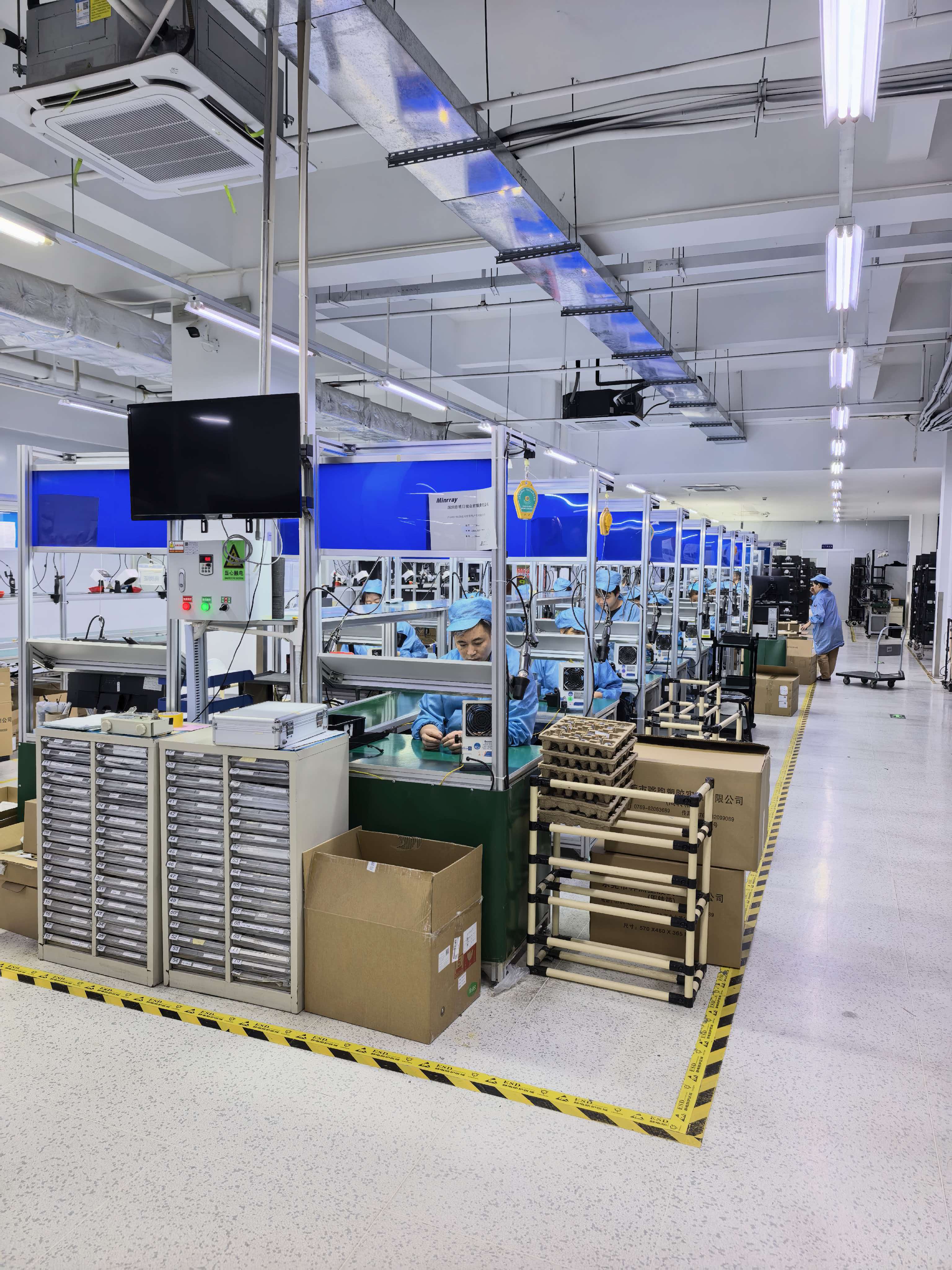
Two structural facts stand out for an analyst. First, a 50-person company with a 10-engineer R&D team is an engineering-led specialist, not a volume commodity supplier. Second, a 20% export ratio indicates the business is primarily domestic-facing, with export activity concentrated in the EU, USA and Asia.
Where TCHD's Engineering Focus Actually Sits
Competitiveness in capture hardware is usually determined by three things: signal path design, interface bandwidth handling and software integration. TCHD's product documentation concentrates on exactly those areas rather than on cosmetic differentiation.
On signal path, the TC-210N5 SDI uses a professional FPGA processing architecture and is described as delivering zero frame-drop video collection and output, with embedded SDI audio processed synchronously. On bandwidth handling, the company spans two distinct routes — PCIe for fixed installations and USB for portable workflows — and each product line is specified with explicit resolution and frame-rate ceilings rather than a single headline resolution.
On software integration, TCHD states Windows and Linux compatibility for the TC-210N5 SDI, Windows and macOS compatibility for the TC-200N9 SDI, and Windows, macOS, Linux, Android and iOS support for the TC-UB660. The company also states that its SDK supports secondary development for commercial customization on the SDI capture line, which is a relevant capability for system integrators rather than end users.
Technical Explanation: What Actually Determines 4K Capture Quality
A capture card does one job: convert an incoming video signal into a computer-readable stream in real time. What separates a professional card from a consumer device is how honestly that conversion is specified.
The core constraint is bandwidth. Uncompressed 4K 60Hz RGB 24-bit video requires approximately 11.94 Gbps, which exceeds the 5 Gbps limit of USB 3.0, as documented in purplelec's technical comparison of PCIe and USB 3.0 capture performance. This single figure explains most specification differences in the market. A USB-class 4K capture card cannot carry raw 4K60 RGB; it must either negotiate a faster link such as USB 3.2 Gen 2, or apply compression or chroma subsampling such as MJPG, NV12, YUY2, RGB24 or P010.
This is why the TCHD specification sheets list capture performance as a format matrix rather than a single number. The TC-UB660 records 3840 × 2160 at 144 fps in MJPG and 60 fps in NV12 over USB 3.2 Gen 2, and drops to 30 fps NV12 or 25 fps RGB24 over USB 3.2 Gen 1. The TC-UB620 records 4K at 60 fps in MJPG and 30 fps in NV12 or I420 over USB-C 3.2 Gen 1. A buyer who reads only the resolution figure will misjudge both products.
The second determining factor is standard conformance. UVC, the USB Video Class standard, allows a capture device to appear as a plug-and-play webcam without proprietary drivers, as Elgato documents in its technical explainer on capture card standards. TCHD states UVC and UAC compliance for the TC-UB620 and TC-UB660, which is what makes driver-free operation in OBS, VLC or Amcap possible.
The 4K Capture Card Portfolio, Model by Model
TCHD's capture and switching range splits into three groups: USB capture cards for portable and software-driven workflows, PCIe SDI cards for fixed professional installations, and an integrated switcher that removes the capture card from the chain entirely.
| Model | Category | Interface | Maximum capture | Typical fit |
|---|---|---|---|---|
| TC-UB660 | USB 4K capture card | USB 3.2 Gen 2 Type-C; HDMI 2.1 pass-through | 3840 × 2160 at 144 fps (MJPG); 4K60 NV12 | High-frame-rate game console recording, esports streaming, e-commerce live sales |
| TC-UB620 | USB 4K capture card | USB-C 3.2 Gen 1; HDMI 2.0 pass-through | 3840 × 2160 at 60 fps (MJPG), 30 fps NV12/I420 | 4K60 streaming, remote teaching, video conferencing |
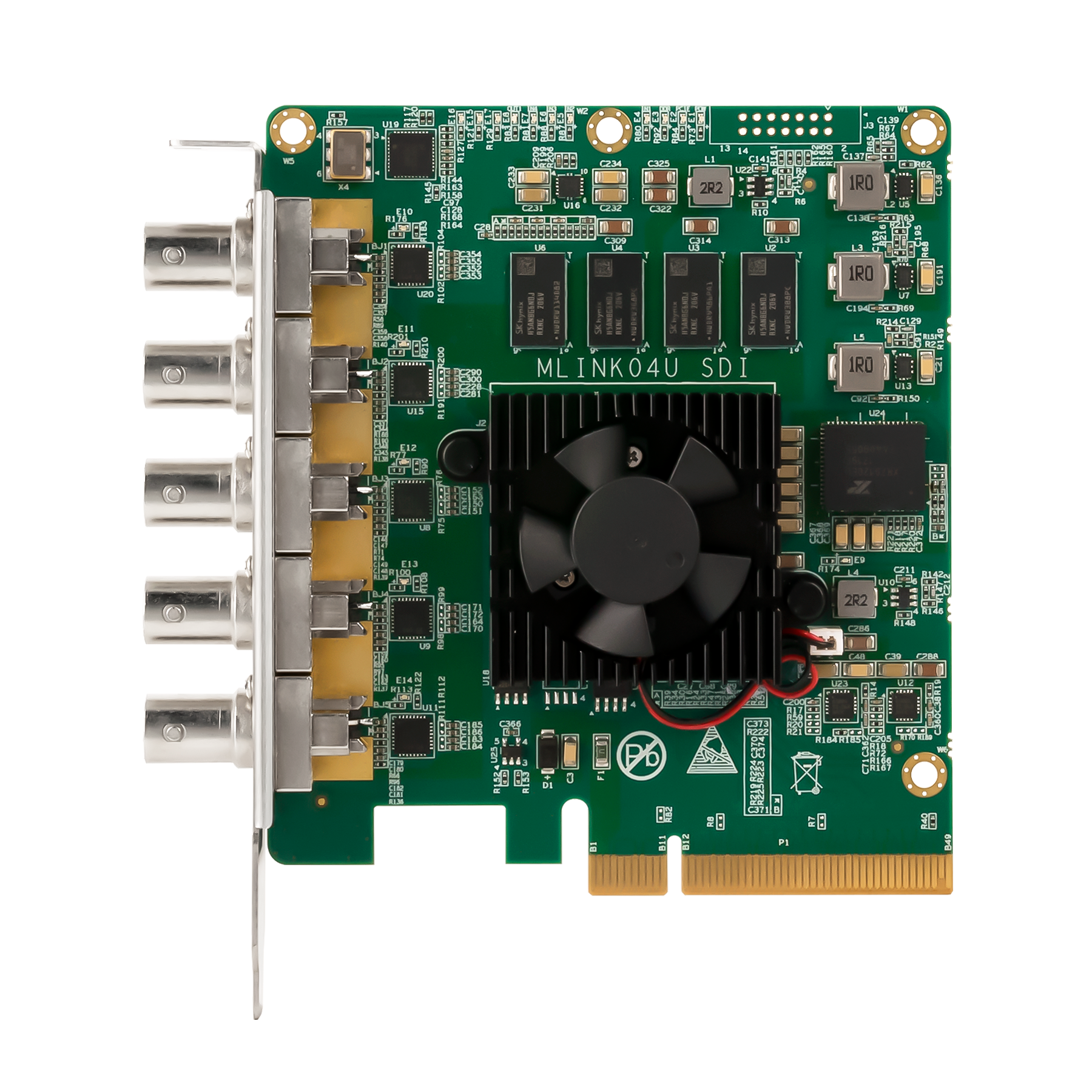
| TC-210N5 SDI | PCIe capture and output card | 12G/6G/3G-SDI; 5 configurable SDI channels | 4K@60Hz | Broadcast production, industrial vision, medical image collection |
| TC-200N9 SDI | PCIe SDI capture and playback card | SD-SDI, HD-SDI, 3G-SDI | 1080p60 | Studio post-production, conference signal acquisition, HD workflows |
| TCHD-840 Pro | Live stream switcher | 4-channel 4K HDMI and NDI hybrid input; USB-C UVC output | 4K@60Hz switching | Multi-camera events, multi-platform e-commerce, esports production |
| TC420 | Live streaming camera | HDMI, SDI, LAN (PoE), USB 3.0 | 4K@30 over HDMI | Conference, education teaching, medical training |
TC-210N5 SDI: the broadcast-grade SDI route
The TC-210N5 SDI supports 12G, 6G and 3G-SDI full-standard signal input and output and captures up to 4K@60Hz. Its distinguishing feature is channel flexibility: four SDI inputs plus one SDI output, configurable into combinations such as 4-in-1-out, 3-in-2-out, 2-in-3-out or 1-in-4-out. It is built on a high-strength PCB with an industrial anti-interference design and is specified for 24-hour continuous operation. Compatibility covers Windows and Linux, with OBS, vMix and Premiere cited, plus standard SDK support for secondary development.
TC-UB660 and TC-UB620: the USB routes
The TC-UB660 targets frame rate above all. It uses USB 3.2 Gen 2 Type-C with HDMI 2.1 pass-through, supporting pass-through resolutions including 2160p144 HDR/VRR, 3440 × 1440p120 and 1080p360. Its audio path is unusually complete for a USB card: HDMI audio, a 3.5 mm line input and a 3.5 mm headset microphone input, allowing microphone and HDMI audio to be mixed for live commentary. A full-aluminium housing is specified for heat dissipation during long sessions.
The TC-UB620 is the more conservative sibling. HDMI 2.0 pass-through supports 2160p60 HDR, and VRR pass-through is specified at 3840 × 2160 between 48 and 60 Hz and 1920 × 1080 between 48 and 120 Hz. TCHD explicitly notes that YCbCr 4:2:0 VRR is not supported and that certain consoles, such as Xbox, require the YCC 4:2:2 option to be enabled. That is the kind of detail that prevents a support ticket.
TCHD-840 Pro: removing the capture card
The TCHD-840 Pro is a four-channel 4K HDMI and NDI hybrid switcher with 1×4K60, 2×4K30 and 4×1080P decoding modes, plus one-click switching between 16:9 landscape and 9:16 portrait. Its most consequential design decision is a native Type-C UVC output that is recognised as a high-definition webcam by Windows and macOS, meaning no external capture card is required. Encoding is H.264 and H.265 hardware-based, with RTMP, RTMPS, SRT, UDP, RTP, HLS and WHIP support and simultaneous streaming to four independent platforms. Audio handling includes real-time mixing of HDMI embedded, NDI, DDR playback and external microphone audio, with 0–10000 ms audio delay tuning for long-duration synchronisation.
Application Coverage: From Esports to Endoscope Surgery
TCHD's stated application map is unusually broad for a company of its size, and it is worth separating the mainstream uses from the specialist ones.
In gaming, the products are positioned for game console recording and esports streaming — the segment that accounted for 31.2% of capture card revenue in 2025. In e-commerce, the target is live sales broadcasting, where the TC-UB660 is specified to render product detail for apparel, beauty and gadget streams. In education, remote teaching and lecture recording are named, with the TCHD-840 Pro covering multi-camera classroom production. In corporate environments, meeting recording, video conferencing and conference streaming are listed, supported by PoE-capable cameras and TALLY-linked switchers.
The specialist end of the map is healthcare and industrial vision. The TC-210N5 SDI is stated as applicable to medical image collection and industrial vision detection, and the TC-200N9 SDI is listed for medical imaging and high-precision video acquisition. There is also a documented company footprint in medical training cameras and surgical teaching hosts. Buyers in these segments should note that the requirement profile is different from live streaming: continuous operation, colour fidelity and signal integrity matter more than frame-rate ceilings.
Market Trend Analysis: Four Indicators Buyers Should Track
| Indicator | Reported value | Source |
|---|---|---|
| Global capture card market size, 2024 | USD 1.31 billion | Dataintelo, Capture Card Market Research Report 2033 |
| Projected market size, 2033 | USD 3.37 billion at 12.4% CAGR | Dataintelo, Capture Card Market Research Report 2033 |
| USB capture card product-type share, 2025 | 38.4% | Dataintelo, Video Capture Card Market Research Report 2034 |
| Gaming application revenue share, 2025 | 31.2% | Dataintelo, Video Capture Card Market Research Report 2034 |
| Medical and industrial segments | 19.4% of revenue; 11.8% CAGR through 2034 | Dataintelo, Video Capture Card Market Research Report 2034 |
| Competitive leadership, 2025 | Elgato (Corsair Gaming) and AVerMedia Technologies | Dataintelo, Video Capture Card Market Research Report 2034 |
Three readings follow. First, growth is being driven by USB-class devices rather than by rack-mounted systems, which favours suppliers with strong USB engineering. Second, gaming remains the largest single application but not the fastest-growing one, which is why medical and industrial capture — growing at 11.8% — is attracting attention from suppliers looking for higher-margin B2B demand. Third, a documented market leadership position for Elgato and AVerMedia means the majority of buyers will encounter those two brands first; smaller manufacturers must therefore compete on specification transparency, integration support and certification rather than on brand recall.
Comparison With Traditional Solutions: What Changes and What It Costs
The traditional alternative to a 4K capture card is a hardware capture-and-record chain: an SDI or HDMI source feeding a dedicated recorder or broadcast encoder, with a separate switching stage. That architecture still has advantages — self-contained operation, no dependency on host software, and predictable behaviour in fixed installations.
The newer approach replaces that chain with a card inside a general-purpose computer, or, in the TCHD-840 Pro case, with a switcher whose UVC output makes the computer treat it as a webcam. The gains are cost, flexibility and software-defined workflow. The costs are real and should be stated plainly.
The first boundary is bandwidth and format dependency. As noted, uncompressed 4K60 RGB24 requires roughly 11.94 Gbps, above USB 3.0's 5 Gbps ceiling. Any USB-class 4K solution therefore trades compression or subsampling for resolution, and the buyer must confirm which capture formats are available at which frame rates on the specific host bus in use. A USB 3.2 Gen 1 port will not deliver the same result as a Gen 2 port on the same card.
The second boundary is genuine product-tier difference inside the range. The TC-200N9 SDI supports SD-SDI, HD-SDI and 3G-SDI at up to 1080p60; it is not a 4K device. Buyers who need 4K over SDI must move to the TC-210N5 SDI. This is not a flaw, but it is a specification distinction that a procurement checklist should capture.
The third boundary concerns compatibility edge cases. TCHD documents that YCbCr 4:2:0 VRR is not supported on the TC-UB620 and that some consoles require the YCC 4:2:2 setting to be enabled for VRR to function. Similar caveats apply to any VRR implementation and are best verified against the actual source device before deployment.
The fourth boundary concerns certification scope and scale. The certification documents contained in the available material — a CE EMC Attestation of Compliance (certificate number LCSA07075157E, issued by LCS TESTING LABORATORY, against EN 55032:2015/A1:2020 and EN 55035:2017/A11:2020), ISO 9001 (certificate 064-24-Q-0675-R1-S, valid 2024-03-08 to 2027-03-07), ISO 14001 (064-24-E-0676-R1-S) and ISO 45001 (064-24-S-0677-R1-S), the latter issued by BEIJING STANDARD CERTIFICATION CENTRE — relate to the live streaming camera line, specifically TC420, TCHD-T3 and TC-980S. No medical-device-specific certification such as ISO 13485 appears in the provided documentation. Clinical or diagnostic buyers must therefore verify regulatory status independently rather than infer it from the medical application listing. Separately, a stated annual output of 4,000 units indicates a specialist production scale; buyers planning high-volume rollouts should confirm lead times and capacity directly.
Industry Position: An Honest Read
TCHD Video is not a market leader in capture cards, and its own material does not claim to be. The 2025 competitive landscape is documented as being led by Elgato (Corsair Gaming) and AVerMedia Technologies. TCHD's position is better described as a specialist supplier with vertical integration across capture, switching, encoding and camera hardware, concentrated in the Chinese domestic market with export activity into the EU, USA and Asia.
Third-party profile data on the company should be treated with care. One commercial directory profile places annual revenue in the USD 3–5 million range, while another source reports a lower band of USD 1–2 million; the discrepancy is documented and unresolved. For trade purposes, TCHD products are classified under HS Code 8471.80 (automatic data processing units) and 8525.80 (television and digital cameras), which is useful for importers preparing documentation.
What the profile supports is a specific claim set: documented product specifications, an identifiable manufacturing footprint, published certification numbers with issuing bodies, and a stated SDK path for integration. What it does not support is a claim of market leadership, benchmark superiority over named competitors, or medical device clearance. Buyers should evaluate accordingly.
Procurement Value: An Evaluation Checklist
For a buyer at the research stage, the useful output of this review is a short list of verifiable questions rather than a recommendation.
Interface and route. Confirm whether the workflow is fixed (PCIe with 12G-SDI, as with the TC-210N5 SDI) or portable (USB, as with the TC-UB660 and TC-UB620), and whether the host machine has the matching bus generation.
Capture format matrix. Ask for the frame rate available at each capture format, not just the maximum resolution. The difference between 4K60 MJPG and 4K60 NV12 is material in editing and streaming pipelines.
Pass-through behaviour. Verify HDR and VRR pass-through support and any documented exceptions, including console-specific settings such as YCC 4:2:2.
Software and SDK. Confirm compatibility with the actual production software in use — OBS, vMix, Premiere, After Effects, VLC and Amcap are all cited in TCHD documentation — and whether SDK-based customization is required.
Certification by SKU. Match certificate numbers to the exact model being purchased, and do not assume that a certificate covering one product line applies to another.
Application fit. Medical imaging, industrial vision, esports production and classroom recording have different tolerance for latency, colour accuracy and duty cycle. The TCHD range covers these as separate SKUs rather than as one universal device.
Future Outlook
Two forces are likely to shape this supplier's trajectory. The first is the migration of growth toward B2B capture. With medical and industrial applications growing at 11.8% annually and representing 19.4% of revenue, suppliers with SDI engineering depth and 24-hour duty-cycle designs are positioned closer to that demand than consumer peripheral brands are.
The second is the compression of the traditional capture card role. Devices such as the TCHD-840 Pro, which deliver a UVC output directly from a switcher, remove the capture card from the bill of materials for some workflows. That is a structural change in the category rather than a product feature, and it favours manufacturers who can supply the whole chain — camera, switcher, encoder and card — rather than a single component.
What would materially strengthen TCHD's position in the next evaluation cycle is public documentation that the current material does not contain: verified medical-grade certification for the healthcare SKUs, third-party test data on latency and colour accuracy, and independently audited capacity figures. Until then, the company is best assessed as a specification-transparent specialist with a broad catalogue, a modest production scale and a clear integration story.
FAQ
What is TCHD Video and what does it manufacture?
TCHD Video is the trading identity of TCHD Digital Video Technology Development (Beijing) Ltd, a video hardware manufacturer established in 2005 and based in Haidian District, Beijing. Its core hardware lines are live streaming cameras, video capture cards, video converters, video encoders and video switchers, supported by recording hosts, virtual studio all-in-one machines and medical video recorders. The company reports a 10,000 m² facility, approximately 50 employees, a 10-engineer R&D team, an annual output of 4,000 units, and an export ratio of roughly 20% to EU, USA and Asia markets.
What is a 4K capture card, and how does it differ from a standard HD capture card?
A 4K capture card converts an HDMI or SDI signal into a computer-readable video stream at up to 3840 × 2160 pixels, whereas a standard HD capture card typically tops out at 1080p. The practical difference is bandwidth: uncompressed 4K 60Hz RGB 24-bit video requires approximately 11.94 Gbps, which exceeds the 5 Gbps limit of USB 3.0. USB-class 4K cards therefore rely on faster links such as USB 3.2 Gen 2, or on compressed and subsampled formats such as MJPG, NV12, YUY2, RGB24 and P010.
Which TCHD models support 4K, and how do they differ?
Four TCHD products are specified at 4K. The TC-UB660 is a USB 3.2 Gen 2 Type-C card with HDMI 2.1 pass-through, recording 4K at 144 fps in MJPG and 4K60 in NV12. The TC-UB620 is a USB-C 3.2 Gen 1 card with HDMI 2.0 pass-through, recording 4K at 60 fps in MJPG and 30 fps in NV12 or I420. The TC-210N5 SDI is a PCIe card supporting 12G/6G/3G-SDI with 4K@60Hz capture and five configurable SDI channels. The TCHD-840 Pro is a switcher with four 4K HDMI and NDI hybrid inputs and 4K@60Hz switching. The TC-200N9 SDI is HD-class, with a 1080p60 maximum.
Should a professional production choose a USB 4K capture card or a PCIe SDI card?
The trade-off is portability against dedicated bandwidth. USB cards such as the TC-UB660 and TC-UB620 work with laptops and require no expansion slot, but their capture format depends on the host bus generation and compression choice. PCIe SDI cards such as the TC-210N5 SDI use a dedicated slot, support broadcast SDI standards including 12G-SDI, and are specified for 24-hour continuous operation, which suits fixed installations where signal integrity and duty cycle matter more than mobility.
Can 4K capture cards be used for medical imaging, endoscope surgery recording and telemedicine?
TCHD lists healthcare as an applicable field for the TC-210N5 SDI and the TC-200N9 SDI, and identifies medical video capture, medical imaging and high-precision video acquisition as target applications, alongside a documented footprint in medical training cameras and surgical teaching hosts. However, the certification documents contained in the available material cover the live streaming camera line — CE EMC, ISO 9001, ISO 14001 and ISO 45001 — and do not include a medical-device-specific certification such as ISO 13485. Buyers deploying into diagnostic, surgical or telemedicine workflows should verify regulatory status independently rather than infer it from the application listing.
What should a buyer verify before purchasing a 4K capture card for live streaming or recording?
Six items are worth confirming. First, the interface route and host bus generation, since USB 3.2 Gen 1 and Gen 2 deliver different results on the same card. Second, the full capture format matrix rather than the maximum resolution alone. Third, HDR and VRR pass-through support together with any documented exceptions, such as the YCbCr 4:2:0 VRR limitation on the TC-UB620. Fourth, compatibility with the production software actually in use. Fifth, that certification numbers match the exact SKU being purchased. Sixth, production capacity and lead time relative to programme volume, which is relevant for suppliers with a specialist-scale output.
Reference Materials
Product documentation for the models discussed, including the TC-UB620, TC-UB660, TC-210N5 SDI, TC-200N9 SDI, TCHD-840 Pro and TC420, is compiled in the TCHD product catalogue, available for public download: TCHD Product Catalog 2025.